


KKU_Biomech_Intro

   Introduction to


Dr / Shimaa Essa
Lecturer of physical therapy , faculty of community,
King Khalid university
Upon successful completion of this lesson you
  would be able to:

  1- Define the science of biomechanics.
  2- Identify different Classifications of
     biomechanics.
  3- Identify components of the musclosekeltal
     system.
•   Definition:
    - Kinesis = means movement or to move.
    - Logos = means the science or to study.

• Kinesiology can be defined as the scientific study of
  human motion.
• Kinesiology means the science of movement including
  active and passive structures.
• Kinesiology is the science which investigates anatomy
  and organic processes in reference to human motion.
•   kinesiologists:
     Those who study movements, They can no longer limit
    their scope to the mechanical analysis of movement.
    They must consider increasingly the meaning and
    significance of musculoskeletal movement.

• Kinesiology can be divided into 2 special study
  fields:
   1- Anatomical kinesiology.
   2- Mechanical kinesiology = Biomechanics
           The term mechanical kinesiology has been
                replaced lately by Biomechanics.
Definition:
• Bios         = life.
• Mechanics = study the effect of forces on bodies
  during static and dynamic situations.
• Mechanics = It is the branch of physics which deals
  with the interrelations between force, matter and
  motion.

         Biomechanics is the application of mechanical
         principles to living structures either animals or
          human being at rest and during movement.
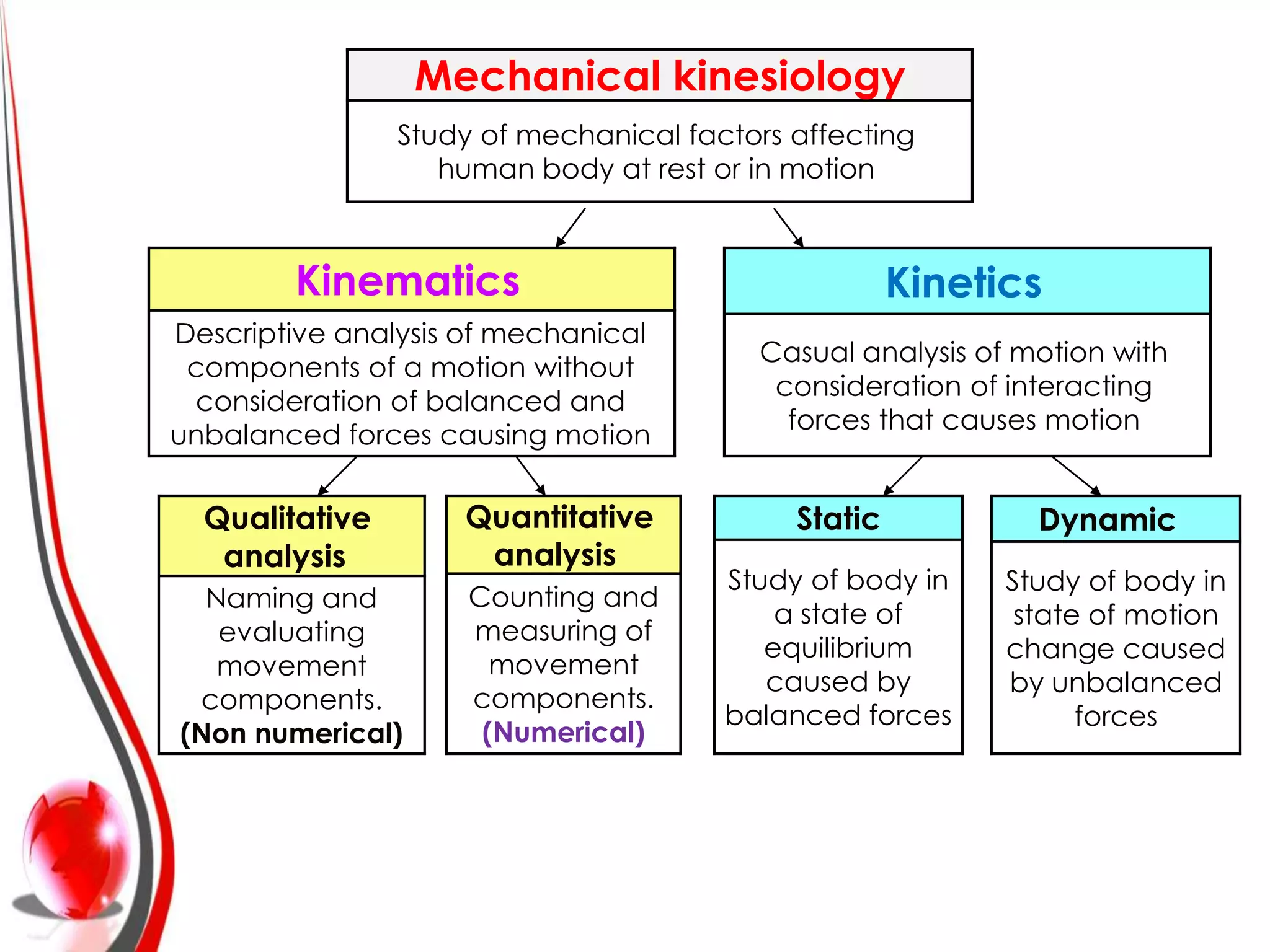
Mechanical kinesiology
                Study of mechanical factors affecting
                   human body at rest or in motion


        Kinematics                                   Kinetics
Descriptive analysis of mechanical
                                         Casual analysis of motion with
 components of a motion without
                                          consideration of interacting
 consideration of balanced and
                                           forces that causes motion
unbalanced forces causing motion


  Qualitative       Quantitative            Static           Dynamic
   analysis          analysis
                                       Study of body in    Study of body in
  Naming and         Counting and
                                           a state of       state of motion
   evaluating        measuring of
                                          equilibrium      change caused
   movement            movement
                                          caused by        by unbalanced
 components.         components.
                                       balanced forces           forces
(Non numerical)       (Numerical)
Biomechanics    deals   with   the
locomotion system which   is   the
musculoskeletal system.
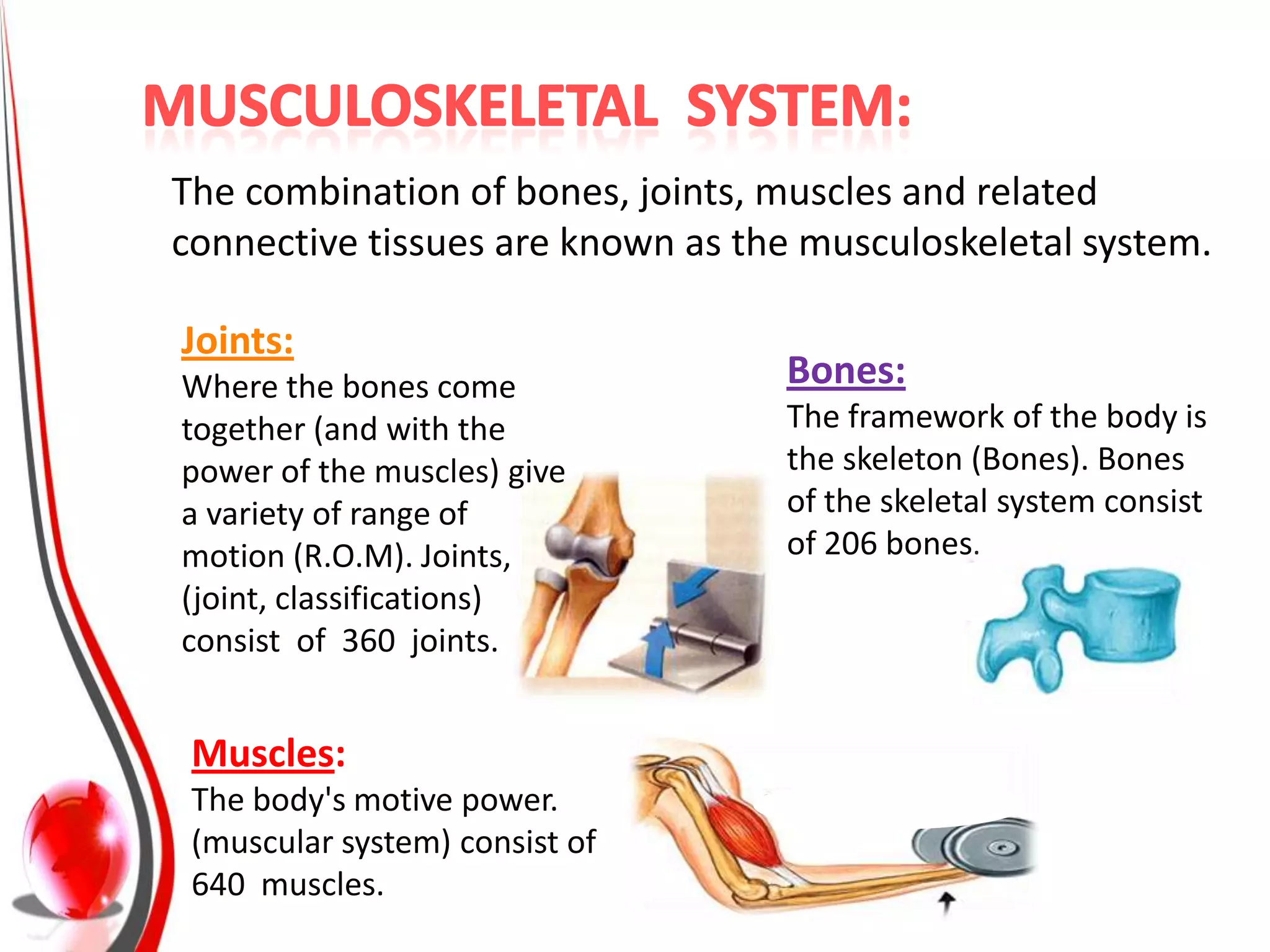
The combination of bones, joints, muscles and related
connective tissues are known as the musculoskeletal system.

Joints:
Where the bones come              Bones:
together (and with the            The framework of the body is
power of the muscles) give        the skeleton (Bones). Bones
a variety of range of             of the skeletal system consist
motion (R.O.M). Joints,           of 206 bones.
(joint, classifications)
consist of 360 joints.


 Muscles:
 The body's motive power.
 (muscular system) consist of
 640 muscles.
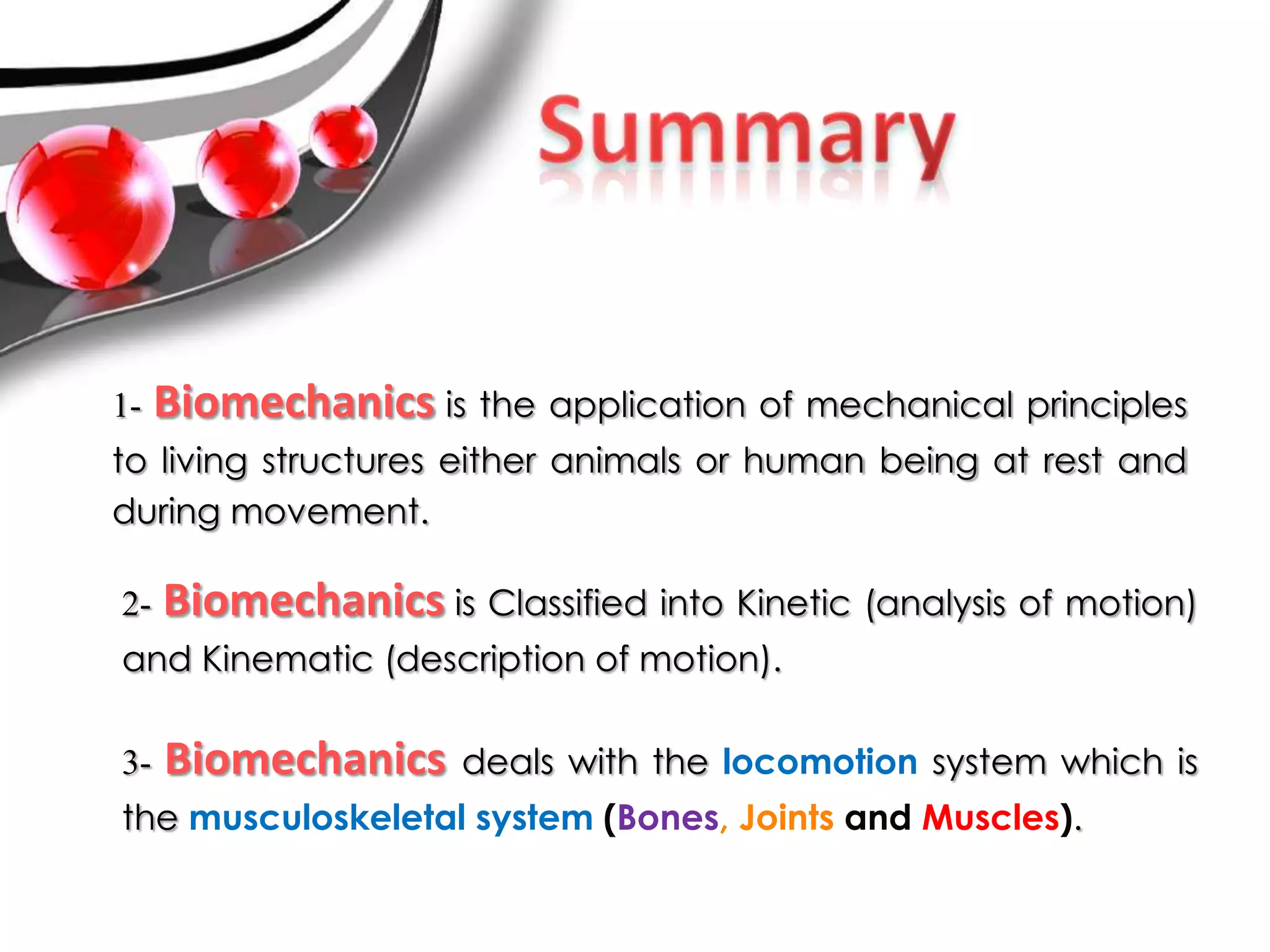
1-   Biomechanics is the application of mechanical principles
to living structures either animals or human being at rest and
during movement.

2-   Biomechanics is Classified into Kinetic (analysis of motion)
and Kinematic (description of motion).

3-   Biomechanics     deals with the locomotion system which is
the musculoskeletal system (Bones, Joints and Muscles).
Introduction to biomechanics

Introduction to biomechanics

  • 1.
    KKU_Biomech_Intro Introduction to Dr / Shimaa Essa Lecturer of physical therapy , faculty of community, King Khalid university
  • 2.
    Upon successful completionof this lesson you would be able to: 1- Define the science of biomechanics. 2- Identify different Classifications of biomechanics. 3- Identify components of the musclosekeltal system.
  • 3.
    Definition: - Kinesis = means movement or to move. - Logos = means the science or to study. • Kinesiology can be defined as the scientific study of human motion. • Kinesiology means the science of movement including active and passive structures. • Kinesiology is the science which investigates anatomy and organic processes in reference to human motion.
  • 4.
    kinesiologists: Those who study movements, They can no longer limit their scope to the mechanical analysis of movement. They must consider increasingly the meaning and significance of musculoskeletal movement. • Kinesiology can be divided into 2 special study fields: 1- Anatomical kinesiology. 2- Mechanical kinesiology = Biomechanics The term mechanical kinesiology has been replaced lately by Biomechanics.
  • 5.
    Definition: • Bios = life. • Mechanics = study the effect of forces on bodies during static and dynamic situations. • Mechanics = It is the branch of physics which deals with the interrelations between force, matter and motion. Biomechanics is the application of mechanical principles to living structures either animals or human being at rest and during movement.
  • 7.
    Mechanical kinesiology Study of mechanical factors affecting human body at rest or in motion Kinematics Kinetics Descriptive analysis of mechanical Casual analysis of motion with components of a motion without consideration of interacting consideration of balanced and forces that causes motion unbalanced forces causing motion Qualitative Quantitative Static Dynamic analysis analysis Study of body in Study of body in Naming and Counting and a state of state of motion evaluating measuring of equilibrium change caused movement movement caused by by unbalanced components. components. balanced forces forces (Non numerical) (Numerical)
  • 8.
    Biomechanics deals with the locomotion system which is the musculoskeletal system.
  • 9.
    The combination ofbones, joints, muscles and related connective tissues are known as the musculoskeletal system. Joints: Where the bones come Bones: together (and with the The framework of the body is power of the muscles) give the skeleton (Bones). Bones a variety of range of of the skeletal system consist motion (R.O.M). Joints, of 206 bones. (joint, classifications) consist of 360 joints. Muscles: The body's motive power. (muscular system) consist of 640 muscles.
  • 10.
    1- Biomechanics is the application of mechanical principles to living structures either animals or human being at rest and during movement. 2- Biomechanics is Classified into Kinetic (analysis of motion) and Kinematic (description of motion). 3- Biomechanics deals with the locomotion system which is the musculoskeletal system (Bones, Joints and Muscles).