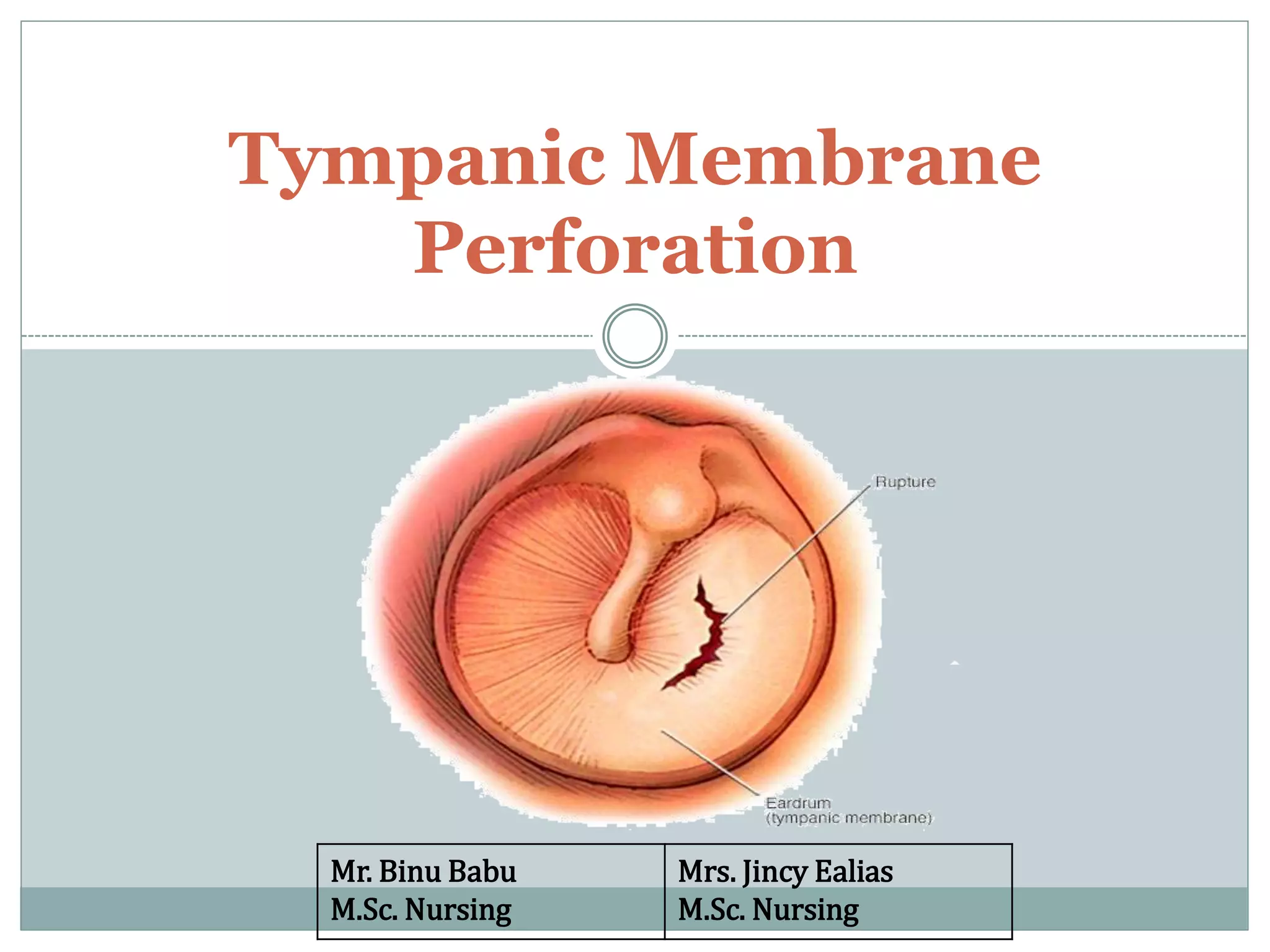
Tympanic Membrane
Perforation
Mr. Binu Babu
M.Sc. Nursing
Mrs. Jincy Ealias
M.Sc. Nursing
 Tympanic membrane perforation is the rupture of
the tympanic membrane.
Etiology
 Ear infection
 Trauma
 Careless while removing wax
 Skull fractures
 Barotrauma
 Severe blow to the ear
 Foreign bodies that have been pushed too far into
the external auditory canal.
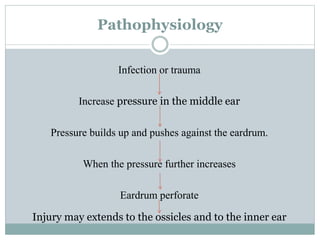
Pathophysiology
Infection or trauma
Increase pressure in the middle ear
Pressure builds up and pushes against the eardrum.
When the pressure further increases
Eardrum perforate
Injury may extends to the ossicles and to the inner ear
Clinical features
 Otalgia
 Bleeding
 Fullness
 Hearing loss: that may be partial or complete in the
affected ear
 Tinnitus
 Drainage
 Dizziness
Types
 Marginal Perforation
 Central perforation
 Attic perforation
 Marginal Perforation : perforation that occurs at
the margin of the eardrum - where the eardrum and
ear canal come together.
 Central perforation: perforation at the central
part of the eardrum.
 Attic perforation: perforation in the superior part
of the eardrum.
Diagnostic measures
 History collection
 Physical examination
 Otoscopy
 Audiometry
 Tympanometry
Management
Medical management
 Typically, no specific treatment is needed for a ruptured
eardrum. The vast majority of ruptured eardrums heal within
three months.
 A tympanic membrane perforation heals spontaneously within
weeks to months after rupture.
 Antibiotic to prevent infection.
 Analgesics to reduce pain
 Warmth may be applied also to relieve discomfort.
 Aseptic cleansing of external auditory canal with alcohol
 Prevent upper respiratory infection
 Prohibit nasal blow
 Prohibit ear drops
 While healing the ear must be protected from water
 If 3 months later, perforation still exists, surgical management is
indicated.
Surgical management
A surgery to patch a hole in the tympanic membrane is
indicated for non-healing perforations.
 Myringoplasty : Closure of perforation is called
Myringoplasty. For a small, dry, central perfusion caused
by trauma.
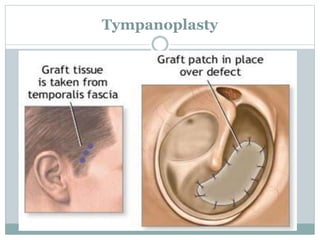
 Tympanoplasty : For a large, central perforation or
marginal perforation or perforation caused by an ear
infection. It is the surgical repair of the tympanic
membrane. In this, tissue commonly from the temporalis
fascia is placed across the perforation to allow healing.
Alloderm grafts (from synthetic materials) may be used if
patients have multiple previous surgeries
 Ossiculoplasty – ossicular reconstruction if ossicle is
involved.
Tympanoplasty
Classification of tympanoplasty
 Type I – involves repair of the tympanic membrane
alone (myringoplasty)
 Type II – involves repair of the TM and middle ear
in spite of slight defects in the ossicles
 Type III – involves removal of ossicles when a large
defect of malleus and incus. In this tympanic
membrane is repaired and directly connected into
the stapes
 Type IV – repair when the stapes foot plate is
movable but ligament is missing
 Type V – repair of fixed stapes footplate.
Complication of surgery
 Bleeding or infection
 Pain
 Facial nerve palsy – rarely but permanent
 Tinnitus
 Loss of taste last few weeks
 Dizziness for a short time
 Partial or total loss of hearing may rarely occur
Post op care
 Keep the ear dry.
 Cover ear while taking a bath or shower.
 Use cotton ball coated with Vaseline to protect the
ear.
 Do not lift anything heavy objects during the first
postoperative week.
 Sneeze with mouth open.
 Blow nose gently or avoid blowing nose.
 Avoid air travel during the first two weeks.

Tympanic membrane perforation

  • 1.
    Tympanic Membrane Perforation Mr. BinuBabu M.Sc. Nursing Mrs. Jincy Ealias M.Sc. Nursing
  • 2.
     Tympanic membraneperforation is the rupture of the tympanic membrane.
  • 3.
    Etiology  Ear infection Trauma  Careless while removing wax  Skull fractures  Barotrauma  Severe blow to the ear  Foreign bodies that have been pushed too far into the external auditory canal.
  • 4.
    Pathophysiology Infection or trauma Increasepressure in the middle ear Pressure builds up and pushes against the eardrum. When the pressure further increases Eardrum perforate Injury may extends to the ossicles and to the inner ear
  • 5.
    Clinical features  Otalgia Bleeding  Fullness  Hearing loss: that may be partial or complete in the affected ear  Tinnitus  Drainage  Dizziness
  • 6.
    Types  Marginal Perforation Central perforation  Attic perforation
  • 7.
     Marginal Perforation: perforation that occurs at the margin of the eardrum - where the eardrum and ear canal come together.  Central perforation: perforation at the central part of the eardrum.  Attic perforation: perforation in the superior part of the eardrum.
  • 8.
    Diagnostic measures  Historycollection  Physical examination  Otoscopy  Audiometry  Tympanometry
  • 9.
    Management Medical management  Typically,no specific treatment is needed for a ruptured eardrum. The vast majority of ruptured eardrums heal within three months.  A tympanic membrane perforation heals spontaneously within weeks to months after rupture.  Antibiotic to prevent infection.  Analgesics to reduce pain  Warmth may be applied also to relieve discomfort.  Aseptic cleansing of external auditory canal with alcohol  Prevent upper respiratory infection  Prohibit nasal blow  Prohibit ear drops  While healing the ear must be protected from water  If 3 months later, perforation still exists, surgical management is indicated.
  • 10.
    Surgical management A surgeryto patch a hole in the tympanic membrane is indicated for non-healing perforations.  Myringoplasty : Closure of perforation is called Myringoplasty. For a small, dry, central perfusion caused by trauma.  Tympanoplasty : For a large, central perforation or marginal perforation or perforation caused by an ear infection. It is the surgical repair of the tympanic membrane. In this, tissue commonly from the temporalis fascia is placed across the perforation to allow healing. Alloderm grafts (from synthetic materials) may be used if patients have multiple previous surgeries
  • 11.
     Ossiculoplasty –ossicular reconstruction if ossicle is involved.
  • 12.
  • 13.
    Classification of tympanoplasty Type I – involves repair of the tympanic membrane alone (myringoplasty)  Type II – involves repair of the TM and middle ear in spite of slight defects in the ossicles  Type III – involves removal of ossicles when a large defect of malleus and incus. In this tympanic membrane is repaired and directly connected into the stapes  Type IV – repair when the stapes foot plate is movable but ligament is missing  Type V – repair of fixed stapes footplate.
  • 14.
    Complication of surgery Bleeding or infection  Pain  Facial nerve palsy – rarely but permanent  Tinnitus  Loss of taste last few weeks  Dizziness for a short time  Partial or total loss of hearing may rarely occur
  • 15.
    Post op care Keep the ear dry.  Cover ear while taking a bath or shower.  Use cotton ball coated with Vaseline to protect the ear.  Do not lift anything heavy objects during the first postoperative week.  Sneeze with mouth open.  Blow nose gently or avoid blowing nose.  Avoid air travel during the first two weeks.