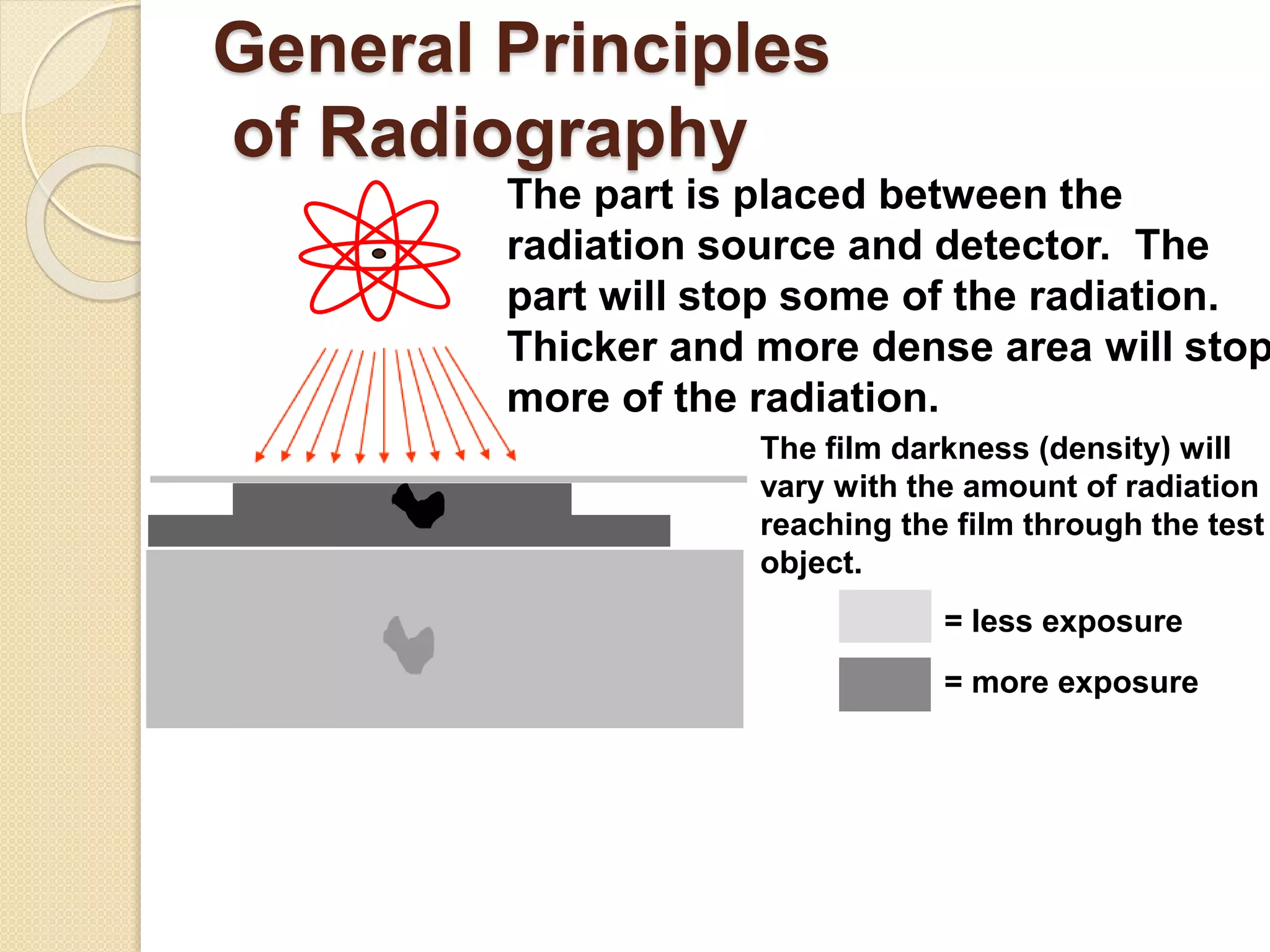
This document provides an overview of digital radiography. It discusses the history, general principles, detectors, advantages, and disadvantages of digital radiography. Digital radiography was first developed in 1980 and makes radiographic images digitally stored and viewable on computers. The document focuses on the two main types of detectors used: flat panel detectors and high-density line-scan solid state detectors. Flat panel detectors can be indirect, using a scintillator, or direct, converting x-rays directly into charge. Digital radiography provides benefits like instant viewing, less radiation dose, and ability to share images digitally, but has higher costs than traditional radiography.