FILTERS
MUHAMMED ASLAM BS
BSC MIT
FILTERS
 FILTERATION IS THE PROCESS OF SHAPING
THE X-RAY BEAM TO INCREASE THE
RATIO OF PHOTONS USEFUL FOR IMAGING
TO THOSE PHOTONS THAT INCREASE
PATIENT DOSE OR DECREASE IMAGE
CONTRAST
 DIAGNOSTIC XRAYS ARE POLYCHROMATIC
 LOW ENERGY PHOTONS ARE ABSORBED IN THE FIRST FEW
CENTIMETERS OF TISSUE
 ONLY HIGHER ENERGY PHOTONS PENETRATE
THROUGH THE PATIENT
 THE FIRST FEW CENTIMETERS OF THE TISSUE RECEIVES
MUCH MORE RADIATION THAN THE REST OF THE PATIENT
 THE TISSUE CAN BE PROTECTED BY ABSORBING THE LOW
ENERGY PHOTONS FROM THE BEAM BEFORE THEY REACH
THE PATIENT
 BY INTERPOSING A FILTER MATERIAL BETWEEN THE PATIENT
AND XRAY TUBE
 FILTERS ARE MADE OF METAL
FILTERATION OF X RAY BEAM
 OCCURS AT 3 LEVELS
 INHERENT FILTERATION
 ADDED FILTERATION
 THE PATIENT
INHERENT FILTERATION
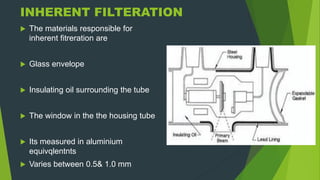
 The materials responsible for
inherent fitreration are
 Glass envelope
 Insulating oil surrounding the tube
 The window in the the housing tube
 Its measured in aluminium
equivqlentnts
 Varies between 0.5& 1.0 mm
ADDED FILTERATION
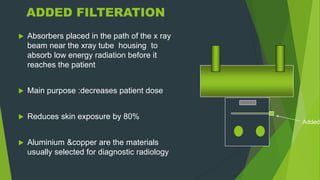
 Absorbers placed in the path of the x ray
beam near the xray tube housing to
absorb low energy radiation before it
reaches the patient
 Main purpose :decreases patient dose
 Reduces skin exposure by 80%
 Aluminium &copper are the materials
usually selected for diagnostic radiology
Added
Compound FILTERS
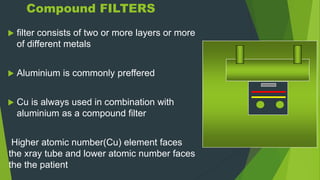
 filter consists of two or more layers or more
of different metals
 Aluminium is commonly preffered
 Cu is always used in combination with
aluminium as a compound filter
Higher atomic number(Cu) element faces
the xray tube and lower atomic number faces
the the patient
 Photoelectric attenuation in copper produces characteristic
radiation with an energy of 8 Kev which is energetic enough
to reach the patient and significantly increases skin dose
 The aluminium layer absorbs this characteristic radiation
 Its own characteristic is very lkittle 1.5 Kev which is absorbed
in the air gap between the filter & patient
FILTER THICKNESS
 2MM aluminium absorbs nearly all
photons of with energies less than 20
Kev
 Most of the advantages of filteration are
achieved by this thickness
Filter thickness
 NCRP recommendations
for filter thickness in
diagnostic radiology
Effect of Filteration
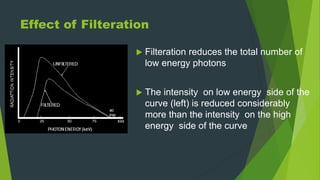
 Filteration reduces the total number of
low energy photons
 The intensity on low energy side of the
curve (left) is reduced considerably
more than the intensity on the high
energy side of the curve
Effects of filter on patients
exposure
 Trout & co-workers demonstrared
the degree of patient protection
afforded by filters
 The decrease in patients
exposure was remarkable upto
80% with 3mm of aluminium
filteration
Effects on exposure factors
 Reduction in the intensity of xray beam
 Compensated by increasing the exposure factors(mAs)
 Xray tube puts out more photons but the filter absorbs many
of them & the tpotal number reaching the patient actually
decreases
Wedge filters
Useful when part to be examined diminishes
greatly in thickness from one side of the field to the
other
Filter is shaped like a wedge
Thicker side of the wedge faces the thin part of
the patient
Used in lower limb angiography
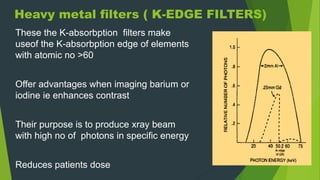
Heavy metal filters ( K-EDGE FILTERS)
These the K-absorbption filters make
useof the K-absorbption edge of elements
with atomic no >60
Offer advantages when imaging barium or
iodine ie enhances contrast
Their purpose is to produce xray beam
with high no of photons in specific energy
Reduces patients dose
Molybdenum filters
 Used in mammography
 Thickness of 0.030 is commonly used
 This filter will attenuate x rays just above 20 KeV
WHICH IS THE K-EDGE OF molybdenum
 It will transmit 57% of 17.5 k-alpha and 67% of the 19
kev k-beta characteristic radiation of molybdenum
SUMMARY
Filters are sheets of metal placed in the path of x ray beam
near the xray tube housing to absorb low energy radiation
Main function is to protect the patient from radiation
Aluminium is usually selected as the filter for diagnostic
radiology
Filters are simple & inexpensive
K-edge filters enhance contrast for iodine & barium,reduce
patient dose &increase tube loading
THANK YOU

Filters

  • 1.
  • 2.
    FILTERS  FILTERATION ISTHE PROCESS OF SHAPING THE X-RAY BEAM TO INCREASE THE RATIO OF PHOTONS USEFUL FOR IMAGING TO THOSE PHOTONS THAT INCREASE PATIENT DOSE OR DECREASE IMAGE CONTRAST
  • 3.
     DIAGNOSTIC XRAYSARE POLYCHROMATIC  LOW ENERGY PHOTONS ARE ABSORBED IN THE FIRST FEW CENTIMETERS OF TISSUE  ONLY HIGHER ENERGY PHOTONS PENETRATE THROUGH THE PATIENT  THE FIRST FEW CENTIMETERS OF THE TISSUE RECEIVES MUCH MORE RADIATION THAN THE REST OF THE PATIENT
  • 4.
     THE TISSUECAN BE PROTECTED BY ABSORBING THE LOW ENERGY PHOTONS FROM THE BEAM BEFORE THEY REACH THE PATIENT  BY INTERPOSING A FILTER MATERIAL BETWEEN THE PATIENT AND XRAY TUBE  FILTERS ARE MADE OF METAL
  • 5.
    FILTERATION OF XRAY BEAM  OCCURS AT 3 LEVELS  INHERENT FILTERATION  ADDED FILTERATION  THE PATIENT
  • 6.
    INHERENT FILTERATION  Thematerials responsible for inherent fitreration are  Glass envelope  Insulating oil surrounding the tube  The window in the the housing tube  Its measured in aluminium equivqlentnts  Varies between 0.5& 1.0 mm
  • 7.
    ADDED FILTERATION  Absorbersplaced in the path of the x ray beam near the xray tube housing to absorb low energy radiation before it reaches the patient  Main purpose :decreases patient dose  Reduces skin exposure by 80%  Aluminium &copper are the materials usually selected for diagnostic radiology Added
  • 8.
    Compound FILTERS  filterconsists of two or more layers or more of different metals  Aluminium is commonly preffered  Cu is always used in combination with aluminium as a compound filter Higher atomic number(Cu) element faces the xray tube and lower atomic number faces the the patient
  • 9.
     Photoelectric attenuationin copper produces characteristic radiation with an energy of 8 Kev which is energetic enough to reach the patient and significantly increases skin dose  The aluminium layer absorbs this characteristic radiation  Its own characteristic is very lkittle 1.5 Kev which is absorbed in the air gap between the filter & patient
  • 10.
    FILTER THICKNESS  2MMaluminium absorbs nearly all photons of with energies less than 20 Kev  Most of the advantages of filteration are achieved by this thickness
  • 11.
    Filter thickness  NCRPrecommendations for filter thickness in diagnostic radiology
  • 12.
    Effect of Filteration Filteration reduces the total number of low energy photons  The intensity on low energy side of the curve (left) is reduced considerably more than the intensity on the high energy side of the curve
  • 13.
    Effects of filteron patients exposure  Trout & co-workers demonstrared the degree of patient protection afforded by filters  The decrease in patients exposure was remarkable upto 80% with 3mm of aluminium filteration
  • 14.
    Effects on exposurefactors  Reduction in the intensity of xray beam  Compensated by increasing the exposure factors(mAs)  Xray tube puts out more photons but the filter absorbs many of them & the tpotal number reaching the patient actually decreases
  • 15.
    Wedge filters Useful whenpart to be examined diminishes greatly in thickness from one side of the field to the other Filter is shaped like a wedge Thicker side of the wedge faces the thin part of the patient Used in lower limb angiography
  • 16.
    Heavy metal filters( K-EDGE FILTERS) These the K-absorbption filters make useof the K-absorbption edge of elements with atomic no >60 Offer advantages when imaging barium or iodine ie enhances contrast Their purpose is to produce xray beam with high no of photons in specific energy Reduces patients dose
  • 17.
    Molybdenum filters  Usedin mammography  Thickness of 0.030 is commonly used  This filter will attenuate x rays just above 20 KeV WHICH IS THE K-EDGE OF molybdenum  It will transmit 57% of 17.5 k-alpha and 67% of the 19 kev k-beta characteristic radiation of molybdenum
  • 18.
    SUMMARY Filters are sheetsof metal placed in the path of x ray beam near the xray tube housing to absorb low energy radiation Main function is to protect the patient from radiation Aluminium is usually selected as the filter for diagnostic radiology Filters are simple & inexpensive K-edge filters enhance contrast for iodine & barium,reduce patient dose &increase tube loading
  • 19.