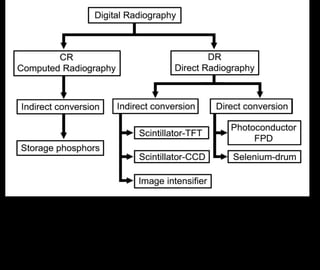
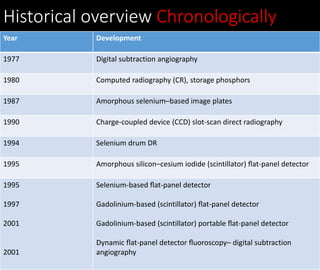
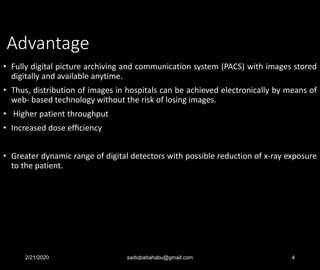
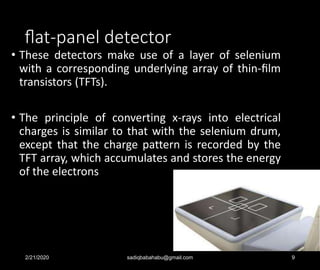
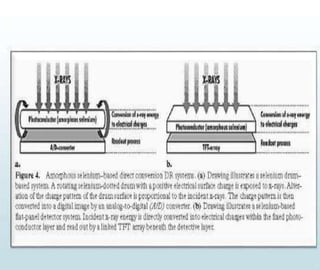
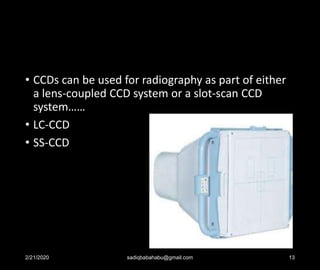
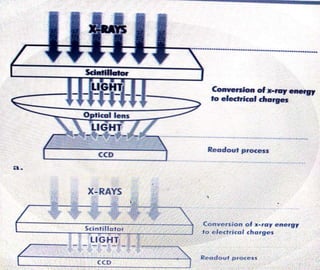
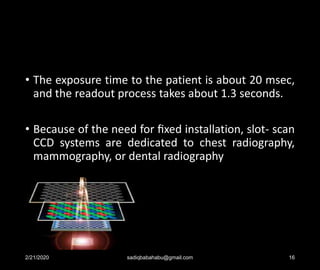
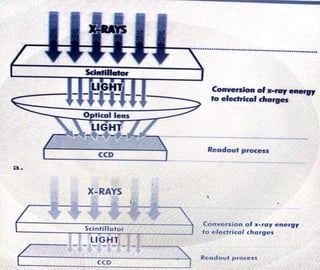
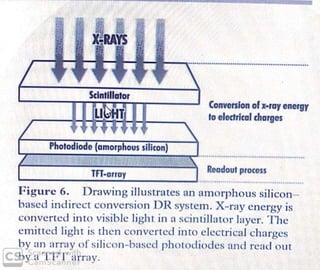
Digital radiography (DR) uses digital detectors and imaging plates to capture x-rays and produce digital images. There are two main types: direct and indirect conversion. Direct conversion detectors like selenium plates directly convert x-rays to electrical signals. Indirect detectors like CCDs and flat panel detectors use scintillators to first convert x-rays to light, which is then converted to electrical signals. DR provides advantages over film like fully digital storage and transmission of images. Early DR systems included selenium drum detectors in the 1970s-80s and CCD slot scanning in the 1990s, while flat panel detectors since the mid-1990s have provided the best image quality and productivity.