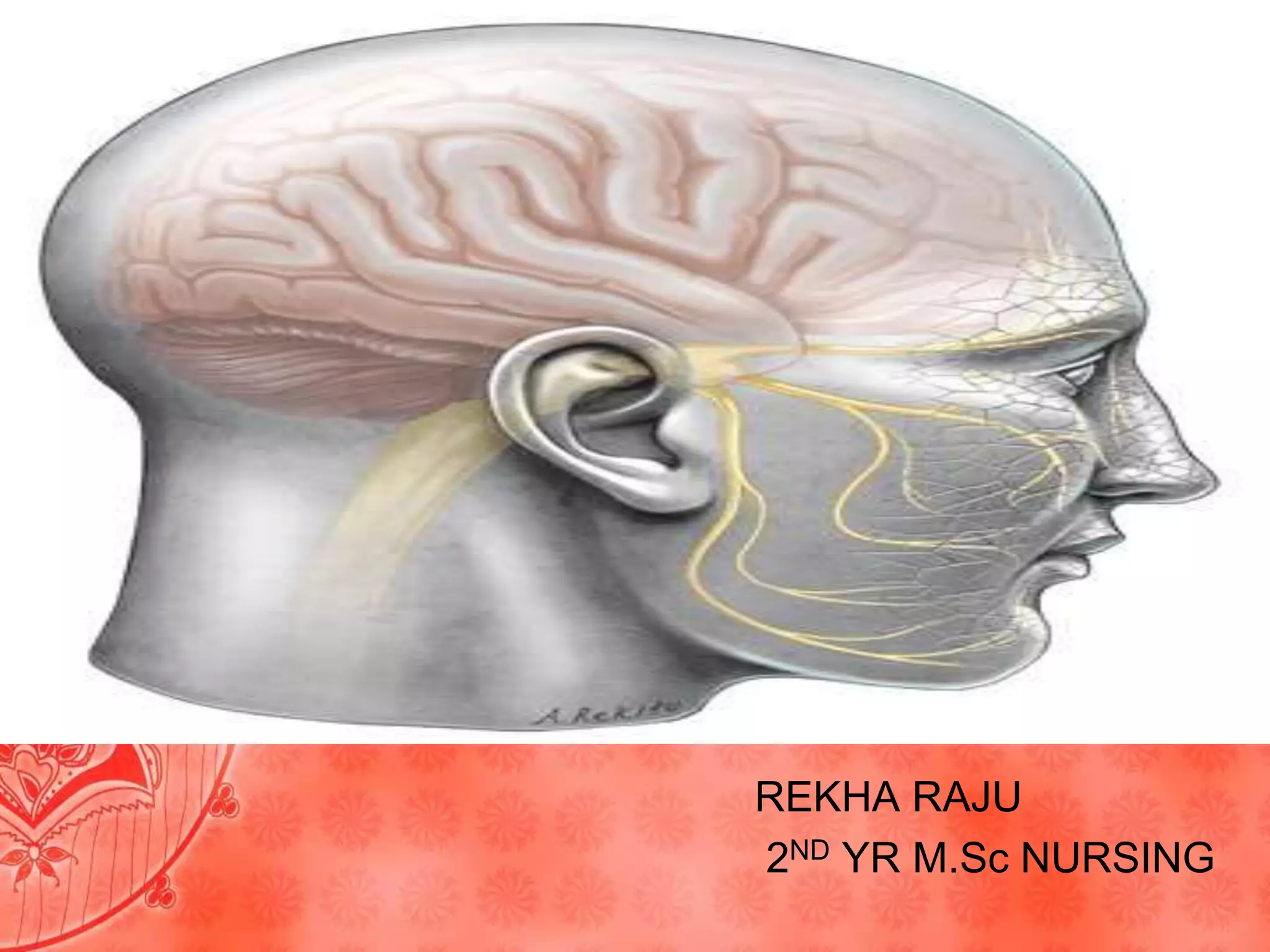
REKHA RAJU
2ND YR M.Sc NURSING
DEFINITION

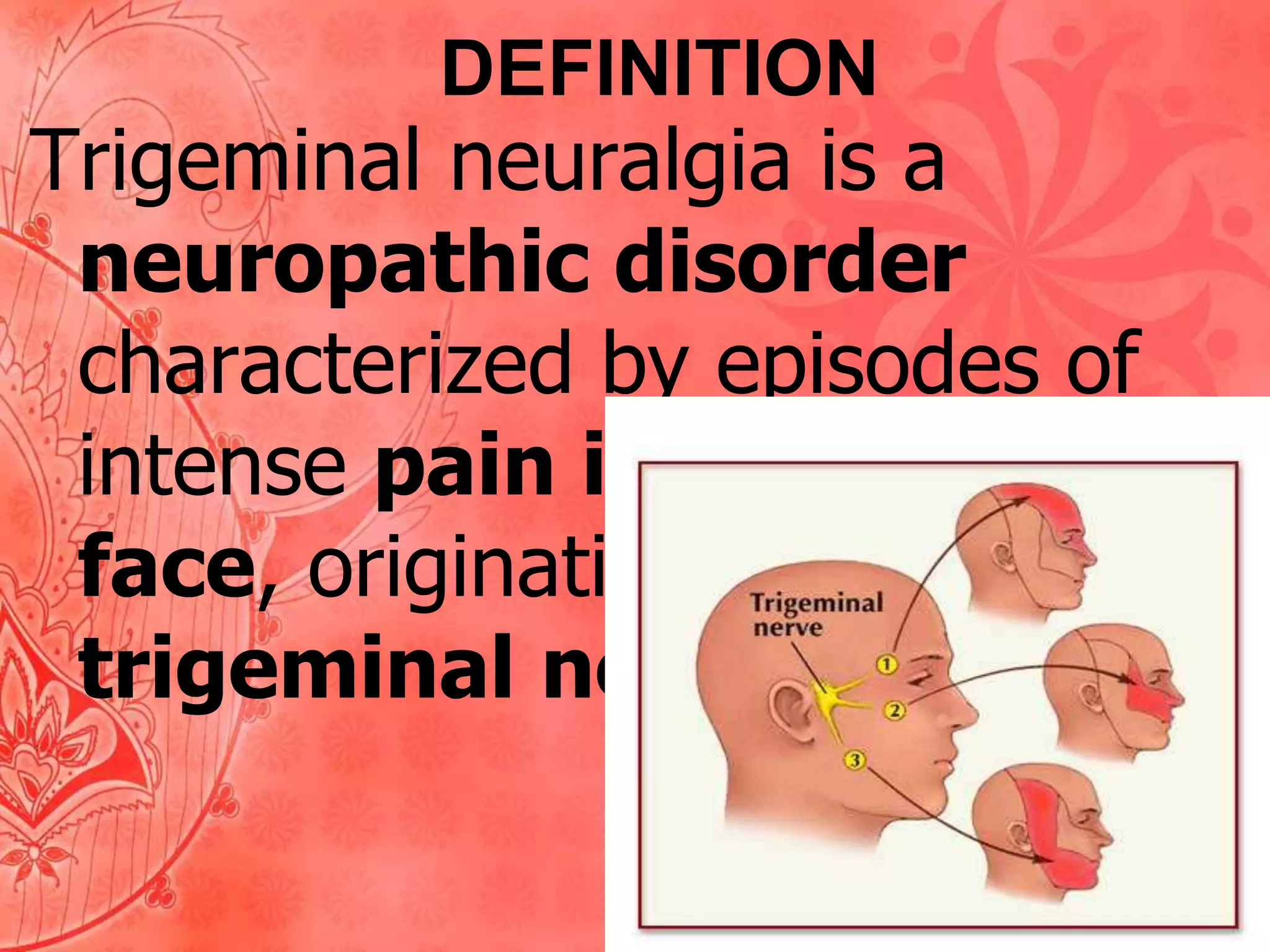
Trigeminal neuralgia is a
neuropathic disorder
characterized by episodes of
intense pain in the
face, originating from the
trigeminal nerve
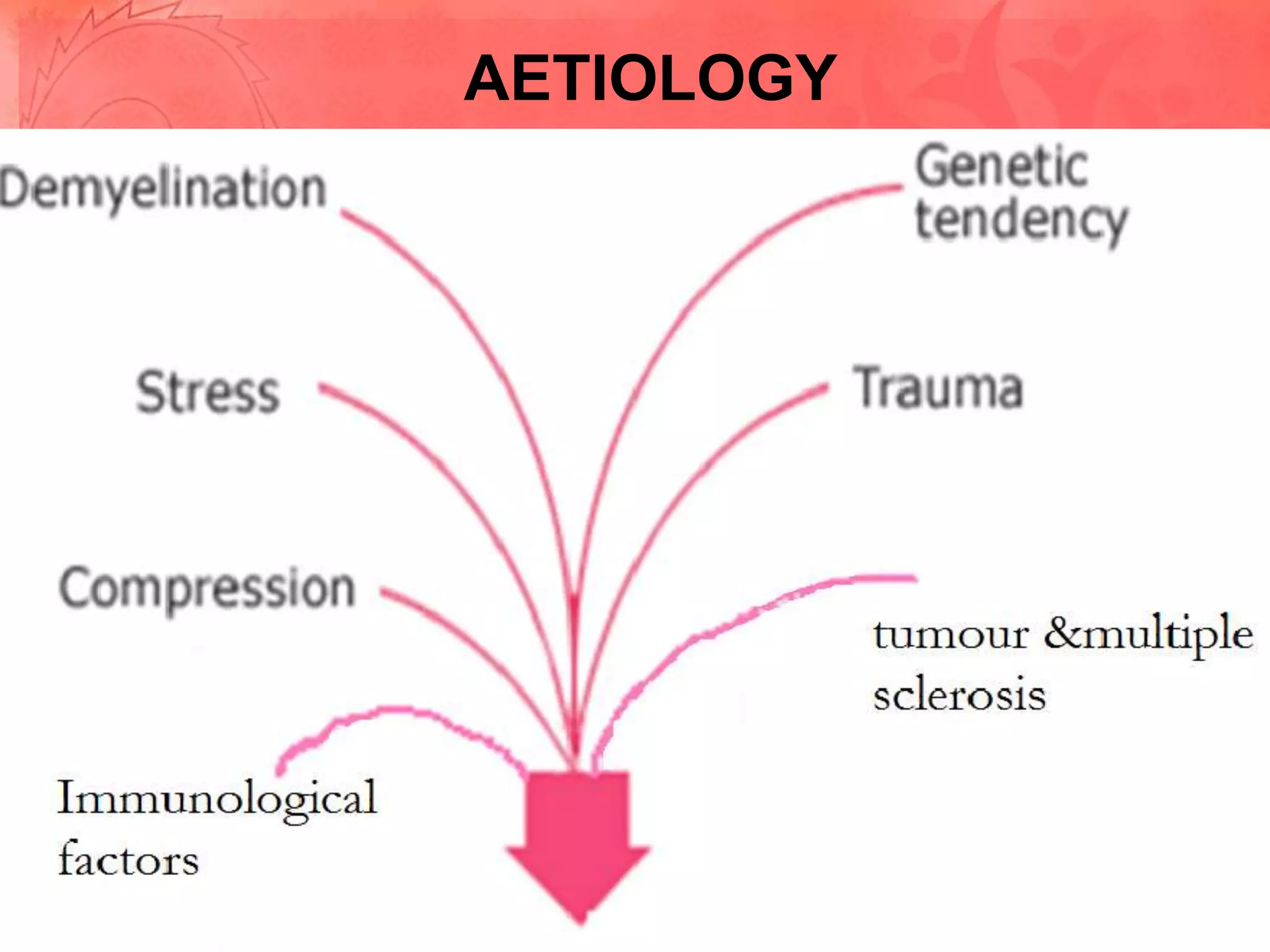
AETIOLOGY
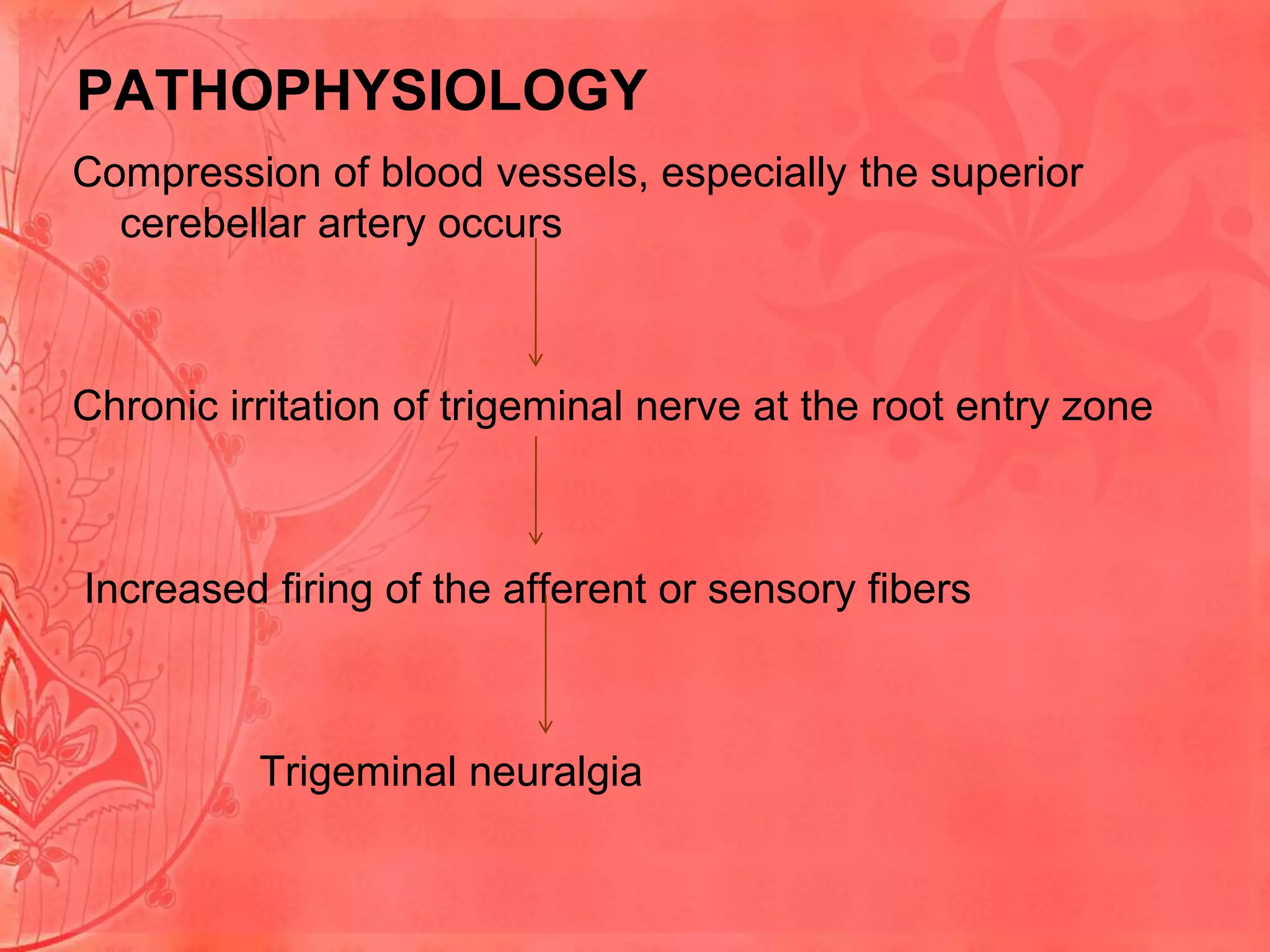
PATHOPHYSIOLOGY
Compression of blood vessels, especially the superior
cerebellar artery occurs

Chronic irritation of trigeminal nerve at the root entry zone

Increased firing of the afferent or sensory fibers

Trigeminal neuralgia
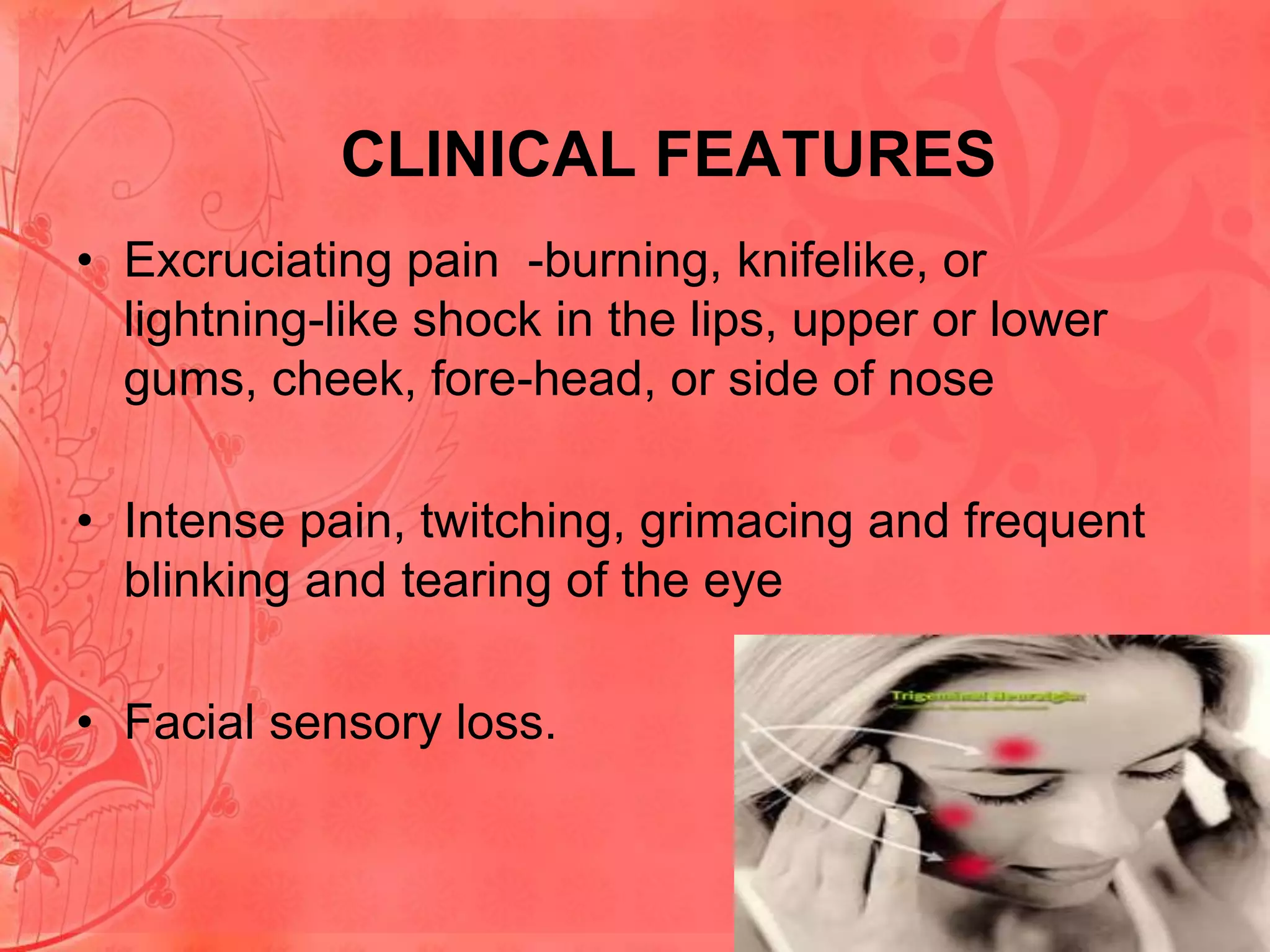
CLINICAL FEATURES
• Excruciating pain -burning, knifelike, or
lightning-like shock in the lips, upper or lower
gums, cheek, fore-head, or side of nose
• Intense pain, twitching, grimacing and frequent
blinking and tearing of the eye
• Facial sensory loss.
DIAGNOSTIC EVALUATION
•
•
•
•
•
•
•
•

History and physical examination
Computerised Tomography
Audio logic evaluation
MRI:-to rule out multiple sclerosis.
Electromyography(EMG)
Cerebrospinal fluid analysis
Arteriography
myelography
PHARMACOLOGICAL MANAGEMENT
• Carbamazepine (tegretal, Apocarbamazepine, mazepine)
• Phenytoin (dilantin)
• Bacofen(lioresal)
• Amitriptyline(elavil,meravil)
• Diazepam(valium,E-pam)
• Alcohol or phenol may be injected into the affected
branch of the trigeminal nerve.
• Injection into the gasserian ganglion
SURGICAL MANAGEMENT
• Janetta procedure
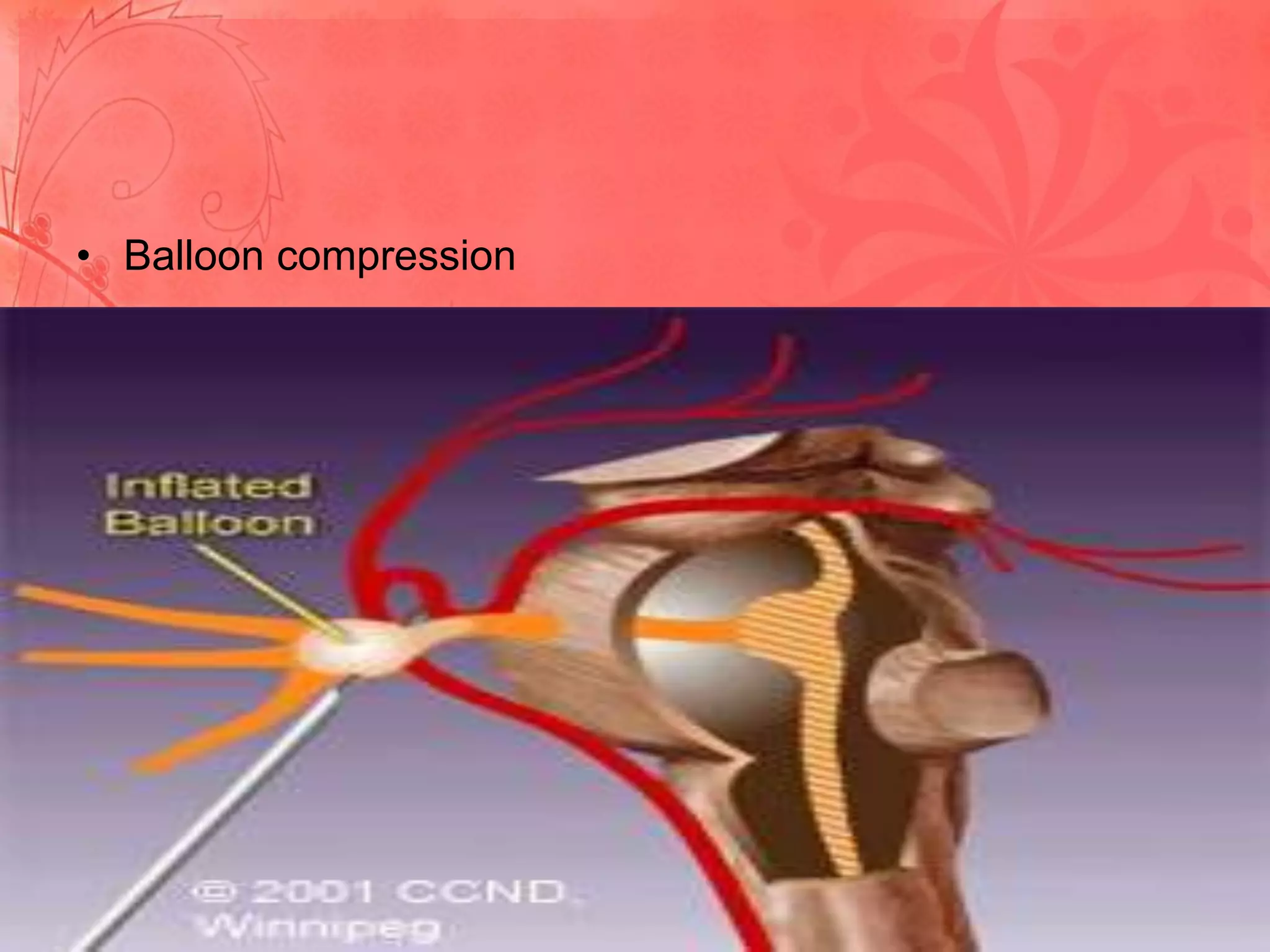
• Balloon compression
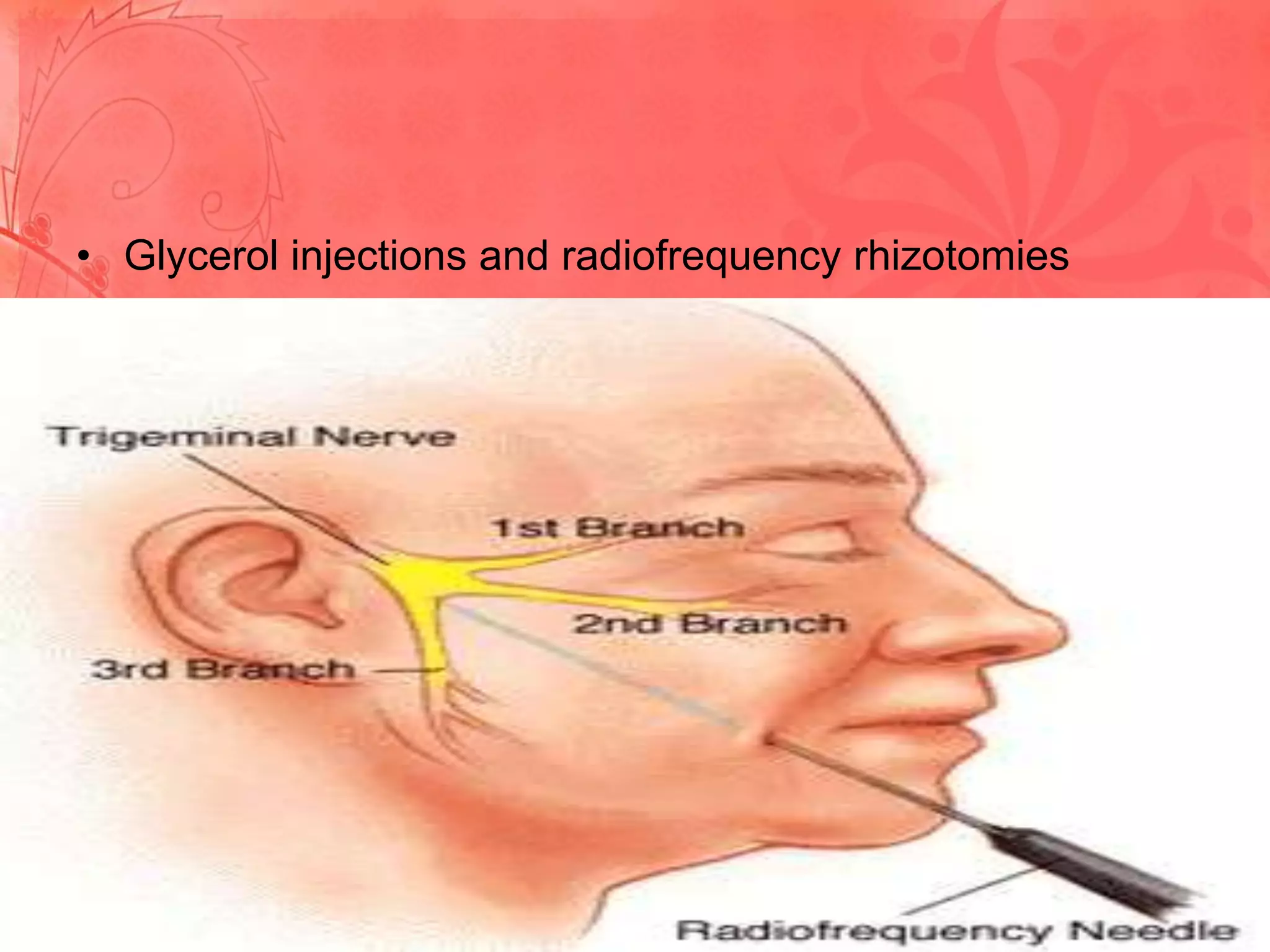
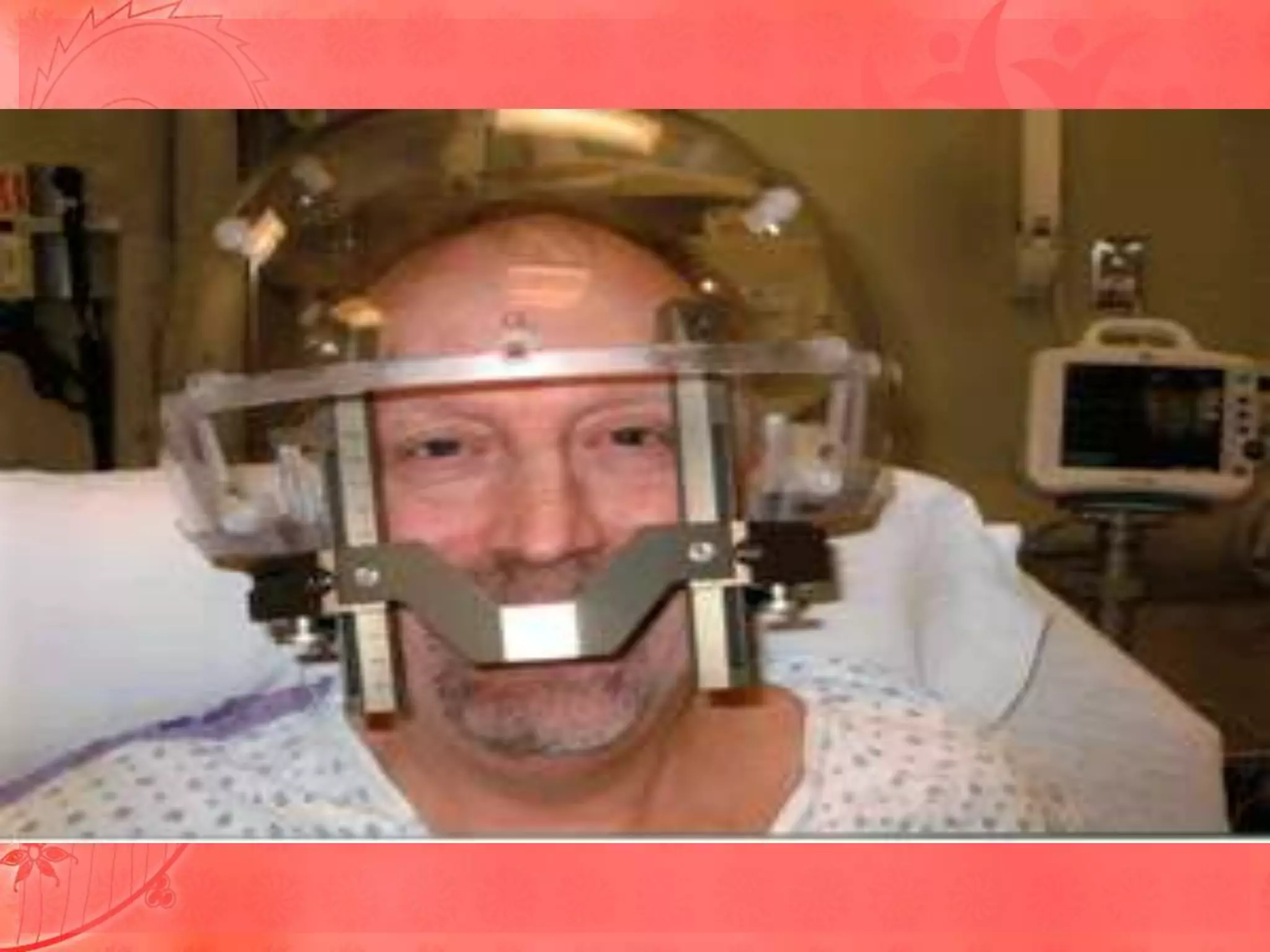
• Glycerol injections and radiofrequency rhizotomies
NURSING MANAGEMENT

• Instruct the patient avoid exposing affected cheek to
sudden cold.
• Avoid foods that are too cold or too hot.
• Chews food in affected side.
• Administer Tegretal which relieves and prevent pain.
• Serum blood levels of drug are monitored in long term
use.
• Instruct the patient in methods to prevent
environmental stimulation of pain.
• Provide emotional support
• Provide adequate nutrition in small frequent
meals at room temperature.
• Use cotton pads gently , wash face and for oral
hygiene.
• Inspection of the eyes for foreign bodies, which
the client not able to feel,should be done several
times aday.
• Warm normal saline irrigation of the affected eye
2 or 3 times a day is helpful in preventing
corneal infection.
• Dental check up every 6 month is
encouraged, since the dental caries not produce
pain
• Explain to the client and his family the disease
and its treatment.
NURSING DIAGNOSIS
1. Chronic pain related to disease process
2. Imbalanced nutrition less than body
requirements related to pain associated with
chewing.
3. Fear related to anticipated painful episodes
4. Deficient knowledge of trigeminal neuralgia
COMPLICATIONS
• Toxic side effects of the drugs
• Bone marrow and blood disorders
• numbness of the face or eye and may lead to
complications such as corneal abrasion
• surgical micro vascular decompression may
cause haemorrhage, infection, and brainstem
damage
• There may be residual facial numbness, jaw
weakness, or corneal numbness following
radiofrequency trigeminal gangliolysis.
• Hearing disturbances
Recurrent Trigeminal Neuralgia Attributable
to Veins after Microvascular Decompression
• OBJECTIVE: To demonstrate the cause of and optimal
treatment for recurrent trigeminal neuralgia (TN) in cases
where veins were observed to be the offending vessels
during the initial microvascular decompression (MVD)
procedure.
• METHODS: An electronic search of patient records from
1988 to 1998 revealed that 393 patients were treated
with MVD for TN caused by veins. The pain recurred in
122 patients (31.0%). Thirty-two (26.2%) of these
patients underwent reoperations. Clinical
presentations, recurrence intervals, surgical
findings, and clinical outcomes were analyzed.
• RESULTS: Analysis of 32 consecutive cases of recurrent TN
initially attributable to veins revealed a female predominance
(female/male = 26:5), with one female patient exhibiting
bilateral TN caused by venous compression. Patient ages
ranged from 15 to 80 years, with a prevalence in the seventh
decade. The V2 distribution of the face was involved more
frequently than other divisions. For 24 patients
(75%), recurrence occurred within 1 year after the initial
operation. At the time of the second MVD
procedure, development of new veins around the nerve root
was observed in 28 cases (87.5%). After successful
subsequent MVD procedures, the pain was improved in 81.3%
of the cases.
• CONCLUSION: The recurrence rate for TN attributable
to veins is high. If pain reoccurs, it is likely to reoccur
within 1 year after the initial operation. The most
common cause of recurrence is the development and
regrowth of new veins. Even fine new veins may cause
pain recurrence; these veins may be located beneath the
felt near the root entry zone or distally, near Meckel's
cave. Because of the variable locations of vein
recurrence, every effort must be made to identify
recollateralized veins. Given the high rate of pain relief
after a second operation, MVD remains the optimal
treatment for the recurrence of TN attributable to vein
regrowth.
Trigeminal neuralgia

Trigeminal neuralgia

  • 2.
    REKHA RAJU 2ND YRM.Sc NURSING
  • 3.
    DEFINITION Trigeminal neuralgia isa neuropathic disorder characterized by episodes of intense pain in the face, originating from the trigeminal nerve
  • 4.
  • 5.
    PATHOPHYSIOLOGY Compression of bloodvessels, especially the superior cerebellar artery occurs Chronic irritation of trigeminal nerve at the root entry zone Increased firing of the afferent or sensory fibers Trigeminal neuralgia
  • 6.
    CLINICAL FEATURES • Excruciatingpain -burning, knifelike, or lightning-like shock in the lips, upper or lower gums, cheek, fore-head, or side of nose • Intense pain, twitching, grimacing and frequent blinking and tearing of the eye • Facial sensory loss.
  • 7.
    DIAGNOSTIC EVALUATION • • • • • • • • History andphysical examination Computerised Tomography Audio logic evaluation MRI:-to rule out multiple sclerosis. Electromyography(EMG) Cerebrospinal fluid analysis Arteriography myelography
  • 8.
    PHARMACOLOGICAL MANAGEMENT • Carbamazepine(tegretal, Apocarbamazepine, mazepine) • Phenytoin (dilantin) • Bacofen(lioresal) • Amitriptyline(elavil,meravil) • Diazepam(valium,E-pam)
  • 9.
    • Alcohol orphenol may be injected into the affected branch of the trigeminal nerve. • Injection into the gasserian ganglion
  • 10.
  • 11.
  • 12.
    • Glycerol injectionsand radiofrequency rhizotomies
  • 15.
    NURSING MANAGEMENT • Instructthe patient avoid exposing affected cheek to sudden cold. • Avoid foods that are too cold or too hot. • Chews food in affected side. • Administer Tegretal which relieves and prevent pain. • Serum blood levels of drug are monitored in long term use.
  • 16.
    • Instruct thepatient in methods to prevent environmental stimulation of pain. • Provide emotional support • Provide adequate nutrition in small frequent meals at room temperature. • Use cotton pads gently , wash face and for oral hygiene. • Inspection of the eyes for foreign bodies, which the client not able to feel,should be done several times aday.
  • 17.
    • Warm normalsaline irrigation of the affected eye 2 or 3 times a day is helpful in preventing corneal infection. • Dental check up every 6 month is encouraged, since the dental caries not produce pain • Explain to the client and his family the disease and its treatment.
  • 18.
    NURSING DIAGNOSIS 1. Chronicpain related to disease process 2. Imbalanced nutrition less than body requirements related to pain associated with chewing. 3. Fear related to anticipated painful episodes 4. Deficient knowledge of trigeminal neuralgia
  • 19.
    COMPLICATIONS • Toxic sideeffects of the drugs • Bone marrow and blood disorders • numbness of the face or eye and may lead to complications such as corneal abrasion • surgical micro vascular decompression may cause haemorrhage, infection, and brainstem damage
  • 20.
    • There maybe residual facial numbness, jaw weakness, or corneal numbness following radiofrequency trigeminal gangliolysis. • Hearing disturbances
  • 21.
    Recurrent Trigeminal NeuralgiaAttributable to Veins after Microvascular Decompression • OBJECTIVE: To demonstrate the cause of and optimal treatment for recurrent trigeminal neuralgia (TN) in cases where veins were observed to be the offending vessels during the initial microvascular decompression (MVD) procedure. • METHODS: An electronic search of patient records from 1988 to 1998 revealed that 393 patients were treated with MVD for TN caused by veins. The pain recurred in 122 patients (31.0%). Thirty-two (26.2%) of these patients underwent reoperations. Clinical presentations, recurrence intervals, surgical findings, and clinical outcomes were analyzed.
  • 22.
    • RESULTS: Analysisof 32 consecutive cases of recurrent TN initially attributable to veins revealed a female predominance (female/male = 26:5), with one female patient exhibiting bilateral TN caused by venous compression. Patient ages ranged from 15 to 80 years, with a prevalence in the seventh decade. The V2 distribution of the face was involved more frequently than other divisions. For 24 patients (75%), recurrence occurred within 1 year after the initial operation. At the time of the second MVD procedure, development of new veins around the nerve root was observed in 28 cases (87.5%). After successful subsequent MVD procedures, the pain was improved in 81.3% of the cases.
  • 23.
    • CONCLUSION: Therecurrence rate for TN attributable to veins is high. If pain reoccurs, it is likely to reoccur within 1 year after the initial operation. The most common cause of recurrence is the development and regrowth of new veins. Even fine new veins may cause pain recurrence; these veins may be located beneath the felt near the root entry zone or distally, near Meckel's cave. Because of the variable locations of vein recurrence, every effort must be made to identify recollateralized veins. Given the high rate of pain relief after a second operation, MVD remains the optimal treatment for the recurrence of TN attributable to vein regrowth.