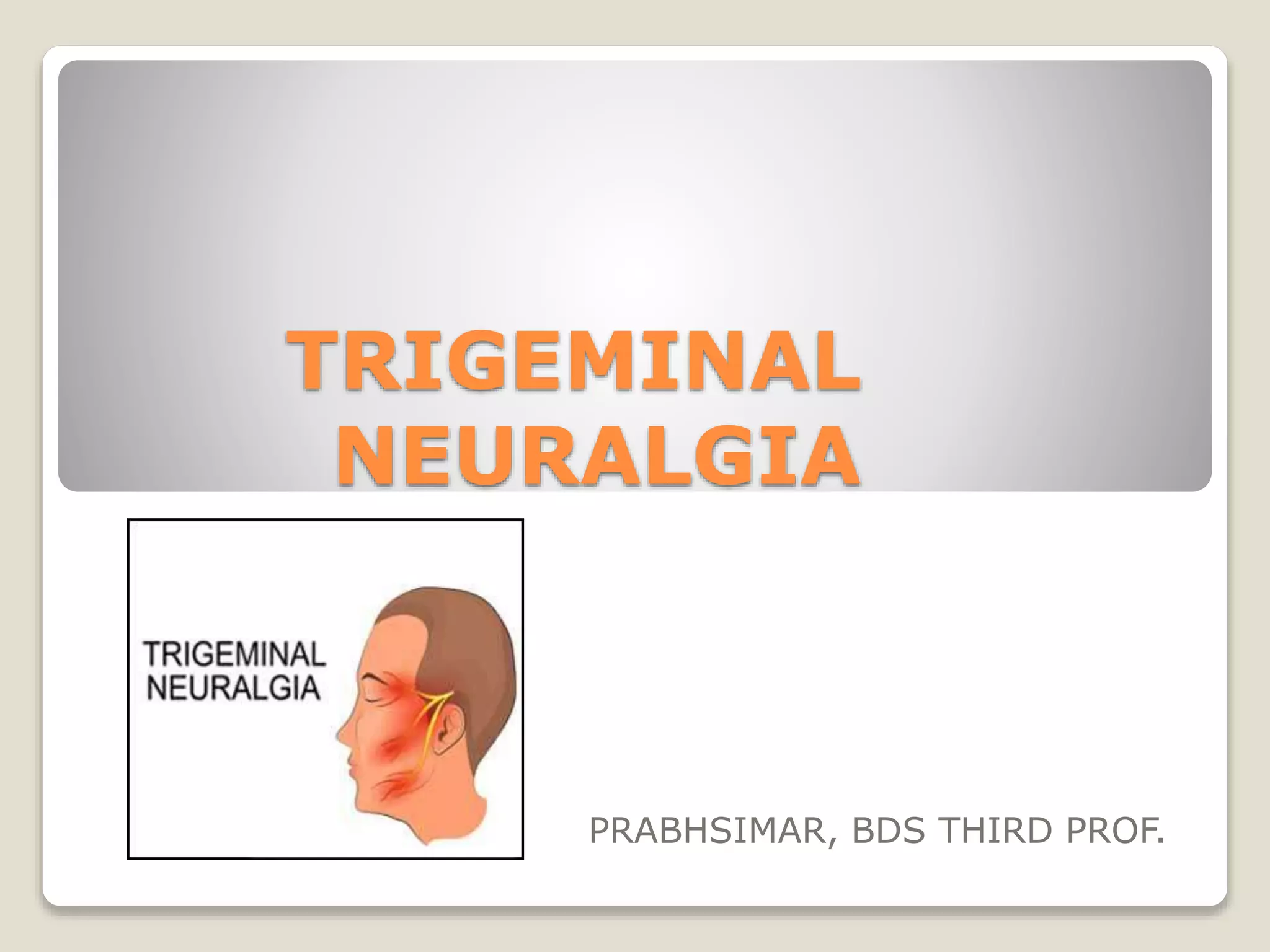
TRIGEMINAL
NEURALGIA
PRABHSIMAR, BDS THIRD PROF.
INTRODUCTION
 Trigeminal neuralgia is a neuropathic
disorder of trigeminal nerve that causes
episodes of intense pain in eyes,
lips,scalp,forehead and jaws.
 It has been called as a suicide disease
due to insignificant number of people
taking their own life because they are
unable to have their pain controlled by
medications or surgery.
DEFINITIONS HIS( international
headache society)
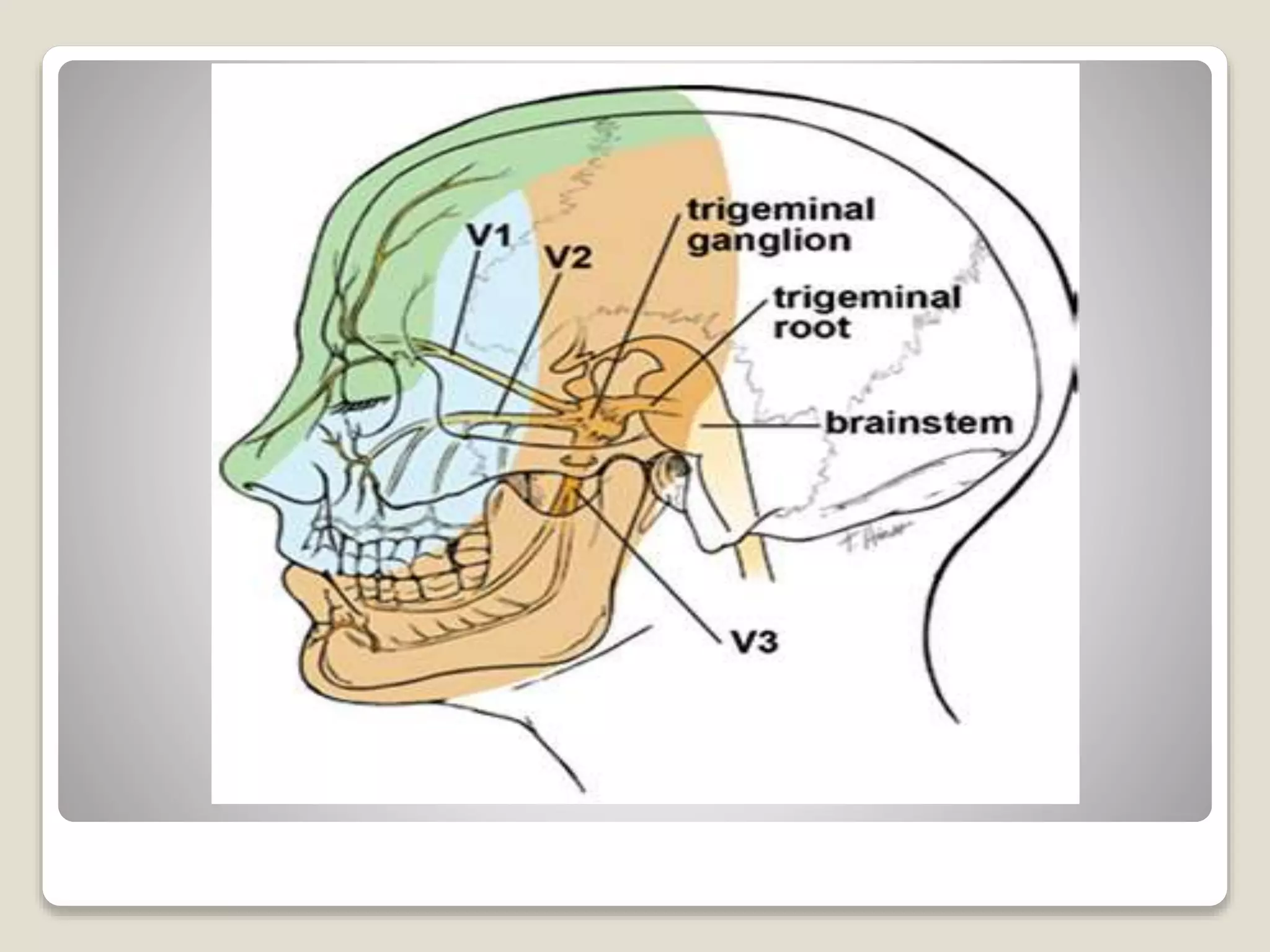
 Painful,unilateral affection of the face,
characterized by brief electric shock like
pain limited to distribution of one or more
divisions of trigeminal nerve. Pain is
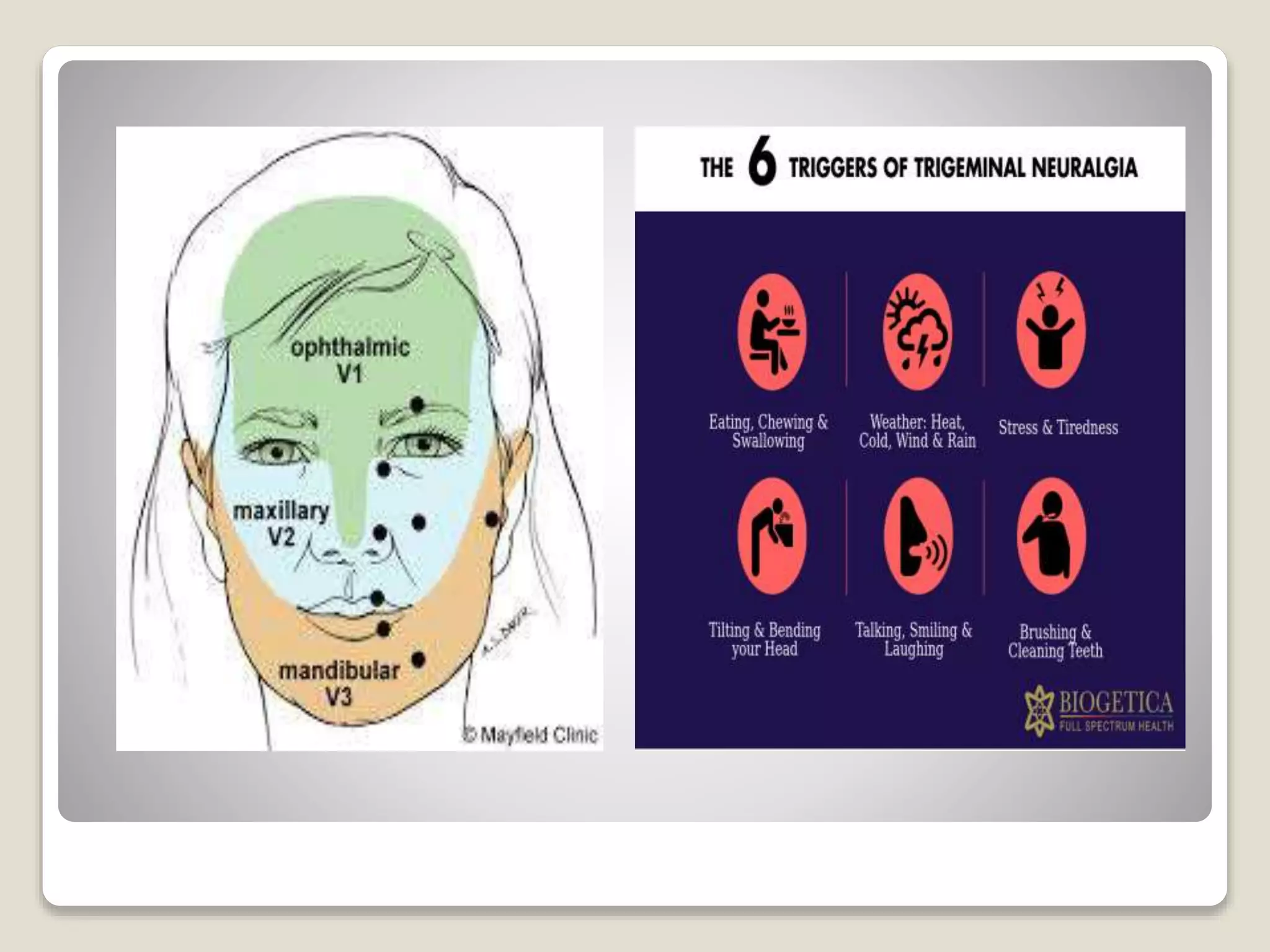
commonly evoked by trivial stimulus like
washing, shaving, talking, smoking and
brushing teeth.the pain is abrupt in onset,
terminations may remit for varying
periods.
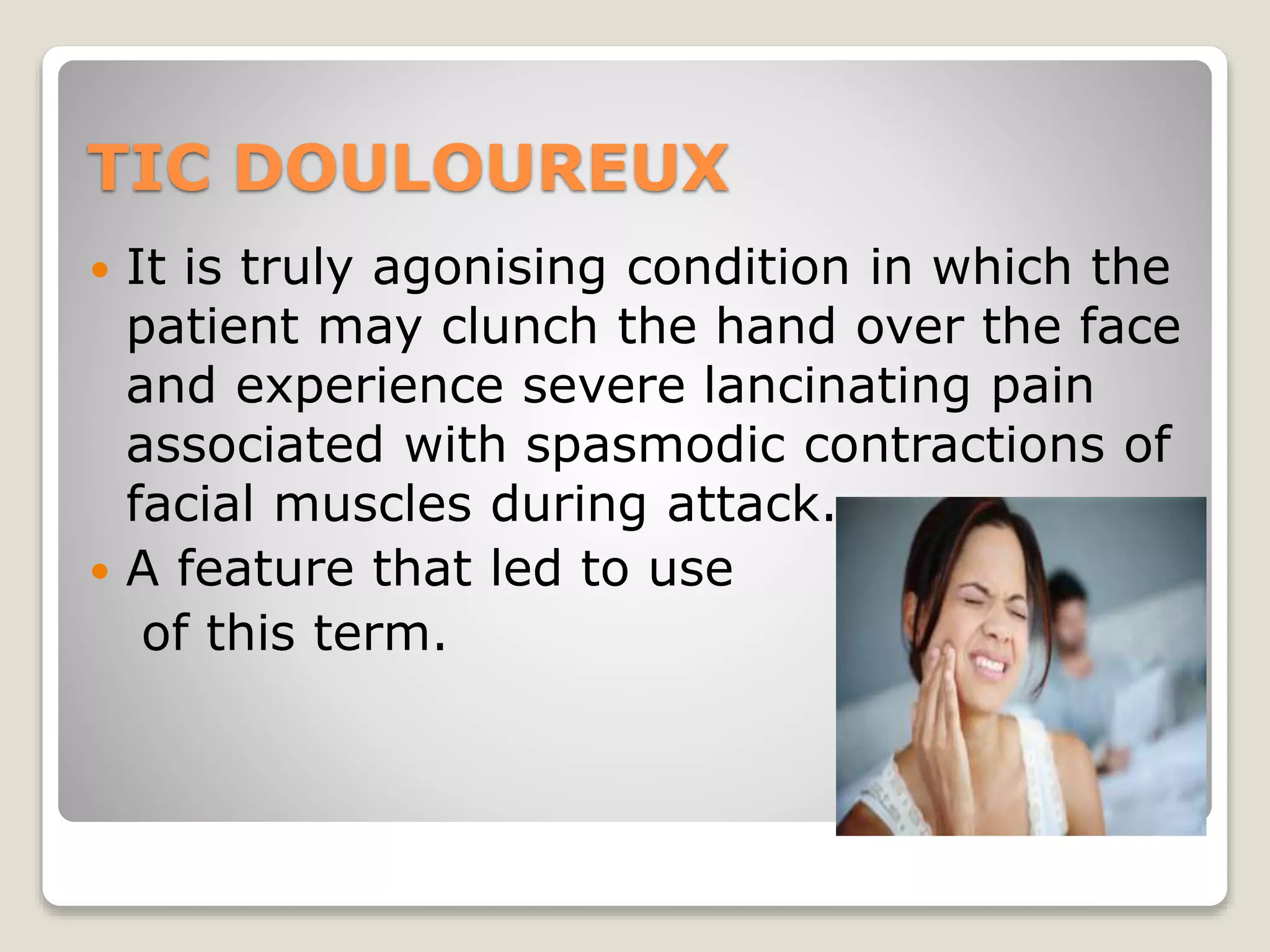
TIC DOULOUREUX
 It is truly agonising condition in which the
patient may clunch the hand over the face
and experience severe lancinating pain
associated with spasmodic contractions of
facial muscles during attack.
 A feature that led to use
of this term.
TYPES OF TRIGEMINAL NEURALGIA
 TYPICAL TRIGEMINAL NEURALGIA
 ATYPICAL TRIGEMINAL NEURALGIA
 PRE-TRIGEMINAL NEURALGIA
 MULTIPLE SCLEROSIS RELATED
 SECONDARY OR TUMOR RELATED
 POST TRAUMATIC TRIGEMINAL
NEURALGIA
 FAILED TRIGEMINAL NEURALGIA
TYPICAL TRIGEMINAL NEURALGIA
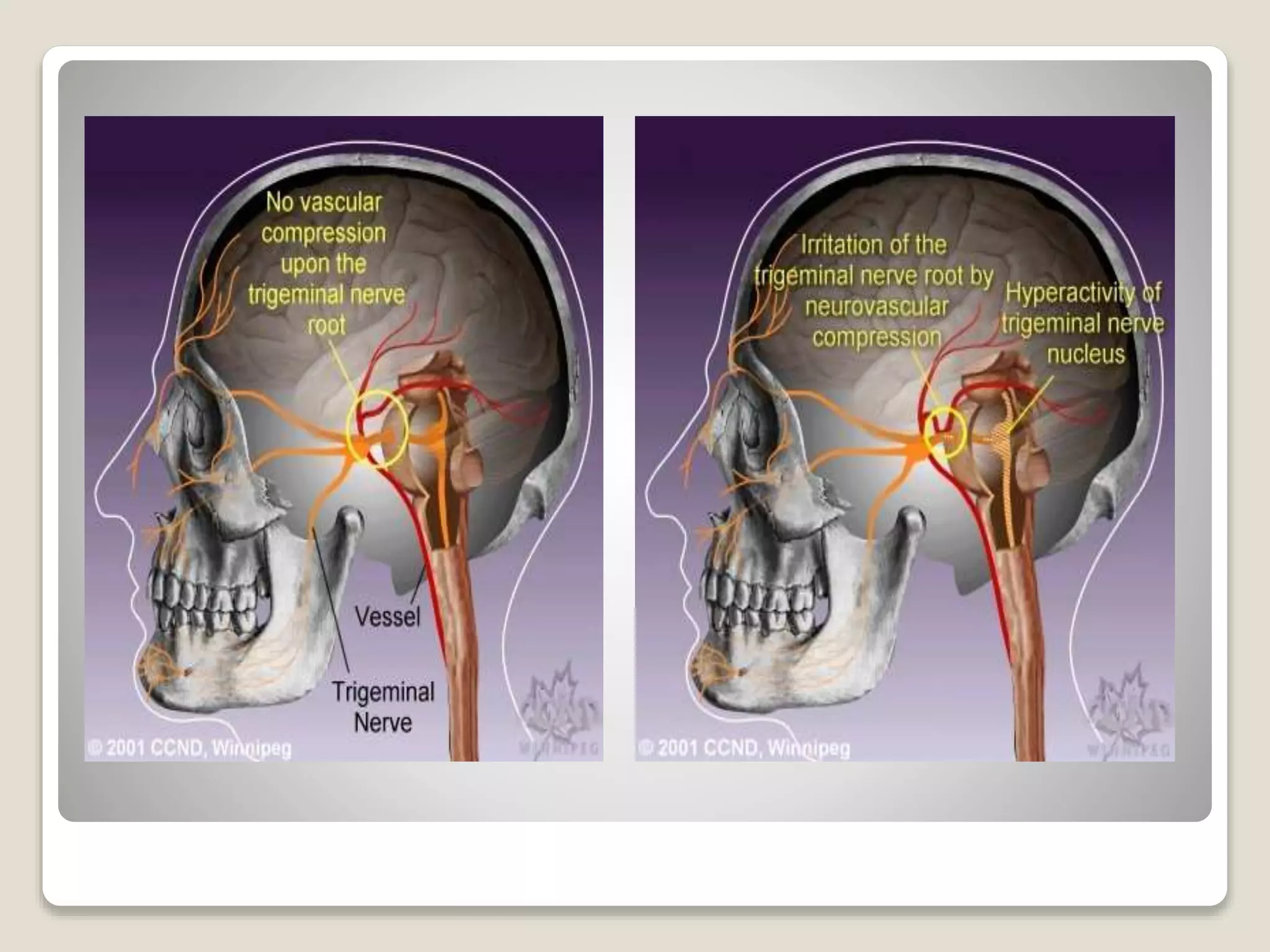
 Most common form, previously termed classical,
idiopathic,essential TN. It is caused by a blood vessel
compressing the nerve root.
 Pulsations of vessels normally do not effect the nerve root
but with repeated pulsations may lead to changes of nerve
function, delivery of abnormal signals,this causes
hyperactivity of of nerve root leading to pain.
 The superior cerebellar artery is the vessel most often
responsible for neurovascular compression upon the
trigeminal nerve root, although other arteries or veins may
be the culprit vessels.
ATYPICAL TRIGEMINAL NEURALGIA
 It is characterised by unilateral, prominent constant and
severe aching and burning pain superimposed upon
otherwise typical symptom
 Some believe atypical TN due to compression of specific
part of ganglion while others believe it to be a more severe
form of typical TN
 Atypical TN pain can be at least partially relieved
with medications used for typical TN, such
as carbamazepine.
PRE TRIGEMINAL NEURALGIA
 Days to years before the first attack of TN pain,
some sufferers experience odd sensations of pain
such as toothache or discomfort (paresthesia).
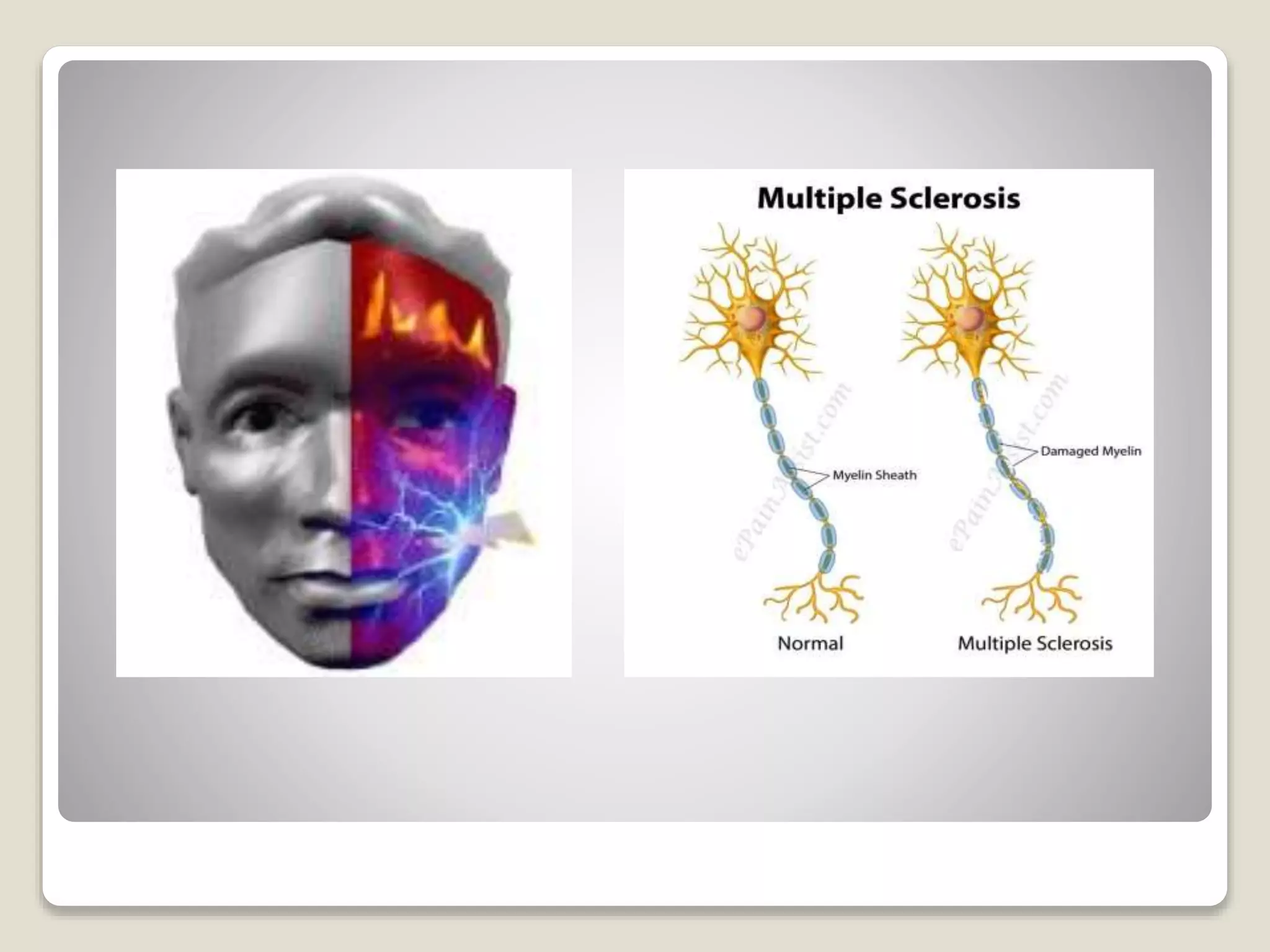
Symptoms are similar to typical, bilateral TN is
commonly seen in people with MS. Multiple
sclerosis is due to formation of demyelinating
plaques with brain
SECONDARY OR TUMOR RELATED
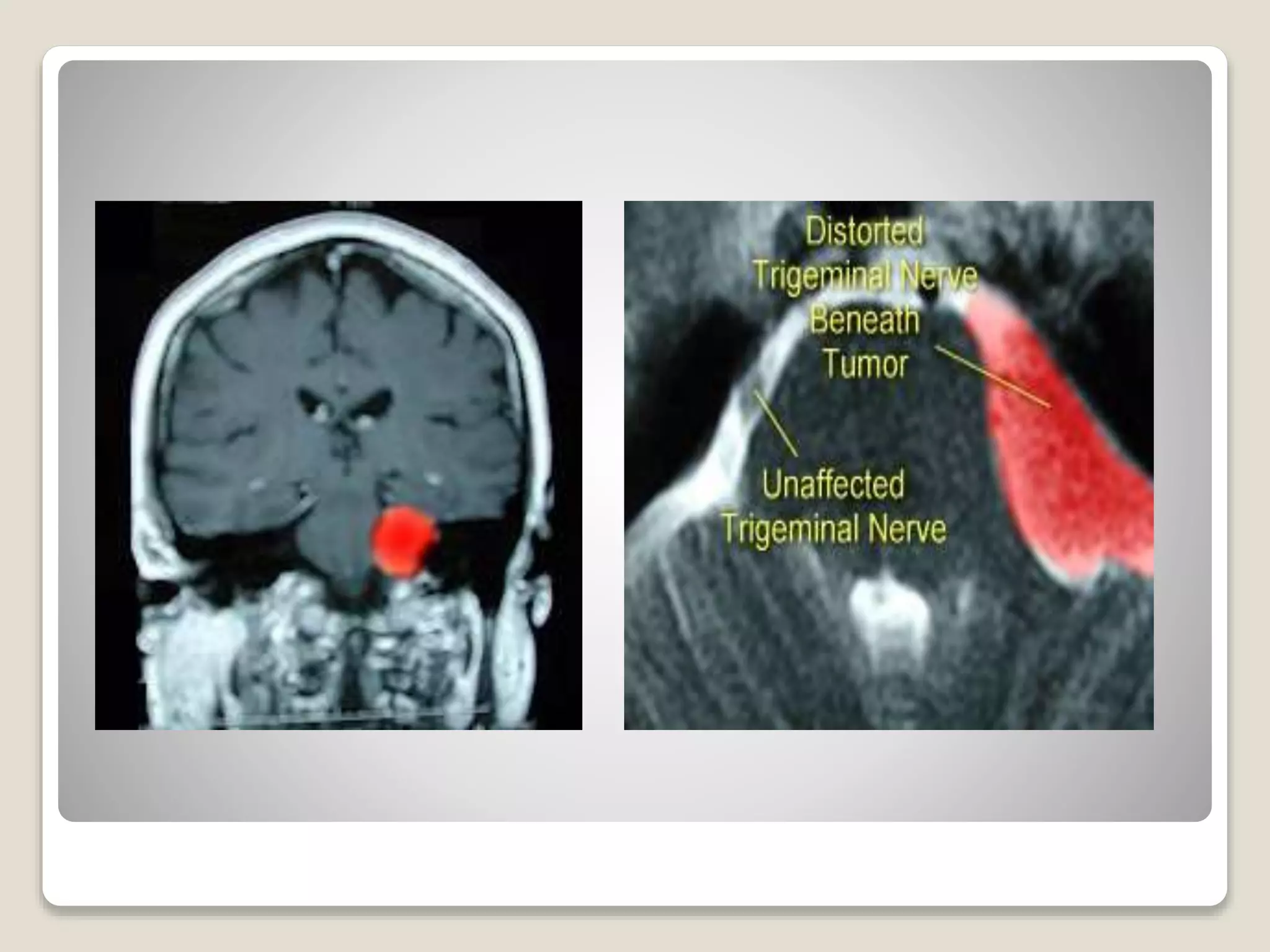
 TN caused by a lesion such as a tumor, tumor
can compress or distort the trigeminal nerve and
cause numbness, weakness of chewing muscles
or constant aching pain.
FAILED TRIGEMINAL NEURALGIA
In case of failed surgical procedures and
medications, these sufferers can suffer from
additional trigeminal neuropathy as a result of
destructive intervention they went.
CLINICAL FEATURES
 Manifests as a sudden, unilateral, intermittent
paroxysmal sharp, shooting, lancinating shock like
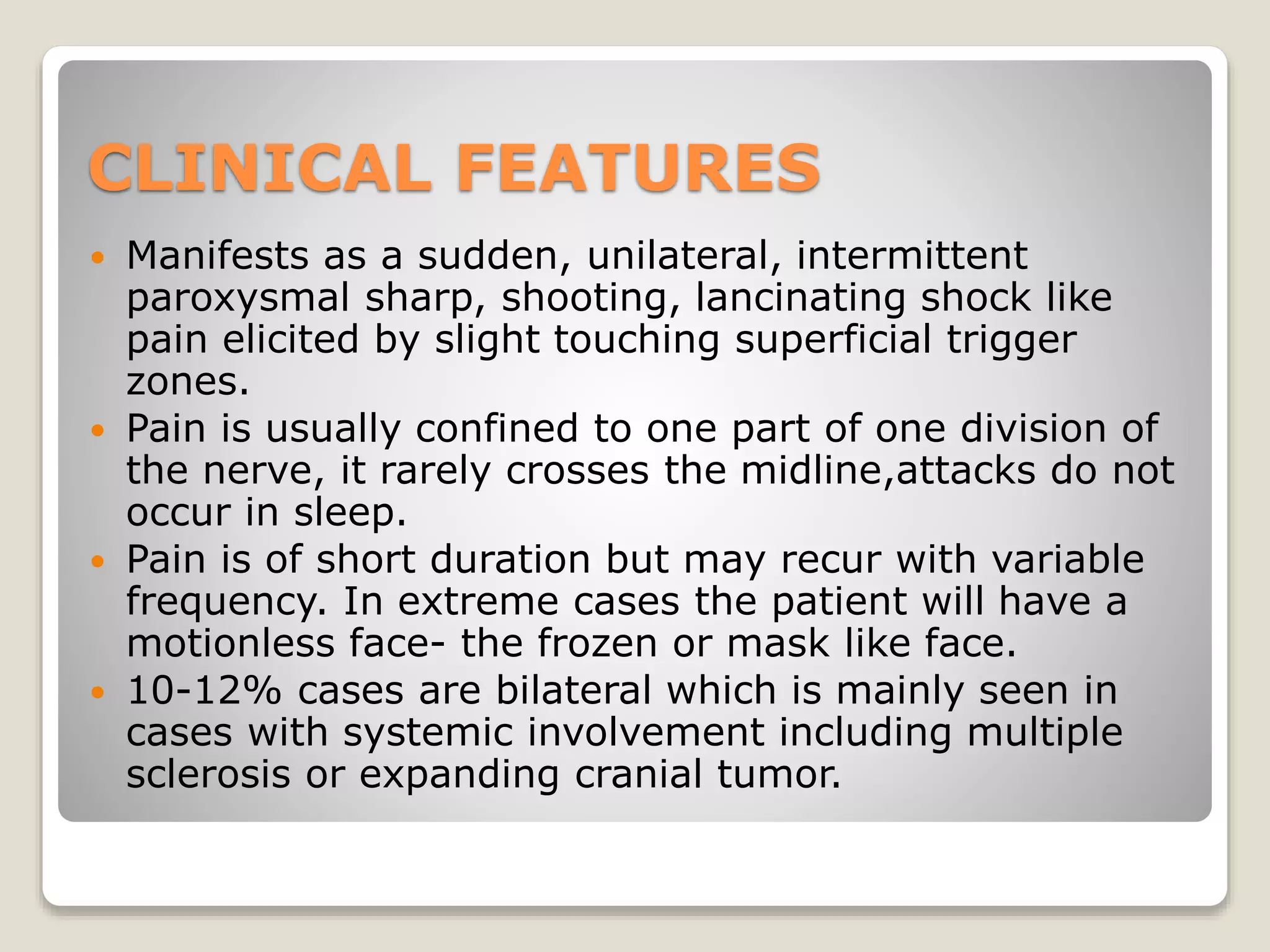
pain elicited by slight touching superficial trigger
zones.
 Pain is usually confined to one part of one division of
the nerve, it rarely crosses the midline,attacks do not
occur in sleep.
 Pain is of short duration but may recur with variable
frequency. In extreme cases the patient will have a
motionless face- the frozen or mask like face.
 10-12% cases are bilateral which is mainly seen in
cases with systemic involvement including multiple
sclerosis or expanding cranial tumor.
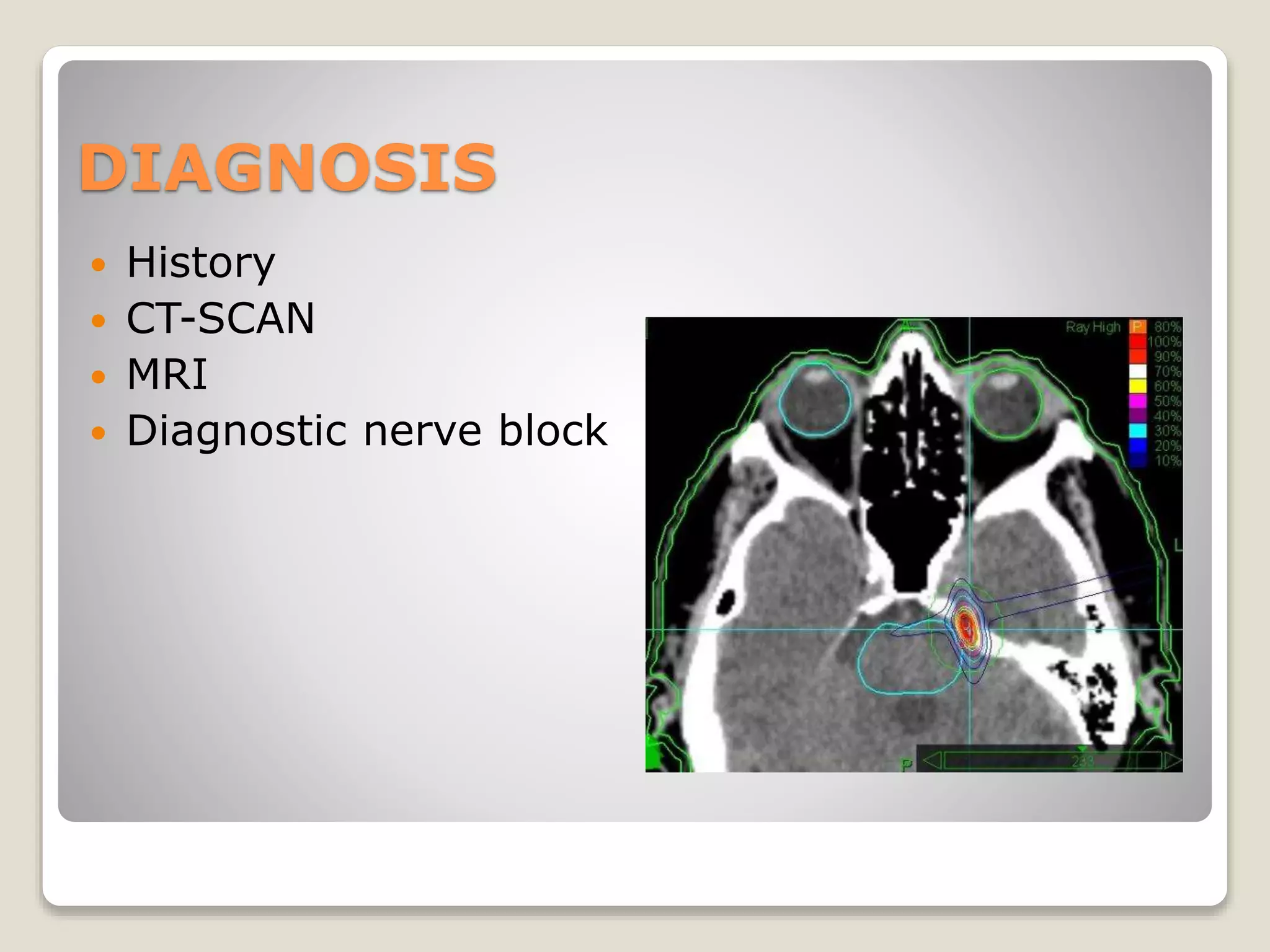
DIAGNOSIS
 History
 CT-SCAN
 MRI
 Diagnostic nerve block
TREATMENT
 MEDICAL
First line treatment is: carbamazepine(anticonvulsant).
Second line of treatment:baclofen,
lamotrigine,phenytoin,gabapentin,sodium valproate.
DULOXETINE is helpful where neuropathic pain and
depression are combined.
OPIATES such as MORPHINE and OXYCODONE, there is
evidence of their effectiveness on neuropathic pain,
especially if combined with gabapentin, gallium maltoate in
a cream or ointment base has been reported to relieve
refractory postherpetic TN.
Low doses of antidepressants such as AMITRYPTILINE is
thought to be effective.
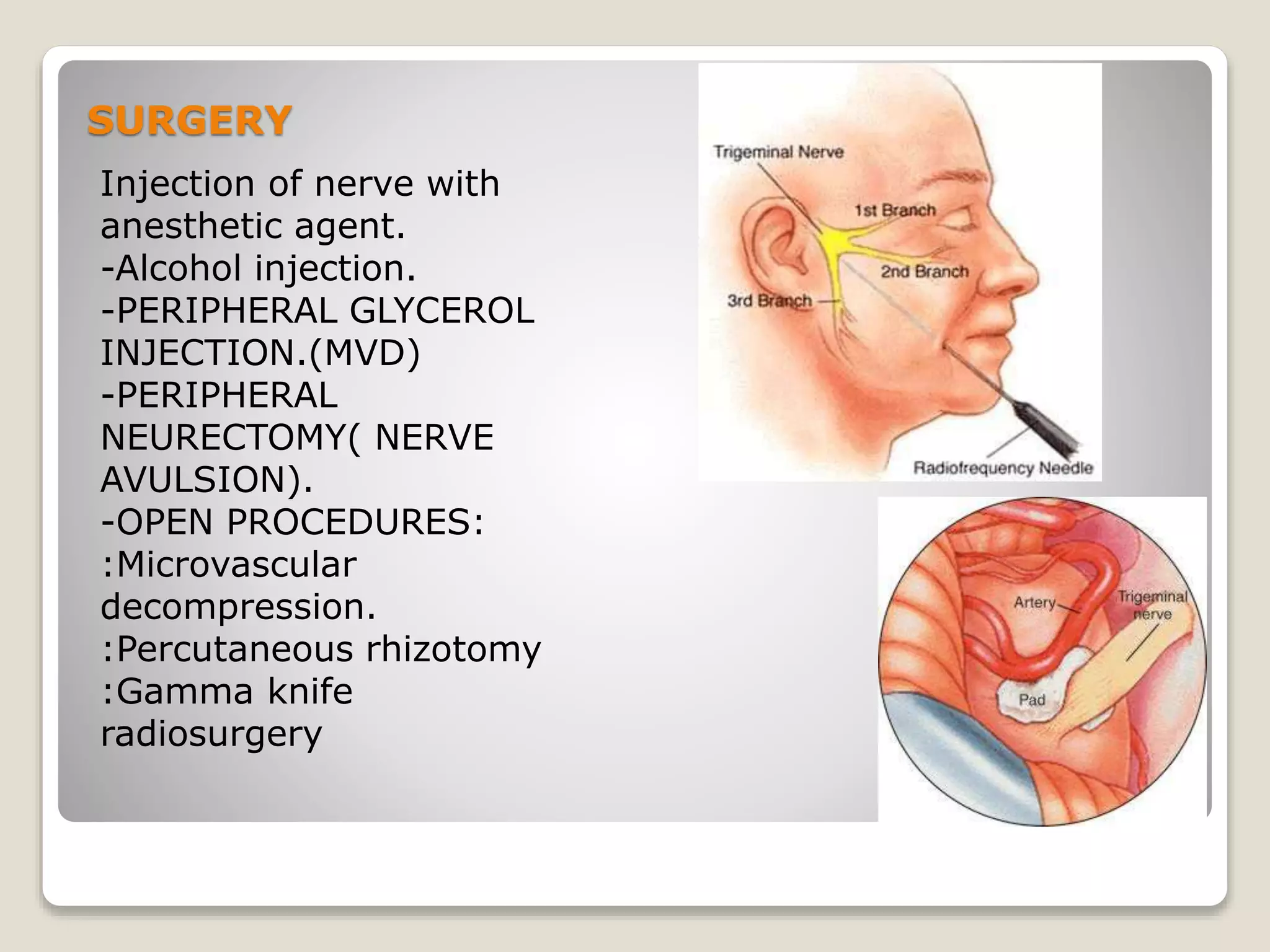
SURGERY
Injection of nerve with
anesthetic agent.
-Alcohol injection.
-PERIPHERAL GLYCEROL
INJECTION.(MVD)
-PERIPHERAL
NEURECTOMY( NERVE
AVULSION).
-OPEN PROCEDURES:
:Microvascular
decompression.
:Percutaneous rhizotomy
:Gamma knife
radiosurgery

Trigeminal neuralgia

  • 1.
  • 2.
    INTRODUCTION  Trigeminal neuralgiais a neuropathic disorder of trigeminal nerve that causes episodes of intense pain in eyes, lips,scalp,forehead and jaws.  It has been called as a suicide disease due to insignificant number of people taking their own life because they are unable to have their pain controlled by medications or surgery.
  • 3.
    DEFINITIONS HIS( international headachesociety)  Painful,unilateral affection of the face, characterized by brief electric shock like pain limited to distribution of one or more divisions of trigeminal nerve. Pain is commonly evoked by trivial stimulus like washing, shaving, talking, smoking and brushing teeth.the pain is abrupt in onset, terminations may remit for varying periods.
  • 5.
    TIC DOULOUREUX  Itis truly agonising condition in which the patient may clunch the hand over the face and experience severe lancinating pain associated with spasmodic contractions of facial muscles during attack.  A feature that led to use of this term.
  • 6.
    TYPES OF TRIGEMINALNEURALGIA  TYPICAL TRIGEMINAL NEURALGIA  ATYPICAL TRIGEMINAL NEURALGIA  PRE-TRIGEMINAL NEURALGIA  MULTIPLE SCLEROSIS RELATED  SECONDARY OR TUMOR RELATED  POST TRAUMATIC TRIGEMINAL NEURALGIA  FAILED TRIGEMINAL NEURALGIA
  • 7.
    TYPICAL TRIGEMINAL NEURALGIA Most common form, previously termed classical, idiopathic,essential TN. It is caused by a blood vessel compressing the nerve root.  Pulsations of vessels normally do not effect the nerve root but with repeated pulsations may lead to changes of nerve function, delivery of abnormal signals,this causes hyperactivity of of nerve root leading to pain.  The superior cerebellar artery is the vessel most often responsible for neurovascular compression upon the trigeminal nerve root, although other arteries or veins may be the culprit vessels.
  • 9.
    ATYPICAL TRIGEMINAL NEURALGIA It is characterised by unilateral, prominent constant and severe aching and burning pain superimposed upon otherwise typical symptom  Some believe atypical TN due to compression of specific part of ganglion while others believe it to be a more severe form of typical TN  Atypical TN pain can be at least partially relieved with medications used for typical TN, such as carbamazepine.
  • 10.
    PRE TRIGEMINAL NEURALGIA Days to years before the first attack of TN pain, some sufferers experience odd sensations of pain such as toothache or discomfort (paresthesia). Symptoms are similar to typical, bilateral TN is commonly seen in people with MS. Multiple sclerosis is due to formation of demyelinating plaques with brain
  • 12.
    SECONDARY OR TUMORRELATED  TN caused by a lesion such as a tumor, tumor can compress or distort the trigeminal nerve and cause numbness, weakness of chewing muscles or constant aching pain. FAILED TRIGEMINAL NEURALGIA In case of failed surgical procedures and medications, these sufferers can suffer from additional trigeminal neuropathy as a result of destructive intervention they went.
  • 14.
    CLINICAL FEATURES  Manifestsas a sudden, unilateral, intermittent paroxysmal sharp, shooting, lancinating shock like pain elicited by slight touching superficial trigger zones.  Pain is usually confined to one part of one division of the nerve, it rarely crosses the midline,attacks do not occur in sleep.  Pain is of short duration but may recur with variable frequency. In extreme cases the patient will have a motionless face- the frozen or mask like face.  10-12% cases are bilateral which is mainly seen in cases with systemic involvement including multiple sclerosis or expanding cranial tumor.
  • 16.
    DIAGNOSIS  History  CT-SCAN MRI  Diagnostic nerve block
  • 17.
    TREATMENT  MEDICAL First linetreatment is: carbamazepine(anticonvulsant). Second line of treatment:baclofen, lamotrigine,phenytoin,gabapentin,sodium valproate. DULOXETINE is helpful where neuropathic pain and depression are combined. OPIATES such as MORPHINE and OXYCODONE, there is evidence of their effectiveness on neuropathic pain, especially if combined with gabapentin, gallium maltoate in a cream or ointment base has been reported to relieve refractory postherpetic TN. Low doses of antidepressants such as AMITRYPTILINE is thought to be effective.
  • 18.
    SURGERY Injection of nervewith anesthetic agent. -Alcohol injection. -PERIPHERAL GLYCEROL INJECTION.(MVD) -PERIPHERAL NEURECTOMY( NERVE AVULSION). -OPEN PROCEDURES: :Microvascular decompression. :Percutaneous rhizotomy :Gamma knife radiosurgery

Editor's Notes

  • #15 Even air currents can trigger the pain.
  • #16 Trigger zones include corner of the lips, ala of nose, lateral brow, INTRAORAL teeth, gingiva, tongue.