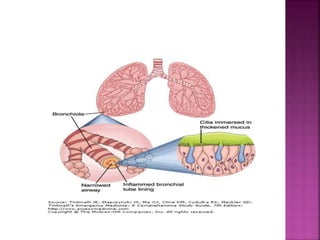
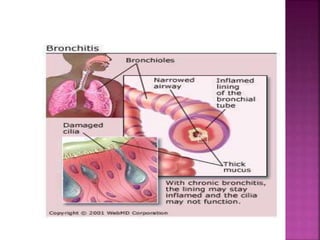
Bronchitis is inflammation or swelling of the
bronchial tubes (bronchi), the air passages
between the nose and the lungs.
More specifically, bronchitis is when the lining
of the bronchial tubes becomes inflamed or
infected.
Bronchitis is caused by viruses, bacteria, and
other
particles that irritate the bronchial tubes.
Etiology and risk factor
 Bacteria
 Virus
Predisposing factor
 Smoking
 People who are exposed to a lot of secondhand
smoke
 People with weakened immune systems
 The elderly and infants
 People with gastroesophageal reflux disease (GERD)
 People who are exposed to air pollution
 Malnutrition
 Longterm illness
 Pathophysciology
 Short term irritation of respiratory tract
leads to inflammation resulting in hyper
secretion of mucus and initial dry irritating
cough which later becomes productive.
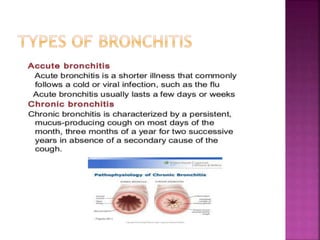
Continued bronchial irritation in chronic
bronchitis.
 Resulting in hypertrophy and hyperplasia of
bronchial mucous glands and mucous
producing goblet cells thus causing increased
secretion by the bronchial mucosa.
 Chronic infiltration of the bronchial walls by
leucocytes and lymphocytes. Make the
bronchial wall to become thickened and the
bronchial lumen to become narrowed thus
interfering with the flow of air to and from
the lungs
 The narrowed lumen often becomes plugged
with the mucus. The alveoli adjacent to the
affected bronchioles may become damaged
and fibroses with increased airway resistance
and severe ventilation perfusion imbalance.
Because of the inflammatory process, the
 patient has fever with accompanying chills,
headache, chest muscle soreness and loss of
appetite.
 Coughing
 Production of clear, white, yellow, grey, or
green mucus (sputum)
 In chronic bronchitis (insidious onset):
 Thick, gelatinous sputum (greater amounts produced
during superimposed infections).
 Shortness of breath
 Wheezing
 Fatigue
 Fever and chills
 Chest pain or discomfort
 Blocked or runny nose
 History collection
 Physical examination
 Chest x- rays
 Sputum cultures
 Pulmonary function test
 Spirometer excercises
 Bronchoscopy
 Antibiotics - these are effective for bacterial
infections, but not for viral infections. They may also
prevent secondary infections.
 Expectorant - one must be careful not to
completely suppress the cough, for it is an important
way to bring up mucus and remove irritants from the
lungs.
 Bronchodilators - these open the bronchial tubes
and clear out mucus.
 Mucolytics - these thin or loosen mucus in the
airways,making it easier to cough up sputum.
 Anti-inflammatory medicines and glucocorticoid
steroids - these are for more persistent symptoms.
 Pulmonary rehabilitation program -
 Ineffective breathing pattern related to
shortness breathing ,mucus or broncho
constriction.
 Ineffective airway clearence related to
broncho constriction.
 Self care deficit related to fatigue
secondary to increased effort for breathing.
 Activity intolerence due to fatigue and
inffective breathing patterns
 Nursing Intervention
 Monitor for adverse effects of bronchodilators-
tremulousness, tachycardia, cardiac arrhythmias,
central nervous system stimulation, hypertension.
 Monitor oxygen saturation at rest and with activity.
 Eliminate all pulmonary irritants, particularly
cigarette smoke. Smoking cessation usually reduces
pulmonary irritation, sputum production, and cough.
Keep the patient’s room as dust-free as possible.
 Use postural drainage positions to help clear
secretions responsible for airway obstruction.
 Teach controlled coughing.
 Encourage high level of fluid intake (8 to 10
glasses; 2 to 2.5 L daily) within level of cardiac
reserve.
 Give inhalations of nebulized saline to humidify
bronchial tree and liquefy sputum.
 Add moisture (humidifier, vaporizer) to indoor air.
Avoid dairy products if these increase sputum
production.
 Encourage the patient to assume comfortable
position to decrease dyspnea.
 Use pursed lip breathing at intervals and during
periods of dyspnea to control rate and depth of
respiration and improve respiratory muscle
coordination.
 Discuss and demonstrates relaxation exercises to
reduce stress, tension, and anxiety.
 Encourage frequent small meals if the patient
is dyspneic; en a small increase in abdominal
contents may press on diaphragm and impede
breathing.
 Offer liquid nutritional supplements to
improve caloric intake and counteract weight
loss. Avoid foods producing abdominal
discomfort.
 Encourage use of portable oxygen system for
ambulation for patients with hypoxemia and
marked disability.
 Encourage the patient in energy conservation
techniques.
 Assess The Condition Of Patient.
 Assess The Vital Signs
 . Provide Comfortable Position.
 Change The Position Periodically.
 Maintain Personal Hygiene.
 Use pulse oximetry & Suction.
 Deep Breathing Exercise Learn To Patient.
 Refer To Physiotherapist(if Need).
 Provide Oxygen According To Physician Order.
 Provide Psychological Support To Patient.
 Provide Knowledge About Chronic Bronchitis.
 Administer medication according to physician order.
 Bronchodilators,antibiotics,mucolytics.
 Avoiding tobacco smoke and exposure to second hand
 smoke
 Quitting smoking
 Avoiding people who are sick with colds or the flu
 Getting a yearly flu vaccine
 Getting a pneumonia vaccine (especially for those over
 60 years of age)
 Washing hands regularly
 Avoiding cold, damp locations or areas with a lot of air
 pollution
 Wearing a mask around people who are coughing and
 sneezing

Bronchitis

  • 3.
    Bronchitis is inflammationor swelling of the bronchial tubes (bronchi), the air passages between the nose and the lungs. More specifically, bronchitis is when the lining of the bronchial tubes becomes inflamed or infected. Bronchitis is caused by viruses, bacteria, and other particles that irritate the bronchial tubes.
  • 4.
    Etiology and riskfactor  Bacteria  Virus Predisposing factor  Smoking  People who are exposed to a lot of secondhand smoke  People with weakened immune systems  The elderly and infants  People with gastroesophageal reflux disease (GERD)  People who are exposed to air pollution  Malnutrition  Longterm illness
  • 5.
  • 6.
     Short termirritation of respiratory tract leads to inflammation resulting in hyper secretion of mucus and initial dry irritating cough which later becomes productive. Continued bronchial irritation in chronic bronchitis.
  • 7.
     Resulting inhypertrophy and hyperplasia of bronchial mucous glands and mucous producing goblet cells thus causing increased secretion by the bronchial mucosa.  Chronic infiltration of the bronchial walls by leucocytes and lymphocytes. Make the bronchial wall to become thickened and the bronchial lumen to become narrowed thus interfering with the flow of air to and from the lungs
  • 8.
     The narrowedlumen often becomes plugged with the mucus. The alveoli adjacent to the affected bronchioles may become damaged and fibroses with increased airway resistance and severe ventilation perfusion imbalance. Because of the inflammatory process, the  patient has fever with accompanying chills, headache, chest muscle soreness and loss of appetite.
  • 10.
     Coughing  Productionof clear, white, yellow, grey, or green mucus (sputum)  In chronic bronchitis (insidious onset):  Thick, gelatinous sputum (greater amounts produced during superimposed infections).  Shortness of breath  Wheezing  Fatigue  Fever and chills  Chest pain or discomfort  Blocked or runny nose
  • 12.
     History collection Physical examination  Chest x- rays  Sputum cultures  Pulmonary function test  Spirometer excercises  Bronchoscopy
  • 13.
     Antibiotics -these are effective for bacterial infections, but not for viral infections. They may also prevent secondary infections.  Expectorant - one must be careful not to completely suppress the cough, for it is an important way to bring up mucus and remove irritants from the lungs.  Bronchodilators - these open the bronchial tubes and clear out mucus.
  • 14.
     Mucolytics -these thin or loosen mucus in the airways,making it easier to cough up sputum.  Anti-inflammatory medicines and glucocorticoid steroids - these are for more persistent symptoms.  Pulmonary rehabilitation program -
  • 15.
     Ineffective breathingpattern related to shortness breathing ,mucus or broncho constriction.  Ineffective airway clearence related to broncho constriction.  Self care deficit related to fatigue secondary to increased effort for breathing.  Activity intolerence due to fatigue and inffective breathing patterns
  • 16.
     Nursing Intervention Monitor for adverse effects of bronchodilators- tremulousness, tachycardia, cardiac arrhythmias, central nervous system stimulation, hypertension.  Monitor oxygen saturation at rest and with activity.  Eliminate all pulmonary irritants, particularly cigarette smoke. Smoking cessation usually reduces pulmonary irritation, sputum production, and cough. Keep the patient’s room as dust-free as possible.  Use postural drainage positions to help clear secretions responsible for airway obstruction.  Teach controlled coughing.
  • 17.
     Encourage highlevel of fluid intake (8 to 10 glasses; 2 to 2.5 L daily) within level of cardiac reserve.  Give inhalations of nebulized saline to humidify bronchial tree and liquefy sputum.  Add moisture (humidifier, vaporizer) to indoor air. Avoid dairy products if these increase sputum production.  Encourage the patient to assume comfortable position to decrease dyspnea.  Use pursed lip breathing at intervals and during periods of dyspnea to control rate and depth of respiration and improve respiratory muscle coordination.  Discuss and demonstrates relaxation exercises to reduce stress, tension, and anxiety.
  • 18.
     Encourage frequentsmall meals if the patient is dyspneic; en a small increase in abdominal contents may press on diaphragm and impede breathing.  Offer liquid nutritional supplements to improve caloric intake and counteract weight loss. Avoid foods producing abdominal discomfort.  Encourage use of portable oxygen system for ambulation for patients with hypoxemia and marked disability.  Encourage the patient in energy conservation techniques.
  • 19.
     Assess TheCondition Of Patient.  Assess The Vital Signs  . Provide Comfortable Position.  Change The Position Periodically.  Maintain Personal Hygiene.  Use pulse oximetry & Suction.  Deep Breathing Exercise Learn To Patient.  Refer To Physiotherapist(if Need).  Provide Oxygen According To Physician Order.  Provide Psychological Support To Patient.  Provide Knowledge About Chronic Bronchitis.  Administer medication according to physician order.  Bronchodilators,antibiotics,mucolytics.
  • 20.
     Avoiding tobaccosmoke and exposure to second hand  smoke  Quitting smoking  Avoiding people who are sick with colds or the flu  Getting a yearly flu vaccine  Getting a pneumonia vaccine (especially for those over  60 years of age)  Washing hands regularly  Avoiding cold, damp locations or areas with a lot of air  pollution  Wearing a mask around people who are coughing and  sneezing