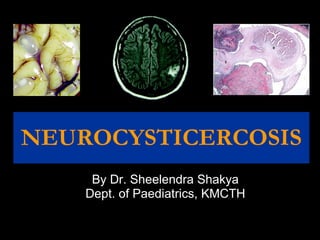
NEUROCYSTICERCOSIS By Dr. Sheelendra Shakya Dept. of Paediatrics, KMCTH
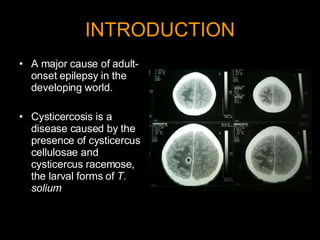
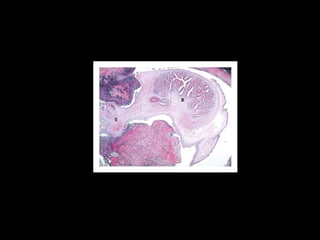
INTRODUCTION A major cause of adult-onset epilepsy in the developing world.  Cysticercosis is a disease caused by the presence of cysticercus cellulosae and cysticercus racemose, the larval forms of  T. solium
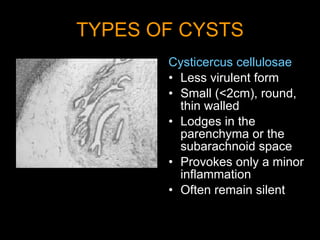
TYPES OF CYSTS Cysticercus cellulosae Less virulent form Small (<2cm), round, thin walled Lodges in the parenchyma or the subarachnoid space Provokes only a minor inflammation Often remain silent
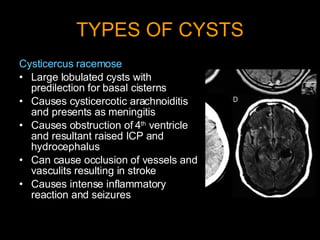
TYPES OF CYSTS Cysticercus racemose  Large lobulated cysts with   predilection for basal cisterns Causes cysticercotic arachnoiditis and presents as meningitis Causes obstruction of 4 th  ventricle and resultant raised ICP and hydrocephalus Can cause occlusion of vessels and vasculits resulting in stroke Causes intense inflammatory reaction and seizures
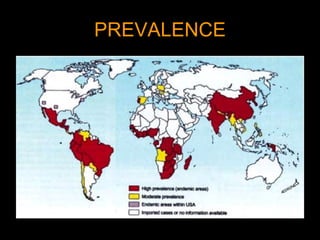
PREVALENCE
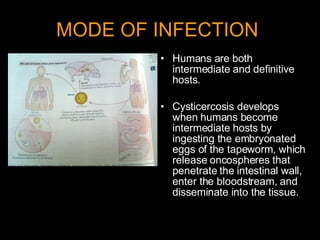
MODE OF INFECTION   Humans are both intermediate and definitive hosts.  Cysticercosis develops when humans become intermediate hosts by ingesting the embryonated eggs of the tapeworm, which release oncospheres that penetrate the intestinal wall, enter the bloodstream, and disseminate into the tissue.
MODE OF INFECTION HETEROINOCULATION eggs may come from the environment  INTERNAL AUTOINOCULATION regurgitated from proglottids into the stomach  EXTERNAL AUTOINOCULATION from the fingers of an infected person
TARGET TISSUES Predilection for migration to eyes, CNS and striated muscles, probably due to high glycogen and glucose content of these tissues. CNS and Eye involvement is termed as Neurocysticercosis.
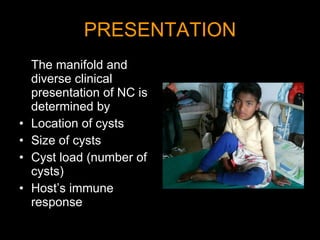
PRESENTATION The manifold and diverse clinical presentation of NC is determined by Location of cysts Size of cysts Cyst load (number of cysts) Host’s immune response
CLASSIFICATIONS Anatomical classification Sotelo et al classification  Carpio et al classification Chorobski Classification
Anatomical Classification Parenchymal NC Intraventricular NC Meningeal NC Spinal NC Ocular NC Nelson
CLINICAL PRESENTATION Parenchymal NC Seizures (87%)  Simple partial with secondary generalization, generalized, complex partial or complex partial with secondary generalization  Headache, nausea and vomiting Stroke  Hemiparesis  Focal neurologic deficits Frontal lobe involvement Psychosis, dementia, parkinsonism, intellectual impairment Cerebellar Ataxia Fulminant encephalitis in massive initial infection
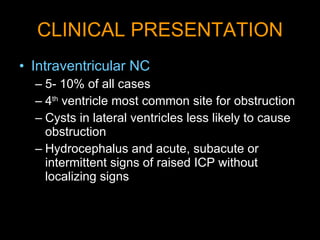
CLINICAL PRESENTATION Intraventricular NC   5- 10% of all cases 4 th  ventricle most common site for obstruction  Cysts in lateral ventricles less likely to cause obstruction Hydrocephalus and acute, subacute or intermittent signs of raised ICP without localizing signs
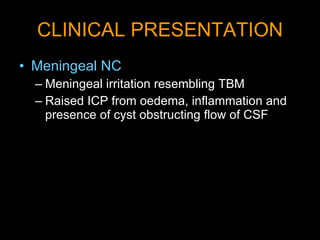
CLINICAL PRESENTATION Meningeal NC Meningeal irritation resembling TBM Raised ICP from oedema, inflammation and presence of cyst obstructing flow of CSF
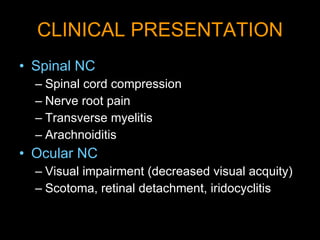
CLINICAL PRESENTATION Spinal NC Spinal cord compression Nerve root pain Transverse myelitis Arachnoiditis Ocular NC Visual impairment (decreased visual acquity) Scotoma, retinal detachment, iridocyclitis
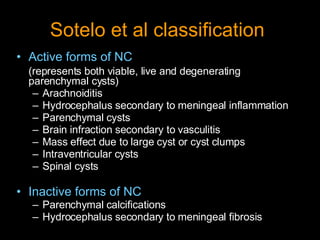
Sotelo et al classification   Active forms of NC (represents both viable, live and degenerating parenchymal cysts) Arachnoiditis Hydrocephalus secondary to meningeal inflammation Parenchymal cysts Brain infraction secondary to vasculitis Mass effect due to large cyst or cyst clumps Intraventricular cysts Spinal cysts Inactive forms of NC Parenchymal calcifications Hydrocephalus secondary to meningeal fibrosis
Carpio et al Active form   Refers to live, viable parenchymal or extraparenchymal cysts, rarely produce symptoms apart from the rare instance of mass effect Transitional form Symptomatic seizures occur with this form. Degenerating subarachnoid cysts produce meningitis, arachnoiditis and hydrocephalus; ventricular cysts lead to acute hydrocephalus. Inactive form   Single or multiple parenchymal calcification/s and /or hydrocephalus secondary to meningeal fibrosis
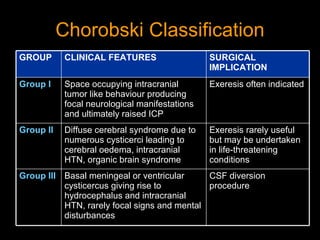
Chorobski Classification CSF diversion procedure Basal meningeal or ventricular cysticercus giving rise to hydrocephalus and intracranial HTN, rarely focal signs and mental disturbances Group III Exeresis rarely useful but may be undertaken in life-threatening conditions Diffuse cerebral syndrome due to numerous cysticerci leading to cerebral oedema, intracranial HTN, organic brain syndrome Group II Exeresis often indicated Space occupying intracranial tumor like behaviour producing focal neurological manifestations and ultimately raised ICP Group I SURGICAL IMPLICATION CLINICAL FEATURES GROUP
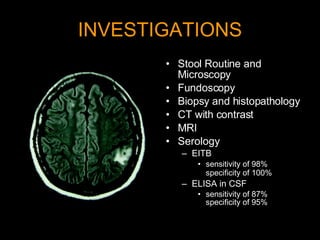
INVESTIGATIONS Stool Routine and Microscopy Fundoscopy Biopsy and histopathology CT with contrast MRI Serology EITB sensitivity of 98%  specificity of 100%   ELISA in CSF sensitivity of 87% specificity of 95%
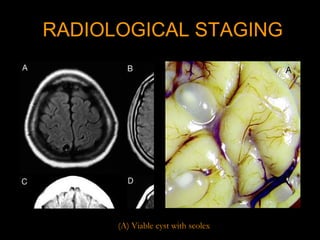
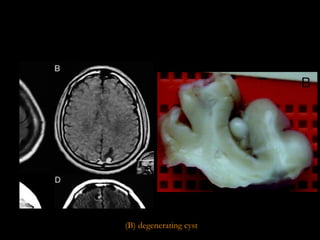
RADIOLOGICAL STAGING (A) Viable cyst with scolex
(B) degenerating cyst
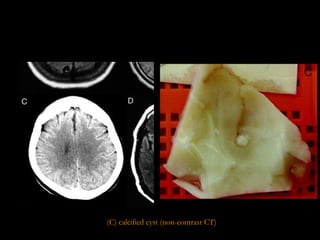
(C) calcified cyst (non-contrast CT)
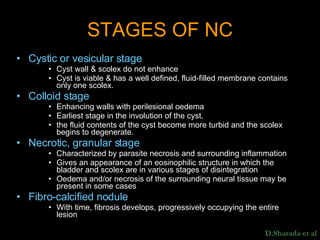
STAGES OF NC Cystic or vesicular stage Cyst wall & scolex do not enhance  Cyst is viable & has a well defined, fluid-filled membrane contains only one scolex.  Colloid stage Enhancing walls with perilesional oedema Earliest stage in the involution of the cyst. the fluid contents of the cyst become more turbid and the scolex begins to degenerate. Necrotic, granular stage Characterized by parasite necrosis and surrounding inflammation Gives an appearance of an eosinophilic structure in which the bladder and scolex are in various stages of disintegration Oedema and/or necrosis of the surrounding neural tissue may be present in some cases Fibro-calcified nodule With time, fibrosis develops, progressively occupying the entire lesion D.Sharada et al
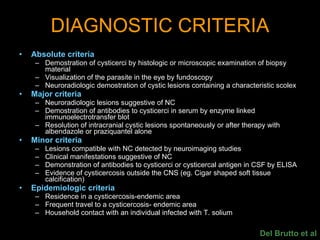
DIAGNOSTIC CRITERIA Absolute criteria Demostration of cysticerci by histologic or microscopic examination of biopsy material Visualization of the parasite in the eye by fundoscopy Neuroradiologic demostration of cystic lesions containing a characteristic scolex Major criteria Neuroradiologic lesions suggestive of NC Demostration of antibodies to cysticerci in serum by enzyme linked immunoelectrotransfer blot Resolution of intracranial cystic lesions spontaneously or after therapy with albendazole or praziquantel alone Minor criteria Lesions compatible with NC detected by neuroimaging studies Clinical manifestations suggestive of NC Demonstration of antibodies to cysticerci or cysticercal antigen in CSF by ELISA Evidence of cysticercosis outside the CNS (eg. Cigar shaped soft tissue calcification) Epidemiologic criteria Residence in a cysticercosis-endemic area Frequent travel to a cysticercosis- endemic area Household contact with an individual infected with T. solium Del Brutto et al
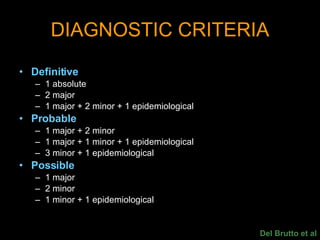
DIAGNOSTIC CRITERIA Definitive 1 absolute 2 major 1 major + 2 minor + 1 epidemiological Probable 1 major + 2 minor 1 major + 1 minor + 1 epidemiological 3 minor + 1 epidemiological Possible 1 major 2 minor 1 minor + 1 epidemiological Del Brutto et al
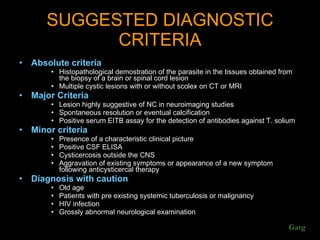
SUGGESTED DIAGNOSTIC CRITERIA Absolute criteria Histopathological demostration of the parasite in the tissues obtained from the biopsy of a brain or spinal cord lesion Multiple cystic lesions with or without scolex on CT or MRI Major Criteria Lesion highly suggestive of NC in neuroimaging studies Spontaneous resolution or eventual calcification Positive serum EITB assay for the detection of antibodies against T. solium Minor criteria Presence of a characteristic clinical picture Positive CSF ELISA Cysticercosis outside the CNS Aggravation of existing symptoms or appearance of a new symptom following anticysticercal therapy Diagnosis with caution Old age Patients with pre existing systemic tuberculosis or malignancy HIV infection Grossly abnormal neurological examination Garg
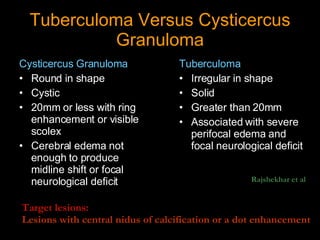
Tuberculoma Versus Cysticercus Granuloma Cysticercus Granuloma Round in shape Cystic 20mm or less with ring enhancement or visible scolex Cerebral edema not enough to produce midline shift or focal neurological deficit Tuberculoma Irregular in shape Solid Greater than 20mm Associated with severe perifocal edema and focal neurological deficit Rajshekhar et al Target lesions:  Lesions with central nidus of calcification or a dot enhancement
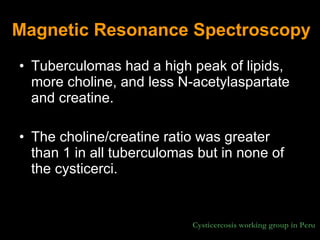
Magnetic Resonance Spectroscopy Tuberculomas had a high peak of lipids, more choline, and less N-acetylaspartate and creatine.  The choline/creatine ratio was greater than 1 in all tuberculomas but in none of the cysticerci.  Cysticercosis working group in Peru
 
TREATMENT VS NO TREATMENT Understanding a controversy
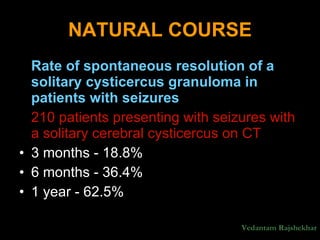
NATURAL COURSE Rate of spontaneous resolution of a solitary cysticercus granuloma in patients with seizures  210 patients presenting with seizures with a solitary cerebral cysticercus on CT 3 months - 18.8%  6 months - 36.4%  1 year - 62.5% Vedantam Rajshekhar
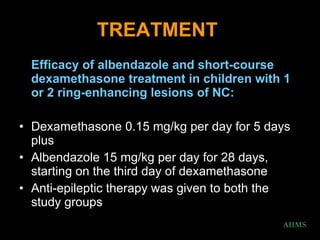
TREATMENT   Efficacy of albendazole and short-course dexamethasone treatment in children with 1 or 2 ring-enhancing lesions of NC:  Dexamethasone 0.15 mg/kg per day for 5 days plus  Albendazole 15 mg/kg per day for 28 days, starting on the third day of dexamethasone  Anti-epileptic therapy was given to both the study groups  AIIMS
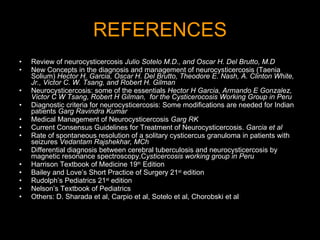
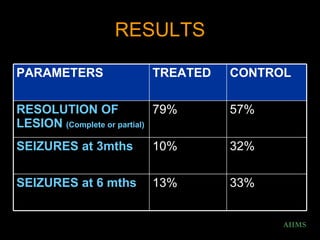
RESULTS AIIMS 33% 13% SEIZURES at 6 mths 32% 10% SEIZURES at 3mths 57% 79% RESOLUTION OF LESION  (Complete or partial) CONTROL TREATED PARAMETERS
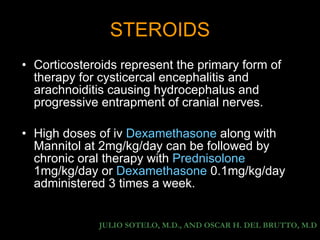
STEROIDS Corticosteroids represent the primary form of therapy for cysticercal encephalitis and arachnoiditis causing hydrocephalus and progressive entrapment of cranial nerves. High doses of iv  Dexamethasone  along with Mannitol at 2mg/kg/day can be followed by chronic oral therapy with  Prednisolone  1mg/kg/day or  Dexamethasone  0.1mg/kg/day administered 3 times a week. JULIO SOTELO, M.D., AND OSCAR H. DEL BRUTTO, M.D
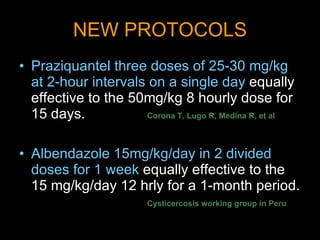
NEW PROTOCOLS Praziquantel three doses of 25-30 mg/kg at 2-hour intervals on a single day  equally effective to the 50mg/kg 8 hourly dose for 15 days.   Corona T, Lugo R, Medina R, et al Albendazole 15mg/kg/day in 2 divided doses for 1 week  equally effective to the 15 mg/kg/day 12 hrly for a 1-month period.  Cysticercosis working group in Peru
Surgery restricted to: Placement of ventriculo-peritoneal shunts for hydrocephalus Excision of single big cysts causing mass effect  Endoscopical excision of intraventricular parasites.  Unfortunately shunts are frequently occluded by the high protein content and debris in the CSF of patients with extraparenchymal neurocysticercosis, requiring multiple revisions.  Deaths due to shunt dysfunction may occur in up to 50% of cases, mainly in the initial 1–2 years after placement.   Garcia et al
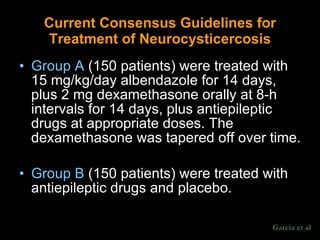
Group A  (150 patients) were treated with 15 mg/kg/day albendazole for 14 days, plus 2 mg dexamethasone orally at 8-h intervals for 14 days, plus antiepileptic drugs at appropriate doses. The dexamethasone was tapered off over time.  Group B  (150 patients) were treated with antiepileptic drugs and placebo.  Current Consensus Guidelines for Treatment of Neurocysticercosis Garcia et al
RESULTS During the first year of treatment the incidences of seizure, encephalopathy, and readmission were greater for group A than group B.  Two patients in group A died from intractable seizures and encephalopathy in the first 3 months of treatment.  Garcia et al
The proportion of patients with  complete resolution of lesions  was greater in group B than in group A  The proportion of patients with  calcification of lesions  was greater in group A than in group B. Calcified lesions may be the focal pathology for seizure recurrence.  randomised controlled study and follow-up of at least 5 years (the longest follow-up period yet for this type of study) for 300 neurocysticercosis patients with more than one lesion Garcia et al
Calcification Vs Natural Resolution There is increasing evidence that  calcified neurocysticercosis is not clinically inactive , and that perilesional oedema may at times be present around the apparently calcified foci.  Therefore, it is  better to wait for spontaneous resolution of lesions, while treating the patient with appropriate antiepileptic drugs for control of seizures.  Garcia et al
RECOMMENDATIONS Individualize therapeutic decisions, including whether to use antiparasitic drugs, based on the number, location, and viability of the parasites within the nervous system;  Actively manage growing cysticerci either with antiparasitic drugs or surgical excision;  Garcia et al
Prioritize the management of intracranial hypertension secondary to neurocysticercosis before considering any other form of therapy; and  Manage seizures as done for seizures due to other causes of secondary seizures (remote symptomatic seizures) because they are due to an organic focus that has been present for a long time. Garcia et al
CONCLUSION Treatment with albendazole plus antiepileptic drugs has no benefit over treatment with antiepileptic drugs alone.  Albendazole treatment may cause problems or have adverse effects with regard to increased seizure frequency, encephalopathy and hospital readmissions in the early part of the treatment.  Albendazole treatment may be disadvantageous from an economical perspective because of the direct and indirect treatment costs and the loss of working days.  Garcia et al
REFERENCES Review of neurocysticercosis  Julio Sotelo M.D., and Oscar H. Del Brutto, M.D New Concepts in the diagnosis and management of neurocysticercosis (Taenia Solium)   Hector H. Garcia, Oscar H. Del Brutto, Theodore E. Nash, A. Clinton White, Jr., Victor C. W. Tsang, and Robert H. Gilman   Neurocysticercosis: some of the essentials   Hector H Garcia, Armando E Gonzalez, Victor C W Tsang, Robert H Gilman,  for the Cysticerocosis Working Group in Peru Diagnostic criteria for neurocysticercosis: Some modifications are needed for Indian patients  Garg Ravindra Kumar Medical Management of Neurocysticercosis  Garg RK Current Consensus Guidelines for Treatment of Neurocysticercosis.  Garcia et al   Rate of spontaneous resolution of a solitary cysticercus granuloma in patients with seizures  Vedantam Rajshekhar, MCh Differential diagnosis between cerebral tuberculosis and neurocysticercosis by magnetic resonance spectroscopy.C ysticercosis working group in Peru Harrison Textbook of Medicine 19 th  Edition Bailey and Love’s Short Practice of Surgery 21 st  edition Rudolph’s Pediatrics 21 st  edition Nelson’s Textbook of Pediatrics Others: D. Sharada et al, Carpio et al, Sotelo et al, Chorobski et al

Neurocysticercosis

  • 1.
    NEUROCYSTICERCOSIS By Dr.Sheelendra Shakya Dept. of Paediatrics, KMCTH
  • 2.
    INTRODUCTION A majorcause of adult-onset epilepsy in the developing world. Cysticercosis is a disease caused by the presence of cysticercus cellulosae and cysticercus racemose, the larval forms of T. solium
  • 3.
    TYPES OF CYSTSCysticercus cellulosae Less virulent form Small (<2cm), round, thin walled Lodges in the parenchyma or the subarachnoid space Provokes only a minor inflammation Often remain silent
  • 4.
    TYPES OF CYSTSCysticercus racemose Large lobulated cysts with predilection for basal cisterns Causes cysticercotic arachnoiditis and presents as meningitis Causes obstruction of 4 th ventricle and resultant raised ICP and hydrocephalus Can cause occlusion of vessels and vasculits resulting in stroke Causes intense inflammatory reaction and seizures
  • 5.
  • 6.
    MODE OF INFECTION Humans are both intermediate and definitive hosts. Cysticercosis develops when humans become intermediate hosts by ingesting the embryonated eggs of the tapeworm, which release oncospheres that penetrate the intestinal wall, enter the bloodstream, and disseminate into the tissue.
  • 7.
    MODE OF INFECTIONHETEROINOCULATION eggs may come from the environment INTERNAL AUTOINOCULATION regurgitated from proglottids into the stomach EXTERNAL AUTOINOCULATION from the fingers of an infected person
  • 8.
    TARGET TISSUES Predilectionfor migration to eyes, CNS and striated muscles, probably due to high glycogen and glucose content of these tissues. CNS and Eye involvement is termed as Neurocysticercosis.
  • 9.
    PRESENTATION The manifoldand diverse clinical presentation of NC is determined by Location of cysts Size of cysts Cyst load (number of cysts) Host’s immune response
  • 10.
    CLASSIFICATIONS Anatomical classificationSotelo et al classification Carpio et al classification Chorobski Classification
  • 11.
    Anatomical Classification ParenchymalNC Intraventricular NC Meningeal NC Spinal NC Ocular NC Nelson
  • 12.
    CLINICAL PRESENTATION ParenchymalNC Seizures (87%) Simple partial with secondary generalization, generalized, complex partial or complex partial with secondary generalization Headache, nausea and vomiting Stroke Hemiparesis Focal neurologic deficits Frontal lobe involvement Psychosis, dementia, parkinsonism, intellectual impairment Cerebellar Ataxia Fulminant encephalitis in massive initial infection
  • 13.
    CLINICAL PRESENTATION IntraventricularNC 5- 10% of all cases 4 th ventricle most common site for obstruction Cysts in lateral ventricles less likely to cause obstruction Hydrocephalus and acute, subacute or intermittent signs of raised ICP without localizing signs
  • 14.
    CLINICAL PRESENTATION MeningealNC Meningeal irritation resembling TBM Raised ICP from oedema, inflammation and presence of cyst obstructing flow of CSF
  • 15.
    CLINICAL PRESENTATION SpinalNC Spinal cord compression Nerve root pain Transverse myelitis Arachnoiditis Ocular NC Visual impairment (decreased visual acquity) Scotoma, retinal detachment, iridocyclitis
  • 16.
    Sotelo et alclassification Active forms of NC (represents both viable, live and degenerating parenchymal cysts) Arachnoiditis Hydrocephalus secondary to meningeal inflammation Parenchymal cysts Brain infraction secondary to vasculitis Mass effect due to large cyst or cyst clumps Intraventricular cysts Spinal cysts Inactive forms of NC Parenchymal calcifications Hydrocephalus secondary to meningeal fibrosis
  • 17.
    Carpio et alActive form Refers to live, viable parenchymal or extraparenchymal cysts, rarely produce symptoms apart from the rare instance of mass effect Transitional form Symptomatic seizures occur with this form. Degenerating subarachnoid cysts produce meningitis, arachnoiditis and hydrocephalus; ventricular cysts lead to acute hydrocephalus. Inactive form Single or multiple parenchymal calcification/s and /or hydrocephalus secondary to meningeal fibrosis
  • 18.
    Chorobski Classification CSFdiversion procedure Basal meningeal or ventricular cysticercus giving rise to hydrocephalus and intracranial HTN, rarely focal signs and mental disturbances Group III Exeresis rarely useful but may be undertaken in life-threatening conditions Diffuse cerebral syndrome due to numerous cysticerci leading to cerebral oedema, intracranial HTN, organic brain syndrome Group II Exeresis often indicated Space occupying intracranial tumor like behaviour producing focal neurological manifestations and ultimately raised ICP Group I SURGICAL IMPLICATION CLINICAL FEATURES GROUP
  • 19.
    INVESTIGATIONS Stool Routineand Microscopy Fundoscopy Biopsy and histopathology CT with contrast MRI Serology EITB sensitivity of 98% specificity of 100% ELISA in CSF sensitivity of 87% specificity of 95%
  • 20.
    RADIOLOGICAL STAGING (A)Viable cyst with scolex
  • 21.
  • 22.
    (C) calcified cyst(non-contrast CT)
  • 23.
    STAGES OF NCCystic or vesicular stage Cyst wall & scolex do not enhance Cyst is viable & has a well defined, fluid-filled membrane contains only one scolex. Colloid stage Enhancing walls with perilesional oedema Earliest stage in the involution of the cyst. the fluid contents of the cyst become more turbid and the scolex begins to degenerate. Necrotic, granular stage Characterized by parasite necrosis and surrounding inflammation Gives an appearance of an eosinophilic structure in which the bladder and scolex are in various stages of disintegration Oedema and/or necrosis of the surrounding neural tissue may be present in some cases Fibro-calcified nodule With time, fibrosis develops, progressively occupying the entire lesion D.Sharada et al
  • 24.
    DIAGNOSTIC CRITERIA Absolutecriteria Demostration of cysticerci by histologic or microscopic examination of biopsy material Visualization of the parasite in the eye by fundoscopy Neuroradiologic demostration of cystic lesions containing a characteristic scolex Major criteria Neuroradiologic lesions suggestive of NC Demostration of antibodies to cysticerci in serum by enzyme linked immunoelectrotransfer blot Resolution of intracranial cystic lesions spontaneously or after therapy with albendazole or praziquantel alone Minor criteria Lesions compatible with NC detected by neuroimaging studies Clinical manifestations suggestive of NC Demonstration of antibodies to cysticerci or cysticercal antigen in CSF by ELISA Evidence of cysticercosis outside the CNS (eg. Cigar shaped soft tissue calcification) Epidemiologic criteria Residence in a cysticercosis-endemic area Frequent travel to a cysticercosis- endemic area Household contact with an individual infected with T. solium Del Brutto et al
  • 25.
    DIAGNOSTIC CRITERIA Definitive1 absolute 2 major 1 major + 2 minor + 1 epidemiological Probable 1 major + 2 minor 1 major + 1 minor + 1 epidemiological 3 minor + 1 epidemiological Possible 1 major 2 minor 1 minor + 1 epidemiological Del Brutto et al
  • 26.
    SUGGESTED DIAGNOSTIC CRITERIAAbsolute criteria Histopathological demostration of the parasite in the tissues obtained from the biopsy of a brain or spinal cord lesion Multiple cystic lesions with or without scolex on CT or MRI Major Criteria Lesion highly suggestive of NC in neuroimaging studies Spontaneous resolution or eventual calcification Positive serum EITB assay for the detection of antibodies against T. solium Minor criteria Presence of a characteristic clinical picture Positive CSF ELISA Cysticercosis outside the CNS Aggravation of existing symptoms or appearance of a new symptom following anticysticercal therapy Diagnosis with caution Old age Patients with pre existing systemic tuberculosis or malignancy HIV infection Grossly abnormal neurological examination Garg
  • 27.
    Tuberculoma Versus CysticercusGranuloma Cysticercus Granuloma Round in shape Cystic 20mm or less with ring enhancement or visible scolex Cerebral edema not enough to produce midline shift or focal neurological deficit Tuberculoma Irregular in shape Solid Greater than 20mm Associated with severe perifocal edema and focal neurological deficit Rajshekhar et al Target lesions: Lesions with central nidus of calcification or a dot enhancement
  • 28.
    Magnetic Resonance SpectroscopyTuberculomas had a high peak of lipids, more choline, and less N-acetylaspartate and creatine. The choline/creatine ratio was greater than 1 in all tuberculomas but in none of the cysticerci. Cysticercosis working group in Peru
  • 29.
  • 30.
    TREATMENT VS NOTREATMENT Understanding a controversy
  • 31.
    NATURAL COURSE Rateof spontaneous resolution of a solitary cysticercus granuloma in patients with seizures 210 patients presenting with seizures with a solitary cerebral cysticercus on CT 3 months - 18.8% 6 months - 36.4% 1 year - 62.5% Vedantam Rajshekhar
  • 32.
    TREATMENT Efficacy of albendazole and short-course dexamethasone treatment in children with 1 or 2 ring-enhancing lesions of NC: Dexamethasone 0.15 mg/kg per day for 5 days plus Albendazole 15 mg/kg per day for 28 days, starting on the third day of dexamethasone Anti-epileptic therapy was given to both the study groups AIIMS
  • 33.
    RESULTS AIIMS 33%13% SEIZURES at 6 mths 32% 10% SEIZURES at 3mths 57% 79% RESOLUTION OF LESION (Complete or partial) CONTROL TREATED PARAMETERS
  • 34.
    STEROIDS Corticosteroids representthe primary form of therapy for cysticercal encephalitis and arachnoiditis causing hydrocephalus and progressive entrapment of cranial nerves. High doses of iv Dexamethasone along with Mannitol at 2mg/kg/day can be followed by chronic oral therapy with Prednisolone 1mg/kg/day or Dexamethasone 0.1mg/kg/day administered 3 times a week. JULIO SOTELO, M.D., AND OSCAR H. DEL BRUTTO, M.D
  • 35.
    NEW PROTOCOLS Praziquantelthree doses of 25-30 mg/kg at 2-hour intervals on a single day equally effective to the 50mg/kg 8 hourly dose for 15 days. Corona T, Lugo R, Medina R, et al Albendazole 15mg/kg/day in 2 divided doses for 1 week equally effective to the 15 mg/kg/day 12 hrly for a 1-month period. Cysticercosis working group in Peru
  • 36.
    Surgery restricted to:Placement of ventriculo-peritoneal shunts for hydrocephalus Excision of single big cysts causing mass effect Endoscopical excision of intraventricular parasites. Unfortunately shunts are frequently occluded by the high protein content and debris in the CSF of patients with extraparenchymal neurocysticercosis, requiring multiple revisions. Deaths due to shunt dysfunction may occur in up to 50% of cases, mainly in the initial 1–2 years after placement. Garcia et al
  • 37.
    Group A (150 patients) were treated with 15 mg/kg/day albendazole for 14 days, plus 2 mg dexamethasone orally at 8-h intervals for 14 days, plus antiepileptic drugs at appropriate doses. The dexamethasone was tapered off over time. Group B (150 patients) were treated with antiepileptic drugs and placebo. Current Consensus Guidelines for Treatment of Neurocysticercosis Garcia et al
  • 38.
    RESULTS During thefirst year of treatment the incidences of seizure, encephalopathy, and readmission were greater for group A than group B. Two patients in group A died from intractable seizures and encephalopathy in the first 3 months of treatment. Garcia et al
  • 39.
    The proportion ofpatients with complete resolution of lesions was greater in group B than in group A The proportion of patients with calcification of lesions was greater in group A than in group B. Calcified lesions may be the focal pathology for seizure recurrence. randomised controlled study and follow-up of at least 5 years (the longest follow-up period yet for this type of study) for 300 neurocysticercosis patients with more than one lesion Garcia et al
  • 40.
    Calcification Vs NaturalResolution There is increasing evidence that calcified neurocysticercosis is not clinically inactive , and that perilesional oedema may at times be present around the apparently calcified foci. Therefore, it is better to wait for spontaneous resolution of lesions, while treating the patient with appropriate antiepileptic drugs for control of seizures. Garcia et al
  • 41.
    RECOMMENDATIONS Individualize therapeuticdecisions, including whether to use antiparasitic drugs, based on the number, location, and viability of the parasites within the nervous system; Actively manage growing cysticerci either with antiparasitic drugs or surgical excision; Garcia et al
  • 42.
    Prioritize the managementof intracranial hypertension secondary to neurocysticercosis before considering any other form of therapy; and Manage seizures as done for seizures due to other causes of secondary seizures (remote symptomatic seizures) because they are due to an organic focus that has been present for a long time. Garcia et al
  • 43.
    CONCLUSION Treatment withalbendazole plus antiepileptic drugs has no benefit over treatment with antiepileptic drugs alone. Albendazole treatment may cause problems or have adverse effects with regard to increased seizure frequency, encephalopathy and hospital readmissions in the early part of the treatment. Albendazole treatment may be disadvantageous from an economical perspective because of the direct and indirect treatment costs and the loss of working days. Garcia et al
  • 44.
    REFERENCES Review ofneurocysticercosis Julio Sotelo M.D., and Oscar H. Del Brutto, M.D New Concepts in the diagnosis and management of neurocysticercosis (Taenia Solium) Hector H. Garcia, Oscar H. Del Brutto, Theodore E. Nash, A. Clinton White, Jr., Victor C. W. Tsang, and Robert H. Gilman Neurocysticercosis: some of the essentials Hector H Garcia, Armando E Gonzalez, Victor C W Tsang, Robert H Gilman, for the Cysticerocosis Working Group in Peru Diagnostic criteria for neurocysticercosis: Some modifications are needed for Indian patients Garg Ravindra Kumar Medical Management of Neurocysticercosis Garg RK Current Consensus Guidelines for Treatment of Neurocysticercosis. Garcia et al Rate of spontaneous resolution of a solitary cysticercus granuloma in patients with seizures Vedantam Rajshekhar, MCh Differential diagnosis between cerebral tuberculosis and neurocysticercosis by magnetic resonance spectroscopy.C ysticercosis working group in Peru Harrison Textbook of Medicine 19 th Edition Bailey and Love’s Short Practice of Surgery 21 st edition Rudolph’s Pediatrics 21 st edition Nelson’s Textbook of Pediatrics Others: D. Sharada et al, Carpio et al, Sotelo et al, Chorobski et al