PREPARED BY :JYOTI RANABHAT
BNS 3RD YEAR
Hospice care
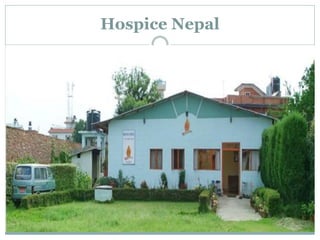
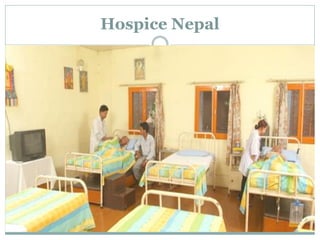
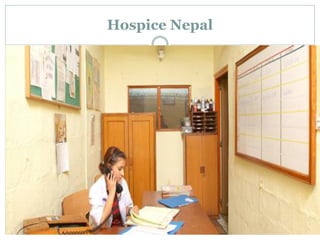
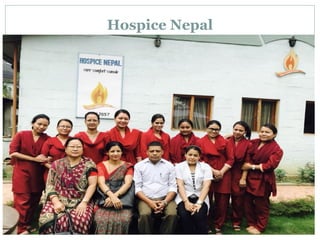
Hospice Nepal
Palliative Care
 Palliative care is an approach that improves
the quality of life of patients and their
families facing the problem associated with
life-threatening illness, through the
prevention and relief of suffering by means
of early identification and impeccable
assessment and treatment of pain and other
problems, physical, psychosocial and
spiritual.
Hospice
 Hospice care is support and care for persons in the
last phase of an incurable disease so that they may
live as fully and comfortably as possible.
Hospice care
 recognizes that the dying process is a part of the
normal process of living and focuses on enhancing
the quality of remaining life.
 affirms life and neither hastens nor postpones death.
 exists in the hope and belief that though appropriate
care, and the promotion of a caring community
sensitive to their needs, that individuals and their
families may be free to attain a degree of satisfaction
in preparation for death.
 recognizes that human growth and development can
be a lifelong process.
 seeks to preserve and promote the inherent potential
for growth within individuals and families during the
last phase of life.
 offers palliative care for all individuals and their
families without regard to age, gender nationality,
race, creed, sexual orientation, disability, diagnosis,
availability of a primary care giver, or ability to pay.
Hospice care contd….
 Physical, social, spiritual and emotional care are
provided by a clinically-directed interdisciplinary
team consisting of patients and their families,
professionals and volunteers during the:
 Last stages of an illness;
 Dying process; and
 Bereavement period.
Hospice Nepal
Hospice Nepal
Hospice Nepal

Hospice Care

  • 1.
    PREPARED BY :JYOTIRANABHAT BNS 3RD YEAR Hospice care
  • 2.
  • 3.
    Palliative Care  Palliativecare is an approach that improves the quality of life of patients and their families facing the problem associated with life-threatening illness, through the prevention and relief of suffering by means of early identification and impeccable assessment and treatment of pain and other problems, physical, psychosocial and spiritual.
  • 4.
    Hospice  Hospice careis support and care for persons in the last phase of an incurable disease so that they may live as fully and comfortably as possible.
  • 5.
    Hospice care  recognizesthat the dying process is a part of the normal process of living and focuses on enhancing the quality of remaining life.  affirms life and neither hastens nor postpones death.  exists in the hope and belief that though appropriate care, and the promotion of a caring community sensitive to their needs, that individuals and their families may be free to attain a degree of satisfaction in preparation for death.
  • 6.
     recognizes thathuman growth and development can be a lifelong process.  seeks to preserve and promote the inherent potential for growth within individuals and families during the last phase of life.  offers palliative care for all individuals and their families without regard to age, gender nationality, race, creed, sexual orientation, disability, diagnosis, availability of a primary care giver, or ability to pay.
  • 7.
    Hospice care contd…. Physical, social, spiritual and emotional care are provided by a clinically-directed interdisciplinary team consisting of patients and their families, professionals and volunteers during the:  Last stages of an illness;  Dying process; and  Bereavement period.
  • 8.
  • 9.
  • 10.