TOPIC- Formwork for Bridge
and Centering Of ArchNAME ENROLL NO.
PATEL NIRMAL 131100106036
PATEL PRIYANKA 131100106037
PATEL Shivani 131100106039
PATEL VIRAJ 131100106040
PATEL YASH 131100106042
GUIDED BY: Prof. PINANK R. PATEL
Prof. MIHIR B. NAIK
CONTENTS
CENTERING OF ARCH
CENTERING OF BIG ARCHES
FALSE WORK FOR BRIDGES
SLIP FORMWORK
Centering of an Arch
Centering is the temporary structure required to
support brick, stone or concrete work of arch, Dome
etc. during its construction .
The centering choice depends upon several factors like
;
Shape of Arch
Span of Opening
Thickness of Soffit
Material used in arch construction …etc
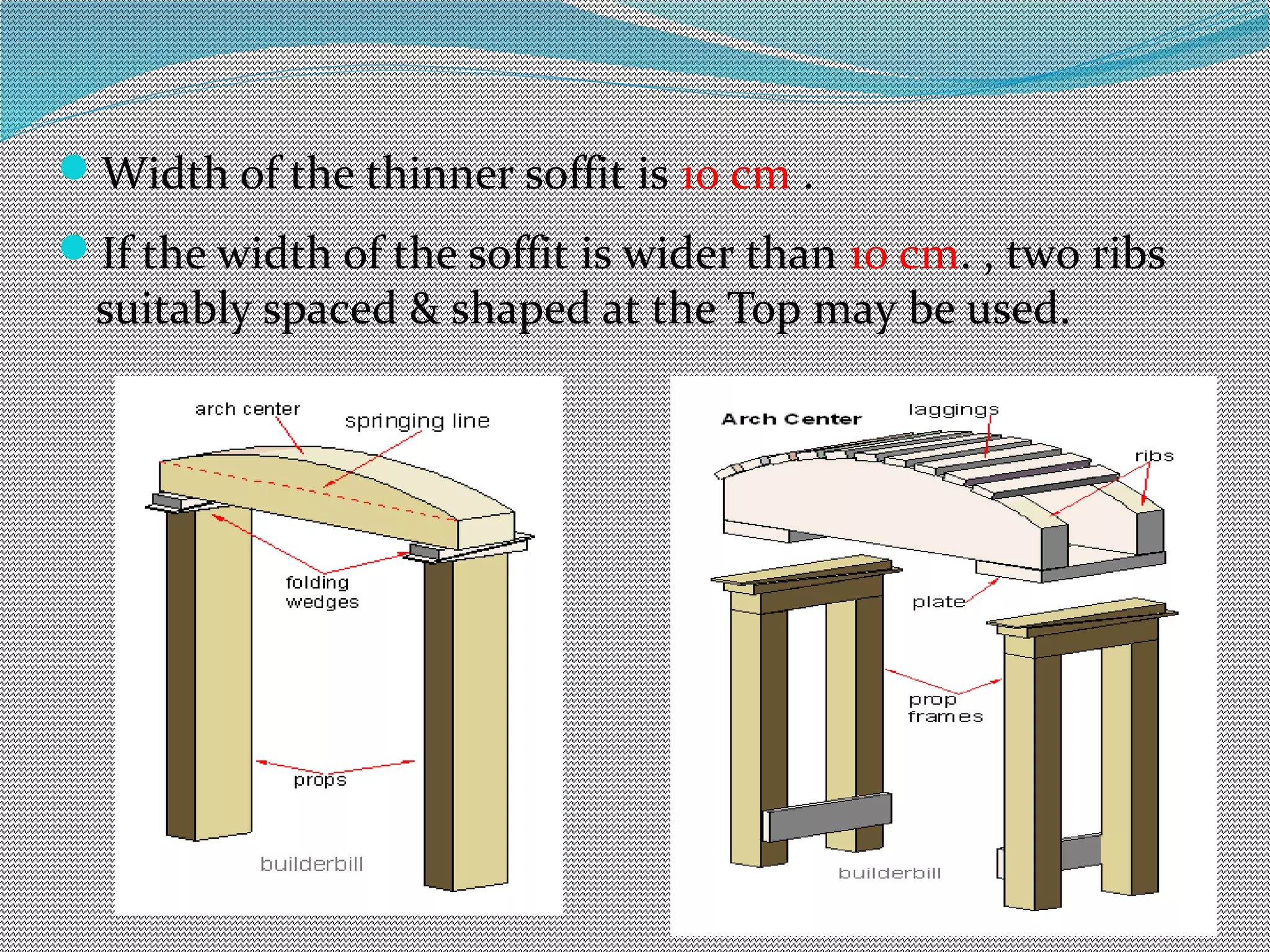
Width of the thinner soffit is 10 cm .
If the width of the soffit is wider than 10 cm. , two ribs
suitably spaced & shaped at the Top may be used.
Centering for a wide soffit and bigger span
Centering for big Arches of bridges
For the construction of big arches, the centering will be
invariably required.
factors:-
Nature & type of arch (i.e. span, rise etc…)
Foundation conditions
Depth of water , liability to flood, etc…
Distance required between support of centering for the passage of
traffic.
Size & lengths of timber available
Availability of labour.
It has Three type,
1. Timber truss centering
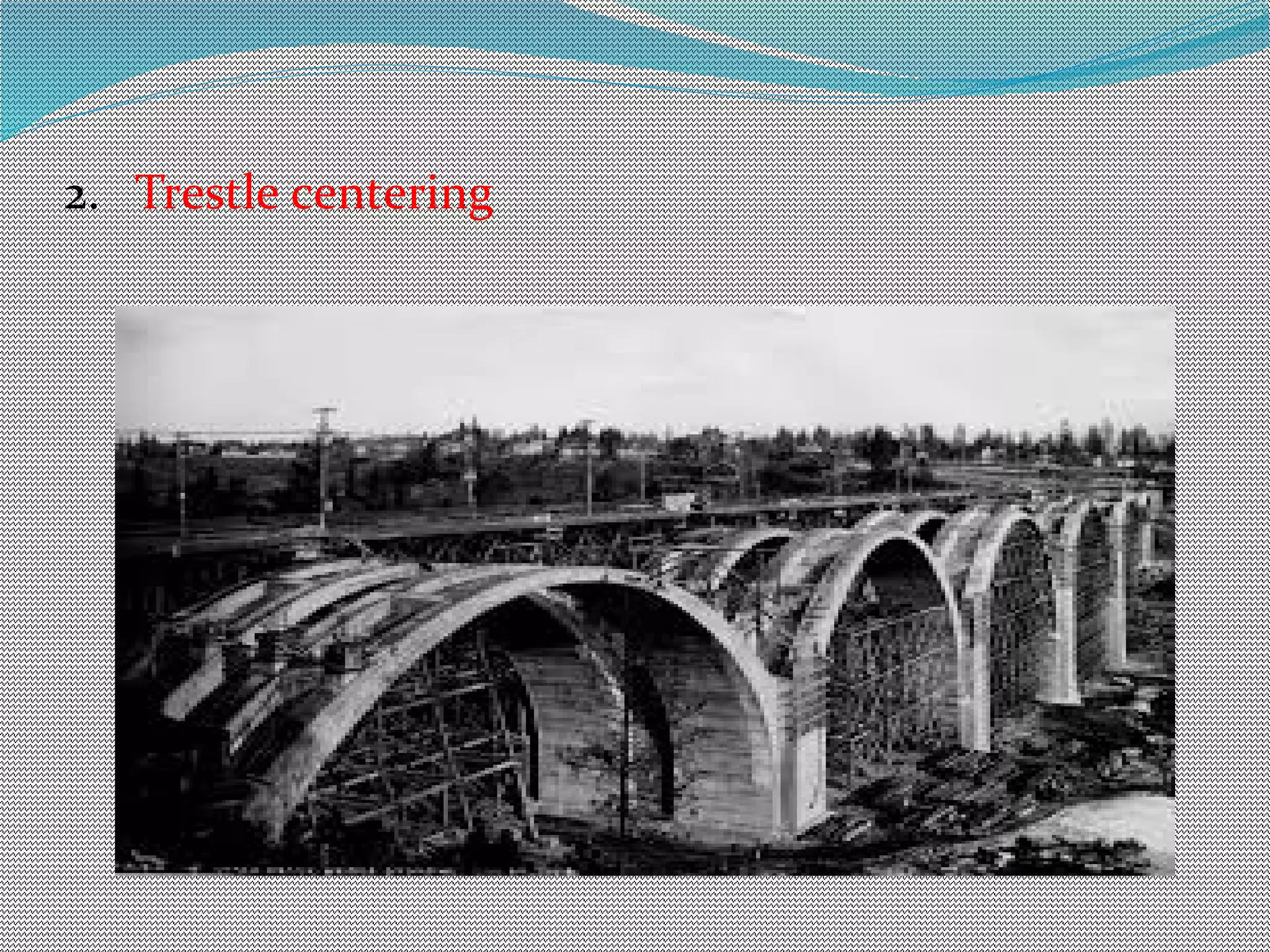
2. Trestle centering
3. Steel truss centering
1. Timber truss centering
It is very useful when,
The arch provided in deep valley
The support for centering are to rest in deep water.
The passage of traffic is required.
2. Trestle centering
3. Steel truss centering
It is very useful when,
It is impossible to use trestle type centering
Depth of water is more
Arches constructed for heavy flood.
False work for Bridges
False work consists of temporary structure used in construction to support
spanning or arched structures in order to hold the component in place until its
construction is sufficiently advanced to support itself.
The construction of falsework in bridges consists of
Timber or concrete foundation pads
Timber corbels
Sand jacks and wedges
Steel sill beams
Timber or round hollow steel posts
Steel cap beams
Timber or steel stringer beams & timber joists.
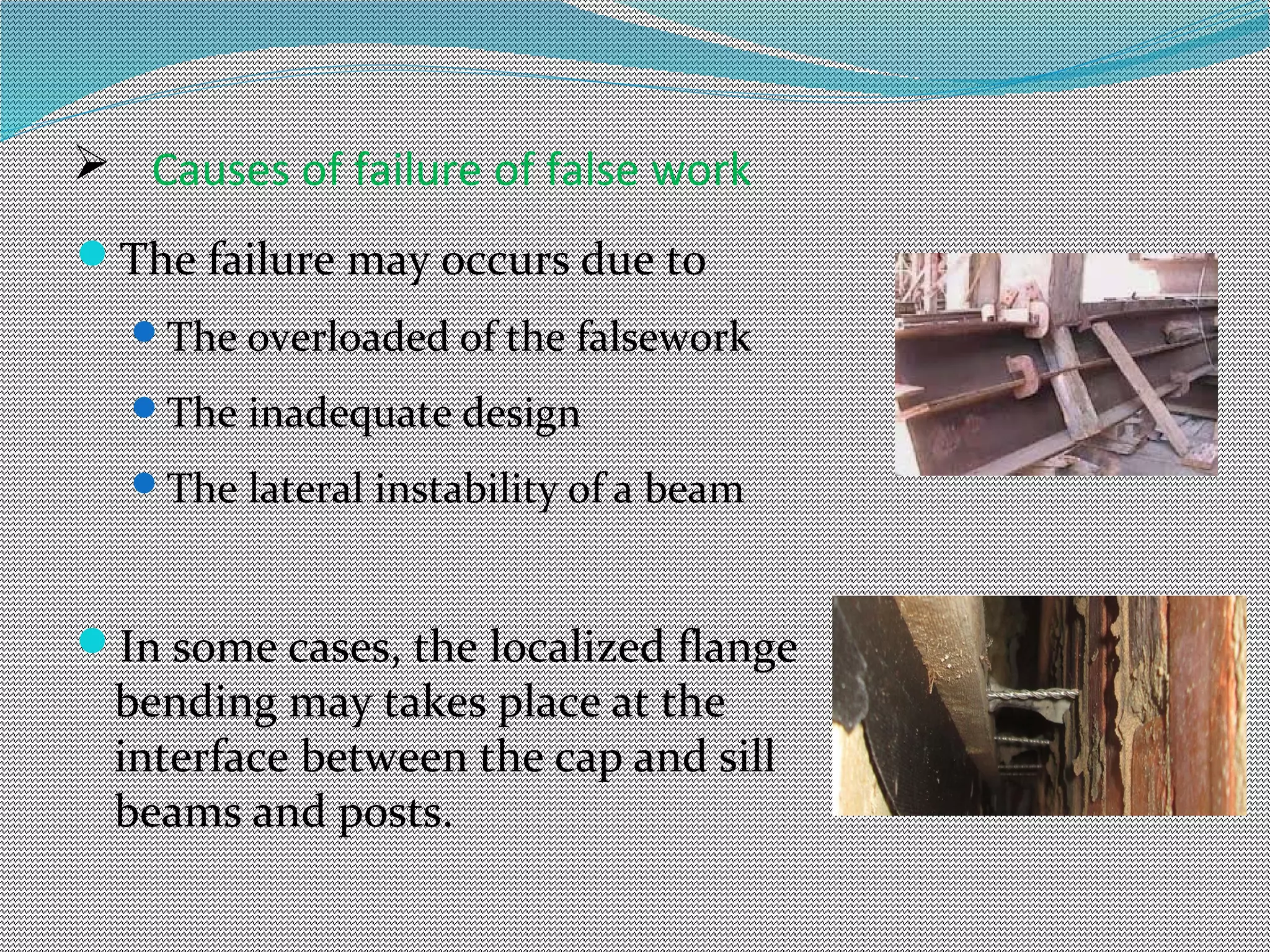
 Causes of failure of false work
The failure may occurs due to
The overloaded of the falsework
The inadequate design
The lateral instability of a beam
In some cases, the localized flange
bending may takes place at the
interface between the cap and sill
beams and posts.
Pile formwork
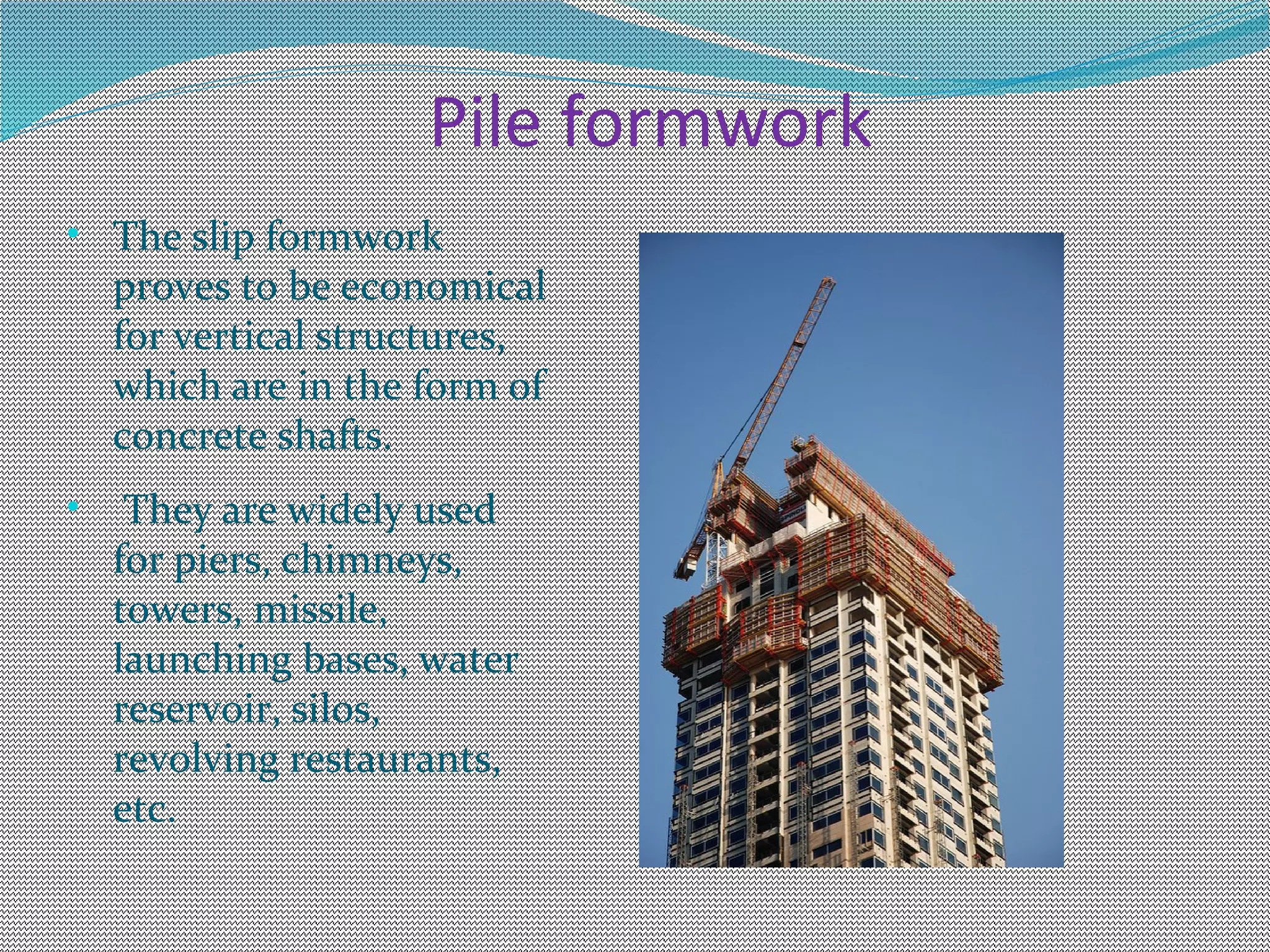
• The slip formwork
proves to be economical
for vertical structures,
which are in the form of
concrete shafts.
• They are widely used
for piers, chimneys,
towers, missile,
launching bases, water
reservoir, silos,
revolving restaurants,
etc.
 The essential parts of slip forms are follow
- sheathing
- wales or ribs
- yokes
- working platform or deck
- suspended scaffolding
-lifting devices
Advantages
 The construction of joints is eliminated.
 The construction work can be carried out speedily.
 There is considerable saving in cost of forms as there is less wastage of forms and they can
be used several times.
Reference
Google image
Advanced construction Equipments by R.P.
RETHALIYA
Advanced construction Techniques by Mahajan
publication.
Thanks…

Formwork for Bridge and Centering Of Arch

  • 1.
    TOPIC- Formwork forBridge and Centering Of ArchNAME ENROLL NO. PATEL NIRMAL 131100106036 PATEL PRIYANKA 131100106037 PATEL Shivani 131100106039 PATEL VIRAJ 131100106040 PATEL YASH 131100106042 GUIDED BY: Prof. PINANK R. PATEL Prof. MIHIR B. NAIK
  • 2.
    CONTENTS CENTERING OF ARCH CENTERINGOF BIG ARCHES FALSE WORK FOR BRIDGES SLIP FORMWORK
  • 3.
    Centering of anArch Centering is the temporary structure required to support brick, stone or concrete work of arch, Dome etc. during its construction . The centering choice depends upon several factors like ; Shape of Arch Span of Opening Thickness of Soffit Material used in arch construction …etc
  • 4.
    Width of thethinner soffit is 10 cm . If the width of the soffit is wider than 10 cm. , two ribs suitably spaced & shaped at the Top may be used.
  • 5.
    Centering for awide soffit and bigger span
  • 6.
    Centering for bigArches of bridges For the construction of big arches, the centering will be invariably required. factors:- Nature & type of arch (i.e. span, rise etc…) Foundation conditions Depth of water , liability to flood, etc… Distance required between support of centering for the passage of traffic. Size & lengths of timber available Availability of labour.
  • 7.
    It has Threetype, 1. Timber truss centering 2. Trestle centering 3. Steel truss centering
  • 8.
    1. Timber trusscentering It is very useful when, The arch provided in deep valley The support for centering are to rest in deep water. The passage of traffic is required.
  • 9.
  • 11.
    3. Steel trusscentering It is very useful when, It is impossible to use trestle type centering Depth of water is more Arches constructed for heavy flood.
  • 12.
    False work forBridges False work consists of temporary structure used in construction to support spanning or arched structures in order to hold the component in place until its construction is sufficiently advanced to support itself. The construction of falsework in bridges consists of Timber or concrete foundation pads Timber corbels Sand jacks and wedges Steel sill beams Timber or round hollow steel posts Steel cap beams Timber or steel stringer beams & timber joists.
  • 14.
     Causes offailure of false work The failure may occurs due to The overloaded of the falsework The inadequate design The lateral instability of a beam In some cases, the localized flange bending may takes place at the interface between the cap and sill beams and posts.
  • 15.
    Pile formwork • Theslip formwork proves to be economical for vertical structures, which are in the form of concrete shafts. • They are widely used for piers, chimneys, towers, missile, launching bases, water reservoir, silos, revolving restaurants, etc.
  • 17.
     The essentialparts of slip forms are follow - sheathing - wales or ribs - yokes - working platform or deck - suspended scaffolding -lifting devices Advantages  The construction of joints is eliminated.  The construction work can be carried out speedily.  There is considerable saving in cost of forms as there is less wastage of forms and they can be used several times.
  • 18.
    Reference Google image Advanced constructionEquipments by R.P. RETHALIYA Advanced construction Techniques by Mahajan publication.
  • 19.