Reflective Glass
Glass with a reflective coating to prevent sun rays to enter the house.
- SAYAN MUNSHI
REFLECTIVE GLASS
 Color: Tinted, reflective architectural glasses offer better harmonization
with spandrels, metal panels, extrusions and other building materials.
This color enriched glass transmits generous levels of visible light and
offers color neutrality, which also enhances the tint of the glass substrate
underneath the reflective coating. Today, reflective glasses can also
include low-e coatings.
 Visibility: Reflective glass also has a special metallic coating that makes
it possible to see out, while preventing people from seeing in, in order to
preserve privacy during the day. In addition, reflective glass makes it
possible to hide computer wires, vents, fans, HVAC components and
other building mechanicals.
 Glare Control: Reflective glass also impacts visible light transmittance
(VLT). Reflective glass allows just the right amount of natural light into a
building, while at the same time reduces glare and the need for window
blinds and other interior shading devices. In addition, reflective solar
control glass reflects a portion of incoming solar radiation, which limits
heat penetration into the building and can potentially lower HVAC usage.
 Exterior Appearance: Reflective glass provides a bold, crisp exterior
appearance, along with a dynamic building surface that changes to reflect
the color of the sky, the passing of clouds and the different times of day.
REFLECTIVE GLASS
2.5MM GLASS
U V COATING
REFLECTIVE GLASS
Heat generated inside the building tends to stay in the
building when the windows are made from reflective glass,
which reduces heating costs.
REFLECTIVE GLASS
 The precise finish used on reflective glass varies.
There are a number of options available,
including tinted glass that can be used to
achieve a desired aesthetic effect. The finish is
usually metallic in nature, and designed so that
people behind the glass can see out. As a
bonus, the coating sometimes reduces glare,
which can be tremendously beneficial for
making office environments healthier; glare is a
common cause of eye strain, especially for
people who work on computers.
REFLECTIVE GLASS
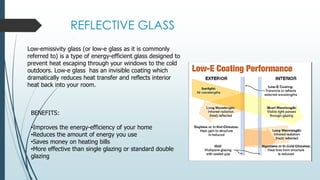
Low-emissivity glass (or low-e glass as it is commonly
referred to) is a type of energy-efficient glass designed to
prevent heat escaping through your windows to the cold
outdoors. Low-e glass has an invisible coating which
dramatically reduces heat transfer and reflects interior
heat back into your room.
BENEFITS:
•Improves the energy-efficiency of your home
•Reduces the amount of energy you use
•Saves money on heating bills
•More effective than single glazing or standard double
glazing
For more information-
Visit: curatorhall.wordpress.com
or
sayanmunshi.tumblr.com
THANK YOU

Reflective glass

  • 1.
    Reflective Glass Glass witha reflective coating to prevent sun rays to enter the house. - SAYAN MUNSHI
  • 2.
    REFLECTIVE GLASS  Color:Tinted, reflective architectural glasses offer better harmonization with spandrels, metal panels, extrusions and other building materials. This color enriched glass transmits generous levels of visible light and offers color neutrality, which also enhances the tint of the glass substrate underneath the reflective coating. Today, reflective glasses can also include low-e coatings.  Visibility: Reflective glass also has a special metallic coating that makes it possible to see out, while preventing people from seeing in, in order to preserve privacy during the day. In addition, reflective glass makes it possible to hide computer wires, vents, fans, HVAC components and other building mechanicals.  Glare Control: Reflective glass also impacts visible light transmittance (VLT). Reflective glass allows just the right amount of natural light into a building, while at the same time reduces glare and the need for window blinds and other interior shading devices. In addition, reflective solar control glass reflects a portion of incoming solar radiation, which limits heat penetration into the building and can potentially lower HVAC usage.  Exterior Appearance: Reflective glass provides a bold, crisp exterior appearance, along with a dynamic building surface that changes to reflect the color of the sky, the passing of clouds and the different times of day.
  • 3.
  • 4.
    REFLECTIVE GLASS Heat generatedinside the building tends to stay in the building when the windows are made from reflective glass, which reduces heating costs.
  • 5.
    REFLECTIVE GLASS  Theprecise finish used on reflective glass varies. There are a number of options available, including tinted glass that can be used to achieve a desired aesthetic effect. The finish is usually metallic in nature, and designed so that people behind the glass can see out. As a bonus, the coating sometimes reduces glare, which can be tremendously beneficial for making office environments healthier; glare is a common cause of eye strain, especially for people who work on computers.
  • 6.
    REFLECTIVE GLASS Low-emissivity glass(or low-e glass as it is commonly referred to) is a type of energy-efficient glass designed to prevent heat escaping through your windows to the cold outdoors. Low-e glass has an invisible coating which dramatically reduces heat transfer and reflects interior heat back into your room. BENEFITS: •Improves the energy-efficiency of your home •Reduces the amount of energy you use •Saves money on heating bills •More effective than single glazing or standard double glazing
  • 7.
    For more information- Visit:curatorhall.wordpress.com or sayanmunshi.tumblr.com
  • 8.