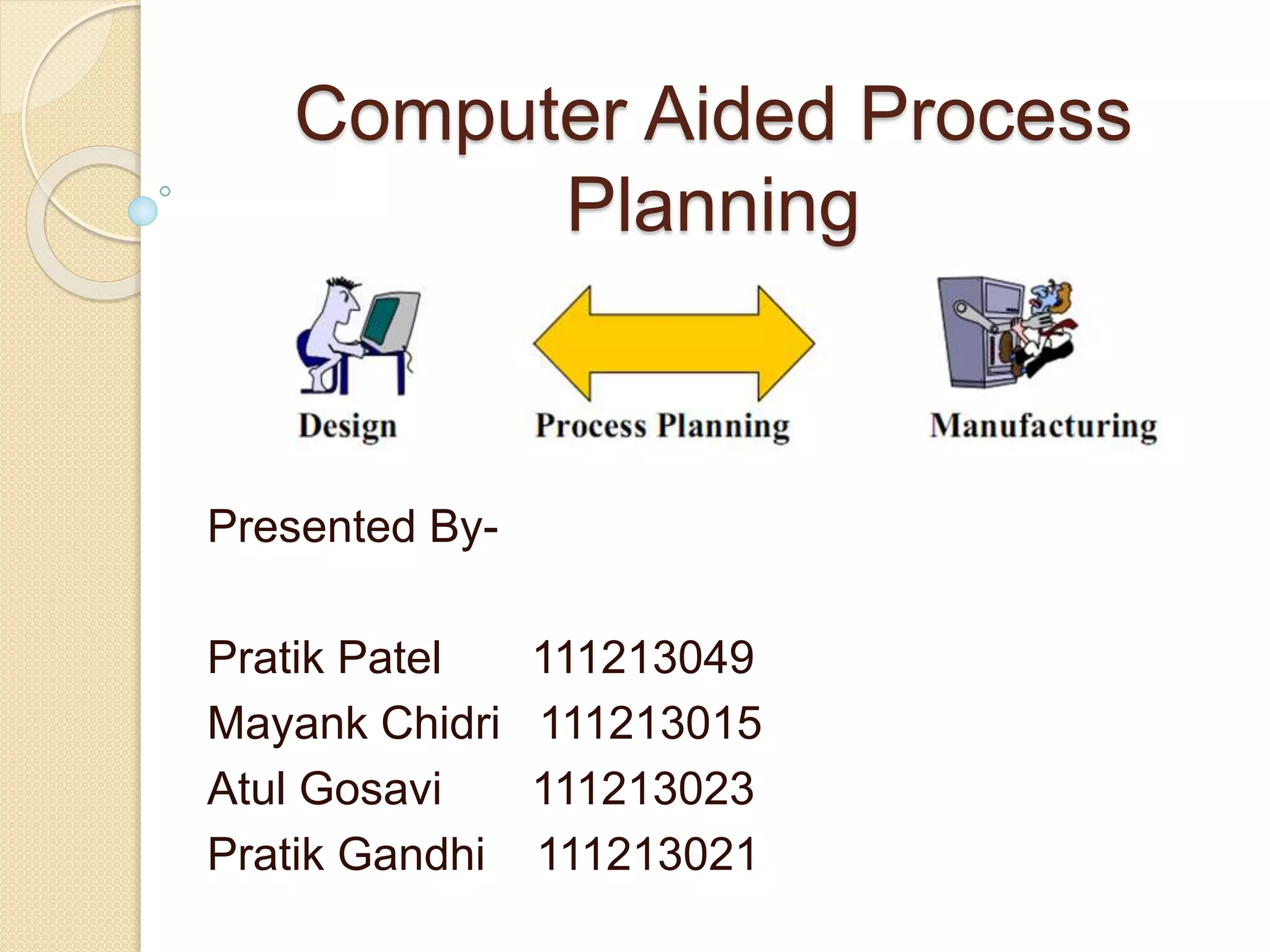
Computer Aided Process
Planning
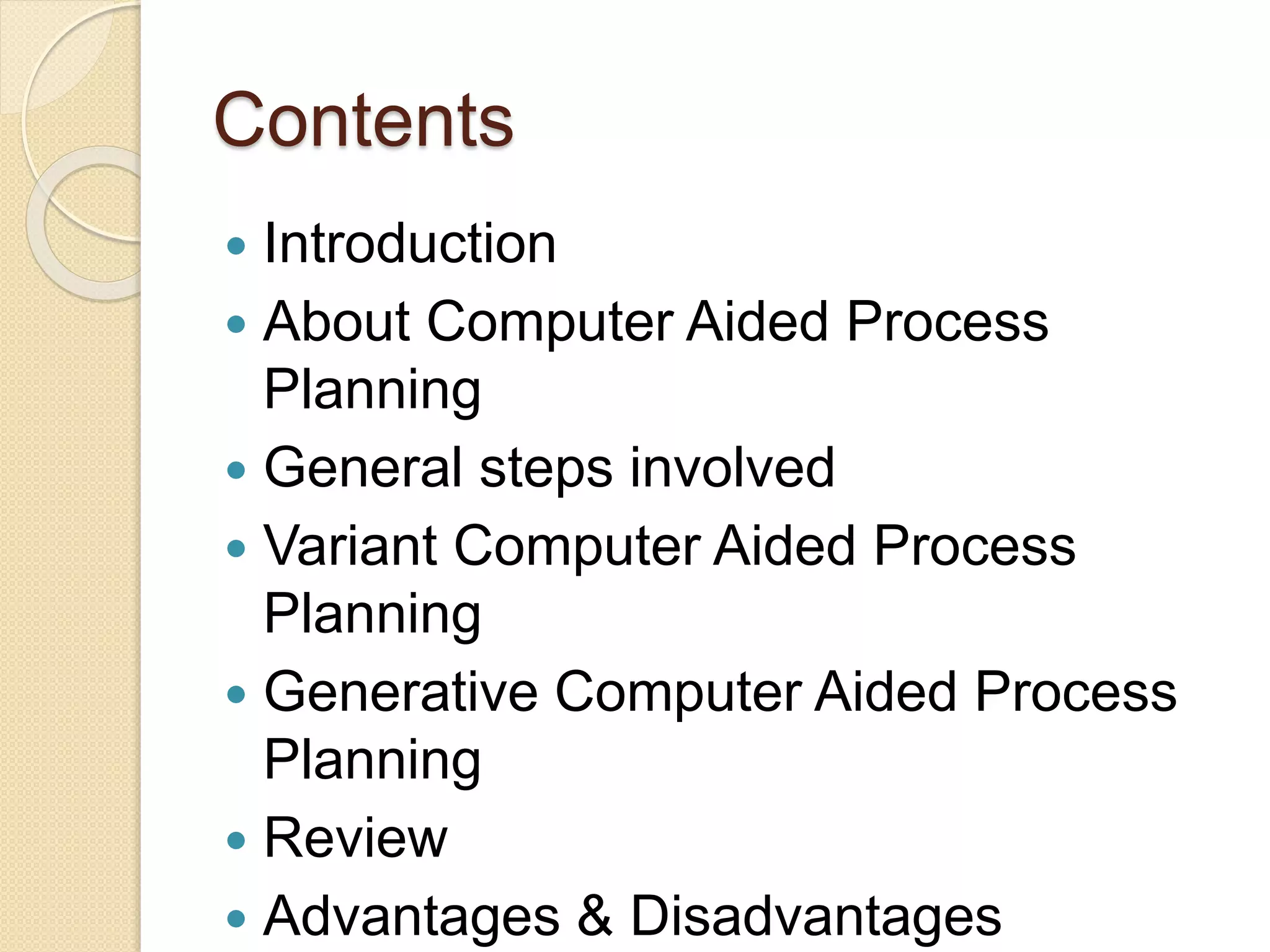
Presented By-
Pratik Patel 111213049
Mayank Chidri 111213015
Atul Gosavi 111213023
Pratik Gandhi 111213021
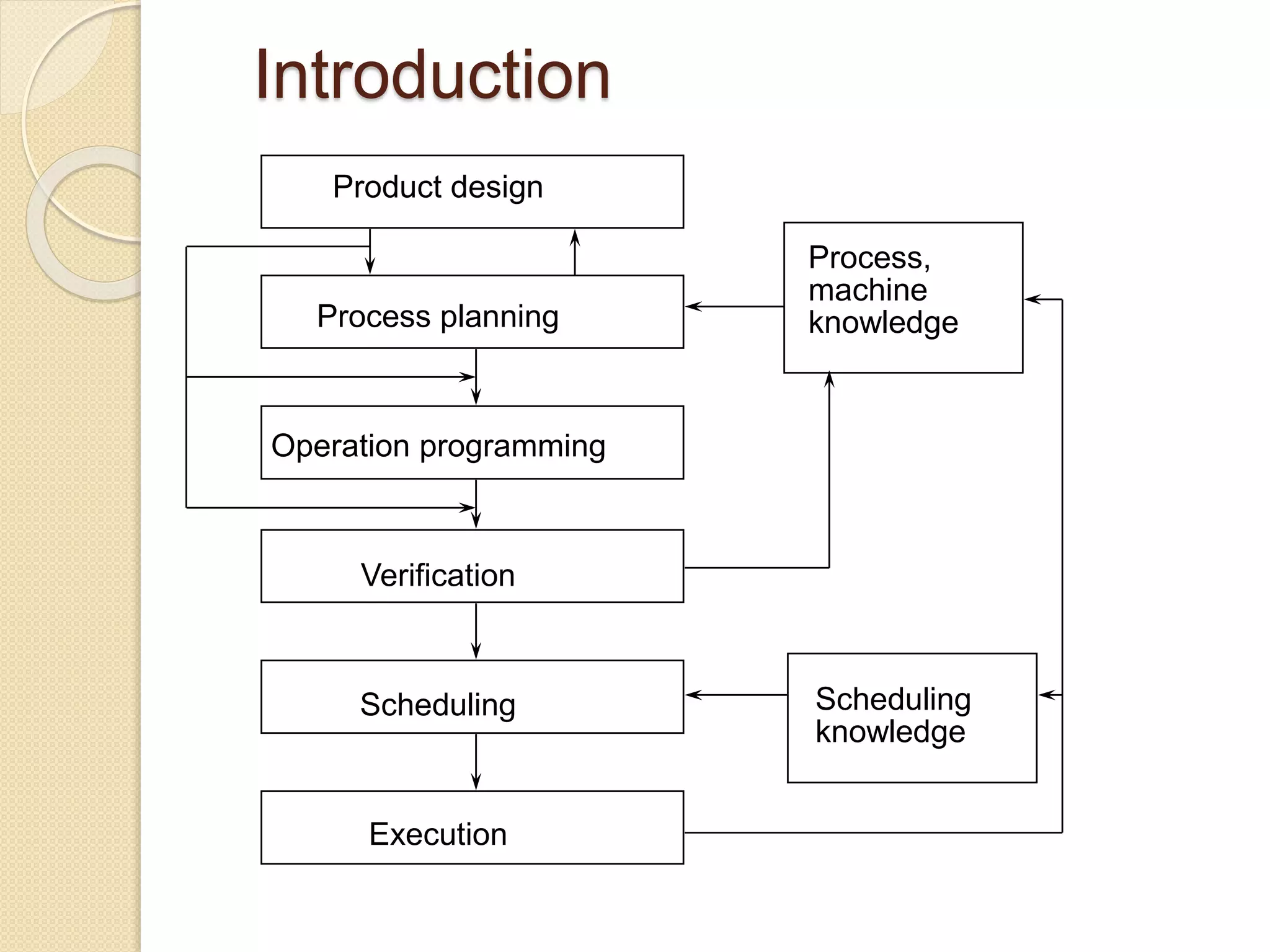
Contents
 Introduction
 About Computer Aided Process
Planning
 General steps involved
 Variant Computer Aided Process
Planning
 Generative Computer Aided Process
Planning
 Review
 Advantages & Disadvantages
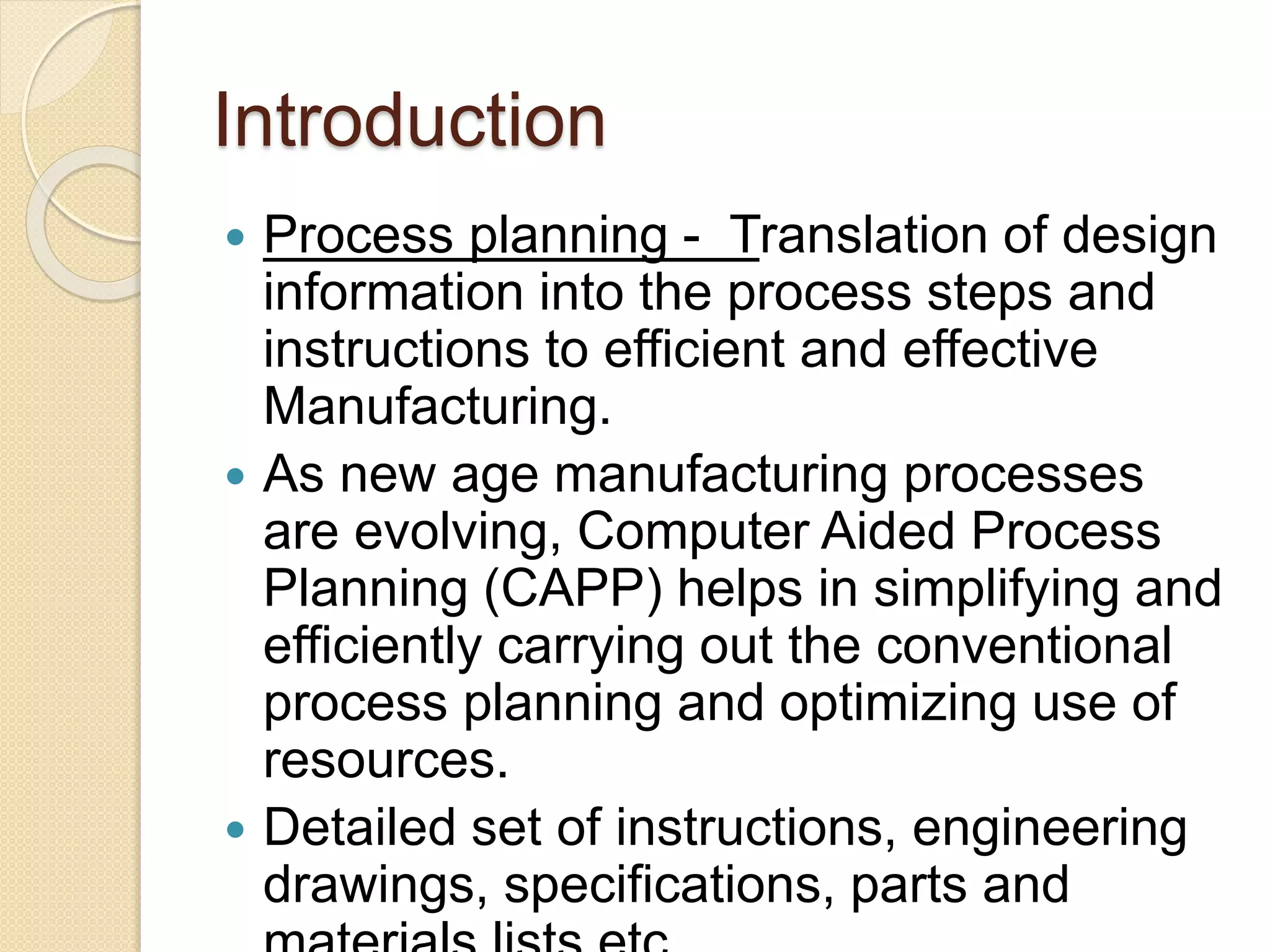
Introduction
Product design
Process planning
Operation programming
Verification
Scheduling
Execution
Process,
machine
knowledge
Scheduling
knowledge
Introduction
 Process planning - Translation of design
information into the process steps and
instructions to efficient and effective
Manufacturing.
 As new age manufacturing processes
are evolving, Computer Aided Process
Planning (CAPP) helps in simplifying and
efficiently carrying out the conventional
process planning and optimizing use of
resources.
 Detailed set of instructions, engineering
drawings, specifications, parts and
CAPP
 Development of process plan (route
sheet) using following approaches-
Variant Computer Aided Process Planning
Generative Computer Aided Process
Planning
 E.g. Design changes- changes cost
estimates
 Machine breakdown- alternate solution
effective solution
 Interaction among various functions of
an organization and dynamic changes.
General steps involved
 Design input, Material selection,
Process selection, Process
sequencing, Machine and tool
selection, Intermediate surface
determination, Fixture selection,
Machining parameter selection,
Cost/time estimation, Plan
preparation, Mc tape image
generation these are the general steps
involved in the computer aided
process planning.
Variant Computer Aided Process
Planning
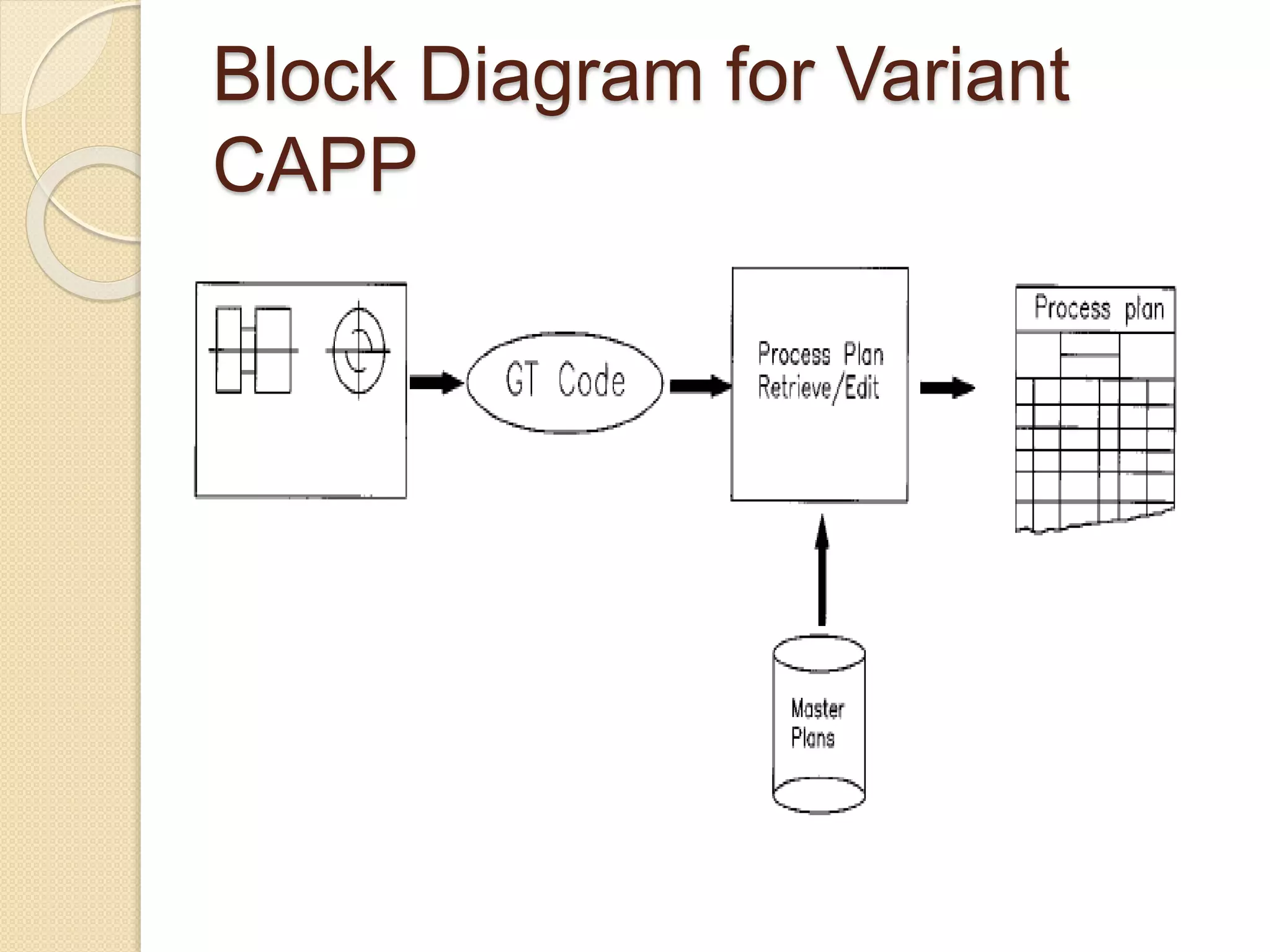
 Also known as data retrieval method.
 Process plan for a new part is generated
by recalling, identifying and retrieving an
existing plan for a similar part and
making necessary modifications for new
part known as ‘Master Part’
 Coding and classification schemes of
group technology (GT) used, number of
algorithms, mathematical models are
developed for family part formation and
plan retrieval.
 Using existing system can save a
tremendous amount of time and
manpower.
Block Diagram for Variant
CAPP
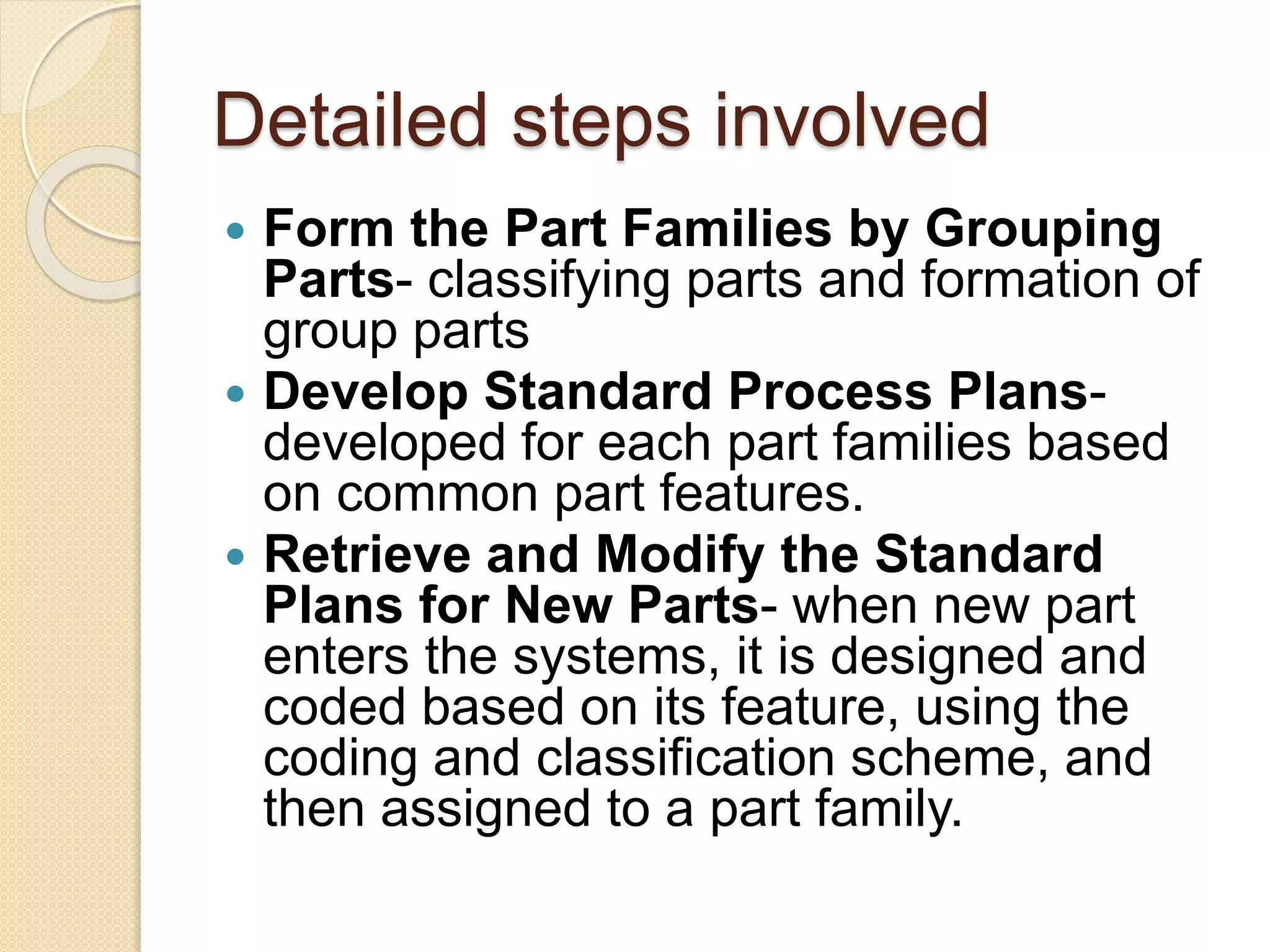
Detailed steps involved
 Form the Part Families by Grouping
Parts- classifying parts and formation of
group parts
 Develop Standard Process Plans-
developed for each part families based
on common part features.
 Retrieve and Modify the Standard
Plans for New Parts- when new part
enters the systems, it is designed and
coded based on its feature, using the
coding and classification scheme, and
then assigned to a part family.
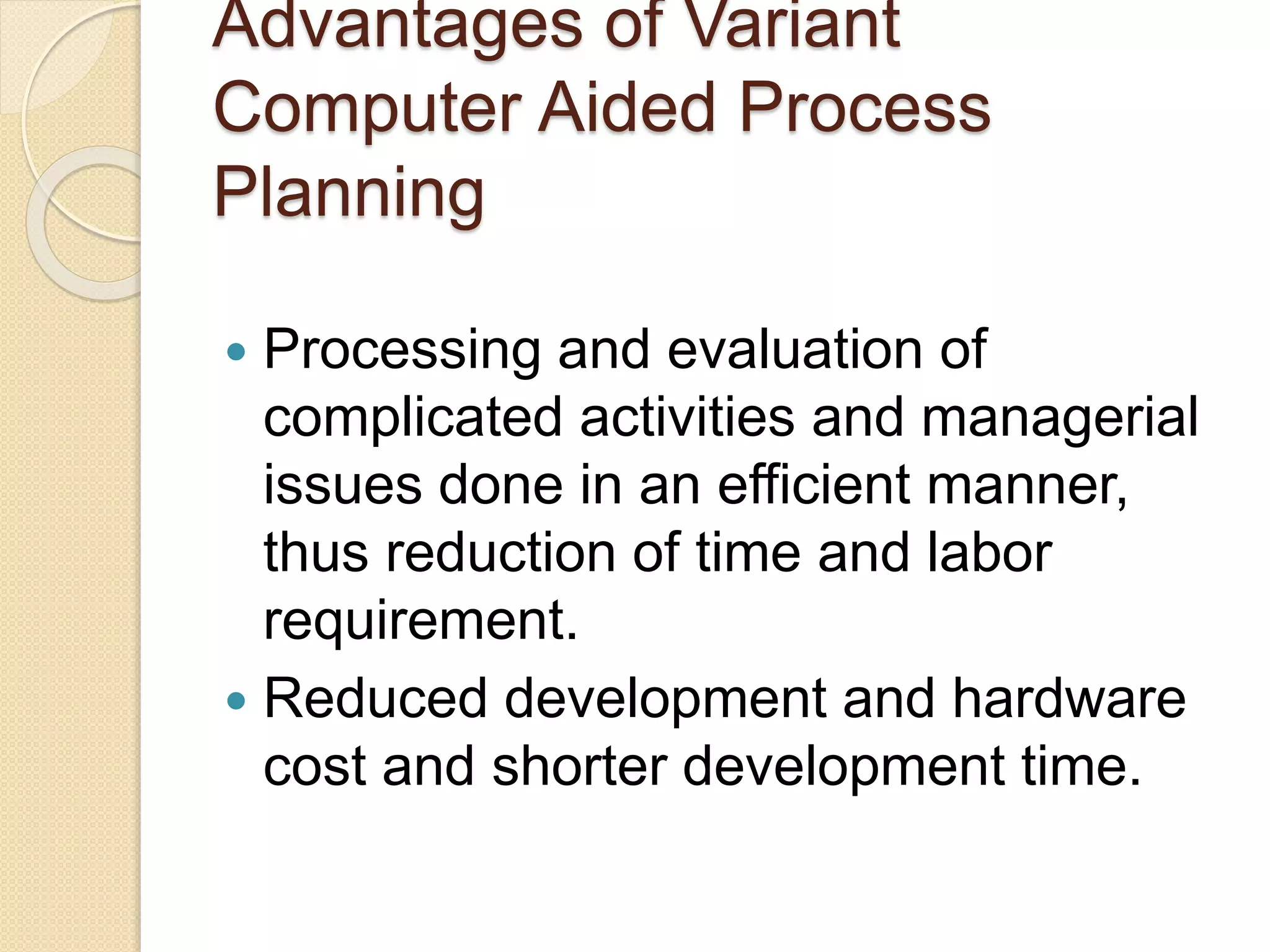
Advantages of Variant
Computer Aided Process
Planning
 Processing and evaluation of
complicated activities and managerial
issues done in an efficient manner,
thus reduction of time and labor
requirement.
 Reduced development and hardware
cost and shorter development time.
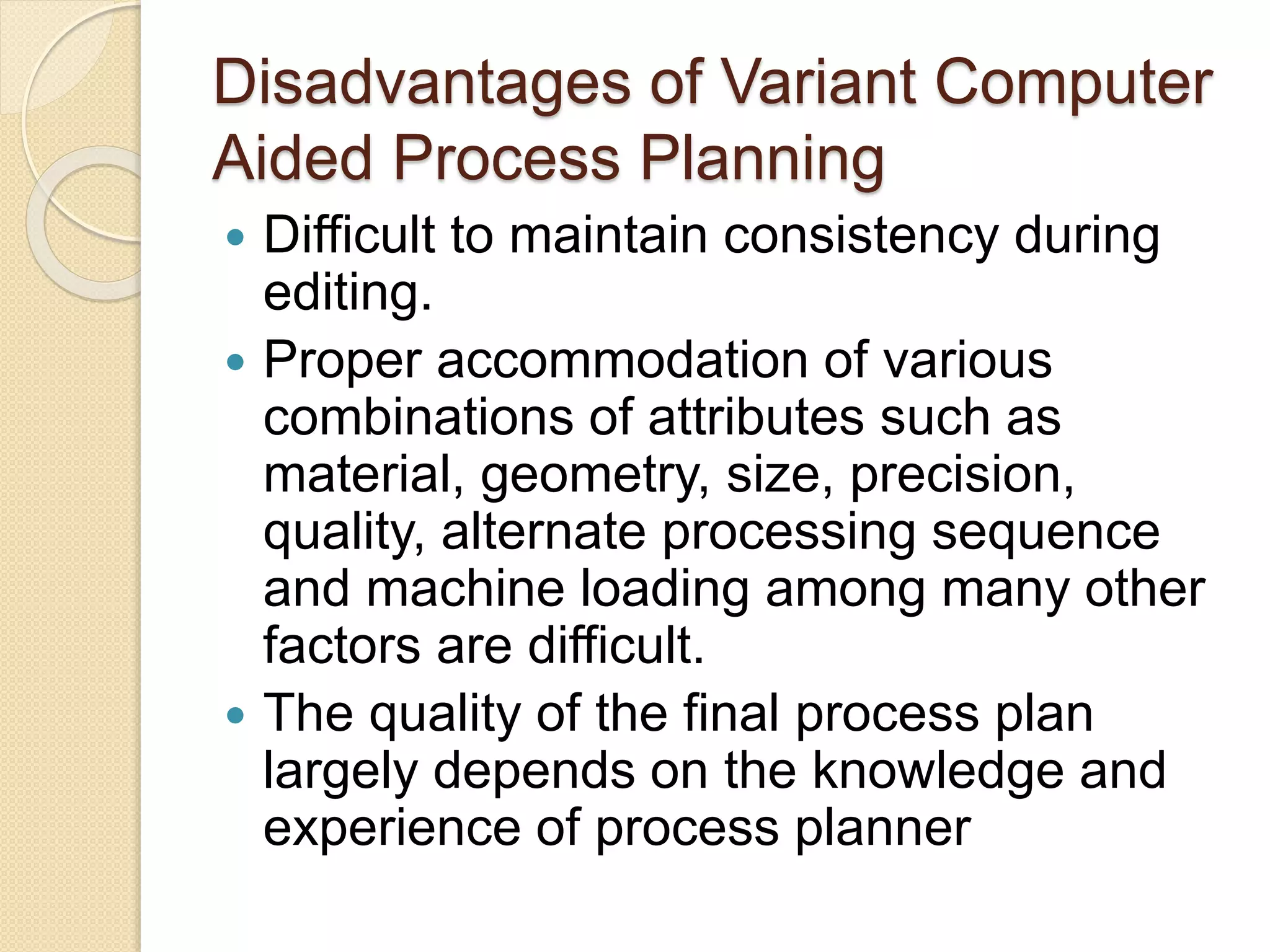
Disadvantages of Variant Computer
Aided Process Planning
 Difficult to maintain consistency during
editing.
 Proper accommodation of various
combinations of attributes such as
material, geometry, size, precision,
quality, alternate processing sequence
and machine loading among many other
factors are difficult.
 The quality of the final process plan
largely depends on the knowledge and
experience of process planner
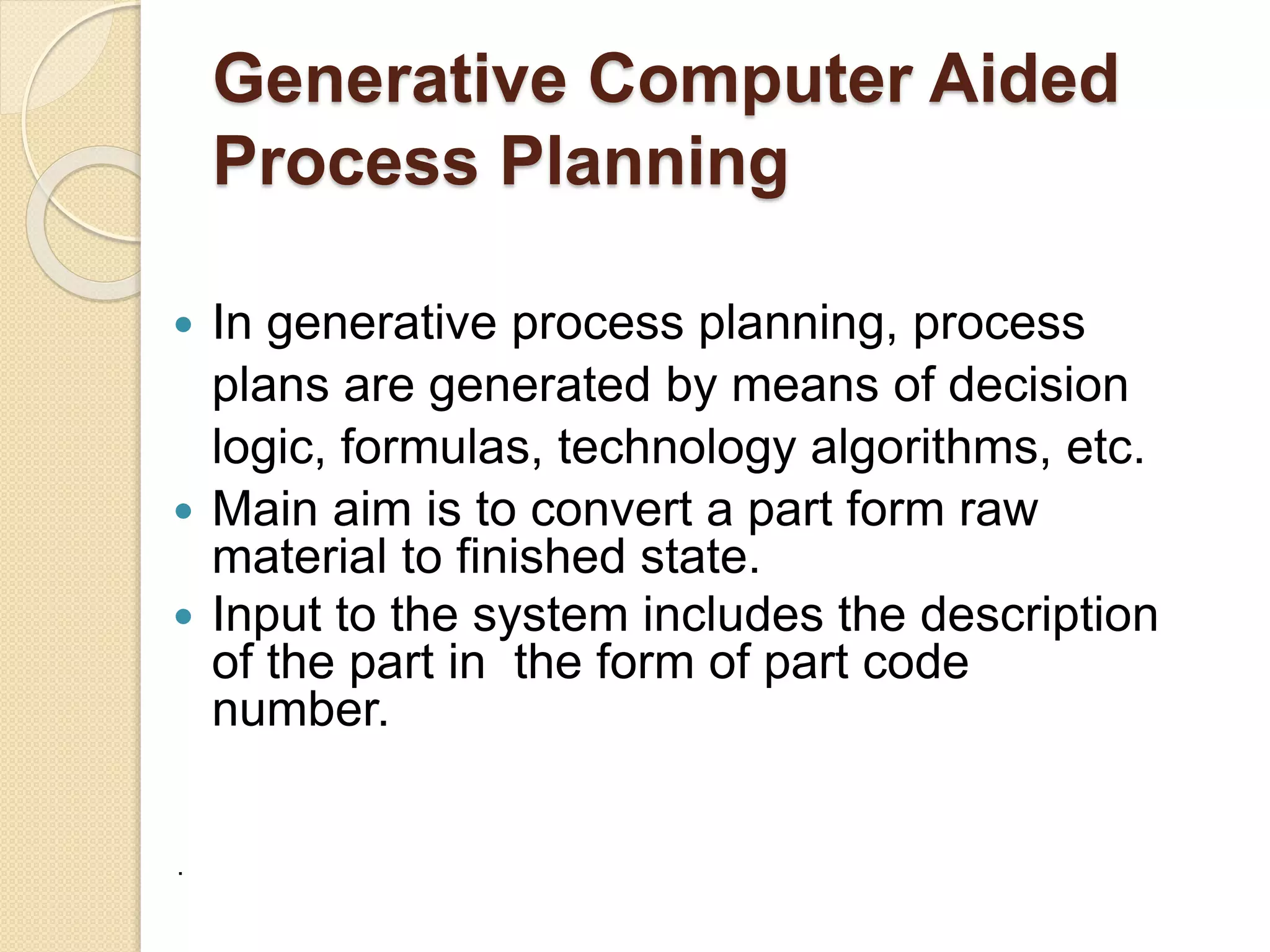
Generative Computer Aided
Process Planning
 In generative process planning, process
plans are generated by means of decision
logic, formulas, technology algorithms, etc.
 Main aim is to convert a part form raw
material to finished state.
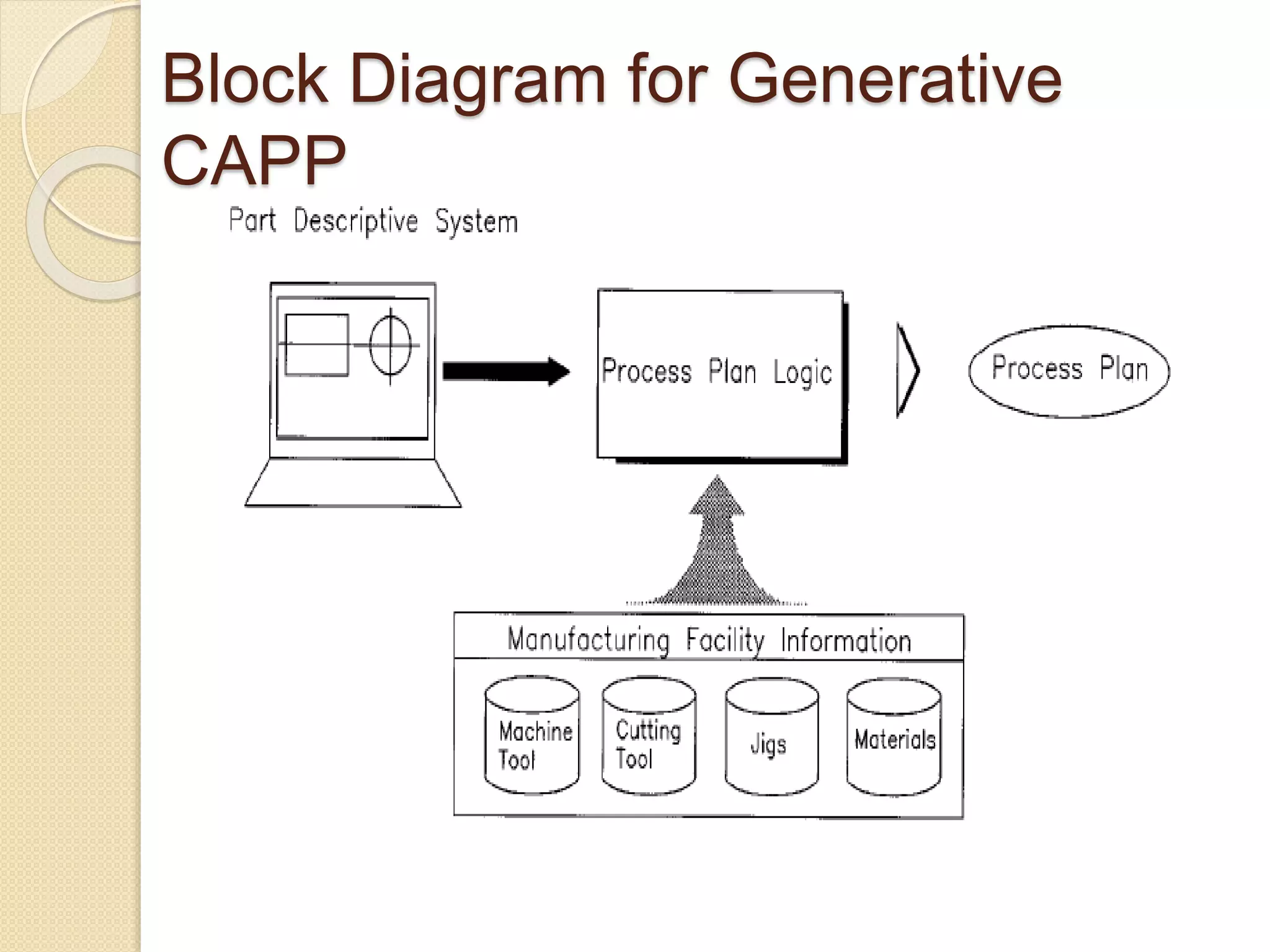
 Input to the system includes the description
of the part in the form of part code
number.
.
Generative Computer Aided
Process Planning
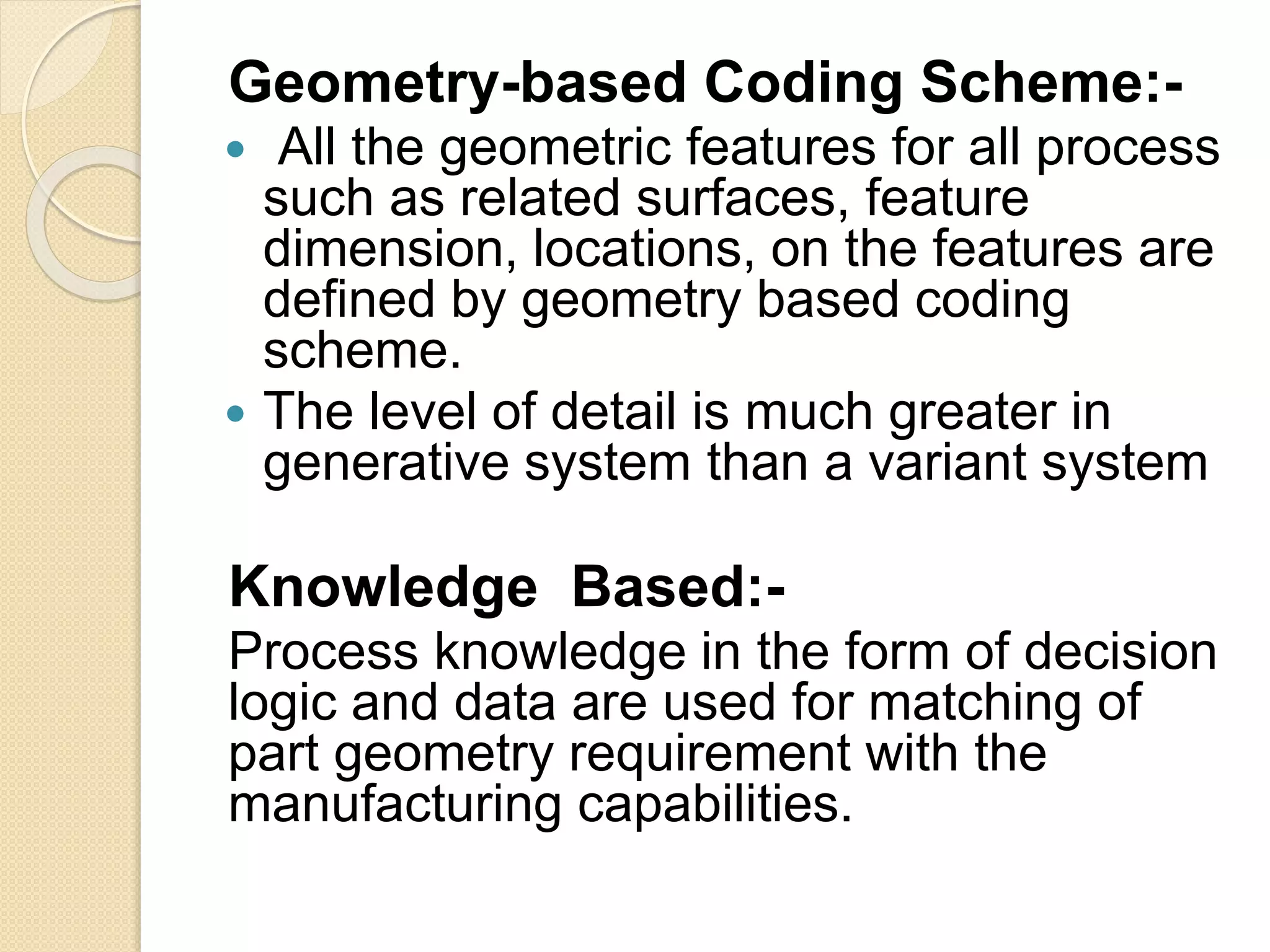
Generative process plan mainly
consists of two major components :
(i) Geometry based coding scheme.
(ii) Knowledge Based
Block Diagram for Generative
CAPP
Geometry-based Coding Scheme:-
 All the geometric features for all process
such as related surfaces, feature
dimension, locations, on the features are
defined by geometry based coding
scheme.
 The level of detail is much greater in
generative system than a variant system
Knowledge Based:-
Process knowledge in the form of decision
logic and data are used for matching of
part geometry requirement with the
manufacturing capabilities.
Advantages of Generative
Process Plan
 They rely less on group technology
code numbers since the process,
usually uses decision tree to
categorize parts into families.
 Maintenance and updating of stored
process plans are largely
unnecessary.
 New Components can planned as
easy as existing components
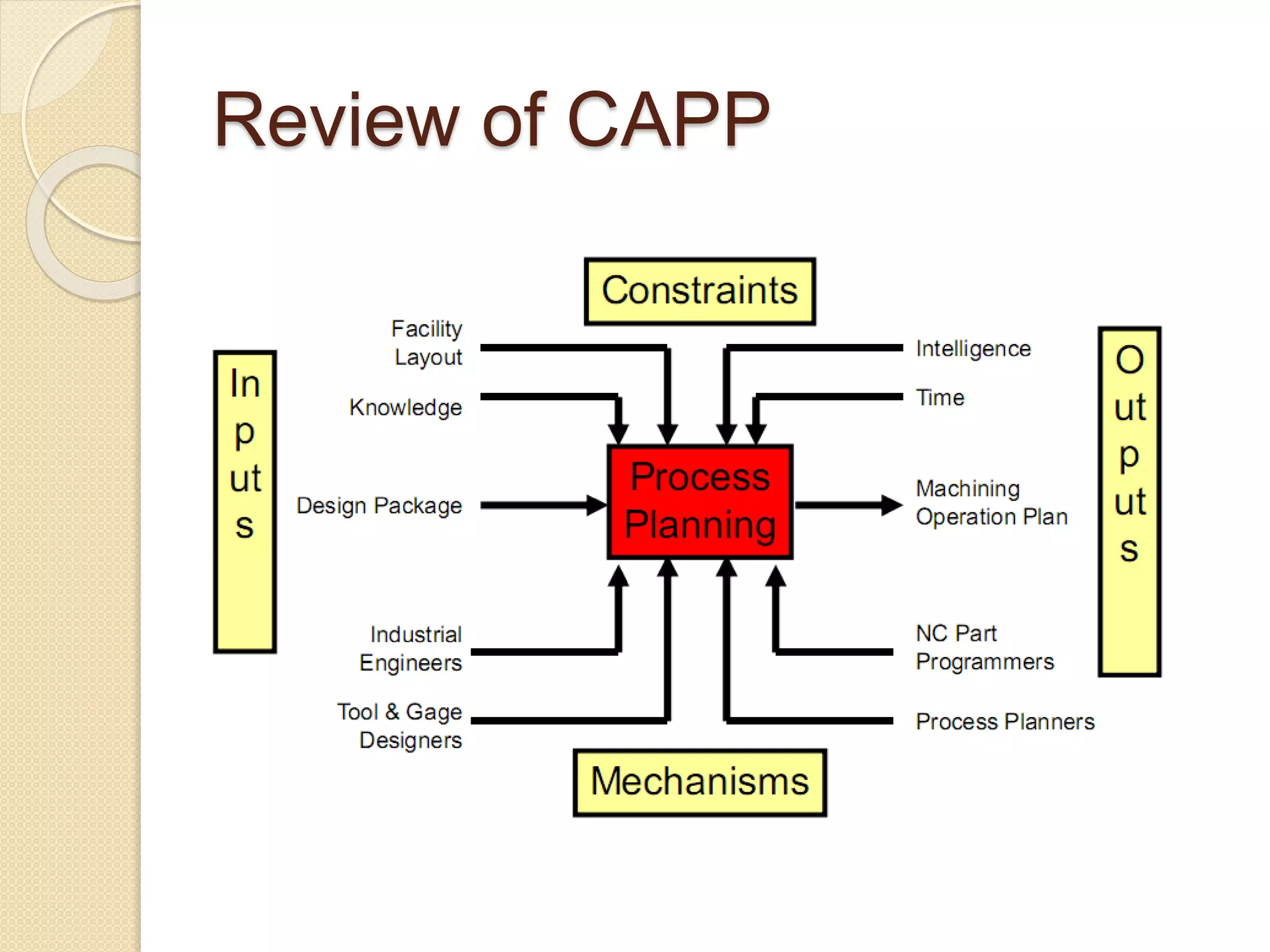
Review of CAPP
Advantages
 It can systematically produce accurate
and consistent process plans.
 It leads to the reduction of cost and lead
times of process plan.
 Skill requirement of process planer are
reduced to develop feasible process
plan.
 Interfacing of software for cost,
manufacturing lead time estimation, and
work standards can easily be done.
 Leads to the increased productivity of
process planar.
Disadvantages
 While compared with manual process
planning the CAPP systems have few
disadvantages:
 The inability to show special
manufacturing techniques.
 The initial cost of establishing a CAPP
system is high while compared with
manual process planning.
Thank You

Computer Aided Process Planning (CAPP)

  • 1.
    Computer Aided Process Planning PresentedBy- Pratik Patel 111213049 Mayank Chidri 111213015 Atul Gosavi 111213023 Pratik Gandhi 111213021
  • 2.
    Contents  Introduction  AboutComputer Aided Process Planning  General steps involved  Variant Computer Aided Process Planning  Generative Computer Aided Process Planning  Review  Advantages & Disadvantages
  • 3.
    Introduction Product design Process planning Operationprogramming Verification Scheduling Execution Process, machine knowledge Scheduling knowledge
  • 4.
    Introduction  Process planning- Translation of design information into the process steps and instructions to efficient and effective Manufacturing.  As new age manufacturing processes are evolving, Computer Aided Process Planning (CAPP) helps in simplifying and efficiently carrying out the conventional process planning and optimizing use of resources.  Detailed set of instructions, engineering drawings, specifications, parts and
  • 5.
    CAPP  Development ofprocess plan (route sheet) using following approaches- Variant Computer Aided Process Planning Generative Computer Aided Process Planning  E.g. Design changes- changes cost estimates  Machine breakdown- alternate solution effective solution  Interaction among various functions of an organization and dynamic changes.
  • 6.
    General steps involved Design input, Material selection, Process selection, Process sequencing, Machine and tool selection, Intermediate surface determination, Fixture selection, Machining parameter selection, Cost/time estimation, Plan preparation, Mc tape image generation these are the general steps involved in the computer aided process planning.
  • 7.
    Variant Computer AidedProcess Planning  Also known as data retrieval method.  Process plan for a new part is generated by recalling, identifying and retrieving an existing plan for a similar part and making necessary modifications for new part known as ‘Master Part’  Coding and classification schemes of group technology (GT) used, number of algorithms, mathematical models are developed for family part formation and plan retrieval.  Using existing system can save a tremendous amount of time and manpower.
  • 8.
    Block Diagram forVariant CAPP
  • 9.
    Detailed steps involved Form the Part Families by Grouping Parts- classifying parts and formation of group parts  Develop Standard Process Plans- developed for each part families based on common part features.  Retrieve and Modify the Standard Plans for New Parts- when new part enters the systems, it is designed and coded based on its feature, using the coding and classification scheme, and then assigned to a part family.
  • 10.
    Advantages of Variant ComputerAided Process Planning  Processing and evaluation of complicated activities and managerial issues done in an efficient manner, thus reduction of time and labor requirement.  Reduced development and hardware cost and shorter development time.
  • 11.
    Disadvantages of VariantComputer Aided Process Planning  Difficult to maintain consistency during editing.  Proper accommodation of various combinations of attributes such as material, geometry, size, precision, quality, alternate processing sequence and machine loading among many other factors are difficult.  The quality of the final process plan largely depends on the knowledge and experience of process planner
  • 12.
    Generative Computer Aided ProcessPlanning  In generative process planning, process plans are generated by means of decision logic, formulas, technology algorithms, etc.  Main aim is to convert a part form raw material to finished state.  Input to the system includes the description of the part in the form of part code number. .
  • 13.
    Generative Computer Aided ProcessPlanning Generative process plan mainly consists of two major components : (i) Geometry based coding scheme. (ii) Knowledge Based
  • 14.
    Block Diagram forGenerative CAPP
  • 15.
    Geometry-based Coding Scheme:- All the geometric features for all process such as related surfaces, feature dimension, locations, on the features are defined by geometry based coding scheme.  The level of detail is much greater in generative system than a variant system Knowledge Based:- Process knowledge in the form of decision logic and data are used for matching of part geometry requirement with the manufacturing capabilities.
  • 16.
    Advantages of Generative ProcessPlan  They rely less on group technology code numbers since the process, usually uses decision tree to categorize parts into families.  Maintenance and updating of stored process plans are largely unnecessary.  New Components can planned as easy as existing components
  • 17.
  • 18.
    Advantages  It cansystematically produce accurate and consistent process plans.  It leads to the reduction of cost and lead times of process plan.  Skill requirement of process planer are reduced to develop feasible process plan.  Interfacing of software for cost, manufacturing lead time estimation, and work standards can easily be done.  Leads to the increased productivity of process planar.
  • 19.
    Disadvantages  While comparedwith manual process planning the CAPP systems have few disadvantages:  The inability to show special manufacturing techniques.  The initial cost of establishing a CAPP system is high while compared with manual process planning.
  • 20.