Computer Aided Process Planning
NAME – Danish Saifi
Roll no – 19SCME201003
INTRODUCTION OF COMPUTER AIDED PROCESS
PLANNING (CAPP)
 CAPP is the use of computer technology to aid in the
process planning of a part or product in manufacturing.
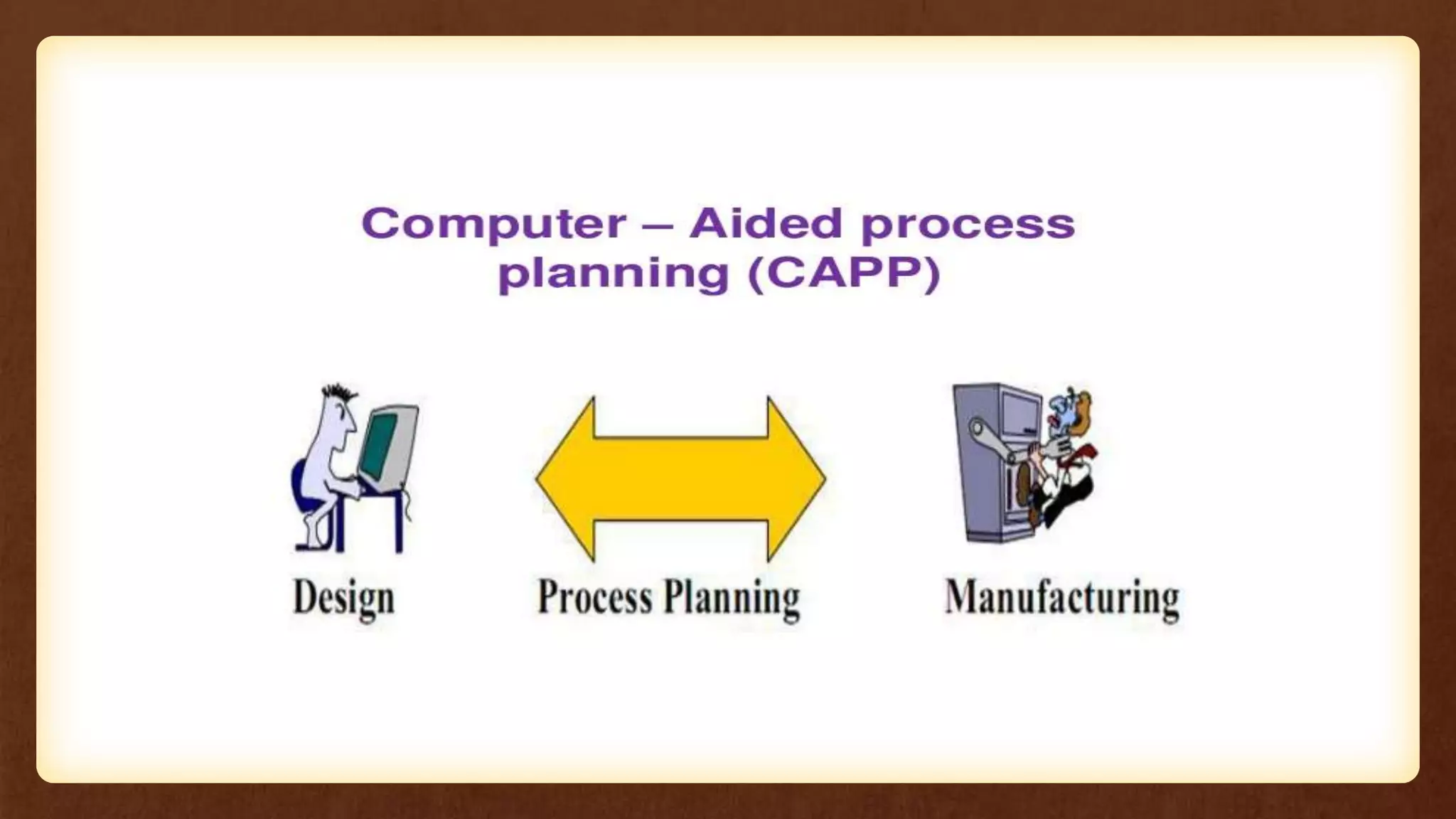
 CAPP is the link between CAD and CAM in that it
provides for the planning of the process to be used in
producing a designed part
 Process planning is a production organization activity
that transforms a product design into a set of instruction
(sequence, machine tool setup etc.) to manufacture
machined part economically and competitively
Two types of CAPP systems
1) Variant system:
computer files contain a standard process plan for a particular part to
be manufactured.
2) Generative system:
Process plan is automatically generated on the basis of the same
logical procedures.
COMPUTER AIDED PROCESS PLANNING
(CAPP) ROLES IN MANUFACTURING
• Used to develop a product manufacturing plan based on
projected variables such as cost, lead times, equipment
availability, production volumes, potential material substitution
routings and testing requirements.
• CAPP is a decision-making process, it determines a set of
instruction and machining parameters required to manufacture a
part.
Two method in Process Planning:
a) The manual experience based planning method
 The manual experience based process planning is most
widely used
 It is mainly based on a manufacturing engineer's experience
and knowledge of production facilities, equipment, their
capabilities, processes and tooling.
b) Computer Aided Process Planning
Purpose of process planning is to translate the
design requirements into manufacturing
Current status of CAPP
 Artificial neural network.
Fuzzy logic.
Agent –based technology.
Internet-based technology.
Advantages of CAPP
• Reduces the demand on the skilled planner
• Reduces the process planning time
• Reduces both process planning and manufacturing cost
• Creates consistent plans
• It produces accurate plans
• It increases productivity
Disadvantages of CAPP
• It does not show special manufacturing techniques.
• The initial cost of establishing a CAPP system is high while
compared with manual process planning.
Danish saifi
Danish

computer aided process planning

  • 1.
    Computer Aided ProcessPlanning NAME – Danish Saifi Roll no – 19SCME201003
  • 4.
    INTRODUCTION OF COMPUTERAIDED PROCESS PLANNING (CAPP)  CAPP is the use of computer technology to aid in the process planning of a part or product in manufacturing.  CAPP is the link between CAD and CAM in that it provides for the planning of the process to be used in producing a designed part  Process planning is a production organization activity that transforms a product design into a set of instruction (sequence, machine tool setup etc.) to manufacture machined part economically and competitively
  • 6.
    Two types ofCAPP systems 1) Variant system: computer files contain a standard process plan for a particular part to be manufactured. 2) Generative system: Process plan is automatically generated on the basis of the same logical procedures.
  • 7.
    COMPUTER AIDED PROCESSPLANNING (CAPP) ROLES IN MANUFACTURING • Used to develop a product manufacturing plan based on projected variables such as cost, lead times, equipment availability, production volumes, potential material substitution routings and testing requirements. • CAPP is a decision-making process, it determines a set of instruction and machining parameters required to manufacture a part.
  • 8.
    Two method inProcess Planning: a) The manual experience based planning method  The manual experience based process planning is most widely used  It is mainly based on a manufacturing engineer's experience and knowledge of production facilities, equipment, their capabilities, processes and tooling.
  • 9.
    b) Computer AidedProcess Planning Purpose of process planning is to translate the design requirements into manufacturing
  • 10.
    Current status ofCAPP  Artificial neural network. Fuzzy logic. Agent –based technology. Internet-based technology.
  • 11.
    Advantages of CAPP •Reduces the demand on the skilled planner • Reduces the process planning time • Reduces both process planning and manufacturing cost • Creates consistent plans • It produces accurate plans • It increases productivity
  • 12.
    Disadvantages of CAPP •It does not show special manufacturing techniques. • The initial cost of establishing a CAPP system is high while compared with manual process planning.
  • 13.