COMPUTER AIDED
PROCESS PLANNING
(CAPP).
B.E. MECH A VII Prepared by: Bhushan V. Tawade.
Subject: PPC Guided by prof. Karande
CONTENT
• What is CAPP
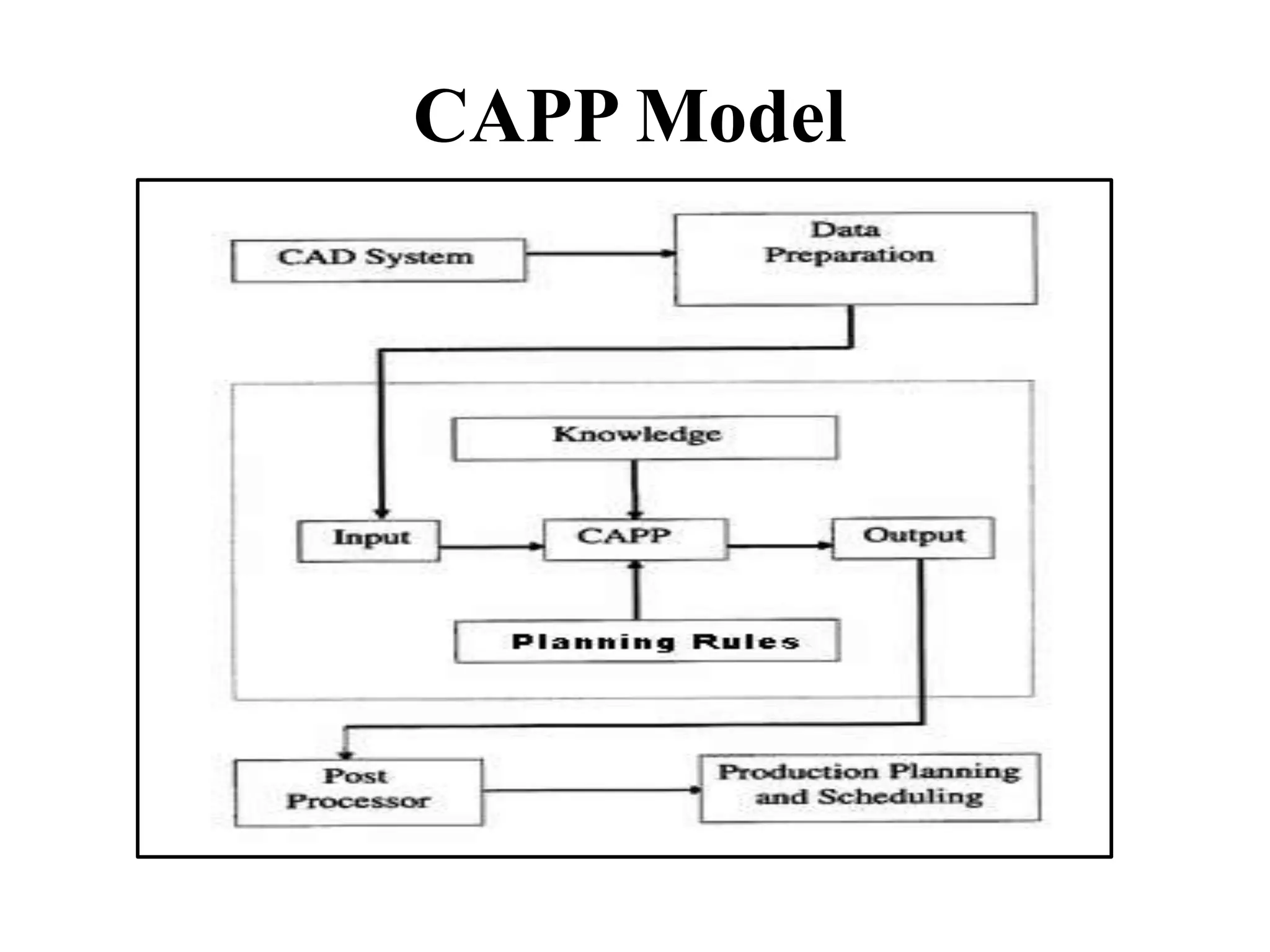
• CAPP Model
• Types of approaches
• Variant process planning
• Generative process planning
• Benefits Of CAPP
What is CAPP
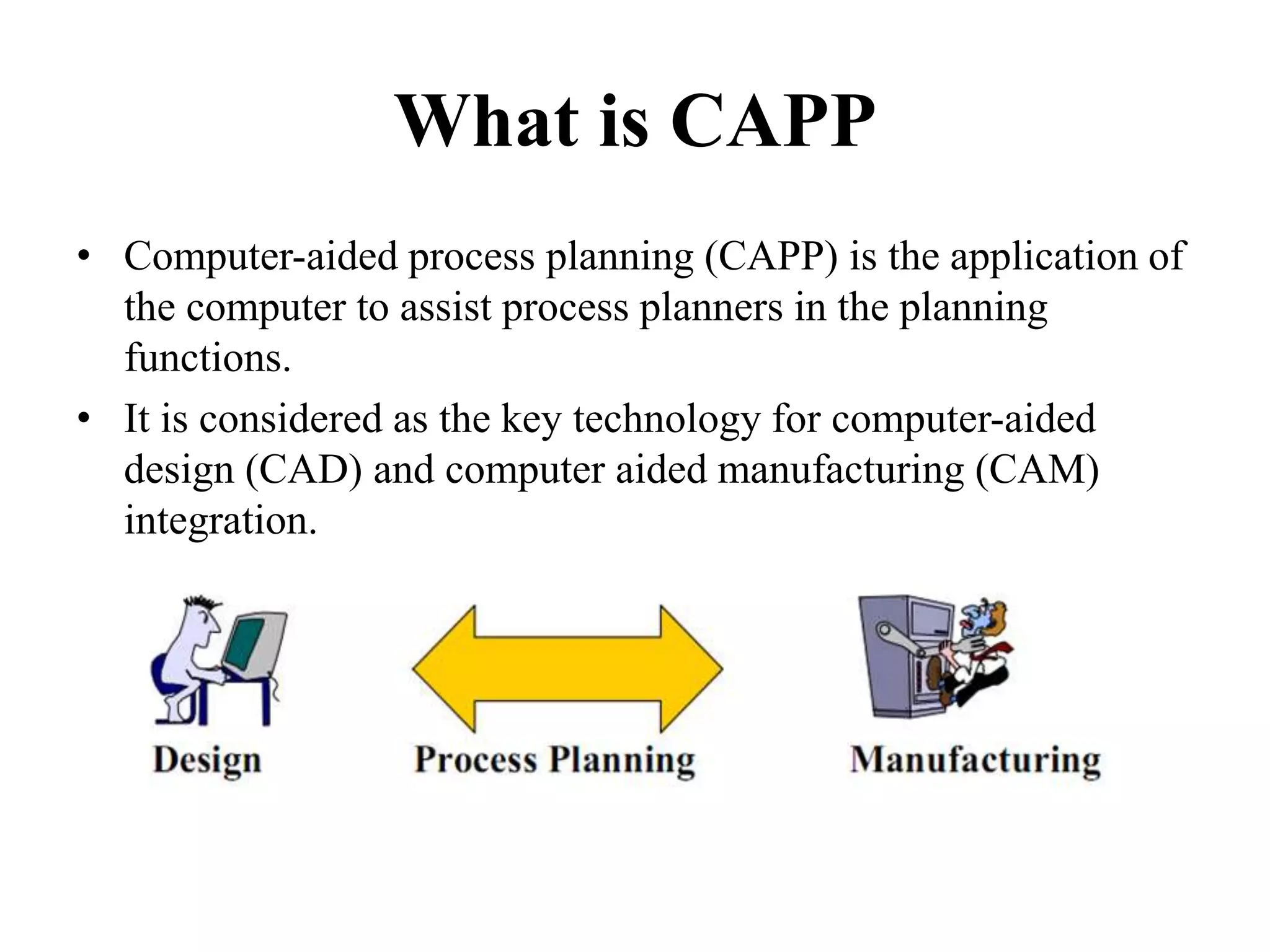
• Computer-aided process planning (CAPP) is the application of
the computer to assist process planners in the planning
functions.
• It is considered as the key technology for computer-aided
design (CAD) and computer aided manufacturing (CAM)
integration.
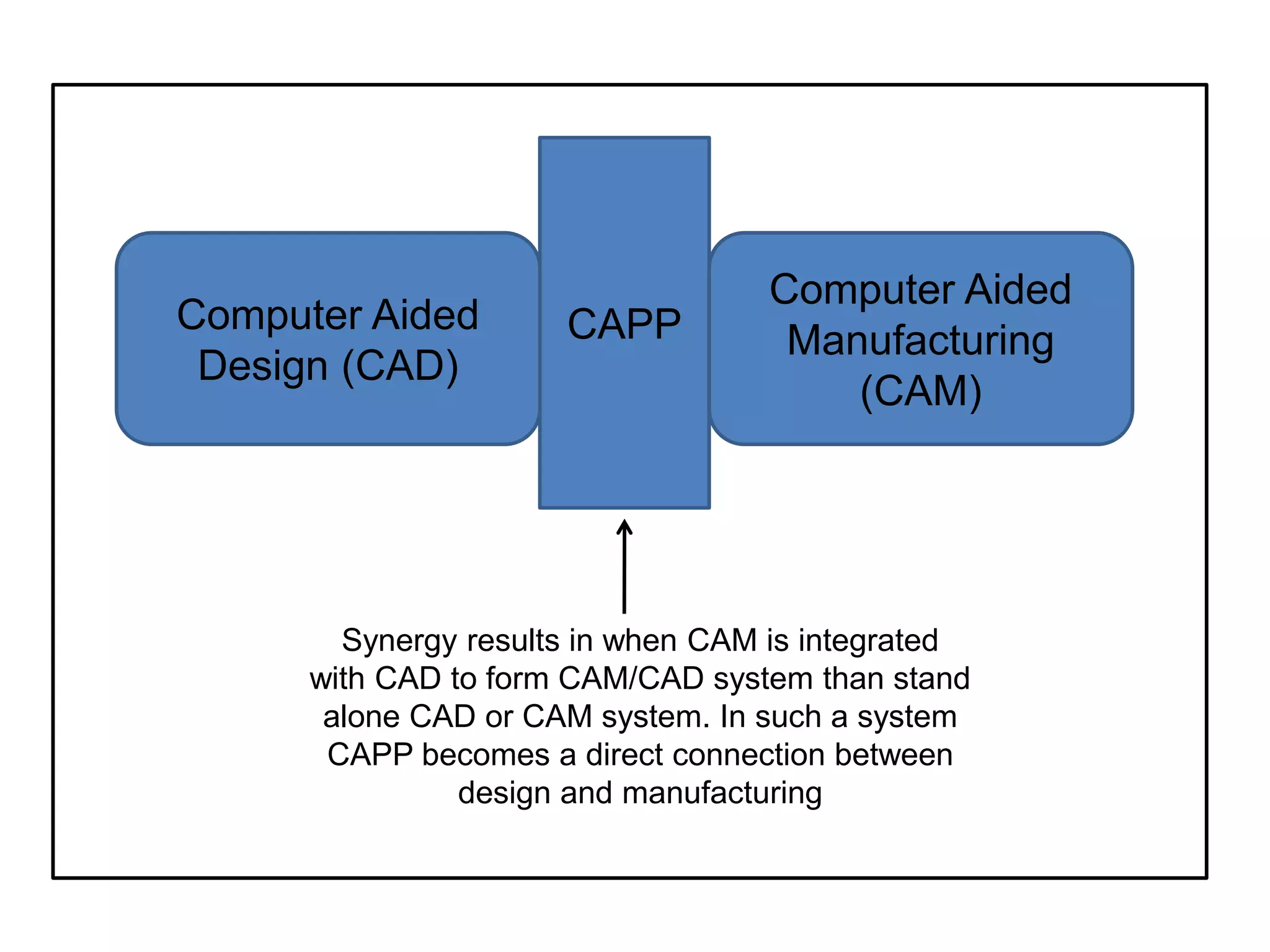
Computer Aided
Design (CAD)
CAPP
Computer Aided
Manufacturing
(CAM)
Synergy results in when CAM is integrated
with CAD to form CAM/CAD system than stand
alone CAD or CAM system. In such a system
CAPP becomes a direct connection between
design and manufacturing
CAPP Model
Types of approaches
• Variant process planning
• Generative process planning
Variant process planning
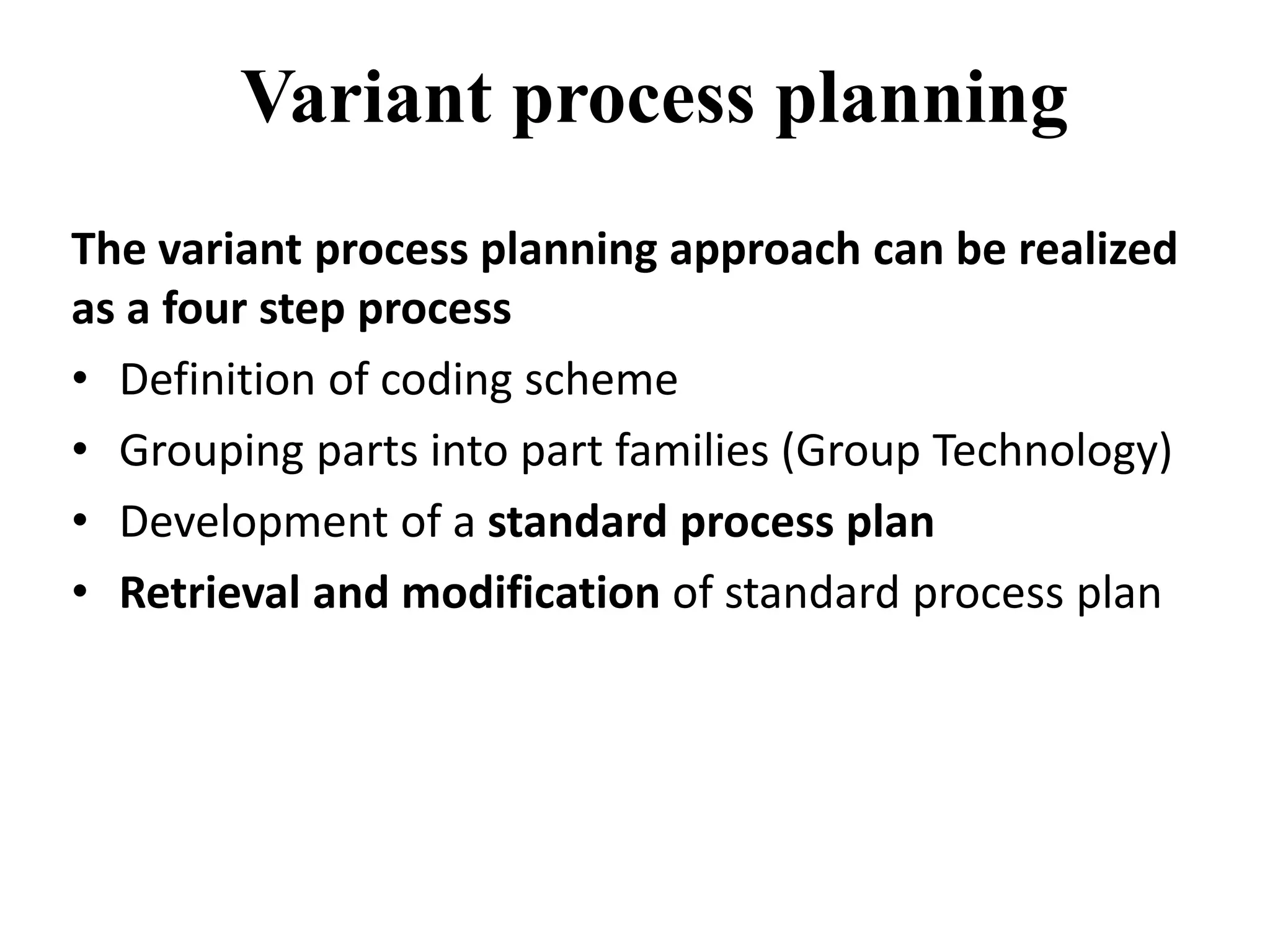
The variant process planning approach can be realized
as a four step process
• Definition of coding scheme
• Grouping parts into part families (Group Technology)
• Development of a standard process plan
• Retrieval and modification of standard process plan
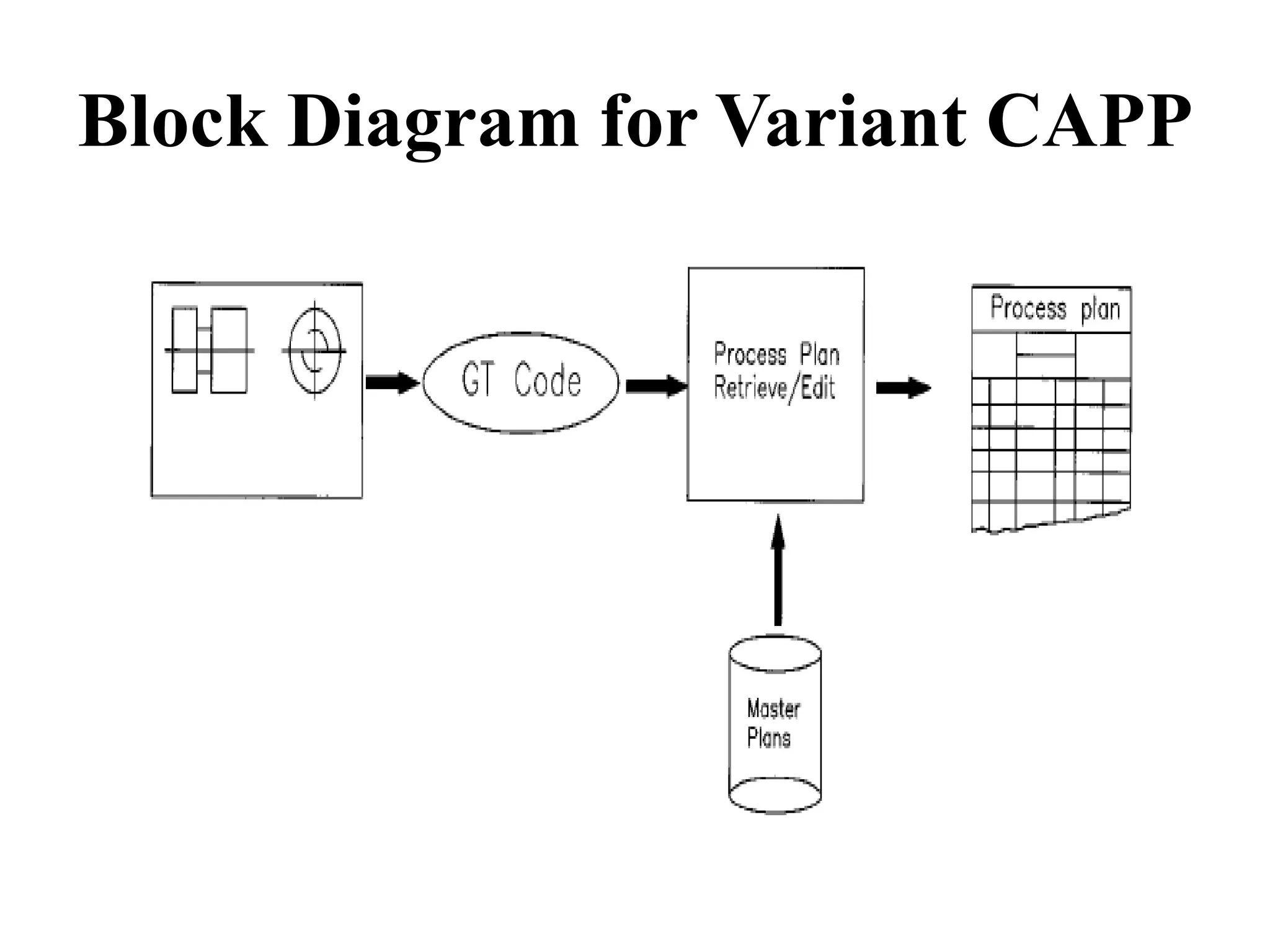
Block Diagram for Variant CAPP
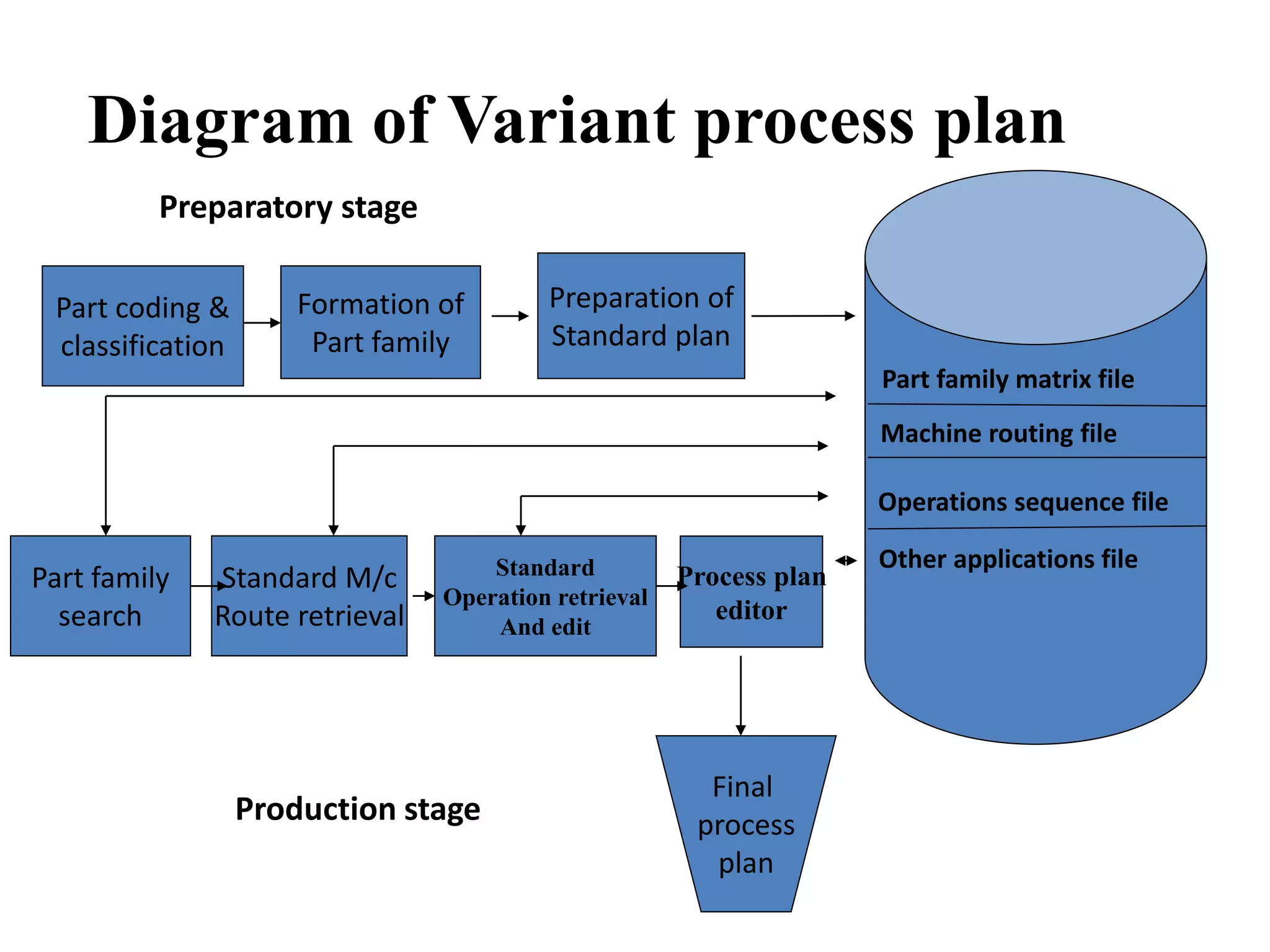
Part coding &
classification
Formation of
Part family
Preparation of
Standard plan
Part family
search
Standard M/c
Route retrieval
Standard
Operation retrieval
And edit
Process plan
editor
Final
process
plan
Operations sequence file
Part family matrix file
Machine routing file
Other applications file
Preparatory stage
Production stage
Diagram of Variant process plan
Generative process planning
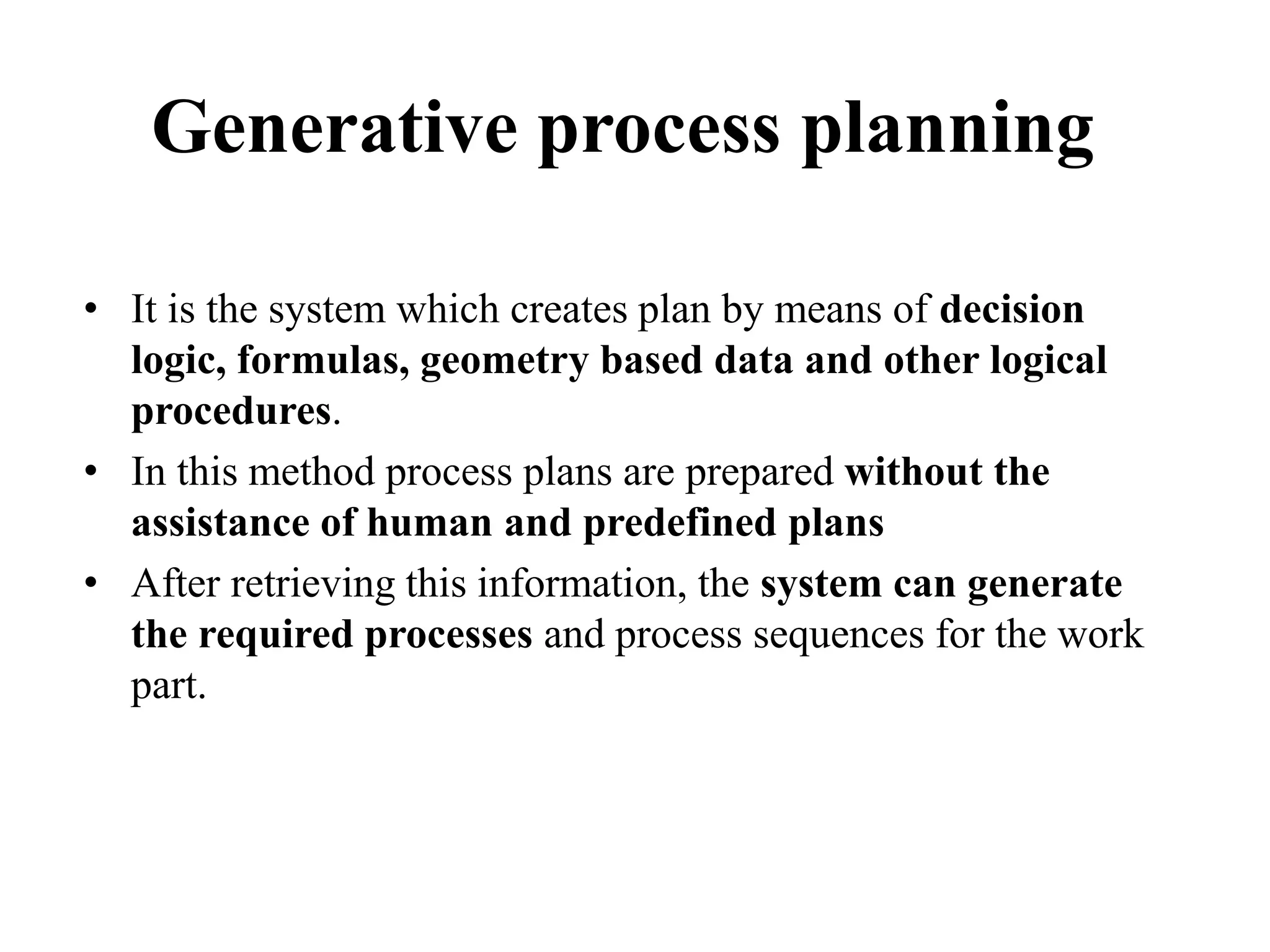
• It is the system which creates plan by means of decision
logic, formulas, geometry based data and other logical
procedures.
• In this method process plans are prepared without the
assistance of human and predefined plans
• After retrieving this information, the system can generate
the required processes and process sequences for the work
part.
Two major components of generative
Geometry description and coding component:
• This defines all geometric features for process related surfaces
together with feature dimensions, locations, tolerances and the
surface finish desired on the features.
• The level of detail is much greater in a generative system than a
variant system.
Process knowledge database & decision making logic:
• The knowledge will be in the form of decision logic.
• It is required to match the part geometry requirement with
manufacturing capability using decision logic and data.
• It includes selection of processes, mfg. equipment's, work
holding devices, jigs & fixtures, inspection instruments, etc.
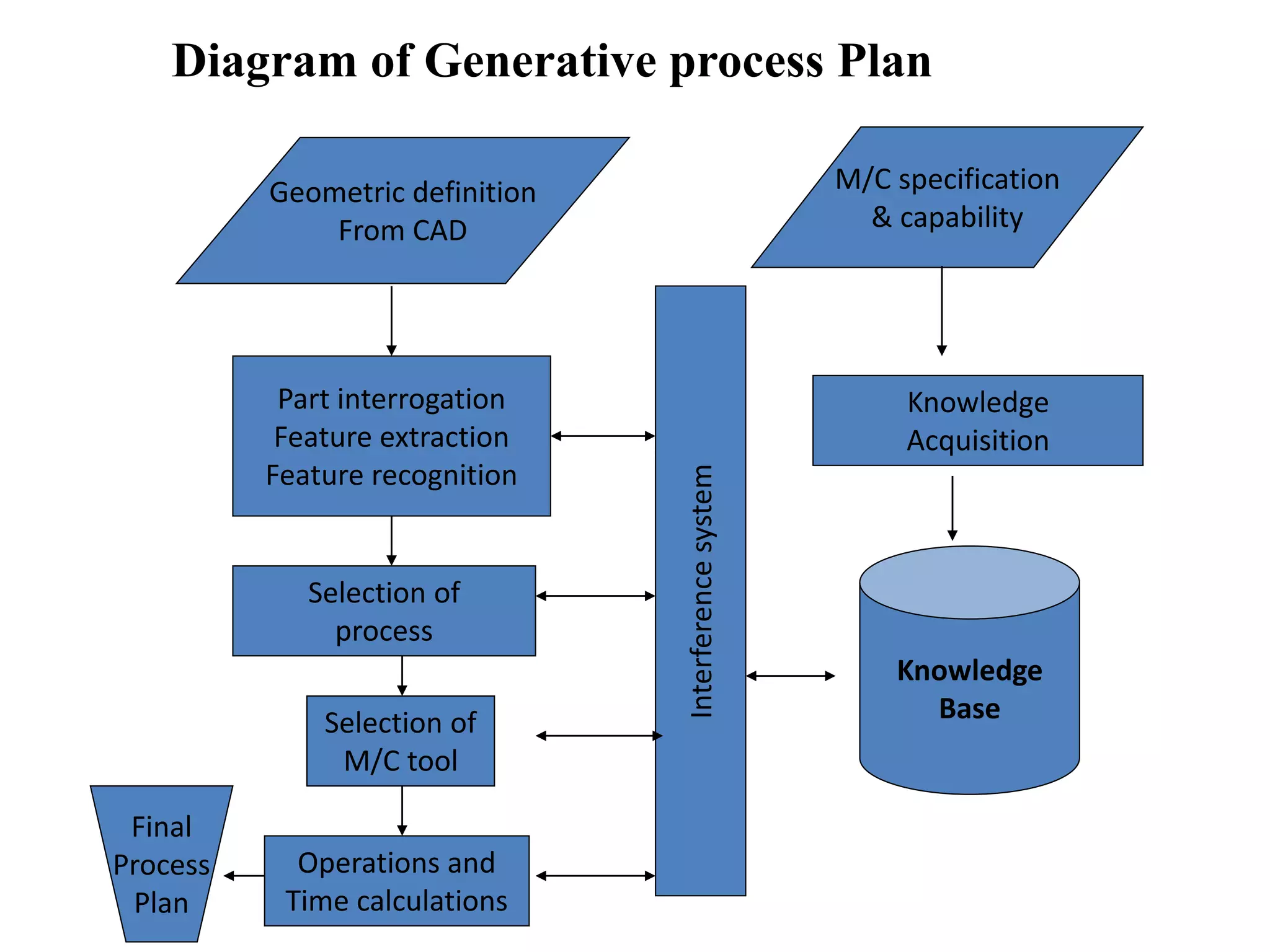
Geometric definition
From CAD
Part interrogation
Feature extraction
Feature recognition
Selection of
process
Selection of
M/C tool
Operations and
Time calculations
Interferencesystem
M/C specification
& capability
Knowledge
Acquisition
Knowledge
Base
Final
Process
Plan
Diagram of Generative process Plan
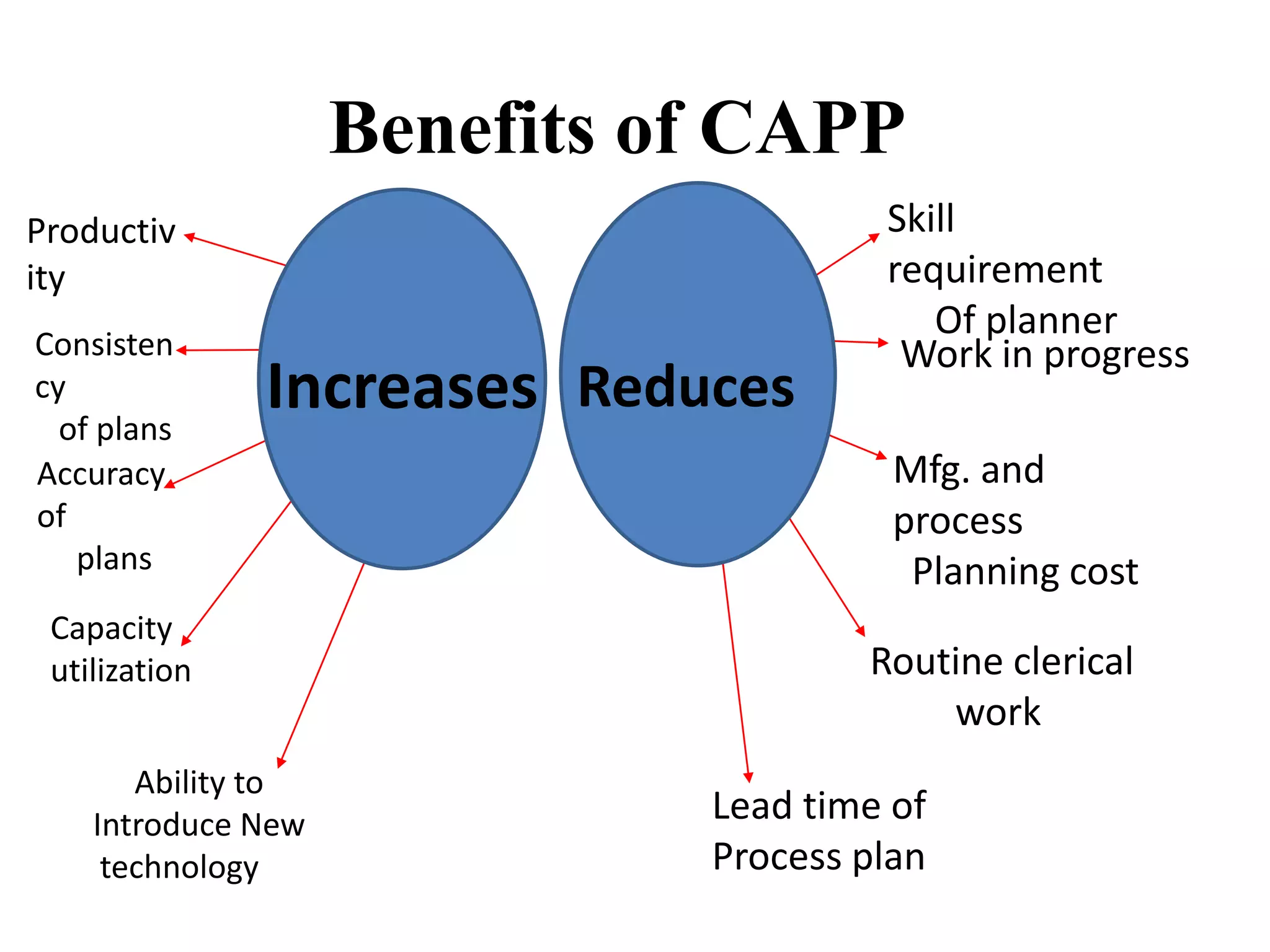
Benefits of CAPP
Productiv
ity
Consisten
cy
of plans
Accuracy
of
plans
Capacity
utilization
Ability to
Introduce New
technology
Increases
Lead time of
Process plan
Routine clerical
work
Mfg. and
process
Planning cost
Work in progress
Skill
requirement
Of planner
Reduces
Thank You!

Computer Aided Process Planning (CAPP)

  • 1.
    COMPUTER AIDED PROCESS PLANNING (CAPP). B.E.MECH A VII Prepared by: Bhushan V. Tawade. Subject: PPC Guided by prof. Karande
  • 2.
    CONTENT • What isCAPP • CAPP Model • Types of approaches • Variant process planning • Generative process planning • Benefits Of CAPP
  • 3.
    What is CAPP •Computer-aided process planning (CAPP) is the application of the computer to assist process planners in the planning functions. • It is considered as the key technology for computer-aided design (CAD) and computer aided manufacturing (CAM) integration.
  • 4.
    Computer Aided Design (CAD) CAPP ComputerAided Manufacturing (CAM) Synergy results in when CAM is integrated with CAD to form CAM/CAD system than stand alone CAD or CAM system. In such a system CAPP becomes a direct connection between design and manufacturing
  • 5.
  • 6.
    Types of approaches •Variant process planning • Generative process planning
  • 7.
    Variant process planning Thevariant process planning approach can be realized as a four step process • Definition of coding scheme • Grouping parts into part families (Group Technology) • Development of a standard process plan • Retrieval and modification of standard process plan
  • 8.
    Block Diagram forVariant CAPP
  • 9.
    Part coding & classification Formationof Part family Preparation of Standard plan Part family search Standard M/c Route retrieval Standard Operation retrieval And edit Process plan editor Final process plan Operations sequence file Part family matrix file Machine routing file Other applications file Preparatory stage Production stage Diagram of Variant process plan
  • 10.
    Generative process planning •It is the system which creates plan by means of decision logic, formulas, geometry based data and other logical procedures. • In this method process plans are prepared without the assistance of human and predefined plans • After retrieving this information, the system can generate the required processes and process sequences for the work part.
  • 11.
    Two major componentsof generative Geometry description and coding component: • This defines all geometric features for process related surfaces together with feature dimensions, locations, tolerances and the surface finish desired on the features. • The level of detail is much greater in a generative system than a variant system. Process knowledge database & decision making logic: • The knowledge will be in the form of decision logic. • It is required to match the part geometry requirement with manufacturing capability using decision logic and data. • It includes selection of processes, mfg. equipment's, work holding devices, jigs & fixtures, inspection instruments, etc.
  • 12.
    Geometric definition From CAD Partinterrogation Feature extraction Feature recognition Selection of process Selection of M/C tool Operations and Time calculations Interferencesystem M/C specification & capability Knowledge Acquisition Knowledge Base Final Process Plan Diagram of Generative process Plan
  • 13.
    Benefits of CAPP Productiv ity Consisten cy ofplans Accuracy of plans Capacity utilization Ability to Introduce New technology Increases Lead time of Process plan Routine clerical work Mfg. and process Planning cost Work in progress Skill requirement Of planner Reduces
  • 14.