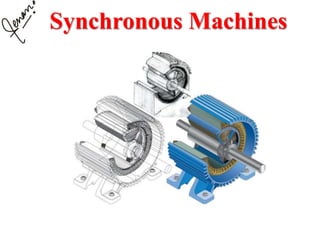
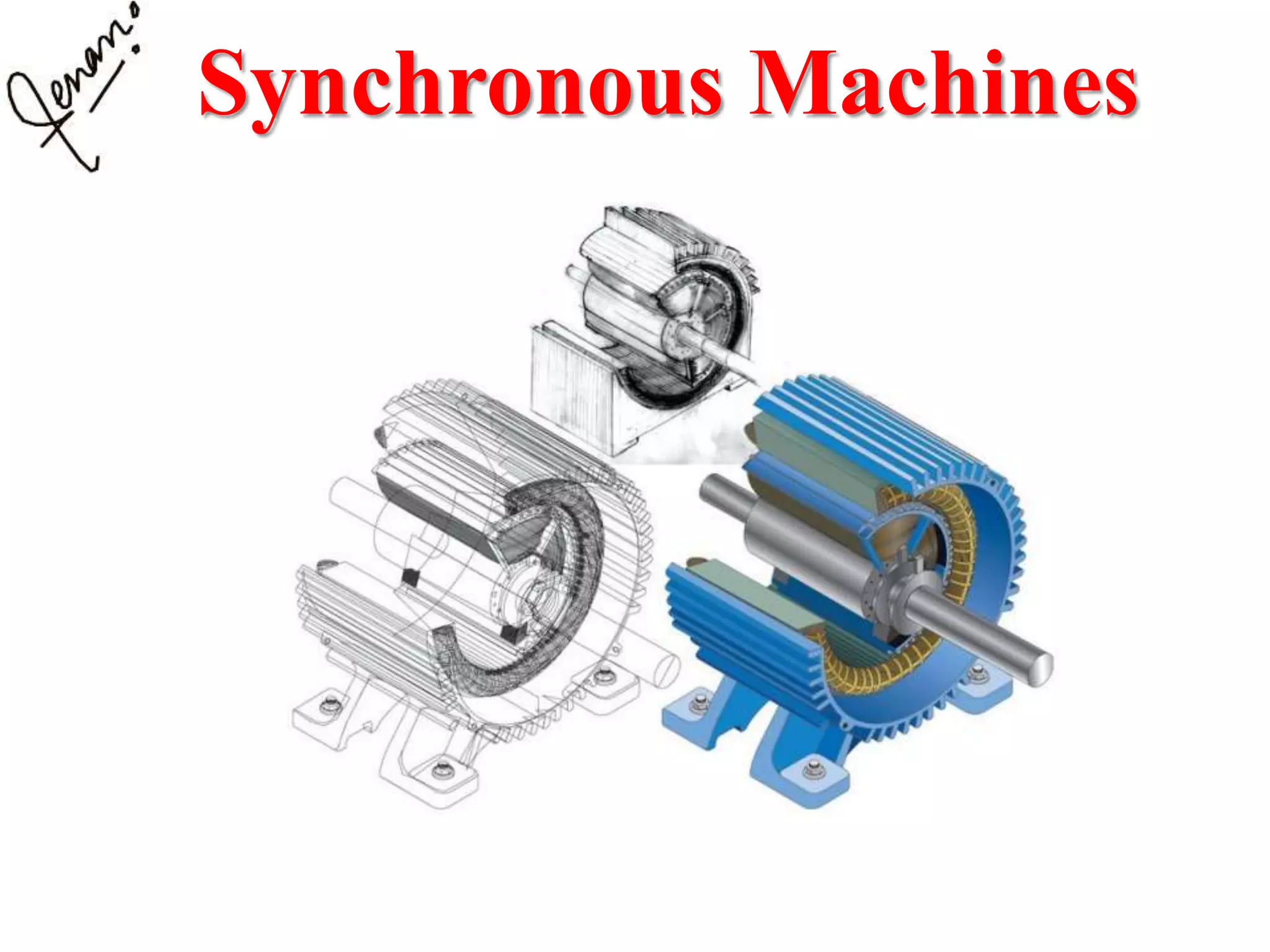
Synchronous Machines
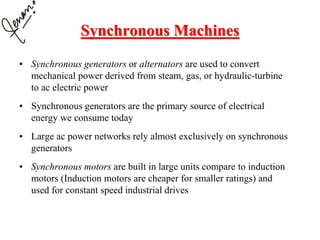
• Synchronous generators or alternators are used to convert
mechanical power derived from steam, gas, or hydraulic-turbine
to ac electric power
• Synchronous generators are the primary source of electrical
energy we consume today
• Large ac power networks rely almost exclusively on synchronous
generators
• Synchronous motors are built in large units compare to induction
motors (Induction motors are cheaper for smaller ratings) and
used for constant speed industrial drives
Construction
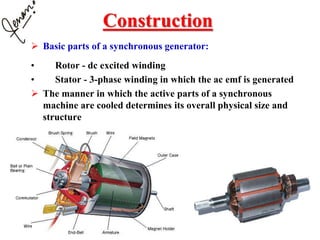
 Basic parts of a synchronous generator:
• Rotor - dc excited winding
• Stator - 3-phase winding in which the ac emf is generated
 The manner in which the active parts of a synchronous
machine are cooled determines its overall physical size and
structure
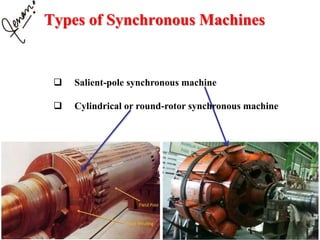
Types of Synchronous Machines
 Salient-pole synchronous machine
 Cylindrical or round-rotor synchronous machine
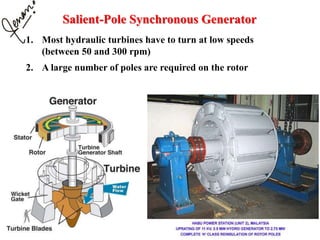
1. Most hydraulic turbines have to turn at low speeds
(between 50 and 300 rpm)
2. A large number of poles are required on the rotor
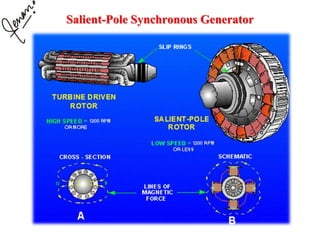
Salient-Pole Synchronous Generator
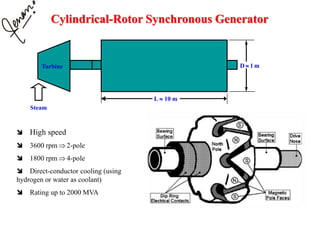
L  10 m
D  1 mTurbine
Steam
 High speed
 3600 rpm  2-pole
 1800 rpm  4-pole
 Direct-conductor cooling (using
hydrogen or water as coolant)
 Rating up to 2000 MVA
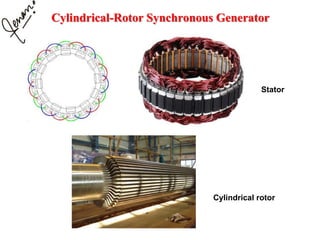
Cylindrical-Rotor Synchronous Generator
Stator
Cylindrical rotor
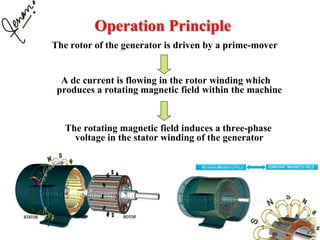
Operation Principle
The rotor of the generator is driven by a prime-mover
A dc current is flowing in the rotor winding which
produces a rotating magnetic field within the machine
The rotating magnetic field induces a three-phase
voltage in the stator winding of the generator
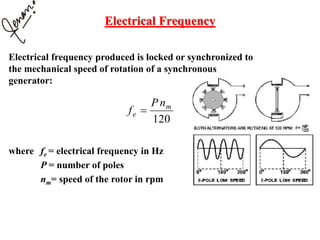
Electrical Frequency
Electrical frequency produced is locked or synchronized to
the mechanical speed of rotation of a synchronous
generator:
where fe = electrical frequency in Hz
P = number of poles
nm= speed of the rotor in rpm
120
m
e
nP
f 
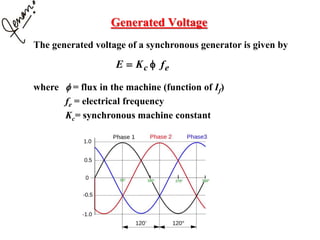
Generated Voltage
The generated voltage of a synchronous generator is given by
where f = flux in the machine (function of If)
fe = electrical frequency
Kc= synchronous machine constant
ec fKE f
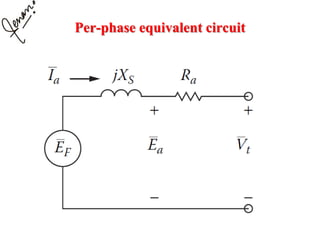
Per-phase equivalent circuit
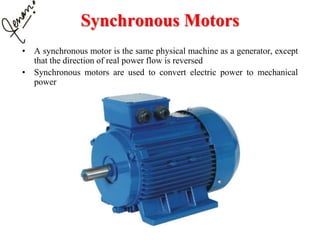
Synchronous Motors
• A synchronous motor is the same physical machine as a generator, except
that the direction of real power flow is reversed
• Synchronous motors are used to convert electric power to mechanical
power
Operation Principle
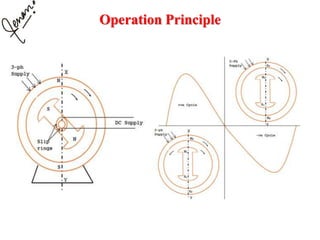
• The field current of a synchronous motor produces a steady-state magnetic
field BR
• A three-phase set of voltages is applied to the stator windings of the motor,
which produces a three-phase current flow in the windings. This three-phase
set of currents in the armature winding produces a uniform rotating magnetic
field of Bs
• Therefore, there are two magnetic fields present in the machine, and the rotor
field will tend to line up with the stator field, just as two bar magnets will
tend to line up if placed near each other.
• Since the stator magnetic field is rotating, the rotor magnetic field (and the
rotor itself) will try to catch up
• The larger the angle between the two magnetic fields (up to certain
maximum), the greater the torque on the rotor of the machine
Operation Principle
Application of Synchronous Motors
Synchronous motors are usually used in large sizes because in small sizes
they are costlier as compared with induction machines. The principal
advantages of using synchronous machine are as follows:
– Power factor of synchronous machine can be controlled very easily
by controlling the field current.
– It has very high operating efficiency and constant speed.
– For operating speed less than about 500 rpm and for high-power
requirements (above 600KW) synchronous motor is cheaper than
induction motor.
In view of these advantages, synchronous motors are preferred for driving
the loads requiring high power at low speed; e.g; reciprocating pumps and
compressor, crushers, rolling mills, pulp grinders etc.

Synchronous machines

  • 1.
  • 2.
    Synchronous Machines • Synchronousgenerators or alternators are used to convert mechanical power derived from steam, gas, or hydraulic-turbine to ac electric power • Synchronous generators are the primary source of electrical energy we consume today • Large ac power networks rely almost exclusively on synchronous generators • Synchronous motors are built in large units compare to induction motors (Induction motors are cheaper for smaller ratings) and used for constant speed industrial drives
  • 3.
    Construction  Basic partsof a synchronous generator: • Rotor - dc excited winding • Stator - 3-phase winding in which the ac emf is generated  The manner in which the active parts of a synchronous machine are cooled determines its overall physical size and structure
  • 4.
    Types of SynchronousMachines  Salient-pole synchronous machine  Cylindrical or round-rotor synchronous machine
  • 5.
    1. Most hydraulicturbines have to turn at low speeds (between 50 and 300 rpm) 2. A large number of poles are required on the rotor Salient-Pole Synchronous Generator
  • 6.
  • 7.
    L  10m D  1 mTurbine Steam  High speed  3600 rpm  2-pole  1800 rpm  4-pole  Direct-conductor cooling (using hydrogen or water as coolant)  Rating up to 2000 MVA Cylindrical-Rotor Synchronous Generator
  • 8.
  • 9.
    Operation Principle The rotorof the generator is driven by a prime-mover A dc current is flowing in the rotor winding which produces a rotating magnetic field within the machine The rotating magnetic field induces a three-phase voltage in the stator winding of the generator
  • 10.
    Electrical Frequency Electrical frequencyproduced is locked or synchronized to the mechanical speed of rotation of a synchronous generator: where fe = electrical frequency in Hz P = number of poles nm= speed of the rotor in rpm 120 m e nP f 
  • 11.
    Generated Voltage The generatedvoltage of a synchronous generator is given by where f = flux in the machine (function of If) fe = electrical frequency Kc= synchronous machine constant ec fKE f
  • 12.
  • 13.
    Synchronous Motors • Asynchronous motor is the same physical machine as a generator, except that the direction of real power flow is reversed • Synchronous motors are used to convert electric power to mechanical power
  • 14.
    Operation Principle • Thefield current of a synchronous motor produces a steady-state magnetic field BR • A three-phase set of voltages is applied to the stator windings of the motor, which produces a three-phase current flow in the windings. This three-phase set of currents in the armature winding produces a uniform rotating magnetic field of Bs • Therefore, there are two magnetic fields present in the machine, and the rotor field will tend to line up with the stator field, just as two bar magnets will tend to line up if placed near each other. • Since the stator magnetic field is rotating, the rotor magnetic field (and the rotor itself) will try to catch up • The larger the angle between the two magnetic fields (up to certain maximum), the greater the torque on the rotor of the machine
  • 15.
  • 16.
    Application of SynchronousMotors Synchronous motors are usually used in large sizes because in small sizes they are costlier as compared with induction machines. The principal advantages of using synchronous machine are as follows: – Power factor of synchronous machine can be controlled very easily by controlling the field current. – It has very high operating efficiency and constant speed. – For operating speed less than about 500 rpm and for high-power requirements (above 600KW) synchronous motor is cheaper than induction motor. In view of these advantages, synchronous motors are preferred for driving the loads requiring high power at low speed; e.g; reciprocating pumps and compressor, crushers, rolling mills, pulp grinders etc.