Group members Alisha Korpal Nivia Jain Sharuti Jain
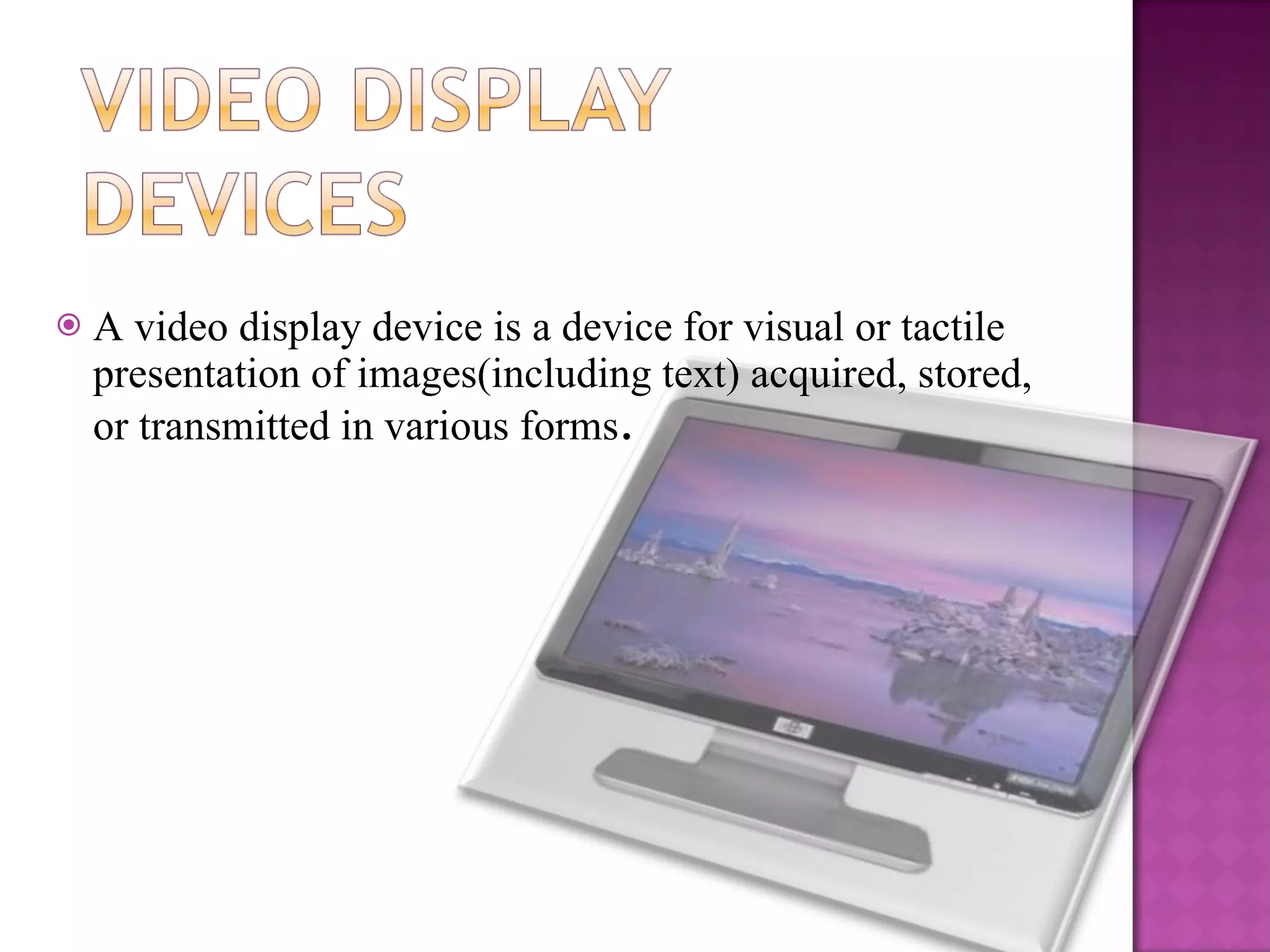
A video display device is a device for visual or tactile presentation of images(including text) acquired, stored, or transmitted in various forms .
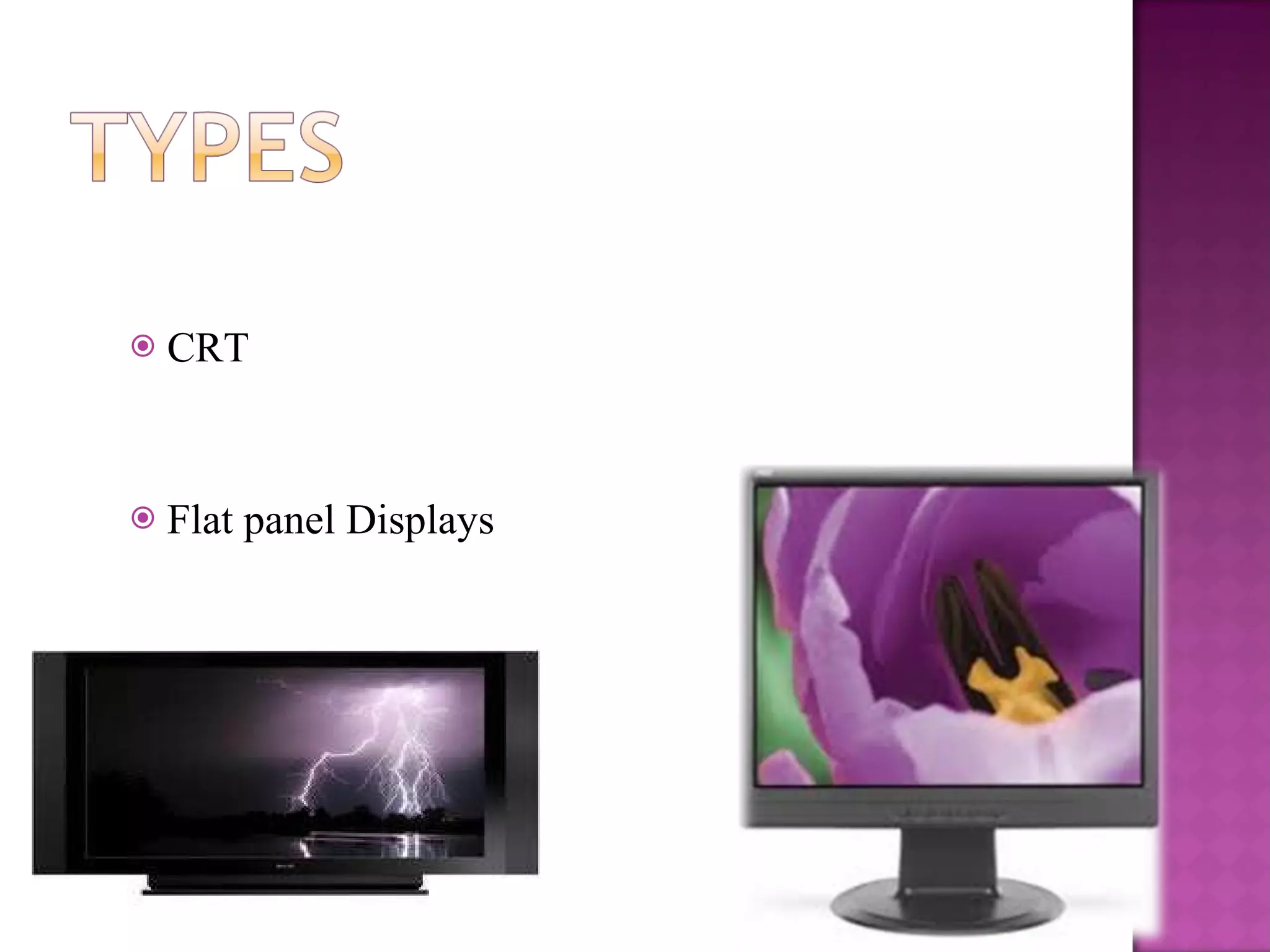
CRT Flat panel Displays
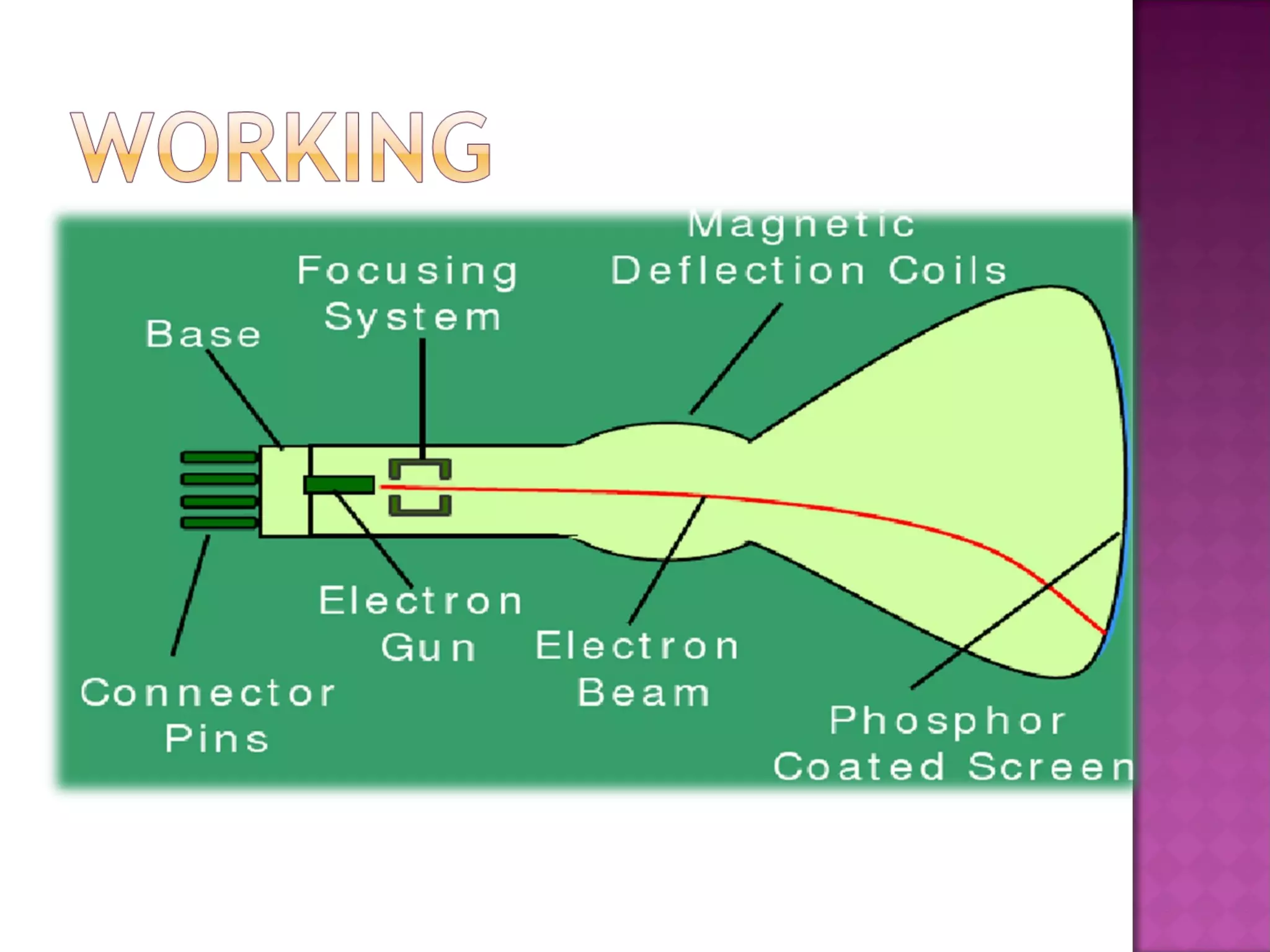
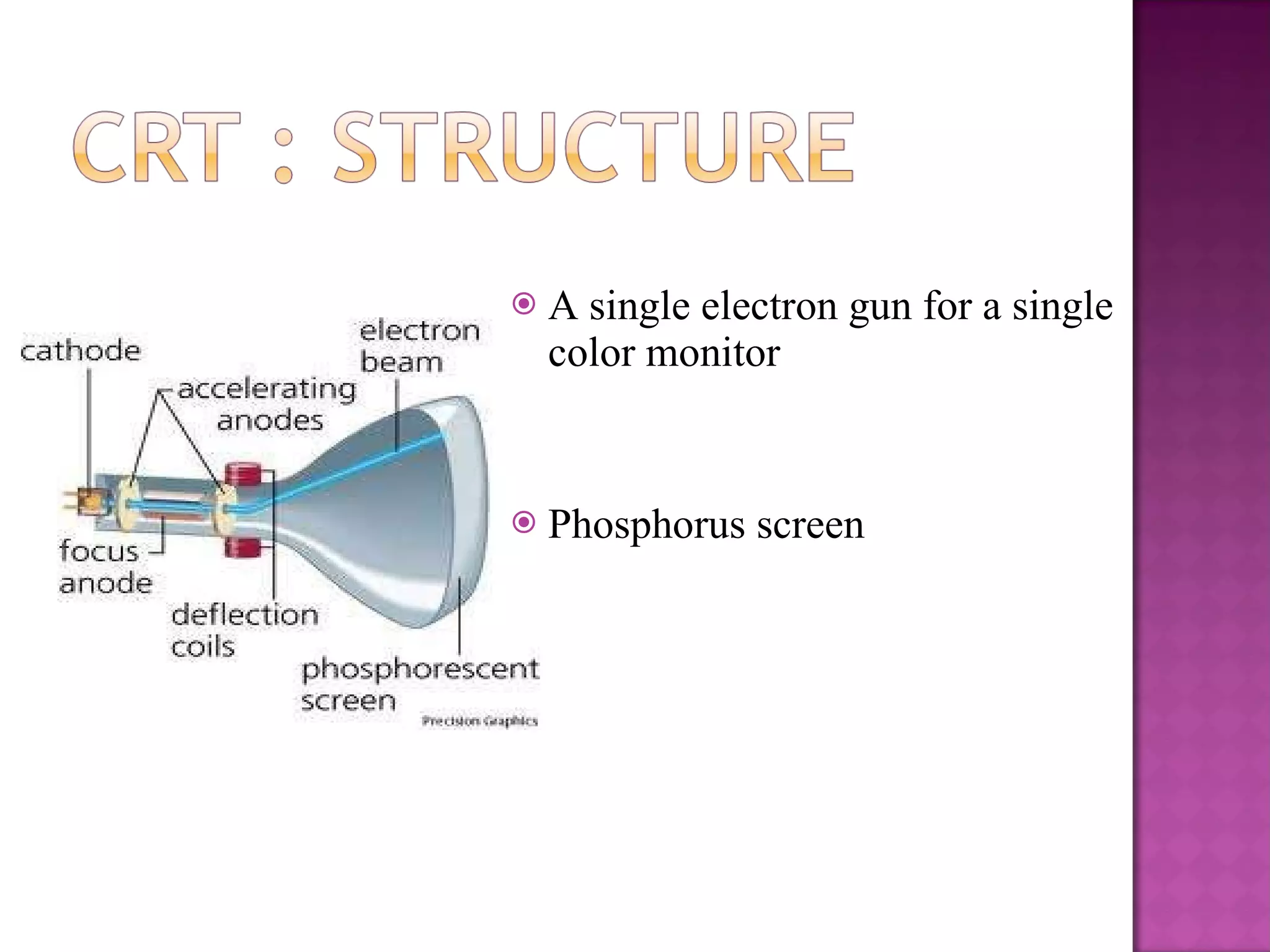
The cathode ray tube (CRT) is a vacuum tube containing an electron gun (a source of electrons) and a fluorescent screen, with internal or external means to accelerate and deflect the electron beam, used to create images in the form of light emitted from the fluorescent screen. 
 
A single electron gun for a single color monitor Phosphorus screen
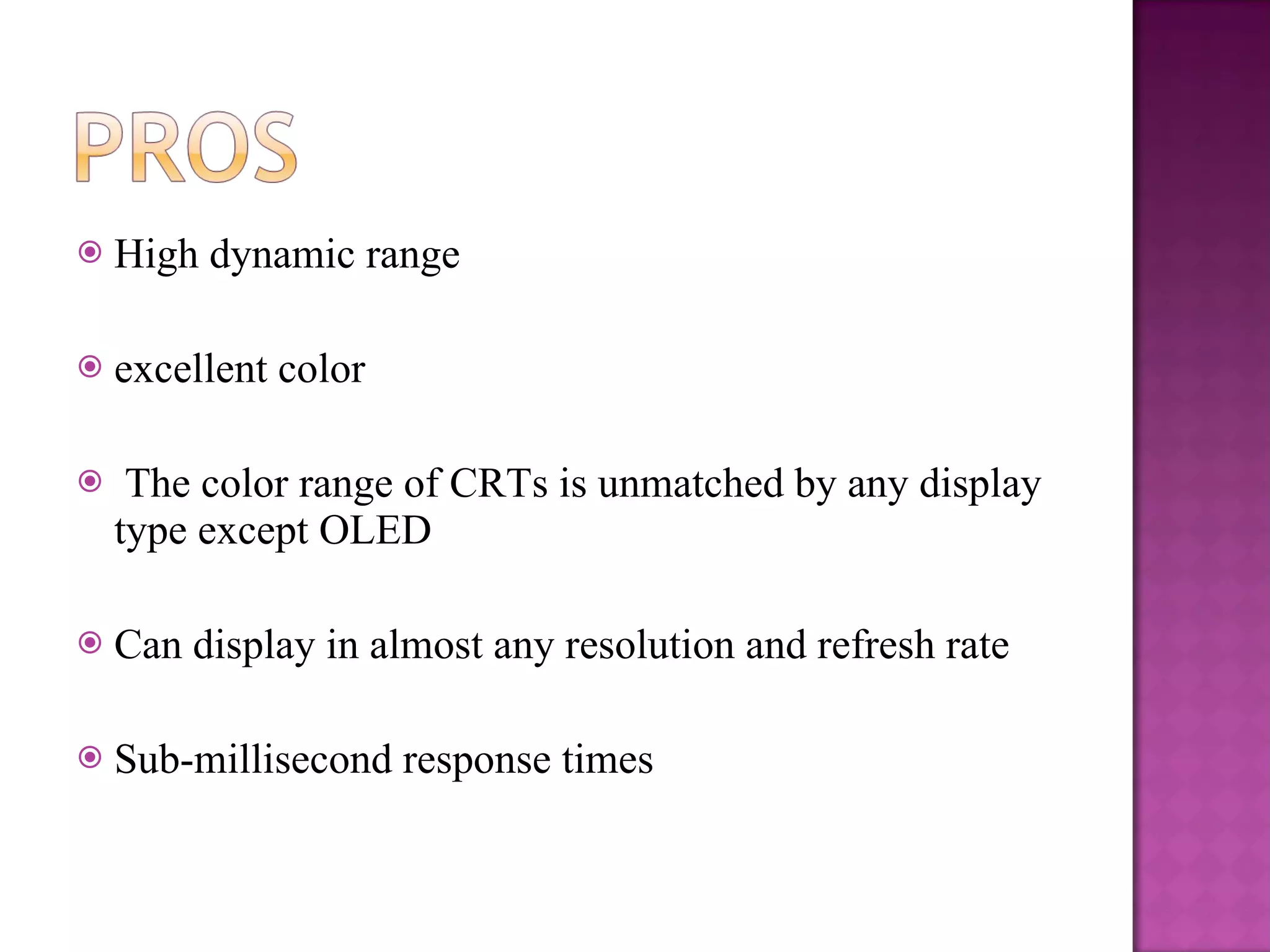
High dynamic range  excellent color  The color range of CRTs is unmatched by any display type except OLED Can display in almost any resolution and refresh rate Sub-millisecond response times
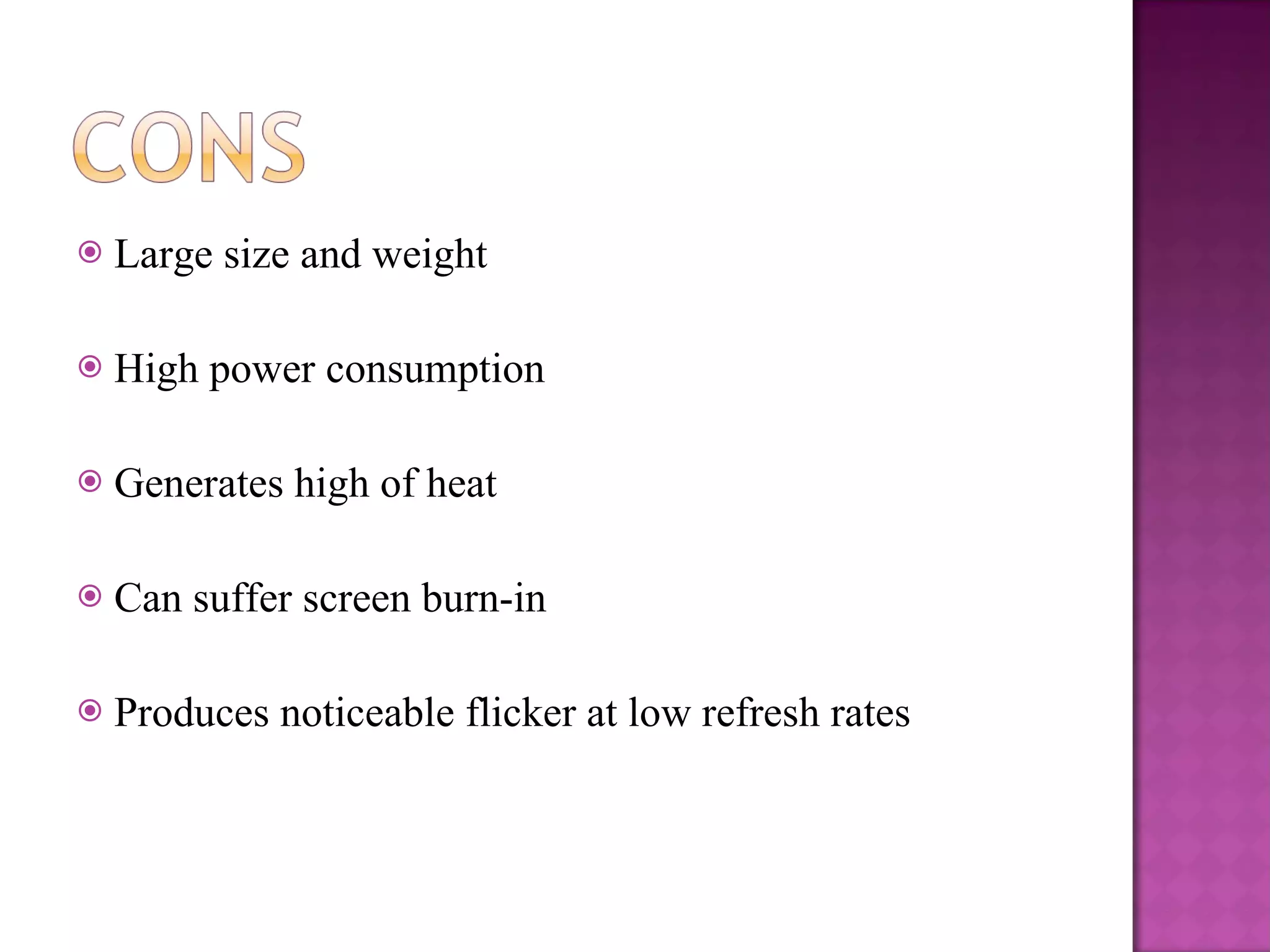
Large size and weight High power consumption Generates high of heat  Can suffer screen burn-in Produces noticeable flicker at low refresh rates
A class of video devices that have reduced volume , weight & power requirement than refresh CRT. Currently they are used in pocket videos , laptop etc.
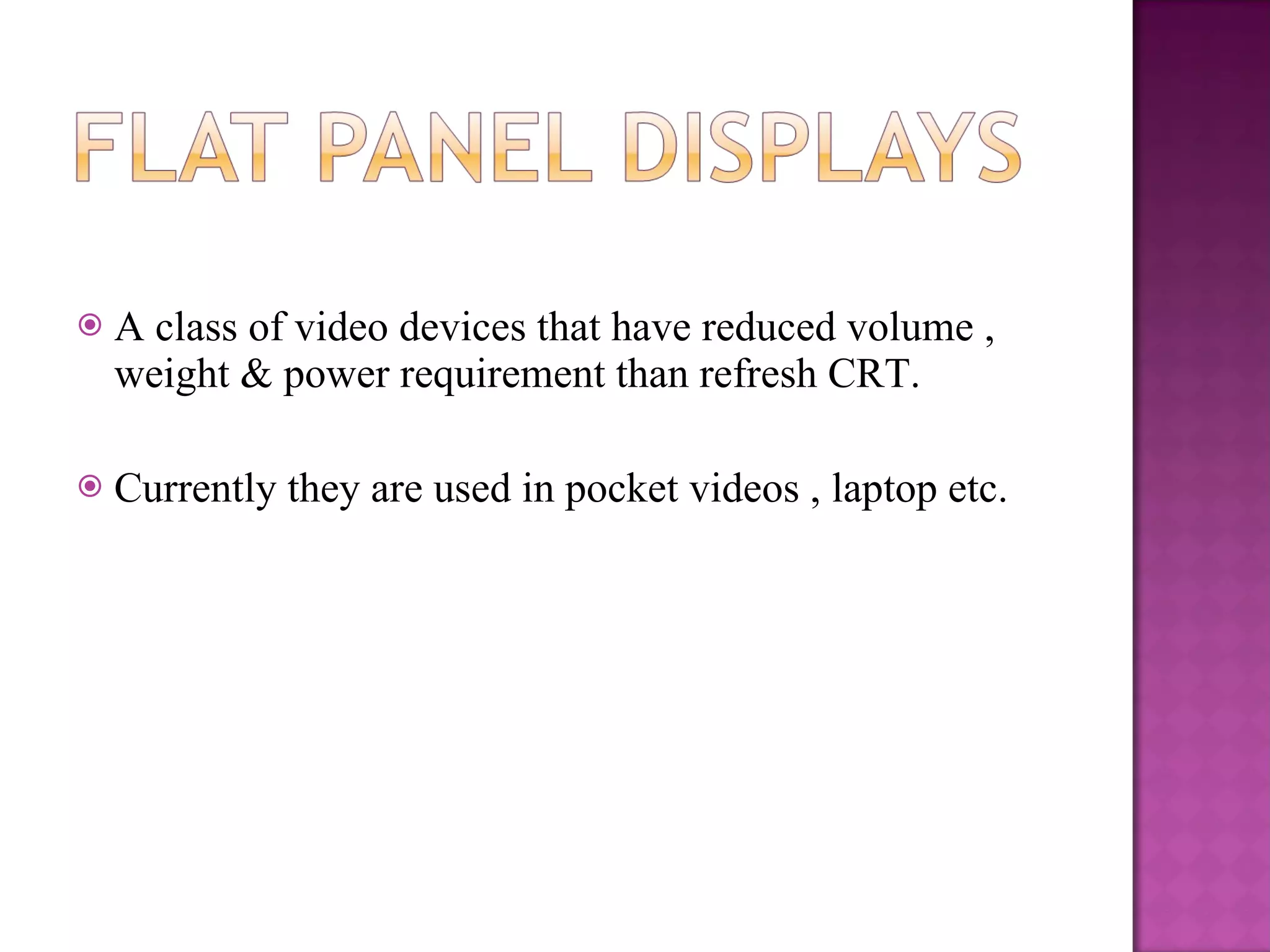
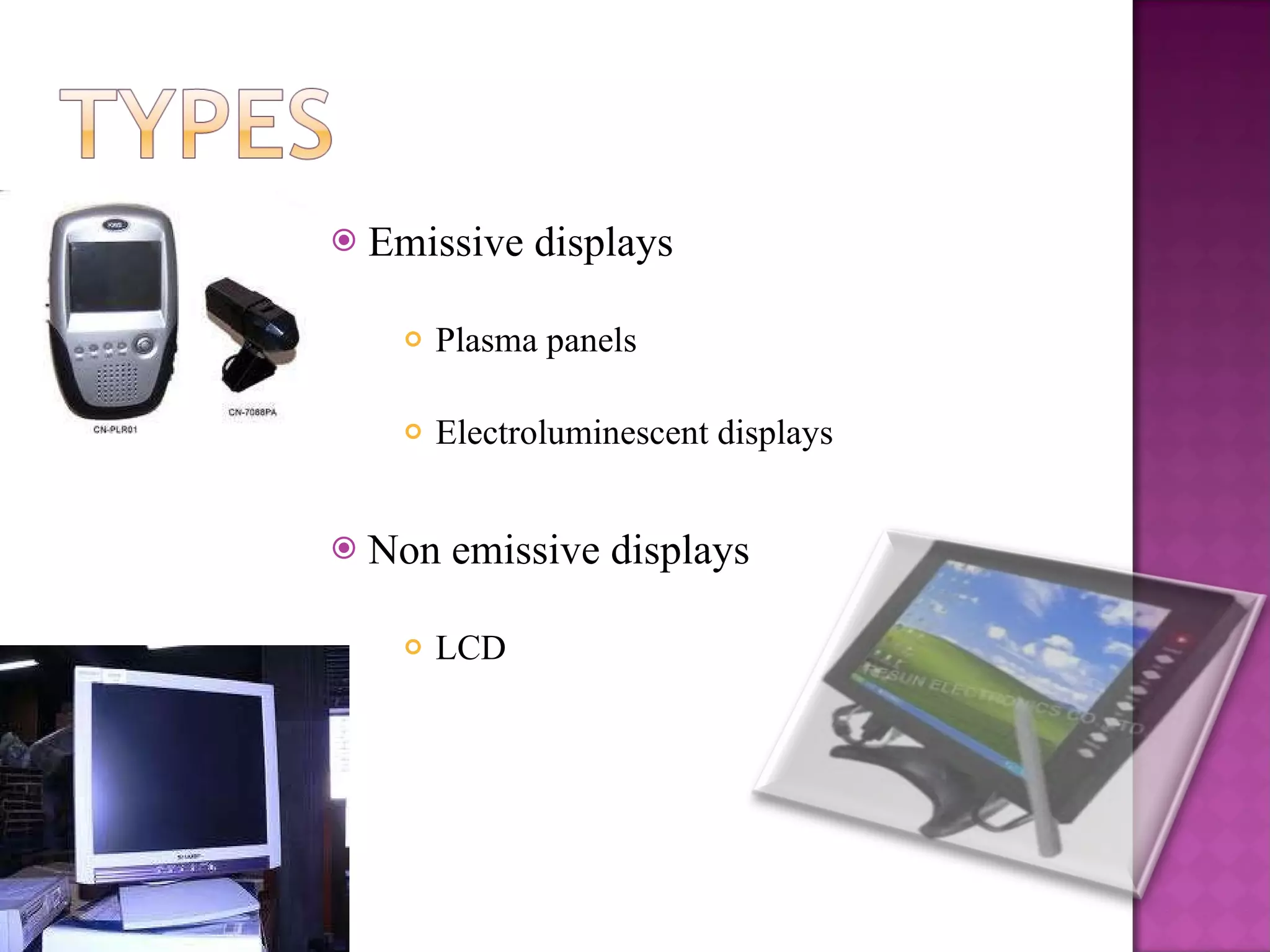
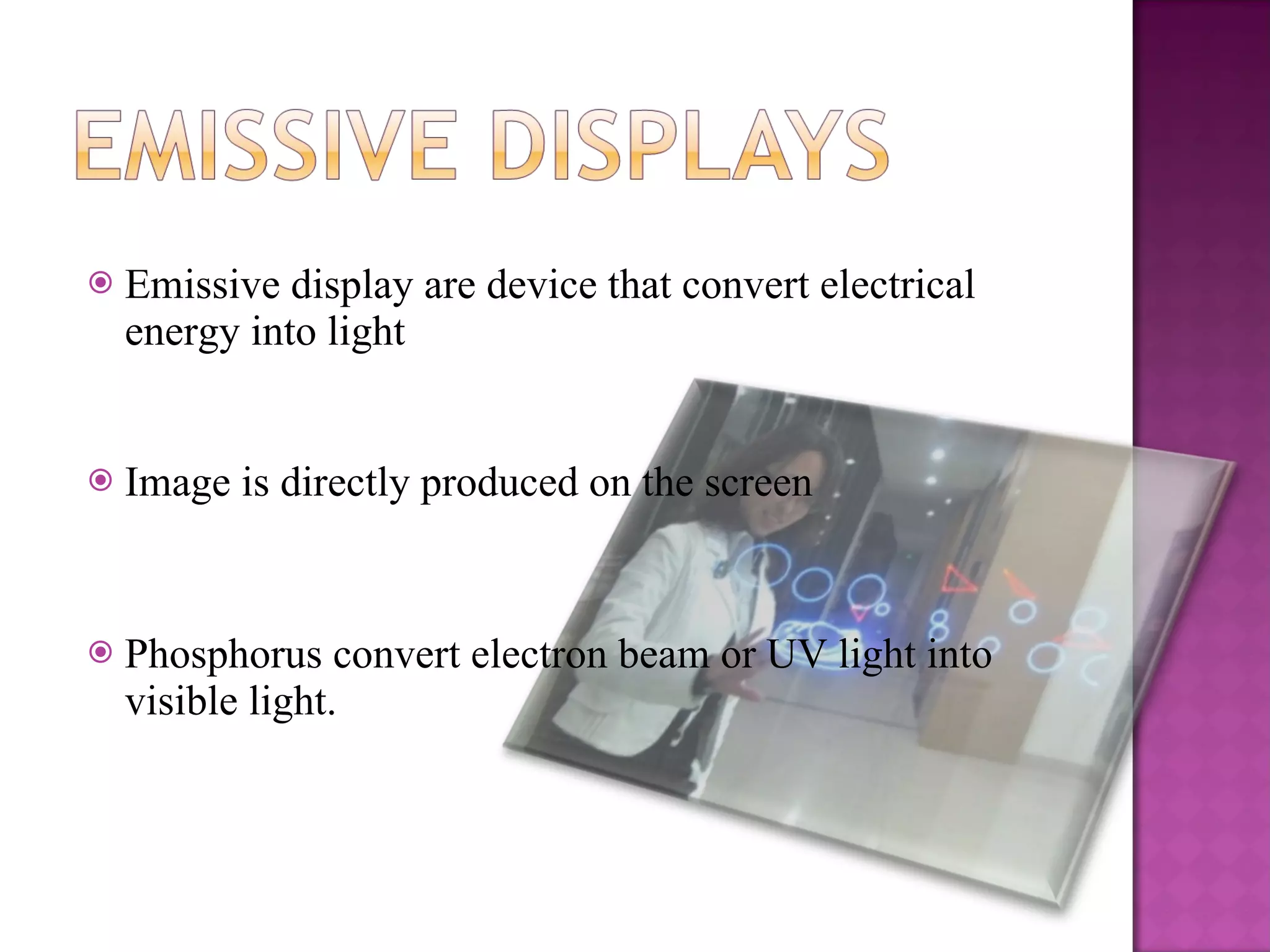
Emissive displays Plasma panels Electroluminescent displays Non emissive displays LCD
Emissive display are device that convert electrical energy into light Image is directly produced on the screen Phosphorus convert electron beam or UV light into visible light.
Light is produced behind the screen and the image is formed by filtering this light.
Liquid Crystal Display  Portable Less desk space Lack of flicker and low glare reduce eyestrain.
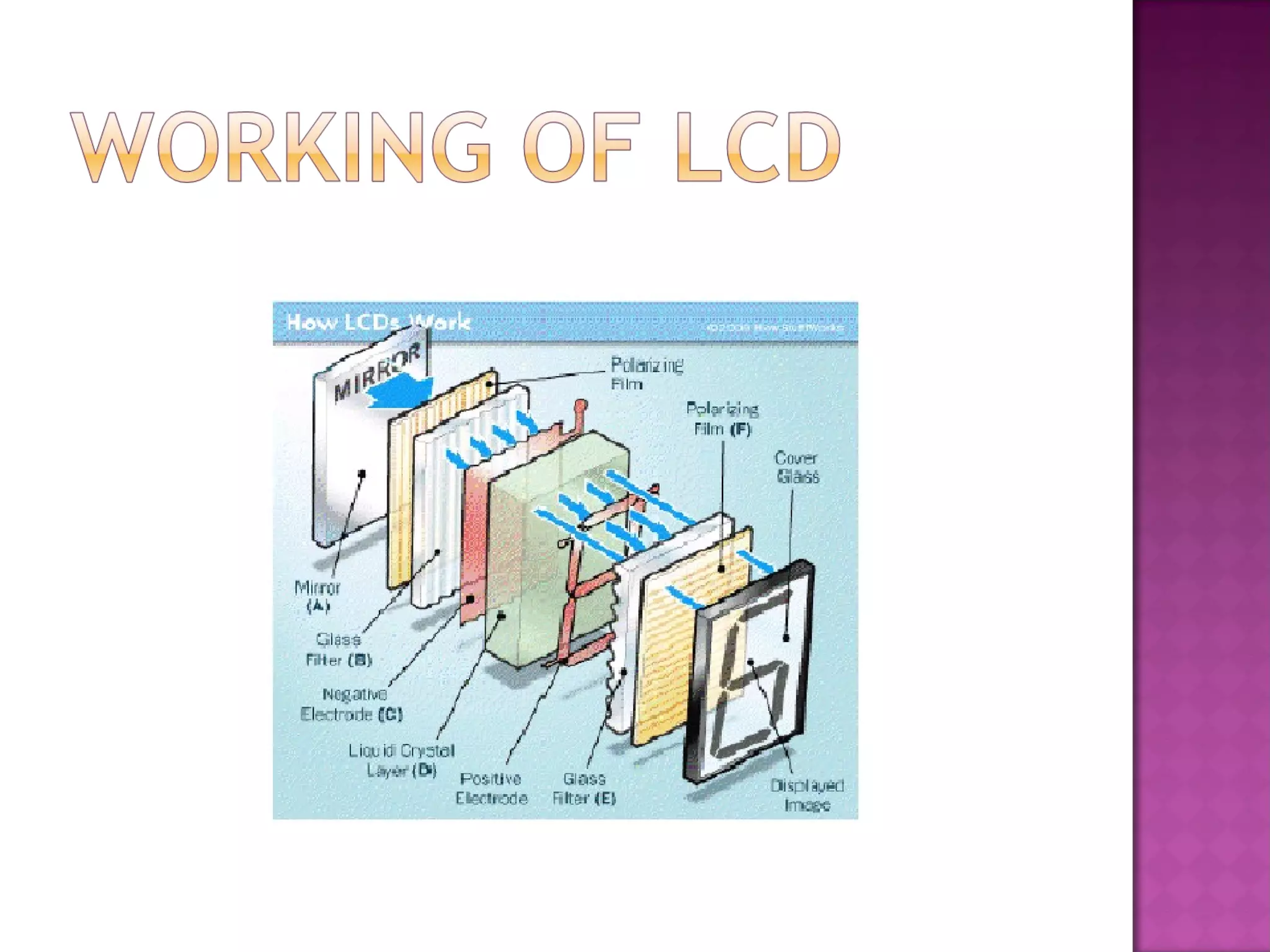
A liquid crystal is an organic compound in a transition state between liquid and solid forms that resemble a liquid.
 
Lightweight construction Thin panels Low energy consumption
Quality of image depends on viewing angle Low response times
A plasma display panel (PDP) is a type of flat panel display. They are called "plasma" displays  Technology utilizes small cells containing electrically charged ionized gases commonly known as fluorescent lamps .
Large displays Good color rendering Thin panels No dependence on viewing angle Brightness
High costs Power consumption
 

Ppt on flat panel display

  • 1.
    Group members AlishaKorpal Nivia Jain Sharuti Jain
  • 2.
    A video displaydevice is a device for visual or tactile presentation of images(including text) acquired, stored, or transmitted in various forms .
  • 3.
  • 4.
    The cathode ray tube (CRT)is a vacuum tube containing an electron gun (a source of electrons) and a fluorescent screen, with internal or external means to accelerate and deflect the electron beam, used to create images in the form of light emitted from the fluorescent screen. 
  • 5.
  • 6.
    A single electrongun for a single color monitor Phosphorus screen
  • 7.
    High dynamic range excellent color The color range of CRTs is unmatched by any display type except OLED Can display in almost any resolution and refresh rate Sub-millisecond response times
  • 8.
    Large size andweight High power consumption Generates high of heat Can suffer screen burn-in Produces noticeable flicker at low refresh rates
  • 9.
    A class ofvideo devices that have reduced volume , weight & power requirement than refresh CRT. Currently they are used in pocket videos , laptop etc.
  • 10.
    Emissive displays Plasmapanels Electroluminescent displays Non emissive displays LCD
  • 11.
    Emissive display aredevice that convert electrical energy into light Image is directly produced on the screen Phosphorus convert electron beam or UV light into visible light.
  • 12.
    Light is producedbehind the screen and the image is formed by filtering this light.
  • 13.
    Liquid Crystal Display Portable Less desk space Lack of flicker and low glare reduce eyestrain.
  • 14.
    A liquid crystalis an organic compound in a transition state between liquid and solid forms that resemble a liquid.
  • 15.
  • 16.
    Lightweight construction Thinpanels Low energy consumption
  • 17.
    Quality of imagedepends on viewing angle Low response times
  • 18.
    A plasma display panel (PDP)is a type of flat panel display. They are called "plasma" displays Technology utilizes small cells containing electrically charged ionized gases commonly known as fluorescent lamps .
  • 19.
    Large displays Goodcolor rendering Thin panels No dependence on viewing angle Brightness
  • 20.
    High costs Powerconsumption
  • 21.