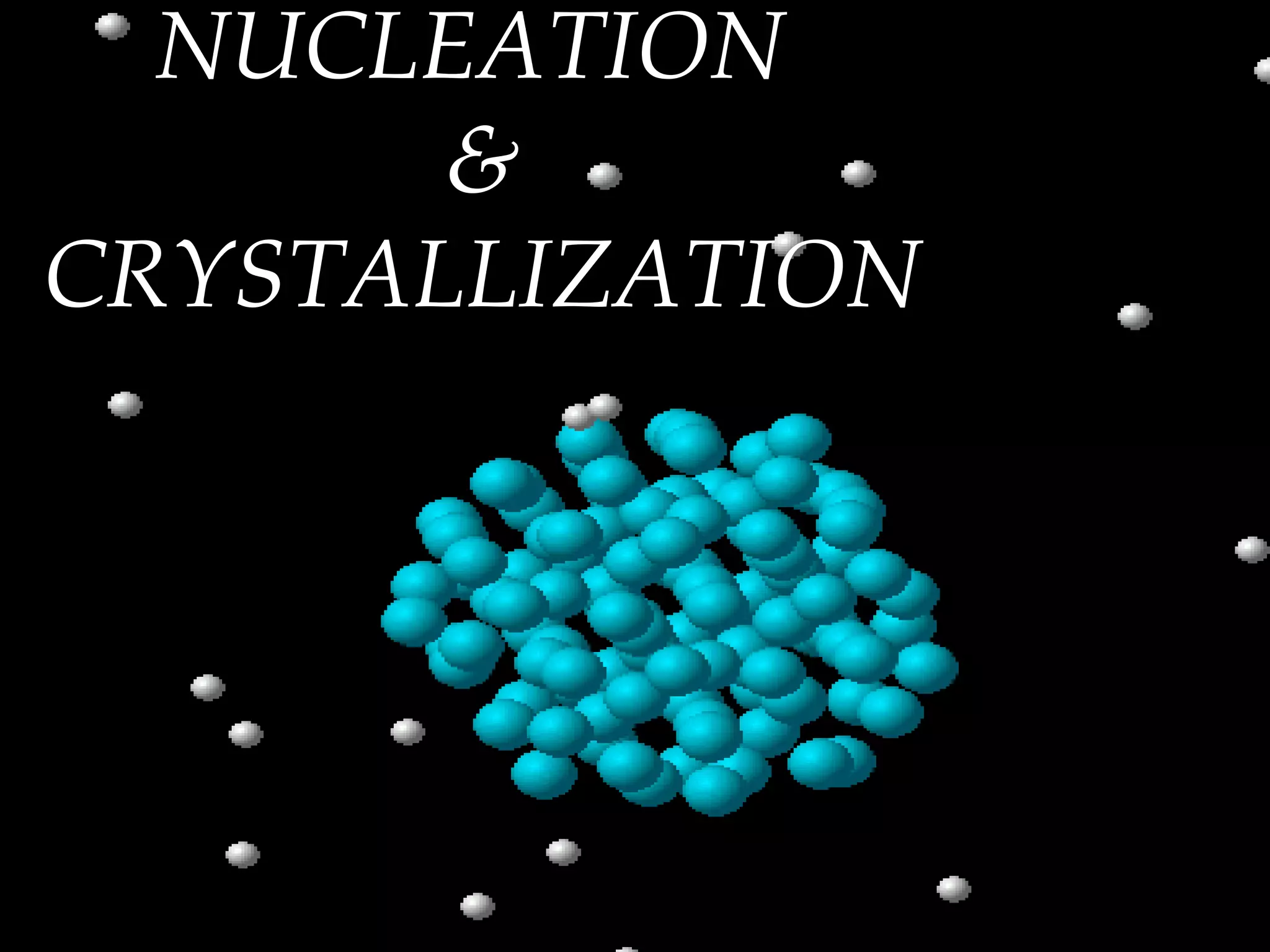
NUCLEATION
       &
CRYSTALLIZATION
FOR MORE HELP CONTACT ME


Muhammad Umair Bukhari

     Engr.umair.bukhari@gmail.com

        www.bzuiam.webs.com
           03136050151
INTRODUCTION

• “The formation of first nano-sized crystallites from
  molten material”.
• In a broader sense, the term nucleation refers to the
  “initial stage” of formation of one phase from
  another phase.
• So nucleation is a phenomenon associated with the
  phase transformation.
• As water begins to freeze, nano-sized ice crystals
  forms 1st.
PROCESS THERMODYNAMICS

• At the thermodynamic melting or freezing
  temperature, the probability of forming stable,
  sustainable nuclei is extremely small.
• Therefore, solidification does not begins at
  thermodynamic melting or freezing temperature.
• If the temperature is decreased from the freezing
  point of the material, the liquid is considered as
  under-cooled.
PROCESS THERMODYNAMICS

• A material is solidify when the liquid cools to just
  below its freezing temperature because the energy
  associated with the crystalline structure of the solid
  is less than the energy of the liquid.
• This energy difference between the liquid and the
  solid is the free energy per unit volume and is the
  “driving force” for solidification.
PROCESS ENERGETIC

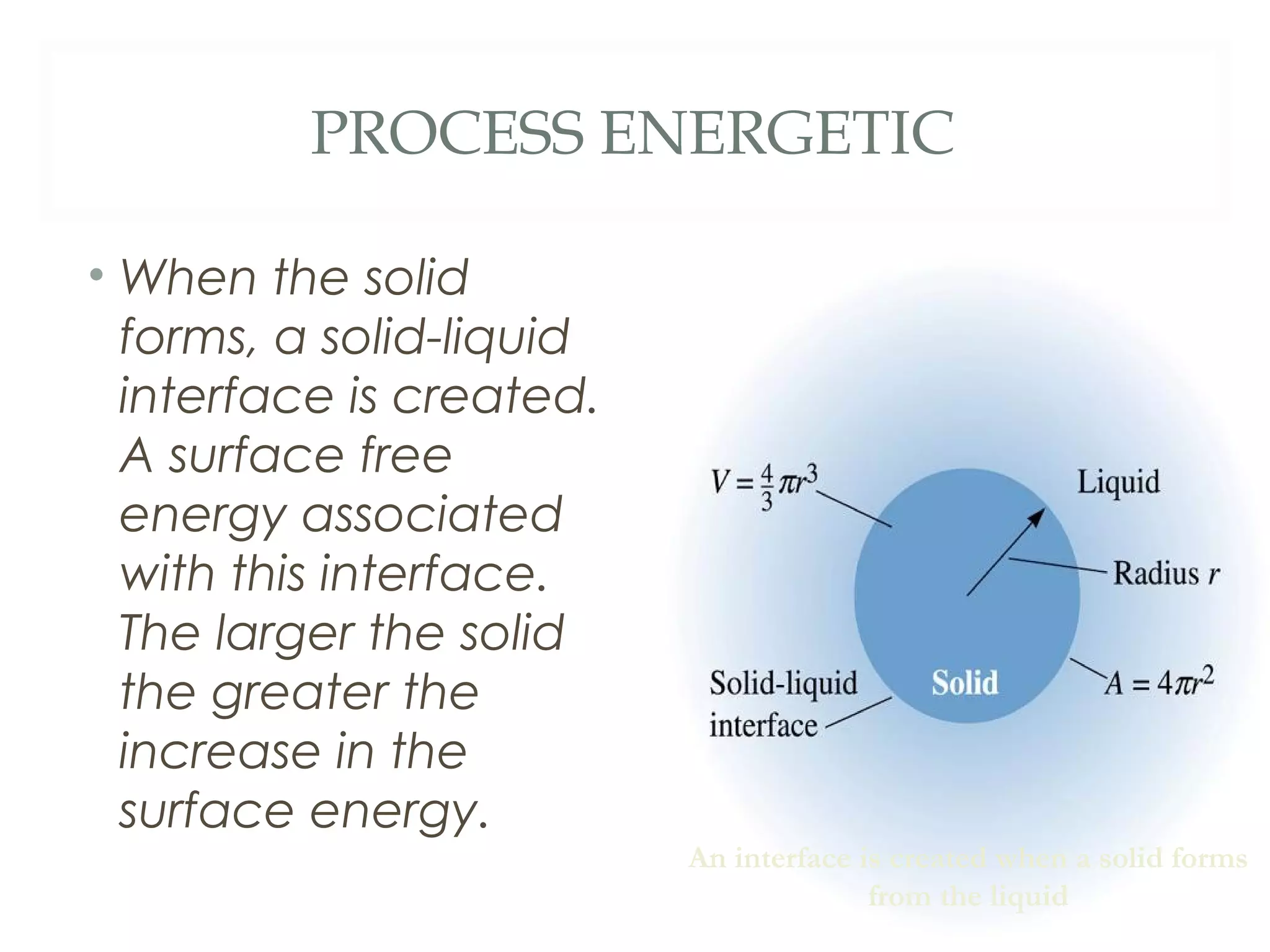
• When the solid
  forms, a solid-liquid
  interface is created.
  A surface free
  energy associated
  with this interface.
  The larger the solid
  the greater the
  increase in the
  surface energy.
                          An interface is created when a solid forms
                                        from the liquid
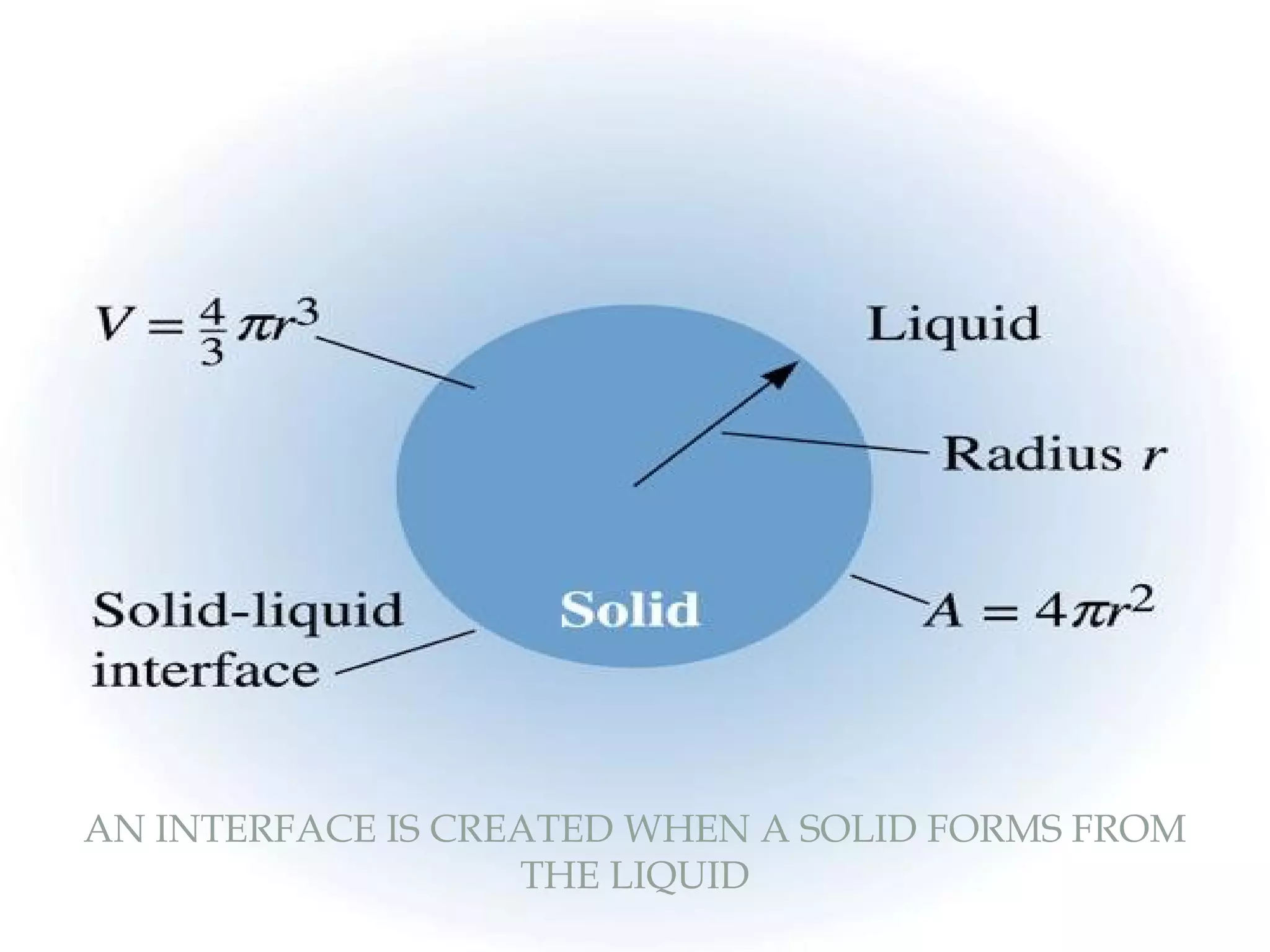
AN INTERFACE IS CREATED WHEN A SOLID FORMS FROM
                   THE LIQUID
PROCESS FREE ENERGY

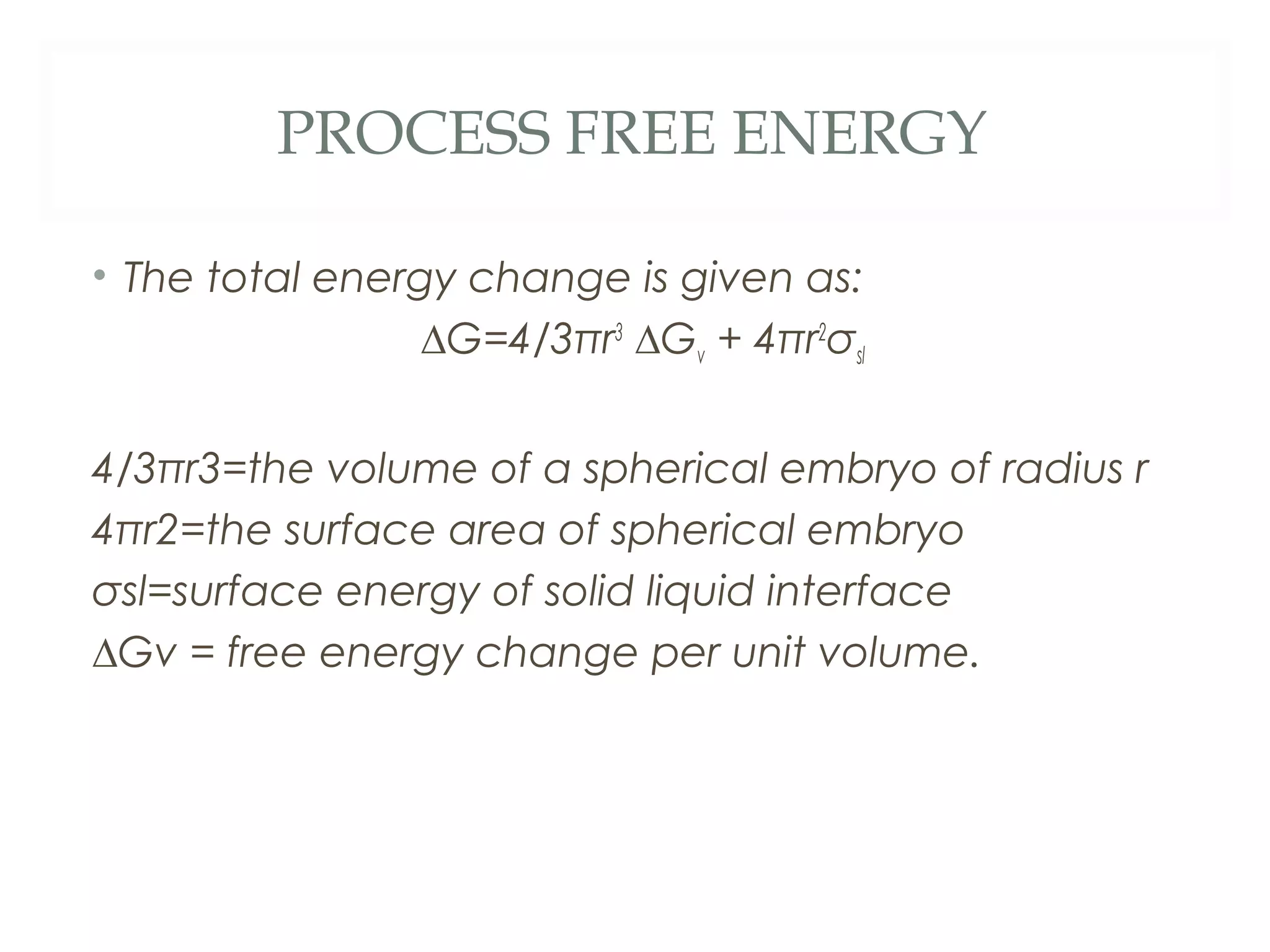
• The total energy change is given as:
                 ∆G=4/3πr3 ∆Gv + 4πr2σsl


4/3πr3=the volume of a spherical embryo of radius r
4πr2=the surface area of spherical embryo
σsl=surface energy of solid liquid interface
∆Gv = free energy change per unit volume.
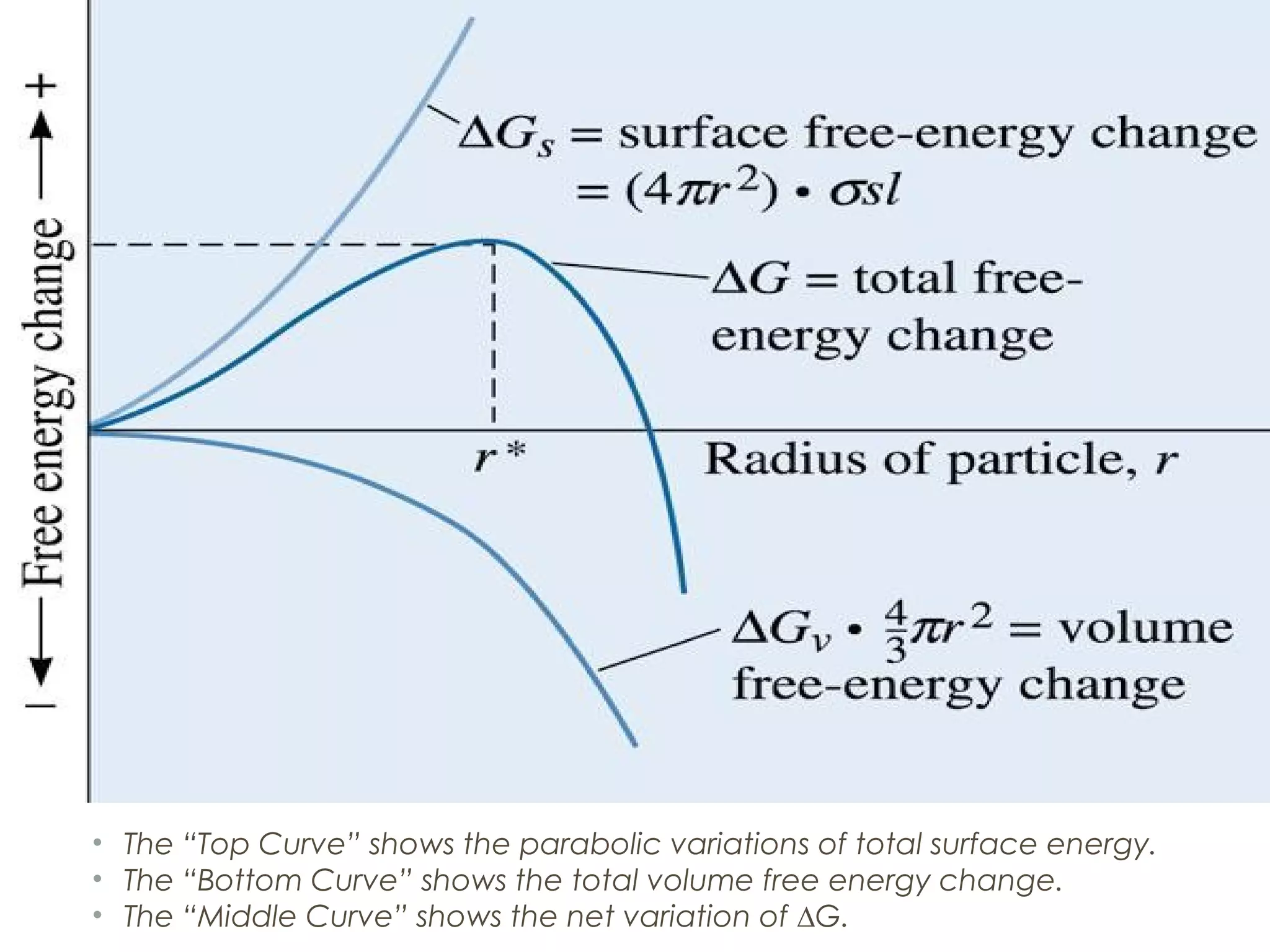
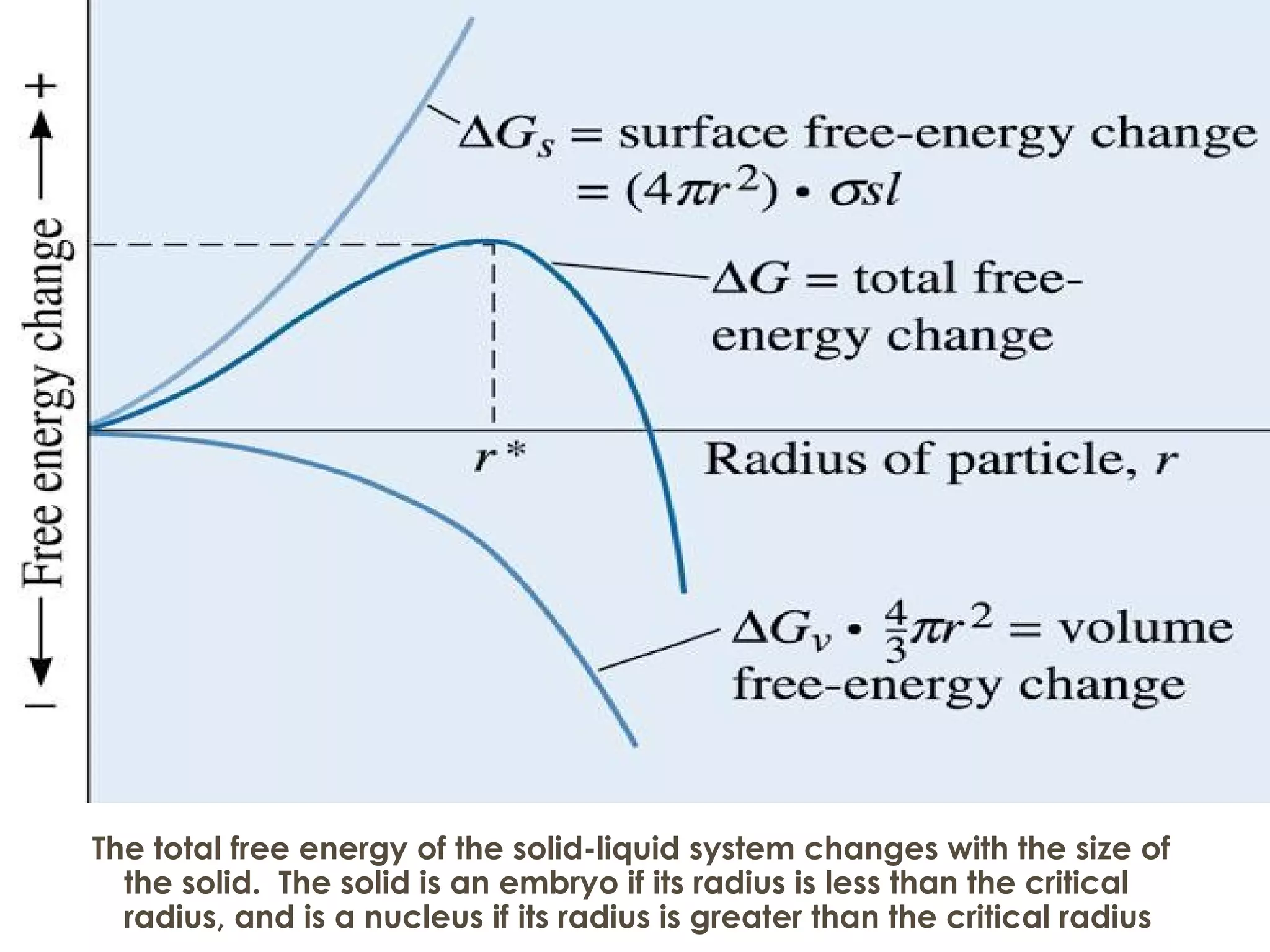
• The “Top Curve” shows the parabolic variations of total surface energy.
• The “Bottom Curve” shows the total volume free energy change.
• The “Middle Curve” shows the net variation of ∆G.
NUCLEATION

• The total free energy of solid-liquid system changes
  with the size of the solid.
• The solid is an “Embryo”, if it’s radius is less than the
  critical radius and is a “Nucleus” if its radius is
  greater than the critical radius.
• “The critical radius is the minimum size of the crystal
  that must be formed by the atoms clustering
  together in a liquid before the solid particle is stable
  and begins to grow.”
The total free energy of the solid-liquid system changes with the size of
  the solid. The solid is an embryo if its radius is less than the critical
  radius, and is a nucleus if its radius is greater than the critical radius
INITIATION OF GROWTH

• The new solid is then stable and sustainable since
  nucleation has occurred, and growth of solid
  particle which are now called a “Nucleus” begins.
GROWTH

• The growth process which follow nucleation
  determine the following crystallographic structure of
  the solid.
• The mode of the growth, both of individual grains
  and of general mass of solid, depends upon
  thermal conditions in the solidification zone.
SEGREGATION

• Segregation means “to isolate something”
  according to specific laws.
• Here, Segregation means “Change in the average
  composition of the metal as one moves from place
  to place in an ingot”.
• The liquid which are frozen to form industrial alloys
  usually contain many impurity elements.
• These impurity elements are frequently eliminated
  during smelting and refining operation.
• The refractory lining of furnaces and the gases in
  the furnace atmospheres may be the sources of
  these impurities.
SEGREGATION

• Elements enter the liquid metal in the form of
  dissolved gases.
• The various elements dissolved in the liquid
  metals can and often do react with each other
  to form compounds.
• In many cases, these compounds are less dense
  than the liquid and rise to the surface and join
  the slag which float on the top of the liquid
  metals.
• On the other hand, it is quiet possible for small
  impurity particles to exist in the liquid.
SEGREGATION

• When an alloy is frozen, a rule applies is that solute
  elements, whether present as alloying elements or
  as impurities, are more soluble in liquid state than in
  the solid state.
• This fact usually leads to the segregation of solute
  elements in finished castings.
SEGREGATION

• There are two basic ways of looking at the resulting
  non-uniformity of the solute.
  • As freezing point progresses, the solute concentration in a
    casting tend to rise in those regions which solidify in the last
    (centre of ingot).
  • In general, segregation means “ to change in the average
    composition of the metal as one moves from place to
    place in an ingot.
SEGREGATION

• Gravitational effects are often a factor in producing
  the segregation.
• The crystal which form freely in the liquid often have
  a different density from that of liquid. As a result,
  they may either “Rise” towards the surface of the
  casting or “Settled” towards the bottom.
MACRO-SEGREGATION

• The basic factor is the accumulation of rejected
  solute by transport over long distances through the
  casting.
• The other factor is the movement of growing
  crystals from their nucleation sites from gravity or
  turbulence and long range capillary flow of liquids
  during the final stages of freezing.
MICRO-SEGREGATION

• It results from accumulation of rejected solute
  between the growing crystals and its failure due to
  either inadequate time to diffuse into the main
  body of residual liquid.
• The micro-segregation of alloying elements and
  impurities can effect the strength and the ductility.
GRAVITY SEGREGATION

• Macro-segregation are frequently influenced by the
  mass movement of precipitated phases due to
  difference in density compared with their parent
  liquid.
• Metals crystals growing independently in the melt
  tend to sink and produce a corresponding upward
  displacement of solute enriched liquid.
• Gravity concentration is mainly encountered in
  heavy sections.

Nucleation & crystallization

  • 1.
    NUCLEATION & CRYSTALLIZATION
  • 2.
    FOR MORE HELPCONTACT ME Muhammad Umair Bukhari Engr.umair.bukhari@gmail.com www.bzuiam.webs.com 03136050151
  • 3.
    INTRODUCTION • “The formationof first nano-sized crystallites from molten material”. • In a broader sense, the term nucleation refers to the “initial stage” of formation of one phase from another phase. • So nucleation is a phenomenon associated with the phase transformation. • As water begins to freeze, nano-sized ice crystals forms 1st.
  • 4.
    PROCESS THERMODYNAMICS • Atthe thermodynamic melting or freezing temperature, the probability of forming stable, sustainable nuclei is extremely small. • Therefore, solidification does not begins at thermodynamic melting or freezing temperature. • If the temperature is decreased from the freezing point of the material, the liquid is considered as under-cooled.
  • 5.
    PROCESS THERMODYNAMICS • Amaterial is solidify when the liquid cools to just below its freezing temperature because the energy associated with the crystalline structure of the solid is less than the energy of the liquid. • This energy difference between the liquid and the solid is the free energy per unit volume and is the “driving force” for solidification.
  • 6.
    PROCESS ENERGETIC • Whenthe solid forms, a solid-liquid interface is created. A surface free energy associated with this interface. The larger the solid the greater the increase in the surface energy. An interface is created when a solid forms from the liquid
  • 7.
    AN INTERFACE ISCREATED WHEN A SOLID FORMS FROM THE LIQUID
  • 8.
    PROCESS FREE ENERGY •The total energy change is given as: ∆G=4/3πr3 ∆Gv + 4πr2σsl 4/3πr3=the volume of a spherical embryo of radius r 4πr2=the surface area of spherical embryo σsl=surface energy of solid liquid interface ∆Gv = free energy change per unit volume.
  • 9.
    • The “TopCurve” shows the parabolic variations of total surface energy. • The “Bottom Curve” shows the total volume free energy change. • The “Middle Curve” shows the net variation of ∆G.
  • 10.
    NUCLEATION • The totalfree energy of solid-liquid system changes with the size of the solid. • The solid is an “Embryo”, if it’s radius is less than the critical radius and is a “Nucleus” if its radius is greater than the critical radius. • “The critical radius is the minimum size of the crystal that must be formed by the atoms clustering together in a liquid before the solid particle is stable and begins to grow.”
  • 11.
    The total freeenergy of the solid-liquid system changes with the size of the solid. The solid is an embryo if its radius is less than the critical radius, and is a nucleus if its radius is greater than the critical radius
  • 12.
    INITIATION OF GROWTH •The new solid is then stable and sustainable since nucleation has occurred, and growth of solid particle which are now called a “Nucleus” begins.
  • 13.
    GROWTH • The growthprocess which follow nucleation determine the following crystallographic structure of the solid. • The mode of the growth, both of individual grains and of general mass of solid, depends upon thermal conditions in the solidification zone.
  • 14.
    SEGREGATION • Segregation means“to isolate something” according to specific laws. • Here, Segregation means “Change in the average composition of the metal as one moves from place to place in an ingot”. • The liquid which are frozen to form industrial alloys usually contain many impurity elements. • These impurity elements are frequently eliminated during smelting and refining operation. • The refractory lining of furnaces and the gases in the furnace atmospheres may be the sources of these impurities.
  • 15.
    SEGREGATION • Elements enterthe liquid metal in the form of dissolved gases. • The various elements dissolved in the liquid metals can and often do react with each other to form compounds. • In many cases, these compounds are less dense than the liquid and rise to the surface and join the slag which float on the top of the liquid metals. • On the other hand, it is quiet possible for small impurity particles to exist in the liquid.
  • 16.
    SEGREGATION • When analloy is frozen, a rule applies is that solute elements, whether present as alloying elements or as impurities, are more soluble in liquid state than in the solid state. • This fact usually leads to the segregation of solute elements in finished castings.
  • 17.
    SEGREGATION • There aretwo basic ways of looking at the resulting non-uniformity of the solute. • As freezing point progresses, the solute concentration in a casting tend to rise in those regions which solidify in the last (centre of ingot). • In general, segregation means “ to change in the average composition of the metal as one moves from place to place in an ingot.
  • 18.
    SEGREGATION • Gravitational effectsare often a factor in producing the segregation. • The crystal which form freely in the liquid often have a different density from that of liquid. As a result, they may either “Rise” towards the surface of the casting or “Settled” towards the bottom.
  • 19.
    MACRO-SEGREGATION • The basicfactor is the accumulation of rejected solute by transport over long distances through the casting. • The other factor is the movement of growing crystals from their nucleation sites from gravity or turbulence and long range capillary flow of liquids during the final stages of freezing.
  • 20.
    MICRO-SEGREGATION • It resultsfrom accumulation of rejected solute between the growing crystals and its failure due to either inadequate time to diffuse into the main body of residual liquid. • The micro-segregation of alloying elements and impurities can effect the strength and the ductility.
  • 21.
    GRAVITY SEGREGATION • Macro-segregationare frequently influenced by the mass movement of precipitated phases due to difference in density compared with their parent liquid. • Metals crystals growing independently in the melt tend to sink and produce a corresponding upward displacement of solute enriched liquid. • Gravity concentration is mainly encountered in heavy sections.