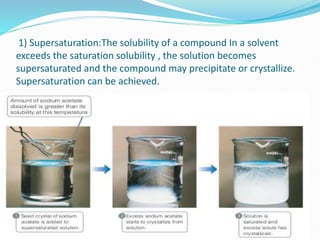
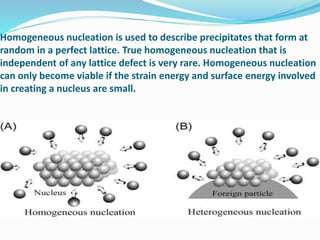
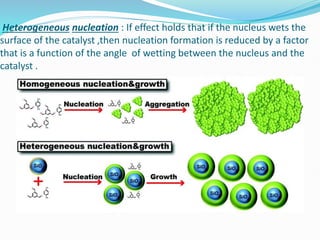
Crystallization is a major process in pharmaceutical chemistry, involving the formation of solid particles from vapor or solution and estimated to produce over 70% of solid materials. The process includes nucleation, which can be primary or secondary, and is influenced by factors such as supersaturation, temperature, and the nature of the crystallizing substance. Various mechanisms for nucleation and crystal growth are discussed, including the effects of agitation, impurities, and the type of solvent used.









![Human Reproduction [ Reproductive System ] Notes @irfanullah_mehar Irfanullah...](https://cdn.slidesharecdn.com/ss_thumbnails/humanreproductionreproductivesystemnotesirfanullahmeharirfanullahmeharjanantantra-260111172350-56e85778-thumbnail.jpg?width=640&height=640&fit=bounds)


