Download as PDF, PPTX








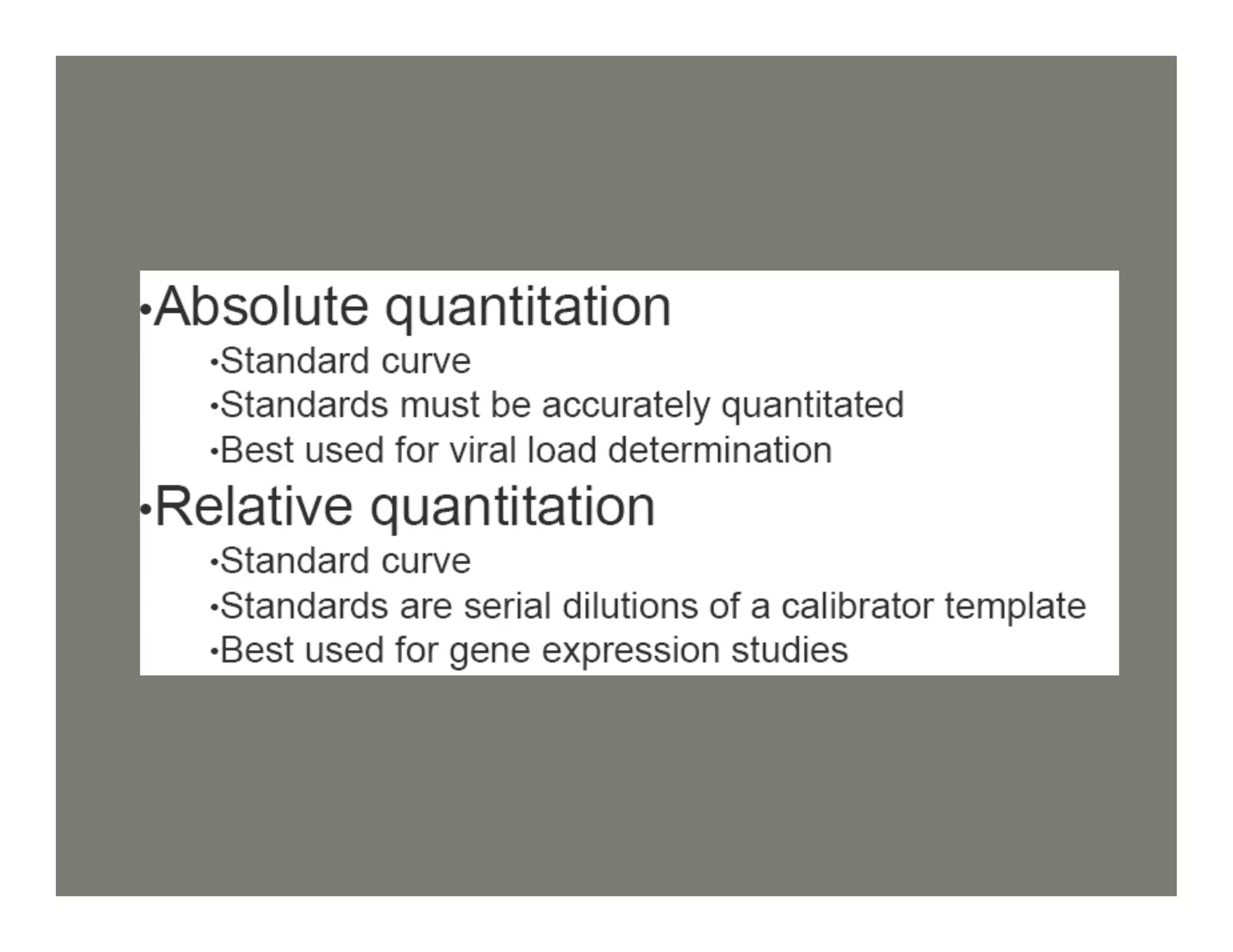



This document discusses real-time quantitative PCR (qPCR) and its applications. It describes how qPCR works by amplifying and simultaneously quantifying a targeted DNA sequence. Two common chemistries are explained: SYBR Green I which binds double stranded DNA and fluoresces, and TaqMan probes which utilize the 5' nuclease activity of Taq polymerase and fluorescence resonance energy transfer. Considerations for proper experimental design such as primer specificity, reaction efficiency, and reproducibility are also covered.
Explains Real-Time qPCR technology, its components like Taq polymerase, and the fluorescence detection of amplification products.
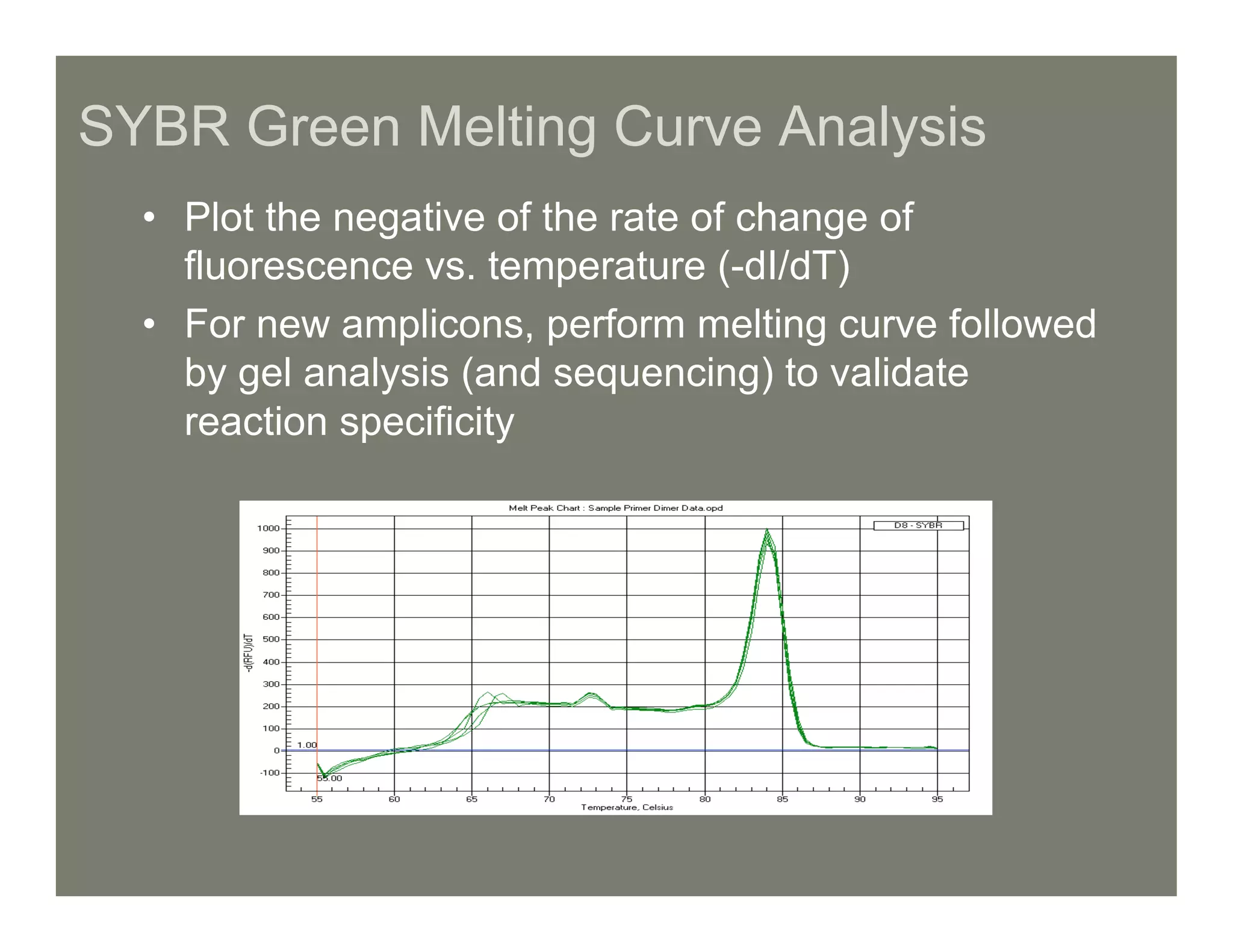
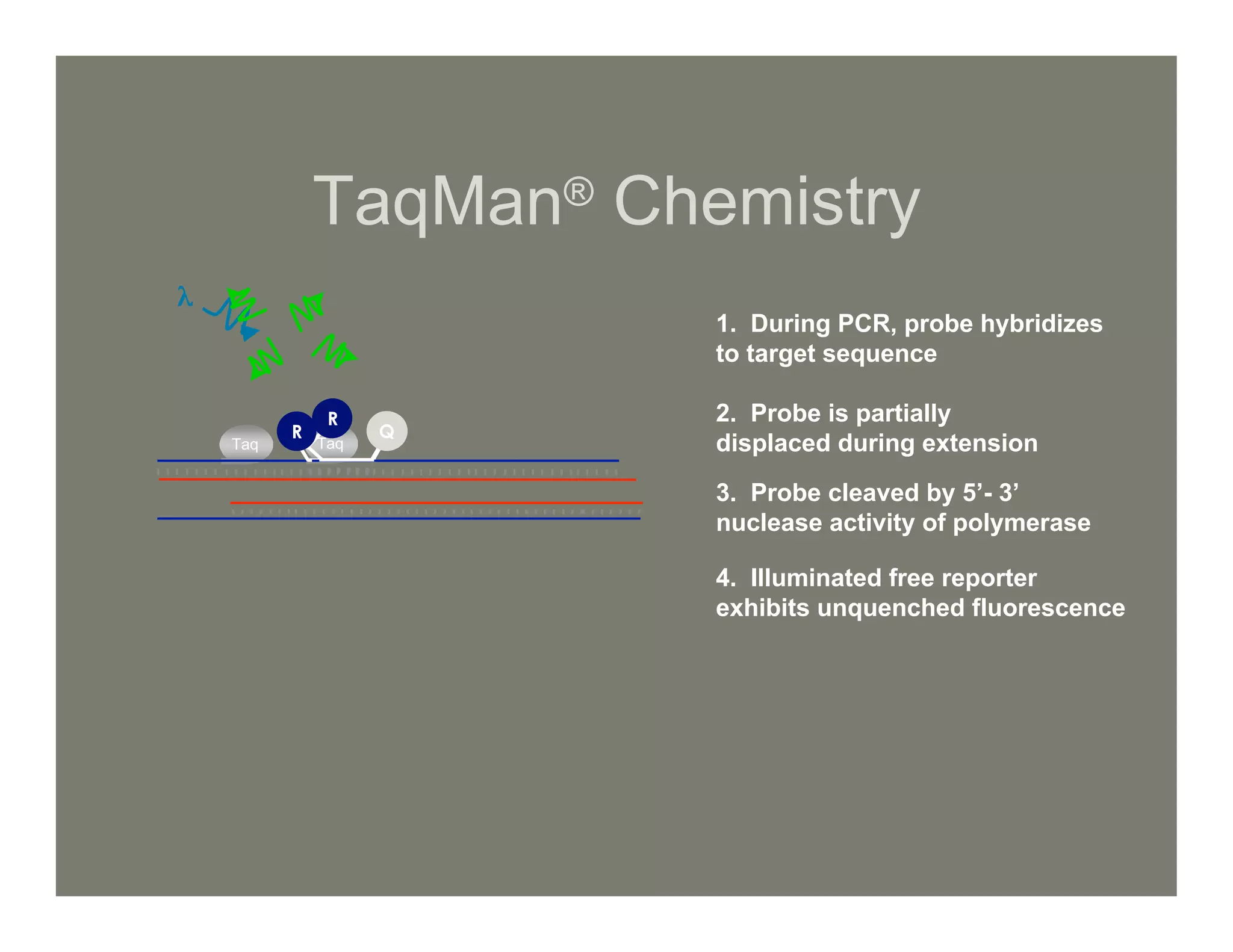
Details two common chemistries: SYBR Green I and TaqMan Probes for fluorescence detection and their mechanisms.
Discusses SYBR Green I binding to dsDNA, advantages, and disadvantages, including potential miscalculations.
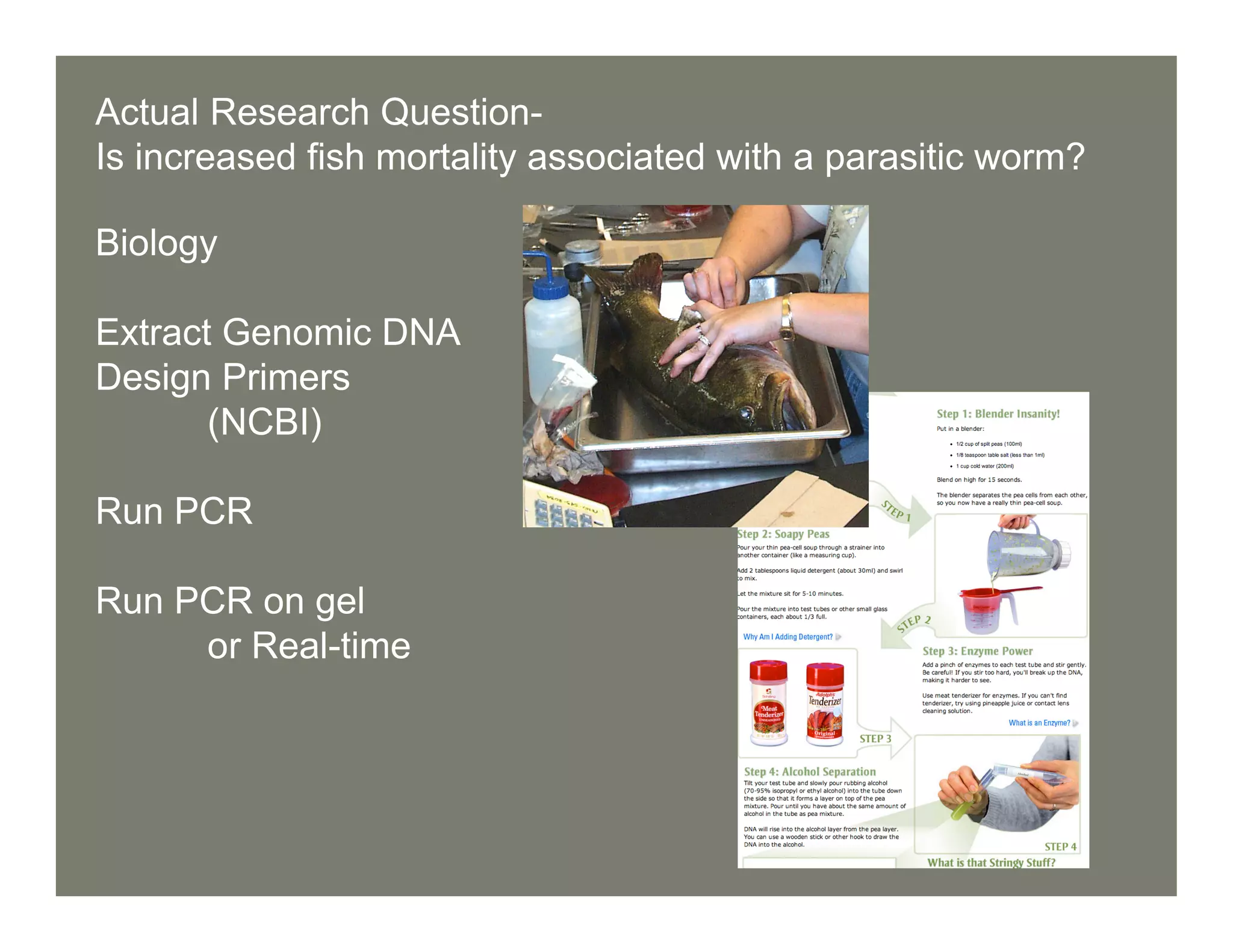
Highlights steps for research on fish mortality linked to parasitic worms using genomic DNA extraction.
Details One-Step versus Two-Step RT-PCR, suggesting ideal conditions and use cases for each method.
Explains TaqMan probe design, working mechanism, and benefits like fluorescence specificity and multiplexing.
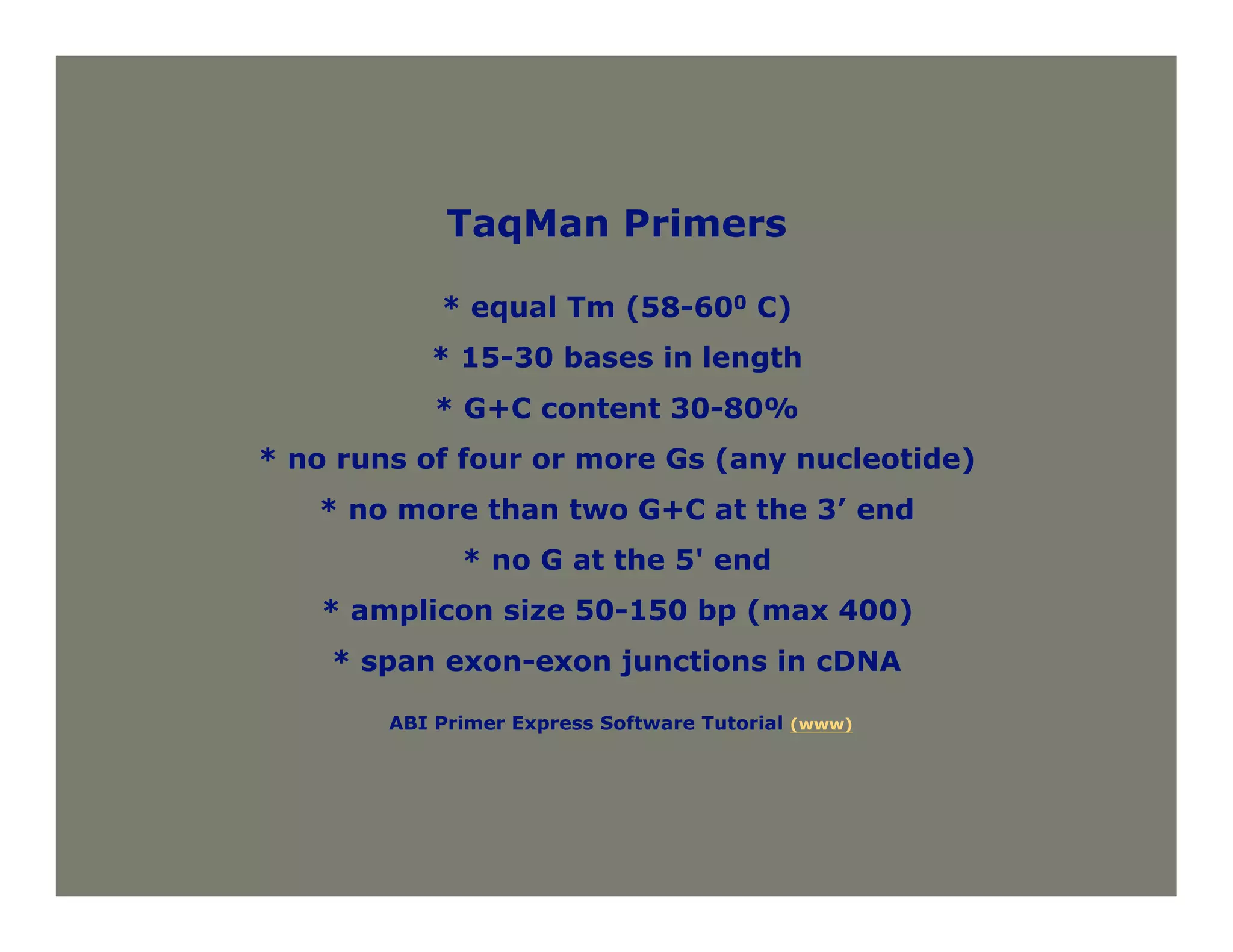
Lists specific requirements for good TaqMan primers, including length, GC content, and properties.
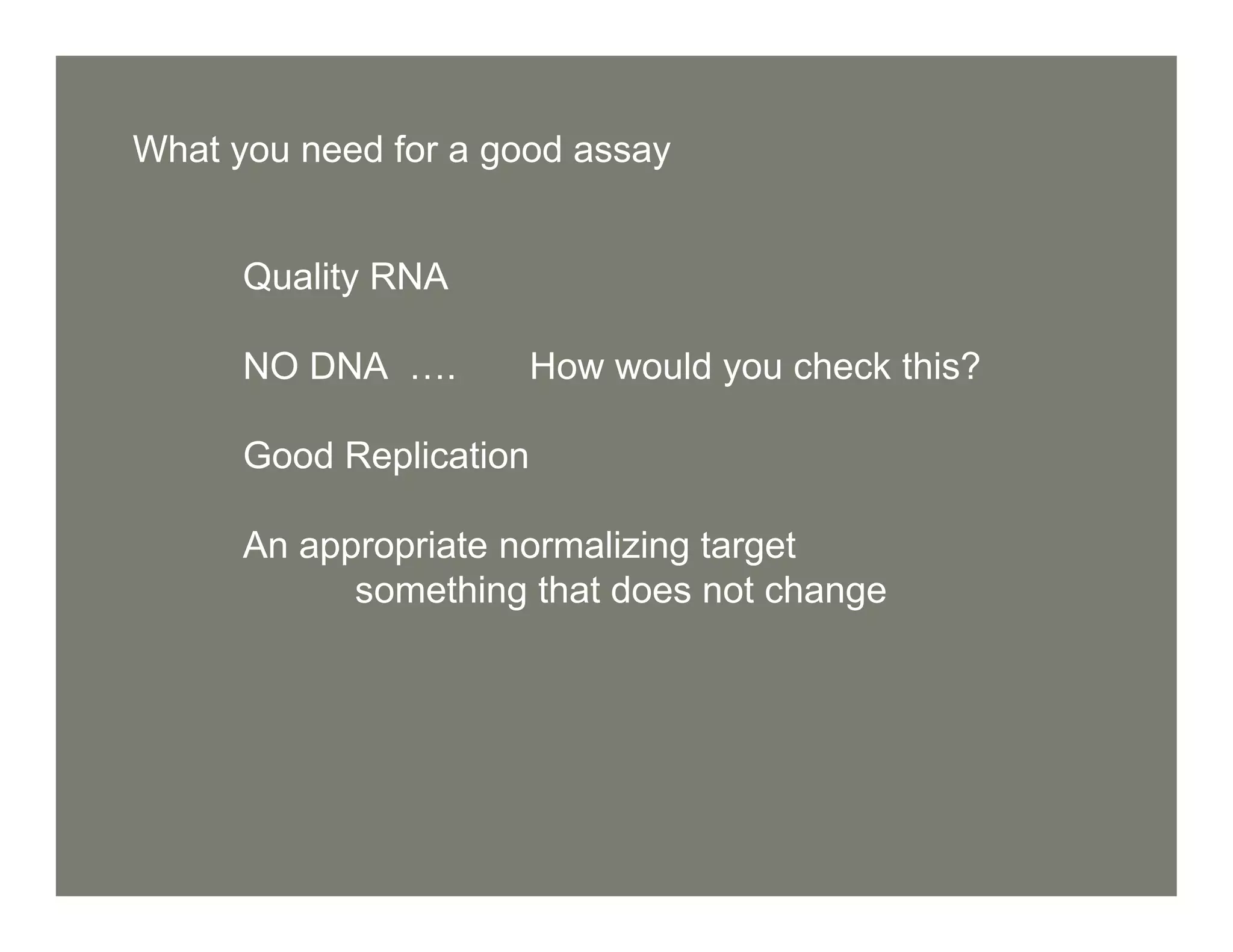
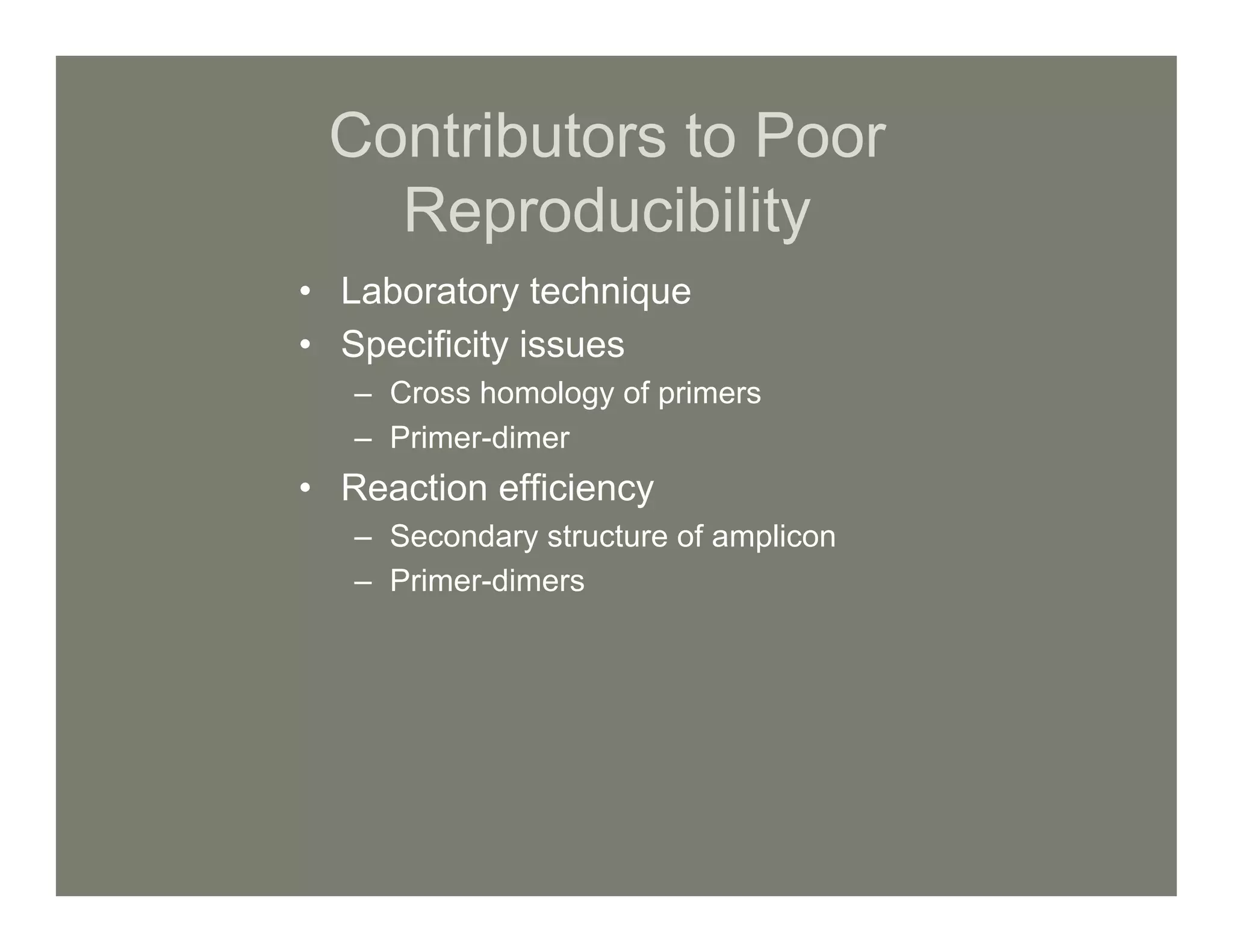
Discusses key elements for a good assay, including quality RNA and factors affecting reproducibility.
Suggests techniques to enhance reproducibility in PCR experiments through better laboratory practices.


