


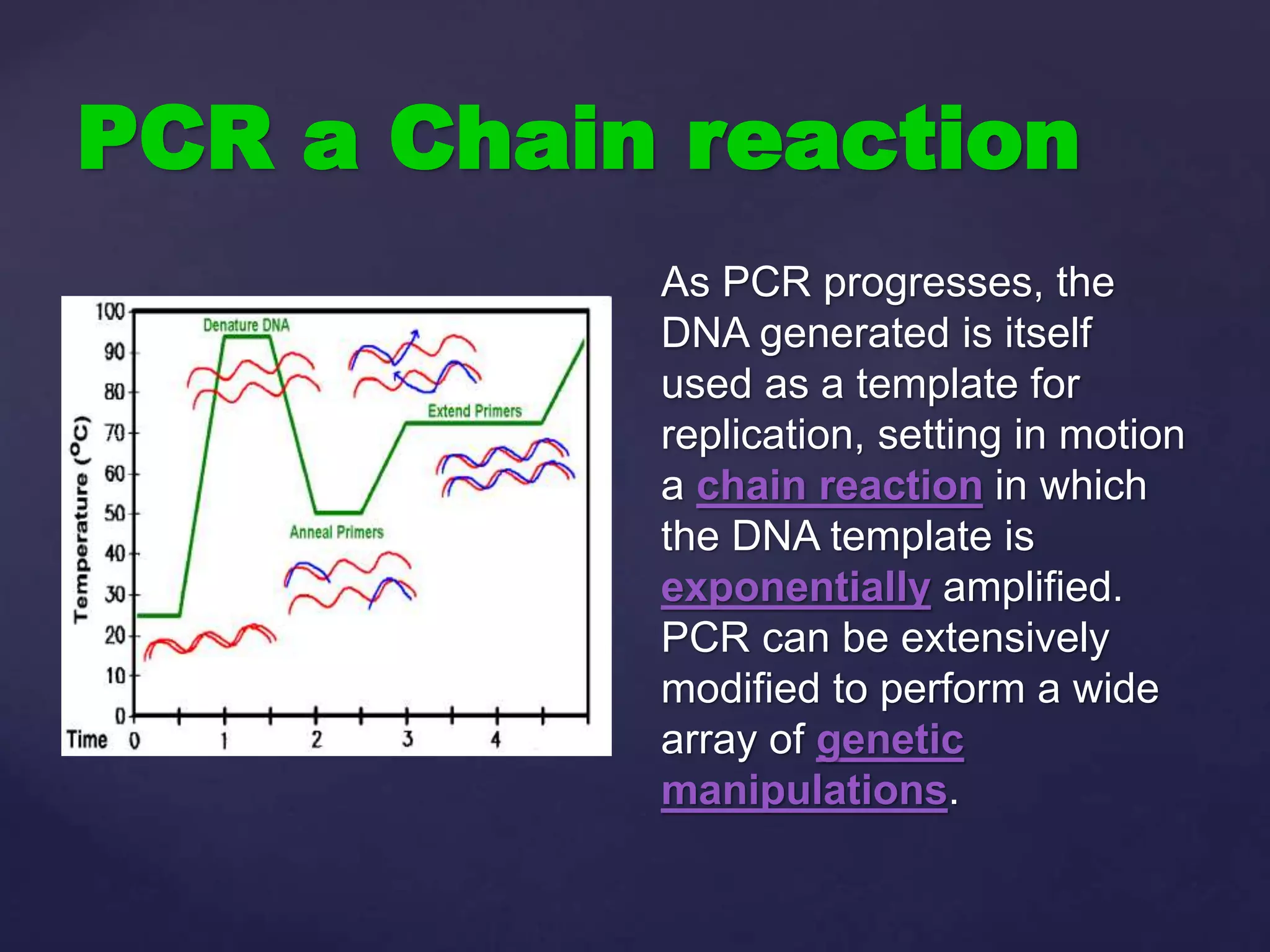



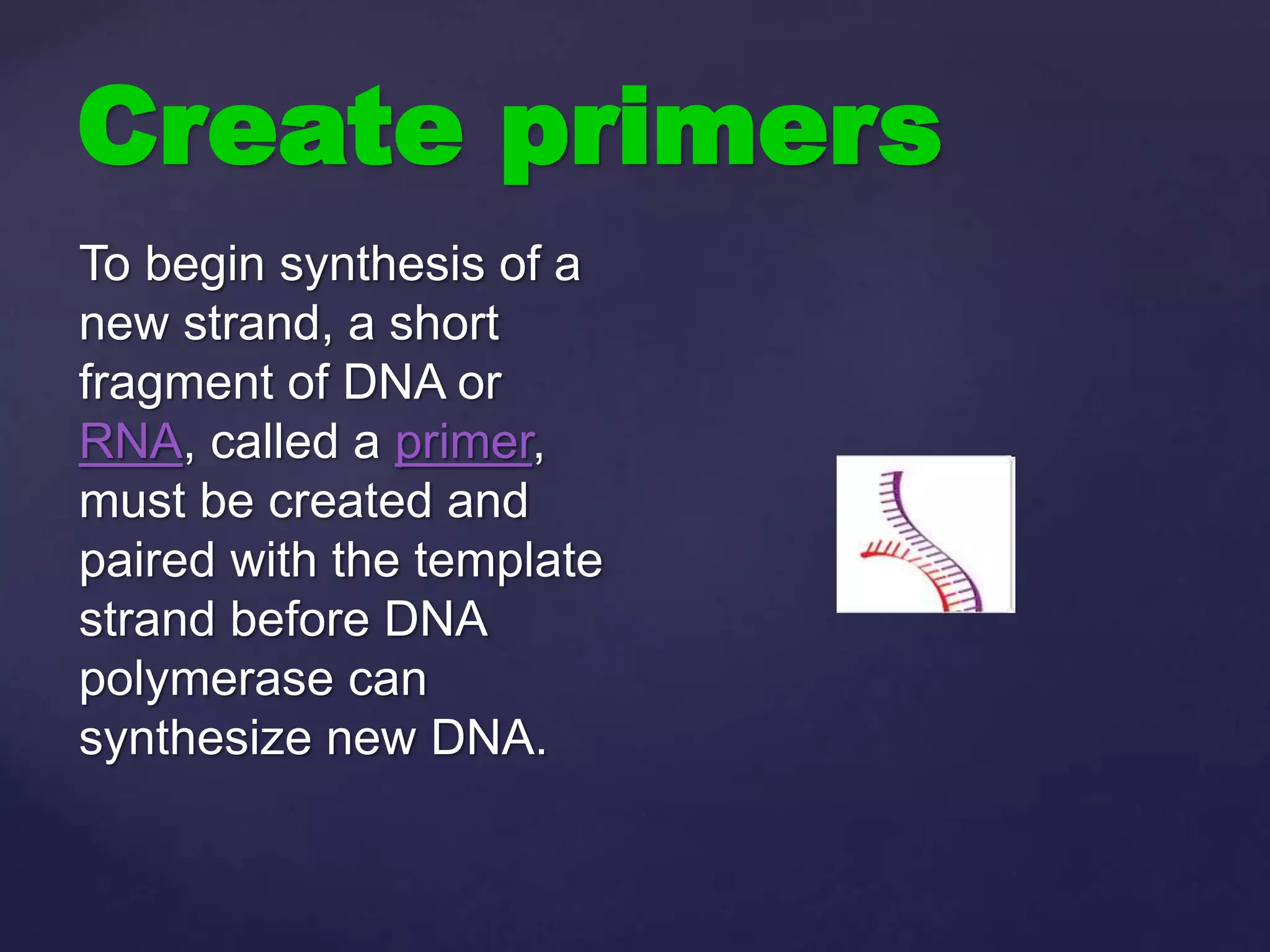


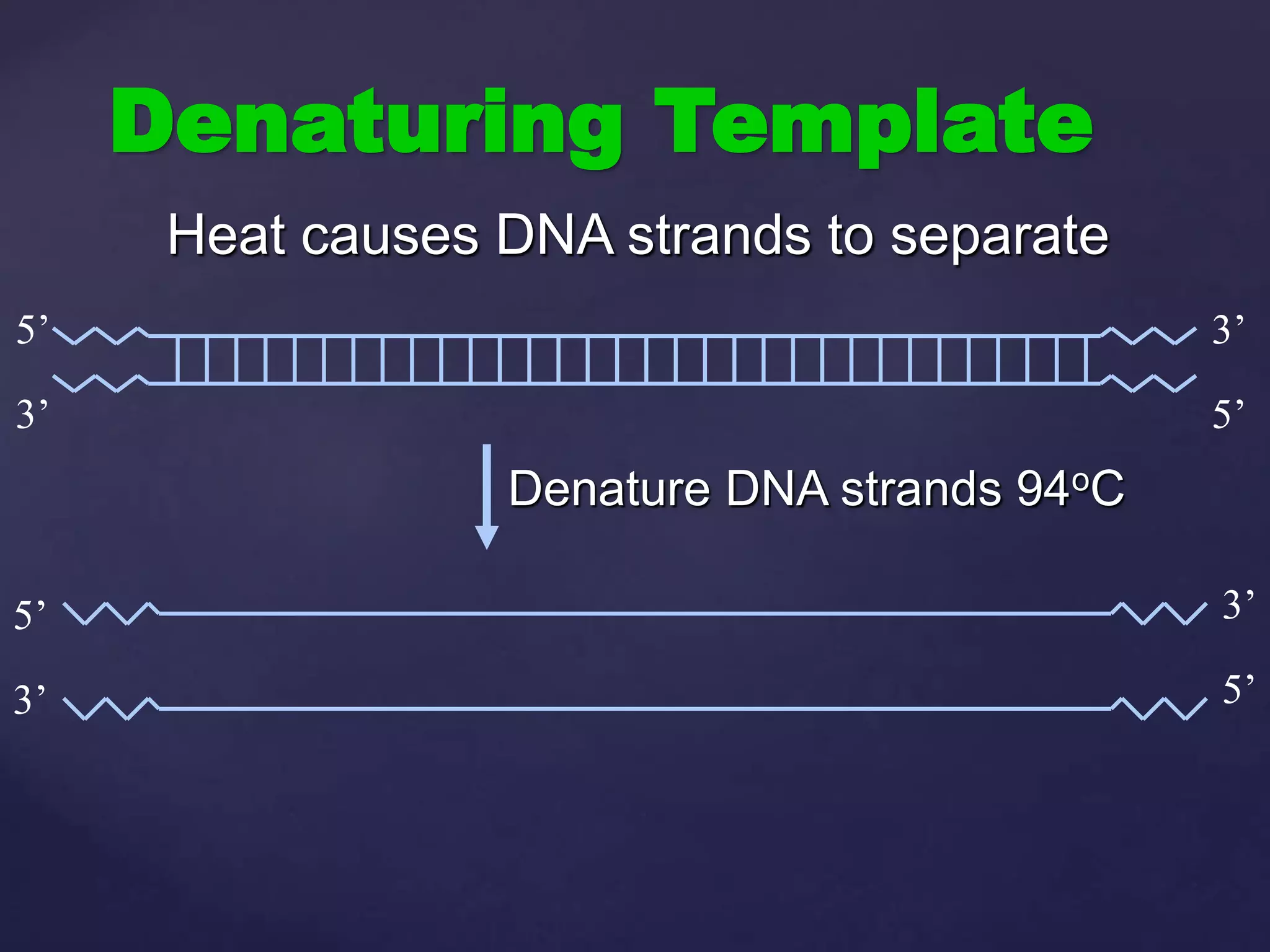

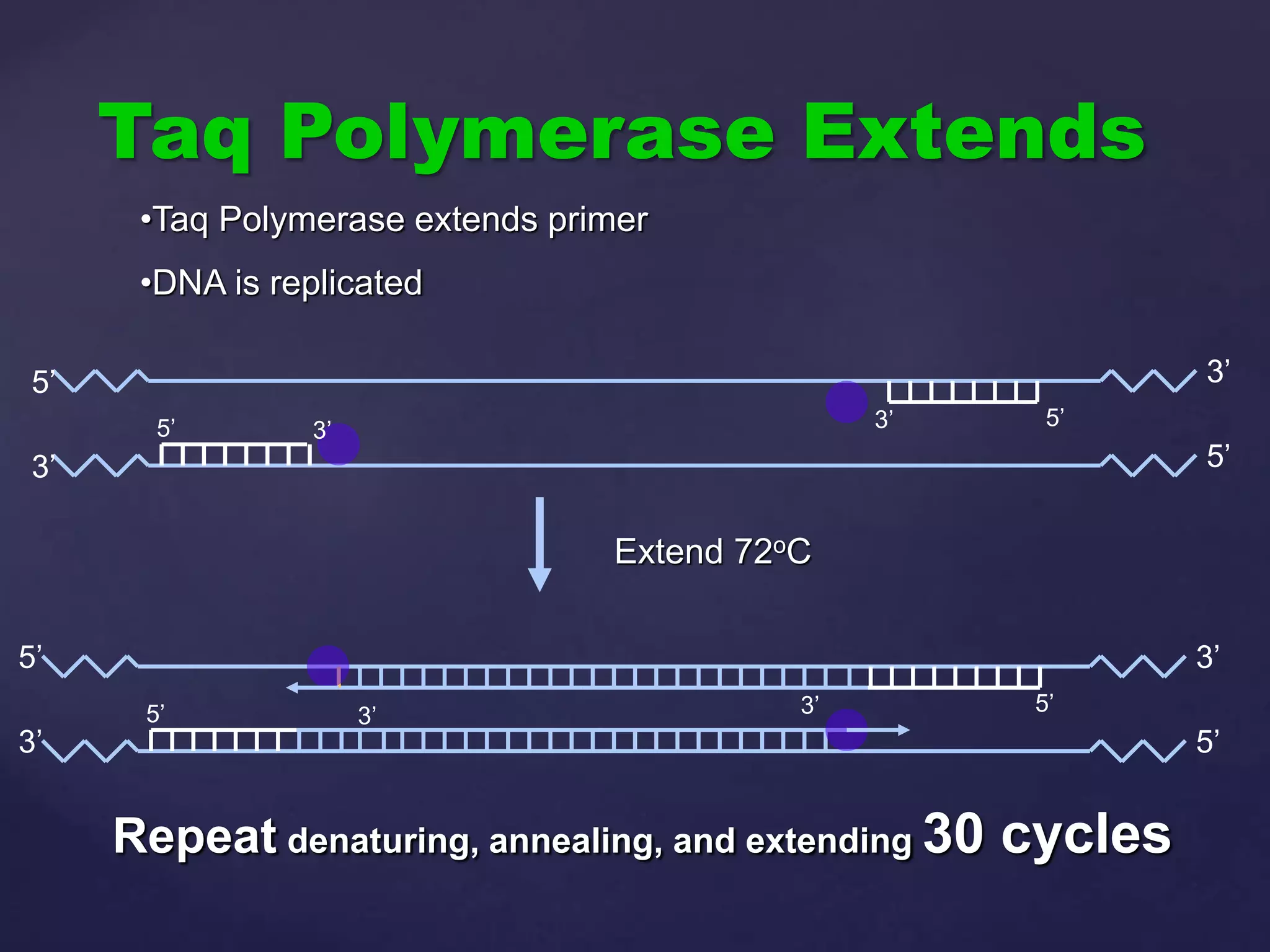

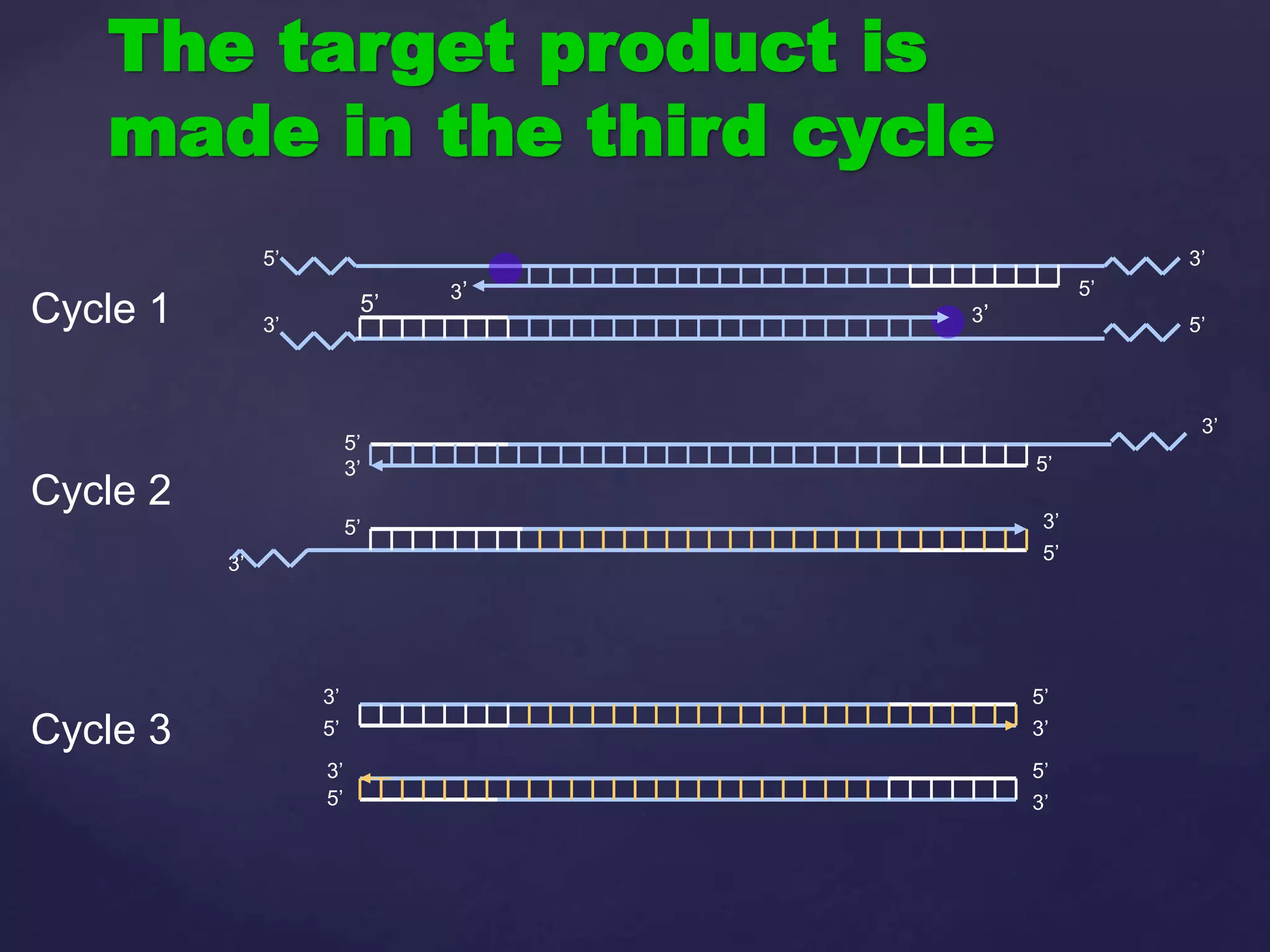


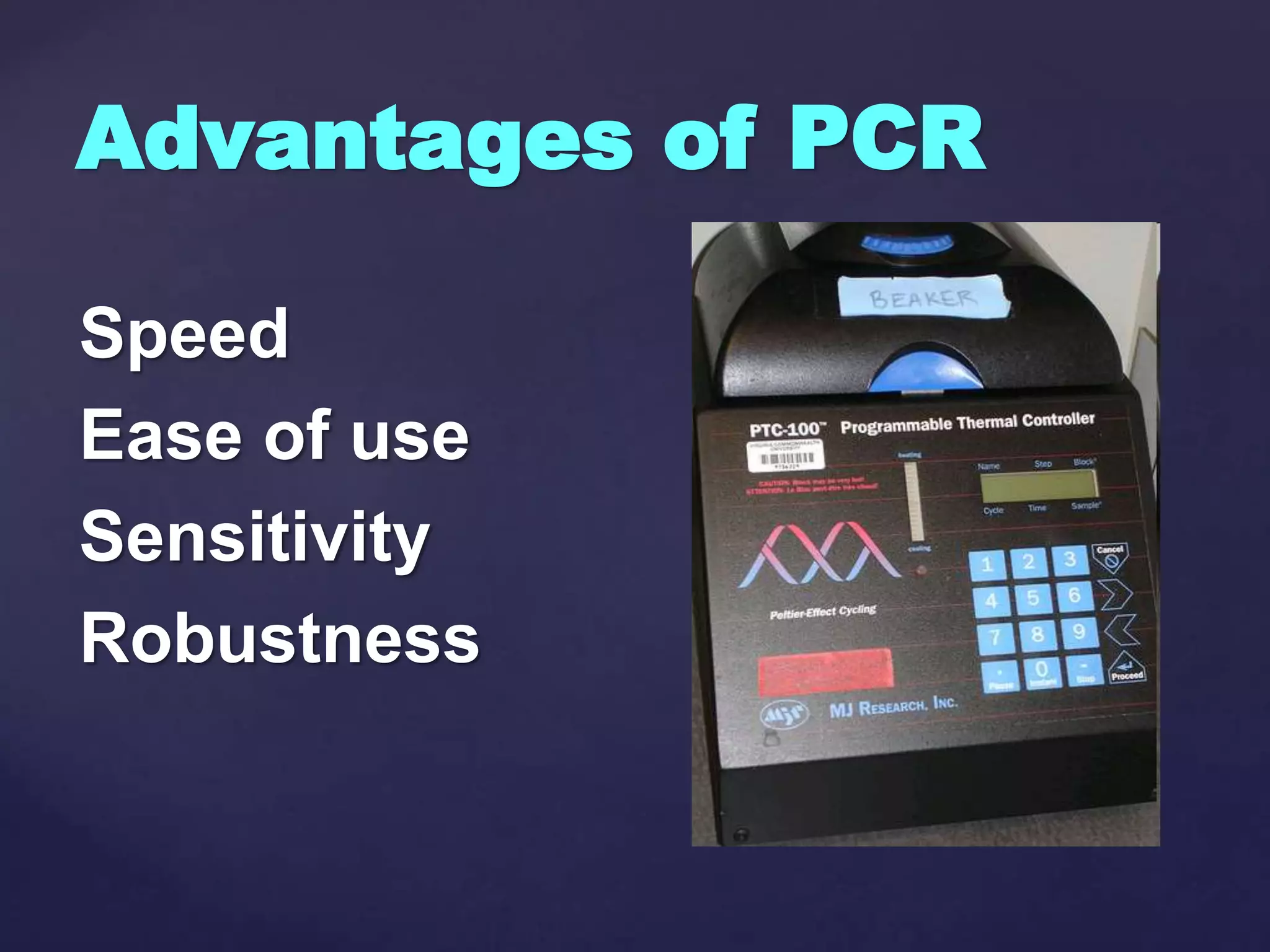



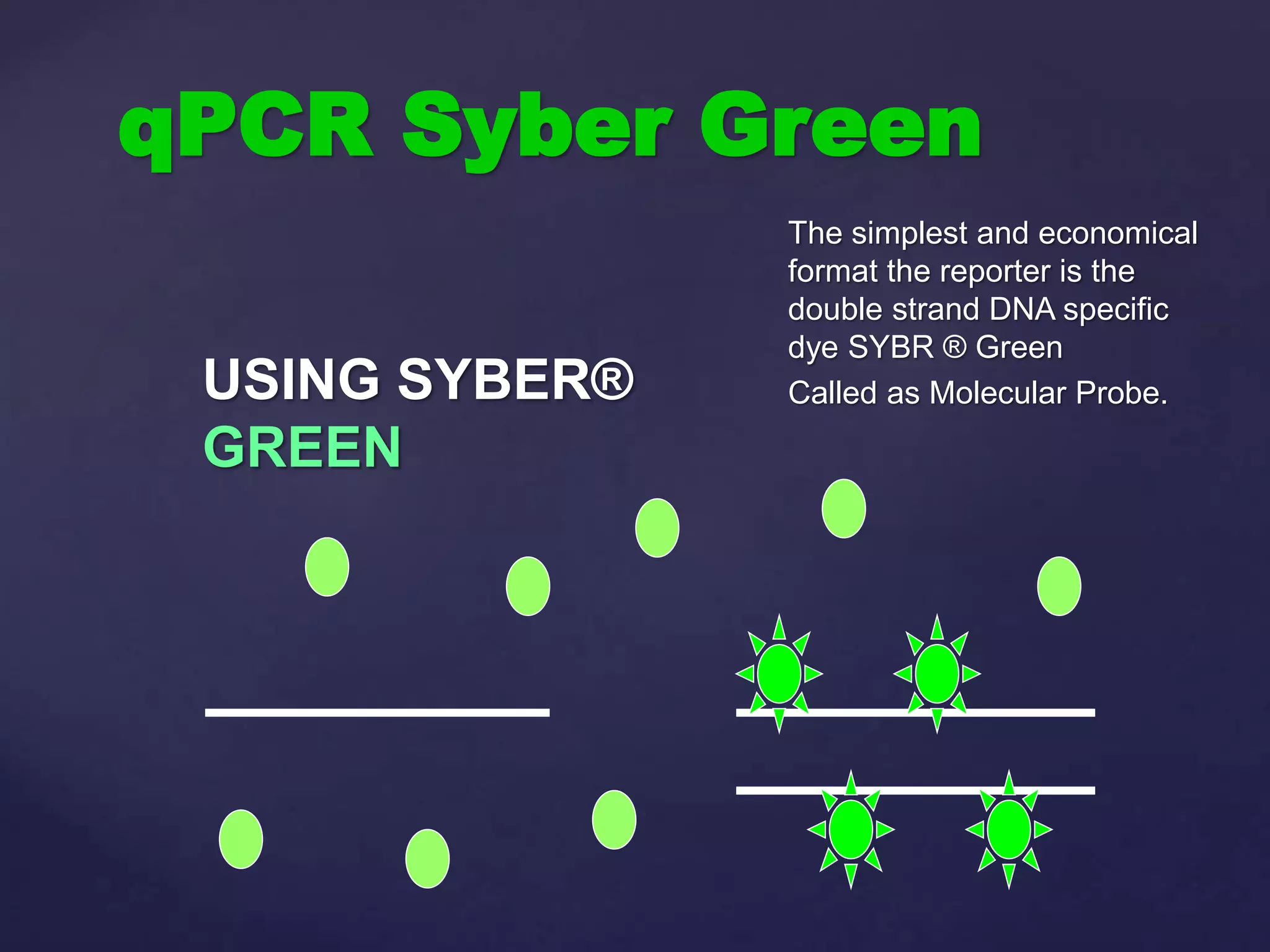


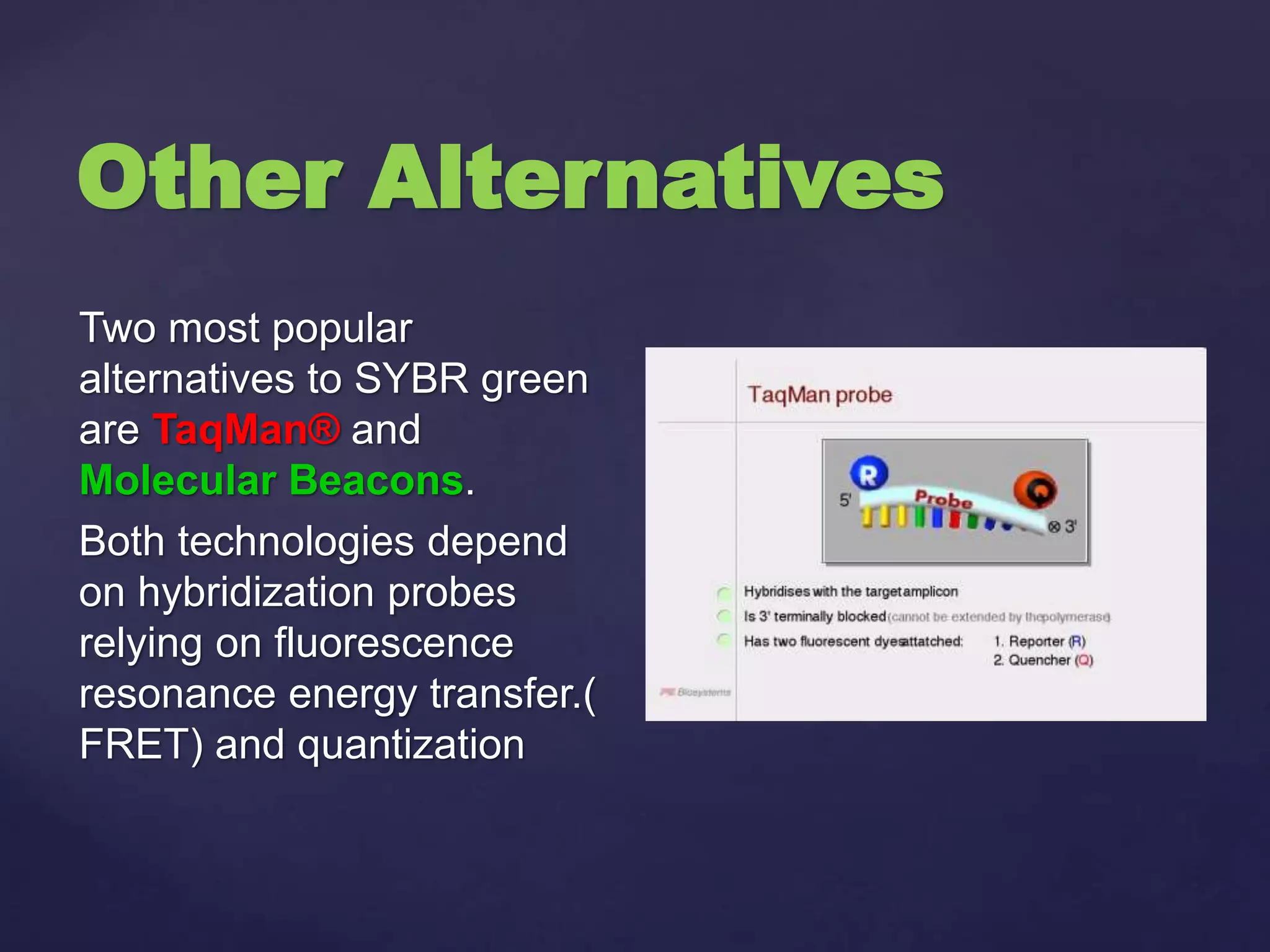


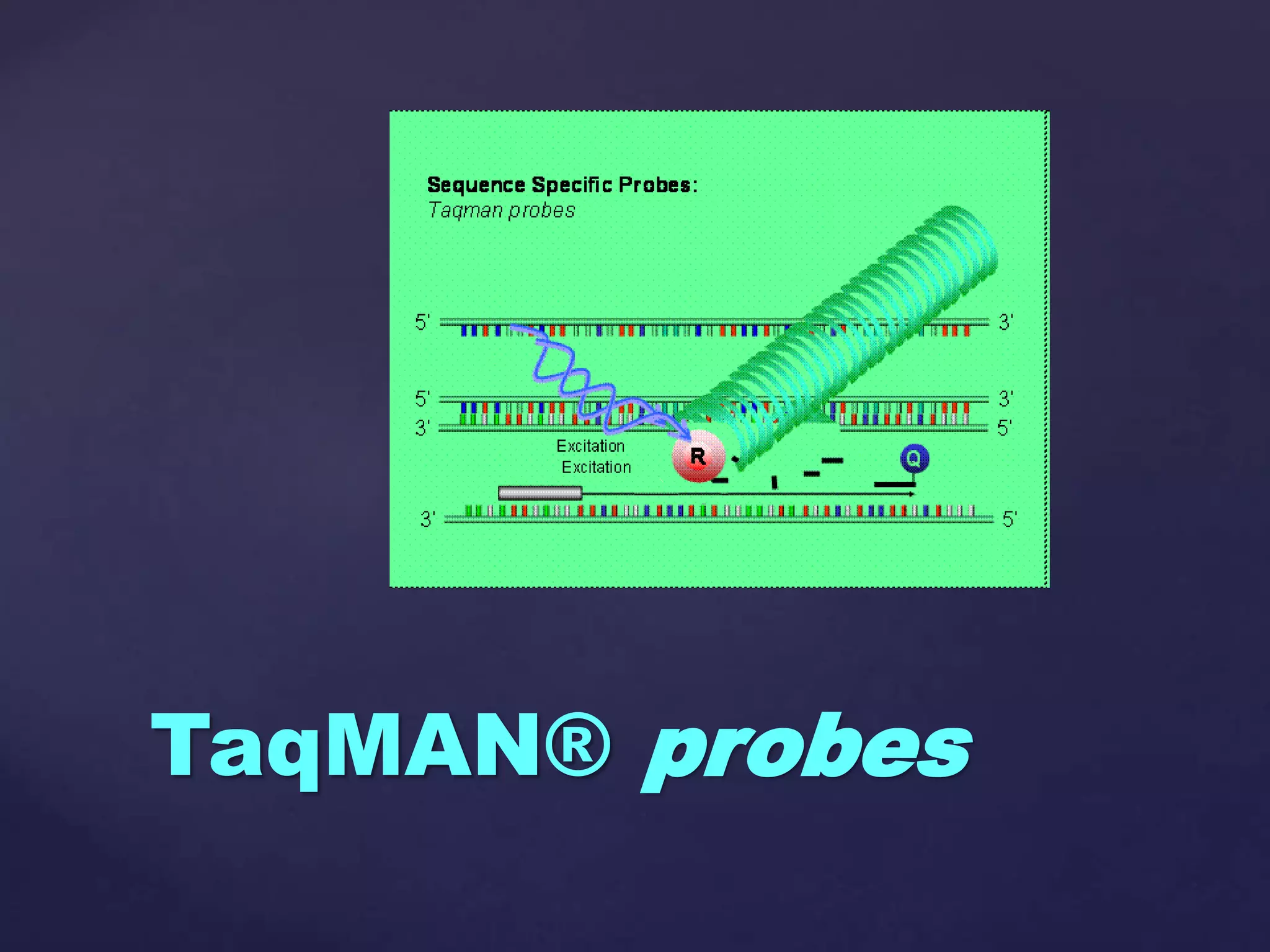


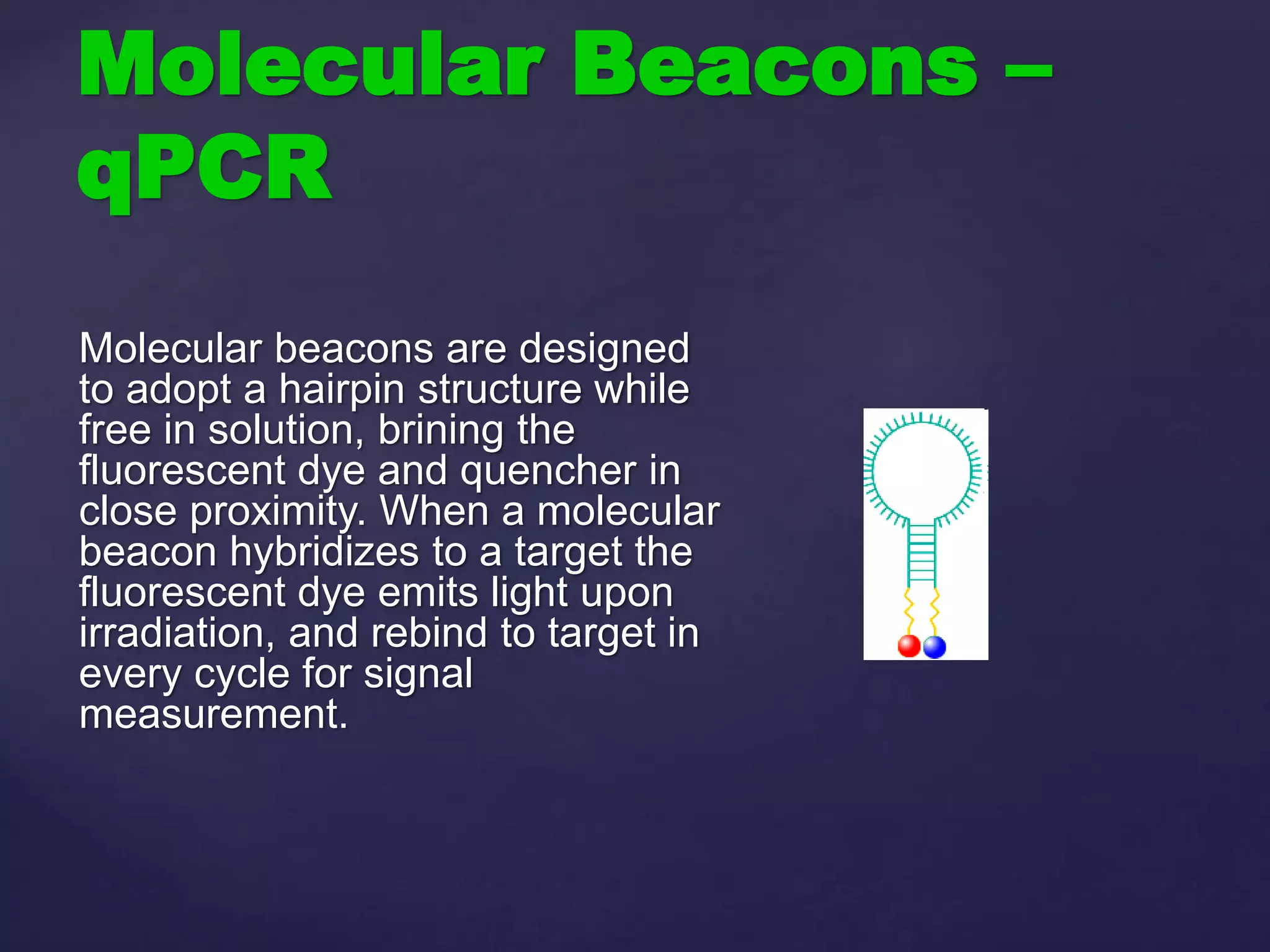

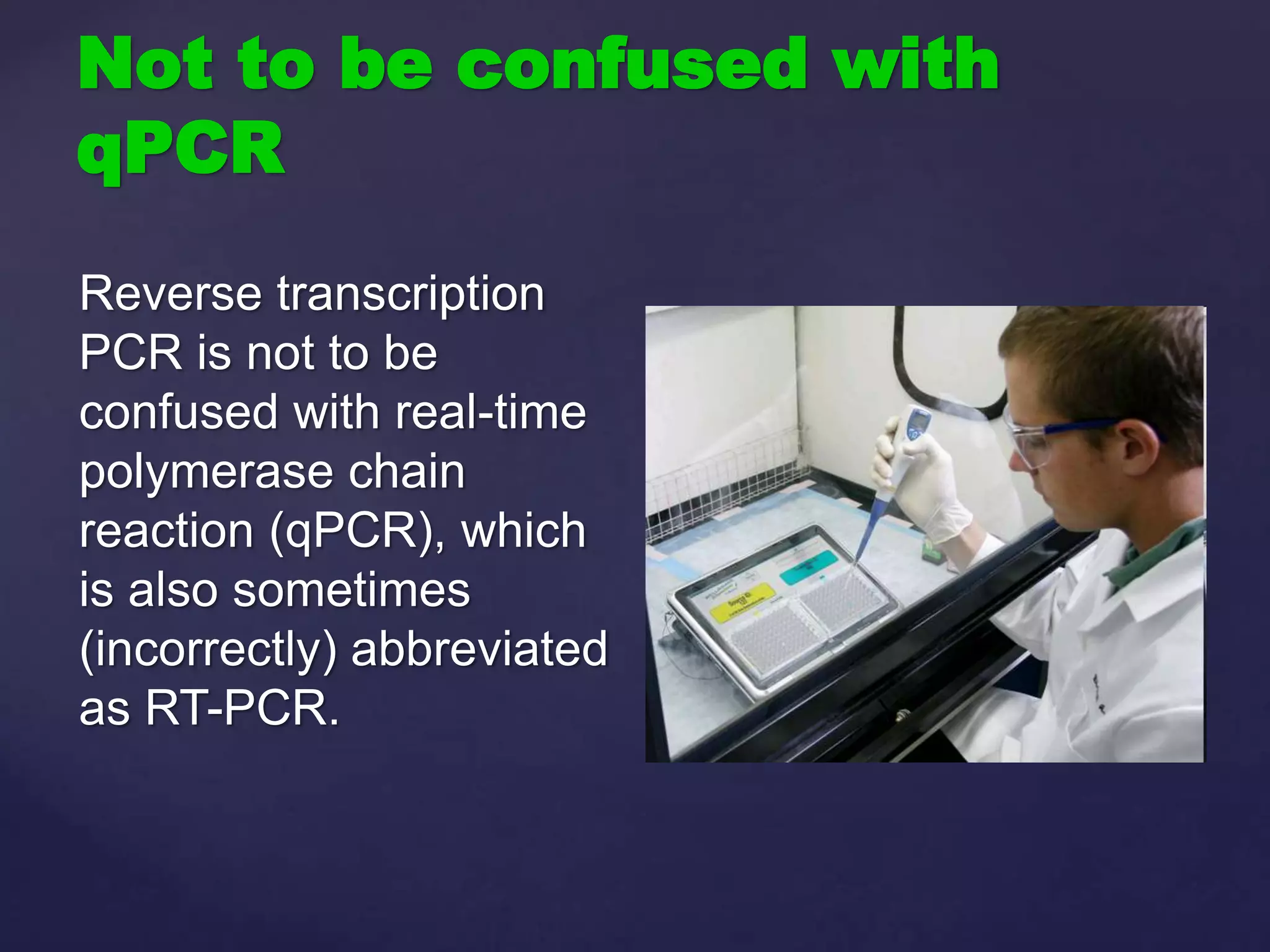

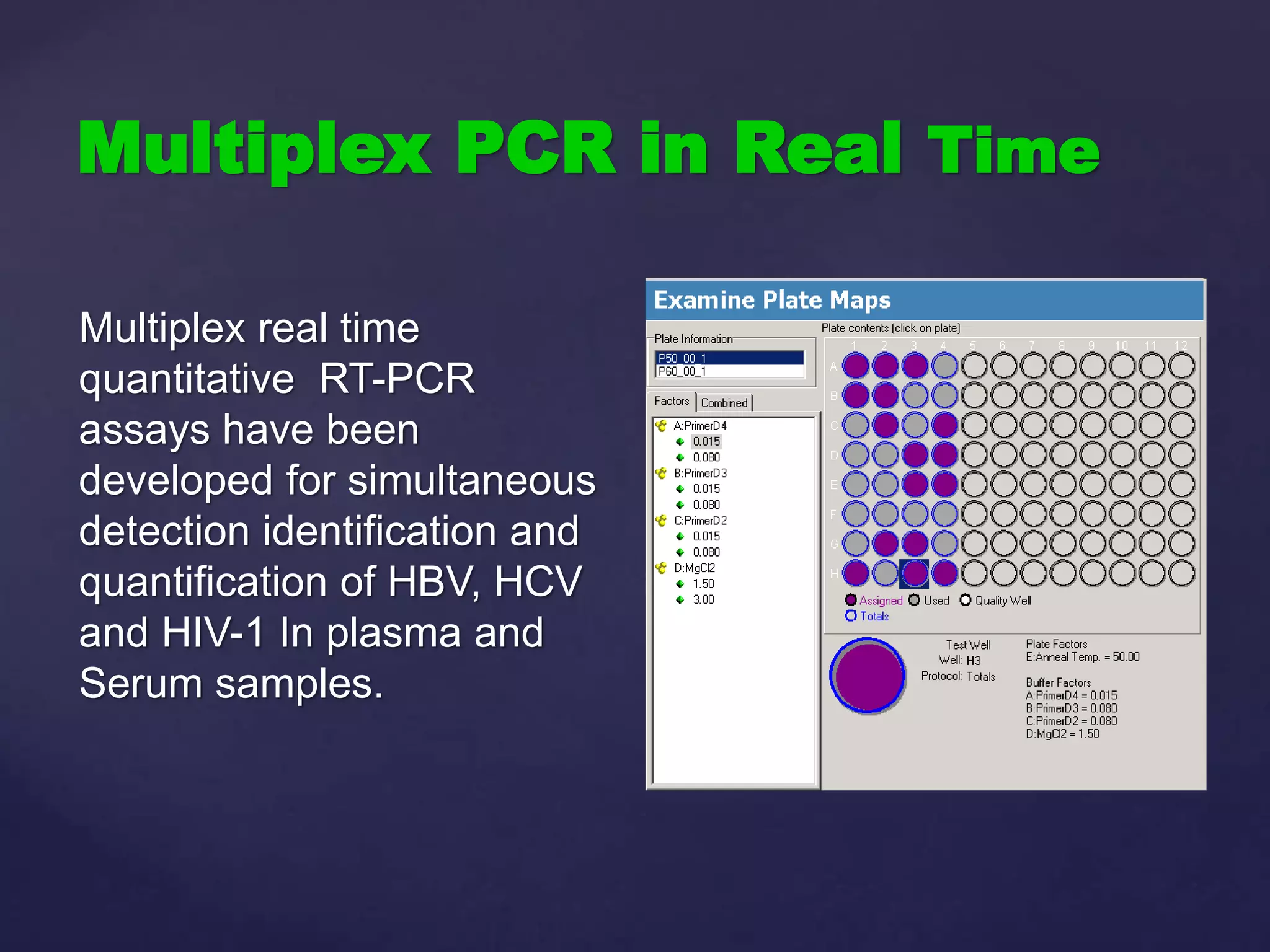


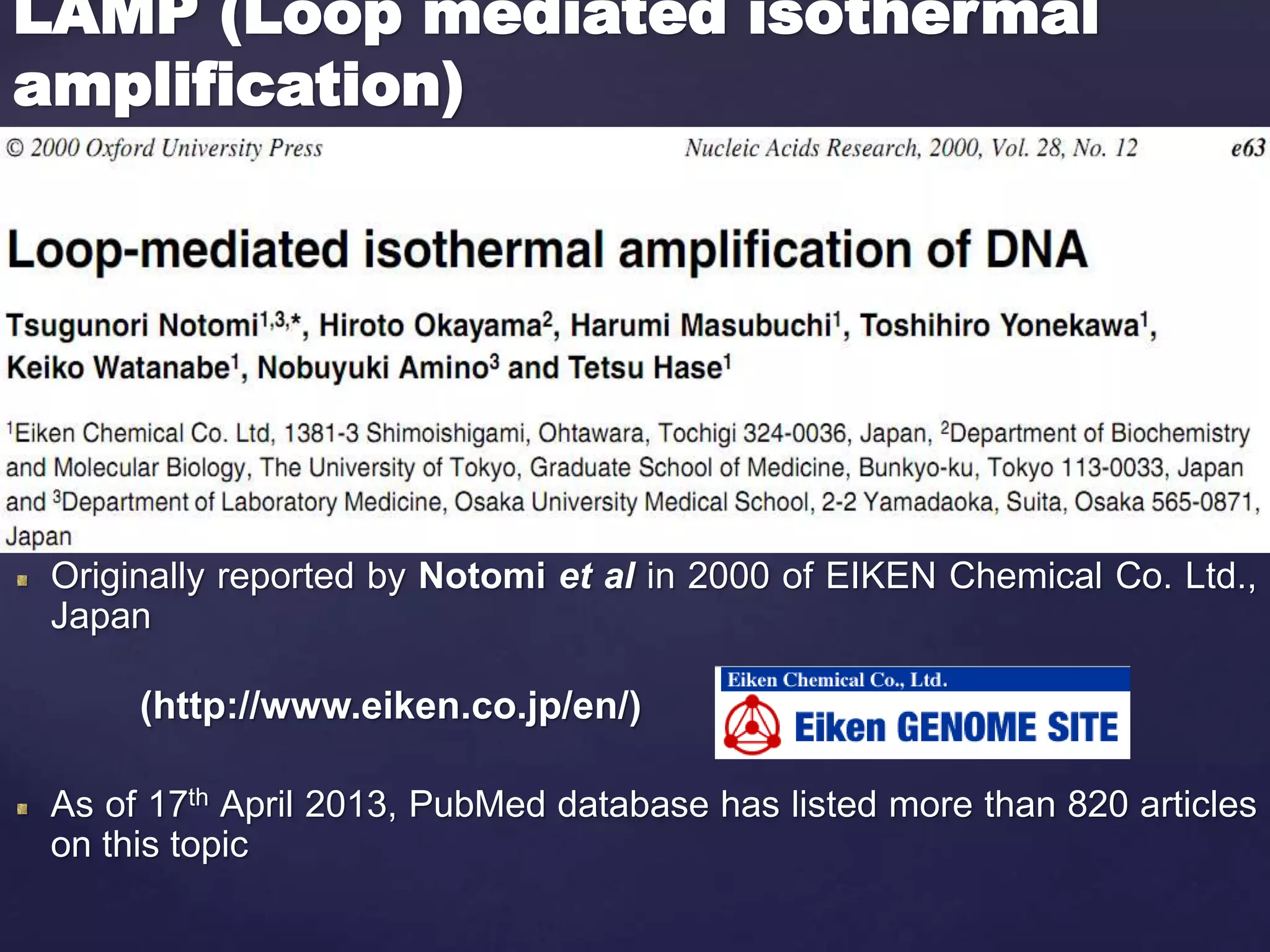

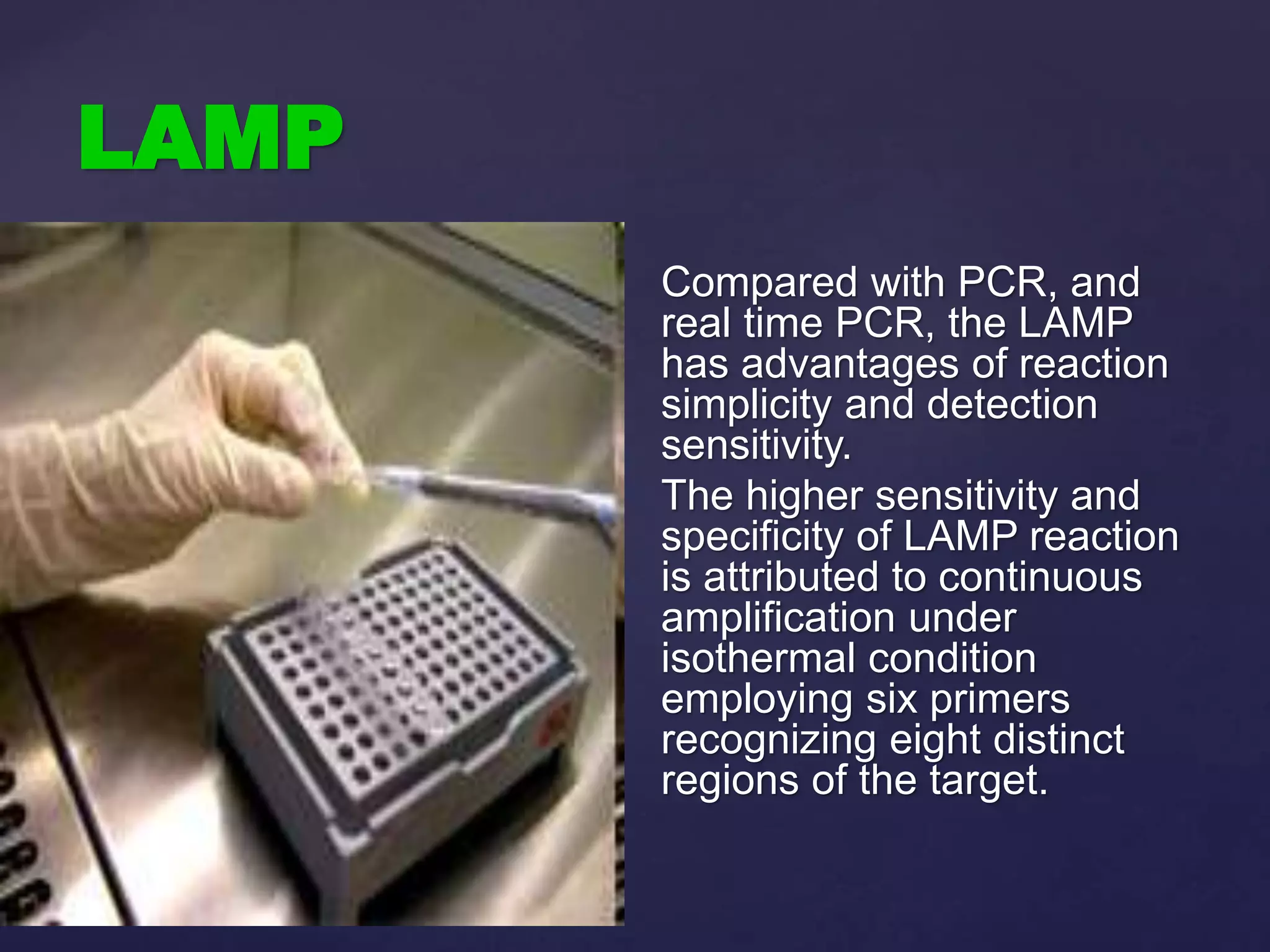










PCR is a technique used to amplify a targeted region of DNA across multiple orders of magnitude. It involves repeated cycles of heating and cooling of the DNA sample to denature the DNA strands, allow primers to anneal to the target region, and extend the primers using a DNA polymerase. Key aspects of PCR include using primers that flank the target region, a thermostable DNA polymerase like Taq polymerase, and thermal cycling to facilitate strand separation and copying. Real-time PCR allows for quantitative analysis of the amplified DNA and has advantages over traditional PCR like speed, sensitivity, and quantification ability.


