
Hasan Otukesh Pediatric Nephrologist Tehran, Iran Complete Urinalysis
Urinary findings are message from kidney Because of diagnostic importance of U/A any physician must be trained for examination and interpretation of urine Complete Urinalysis
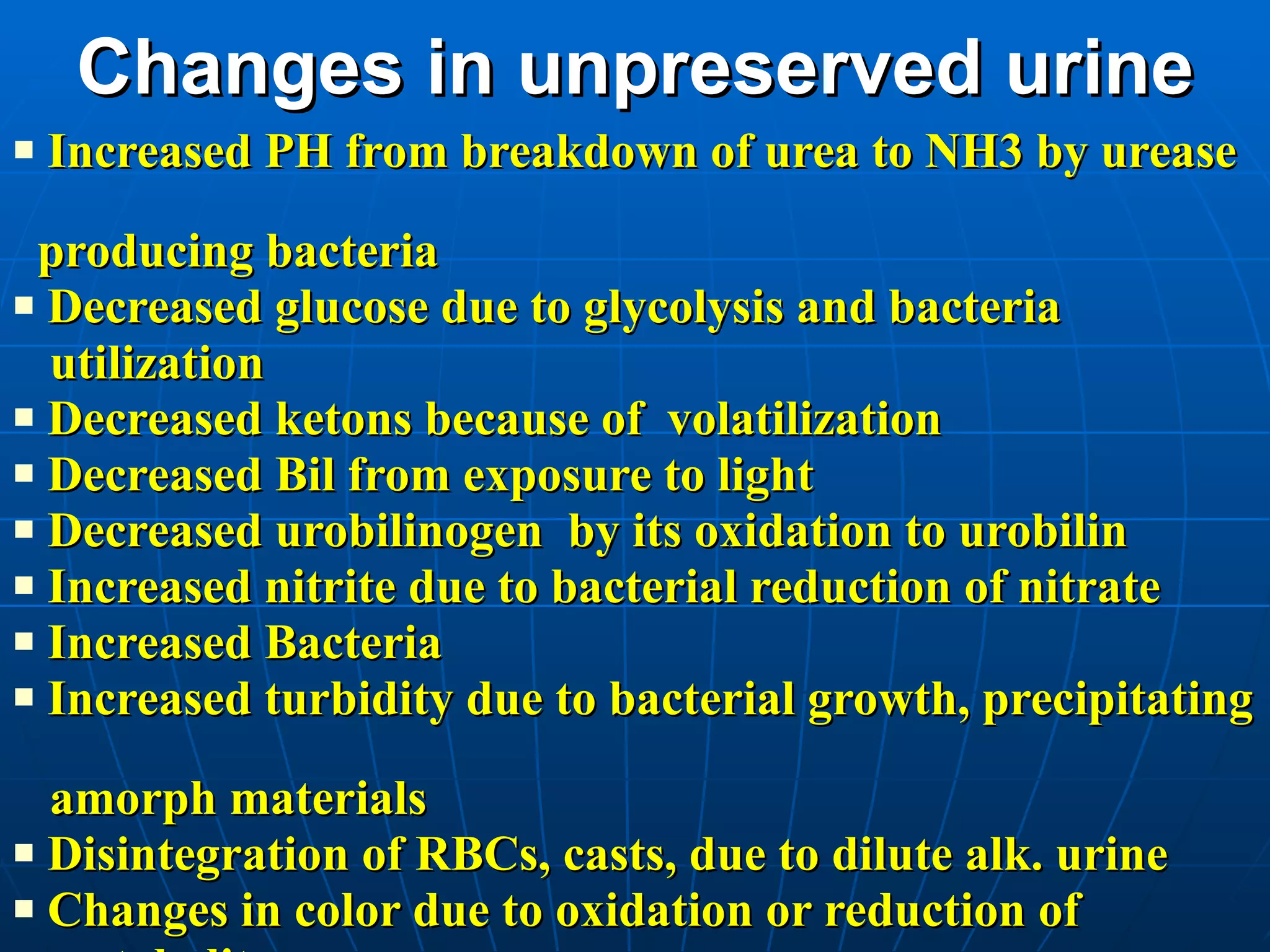
Changes in unpreserved urine Increased PH from breakdown of urea to NH3 by urease  producing bacteria Decreased glucose due to glycolysis and bacteria  utilization Decreased ketons because of  volatilization  Decreased Bil from exposure to light Decreased urobilinogen  by its oxidation to urobilin Increased nitrite due to bacterial reduction of nitrate Increased Bacteria Increased turbidity due to bacterial growth, precipitating  amorph materials Disintegration of RBCs, casts, due to dilute alk. urine Changes in color due to oxidation or reduction of  metabolites
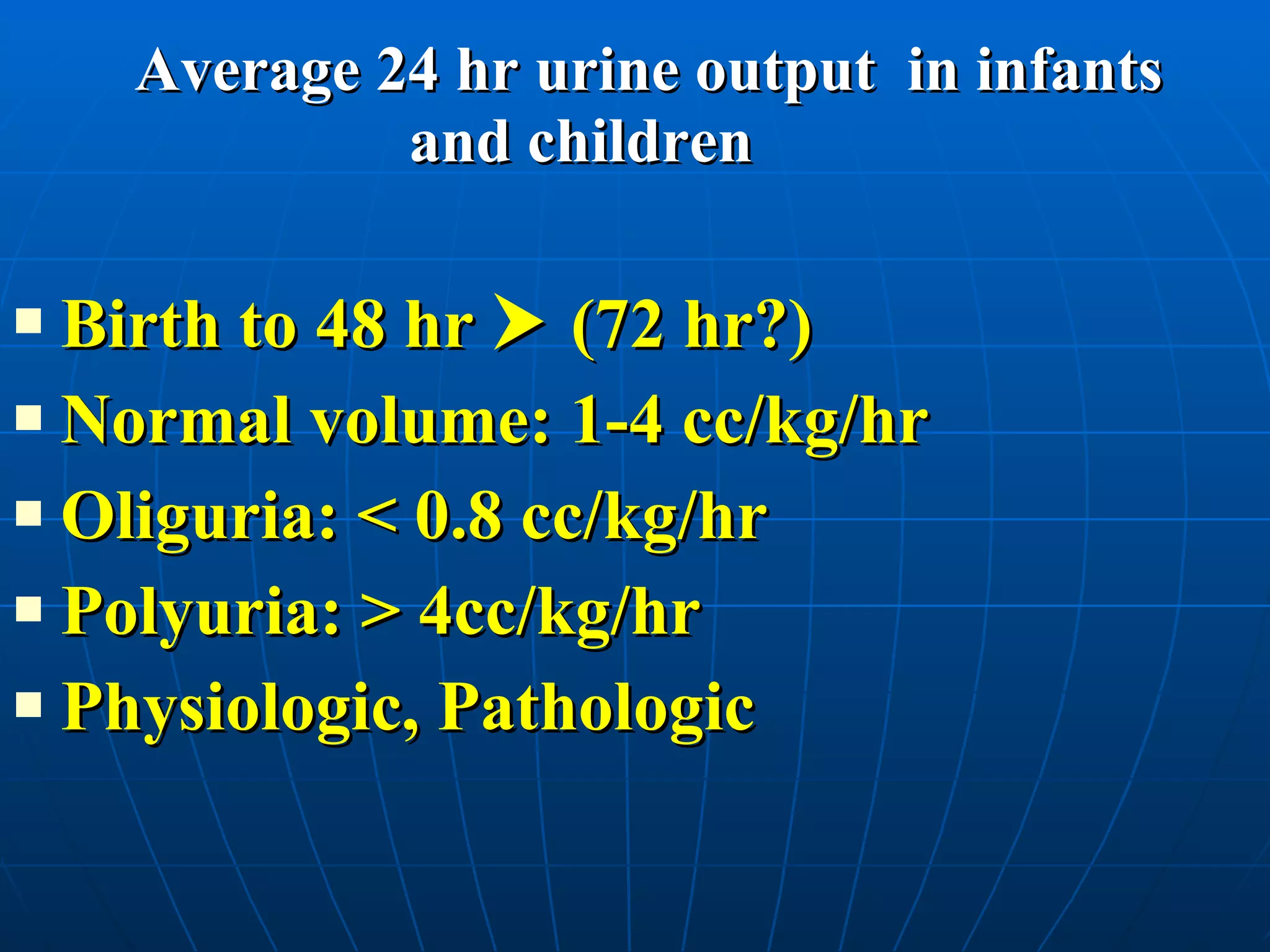
Average 24 hr urine output  in infants    and children Birth to 48 hr    (72 hr?) Normal volume: 1-4 cc/kg/hr Oliguria: < 0.8 cc/kg/hr Polyuria: > 4cc/kg/hr Physiologic, Pathologic
Urine Color, Urine Odor, Urine Suds Normal (Urochrom and PH) Red urine, cola, Rusty Black, Green, Turbid Urine
Odor of Urine and Other Body Fluids Conditions :  Odor Maple syrup urine disease :  Maple syrup, burned sugar Oast house disease, methionine malabsorb:  Brewery, Oast house Methylmalonic, propionic, isovaleric, glutaric, and butyric/hexanoic acidemia:   Sweaty feet Tyrosinemia:  Cabbage like, fishy, rancid Trimethylaminuria:  Stale fish Hypermethioninemia:   Rancid Butter, rotten cabbage Phenylketonuria:  Musty, Mousy Ketosis:  Sweet Cystinuria, homocystinuria:  Sulfurous 3-Oxothiolase deficiency:  sweet 3- methylcrotonyl CoA carboxylase deficiency:  cat urine Hawkinsinuria:  Swimming pool
Urinary PH Definition, Normal range, in neonate Causes of change Ammonia production, Excretion of  Co2, Soap suds, Diets, Others Methods of Measurement Dipstick, PH METER
Urine specific gravity, Urine osmolality Definition, Normal limits, in neonate Effect of heavy substance, Uph, Utemp Methods of Measurement Urinometer, refractive index, dipstick
Ketonuria: is diagnosed when acetone, beta hydroxybuteric acid, acetoacetic acid appear in urine. Use: Screening for DKA in DM when blood is not immediately available, confirm fasting in testing for insulinoma Interference (Reagent strips): false positive (Levodopa), false negative (volatization of acetone, breakdown of acetoacetic acid)  Occurs In:  +Metabolic conditions (DM, renal glycosuria, glycogen storage disease)  +Dietary condition (Starvation, High fat diet) +Increased metabolic requirements (hyperthyroidism, fever, pregnancy, lactation)
1-Normal Range, In neonate 2-Type of proteins Plasma origin (60%): Albumin, B2 microglobulin, Gamma globulin Renal urinary tract origin (40%): T.HP (U.MU), S IgA, Urokinase Urine Protein, Glucose
Continued Defined as persistent proteinuria below detection by routine reagent strips but greater than normal.  3-Microalbuminuria:  > 20  μ g/min or > 30 mg/day or UAlb/cr ratio > 30  μ g/mg. 4-  Methods and Measurement  Semiquantitative: Dipstick,  Precipitation  Quantative: Timed, Untimed ( Pr/Cr ratio)  Electrophoresis, Immunoelectrophoresis
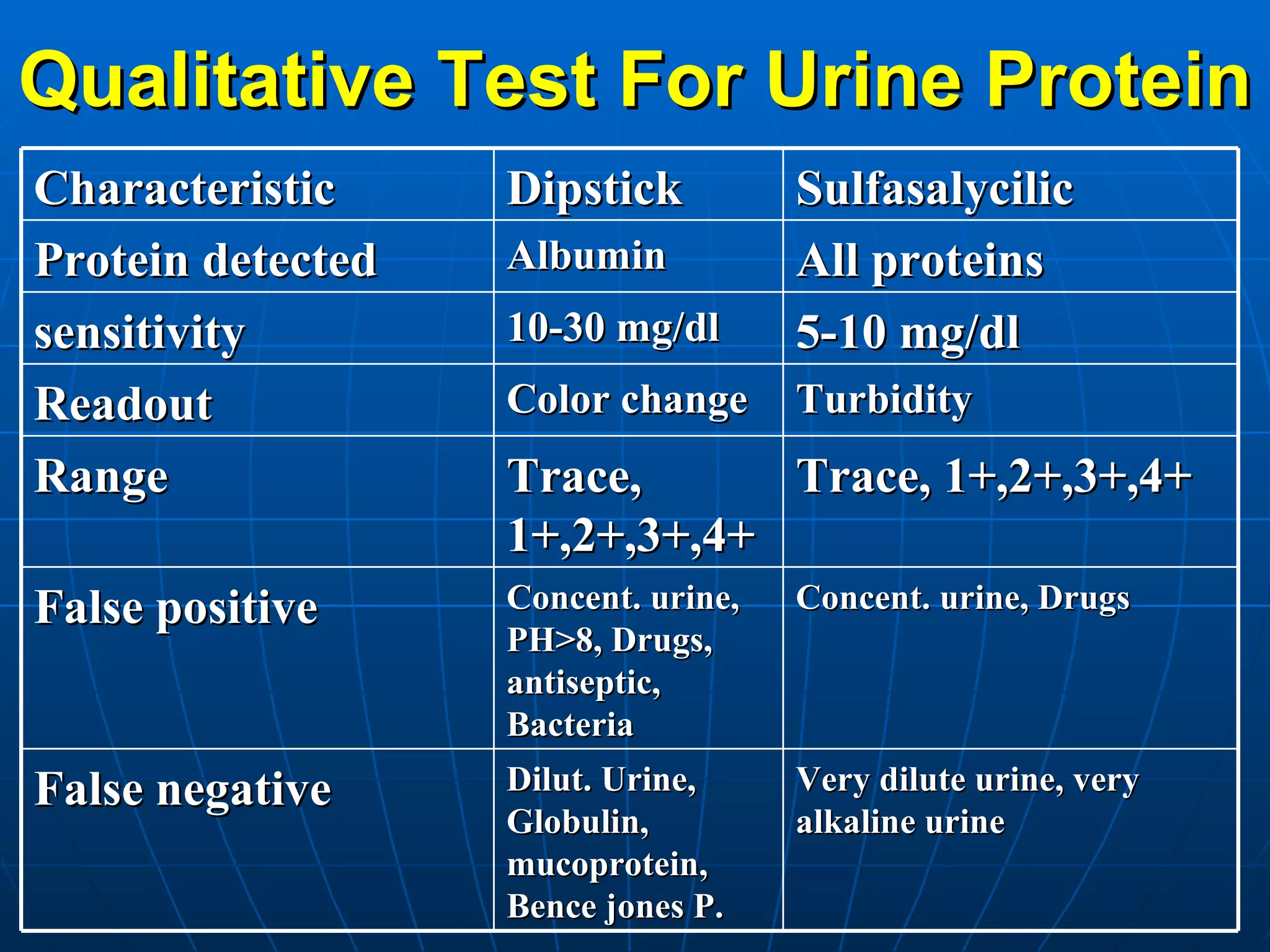
Qualitative Test For Urine Protein Characteristic Dipstick Sulfasalycilic  Protein detected Albumin All proteins sensitivity 10-30 mg/dl 5-10 mg/dl Readout Color change Turbidity Range Trace, 1+,2+,3+,4+ Trace, 1+,2+,3+,4+ False positive Concent. urine, PH>8, Drugs, antiseptic, Bacteria Concent. urine, Drugs False negative Dilut. Urine, Globulin, mucoprotein, Bence jones P. Very dilute urine, very alkaline urine
Urine Electropherosis Glomerular +Selective: primary albumin (>80%) and proteinuria +Nonselective: pattern resembles serum. Primary and  secondary glomerulonephropathies (DM, amyloidosis,  collagen diseases, dysglobulinemia) Tubular: principally a-1, a-2, B, and  ץ   globulins; albumin is  not marked. Overflow: Disparity between small amount with dipstick and  much larger amount on 24-hour specimen. Most often due to monoclonal light chains (eg; multiple myeloma, amyloidosis, lymphoproliferative disease); also hemoglobulinemia, myoglobulinemia .
Bence Jones Proteinuria Use: Detection of various gammapathies 80% of tests are true positive due to: Myeloma (70% of all positive tests) Cryoglobulinemia, Primary amyloidosis  Waldenstrom macroglobulinemia Adult fanconi syndrome, Hyperparathyroidism Benign monoclonal gammapathy About 20% of resulted will be false positive (i.e, urine electrophoresis does not show a spike, and immunoelectrophoresis does not show a monoclonal light chain) due to: Vasculitis, CRF, Malignancy, Drugs like penicillin, aminoglycoside, radiocontrast
Positive test for Bence Jones proteinuria by heat test should always be confirmed by electrophoresis and immunoelectrophoresis/immnunofiltratin of concentrated urine. The heat test is not reliable and should not be used for diagnosis. The reagent strips test for albumin does not detect Bence Jones Protein
Urine Pigments Endogenous: Hb, Myoglobuline Exogenous Importance of urine PH In red urine
Red Urine Dipstick Exogenous Pigmenturia + Centrifugation  Supernatant: colorless Sediment: Red Pure Hematuria Supernatant: Red Sediment: Colorless Pigmenturia Supernatant: Red Sediment: Red Hematuria ± lysis  or Pigmenturia Inspect Color of Plasma for Myoglobin or Hemoglobin
Porphyrinuria Is caused mainly by coproporphyrin Use:  +Porphyrias + Lead poisoning + Cirrhosis + Infectious hepatitis + Passive in newborn of mother  with porphyria, lasts for several days
Hemosidrinura: is diagnosed when centrifuged specimen of random urine is stained by prussian blue and show granules in casts, cells and/or free, present several days after intravascular hemolysis even when hemoglobinuria is absent (eg; PNH)
Summery of Dipstick Analysis SG: 1005-1065, False positive moderate to high protein, False negative alkaline urine PH: 5-6, acid in meat diet, acidosis, low chloride, acidifying agents, Alkaline: vegetable based diet, bacterial infection, alkalosis, urine exposed to air for extended times, postprandial tide, false positive: glucose in urine Glucose: negative to trace, positive in chronic or transient hyperglycemia drugs, rarely fanconi like syndrome Billirubin: negative, indicate liver disease, bile duct obstruction, starvation, hemolysis, pyrexia, False positive  in high doses of chlorpromazine, etodolac metabolites, False negative  in ascorbic acid, nitrites Ketones: negative, positive in starvation, insulinemia, DM, persistant hypoglycemia, high fat low carbohydrate diets, glycogen storage disease, false positive in pigmented urine, false negative in old urine sample Urobilinigen; 0.2-1 mg/dl, Positive: hemolytic crisis, intestinal or hepatic dysfunction, false positive in elevated reagent strip temprature, false negative in tetracycline, high glucose, high SG
 
Urinary Cells RBC: Normal, Clump, Origin WBC: Normal , Clump, Pus Cells, Gliter cells RTEC: Normal, Appearance Others: OFB, lymph, eosin, LE cells, U-tract epithelial, CMV
 
Red Blood Cells Crenated Red Blood Cells
 
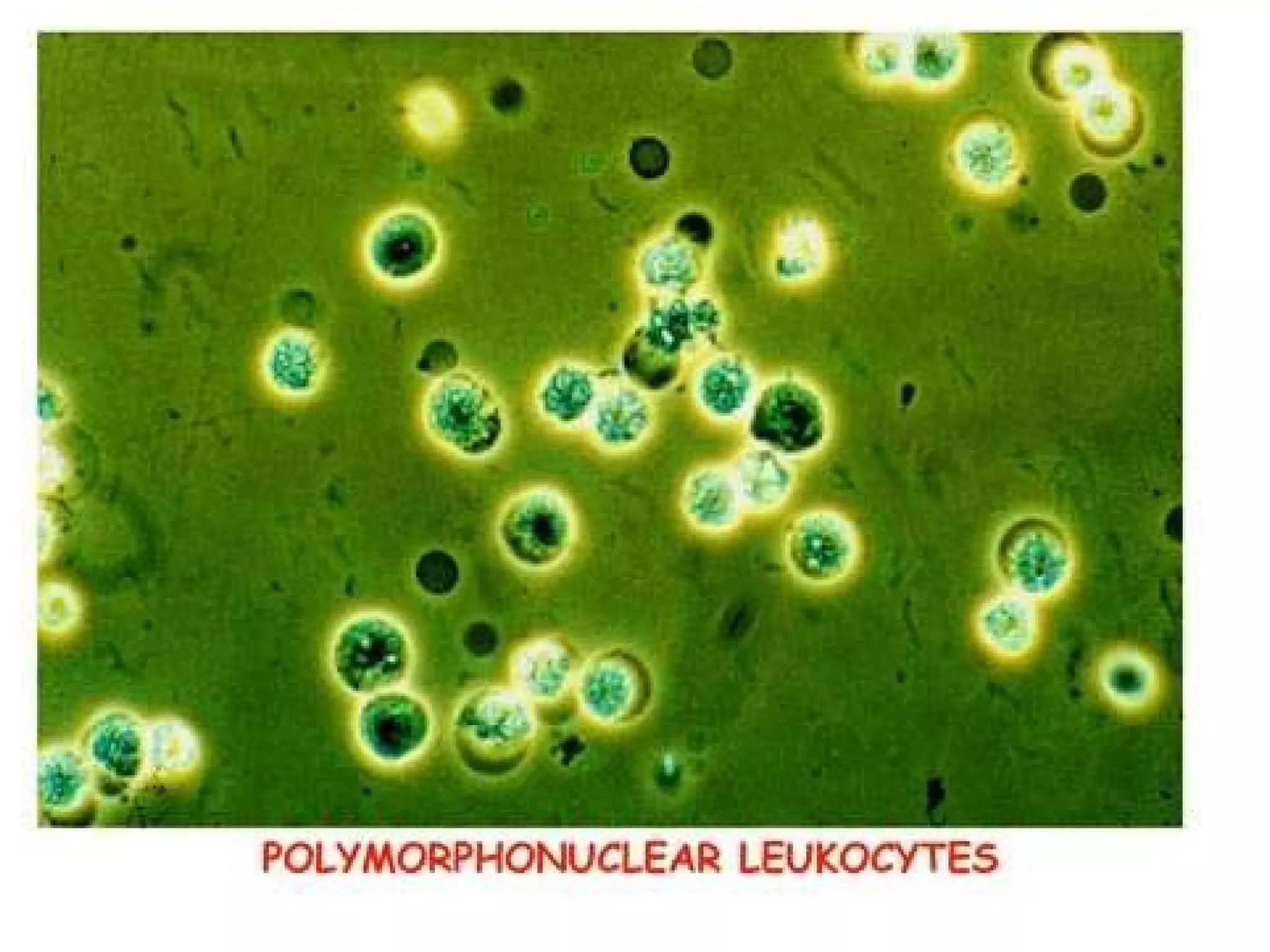
White Blood Cells
 
 
Eosinophilluria 1% of urinary leukocytes as Eosinophils  To distinguish AIN from ATN, in which it is absent Causes:  -AIN (drug induced) -AGN (rapidly progressive; acute including PSGN) -IgA nephropathy (HSP) -Chronic pyelonephritis -Acute rejection of renal allograft (small numbers) -Obstructive uropathy -Prostatitis -Eosinophilic cystitis -Schistosoma hematobium infestation -Bladder cancer -Cholestrol embolization to kidney
 
Urine in Renal Transplantation + Flow cytometry: a reliable diagnostic tool in clinical R.TX: A small number of cells in stable renal function A larger number of cells, with predominance of lymphocytes: acute rejection episodes An absolute predominance of neutrophils: bacterial infection Large-sized cellular debris in cases of post-transplant tubular necrosis;  Small cell debris in cases of cyclosporine cytotoxicity.
Urine in Renal Transplantation + Urinary Enzymes: In acute rejection but not in cases of chronic allograft nephropathy. Pitfall: No information about the type of rejection or the severity to help guide treatment.  + Decoy cells + Pyuria in rejection or UTI +Persistent microscopic hema.: urologic causes + Proteinuria: less than 500 mg/day or higher
 
Urinary podocyte loss is a more specific marker of ongoing glomerular damage than proteinuria. Podocyte loss contributes to the development of glomerulosclerosis. Urinary excretion of viable podocytes: in (1) transient glomerular injury and  (2) in mesPGN as well as in a model of continuous glomerular injury. Podocyturia is confined to the phase of “active” ongoing glomerular damage, whereas the detecting of proteinuria can’t distinguish between ongoing damage from persistent glomerular defects of GBM.  Podocyturia is a unique means of assessing ongoing “active” glomerular damage.  Am Society of Nephrology 2010
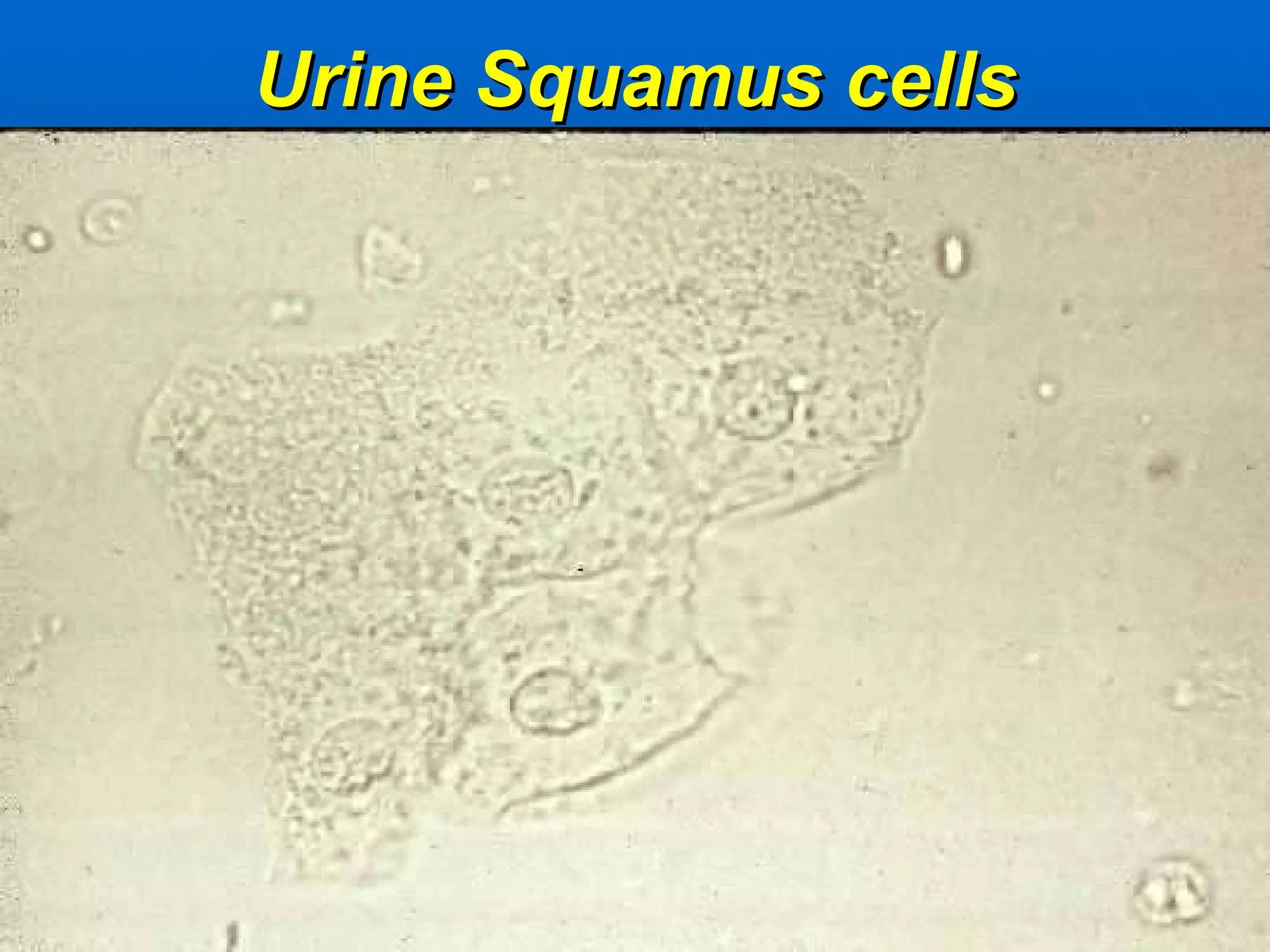
Urine Squamus cells
Squamous Epithelial Cells
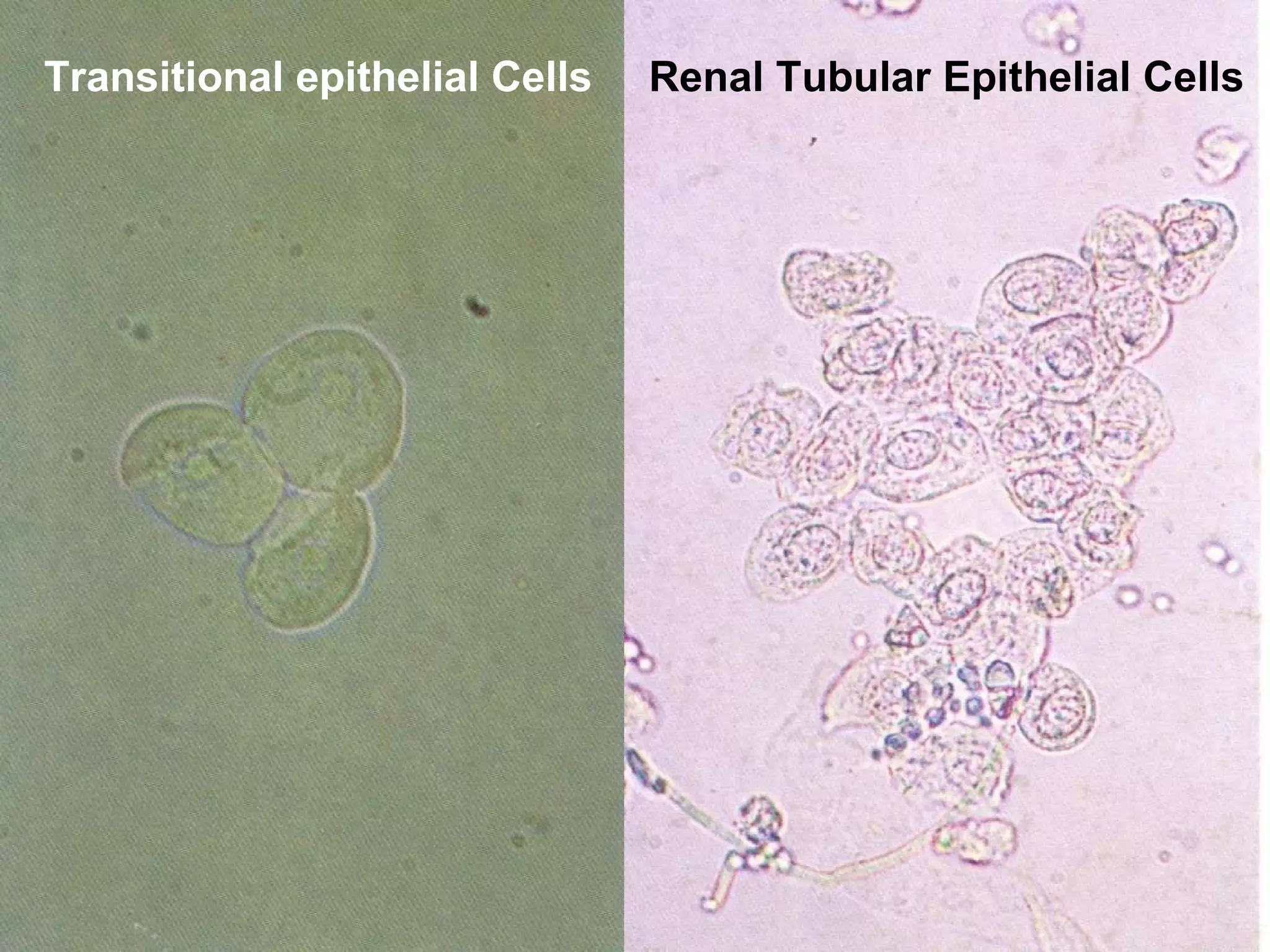
Transitional epithelial Cells Renal Tubular Epithelial Cells
 
CMV In RTEC
 
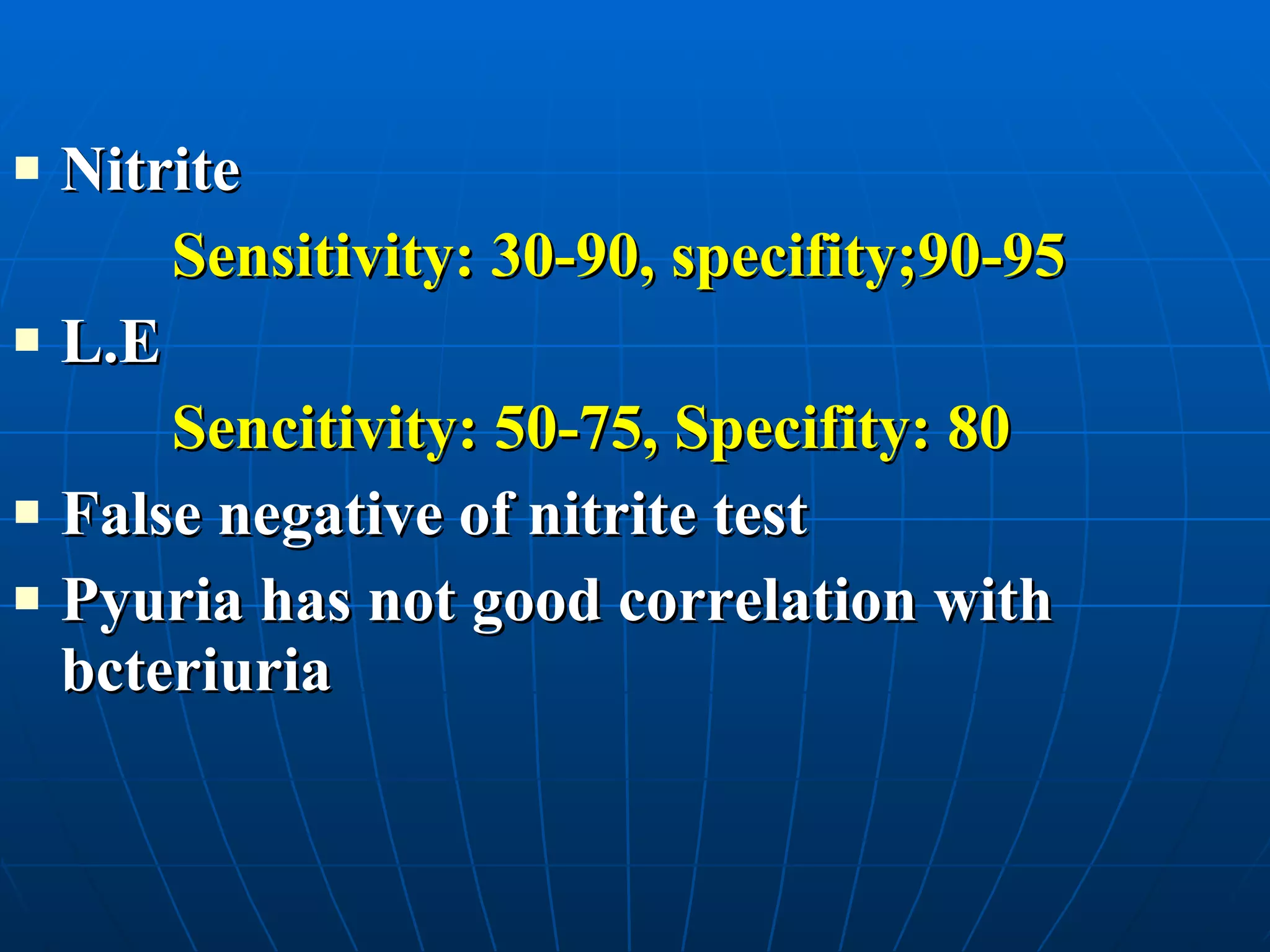
Nitrite  Sensitivity: 30-90, specifity;90-95 L.E Sencitivity: 50-75, Specifity: 80 False negative of nitrite test Pyuria has not good correlation with bcteriuria
Urine Candida
 
 
Lipuria Lipids in the urine include all fractions. Double refractile (cholestrol) bodies can be seen. There is high protein content, rarely used. May occur in: +Hyperlipidemia due to nephrotic syndrome,  severe DM, severe eclampsia +Extensive trauma with bone fracture +Phosphrus poisoning +Carbon monoxide poisoning


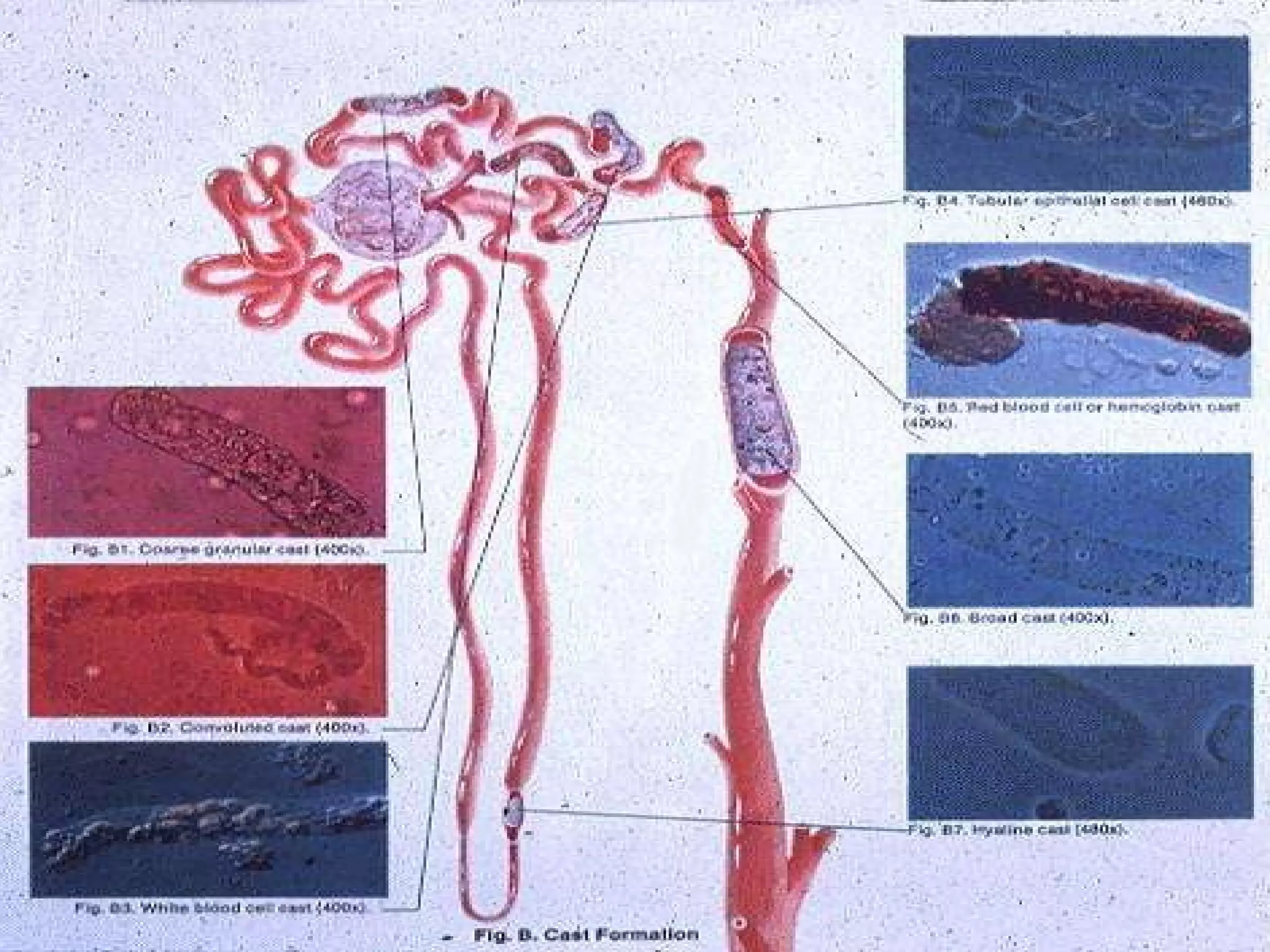
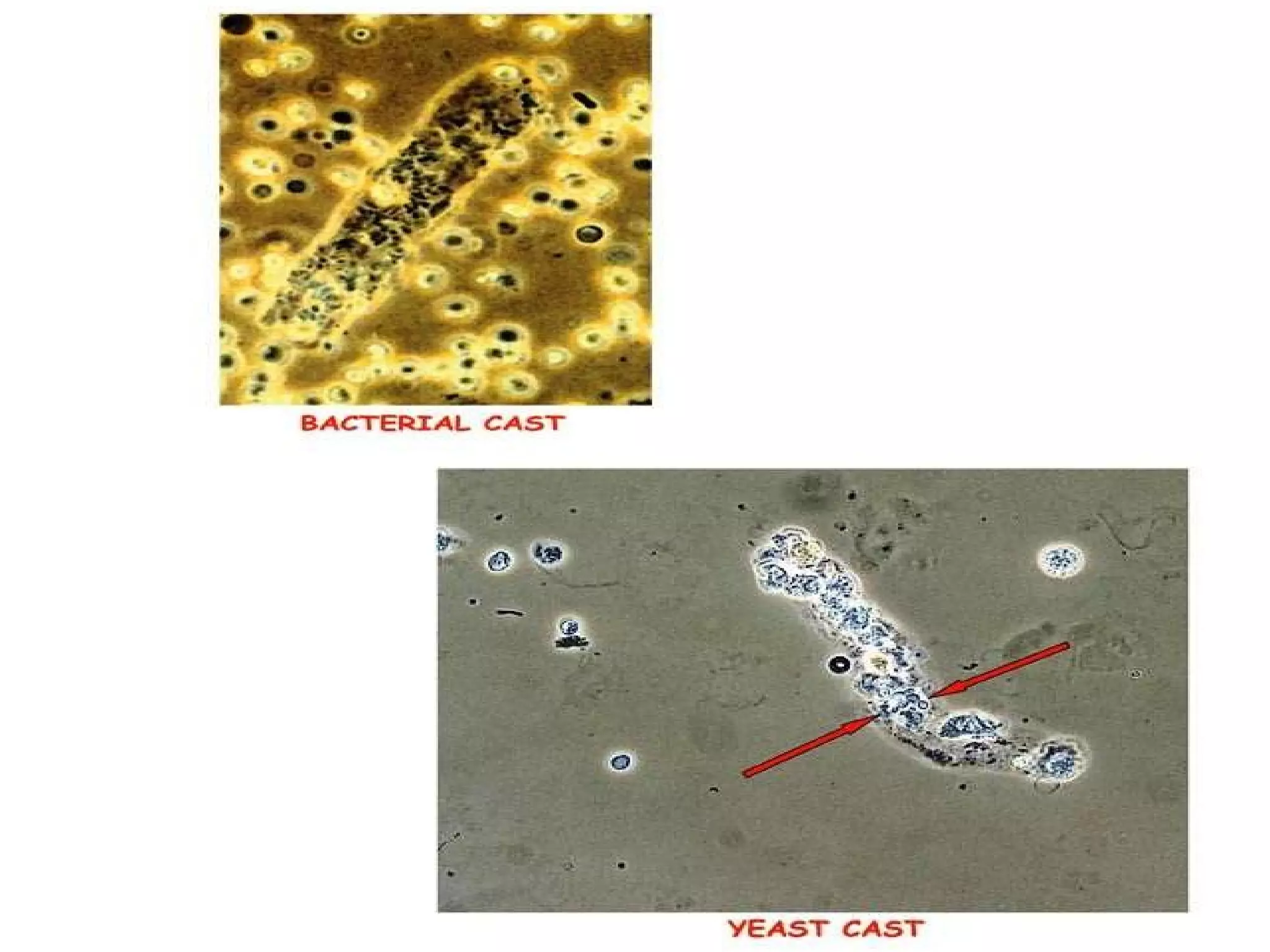
Granular Cast
 
 
Oval Fat Cast
 
 
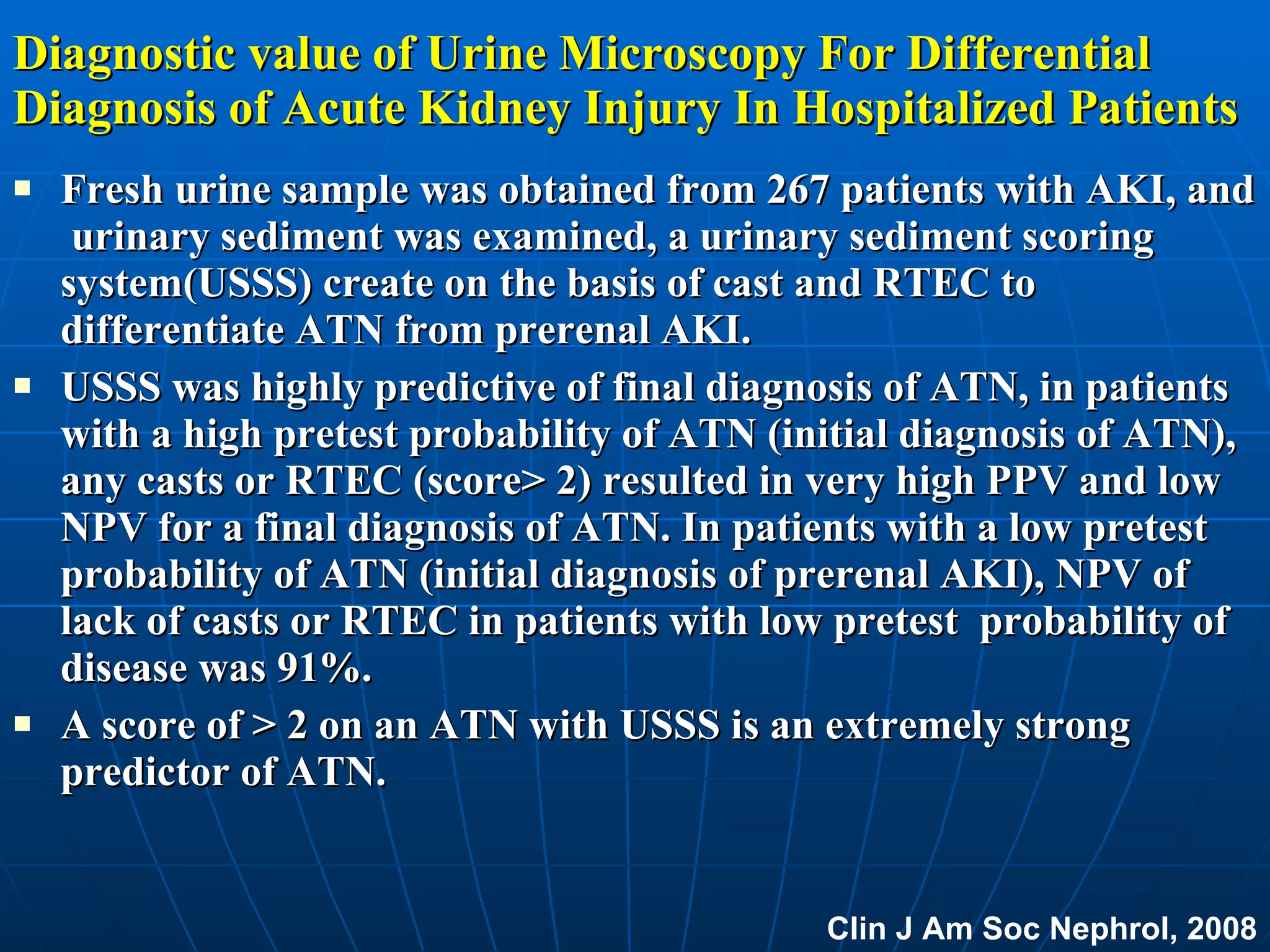
Diagnostic value of Urine Microscopy For Differential Diagnosis of Acute Kidney Injury In Hospitalized Patients Fresh urine sample was obtained from 267 patients with AKI, and  urinary sediment was examined, a urinary sediment scoring system(USSS) create on the basis of cast and RTEC to differentiate ATN from prerenal AKI.  USSS was highly predictive of final diagnosis of ATN, in patients with a high pretest probability of ATN (initial diagnosis of ATN), any casts or RTEC (score> 2) resulted in very high PPV and low NPV for a final diagnosis of ATN. In patients with a low pretest probability of ATN (initial diagnosis of prerenal AKI), NPV of lack of casts or RTEC in patients with low pretest  probability of disease was 91%. A score of > 2 on an ATN with USSS is an extremely strong predictor of ATN.  Clin J Am Soc Nephrol, 2008
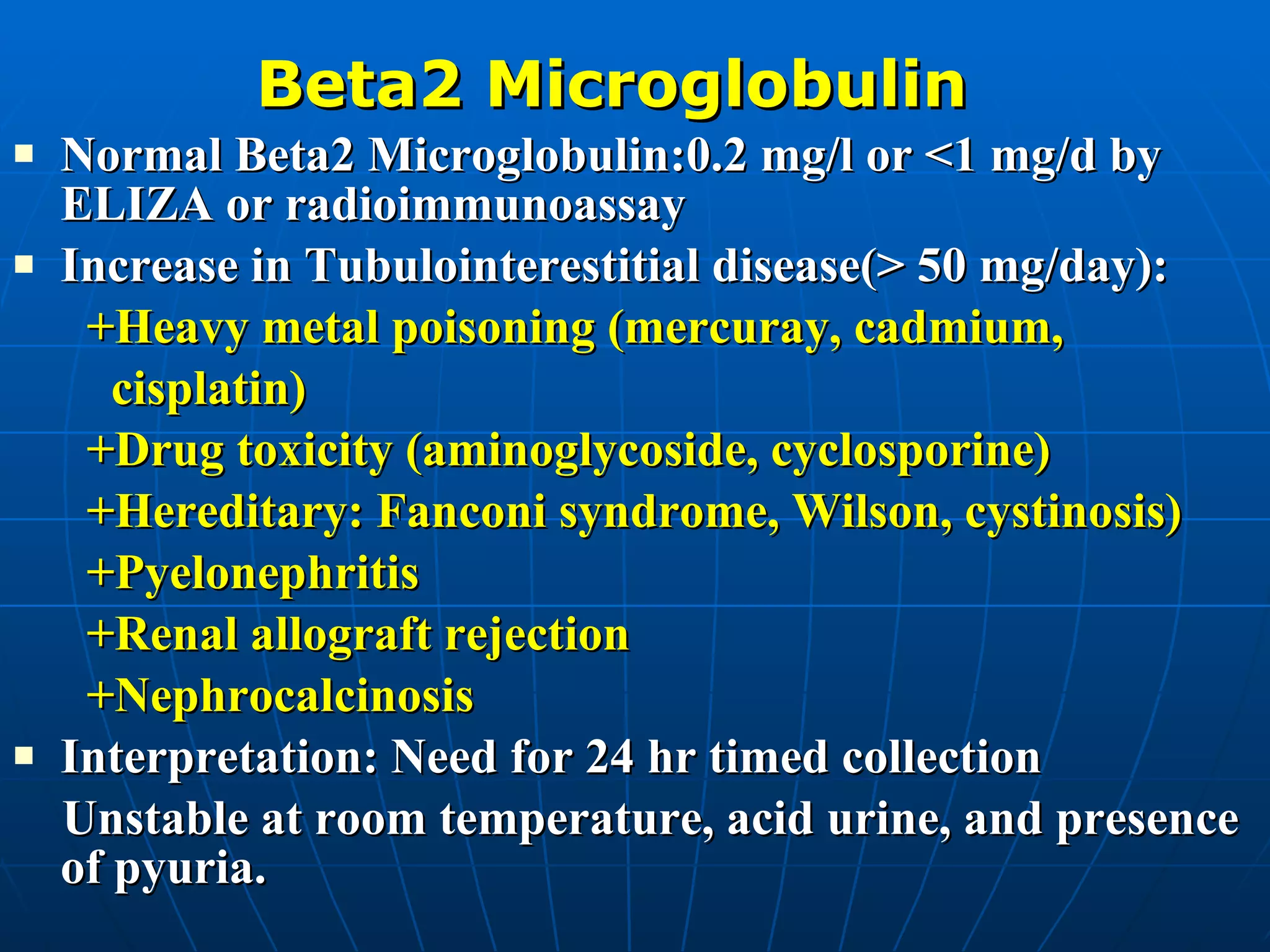
Beta2 Microglobulin Normal Beta2 Microglobulin:0.2 mg/l or <1 mg/d by ELIZA or radioimmunoassay Increase in Tubulointerestitial disease(> 50 mg/day): +Heavy metal poisoning (mercuray, cadmium,  cisplatin) +Drug toxicity (aminoglycoside, cyclosporine) +Hereditary: Fanconi syndrome, Wilson, cystinosis) +Pyelonephritis +Renal allograft rejection +Nephrocalcinosis Interpretation: Need for 24 hr timed collection Unstable at room temperature, acid urine, and presence of pyuria.
Renal Enzyme Excretion A nonspecific but sensitive indicator of renal injury or disease activity. + Brush Border enzymes: ( ץ   glutamyl transpeptidase and alanine aqmonipeptidase), represent minimal tissue injury. +Lysosomal enzymes: (arylsulfatase, B glucoronidase, N acetyl glucosaminidase), represent more severe tissue injury. +Cytosolic enzyme (eg ligandin,NGAL) represent severe damage or cell necrosis.
Urinary Crystals Crystaluria indicates supersaturation Normal crystals?! Significance in diagnosis Crystaluria in relation to stone  Hexagonal crystal in urine: NL, abNL? Crystaluria in relation to U.PH and significance of it in acute renal failure
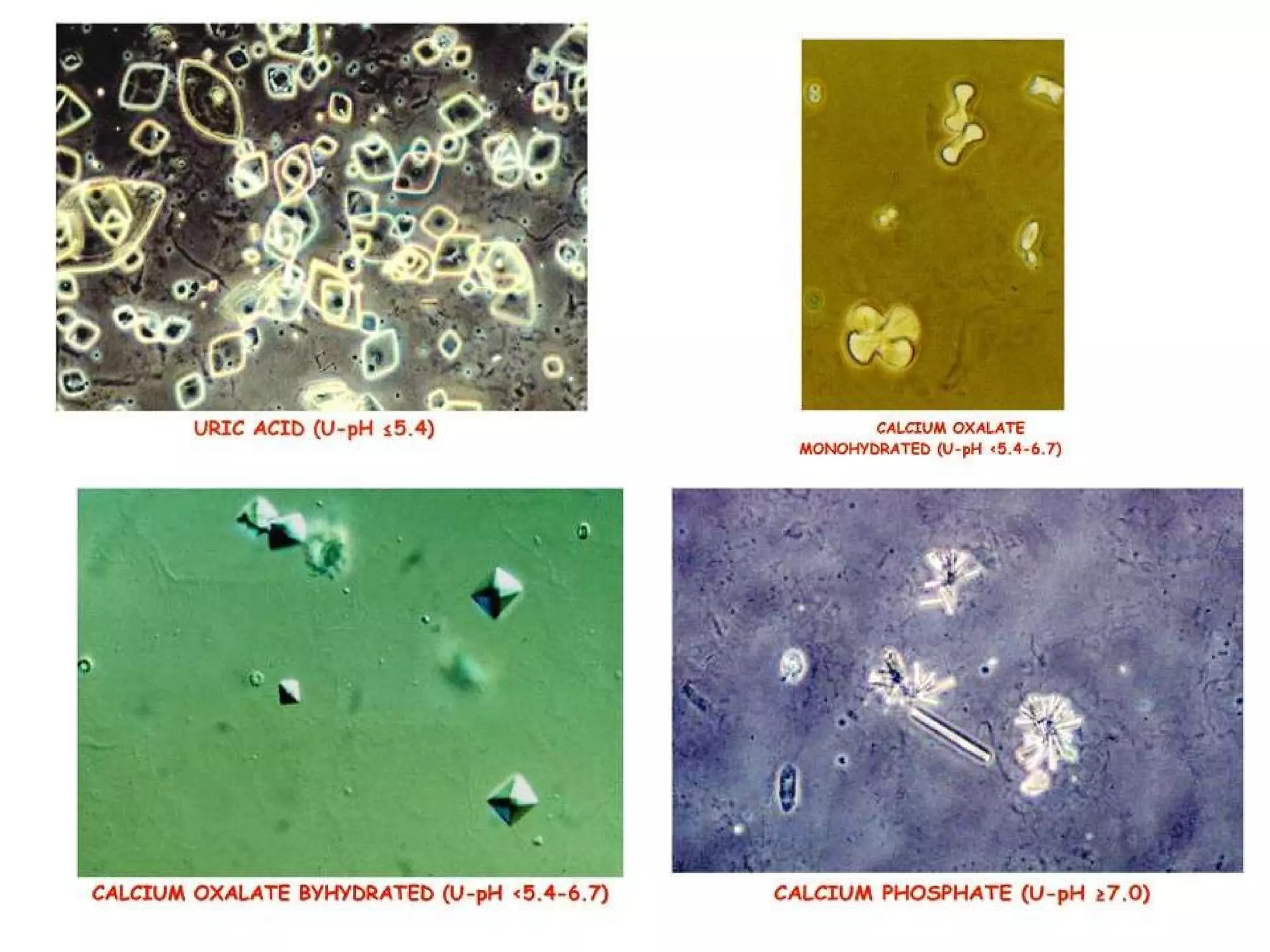
Crystalluria: is diagnostically useful when there are cystine crystals (occurs only in homozygous or heterozygous cystinuria) or struvite crystals. Calcium oxalate, phosphate and uric acid should arouse suspicion about possible causes of stone, but they may occur in normal urine.
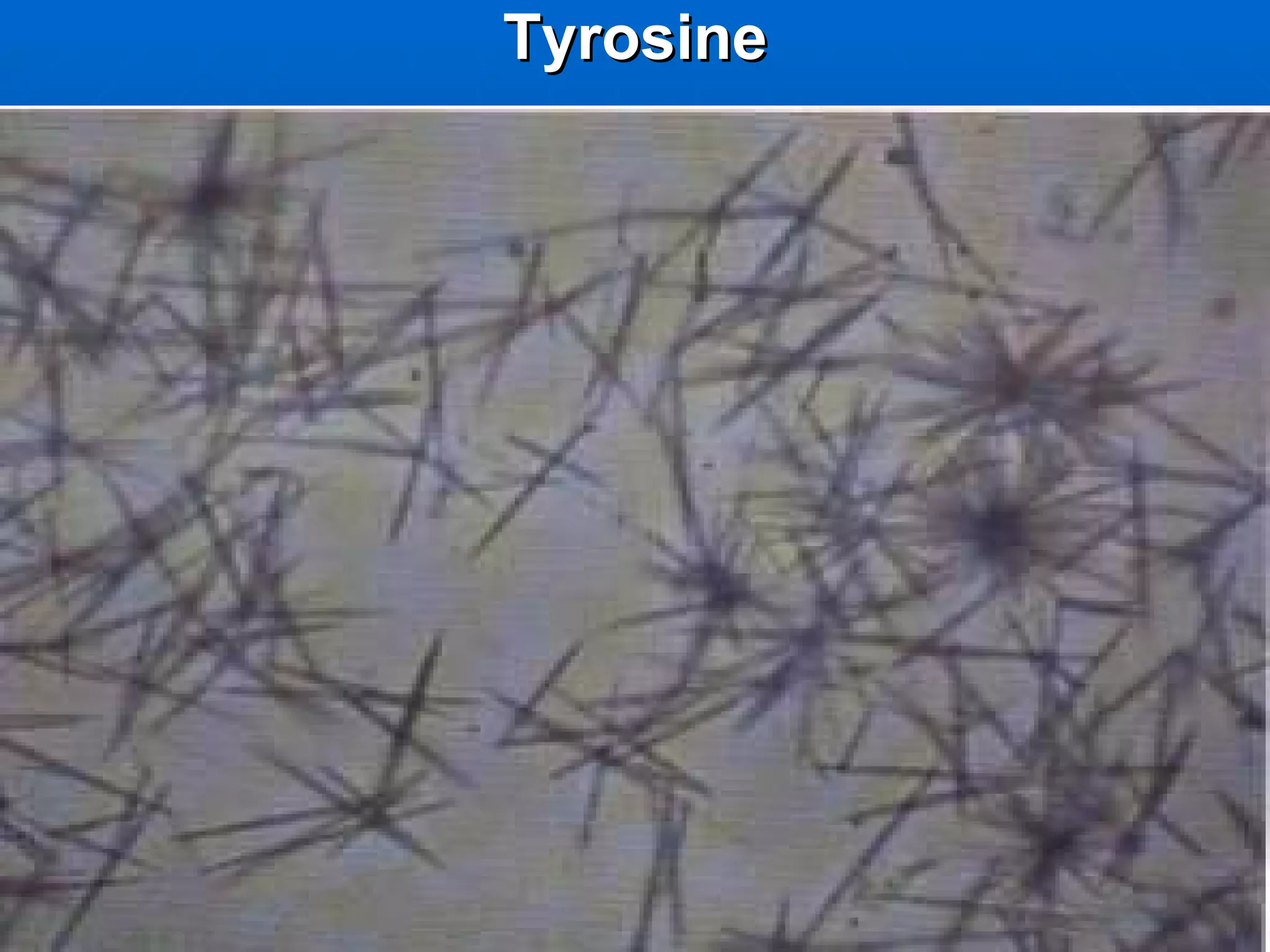
Crystalluria Disorder Substance Cystinuria, cystinosis Cystine (crystals are found in WBCs, cornea, and rectal mucosa) Fanconi syndrome Leucine Hyperoxaluria, Oxalosis Calcium oxalate Lesch Nyhan syndrome Uric acid Orotic aciduria Orotic acid Xanthinuria Xanthine Massive hepatic necrosis (acute yellow atrophy, tyrosinemia, tyrosinosis) Tyrosine (cystine and tyrosine crystals are found in marrow)
 
Cystine Triple phosphate Uric acid crystal Calcium Oxalate Crystals
 
 
Tyrosine
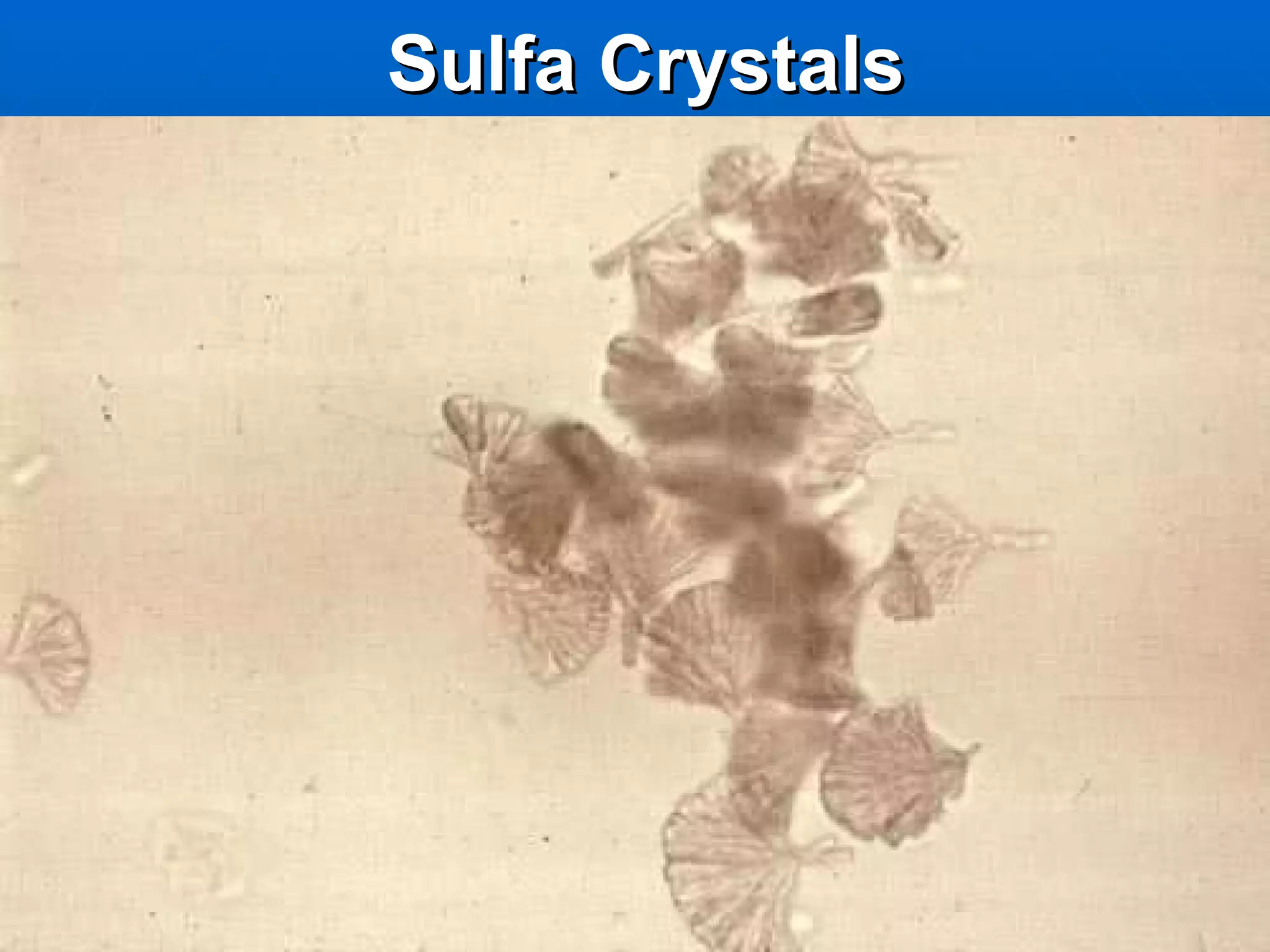
Sulfa Crystals
 
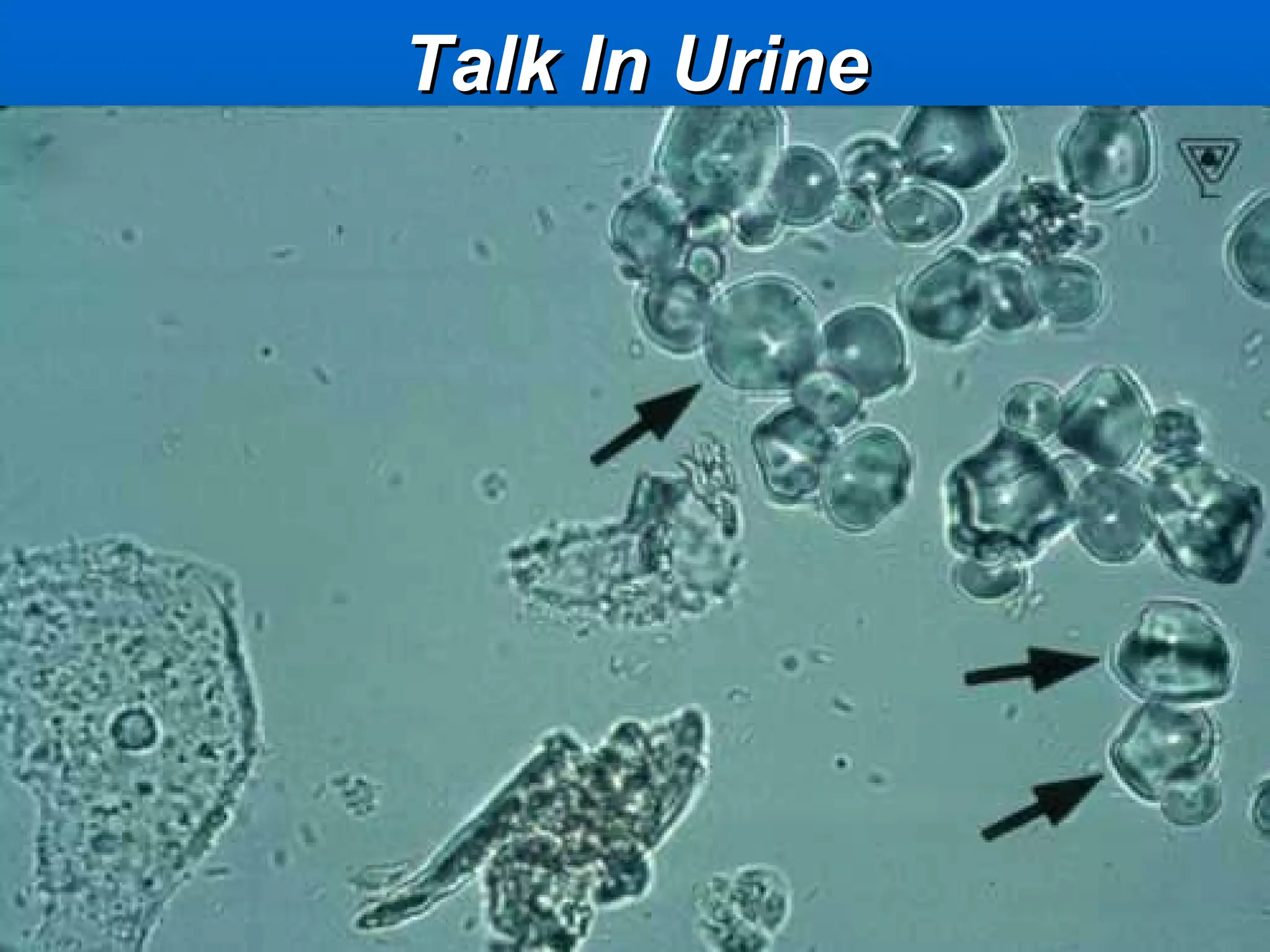
Talk In Urine
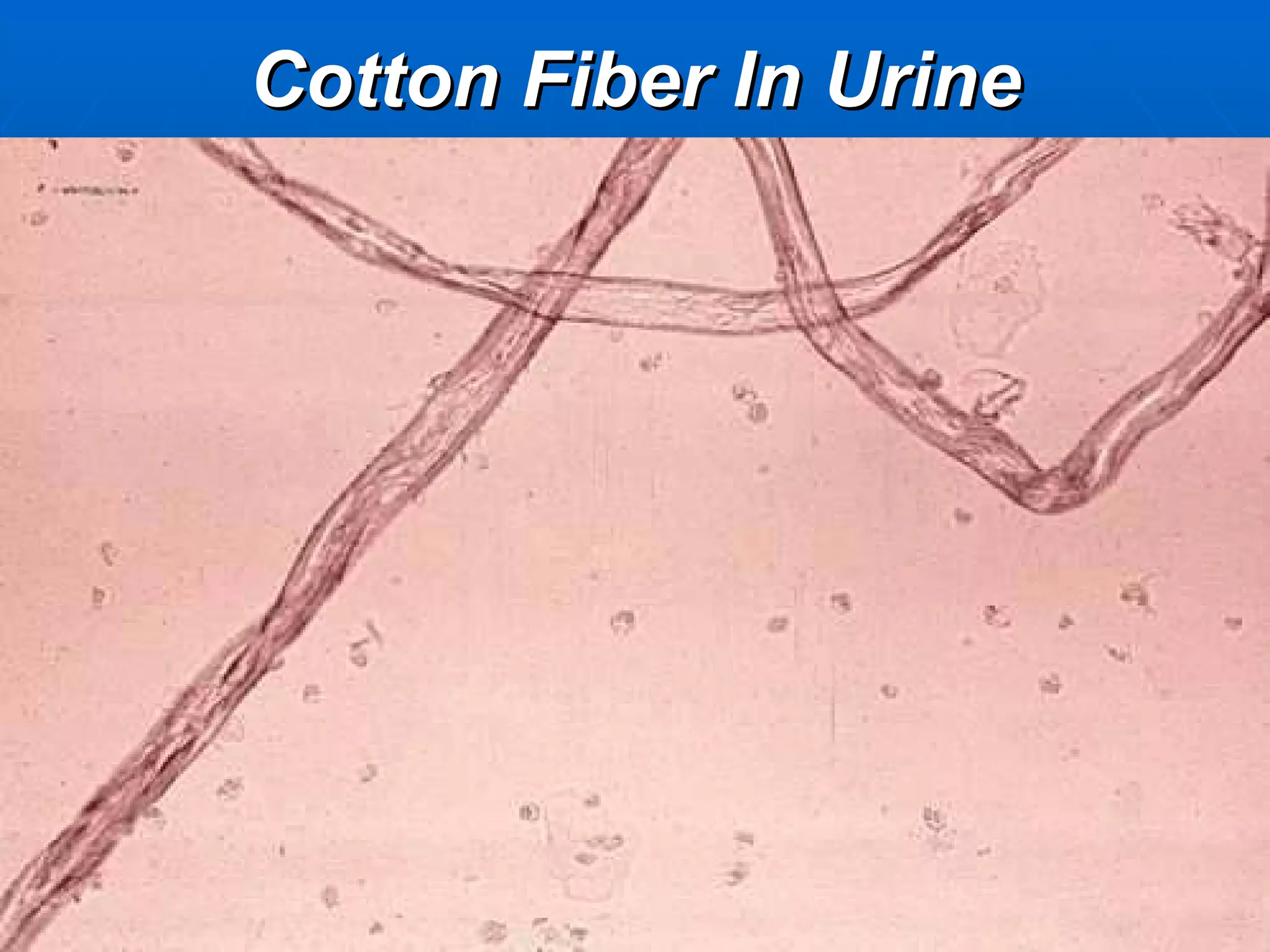
Cotton Fiber In Urine
 
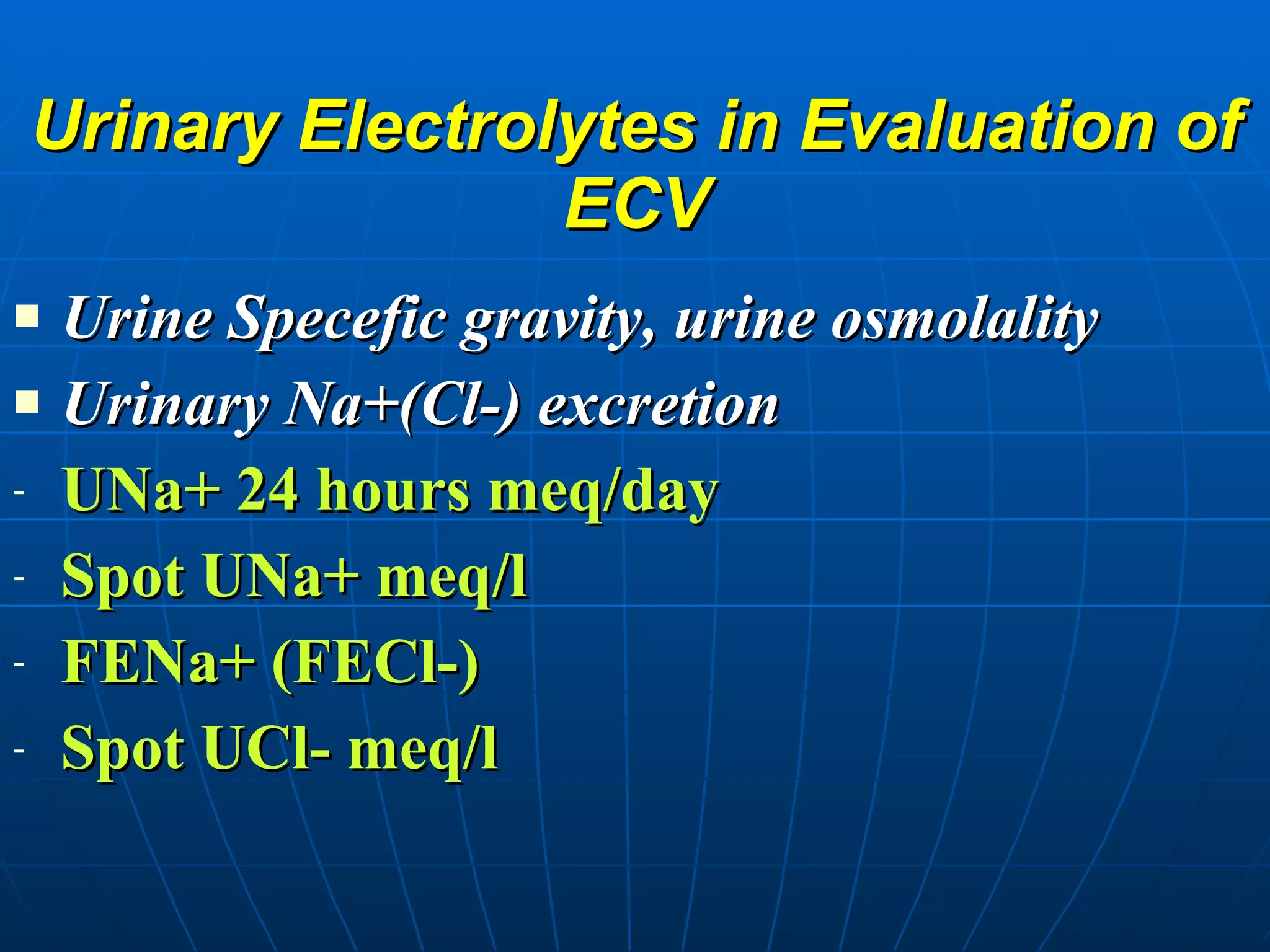
Urinary Electrolytes in Evaluation of ECV Urine Specefic gravity, urine osmolality Urinary Na+(Cl-) excretion UNa+ 24 hours meq/day Spot UNa+ meq/l FENa+ (FECl-) Spot UCl- meq/l
Fractional Excretion of Na Definition, A physiological concept Not dependent on urine volume Easy to do
Pit falls of FENa Diuretics, Osmotic agents Non reabsorbable anions RTD IV Therapy
FECl as a measure of ECV Can be used  in place of FENa Better measure in presence of A- Error if urine has nonabso-posit change Other pitfalls similar to FENa
Meaning of Urinary Electrolytes Measurement of the urinary electrolyte concentrations, osmolality and PH play an important role in the diagnosis and management of a variety of disorders. There is no fixed normal values, we should use expected values in state of fixed values, since the kidney varies the rate of excretion  to match  net dietary intake and endogenous production.  Thus, interpretation of a given test requires knowledge of the patient’s clinical states , as an example, the urinary excretion of 125 meq of Na per day may be appropriate for a subject on a regular diet, but represents inappropriate renal Na wasting in a patient who is volume depleted. In most circumstances, a random urine specimen is sufficient, although a 24 hr collection to determine the daily rate of solute excretion is occasionally indicated.
 
Urinary Sodium versus Urinary Chloride In most clinical sates, Na and Cl excretion vary in parallel but,  In 30% of patients with volume depletion, UNa and Ucl have more than a 15 meq/l difference, due to UNa excretion with another anion  (like HCO3- or penicillin) or Ucl with another cation (like NH4+).
AS a result, it is helpful to measure Ucl in a patient who appears to be hypovolemic but has a higher than expected UNa [like in m.Al due to vomiting that we have desire to excrete excess HCO3 (as Na-HCO3) to correct m.Al, this lead to a high UNa despite the presence of volume depletion and also UPH>6.5], in contrast we have Ucl   in m.acidosis and hypovolemia (like in diarrhea) because of UNH4+   that excreted with chloride, but UNa is low.
Variability in urinary electrolytes excretion and PH according to time after onset of vomiting Time Na+ K+ Cl- HCO3- PH Days 1-3     >6.5 Late     <5.5
Urinary measurements to evaluate A.B    disorders Urine PH Urinary NAE Urinary AG Urine osmolol gap Urine PCO2
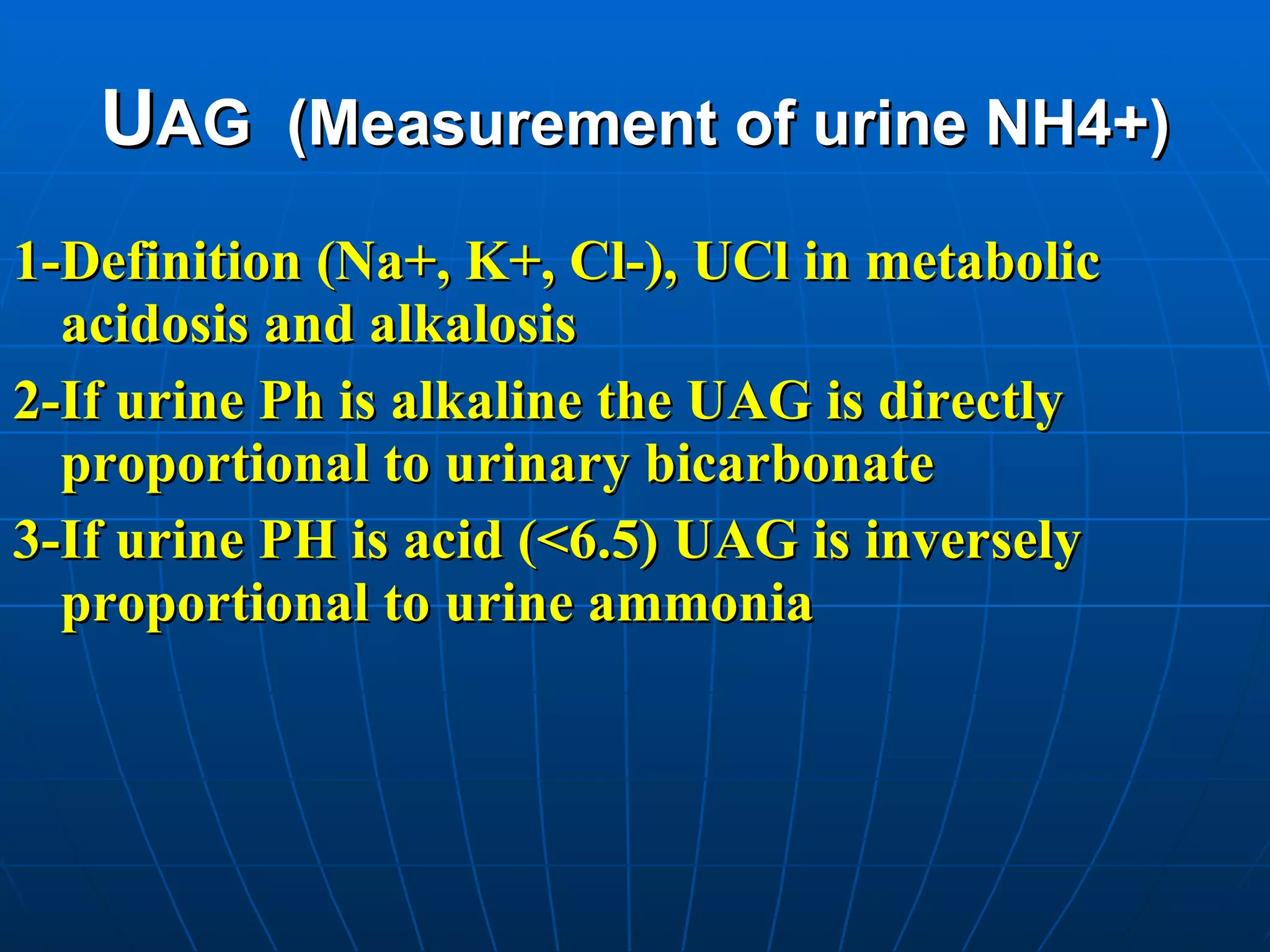
U AG  (Measurement of urine NH4+) 1-Definition (Na+, K+, Cl-), UCl in metabolic acidosis and alkalosis 2-If urine Ph is alkaline the UAG is directly proportional to urinary bicarbonate 3-If urine PH is acid (<6.5) UAG is inversely proportional to urine ammonia
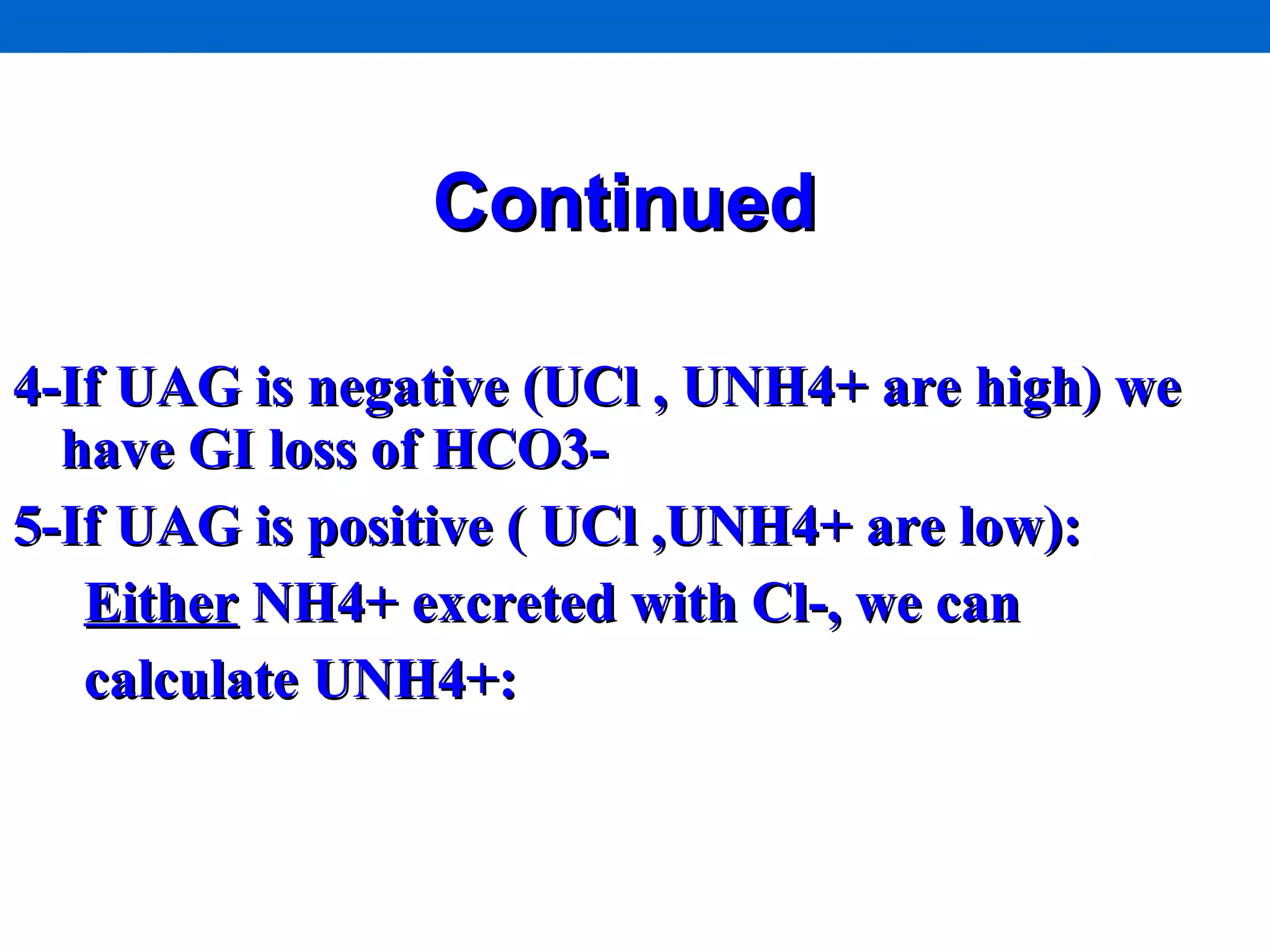
Continued   4-If UAG is negative (UCl , UNH4+ are high) we have GI loss of HCO3- 5-If UAG is positive ( UCl ,UNH4+ are low):  Either  NH4+ excreted with Cl-, we can  calculate UNH4+:
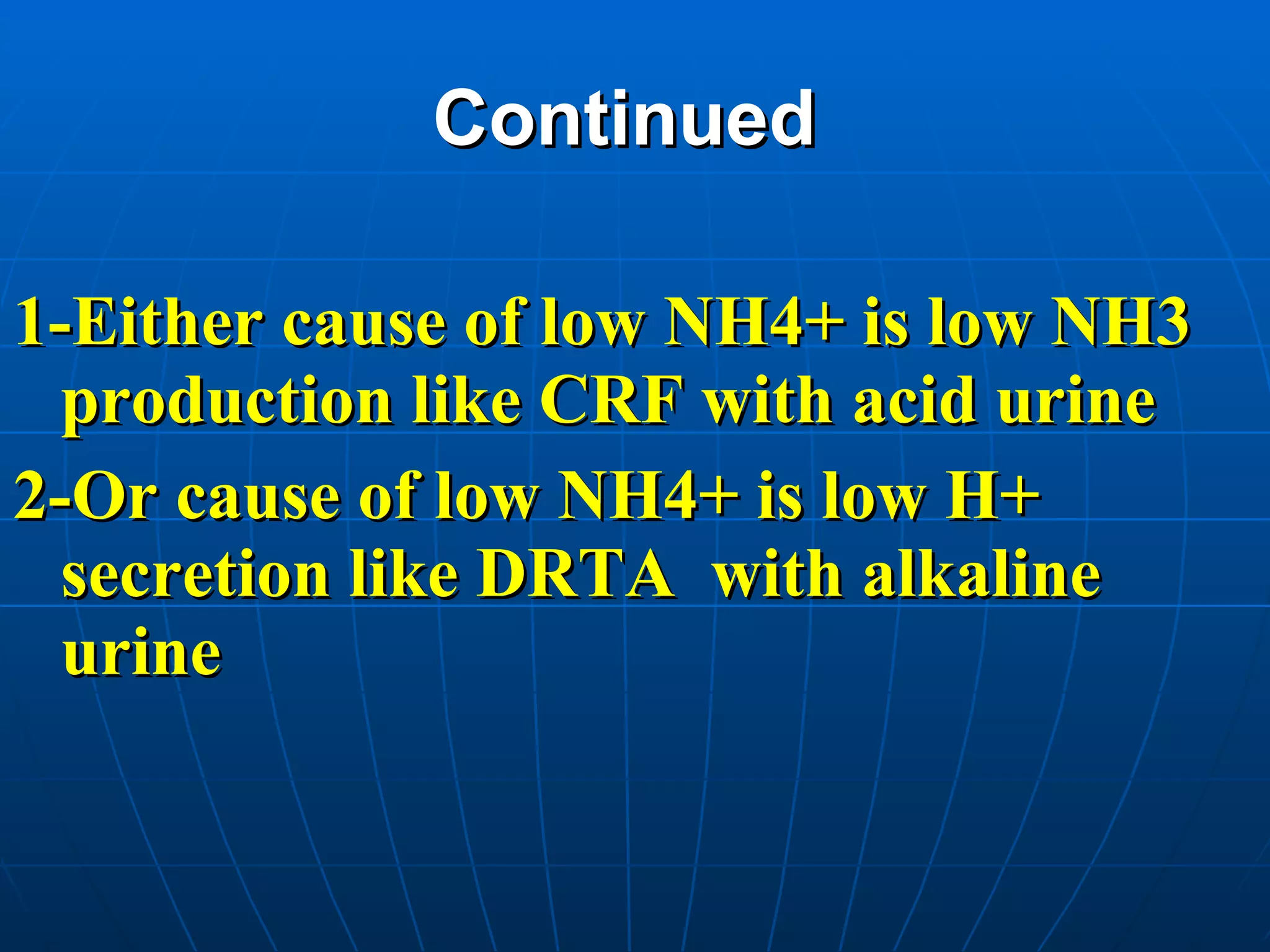
Continued   1-Either cause of low NH4+ is low NH3 production like CRF with acid urine 2-Or cause of low NH4+ is low H+ secretion like DRTA  with alkaline urine
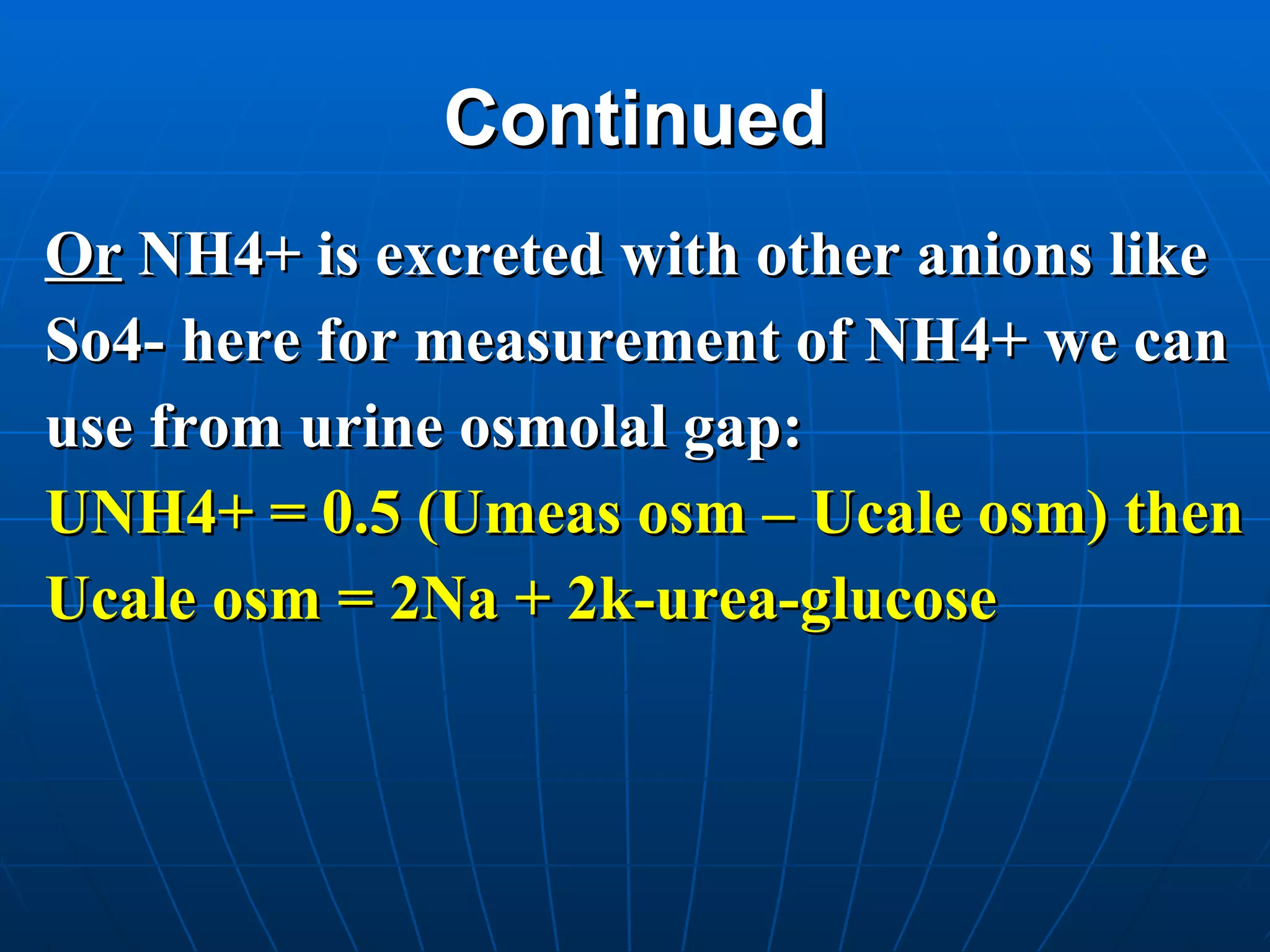
Continued Or  NH4+ is excreted with other anions like  So4- here for measurement of NH4+ we can  use from urine osmolal gap: UNH4+ = 0.5 (Umeas osm – Ucale osm) then Ucale osm = 2Na + 2k-urea-glucose
NAE: POTENTIALS AND PITFALS Defines renal contribution to A-B balance Normal out put on regular diet 1-3 meq/kg/day Increased in acidosis and vice versa Difficult to measure
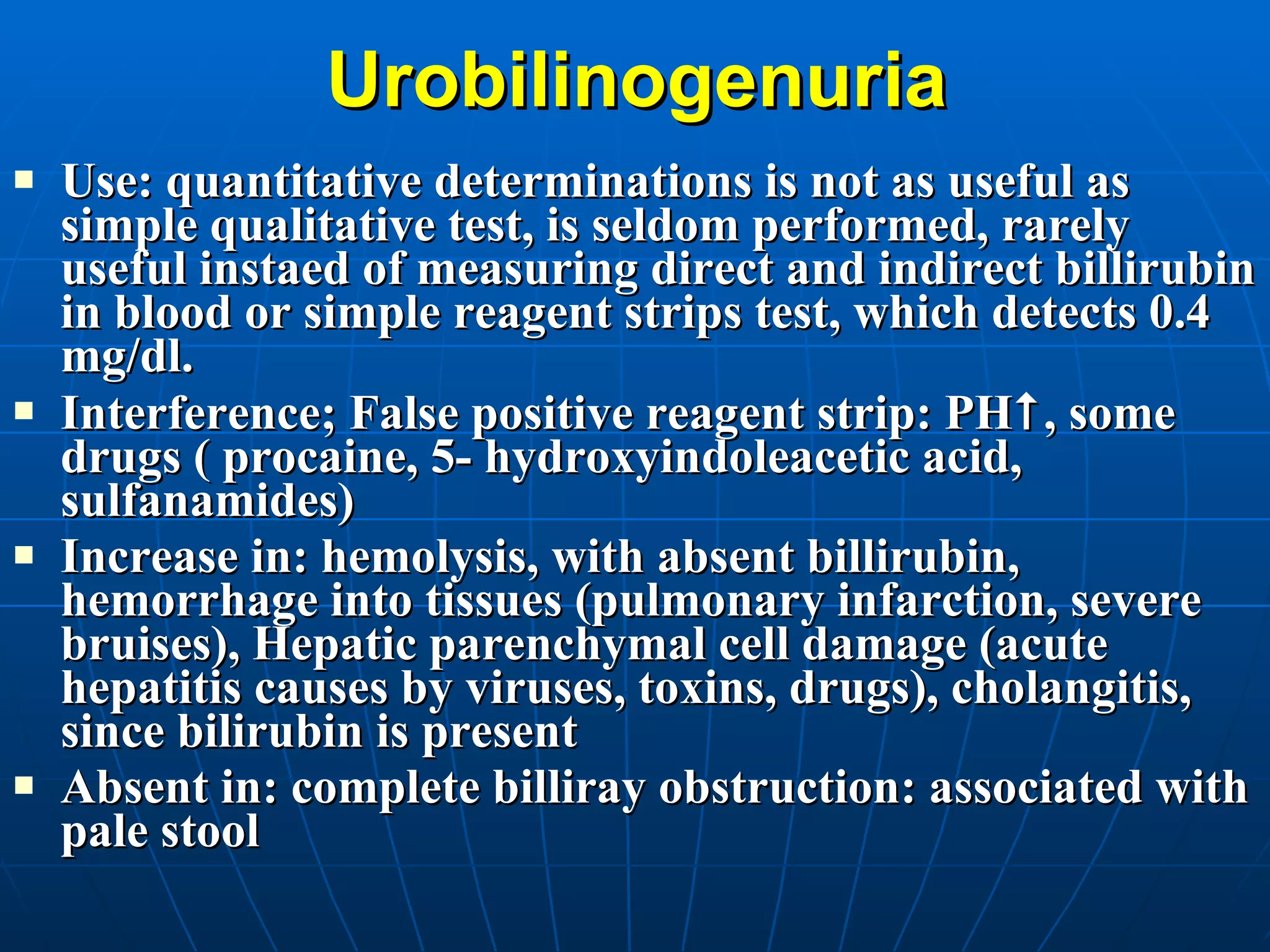
Urobilinogenuria Use: quantitative determinations is not as useful as simple qualitative test,   is seldom performed, rarely useful   instaed of measuring direct and indirect billirubin in blood or simple reagent strips test, which detects 0.4 mg/dl.  Interference; False positive reagent strip: PH  , some drugs ( procaine, 5- hydroxyindoleacetic acid, sulfanamides) Increase in: hemolysis, with absent billirubin, hemorrhage into tissues (pulmonary infarction, severe bruises), Hepatic parenchymal cell damage (acute hepatitis causes by viruses, toxins, drugs), cholangitis, since bilirubin is present Absent in: complete billiray obstruction: associated with pale stool
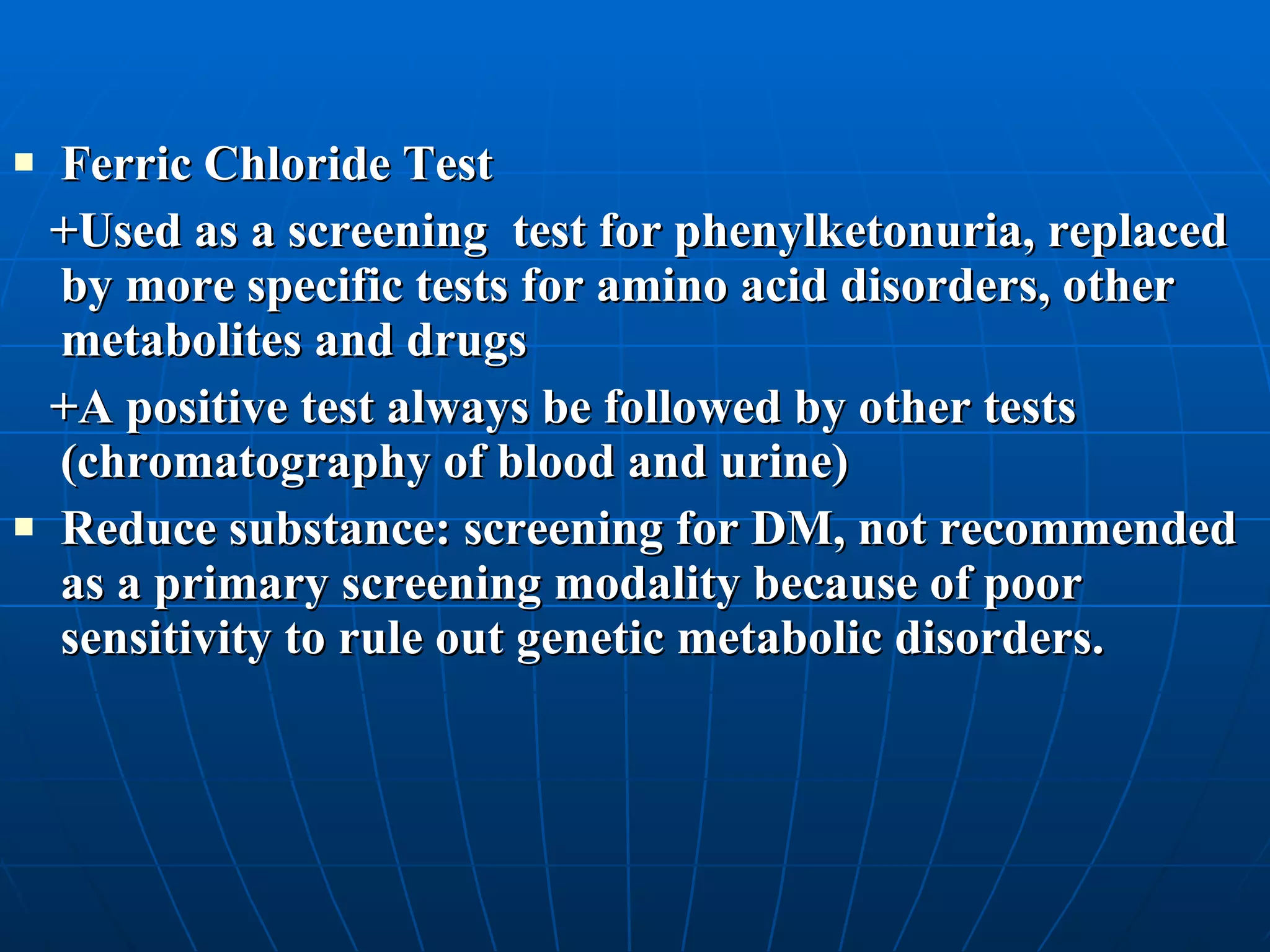
Ferric Chloride Test +Used as a screening  test for phenylketonuria, replaced by more specific tests for amino acid disorders, other metabolites and drugs  +A positive test always be followed by other tests (chromatography of blood and urine) Reduce substance: screening for DM, not recommended as a primary screening modality because of poor sensitivity to rule out genetic metabolic disorders.
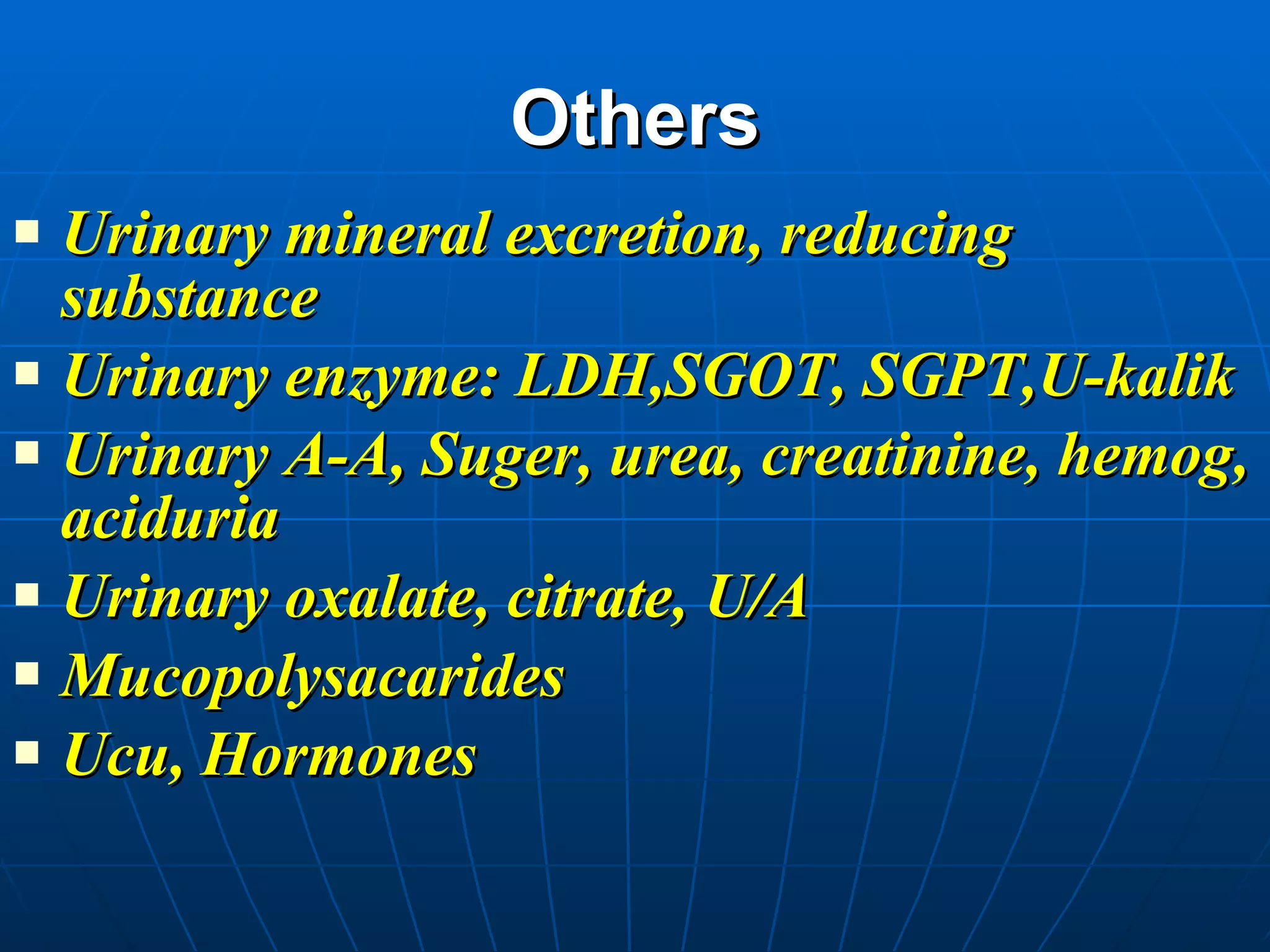
Others Urinary mineral excretion, reducing substance  Urinary enzyme: LDH,SGOT, SGPT,U-kalik Urinary A-A, Suger, urea, creatinine, hemog, aciduria Urinary oxalate, citrate, U/A Mucopolysacarides Ucu, Hormones
Normal values for urine   chemistries  (mg/kg/day) Urinary Chemistry: Normal Values
Creatine -Synthesized in the liver  -The chief source of high energy phosphocreatine  for muscle metabolism -Water loss lead to creatinine synthesize Creatinine -Measure renal function (in creatinine clearance) Determine urine concentration and various  substance can not be obtained (recently reagent  strips can measure pr/cr ratio or Alb/cr   ratio)
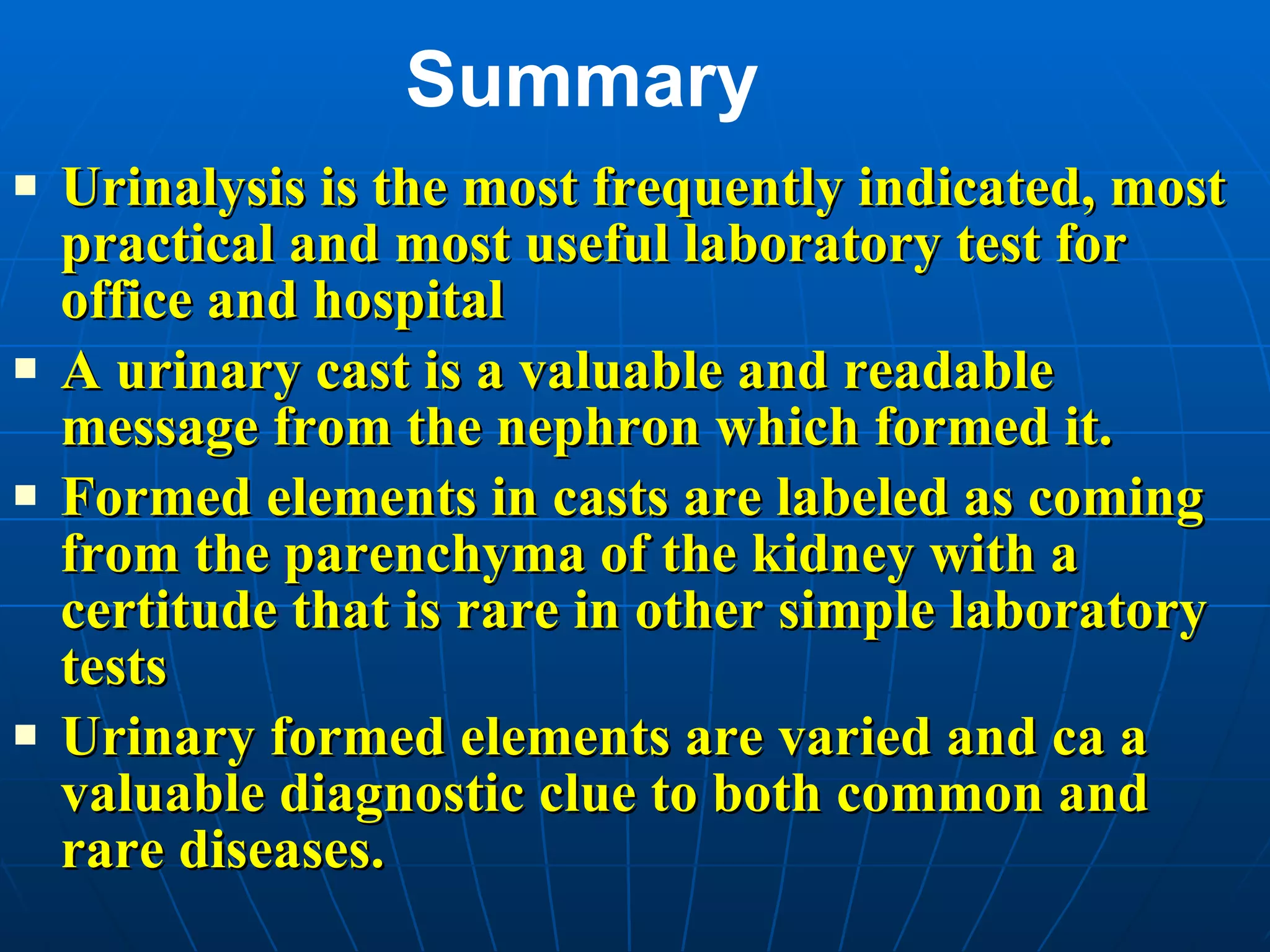
Summary Urinalysis is the most frequently indicated, most practical and most useful laboratory test for office and hospital A urinary cast is a valuable and readable message from the nephron which formed it. Formed elements in casts are labeled as coming from the parenchyma of the kidney with a certitude that is rare in other simple laboratory tests Urinary formed elements are varied and ca a valuable diagnostic clue to both common and rare diseases.
Summary Microscopy of the urinary sediment is a valuable case-finding technique. Formed elements have definite diagnostic value and lead themselves to helpful correlation of anatomical and physiological events in the nephron The urinary sediment provides an objective means for labling the status of certain disease such as glomerulonephritis and aids the clinician in treatment and prognosis.
 

Urinalysis

  • 1.
    Hasan Otukesh PediatricNephrologist Tehran, Iran Complete Urinalysis
  • 2.
    Urinary findings aremessage from kidney Because of diagnostic importance of U/A any physician must be trained for examination and interpretation of urine Complete Urinalysis
  • 3.
    Changes in unpreservedurine Increased PH from breakdown of urea to NH3 by urease producing bacteria Decreased glucose due to glycolysis and bacteria utilization Decreased ketons because of volatilization Decreased Bil from exposure to light Decreased urobilinogen by its oxidation to urobilin Increased nitrite due to bacterial reduction of nitrate Increased Bacteria Increased turbidity due to bacterial growth, precipitating amorph materials Disintegration of RBCs, casts, due to dilute alk. urine Changes in color due to oxidation or reduction of metabolites
  • 4.
    Average 24 hrurine output in infants and children Birth to 48 hr  (72 hr?) Normal volume: 1-4 cc/kg/hr Oliguria: < 0.8 cc/kg/hr Polyuria: > 4cc/kg/hr Physiologic, Pathologic
  • 5.
    Urine Color, UrineOdor, Urine Suds Normal (Urochrom and PH) Red urine, cola, Rusty Black, Green, Turbid Urine
  • 6.
    Odor of Urineand Other Body Fluids Conditions : Odor Maple syrup urine disease : Maple syrup, burned sugar Oast house disease, methionine malabsorb: Brewery, Oast house Methylmalonic, propionic, isovaleric, glutaric, and butyric/hexanoic acidemia: Sweaty feet Tyrosinemia: Cabbage like, fishy, rancid Trimethylaminuria: Stale fish Hypermethioninemia: Rancid Butter, rotten cabbage Phenylketonuria: Musty, Mousy Ketosis: Sweet Cystinuria, homocystinuria: Sulfurous 3-Oxothiolase deficiency: sweet 3- methylcrotonyl CoA carboxylase deficiency: cat urine Hawkinsinuria: Swimming pool
  • 7.
    Urinary PH Definition,Normal range, in neonate Causes of change Ammonia production, Excretion of Co2, Soap suds, Diets, Others Methods of Measurement Dipstick, PH METER
  • 8.
    Urine specific gravity,Urine osmolality Definition, Normal limits, in neonate Effect of heavy substance, Uph, Utemp Methods of Measurement Urinometer, refractive index, dipstick
  • 9.
    Ketonuria: is diagnosedwhen acetone, beta hydroxybuteric acid, acetoacetic acid appear in urine. Use: Screening for DKA in DM when blood is not immediately available, confirm fasting in testing for insulinoma Interference (Reagent strips): false positive (Levodopa), false negative (volatization of acetone, breakdown of acetoacetic acid) Occurs In: +Metabolic conditions (DM, renal glycosuria, glycogen storage disease) +Dietary condition (Starvation, High fat diet) +Increased metabolic requirements (hyperthyroidism, fever, pregnancy, lactation)
  • 10.
    1-Normal Range, Inneonate 2-Type of proteins Plasma origin (60%): Albumin, B2 microglobulin, Gamma globulin Renal urinary tract origin (40%): T.HP (U.MU), S IgA, Urokinase Urine Protein, Glucose
  • 11.
    Continued Defined aspersistent proteinuria below detection by routine reagent strips but greater than normal. 3-Microalbuminuria: > 20 μ g/min or > 30 mg/day or UAlb/cr ratio > 30 μ g/mg. 4- Methods and Measurement  Semiquantitative: Dipstick, Precipitation  Quantative: Timed, Untimed ( Pr/Cr ratio)  Electrophoresis, Immunoelectrophoresis
  • 12.
    Qualitative Test ForUrine Protein Characteristic Dipstick Sulfasalycilic Protein detected Albumin All proteins sensitivity 10-30 mg/dl 5-10 mg/dl Readout Color change Turbidity Range Trace, 1+,2+,3+,4+ Trace, 1+,2+,3+,4+ False positive Concent. urine, PH>8, Drugs, antiseptic, Bacteria Concent. urine, Drugs False negative Dilut. Urine, Globulin, mucoprotein, Bence jones P. Very dilute urine, very alkaline urine
  • 13.
    Urine Electropherosis Glomerular+Selective: primary albumin (>80%) and proteinuria +Nonselective: pattern resembles serum. Primary and secondary glomerulonephropathies (DM, amyloidosis, collagen diseases, dysglobulinemia) Tubular: principally a-1, a-2, B, and ץ globulins; albumin is not marked. Overflow: Disparity between small amount with dipstick and much larger amount on 24-hour specimen. Most often due to monoclonal light chains (eg; multiple myeloma, amyloidosis, lymphoproliferative disease); also hemoglobulinemia, myoglobulinemia .
  • 14.
    Bence Jones ProteinuriaUse: Detection of various gammapathies 80% of tests are true positive due to: Myeloma (70% of all positive tests) Cryoglobulinemia, Primary amyloidosis Waldenstrom macroglobulinemia Adult fanconi syndrome, Hyperparathyroidism Benign monoclonal gammapathy About 20% of resulted will be false positive (i.e, urine electrophoresis does not show a spike, and immunoelectrophoresis does not show a monoclonal light chain) due to: Vasculitis, CRF, Malignancy, Drugs like penicillin, aminoglycoside, radiocontrast
  • 15.
    Positive test forBence Jones proteinuria by heat test should always be confirmed by electrophoresis and immunoelectrophoresis/immnunofiltratin of concentrated urine. The heat test is not reliable and should not be used for diagnosis. The reagent strips test for albumin does not detect Bence Jones Protein
  • 16.
    Urine Pigments Endogenous:Hb, Myoglobuline Exogenous Importance of urine PH In red urine
  • 17.
    Red Urine DipstickExogenous Pigmenturia + Centrifugation Supernatant: colorless Sediment: Red Pure Hematuria Supernatant: Red Sediment: Colorless Pigmenturia Supernatant: Red Sediment: Red Hematuria ± lysis or Pigmenturia Inspect Color of Plasma for Myoglobin or Hemoglobin
  • 18.
    Porphyrinuria Is causedmainly by coproporphyrin Use: +Porphyrias + Lead poisoning + Cirrhosis + Infectious hepatitis + Passive in newborn of mother with porphyria, lasts for several days
  • 19.
    Hemosidrinura: is diagnosedwhen centrifuged specimen of random urine is stained by prussian blue and show granules in casts, cells and/or free, present several days after intravascular hemolysis even when hemoglobinuria is absent (eg; PNH)
  • 20.
    Summery of DipstickAnalysis SG: 1005-1065, False positive moderate to high protein, False negative alkaline urine PH: 5-6, acid in meat diet, acidosis, low chloride, acidifying agents, Alkaline: vegetable based diet, bacterial infection, alkalosis, urine exposed to air for extended times, postprandial tide, false positive: glucose in urine Glucose: negative to trace, positive in chronic or transient hyperglycemia drugs, rarely fanconi like syndrome Billirubin: negative, indicate liver disease, bile duct obstruction, starvation, hemolysis, pyrexia, False positive in high doses of chlorpromazine, etodolac metabolites, False negative in ascorbic acid, nitrites Ketones: negative, positive in starvation, insulinemia, DM, persistant hypoglycemia, high fat low carbohydrate diets, glycogen storage disease, false positive in pigmented urine, false negative in old urine sample Urobilinigen; 0.2-1 mg/dl, Positive: hemolytic crisis, intestinal or hepatic dysfunction, false positive in elevated reagent strip temprature, false negative in tetracycline, high glucose, high SG
  • 21.
  • 22.
    Urinary Cells RBC:Normal, Clump, Origin WBC: Normal , Clump, Pus Cells, Gliter cells RTEC: Normal, Appearance Others: OFB, lymph, eosin, LE cells, U-tract epithelial, CMV
  • 23.
  • 24.
    Red Blood CellsCrenated Red Blood Cells
  • 25.
  • 26.
  • 27.
  • 28.
  • 29.
    Eosinophilluria 1% ofurinary leukocytes as Eosinophils To distinguish AIN from ATN, in which it is absent Causes: -AIN (drug induced) -AGN (rapidly progressive; acute including PSGN) -IgA nephropathy (HSP) -Chronic pyelonephritis -Acute rejection of renal allograft (small numbers) -Obstructive uropathy -Prostatitis -Eosinophilic cystitis -Schistosoma hematobium infestation -Bladder cancer -Cholestrol embolization to kidney
  • 30.
  • 31.
    Urine in RenalTransplantation + Flow cytometry: a reliable diagnostic tool in clinical R.TX: A small number of cells in stable renal function A larger number of cells, with predominance of lymphocytes: acute rejection episodes An absolute predominance of neutrophils: bacterial infection Large-sized cellular debris in cases of post-transplant tubular necrosis; Small cell debris in cases of cyclosporine cytotoxicity.
  • 32.
    Urine in RenalTransplantation + Urinary Enzymes: In acute rejection but not in cases of chronic allograft nephropathy. Pitfall: No information about the type of rejection or the severity to help guide treatment. + Decoy cells + Pyuria in rejection or UTI +Persistent microscopic hema.: urologic causes + Proteinuria: less than 500 mg/day or higher
  • 33.
  • 34.
    Urinary podocyte lossis a more specific marker of ongoing glomerular damage than proteinuria. Podocyte loss contributes to the development of glomerulosclerosis. Urinary excretion of viable podocytes: in (1) transient glomerular injury and (2) in mesPGN as well as in a model of continuous glomerular injury. Podocyturia is confined to the phase of “active” ongoing glomerular damage, whereas the detecting of proteinuria can’t distinguish between ongoing damage from persistent glomerular defects of GBM. Podocyturia is a unique means of assessing ongoing “active” glomerular damage. Am Society of Nephrology 2010
  • 35.
  • 36.
  • 37.
    Transitional epithelial CellsRenal Tubular Epithelial Cells
  • 38.
  • 39.
  • 40.
  • 41.
    Nitrite Sensitivity:30-90, specifity;90-95 L.E Sencitivity: 50-75, Specifity: 80 False negative of nitrite test Pyuria has not good correlation with bcteriuria
  • 42.
  • 43.
  • 44.
  • 45.
    Lipuria Lipids inthe urine include all fractions. Double refractile (cholestrol) bodies can be seen. There is high protein content, rarely used. May occur in: +Hyperlipidemia due to nephrotic syndrome, severe DM, severe eclampsia +Extensive trauma with bone fracture +Phosphrus poisoning +Carbon monoxide poisoning
  • 46.
  • 47.
  • 48.
  • 49.
  • 50.
  • 51.
  • 52.
  • 53.
  • 54.
  • 55.
  • 56.
    Diagnostic value ofUrine Microscopy For Differential Diagnosis of Acute Kidney Injury In Hospitalized Patients Fresh urine sample was obtained from 267 patients with AKI, and urinary sediment was examined, a urinary sediment scoring system(USSS) create on the basis of cast and RTEC to differentiate ATN from prerenal AKI. USSS was highly predictive of final diagnosis of ATN, in patients with a high pretest probability of ATN (initial diagnosis of ATN), any casts or RTEC (score> 2) resulted in very high PPV and low NPV for a final diagnosis of ATN. In patients with a low pretest probability of ATN (initial diagnosis of prerenal AKI), NPV of lack of casts or RTEC in patients with low pretest probability of disease was 91%. A score of > 2 on an ATN with USSS is an extremely strong predictor of ATN. Clin J Am Soc Nephrol, 2008
  • 57.
    Beta2 Microglobulin NormalBeta2 Microglobulin:0.2 mg/l or <1 mg/d by ELIZA or radioimmunoassay Increase in Tubulointerestitial disease(> 50 mg/day): +Heavy metal poisoning (mercuray, cadmium, cisplatin) +Drug toxicity (aminoglycoside, cyclosporine) +Hereditary: Fanconi syndrome, Wilson, cystinosis) +Pyelonephritis +Renal allograft rejection +Nephrocalcinosis Interpretation: Need for 24 hr timed collection Unstable at room temperature, acid urine, and presence of pyuria.
  • 58.
    Renal Enzyme ExcretionA nonspecific but sensitive indicator of renal injury or disease activity. + Brush Border enzymes: ( ץ glutamyl transpeptidase and alanine aqmonipeptidase), represent minimal tissue injury. +Lysosomal enzymes: (arylsulfatase, B glucoronidase, N acetyl glucosaminidase), represent more severe tissue injury. +Cytosolic enzyme (eg ligandin,NGAL) represent severe damage or cell necrosis.
  • 59.
    Urinary Crystals Crystaluriaindicates supersaturation Normal crystals?! Significance in diagnosis Crystaluria in relation to stone Hexagonal crystal in urine: NL, abNL? Crystaluria in relation to U.PH and significance of it in acute renal failure
  • 60.
    Crystalluria: is diagnosticallyuseful when there are cystine crystals (occurs only in homozygous or heterozygous cystinuria) or struvite crystals. Calcium oxalate, phosphate and uric acid should arouse suspicion about possible causes of stone, but they may occur in normal urine.
  • 61.
    Crystalluria Disorder SubstanceCystinuria, cystinosis Cystine (crystals are found in WBCs, cornea, and rectal mucosa) Fanconi syndrome Leucine Hyperoxaluria, Oxalosis Calcium oxalate Lesch Nyhan syndrome Uric acid Orotic aciduria Orotic acid Xanthinuria Xanthine Massive hepatic necrosis (acute yellow atrophy, tyrosinemia, tyrosinosis) Tyrosine (cystine and tyrosine crystals are found in marrow)
  • 62.
  • 63.
    Cystine Triple phosphateUric acid crystal Calcium Oxalate Crystals
  • 64.
  • 65.
  • 66.
  • 67.
  • 68.
  • 69.
  • 70.
  • 71.
  • 72.
    Urinary Electrolytes inEvaluation of ECV Urine Specefic gravity, urine osmolality Urinary Na+(Cl-) excretion UNa+ 24 hours meq/day Spot UNa+ meq/l FENa+ (FECl-) Spot UCl- meq/l
  • 73.
    Fractional Excretion ofNa Definition, A physiological concept Not dependent on urine volume Easy to do
  • 74.
    Pit falls ofFENa Diuretics, Osmotic agents Non reabsorbable anions RTD IV Therapy
  • 75.
    FECl as ameasure of ECV Can be used in place of FENa Better measure in presence of A- Error if urine has nonabso-posit change Other pitfalls similar to FENa
  • 76.
    Meaning of UrinaryElectrolytes Measurement of the urinary electrolyte concentrations, osmolality and PH play an important role in the diagnosis and management of a variety of disorders. There is no fixed normal values, we should use expected values in state of fixed values, since the kidney varies the rate of excretion to match net dietary intake and endogenous production. Thus, interpretation of a given test requires knowledge of the patient’s clinical states , as an example, the urinary excretion of 125 meq of Na per day may be appropriate for a subject on a regular diet, but represents inappropriate renal Na wasting in a patient who is volume depleted. In most circumstances, a random urine specimen is sufficient, although a 24 hr collection to determine the daily rate of solute excretion is occasionally indicated.
  • 77.
  • 78.
    Urinary Sodium versusUrinary Chloride In most clinical sates, Na and Cl excretion vary in parallel but, In 30% of patients with volume depletion, UNa and Ucl have more than a 15 meq/l difference, due to UNa excretion with another anion (like HCO3- or penicillin) or Ucl with another cation (like NH4+).
  • 79.
    AS a result,it is helpful to measure Ucl in a patient who appears to be hypovolemic but has a higher than expected UNa [like in m.Al due to vomiting that we have desire to excrete excess HCO3 (as Na-HCO3) to correct m.Al, this lead to a high UNa despite the presence of volume depletion and also UPH>6.5], in contrast we have Ucl  in m.acidosis and hypovolemia (like in diarrhea) because of UNH4+  that excreted with chloride, but UNa is low.
  • 80.
    Variability in urinaryelectrolytes excretion and PH according to time after onset of vomiting Time Na+ K+ Cl- HCO3- PH Days 1-3     >6.5 Late     <5.5
  • 81.
    Urinary measurements toevaluate A.B disorders Urine PH Urinary NAE Urinary AG Urine osmolol gap Urine PCO2
  • 82.
    U AG (Measurement of urine NH4+) 1-Definition (Na+, K+, Cl-), UCl in metabolic acidosis and alkalosis 2-If urine Ph is alkaline the UAG is directly proportional to urinary bicarbonate 3-If urine PH is acid (<6.5) UAG is inversely proportional to urine ammonia
  • 83.
    Continued 4-If UAG is negative (UCl , UNH4+ are high) we have GI loss of HCO3- 5-If UAG is positive ( UCl ,UNH4+ are low): Either NH4+ excreted with Cl-, we can calculate UNH4+:
  • 84.
    Continued 1-Either cause of low NH4+ is low NH3 production like CRF with acid urine 2-Or cause of low NH4+ is low H+ secretion like DRTA with alkaline urine
  • 85.
    Continued Or NH4+ is excreted with other anions like So4- here for measurement of NH4+ we can use from urine osmolal gap: UNH4+ = 0.5 (Umeas osm – Ucale osm) then Ucale osm = 2Na + 2k-urea-glucose
  • 86.
    NAE: POTENTIALS ANDPITFALS Defines renal contribution to A-B balance Normal out put on regular diet 1-3 meq/kg/day Increased in acidosis and vice versa Difficult to measure
  • 87.
    Urobilinogenuria Use: quantitativedeterminations is not as useful as simple qualitative test, is seldom performed, rarely useful instaed of measuring direct and indirect billirubin in blood or simple reagent strips test, which detects 0.4 mg/dl. Interference; False positive reagent strip: PH  , some drugs ( procaine, 5- hydroxyindoleacetic acid, sulfanamides) Increase in: hemolysis, with absent billirubin, hemorrhage into tissues (pulmonary infarction, severe bruises), Hepatic parenchymal cell damage (acute hepatitis causes by viruses, toxins, drugs), cholangitis, since bilirubin is present Absent in: complete billiray obstruction: associated with pale stool
  • 88.
    Ferric Chloride Test+Used as a screening test for phenylketonuria, replaced by more specific tests for amino acid disorders, other metabolites and drugs +A positive test always be followed by other tests (chromatography of blood and urine) Reduce substance: screening for DM, not recommended as a primary screening modality because of poor sensitivity to rule out genetic metabolic disorders.
  • 89.
    Others Urinary mineralexcretion, reducing substance Urinary enzyme: LDH,SGOT, SGPT,U-kalik Urinary A-A, Suger, urea, creatinine, hemog, aciduria Urinary oxalate, citrate, U/A Mucopolysacarides Ucu, Hormones
  • 90.
    Normal values forurine chemistries (mg/kg/day) Urinary Chemistry: Normal Values
  • 91.
    Creatine -Synthesized inthe liver -The chief source of high energy phosphocreatine for muscle metabolism -Water loss lead to creatinine synthesize Creatinine -Measure renal function (in creatinine clearance) Determine urine concentration and various substance can not be obtained (recently reagent strips can measure pr/cr ratio or Alb/cr ratio)
  • 92.
    Summary Urinalysis isthe most frequently indicated, most practical and most useful laboratory test for office and hospital A urinary cast is a valuable and readable message from the nephron which formed it. Formed elements in casts are labeled as coming from the parenchyma of the kidney with a certitude that is rare in other simple laboratory tests Urinary formed elements are varied and ca a valuable diagnostic clue to both common and rare diseases.
  • 93.
    Summary Microscopy ofthe urinary sediment is a valuable case-finding technique. Formed elements have definite diagnostic value and lead themselves to helpful correlation of anatomical and physiological events in the nephron The urinary sediment provides an objective means for labling the status of certain disease such as glomerulonephritis and aids the clinician in treatment and prognosis.
  • 94.