Urine analysis
Dr. Shweta
Introduction
 Urine is formed in the kidneys, is a product
of ultrafiltration of plasma by the renal
glomeruli.
Collection of urine
 Early morning sample-qualitative
 Random sample- routine
 24hrs sample- quantitative
 Midstream sample-UTI
 Post prandial sample-D.M
 Catheterised- in infants, bedridden
patients
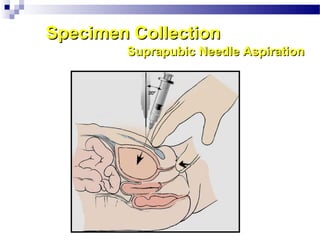
 Suprapubic needle aspiration
24 hour urine sample
1. For quantitative estimation of proteins
2. For estimation of vanillyl mandelic acid,
5-hydroxyindole acetic acid,
metanephrines.
3. For detection of hormones in urine
4. For detection of microalbuminuria
Specimen CollectionSpecimen Collection
Suprapubic Needle AspirationSuprapubic Needle Aspiration
Preservation of urine sample
 HCl- for 24 hr urinary sample preservation
for adrenaline, noradr, VMA, steroids.
 Toluene- as a physical barrier
 Boric acid- general preservative
 Thymol- inhibits bacteria, fungi
 Formalin- for preservation of formed
elements
 For routine analysis, preservatives should
be avoided as they interfere with reagent
strip technique and chemical test for
proteins.
 Sample should be examined within 1-2 hrs
of voiding.
 If delay is expected, sample can be kept in
refrigeration for max 8 hrs.
Urine examination
 Macroscopic examination
 Chemical examination
 Microscopic examination
Macroscopic examination
 Volume
 Color
 Odour
 Reaction or urinary pH
 Specific gravity
 Osmolality
Urinary volume
 Normal = 600-2000ml with night urine not in
excess of 400 ml.
 Polyuria- >2000ml/24 hrs
 Oliguria-<500ml/24 hrs
 Anuria-complete cessation of urine(<200ml)
 Nocturia-excretion of urine by a adult of >500ml
with a specific gravity of <1.018 at night
(characteristic of chronic glomerulonephritis)
Causes of polyuria
 Diabetes mellitus
 Diabetes insipidus
 Polycystic kidney
 Chronic renal failure
 Diuretics
 Intravenous saline/glucose
oliguria
 Dehydration-vomiting, diarrhoea,
excessive sweating
 Acute glomerulonephritis
 Congestive cardiac failure
Anuria
- Acute tubular necrosis
- Complete urinary tract obstruction
Color & appearance
 Normal= clear & pale yellow due to the
presence of various pigments called
urochrome.
1. Colourless- dilution, diabetes mellitus,
diabetes insipidus, diuretics
2. Milky-purulent genitourinary tract
infection, chyluria
3. Orange- urobilinogen
4. Red-beetroot ingestion,haematuria,
hemoglobinuria
5. Brown/ black- alkaptunuria, melanin
Urinary pH/ reaction
 Reaction reflects ability of kidney to
maintain normal hydrogen ion
concentration in plasma & ECF
 Normal= 4.6-8
 Tested by- 1.litmus paper
2. pH paper
3. Reagent strip method
Acidic urine
 Ketosis-diabetes, starvation, fever
 Systemic acidosis
 UTI by E.coli
 Acidification therapy
 High protein diet
Alkaline urine
 Strict vegetarian
 Systemic alkalosis
 UTI by pseudomonas or Proteus
 Alkalization therapy
 CRF
Odour
 Normal= aromatic due to the volatile fatty
acids
 Ammonical – bacterial action(E. coli)
 Fruity- ketonuria, starvation
 Musty- Phenylketonuria
 Fishy- UTI with Proteus
 Rancid- Tyrosinemia
Specific gravity
 Depends on the concentration of various
solutes in the urine.
 Normal range- 1.003 to 1.035
 Measured by-urinometer
- refractometer
- reagent strip method
- falling drop method
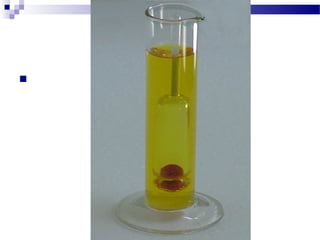
Urinometer
 This method is based on the principle of
buoyancy.
 Take 2/3 of urinometer container with urine
 Allow the urinometer to float into the urine
 Read the graduation at the lowest level of
urinary meniscus
 Correction of temperature & albumin is a
must.
 Urinometer is calibrated at 15or 200
c
So for every 3o
c increase/decrease add/subtract
0.001

High specific
gravity(hyperosthenuria)
 Causes
All causes of oliguria
Gycosuria, DM, Dehydration, nephrotic
syndrome.
Low specific
gravity(hyposthenuria)
 All causes of polyuria except gycosuria
 DI, pyelonephritis, glomerulonephritis.
 Fixed specific gravity (isosthenuria)=1.010
Seen in chronic renal disease when kidney
has lost the ability to concentrate or dilute
Osmolality
 Normal adult with normal fluid intake wil
produce urine of 500-850 mOsm/kg water.
 The normal kidney is able to produce
urine osmolality in the range of 800-1400
mOsm/kg water in dehydration and
minimal osmolality of 40-80 mOsm/kg
water during diuresis.
Chemical examination
 Proteins
 Sugars
 Ketone bodies
 Bilirubin
 Bile salts
 Urobilinogen
 Blood
Tests for proteins
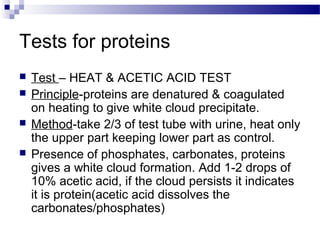
 Test – HEAT & ACETIC ACID TEST
 Principle-proteins are denatured & coagulated
on heating to give white cloud precipitate.
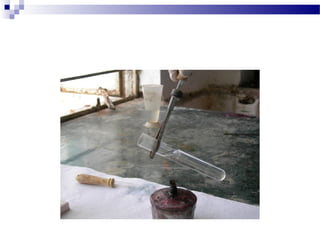
 Method-take 2/3 of test tube with urine, heat only
the upper part keeping lower part as control.
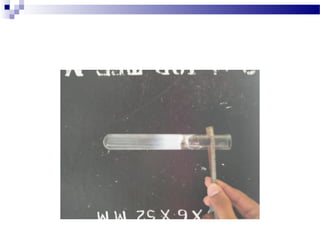
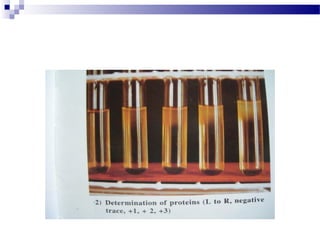
 Presence of phosphates, carbonates, proteins
gives a white cloud formation. Add 1-2 drops of
10% acetic acid, if the cloud persists it indicates
it is protein(acetic acid dissolves the
carbonates/phosphates)
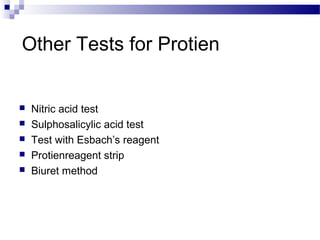
Other Tests for Protien
 Nitric acid test
 Sulphosalicylic acid test
 Test with Esbach’s reagent
 Protienreagent strip
 Biuret method
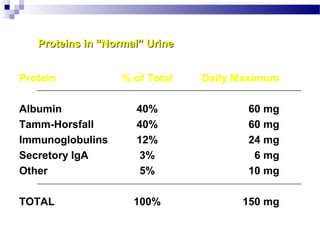
Protein % of Total Daily Maximum
Albumin 40% 60 mg
Tamm-Horsfall 40% 60 mg
Immunoglobulins 12% 24 mg
Secretory IgA 3% 6 mg
Other 5% 10 mg
TOTAL 100% 150 mg
Proteins in “Normal” UrineProteins in “Normal” Urine
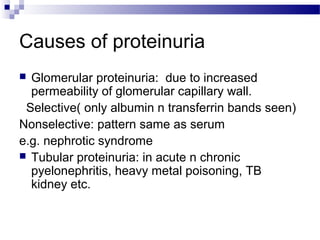
Causes of proteinuria
 Glomerular proteinuria: due to increased
permeability of glomerular capillary wall.
Selective( only albumin n transferrin bands seen)
Nonselective: pattern same as serum
e.g. nephrotic syndrome
 Tubular proteinuria: in acute n chronic
pyelonephritis, heavy metal poisoning, TB
kidney etc.
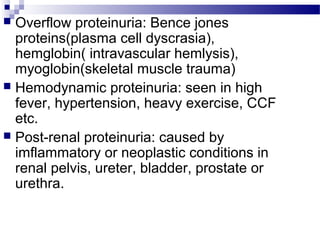
 Overflow proteinuria: Bence jones
proteins(plasma cell dyscrasia),
hemglobin( intravascular hemlysis),
myoglobin(skeletal muscle trauma)
 Hemodynamic proteinuria: seen in high
fever, hypertension, heavy exercise, CCF
etc.
 Post-renal proteinuria: caused by
imflammatory or neoplastic conditions in
renal pelvis, ureter, bladder, prostate or
urethra.
microalbuminuria
 It is presence of albumin in urine above
normal level bt below detectable range of
conventional urine dipstick method.
 Defined as urinary excretion of 30 to 300
mg/24 hrs of albumin in urine.
Significance of microalbuminuria
 an indicator of subclinical cardiovascular
disease
 an important prognostic marker for kidney
disease
 in diabetes mellitus (earliest sign of renal
damage in DM)
 in hypertension
 increasing microalbuminuria during the first 48
hours after admission to an intensive care unit
predicts elevated risk for acute respiratory failure
, multiple organ failure , and overall mortality
Detection of microalbuminuria:
 Methods for detection :
 Measurement of albumin creatinine ratio
in random urine sample.
 Measurement of albumin in early morning
sample.
 Measurement of urine in 24 hr sample.
Bence Jones proteins
 These are monoclonal immunoglobulin light
chains (kappa or lamda) synthesized by
neoplastic plasma cells.
 seen in multiple myeloma, macroglobulinemias,
primary amyloidosis.
 Test- Thermal method(waterbath):
Proteins have unusual property of
precipitating at 400
-600
c & then dissolving
when the urine is brought to boiling(1000
c) &
reappears when the urine is cooled.
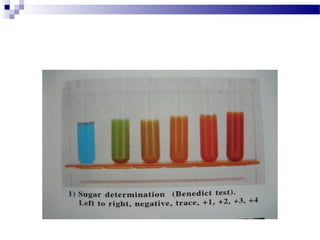
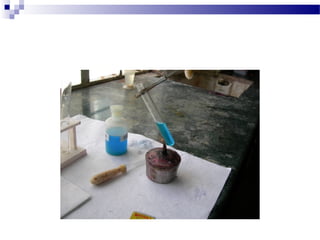
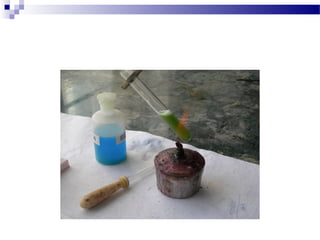
Test for sugar Test-BENEDICT’S TEST(semiquantitative)
 Principle-benedict’s reagent contains
cuso4.In the presence of reducing sugars
cupric ions are converted to cuprous oxide
which is hastened by heating, to give the
color.
 Method- take 5ml of benedict’s reagent in a
test tube, add 8drops of urine. Boil the
mixture.
 Blue= negative
 Yellow=+(<0.5%)
 green=++(0.5-1%)
 Yellow-orange=+++(1-2%)
 Brick red=++++(>2%)
Benedict’s test
 Detects all reducing substances like
glucose, fructose, & other reducing
sustances.
 Sensitivity of the test is about 200 mg
reducing substance per dl of urine.
 To confirm it is glucose, dipsticks can be
used (glucose oxidase)
Reagent strip method:
 Specific for glucose.
 Based on glucose oxidase peroxidase
reaction.
 More sensitive (sensitivity- 100 mg
glucose/dl)
 Glu + oxygen---- gluconic
acid+hydrogen peroxide
 Hydrogen peroxide+chromogen--
oxidised chromogen(blue)+ H2O
Glycosuria
 Other Methods of detecting glycosuria
 Fehling’smethod
 Osazone test
Causes of glycosuria
 Glycosuria with hyperglycaemia-
diabetes,acromegaly, cushing’s disease,
hyperthyroidism, drugs like corticosteroids.
 Glycosuria without hyperglycaemia-
renal tubular dysfunction
Ketone bodies
 3 types
 Acetone
 Acetoacetic acid
 β-hydroxy butyric acid
 They are products of fat metabolism
Rothera’s test
 Principle-acetone & acetoacetic acid react
with sodium nitroprusside in the presence
of alkali to produce purple colour.
 Method- take 5ml of urine in a test tube &
saturate it with ammonium sulphate. Then
add one crystal of sodium nitroprusside.
Then slowly run the liquor ammonia along
the sides of the test tube.
 Formation of purple coloured ring at
junction indicates + test
Other tests:
 Acetest tablet test
 Ferric chloride test(Gerhardt’s test)
 Reagent strip method
 Hart’s test for beta hydroxy butyric acid
Causes of ketonuria
 Diabetes
 Non-diabetic causes- high fever,
starvation, severe vomiting/diarrhoea
 Glycogen storage diseases
Bilirubin
 Test- fouchet’s test.
In 5 ml of urine add 2.5 ml of 10% Barium
chloride and mix well. Then filter to obtain
precipitate. To ppt add 1 drop of fouchet’s
reagent. Development of blue green colour
indicate + test.
Principle: Bilirubin Adsorbs to the Barium Chloride
and results in green color formation when
fouchet’s reagent is added.
 Causes
 Liver diseases-injury,hepatitis
 Obstruction to biliary tract
Other tests:
 Foam test
 Gmelin’s test (nitric acid)
 Lugol’s iodine test
 Reagent strip with diazo reagent
Urobilinogen
 Test- ehrlich test
In 5 ml of urine add 0.5 ml of Ehrlich’s
reagent(HCl 20 ml, d/w 80 ml, p-
dimethylaminobenzaldehyde 2 gm). Allow
to stand for 5 min. development of pink
colour indicates +test.
 Causes-hemolytic jaundice, early
hepatitis, hepatocellular jaundice.
Bile salt:
 Hay’s sulphur test:
In 5 ml of urine sprinkle a pinch of
sulphur particles. If bile salt is present
sulphur particles will sink to the bottom
because bile salts lowers the surface
tension of urine.
Blood in urine
 Test- BENZIDINE TEST
 Principle-The peroxidase activity of hemoglobin
decomposes hydrogen peroxide releasing
nascent oxygen which in turn oxidizes benzidine
to give blue color.
 Method- mix 2ml of benzidine solution with 2ml
of hydrogen peroxide in a test tube. Take 2ml of
urine & add 2ml of above mixture. A blue or
green color within 5 min indicates + reaction.
Causes of hematuria
 Pre renal- bleeding diathesis,
hemoglobinopathies, malignant
hypertension.
 Renal- trauma, calculi, acute & chronic
glomerulonephritis, renal TB, renal
tumors
 Post renal – severe UTI, calculi,
trauma, tumors of urinary tract
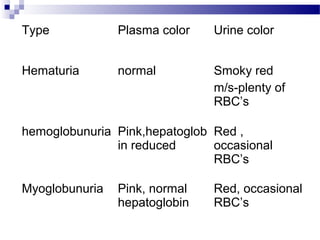
Type Plasma color Urine color
Hematuria normal Smoky red
m/s-plenty of
RBC’s
hemoglobunuria Pink,hepatoglob
in reduced
Red ,
occasional
RBC’s
Myoglobunuria Pink, normal
hepatoglobin
Red, occasional
RBC’s
Microscopic examination
 A well mixed sample of urine (12 ml) is
centrifuged in machine for 5 min at 1500 rpm.
The top liquid part (the supernatant) is
discarded. A drop of urine left at the bottom of
the test tube (the urine sediment) is placed on
glass slide and covered with cover slip. It is
examined under high power.
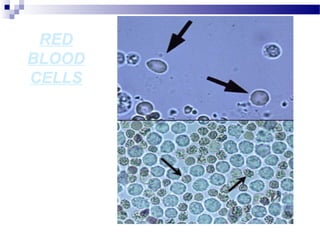
Contents of normal urine m/s
 Contains few epithelial cells, occasional
RBC’s, few crystals.
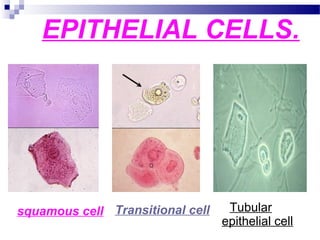
EPITHELIAL CELLS.
squamous cell Transitional cell Tubular
epithelial cell
RED
BLOOD
CELLS
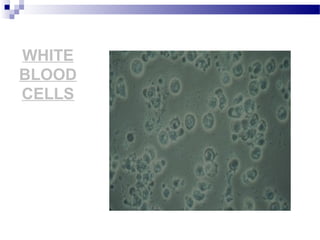
WHITE
BLOOD
CELLS
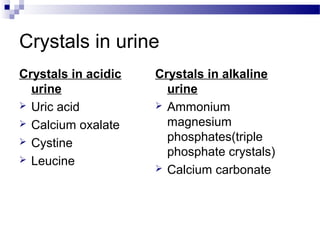
Crystals in urine
Crystals in acidic
urine
 Uric acid
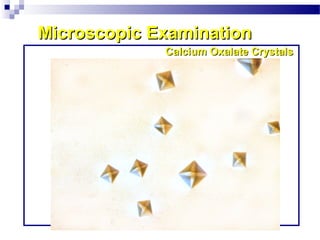
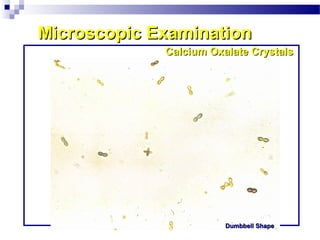
 Calcium oxalate
 Cystine
 Leucine
Crystals in alkaline
urine
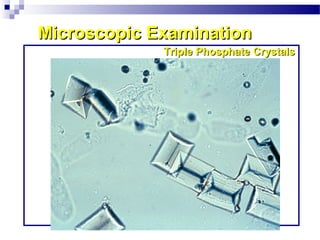
 Ammonium
magnesium
phosphates(triple
phosphate crystals)
 Calcium carbonate
Microscopic ExaminationMicroscopic Examination
Calcium Oxalate CrystalsCalcium Oxalate Crystals
Microscopic ExaminationMicroscopic Examination
Calcium Oxalate CrystalsCalcium Oxalate Crystals
Dumbbell ShapeDumbbell Shape
Microscopic ExaminationMicroscopic Examination
Triple Phosphate CrystalsTriple Phosphate Crystals
Microscopic ExaminationMicroscopic Examination
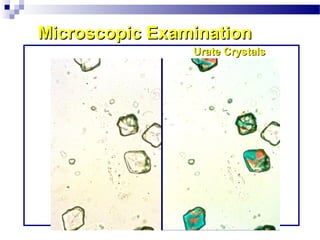
Urate CrystalsUrate Crystals
Microscopic ExaminationMicroscopic Examination
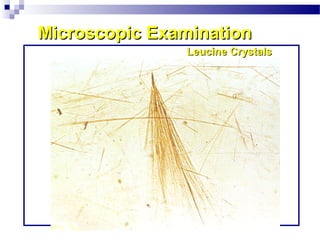
Leucine CrystalsLeucine Crystals
Microscopic ExaminationMicroscopic Examination
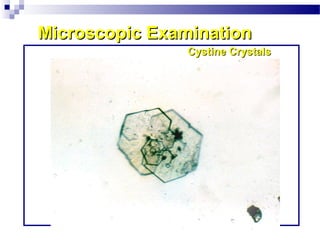
Cystine CrystalsCystine Crystals
Microscopic ExaminationMicroscopic Examination
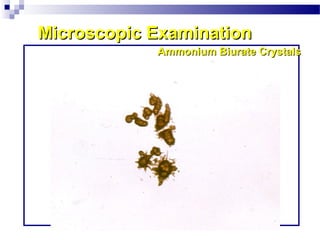
Ammonium Biurate CrystalsAmmonium Biurate Crystals
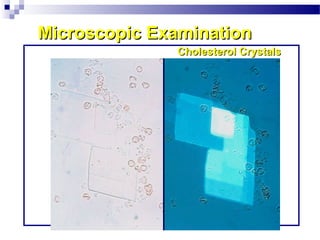
Microscopic ExaminationMicroscopic Examination
Cholesterol CrystalsCholesterol Crystals
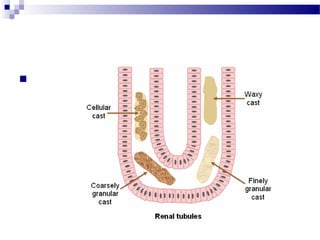
casts
 Urinary casts are cylindrical aggregations
of particles that form in the distal nephron,
dislodge, and pass into the urine. In
urinalysis they indicate kidney disease.
They form via precipitation of
Tamm-Horsfall mucoprotein which is
secreted by renal tubule cells.
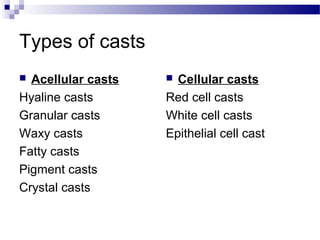
Types of casts
 Acellular casts
Hyaline casts
Granular casts
Waxy casts
Fatty casts
Pigment casts
Crystal casts
 Cellular casts
Red cell casts
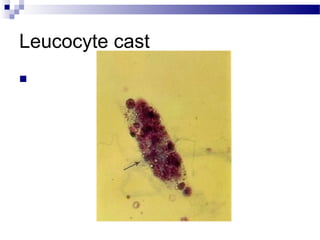
White cell casts
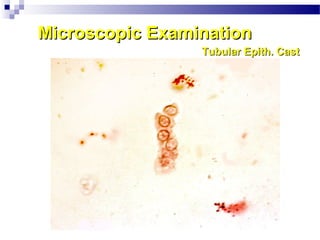
Epithelial cell cast
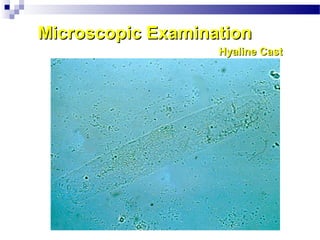
Hyaline casts
 The most common type of cast, hyaline
casts are solidified Tamm-Horsfall
mucoprotein secreted from the tubular
epithelial cells
 Seen in fever, strenuous exercise,
damage to the glomerular capillary
Microscopic ExaminationMicroscopic Examination
Hyaline CastHyaline Cast
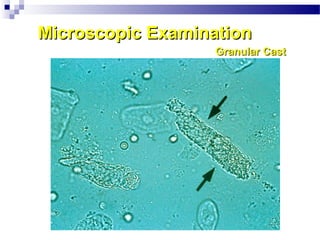
Granular casts
 Granular casts can result either from the
breakdown of cellular casts or the
inclusion of aggregates of plasma proteins
(e.g., albumin) or immunoglobulin light
chains
 indicative of chronic renal disease
Microscopic ExaminationMicroscopic Examination
Granular CastGranular Cast
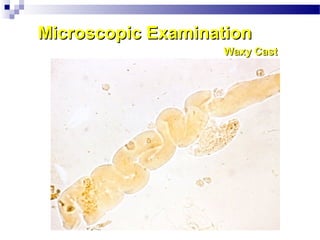
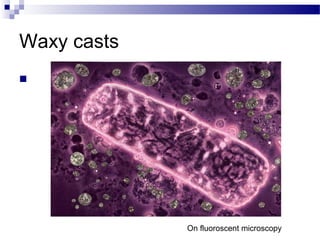
Waxy casts
 waxy casts suggest severe,
longstanding kidney disease such as
renal failure(end stage renal disease).
Microscopic ExaminationMicroscopic Examination
Waxy CastWaxy Cast
Waxy casts

On fluoroscent microscopy

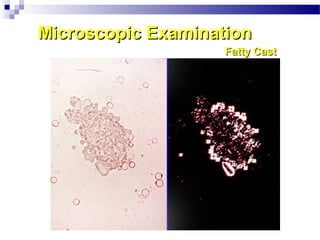
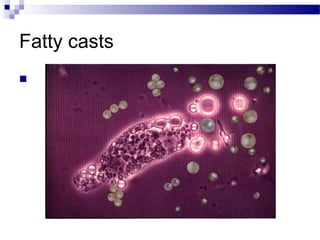
Fatty casts
 Formed by the breakdown of lipid-rich
epithelial cells, these are hyaline casts
with fat globule inclusions
They can be present in various disorders,
including
 nephrotic syndrome,
 diabetic or lupus nephropathy,
 Acute tubular necrosis
Microscopic ExaminationMicroscopic Examination
Fatty CastFatty Cast
Fatty casts

Pigment casts
 Formed by the adhesion of metabolic
breakdown products or drug pigments
 Pigments include those produced
endogenously, such as
 hemoglobin in hemolytic anemia,
 myoglobin in rhabdomyolysis, and
 bilirubin in liver disease.
Crystal casts
 Though crystallized urinary solutes, such
as oxalates, urates, or sulfonamides, may
become enmeshed within a hyaline cast
during its formation.
 The clinical significance of this occurrence
is not felt to be great.
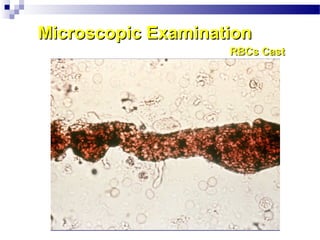
Red cell casts
 The presence of red blood cells within the
cast is always pathologic, and is strongly
indicative of glomerular damage.
 They are usually associated with nephritic
syndromes.
Microscopic ExaminationMicroscopic Examination
RBCs CastRBCs Cast
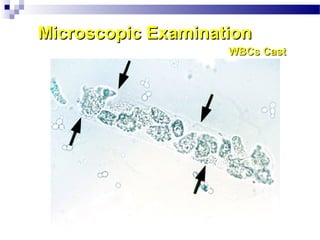
White blood cell casts
 Indicative of inflammation or infection,
 pyelonephritis
 acute allergic interstitial nephritis,
 nephrotic syndrome, or
 post-streptococcal acute
glomerulonephritis
Microscopic ExaminationMicroscopic Examination
WBCs CastWBCs Cast
Leucocyte cast

Epithelial casts
 This cast is formed by inclusion or
adhesion of desquamated epithelial cells
of the tubule lining.
These can be seen in
 acute tubular necrosis and
 toxic ingestion, such as from mercury,
diethylene glycol, or salicylate.
Microscopic ExaminationMicroscopic Examination
Tubular Epith. CastTubular Epith. Cast
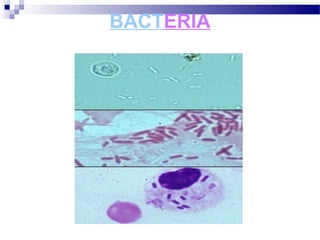
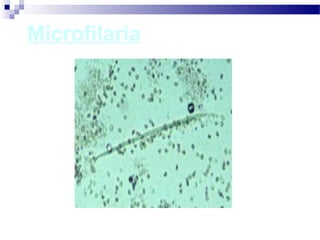
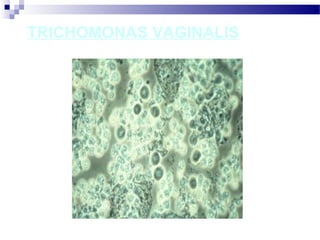
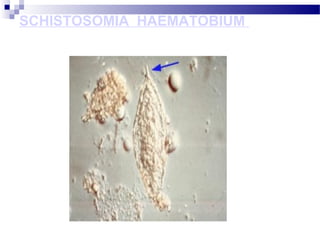
Miscellaneous structures in
urine:
BACTERIA
Microfilaria
TRICHOMONAS VAGINALIS
SCHISTOSOMIA HAEMATOBIUM
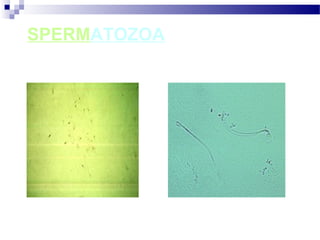
SPERMATOZOA
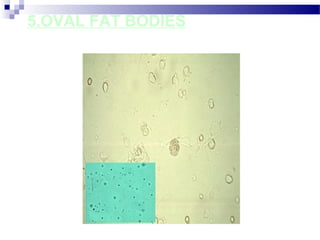
5.OVAL FAT BODIES
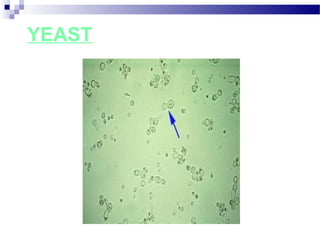
YEAST
Urine dipsticks
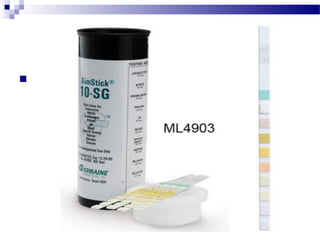
 Urine dipstick is a narrow plastic strip which
has several squares of different colors
attached to it. Each small square represents
a component of the test used to interpret
urinalysis. The entire strip is dipped in the
urine sample and color changes in each
square are noted. The color change takes
place within 2 minutes from dipping the
strip. If read too early or too long after the
strip is dipped, the results may not be
accurate.
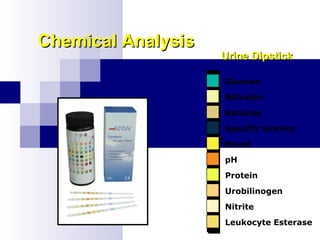
Chemical AnalysisChemical Analysis
Urine DipstickUrine Dipstick
Glucose
Bilirubin
Ketones
Specific Gravity
Blood
pH
Protein
Urobilinogen
Nitrite
Leukocyte Esterase

 The squares on the dipstick represent the
following components in the urine:
∀ specific gravity (concentration of urine),
∀ acidity of the urine (pH),
∀ protein in the urine (mainly albumin),
∀ glucose (sugar),
∀ ketones
∀ blood
∀ bilirubin and
 Urobilinogen
 Nitrites
 Leukocyte esterase
 The main advantage of dipsticks is that
they are
1. convenient,
2. easy to interpret,
3. and cost-effective
The main disadvantage is that the
1. Information may not be very accurate as
the test is time-sensitive.
2. It also provides limited information about
the urine as it is qualitative test and not a
quantitative test (for example, it does not
give a precise measure of the quantity of
abnormality).
Automated urine analyser:
 It is based on the principle of flow
cytometry.
 This system classifies particles based on
fluoroscent intensity ( cells are stained
with 2 fluoroscent dyes), electrical
impedance and forward angle light scatter.
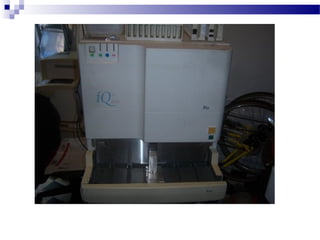
 Next generation automated image based
urinalysis system iQ200 is a walk away
system.
 This system uses flow imaging analysis
technology and Auto Particle Recognition
software.
 It requires minimum of 3 ml of urine and
quantitates particles in 2 microlitre of
sample.
 Can analyse 60 urine samples per hr.
References:
 Henry’s Clinical diagnosis and
Management of Laboratory Methods
 Clinical Pathology Kawthalkar
 Clinical Pathology Sabitri Sanyal
 Basics of Body fluids by Akhil Bansal
 Internet
Urine analysis

Urine analysis

  • 1.
  • 2.
    Introduction  Urine isformed in the kidneys, is a product of ultrafiltration of plasma by the renal glomeruli.
  • 3.
    Collection of urine Early morning sample-qualitative  Random sample- routine  24hrs sample- quantitative  Midstream sample-UTI  Post prandial sample-D.M  Catheterised- in infants, bedridden patients  Suprapubic needle aspiration
  • 4.
    24 hour urinesample 1. For quantitative estimation of proteins 2. For estimation of vanillyl mandelic acid, 5-hydroxyindole acetic acid, metanephrines. 3. For detection of hormones in urine 4. For detection of microalbuminuria
  • 5.
    Specimen CollectionSpecimen Collection SuprapubicNeedle AspirationSuprapubic Needle Aspiration
  • 6.
    Preservation of urinesample  HCl- for 24 hr urinary sample preservation for adrenaline, noradr, VMA, steroids.  Toluene- as a physical barrier  Boric acid- general preservative  Thymol- inhibits bacteria, fungi  Formalin- for preservation of formed elements
  • 7.
     For routineanalysis, preservatives should be avoided as they interfere with reagent strip technique and chemical test for proteins.  Sample should be examined within 1-2 hrs of voiding.  If delay is expected, sample can be kept in refrigeration for max 8 hrs.
  • 8.
    Urine examination  Macroscopicexamination  Chemical examination  Microscopic examination
  • 9.
    Macroscopic examination  Volume Color  Odour  Reaction or urinary pH  Specific gravity  Osmolality
  • 10.
    Urinary volume  Normal= 600-2000ml with night urine not in excess of 400 ml.  Polyuria- >2000ml/24 hrs  Oliguria-<500ml/24 hrs  Anuria-complete cessation of urine(<200ml)  Nocturia-excretion of urine by a adult of >500ml with a specific gravity of <1.018 at night (characteristic of chronic glomerulonephritis)
  • 11.
    Causes of polyuria Diabetes mellitus  Diabetes insipidus  Polycystic kidney  Chronic renal failure  Diuretics  Intravenous saline/glucose
  • 12.
    oliguria  Dehydration-vomiting, diarrhoea, excessivesweating  Acute glomerulonephritis  Congestive cardiac failure Anuria - Acute tubular necrosis - Complete urinary tract obstruction
  • 13.
    Color & appearance Normal= clear & pale yellow due to the presence of various pigments called urochrome. 1. Colourless- dilution, diabetes mellitus, diabetes insipidus, diuretics 2. Milky-purulent genitourinary tract infection, chyluria 3. Orange- urobilinogen 4. Red-beetroot ingestion,haematuria, hemoglobinuria 5. Brown/ black- alkaptunuria, melanin
  • 14.
    Urinary pH/ reaction Reaction reflects ability of kidney to maintain normal hydrogen ion concentration in plasma & ECF  Normal= 4.6-8  Tested by- 1.litmus paper 2. pH paper 3. Reagent strip method
  • 15.
    Acidic urine  Ketosis-diabetes,starvation, fever  Systemic acidosis  UTI by E.coli  Acidification therapy  High protein diet
  • 16.
    Alkaline urine  Strictvegetarian  Systemic alkalosis  UTI by pseudomonas or Proteus  Alkalization therapy  CRF
  • 17.
    Odour  Normal= aromaticdue to the volatile fatty acids  Ammonical – bacterial action(E. coli)  Fruity- ketonuria, starvation  Musty- Phenylketonuria  Fishy- UTI with Proteus  Rancid- Tyrosinemia
  • 18.
    Specific gravity  Dependson the concentration of various solutes in the urine.  Normal range- 1.003 to 1.035  Measured by-urinometer - refractometer - reagent strip method - falling drop method
  • 19.
    Urinometer  This methodis based on the principle of buoyancy.  Take 2/3 of urinometer container with urine  Allow the urinometer to float into the urine  Read the graduation at the lowest level of urinary meniscus  Correction of temperature & albumin is a must.  Urinometer is calibrated at 15or 200 c So for every 3o c increase/decrease add/subtract 0.001
  • 20.
  • 21.
    High specific gravity(hyperosthenuria)  Causes Allcauses of oliguria Gycosuria, DM, Dehydration, nephrotic syndrome.
  • 22.
    Low specific gravity(hyposthenuria)  Allcauses of polyuria except gycosuria  DI, pyelonephritis, glomerulonephritis.  Fixed specific gravity (isosthenuria)=1.010 Seen in chronic renal disease when kidney has lost the ability to concentrate or dilute
  • 23.
    Osmolality  Normal adultwith normal fluid intake wil produce urine of 500-850 mOsm/kg water.  The normal kidney is able to produce urine osmolality in the range of 800-1400 mOsm/kg water in dehydration and minimal osmolality of 40-80 mOsm/kg water during diuresis.
  • 24.
    Chemical examination  Proteins Sugars  Ketone bodies  Bilirubin  Bile salts  Urobilinogen  Blood
  • 25.
    Tests for proteins Test – HEAT & ACETIC ACID TEST  Principle-proteins are denatured & coagulated on heating to give white cloud precipitate.  Method-take 2/3 of test tube with urine, heat only the upper part keeping lower part as control.  Presence of phosphates, carbonates, proteins gives a white cloud formation. Add 1-2 drops of 10% acetic acid, if the cloud persists it indicates it is protein(acetic acid dissolves the carbonates/phosphates)
  • 29.
    Other Tests forProtien  Nitric acid test  Sulphosalicylic acid test  Test with Esbach’s reagent  Protienreagent strip  Biuret method
  • 30.
    Protein % ofTotal Daily Maximum Albumin 40% 60 mg Tamm-Horsfall 40% 60 mg Immunoglobulins 12% 24 mg Secretory IgA 3% 6 mg Other 5% 10 mg TOTAL 100% 150 mg Proteins in “Normal” UrineProteins in “Normal” Urine
  • 31.
    Causes of proteinuria Glomerular proteinuria: due to increased permeability of glomerular capillary wall. Selective( only albumin n transferrin bands seen) Nonselective: pattern same as serum e.g. nephrotic syndrome  Tubular proteinuria: in acute n chronic pyelonephritis, heavy metal poisoning, TB kidney etc.
  • 32.
     Overflow proteinuria:Bence jones proteins(plasma cell dyscrasia), hemglobin( intravascular hemlysis), myoglobin(skeletal muscle trauma)  Hemodynamic proteinuria: seen in high fever, hypertension, heavy exercise, CCF etc.  Post-renal proteinuria: caused by imflammatory or neoplastic conditions in renal pelvis, ureter, bladder, prostate or urethra.
  • 33.
    microalbuminuria  It ispresence of albumin in urine above normal level bt below detectable range of conventional urine dipstick method.  Defined as urinary excretion of 30 to 300 mg/24 hrs of albumin in urine.
  • 34.
    Significance of microalbuminuria an indicator of subclinical cardiovascular disease  an important prognostic marker for kidney disease  in diabetes mellitus (earliest sign of renal damage in DM)  in hypertension  increasing microalbuminuria during the first 48 hours after admission to an intensive care unit predicts elevated risk for acute respiratory failure , multiple organ failure , and overall mortality
  • 35.
    Detection of microalbuminuria: Methods for detection :  Measurement of albumin creatinine ratio in random urine sample.  Measurement of albumin in early morning sample.  Measurement of urine in 24 hr sample.
  • 36.
    Bence Jones proteins These are monoclonal immunoglobulin light chains (kappa or lamda) synthesized by neoplastic plasma cells.  seen in multiple myeloma, macroglobulinemias, primary amyloidosis.  Test- Thermal method(waterbath): Proteins have unusual property of precipitating at 400 -600 c & then dissolving when the urine is brought to boiling(1000 c) & reappears when the urine is cooled.
  • 37.
    Test for sugarTest-BENEDICT’S TEST(semiquantitative)  Principle-benedict’s reagent contains cuso4.In the presence of reducing sugars cupric ions are converted to cuprous oxide which is hastened by heating, to give the color.  Method- take 5ml of benedict’s reagent in a test tube, add 8drops of urine. Boil the mixture.  Blue= negative  Yellow=+(<0.5%)  green=++(0.5-1%)  Yellow-orange=+++(1-2%)  Brick red=++++(>2%)
  • 41.
    Benedict’s test  Detectsall reducing substances like glucose, fructose, & other reducing sustances.  Sensitivity of the test is about 200 mg reducing substance per dl of urine.  To confirm it is glucose, dipsticks can be used (glucose oxidase)
  • 42.
    Reagent strip method: Specific for glucose.  Based on glucose oxidase peroxidase reaction.  More sensitive (sensitivity- 100 mg glucose/dl)  Glu + oxygen---- gluconic acid+hydrogen peroxide  Hydrogen peroxide+chromogen-- oxidised chromogen(blue)+ H2O
  • 43.
    Glycosuria  Other Methodsof detecting glycosuria  Fehling’smethod  Osazone test
  • 44.
    Causes of glycosuria Glycosuria with hyperglycaemia- diabetes,acromegaly, cushing’s disease, hyperthyroidism, drugs like corticosteroids.  Glycosuria without hyperglycaemia- renal tubular dysfunction
  • 45.
    Ketone bodies  3types  Acetone  Acetoacetic acid  β-hydroxy butyric acid  They are products of fat metabolism
  • 46.
    Rothera’s test  Principle-acetone& acetoacetic acid react with sodium nitroprusside in the presence of alkali to produce purple colour.  Method- take 5ml of urine in a test tube & saturate it with ammonium sulphate. Then add one crystal of sodium nitroprusside. Then slowly run the liquor ammonia along the sides of the test tube.  Formation of purple coloured ring at junction indicates + test
  • 47.
    Other tests:  Acetesttablet test  Ferric chloride test(Gerhardt’s test)  Reagent strip method  Hart’s test for beta hydroxy butyric acid
  • 48.
    Causes of ketonuria Diabetes  Non-diabetic causes- high fever, starvation, severe vomiting/diarrhoea  Glycogen storage diseases
  • 49.
    Bilirubin  Test- fouchet’stest. In 5 ml of urine add 2.5 ml of 10% Barium chloride and mix well. Then filter to obtain precipitate. To ppt add 1 drop of fouchet’s reagent. Development of blue green colour indicate + test. Principle: Bilirubin Adsorbs to the Barium Chloride and results in green color formation when fouchet’s reagent is added.  Causes  Liver diseases-injury,hepatitis  Obstruction to biliary tract
  • 50.
    Other tests:  Foamtest  Gmelin’s test (nitric acid)  Lugol’s iodine test  Reagent strip with diazo reagent
  • 51.
    Urobilinogen  Test- ehrlichtest In 5 ml of urine add 0.5 ml of Ehrlich’s reagent(HCl 20 ml, d/w 80 ml, p- dimethylaminobenzaldehyde 2 gm). Allow to stand for 5 min. development of pink colour indicates +test.  Causes-hemolytic jaundice, early hepatitis, hepatocellular jaundice.
  • 52.
    Bile salt:  Hay’ssulphur test: In 5 ml of urine sprinkle a pinch of sulphur particles. If bile salt is present sulphur particles will sink to the bottom because bile salts lowers the surface tension of urine.
  • 53.
    Blood in urine Test- BENZIDINE TEST  Principle-The peroxidase activity of hemoglobin decomposes hydrogen peroxide releasing nascent oxygen which in turn oxidizes benzidine to give blue color.  Method- mix 2ml of benzidine solution with 2ml of hydrogen peroxide in a test tube. Take 2ml of urine & add 2ml of above mixture. A blue or green color within 5 min indicates + reaction.
  • 54.
    Causes of hematuria Pre renal- bleeding diathesis, hemoglobinopathies, malignant hypertension.  Renal- trauma, calculi, acute & chronic glomerulonephritis, renal TB, renal tumors  Post renal – severe UTI, calculi, trauma, tumors of urinary tract
  • 55.
    Type Plasma colorUrine color Hematuria normal Smoky red m/s-plenty of RBC’s hemoglobunuria Pink,hepatoglob in reduced Red , occasional RBC’s Myoglobunuria Pink, normal hepatoglobin Red, occasional RBC’s
  • 56.
    Microscopic examination  Awell mixed sample of urine (12 ml) is centrifuged in machine for 5 min at 1500 rpm. The top liquid part (the supernatant) is discarded. A drop of urine left at the bottom of the test tube (the urine sediment) is placed on glass slide and covered with cover slip. It is examined under high power.
  • 57.
    Contents of normalurine m/s  Contains few epithelial cells, occasional RBC’s, few crystals.
  • 58.
    EPITHELIAL CELLS. squamous cellTransitional cell Tubular epithelial cell
  • 59.
  • 60.
  • 61.
    Crystals in urine Crystalsin acidic urine  Uric acid  Calcium oxalate  Cystine  Leucine Crystals in alkaline urine  Ammonium magnesium phosphates(triple phosphate crystals)  Calcium carbonate
  • 62.
    Microscopic ExaminationMicroscopic Examination CalciumOxalate CrystalsCalcium Oxalate Crystals
  • 63.
    Microscopic ExaminationMicroscopic Examination CalciumOxalate CrystalsCalcium Oxalate Crystals Dumbbell ShapeDumbbell Shape
  • 64.
    Microscopic ExaminationMicroscopic Examination TriplePhosphate CrystalsTriple Phosphate Crystals
  • 65.
  • 66.
  • 67.
  • 68.
    Microscopic ExaminationMicroscopic Examination AmmoniumBiurate CrystalsAmmonium Biurate Crystals
  • 69.
  • 70.
    casts  Urinary castsare cylindrical aggregations of particles that form in the distal nephron, dislodge, and pass into the urine. In urinalysis they indicate kidney disease. They form via precipitation of Tamm-Horsfall mucoprotein which is secreted by renal tubule cells.
  • 71.
    Types of casts Acellular casts Hyaline casts Granular casts Waxy casts Fatty casts Pigment casts Crystal casts  Cellular casts Red cell casts White cell casts Epithelial cell cast
  • 72.
    Hyaline casts  Themost common type of cast, hyaline casts are solidified Tamm-Horsfall mucoprotein secreted from the tubular epithelial cells  Seen in fever, strenuous exercise, damage to the glomerular capillary
  • 73.
  • 74.
    Granular casts  Granularcasts can result either from the breakdown of cellular casts or the inclusion of aggregates of plasma proteins (e.g., albumin) or immunoglobulin light chains  indicative of chronic renal disease
  • 75.
  • 76.
    Waxy casts  waxycasts suggest severe, longstanding kidney disease such as renal failure(end stage renal disease).
  • 77.
  • 78.
  • 79.
  • 80.
    Fatty casts  Formedby the breakdown of lipid-rich epithelial cells, these are hyaline casts with fat globule inclusions They can be present in various disorders, including  nephrotic syndrome,  diabetic or lupus nephropathy,  Acute tubular necrosis
  • 81.
  • 82.
  • 83.
    Pigment casts  Formedby the adhesion of metabolic breakdown products or drug pigments  Pigments include those produced endogenously, such as  hemoglobin in hemolytic anemia,  myoglobin in rhabdomyolysis, and  bilirubin in liver disease.
  • 84.
    Crystal casts  Thoughcrystallized urinary solutes, such as oxalates, urates, or sulfonamides, may become enmeshed within a hyaline cast during its formation.  The clinical significance of this occurrence is not felt to be great.
  • 85.
    Red cell casts The presence of red blood cells within the cast is always pathologic, and is strongly indicative of glomerular damage.  They are usually associated with nephritic syndromes.
  • 86.
  • 87.
    White blood cellcasts  Indicative of inflammation or infection,  pyelonephritis  acute allergic interstitial nephritis,  nephrotic syndrome, or  post-streptococcal acute glomerulonephritis
  • 88.
  • 89.
  • 90.
    Epithelial casts  Thiscast is formed by inclusion or adhesion of desquamated epithelial cells of the tubule lining. These can be seen in  acute tubular necrosis and  toxic ingestion, such as from mercury, diethylene glycol, or salicylate.
  • 91.
  • 92.
  • 93.
  • 94.
  • 95.
  • 96.
  • 97.
  • 98.
  • 99.
  • 100.
    Urine dipsticks  Urinedipstick is a narrow plastic strip which has several squares of different colors attached to it. Each small square represents a component of the test used to interpret urinalysis. The entire strip is dipped in the urine sample and color changes in each square are noted. The color change takes place within 2 minutes from dipping the strip. If read too early or too long after the strip is dipped, the results may not be accurate.
  • 101.
    Chemical AnalysisChemical Analysis UrineDipstickUrine Dipstick Glucose Bilirubin Ketones Specific Gravity Blood pH Protein Urobilinogen Nitrite Leukocyte Esterase
  • 102.
  • 103.
     The squareson the dipstick represent the following components in the urine: ∀ specific gravity (concentration of urine), ∀ acidity of the urine (pH), ∀ protein in the urine (mainly albumin), ∀ glucose (sugar), ∀ ketones ∀ blood ∀ bilirubin and  Urobilinogen  Nitrites  Leukocyte esterase
  • 104.
     The mainadvantage of dipsticks is that they are 1. convenient, 2. easy to interpret, 3. and cost-effective
  • 105.
    The main disadvantageis that the 1. Information may not be very accurate as the test is time-sensitive. 2. It also provides limited information about the urine as it is qualitative test and not a quantitative test (for example, it does not give a precise measure of the quantity of abnormality).
  • 106.
    Automated urine analyser: It is based on the principle of flow cytometry.  This system classifies particles based on fluoroscent intensity ( cells are stained with 2 fluoroscent dyes), electrical impedance and forward angle light scatter.  Next generation automated image based urinalysis system iQ200 is a walk away system.
  • 107.
     This systemuses flow imaging analysis technology and Auto Particle Recognition software.  It requires minimum of 3 ml of urine and quantitates particles in 2 microlitre of sample.  Can analyse 60 urine samples per hr.
  • 109.
    References:  Henry’s Clinicaldiagnosis and Management of Laboratory Methods  Clinical Pathology Kawthalkar  Clinical Pathology Sabitri Sanyal  Basics of Body fluids by Akhil Bansal  Internet

Editor's Notes

  • #61 May occur singly or in clumps. Mostly neutrophils, with granules n lobulation of nuclei. &amp;lt;5 leucocytes/hpf are seen normally. Increased number of clumps are seen in cystitis, prostatitis and balanitis. &amp;gt;30/hpf suggests acute infection. Eosinophils are increased in urine in tubulointerstitial disease, drug hypersesitivity. May occur singly or in clumps. Mostly neutrophils, with granules n lobulation of nuclei. &amp;lt;5 leucocytes/hpf are seen normally. Increased number of clumps are seen in cystitis, prostatitis and balanitis. &amp;gt;30/hpf suggests acute infection. Eosinophils are increased in urine in tubulointerstitial disease, drug hypersesitivity.
  • #96 Under phase contrast, Trichomonas organisms appear much darker than the surrounding white blood cells.
  • #97 This parasite is considered an important factor in the etiology of carcinoma of the bladder. The ova are elongated and are 60 X 160 microns. They are a yellowish color, slightly transparent and possess a delicate terminal spine.
  • #98 Sperm may be present in urine sediment. Sperm have a characteristic oval body with a long thin tail and are 50 microns in length.
  • #99 Oval fat bodies are degenerating tubular epithelial cells. They contain refractile fat droplets. These fats have been absorbed by the tubular cells after being leaked through abnormal glomeruli. They appear as grape-like clusters of variable size and are highly refractile.
  • #100 Yeast can appear as single cells or in the budding form. In the budding form, yeast is easily identified as demonstrated on this slide. Yeast can be found in patients with cystitis due to yeast, usually candida, or as a vaginal contaminant from patient&amp;apos;s with vaginal candidiasis.