Estimation of Serum Total Protein
prepared by
Mr. Samie yaseen
‫ب‬ ‫ـويا‬‫ـ‬‫ـ‬‫ك‬‫ان‬‫ز‬‫ـةكنيكى‬‫ـ‬‫ـ‬‫ـ‬‫ت‬‫ولي‬‫ـؤك‬‫ـ‬‫ـ‬‫ه‬‫د‬ ‫يا‬
‫ـنية‬‫ـ‬‫ـ‬‫ـ‬‫ـ‬‫ق‬‫الت‬ ‫ـوك‬‫ـ‬‫ـ‬‫ـ‬‫ـ‬‫ـ‬‫ـ‬‫ـ‬‫ـ‬‫ـ‬‫ه‬‫د‬ ‫ـة‬‫ـ‬‫ـ‬‫ـ‬‫ـ‬‫ـ‬‫ـ‬‫ـ‬‫ع‬‫جام‬
Duhok Polytechnic University
Shekhan technical College of Health
Department of Medical Lab. Technology
2nd stage
Protein
• Proteins are macromolecules (a molecule with a molecular mass of
several thousand or more). They are polymers built from one or
more unbranched chains of amino acids. A typical protein contains
200 to 300 amino acids, but some are much smaller (peptides) and
some are much larger (titin, in muscle) and range in molecular
mass from approximately 6,000 for insulin to several millions for
some structural proteins.
• importance
Every function in the living cell depends on proteins..
• All biochemical reactions are catalyzed by enzymes, which contain protein.
• The structure of cells and the extracellular matrix that surrounds all cells is
largely made of the protein group collagens. Collagens are the most
abundant protein in the human body.
• The transport of materials in body fluids depends on proteins such as
transferrin, receptors for hormones are transmembrane proteins, and
transcription factors, needed to initiate the transcription of a gene, are
proteins.
• Proteins make up antibodies, which are a major component of the immune
system.
Total protein abnormalities
The total protein test is a rough measure of all of the proteins in the
plasma. Total protein measurements can reflect:
1- nutritional status
2- kidney disease
3- liver disease and many other conditions.
If total protein is abnormal, further tests must be performed to
identify which protein fraction is abnormal, so that a specific diagnosis
can be made.
Hypoproteinemia, a total protein level less than the reference interval, occurs
in any condition where a negative nitrogen balance exists. One cause of a low
level of plasma proteins is excessive loss.
Plasma proteins can be lost by
1- excretion in the urine in renal disease;
2- leakage into the gastrointestinal tract in inflammation of the digestive
system;
3- and the loss of blood in open wounds,
4- internal bleeding, or extensive burns.
Another circumstance producing hypoproteinemia is decreased intake either
because of malnutrition or through intestinal malabsorption as seen in sprue.
Without adequate dietary intake of proteins, there is a deficiency of certain
essential amino acids and protein synthesis is impaired. . Additionally,
hypoproteinemia may result from accelerated catabolism of proteins, such as
occurs in burns, trauma, or other injuries.
Hyperproteinemia, an increase in total plasma proteins, is not
an actual disease state but is the result of the underlying cause,
1- dehydration. When excess water is lost from the vascular
system, the proteins, because of their size, remain within the
blood vessels. Although the absolute quantity of proteins
remains unchanged, the concentration is elevated due to a
decreased volume of solvent water. Dehydration results from a
variety of conditions, including vomiting, diarrhea, excessive
sweating and diabetic acidosis.
Specimen Collection
The specimen most often used to determine the total protein is serum
rather than plasma. A fasting specimen is not needed. Interferences in
some of the methods occur in the presence of lipemia; hemolysis
falsely elevates the total protein result because of the release of RBC
proteins into the serum. The reference interval for serum total protein
is 6.5 to 8.3 g/dL for ambulatory adults. At birth, the total protein
concentration is lower, reaching adult levels by age 3. As a person ages,
there is a slight decrease in albumin levels. Lower total protein levels
are also seen in pregnancy.
Principle- Biuret Method
• The Biuret reagent is made of (NaOH) and copper (II) sulfate
(CuSO4).
• A blue reagent which turns violet in the presence of proteins.
• The intensity of the color is directly proportional to the protein
concentration.
Mohammed Laqqan
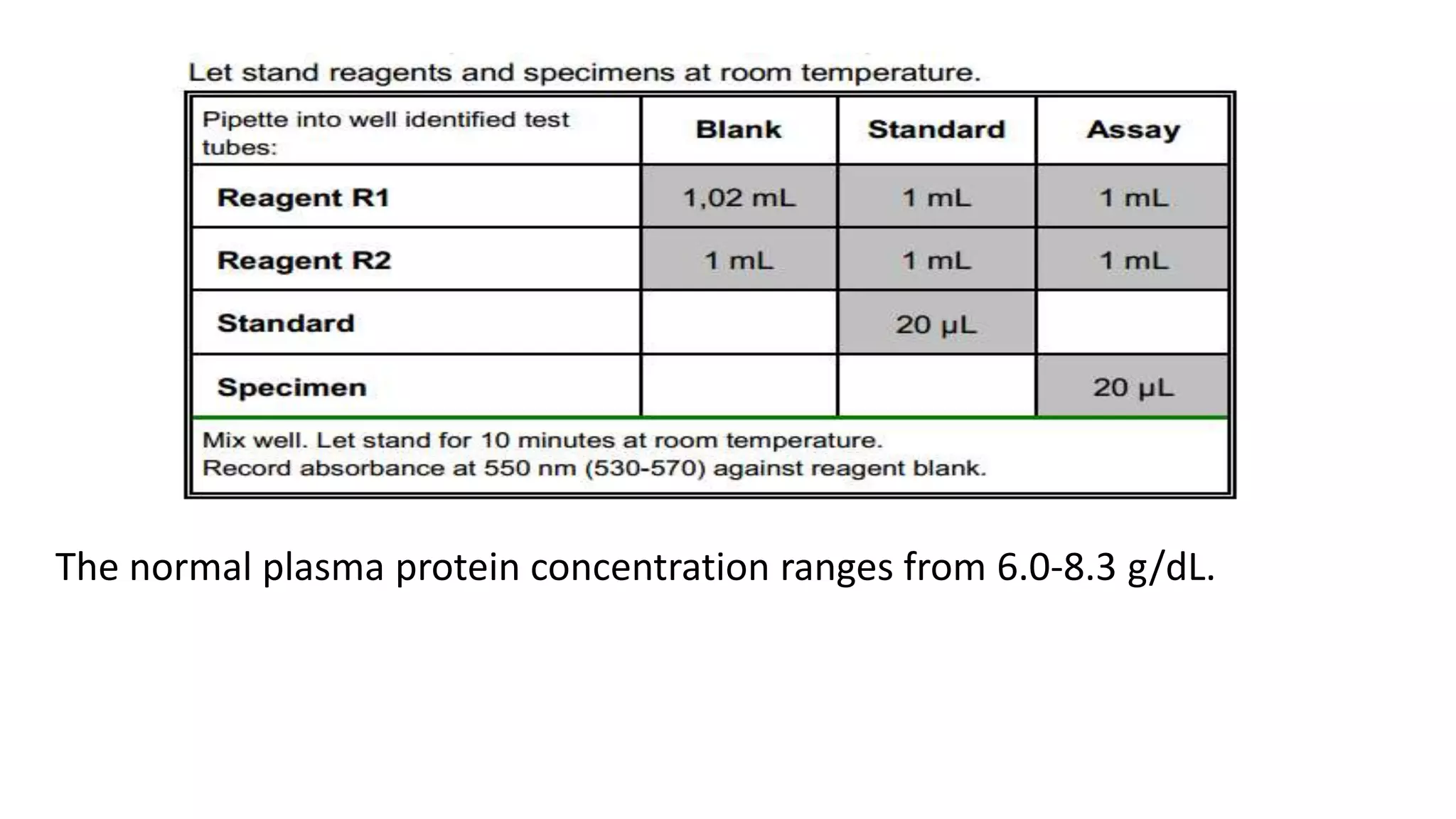
The normal plasma protein concentration ranges from 6.0-8.3 g/dL.

Estimation of serum total protein

  • 1.
    Estimation of SerumTotal Protein prepared by Mr. Samie yaseen ‫ب‬ ‫ـويا‬‫ـ‬‫ـ‬‫ك‬‫ان‬‫ز‬‫ـةكنيكى‬‫ـ‬‫ـ‬‫ـ‬‫ت‬‫ولي‬‫ـؤك‬‫ـ‬‫ـ‬‫ه‬‫د‬ ‫يا‬ ‫ـنية‬‫ـ‬‫ـ‬‫ـ‬‫ـ‬‫ق‬‫الت‬ ‫ـوك‬‫ـ‬‫ـ‬‫ـ‬‫ـ‬‫ـ‬‫ـ‬‫ـ‬‫ـ‬‫ـ‬‫ه‬‫د‬ ‫ـة‬‫ـ‬‫ـ‬‫ـ‬‫ـ‬‫ـ‬‫ـ‬‫ـ‬‫ع‬‫جام‬ Duhok Polytechnic University Duhok Polytechnic University Shekhan technical College of Health Department of Medical Lab. Technology 2nd stage
  • 2.
    Protein • Proteins aremacromolecules (a molecule with a molecular mass of several thousand or more). They are polymers built from one or more unbranched chains of amino acids. A typical protein contains 200 to 300 amino acids, but some are much smaller (peptides) and some are much larger (titin, in muscle) and range in molecular mass from approximately 6,000 for insulin to several millions for some structural proteins.
  • 3.
    • importance Every functionin the living cell depends on proteins.. • All biochemical reactions are catalyzed by enzymes, which contain protein. • The structure of cells and the extracellular matrix that surrounds all cells is largely made of the protein group collagens. Collagens are the most abundant protein in the human body. • The transport of materials in body fluids depends on proteins such as transferrin, receptors for hormones are transmembrane proteins, and transcription factors, needed to initiate the transcription of a gene, are proteins. • Proteins make up antibodies, which are a major component of the immune system.
  • 4.
    Total protein abnormalities Thetotal protein test is a rough measure of all of the proteins in the plasma. Total protein measurements can reflect: 1- nutritional status 2- kidney disease 3- liver disease and many other conditions. If total protein is abnormal, further tests must be performed to identify which protein fraction is abnormal, so that a specific diagnosis can be made.
  • 5.
    Hypoproteinemia, a totalprotein level less than the reference interval, occurs in any condition where a negative nitrogen balance exists. One cause of a low level of plasma proteins is excessive loss. Plasma proteins can be lost by 1- excretion in the urine in renal disease; 2- leakage into the gastrointestinal tract in inflammation of the digestive system; 3- and the loss of blood in open wounds, 4- internal bleeding, or extensive burns. Another circumstance producing hypoproteinemia is decreased intake either because of malnutrition or through intestinal malabsorption as seen in sprue. Without adequate dietary intake of proteins, there is a deficiency of certain essential amino acids and protein synthesis is impaired. . Additionally, hypoproteinemia may result from accelerated catabolism of proteins, such as occurs in burns, trauma, or other injuries.
  • 6.
    Hyperproteinemia, an increasein total plasma proteins, is not an actual disease state but is the result of the underlying cause, 1- dehydration. When excess water is lost from the vascular system, the proteins, because of their size, remain within the blood vessels. Although the absolute quantity of proteins remains unchanged, the concentration is elevated due to a decreased volume of solvent water. Dehydration results from a variety of conditions, including vomiting, diarrhea, excessive sweating and diabetic acidosis.
  • 7.
    Specimen Collection The specimenmost often used to determine the total protein is serum rather than plasma. A fasting specimen is not needed. Interferences in some of the methods occur in the presence of lipemia; hemolysis falsely elevates the total protein result because of the release of RBC proteins into the serum. The reference interval for serum total protein is 6.5 to 8.3 g/dL for ambulatory adults. At birth, the total protein concentration is lower, reaching adult levels by age 3. As a person ages, there is a slight decrease in albumin levels. Lower total protein levels are also seen in pregnancy.
  • 8.
    Principle- Biuret Method •The Biuret reagent is made of (NaOH) and copper (II) sulfate (CuSO4). • A blue reagent which turns violet in the presence of proteins. • The intensity of the color is directly proportional to the protein concentration. Mohammed Laqqan
  • 9.
    The normal plasmaprotein concentration ranges from 6.0-8.3 g/dL.