CONTROL AND COORDINATION
Nervous System
The changes in the environment to which living organisms
respond are called stimuli. Eg :- heat, cold, sound, smell, taste,
touch, pressure, gravity, water etc.
Living organisms respond to stimuli in the form of body
movements.
Coordination :-
For a proper response to a stimulus many organs in the body
should work together. The working together of various organs in
an organism to produce a proper response to a stimulus is called
coordination.
i) In animals control and co ordination is done by the nervous
system and endocrine system.
ii) In plants control and co ordination is done by chemical
substances called plant hormones or phytohormones.
Coordination in animals
In animals control and co ordination is done by
the –
Nervous system
ENDOCRINE SYSTEM
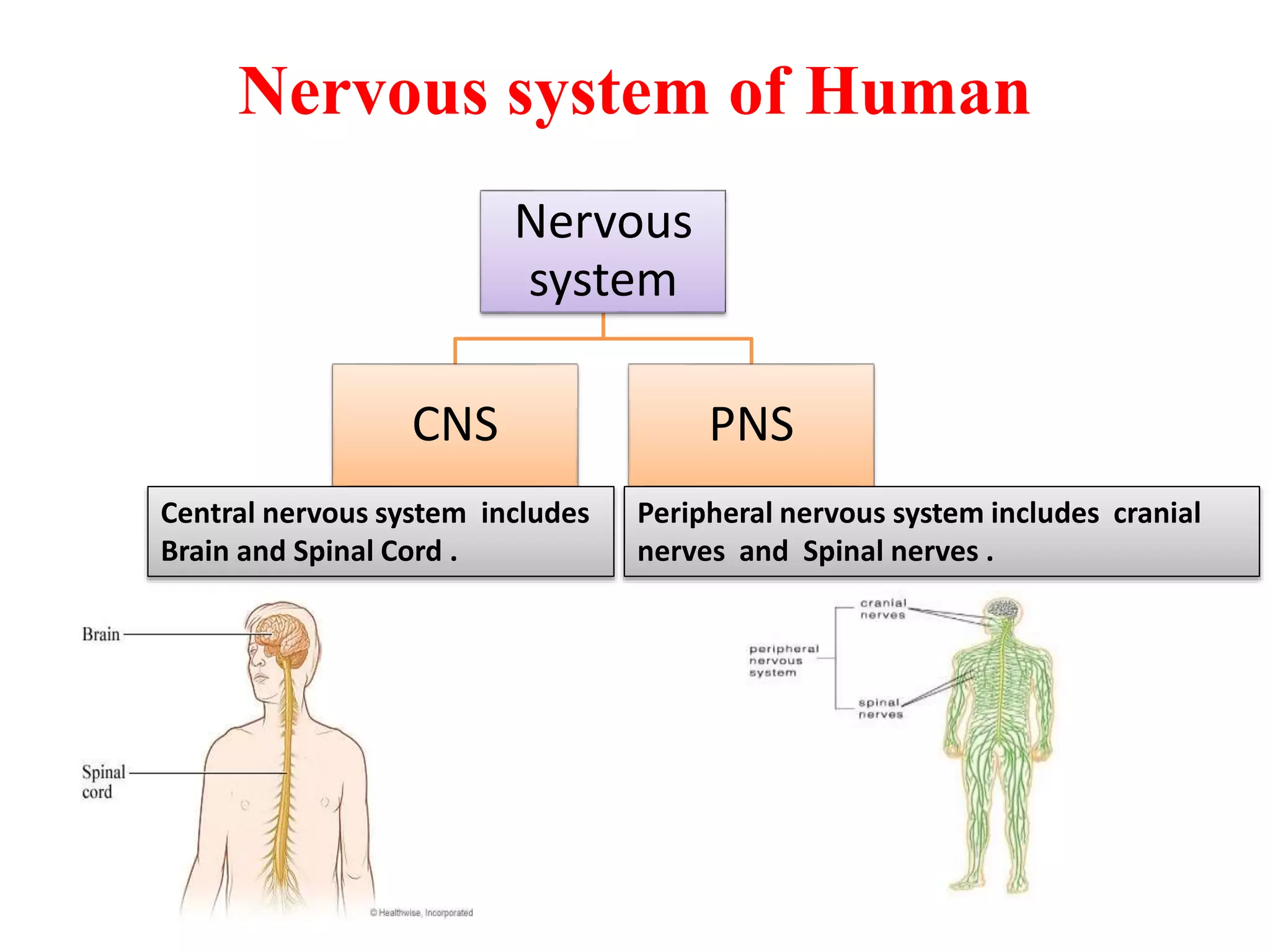
Nervous system of Human
Nervous
system
CNS PNS
Central nervous system includes
Brain and Spinal Cord .
Peripheral nervous system includes cranial
nerves and Spinal nerves .
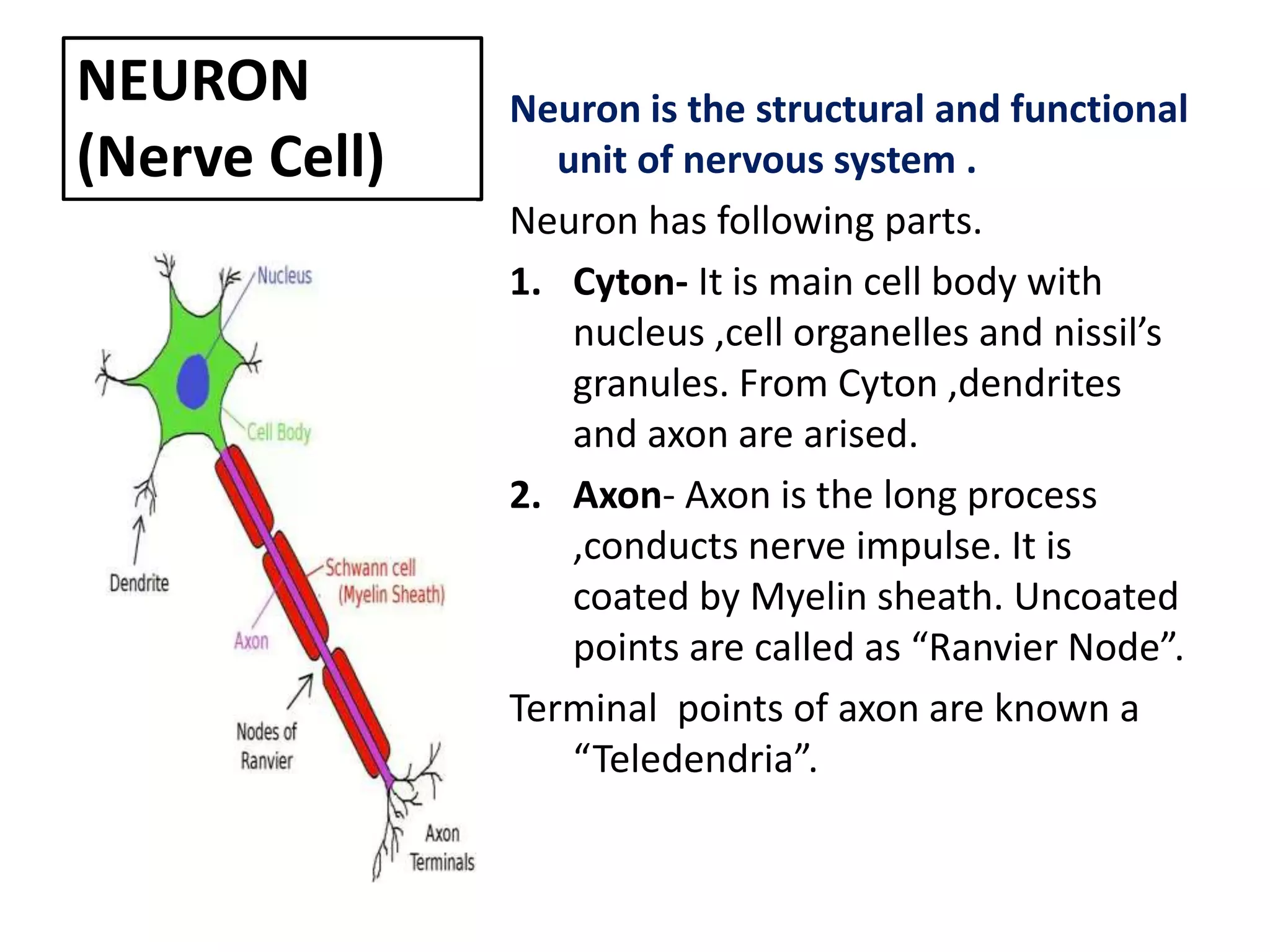
NEURON
(Nerve Cell)
Neuron is the structural and functional
unit of nervous system .
Neuron has following parts.
1. Cyton- It is main cell body with
nucleus ,cell organelles and nissil’s
granules. From Cyton ,dendrites
and axon are arised.
2. Axon- Axon is the long process
,conducts nerve impulse. It is
coated by Myelin sheath. Uncoated
points are called as “Ranvier Node”.
Terminal points of axon are known a
“Teledendria”.
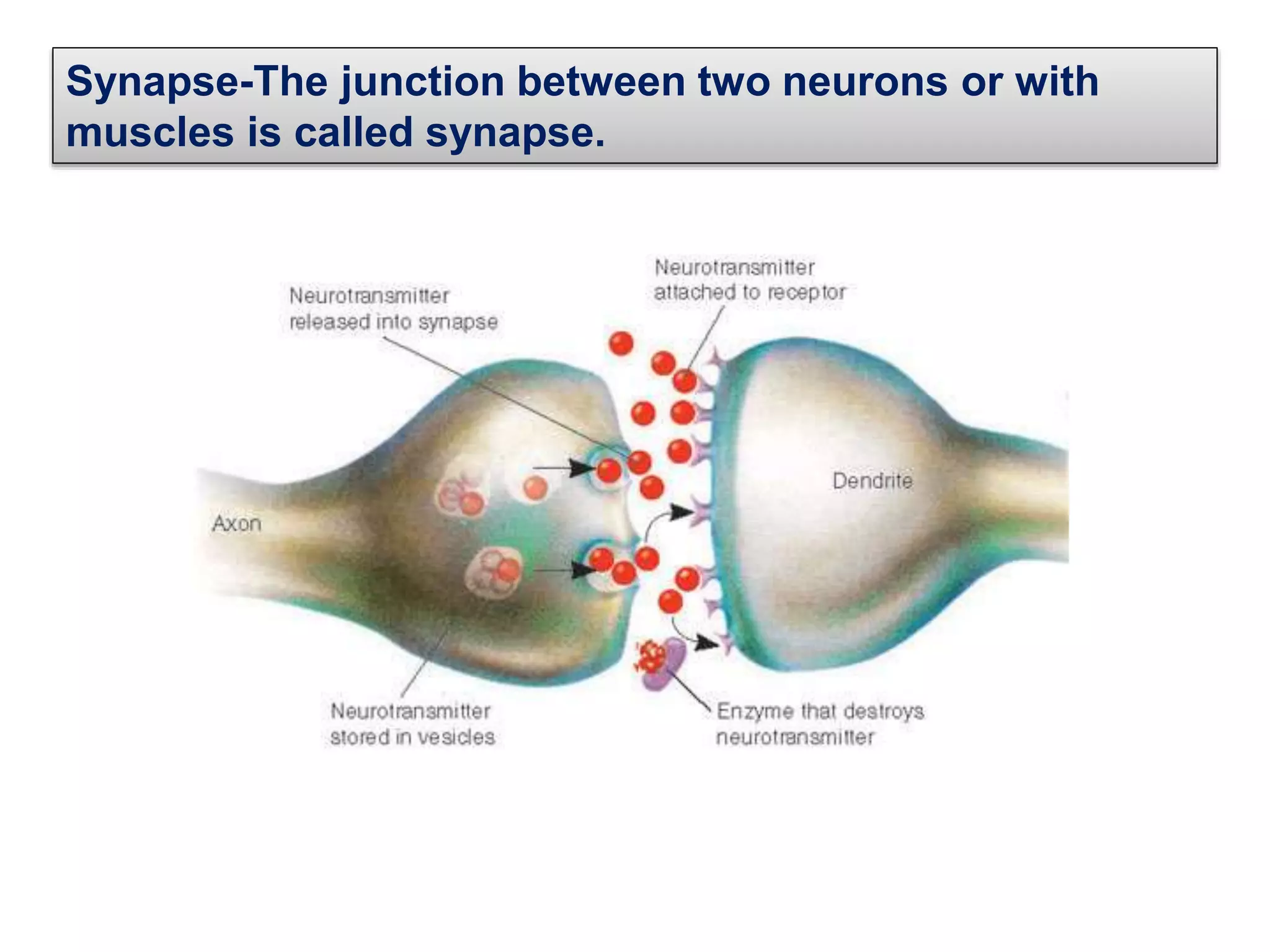
Synapse-The junction between two neurons or with
muscles is called synapse.
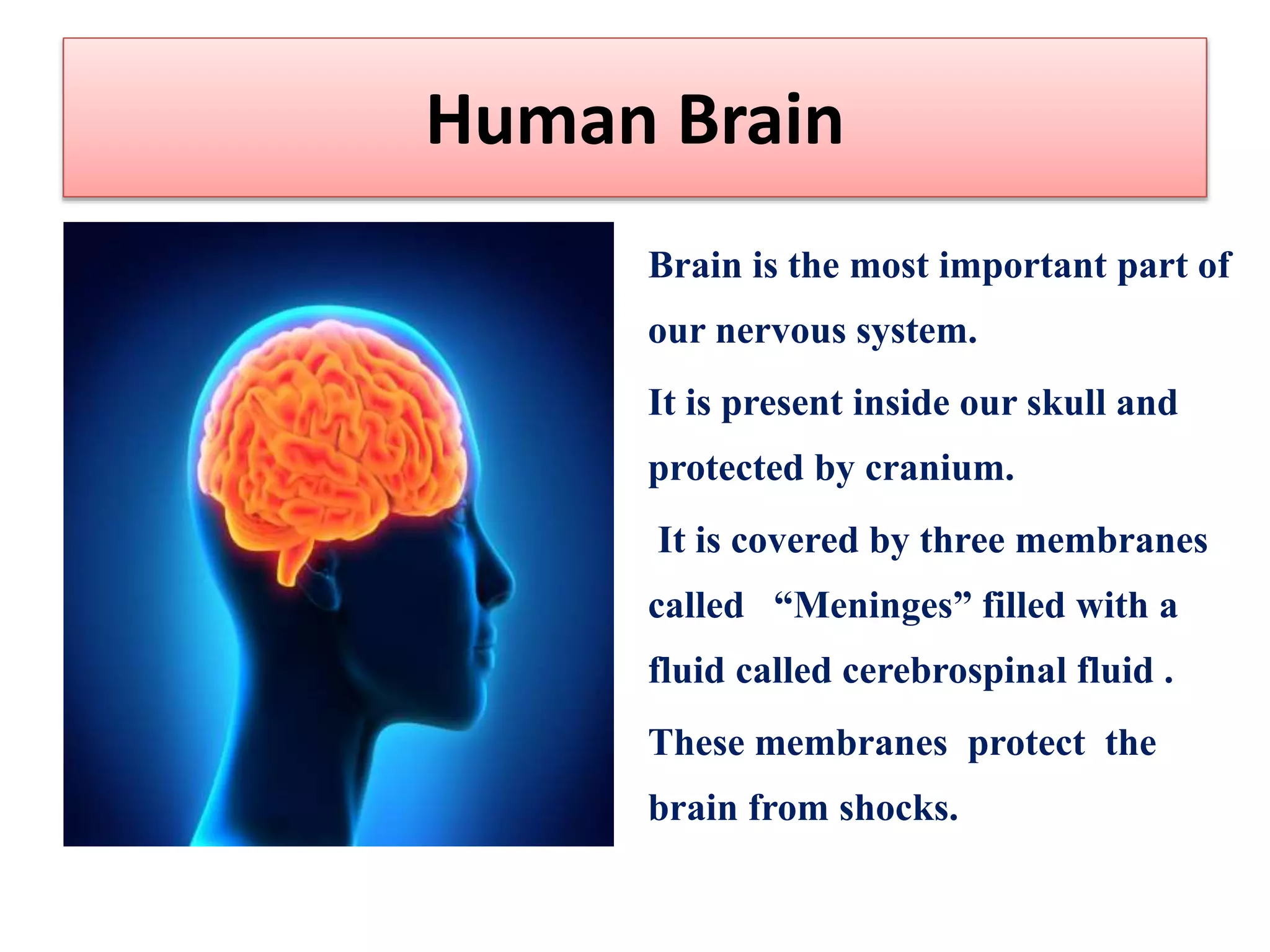
Human Brain
Brain is the most important part of
our nervous system.
It is present inside our skull and
protected by cranium.
It is covered by three membranes
called “Meninges” filled with a
fluid called cerebrospinal fluid .
These membranes protect the
brain from shocks.
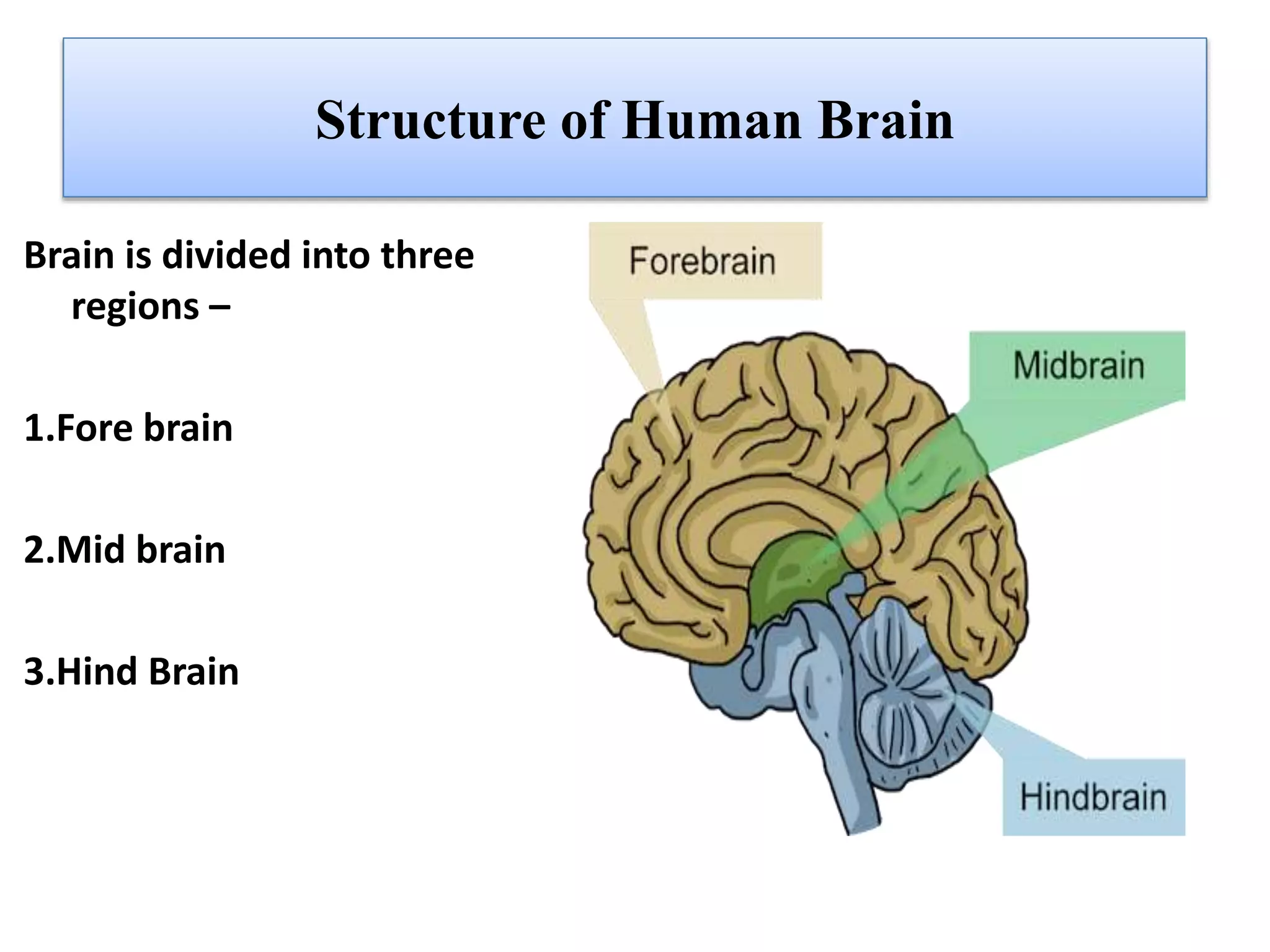
Structure of Human Brain
Brain is divided into three
regions –
1.Fore brain
2.Mid brain
3.Hind Brain
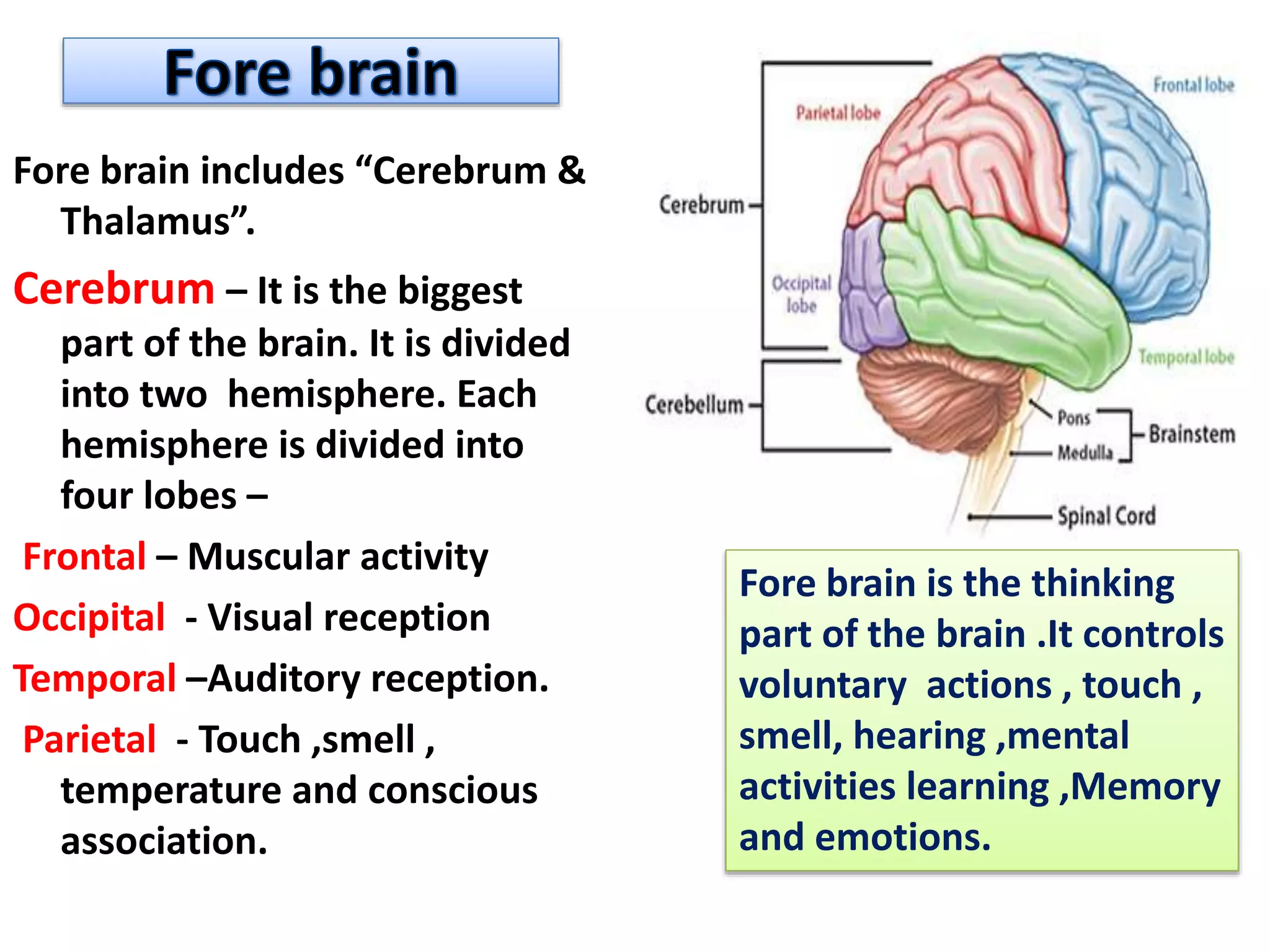
Fore brain includes “Cerebrum &
Thalamus”.
Cerebrum – It is the biggest
part of the brain. It is divided
into two hemisphere. Each
hemisphere is divided into
four lobes –
Frontal – Muscular activity
Occipital - Visual reception
Temporal –Auditory reception.
Parietal - Touch ,smell ,
temperature and conscious
association.
Fore brain is the thinking
part of the brain .It controls
voluntary actions , touch ,
smell, hearing ,mental
activities learning ,Memory
and emotions.
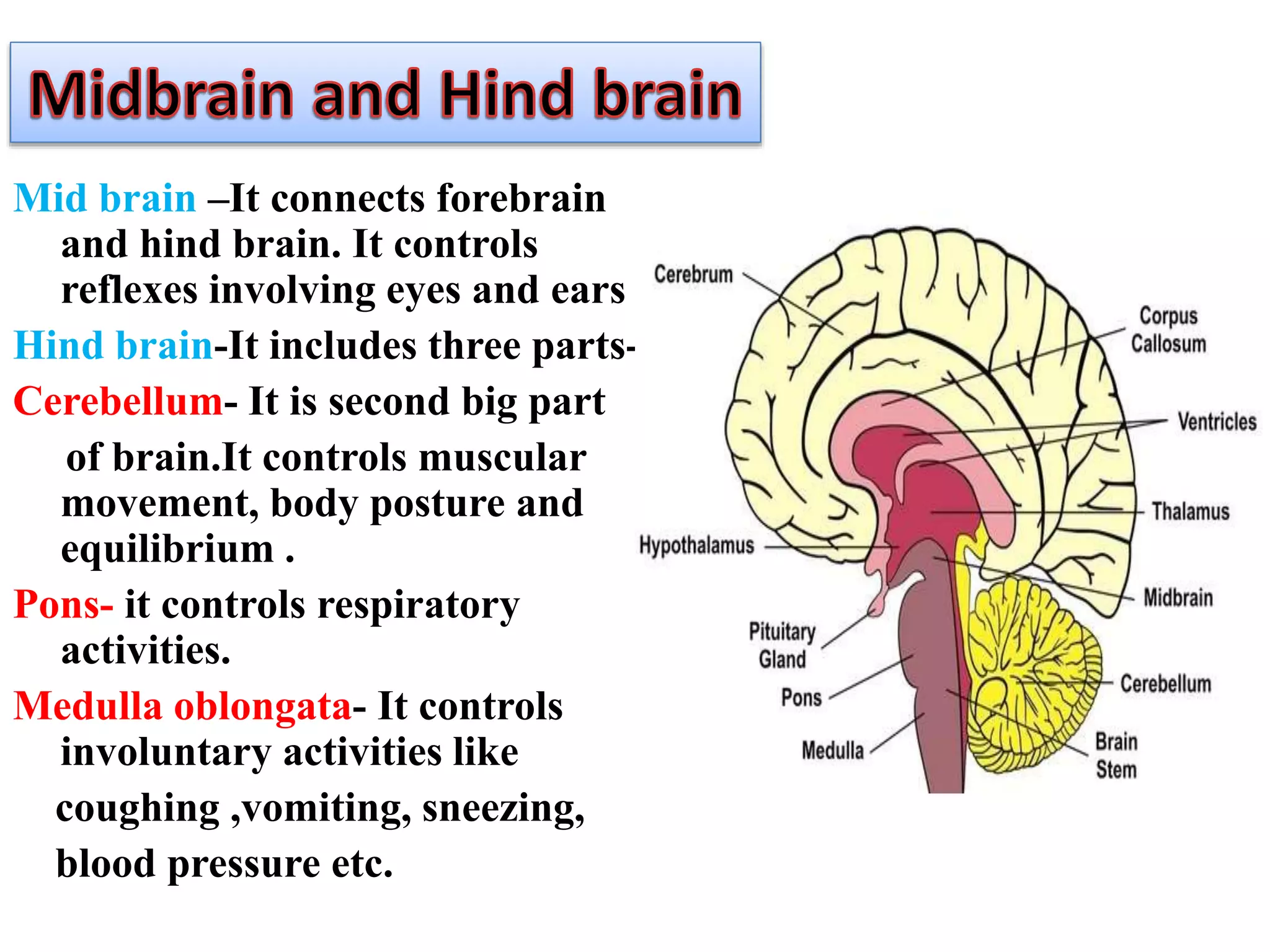
Mid brain –It connects forebrain
and hind brain. It controls
reflexes involving eyes and ears .
Hind brain-It includes three parts-
Cerebellum- It is second big part
of brain.It controls muscular
movement, body posture and
equilibrium .
Pons- it controls respiratory
activities.
Medulla oblongata- It controls
involuntary activities like
coughing ,vomiting, sneezing,
blood pressure etc.
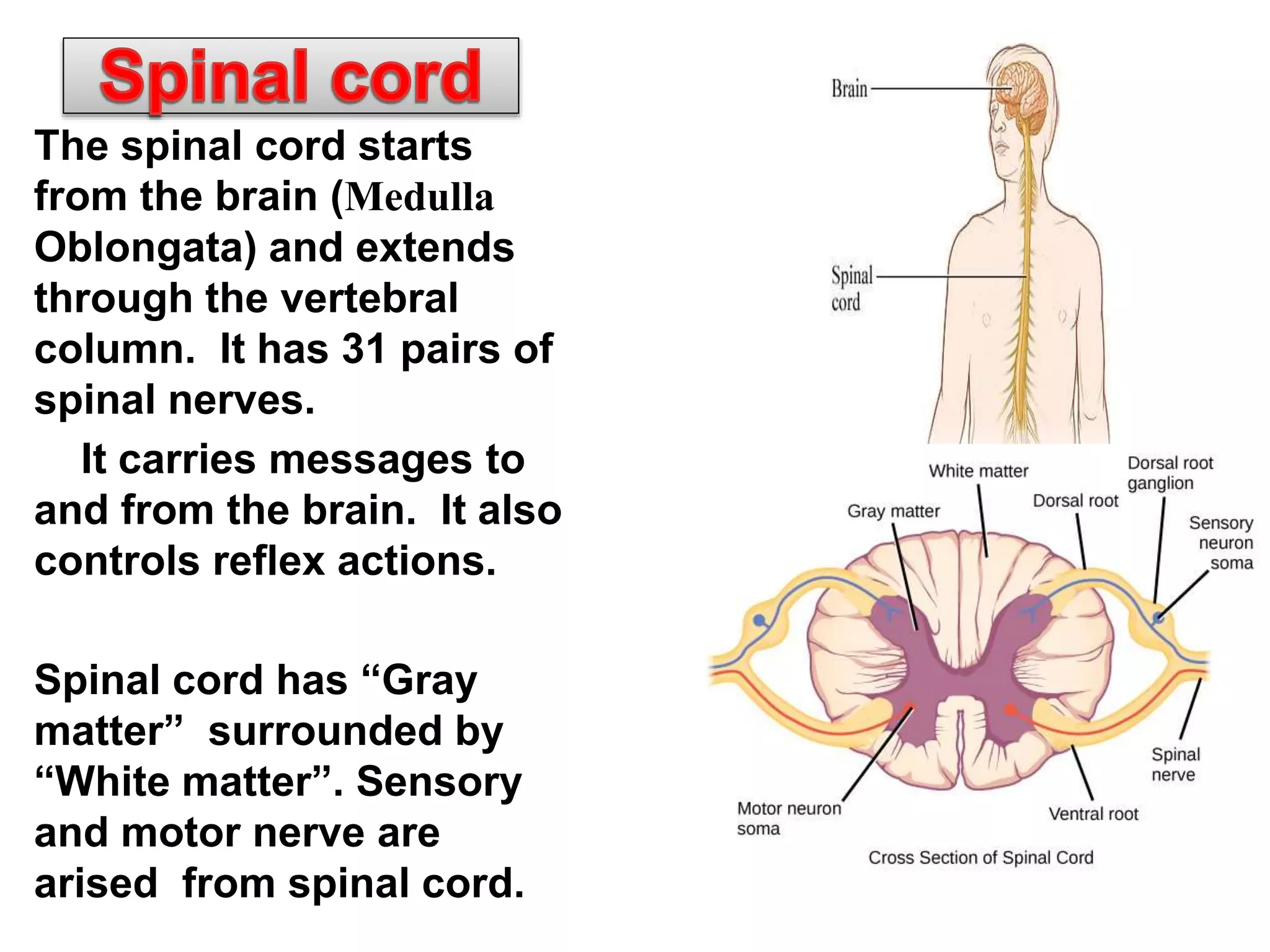
The spinal cord starts
from the brain (Medulla
Oblongata) and extends
through the vertebral
column. It has 31 pairs of
spinal nerves.
It carries messages to
and from the brain. It also
controls reflex actions.
Spinal cord has “Gray
matter” surrounded by
“White matter”. Sensory
and motor nerve are
arised from spinal cord.
Reflex action is a sudden,
unconcious and involuntary
response of the effectors to a
stimulus.
Ex :- We suddenly
withdraw our hand if we
suddenly touch a hot object.
In this reflex action, the
nerves in the skin (receptor)
detects the heat and passes
the message through the
sensory nerves to the spinal
cord. Then the information
passes through the motor
nerves to the muscles
(effector) of the hand and we
withdraw our hand.
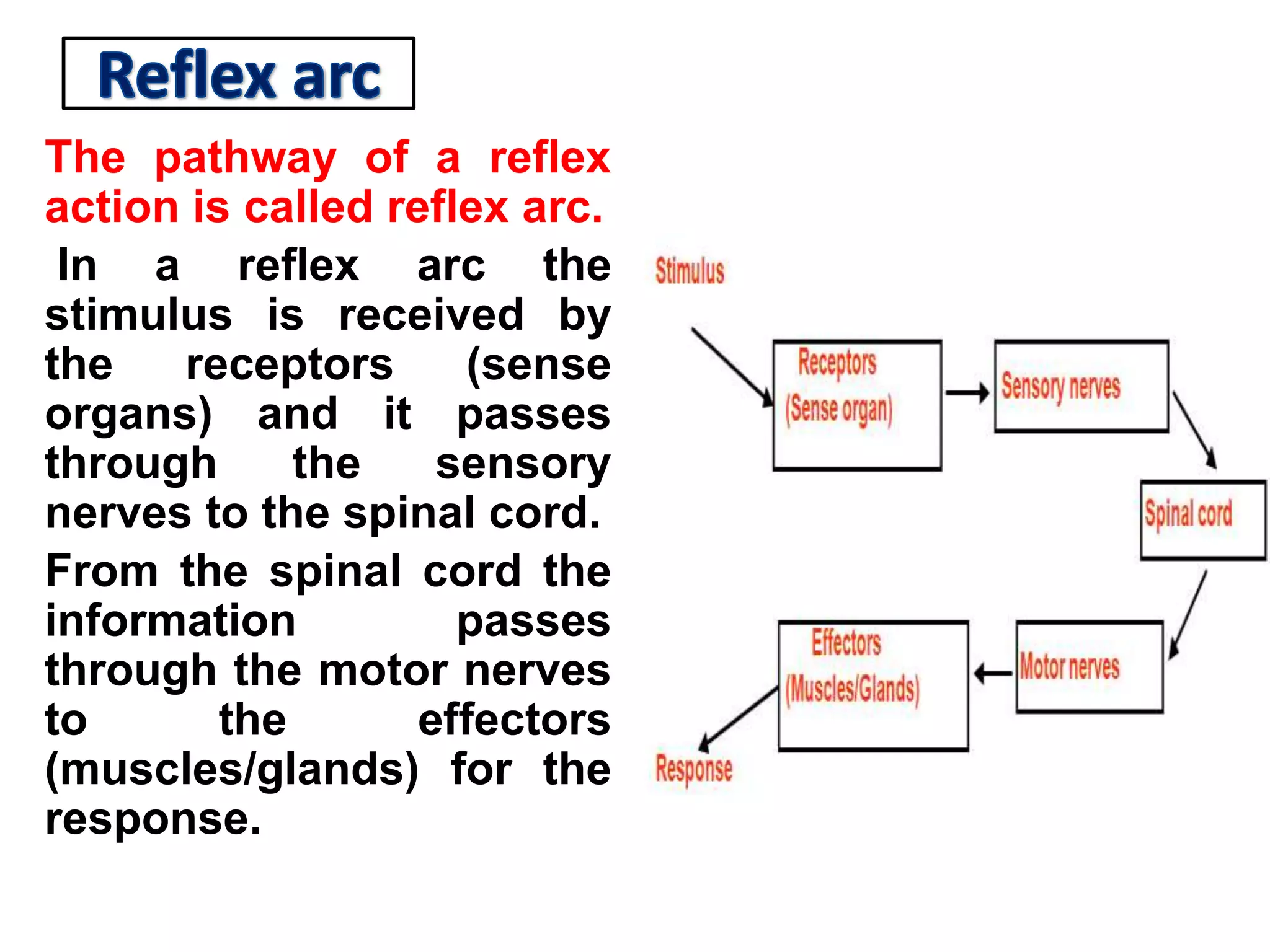
The pathway of a reflex
action is called reflex arc.
In a reflex arc the
stimulus is received by
the receptors (sense
organs) and it passes
through the sensory
nerves to the spinal cord.
From the spinal cord the
information passes
through the motor nerves
to the effectors
(muscles/glands) for the
response.
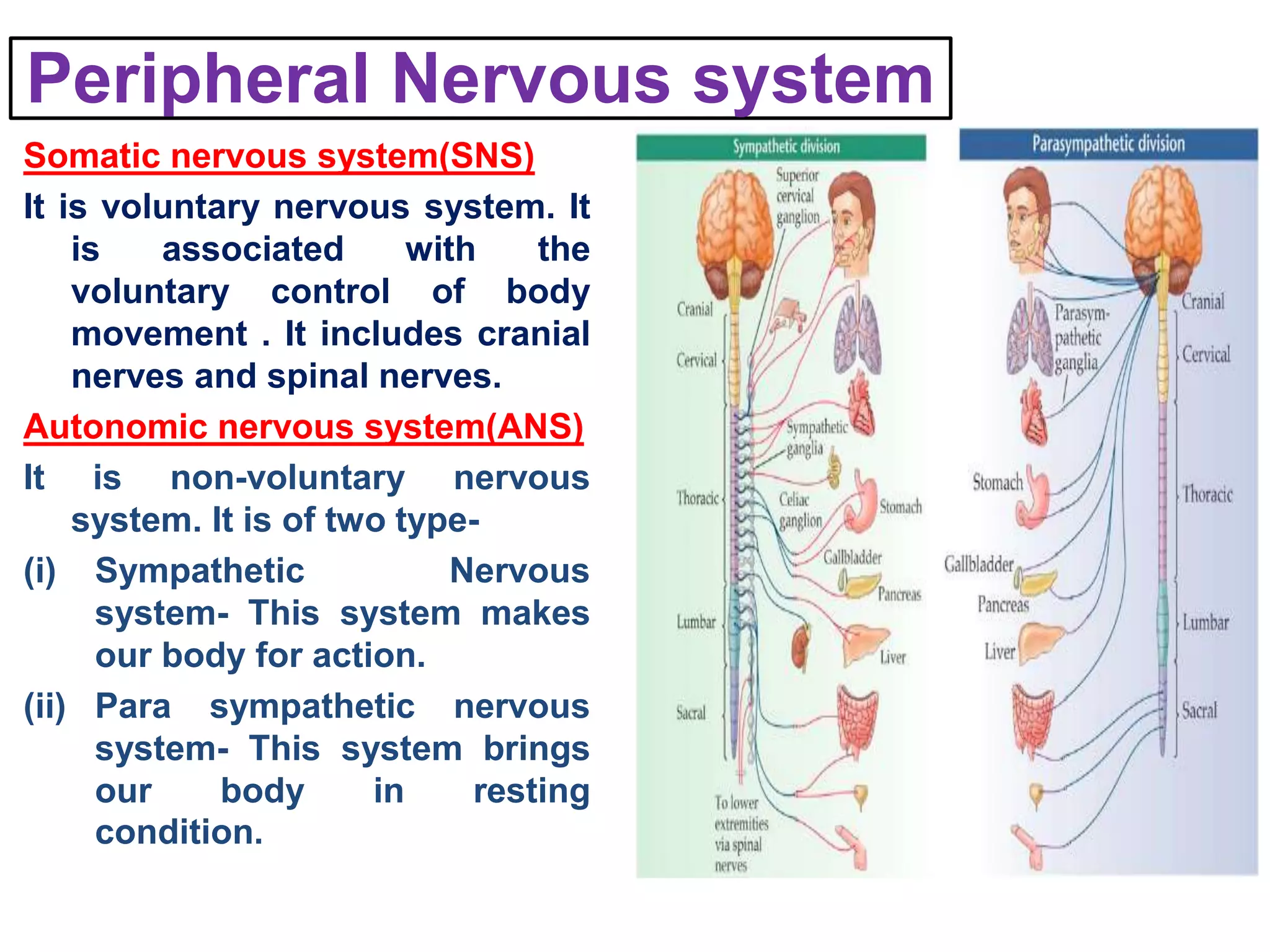
Peripheral Nervous system
Somatic nervous system(SNS)
It is voluntary nervous system. It
is associated with the
voluntary control of body
movement . It includes cranial
nerves and spinal nerves.
Autonomic nervous system(ANS)
It is non-voluntary nervous
system. It is of two type-
(i) Sympathetic Nervous
system- This system makes
our body for action.
(ii) Para sympathetic nervous
system- This system brings
our body in resting
condition.

Control and coordination (nervous system)

  • 1.
  • 2.
    The changes inthe environment to which living organisms respond are called stimuli. Eg :- heat, cold, sound, smell, taste, touch, pressure, gravity, water etc. Living organisms respond to stimuli in the form of body movements. Coordination :- For a proper response to a stimulus many organs in the body should work together. The working together of various organs in an organism to produce a proper response to a stimulus is called coordination. i) In animals control and co ordination is done by the nervous system and endocrine system. ii) In plants control and co ordination is done by chemical substances called plant hormones or phytohormones.
  • 3.
    Coordination in animals Inanimals control and co ordination is done by the – Nervous system ENDOCRINE SYSTEM
  • 4.
    Nervous system ofHuman Nervous system CNS PNS Central nervous system includes Brain and Spinal Cord . Peripheral nervous system includes cranial nerves and Spinal nerves .
  • 5.
    NEURON (Nerve Cell) Neuron isthe structural and functional unit of nervous system . Neuron has following parts. 1. Cyton- It is main cell body with nucleus ,cell organelles and nissil’s granules. From Cyton ,dendrites and axon are arised. 2. Axon- Axon is the long process ,conducts nerve impulse. It is coated by Myelin sheath. Uncoated points are called as “Ranvier Node”. Terminal points of axon are known a “Teledendria”.
  • 6.
    Synapse-The junction betweentwo neurons or with muscles is called synapse.
  • 7.
    Human Brain Brain isthe most important part of our nervous system. It is present inside our skull and protected by cranium. It is covered by three membranes called “Meninges” filled with a fluid called cerebrospinal fluid . These membranes protect the brain from shocks.
  • 8.
    Structure of HumanBrain Brain is divided into three regions – 1.Fore brain 2.Mid brain 3.Hind Brain
  • 9.
    Fore brain includes“Cerebrum & Thalamus”. Cerebrum – It is the biggest part of the brain. It is divided into two hemisphere. Each hemisphere is divided into four lobes – Frontal – Muscular activity Occipital - Visual reception Temporal –Auditory reception. Parietal - Touch ,smell , temperature and conscious association. Fore brain is the thinking part of the brain .It controls voluntary actions , touch , smell, hearing ,mental activities learning ,Memory and emotions.
  • 10.
    Mid brain –Itconnects forebrain and hind brain. It controls reflexes involving eyes and ears . Hind brain-It includes three parts- Cerebellum- It is second big part of brain.It controls muscular movement, body posture and equilibrium . Pons- it controls respiratory activities. Medulla oblongata- It controls involuntary activities like coughing ,vomiting, sneezing, blood pressure etc.
  • 11.
    The spinal cordstarts from the brain (Medulla Oblongata) and extends through the vertebral column. It has 31 pairs of spinal nerves. It carries messages to and from the brain. It also controls reflex actions. Spinal cord has “Gray matter” surrounded by “White matter”. Sensory and motor nerve are arised from spinal cord.
  • 12.
    Reflex action isa sudden, unconcious and involuntary response of the effectors to a stimulus. Ex :- We suddenly withdraw our hand if we suddenly touch a hot object. In this reflex action, the nerves in the skin (receptor) detects the heat and passes the message through the sensory nerves to the spinal cord. Then the information passes through the motor nerves to the muscles (effector) of the hand and we withdraw our hand.
  • 13.
    The pathway ofa reflex action is called reflex arc. In a reflex arc the stimulus is received by the receptors (sense organs) and it passes through the sensory nerves to the spinal cord. From the spinal cord the information passes through the motor nerves to the effectors (muscles/glands) for the response.
  • 14.
    Peripheral Nervous system Somaticnervous system(SNS) It is voluntary nervous system. It is associated with the voluntary control of body movement . It includes cranial nerves and spinal nerves. Autonomic nervous system(ANS) It is non-voluntary nervous system. It is of two type- (i) Sympathetic Nervous system- This system makes our body for action. (ii) Para sympathetic nervous system- This system brings our body in resting condition.