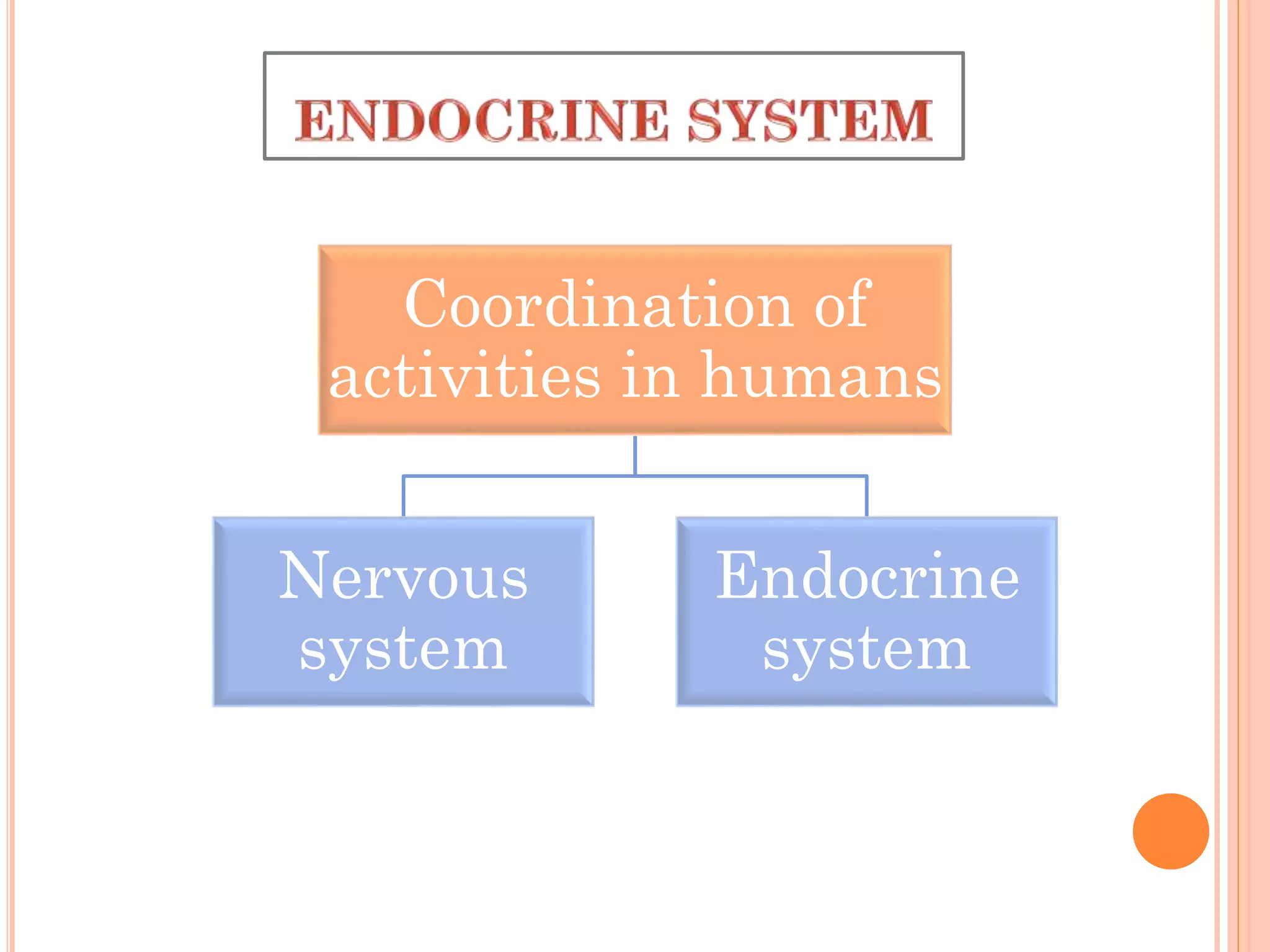
Coordination of
activities in humans
Nervous
system
Endocrine
system
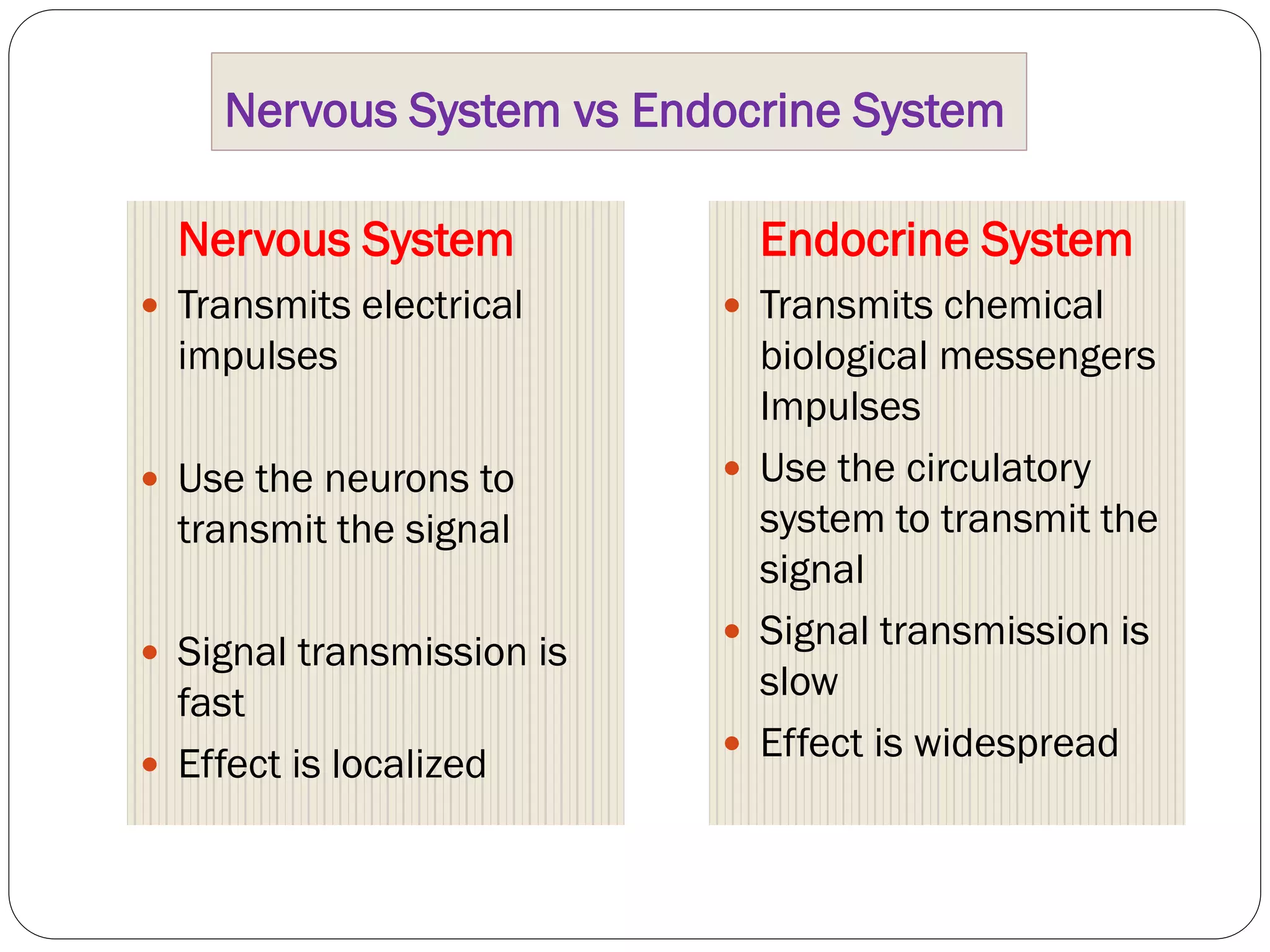
Nervous System
 Transmits electrical
impulses
 Use the neurons to
transmit the signal
 Signal transmission is
fast
 Effect is localized
Endocrine System
 Transmits chemical
biological messengers
Impulses
 Use the circulatory
system to transmit the
signal
 Signal transmission is
slow
 Effect is widespread
Nervous System vs Endocrine System
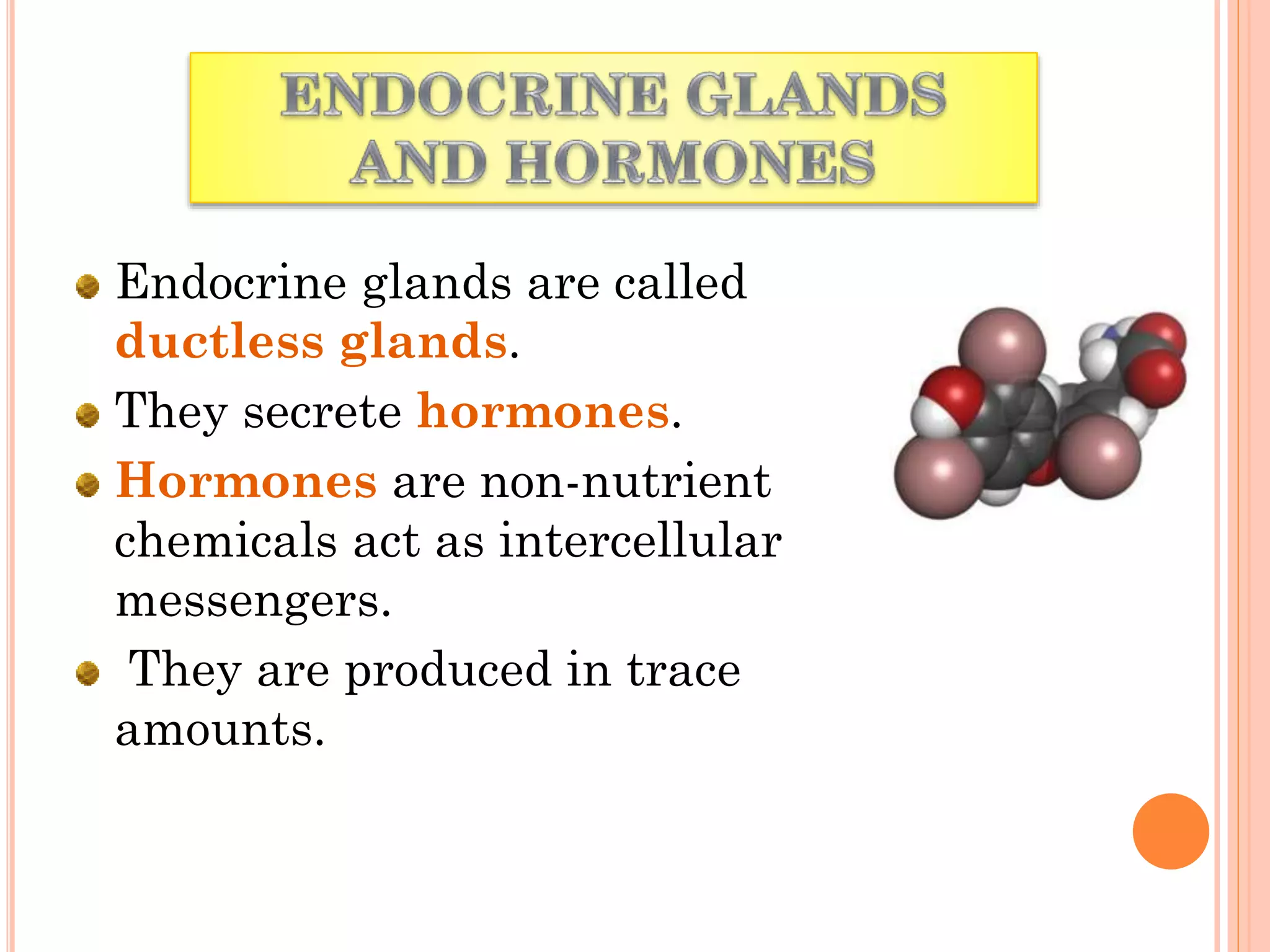
Endocrine glands are called
ductless glands.
They secrete hormones.
Hormones are non-nutrient
chemicals act as intercellular
messengers.
They are produced in trace
amounts.
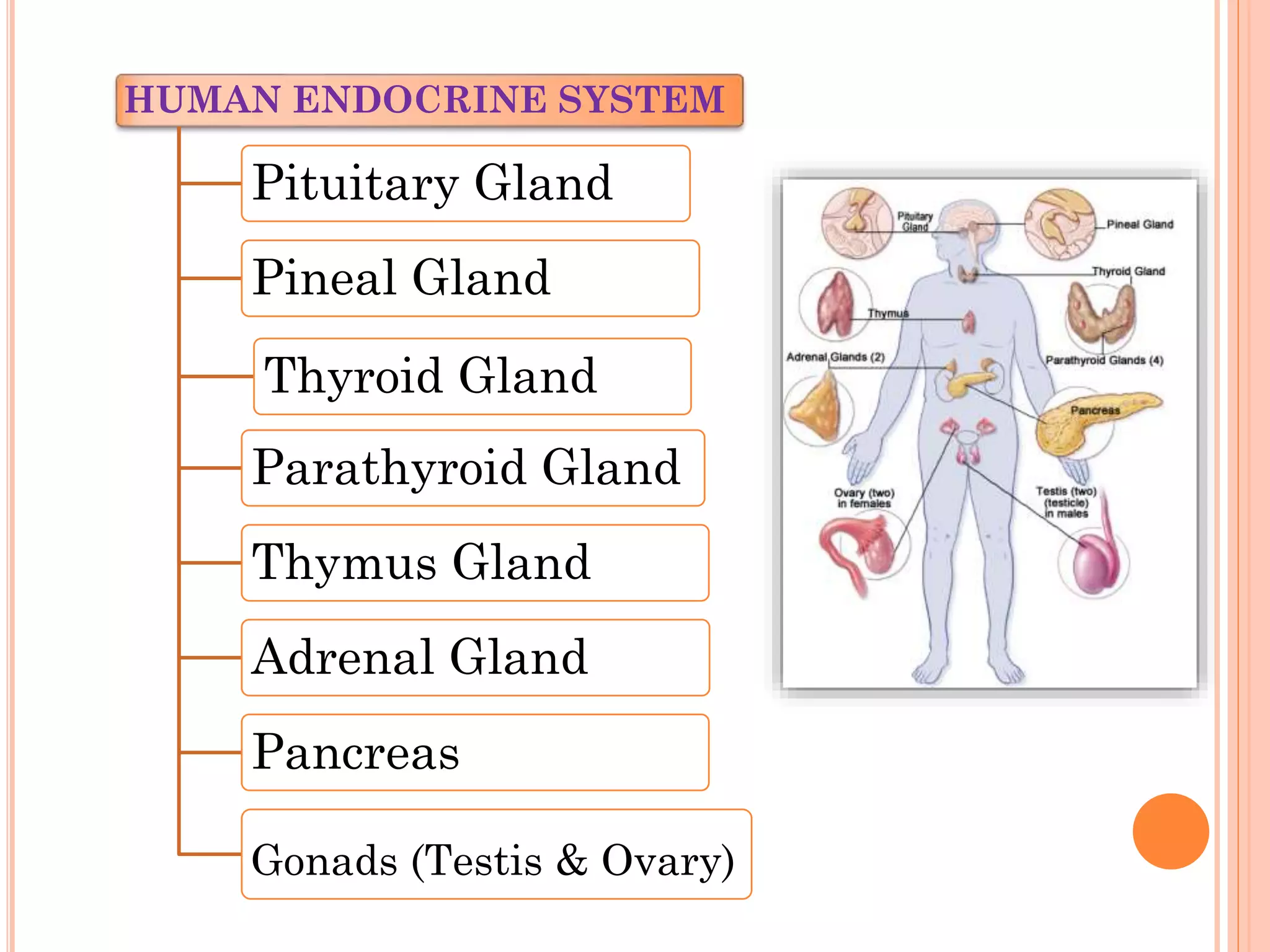
HUMAN ENDOCRINE SYSTEM
Pituitary Gland
Pineal Gland
Thyroid Gland
Parathyroid Gland
Thymus Gland
Adrenal Gland
Pancreas
Gonads (Testis & Ovary)
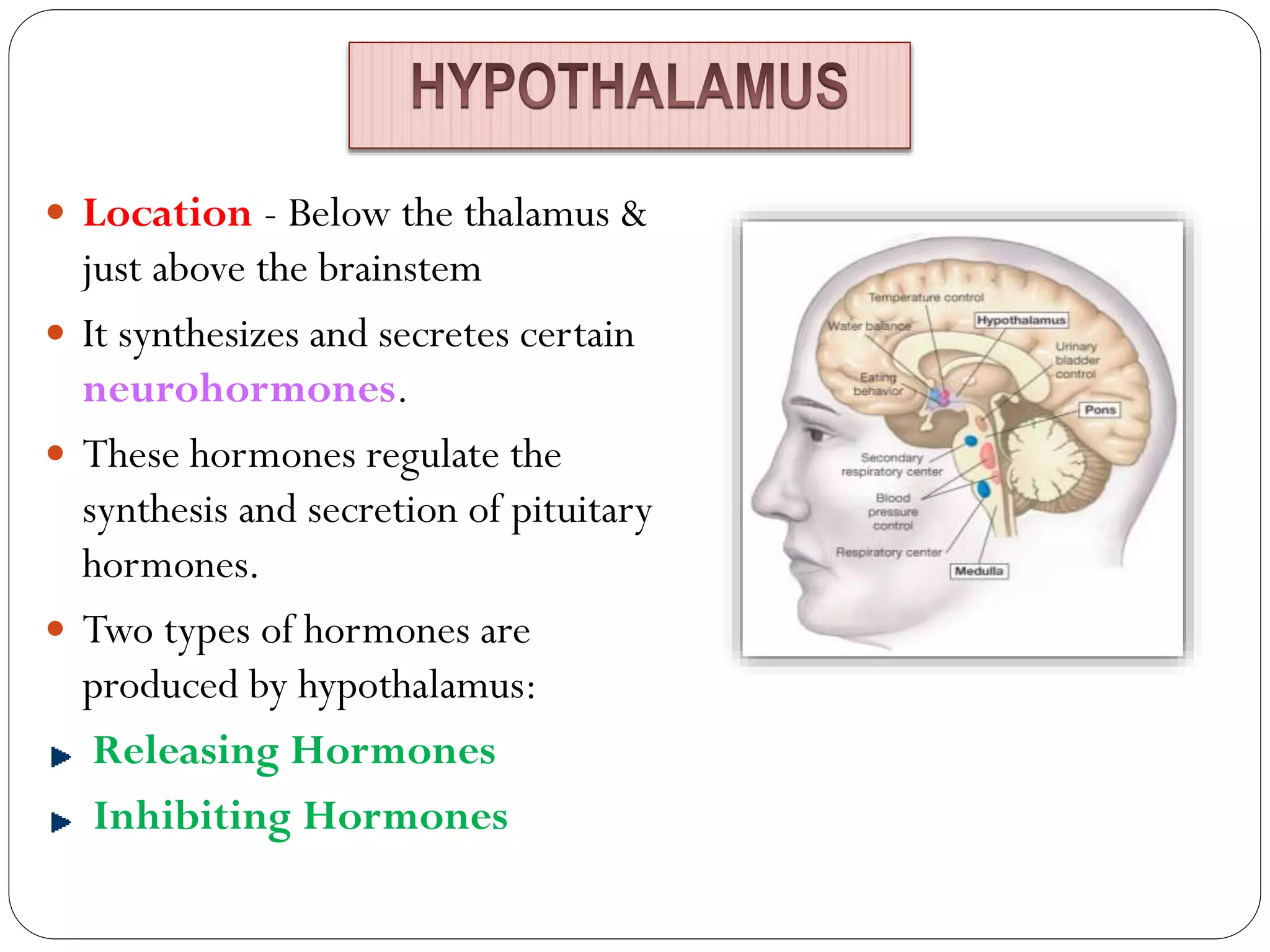
 Location - Below the thalamus &
just above the brainstem
 It synthesizes and secretes certain
neurohormones.
 These hormones regulate the
synthesis and secretion of pituitary
hormones.
 Two types of hormones are
produced by hypothalamus:
Releasing Hormones
Inhibiting Hormones
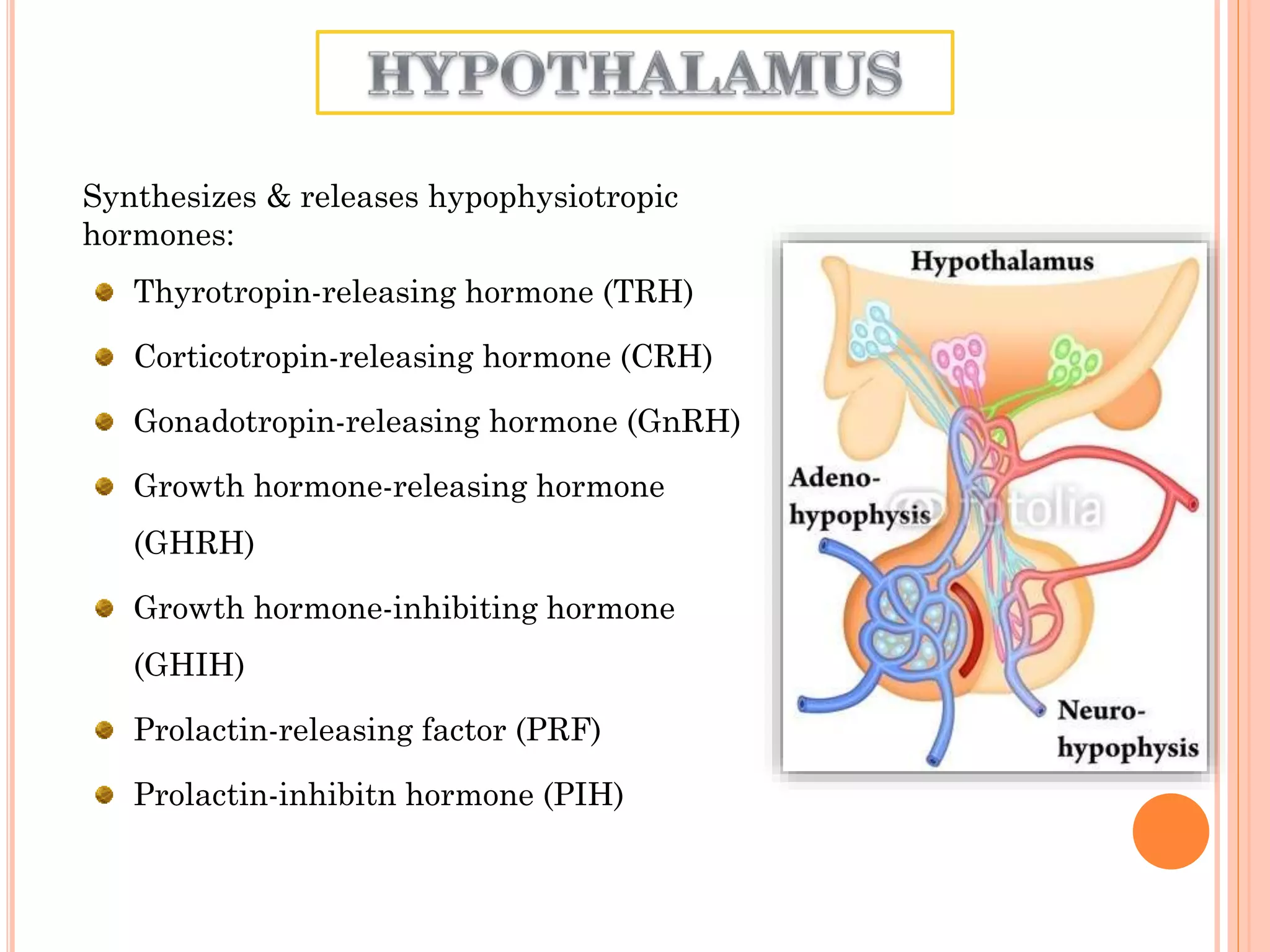
Synthesizes & releases hypophysiotropic
hormones:
Thyrotropin-releasing hormone (TRH)
Corticotropin-releasing hormone (CRH)
Gonadotropin-releasing hormone (GnRH)
Growth hormone-releasing hormone
(GHRH)
Growth hormone-inhibiting hormone
(GHIH)
Prolactin-releasing factor (PRF)
Prolactin-inhibitn hormone (PIH)
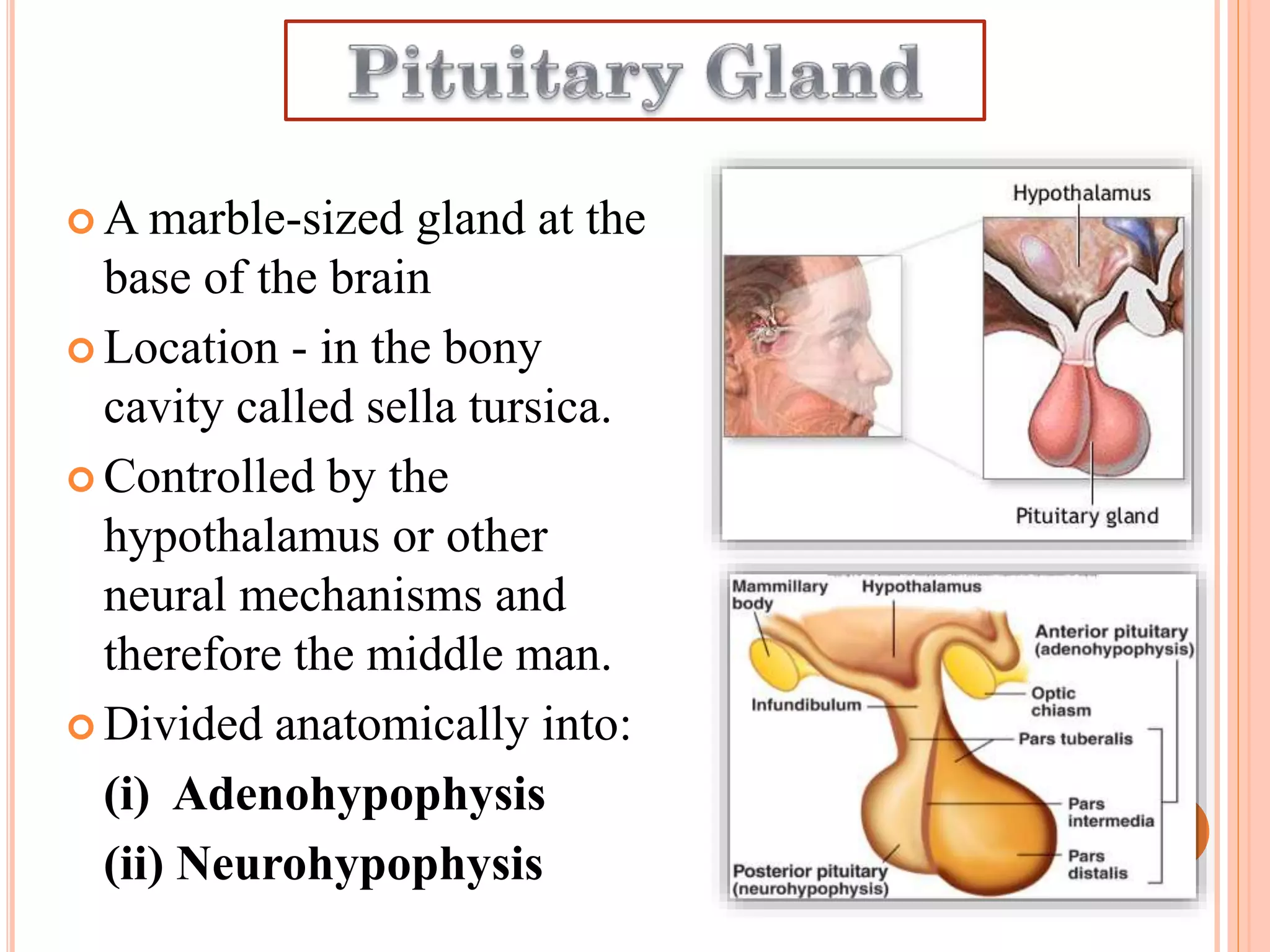
ï‚ą A marble-sized gland at the
base of the brain
ï‚ą Location - in the bony
cavity called sella tursica.
ï‚ą Controlled by the
hypothalamus or other
neural mechanisms and
therefore the middle man.
ï‚ą Divided anatomically into:
(i) Adenohypophysis
(ii) Neurohypophysis
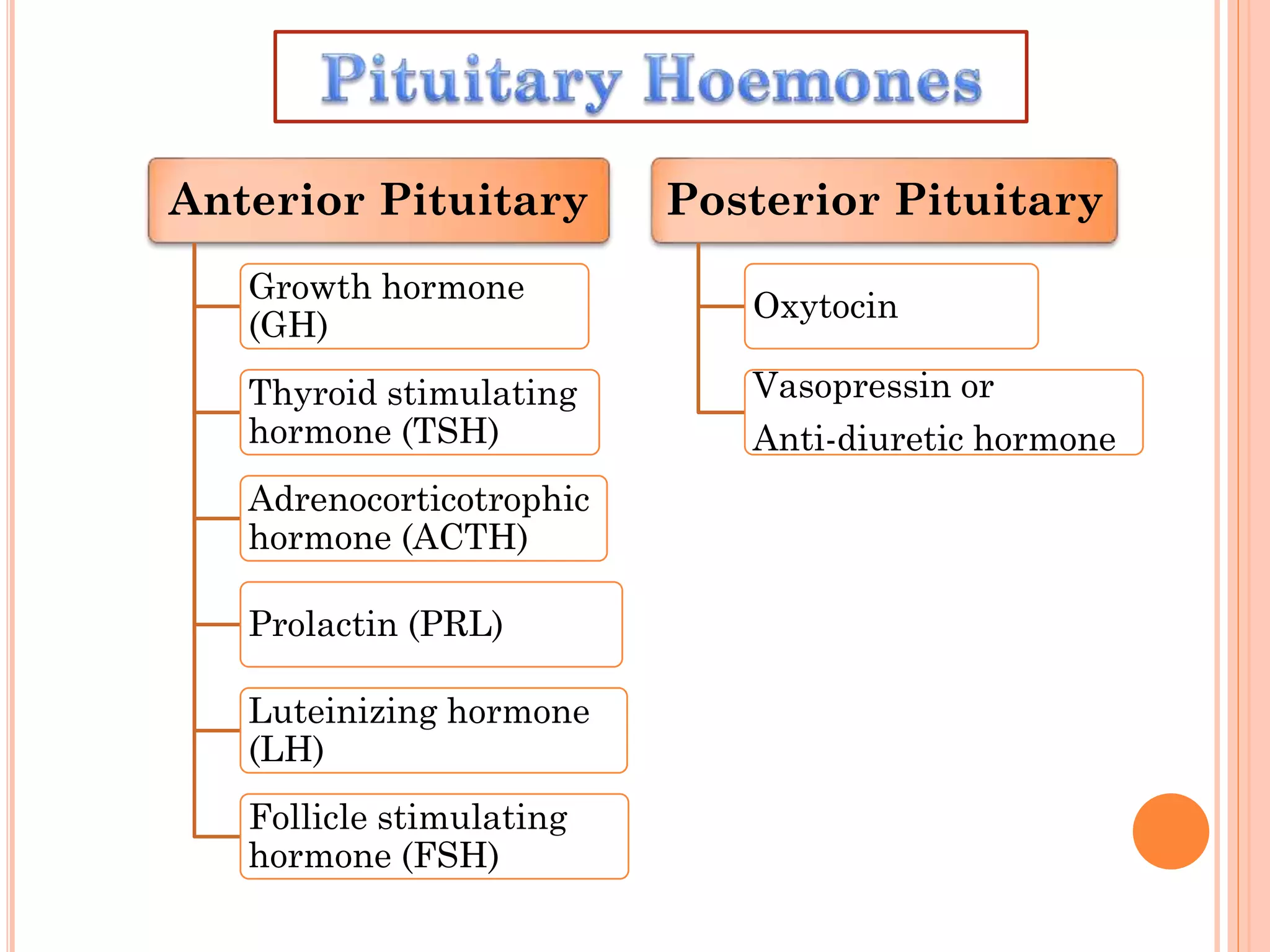
Anterior Pituitary
Growth hormone
(GH)
Thyroid stimulating
hormone (TSH)
Adrenocorticotrophic
hormone (ACTH)
Prolactin (PRL)
Luteinizing hormone
(LH)
Follicle stimulating
hormone (FSH)
Posterior Pituitary
Oxytocin
Vasopressin or
Anti-diuretic hormone
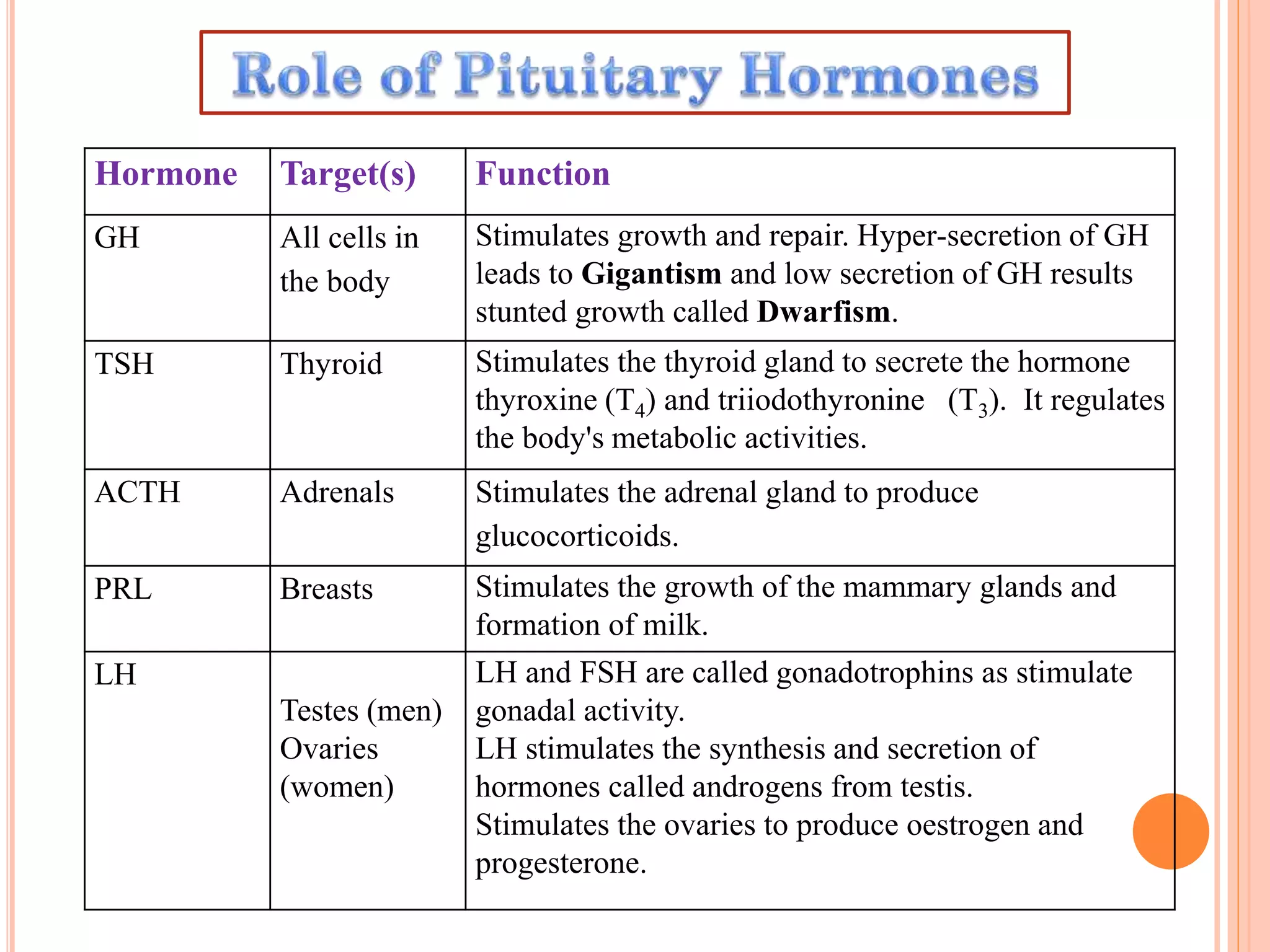
Hormone Target(s) Function
GH All cells in
the body
Stimulates growth and repair. Hyper-secretion of GH
leads to Gigantism and low secretion of GH results
stunted growth called Dwarfism.
TSH Thyroid Stimulates the thyroid gland to secrete the hormone
thyroxine (T4) and triiodothyronine (T3). It regulates
the body's metabolic activities.
ACTH Adrenals Stimulates the adrenal gland to produce
glucocorticoids.
PRL Breasts Stimulates the growth of the mammary glands and
formation of milk.
LH
Testes (men)
Ovaries
(women)
LH and FSH are called gonadotrophins as stimulate
gonadal activity.
LH stimulates the synthesis and secretion of
hormones called androgens from testis.
Stimulates the ovaries to produce oestrogen and
progesterone.
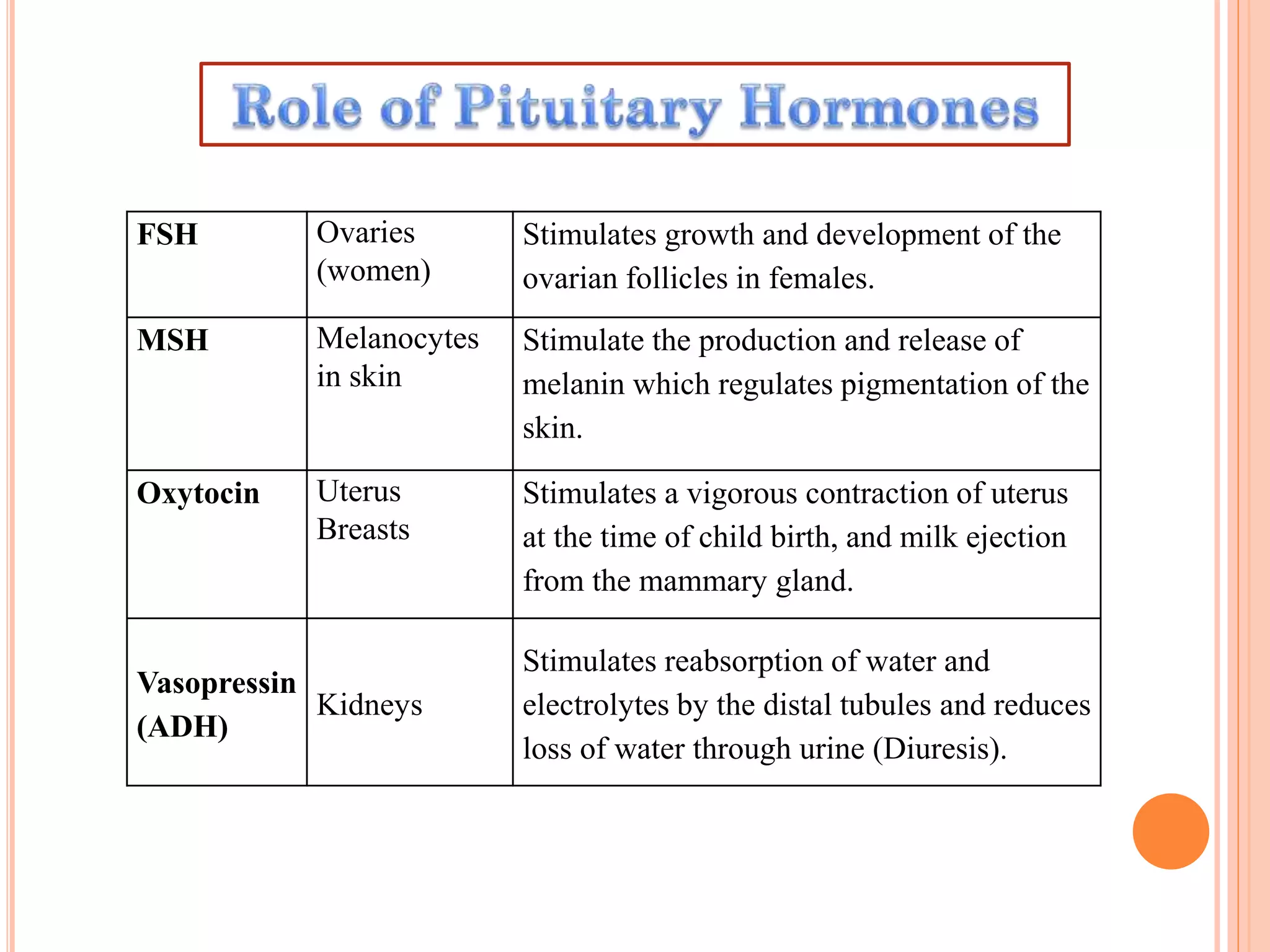
FSH Ovaries
(women)
Stimulates growth and development of the
ovarian follicles in females.
MSH Melanocytes
in skin
Stimulate the production and release of
melanin which regulates pigmentation of the
skin.
Oxytocin Uterus
Breasts
Stimulates a vigorous contraction of uterus
at the time of child birth, and milk ejection
from the mammary gland.
Vasopressin
(ADH)
Kidneys
Stimulates reabsorption of water and
electrolytes by the distal tubules and reduces
loss of water through urine (Diuresis).
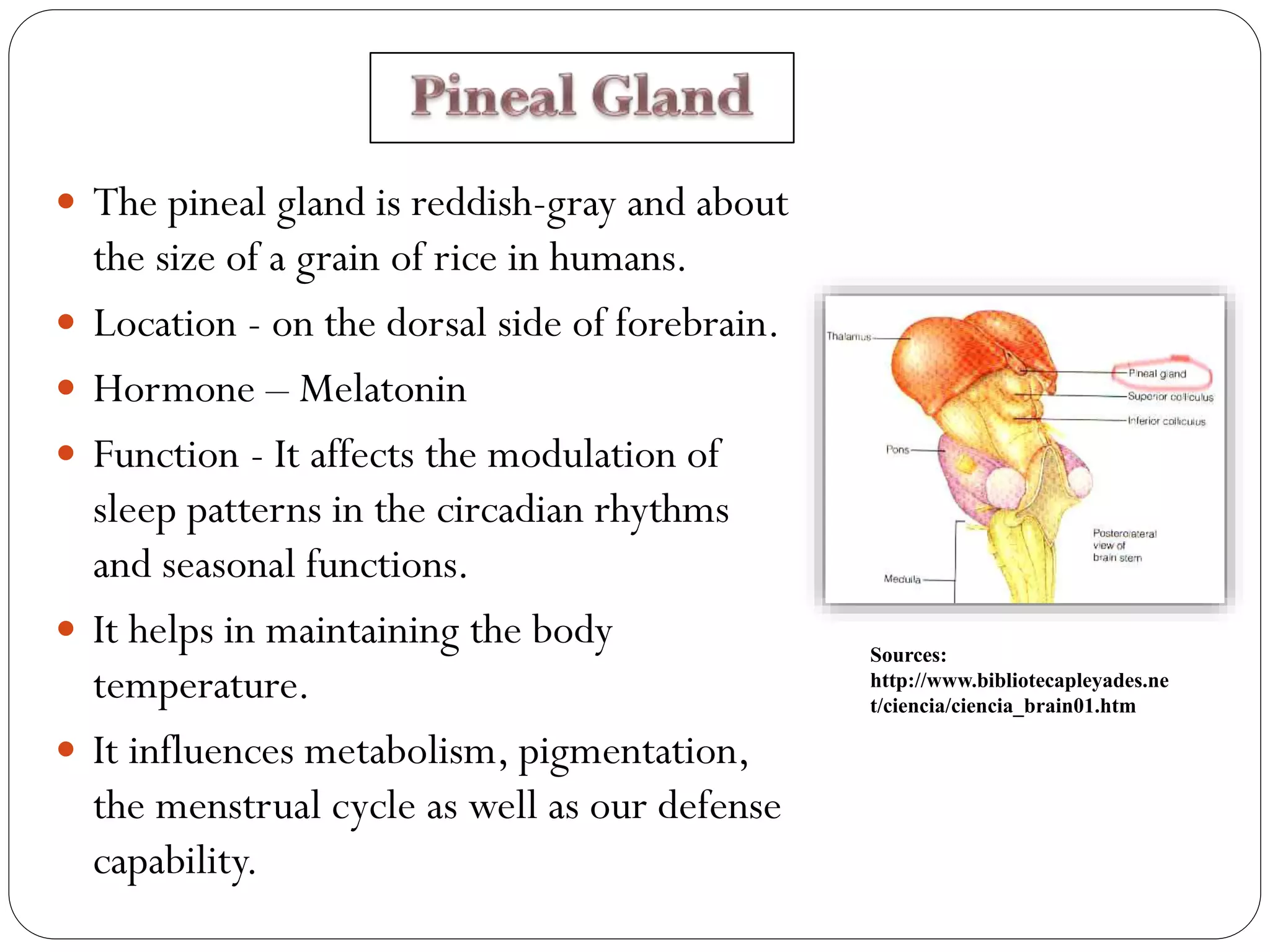
 The pineal gland is reddish-gray and about
the size of a grain of rice in humans.
 Location - on the dorsal side of forebrain.
 Hormone – Melatonin
 Function - It affects the modulation of
sleep patterns in the circadian rhythms
and seasonal functions.
 It helps in maintaining the body
temperature.
 It influences metabolism, pigmentation,
the menstrual cycle as well as our defense
capability.
Sources:
http://www.bibliotecapleyades.ne
t/ciencia/ciencia_brain01.htm
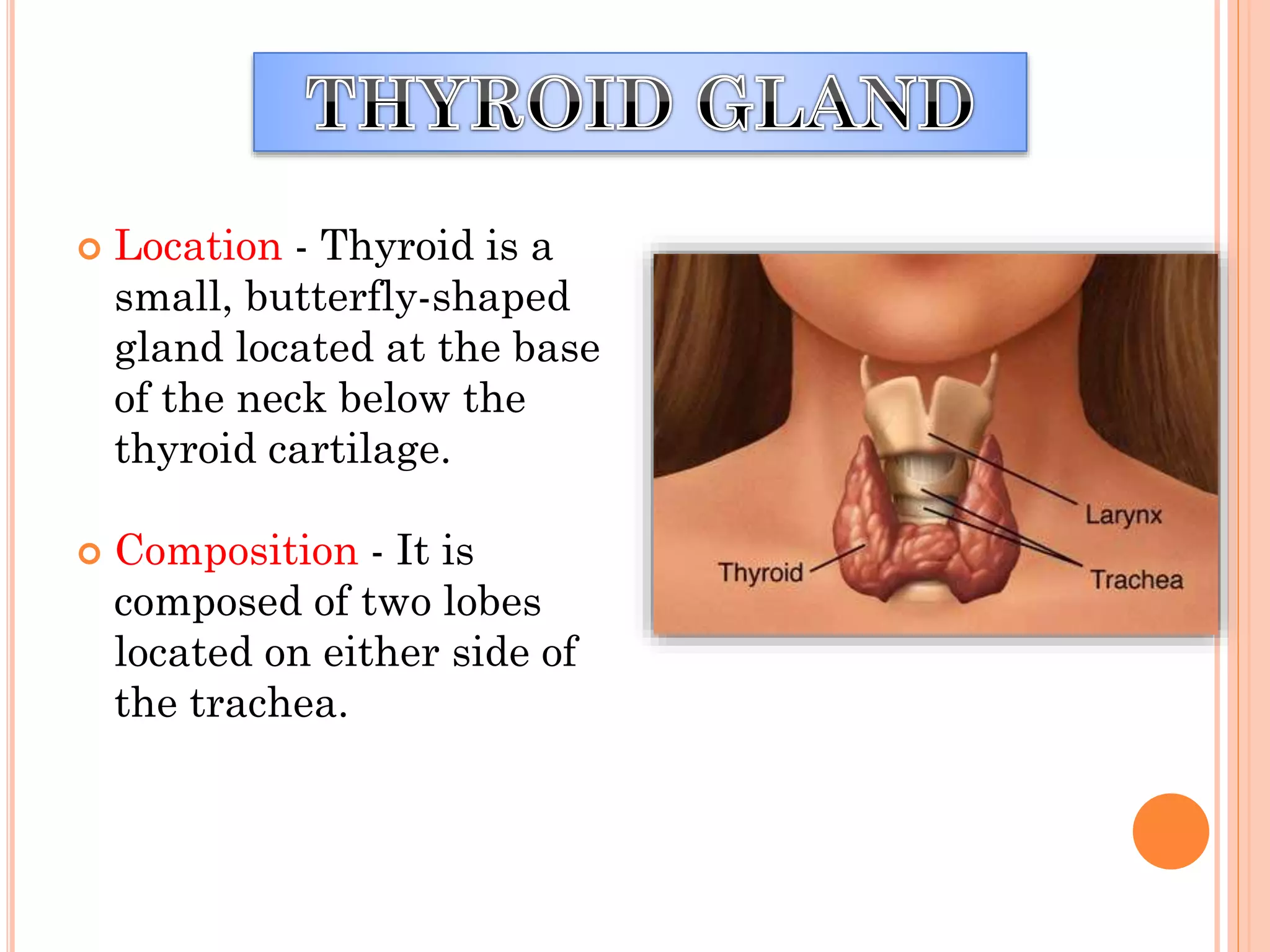
ï‚ą Location - Thyroid is a
small, butterfly-shaped
gland located at the base
of the neck below the
thyroid cartilage.
ï‚ą Composition - It is
composed of two lobes
located on either side of
the trachea.
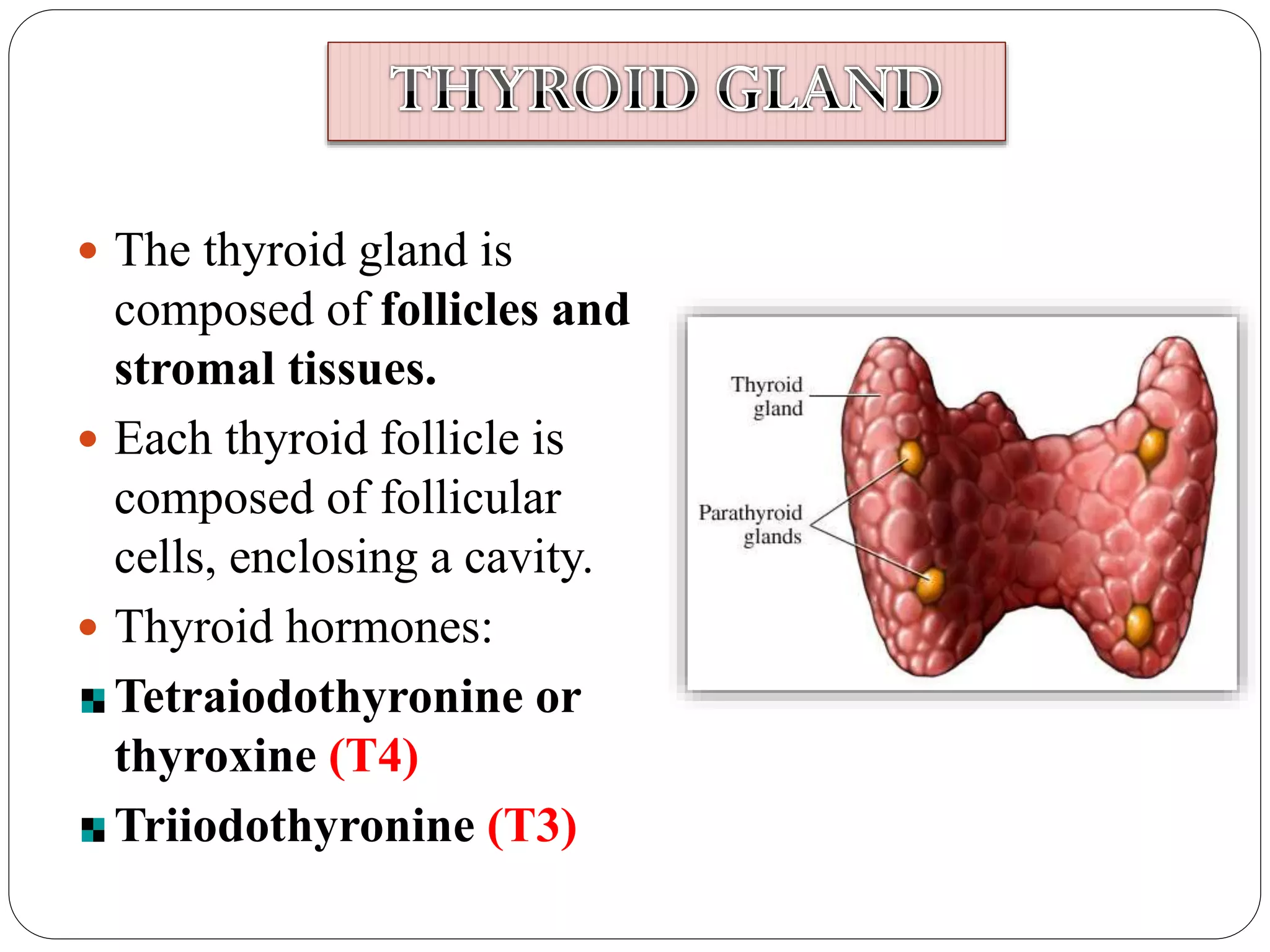
 The thyroid gland is
composed of follicles and
stromal tissues.
 Each thyroid follicle is
composed of follicular
cells, enclosing a cavity.
 Thyroid hormones:
Tetraiodothyronine or
thyroxine (T4)
Triiodothyronine (T3)
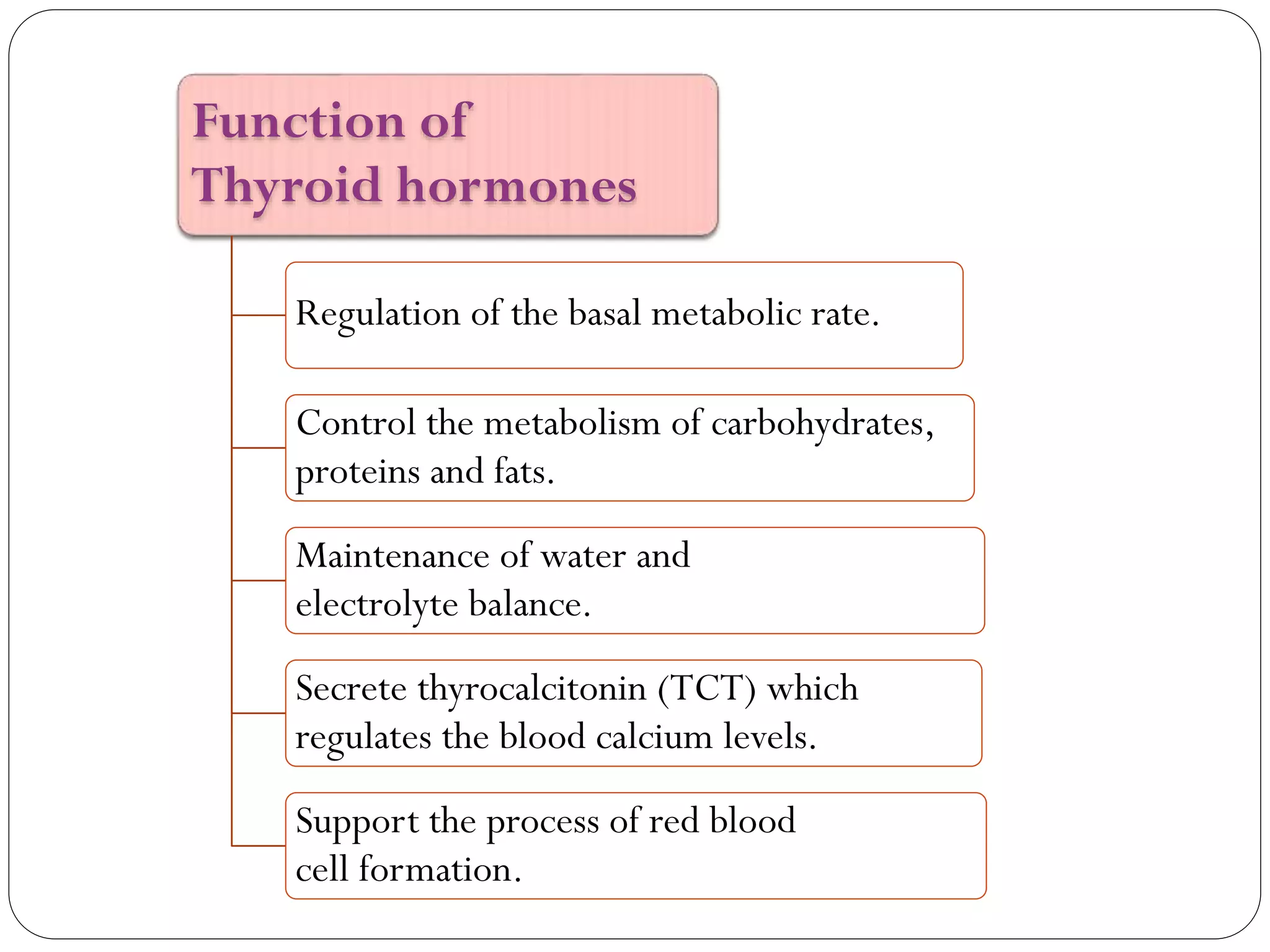
Function of
Thyroid hormones
Regulation of the basal metabolic rate.
Control the metabolism of carbohydrates,
proteins and fats.
Maintenance of water and
electrolyte balance.
Secrete thyrocalcitonin (TCT) which
regulates the blood calcium levels.
Support the process of red blood
cell formation.
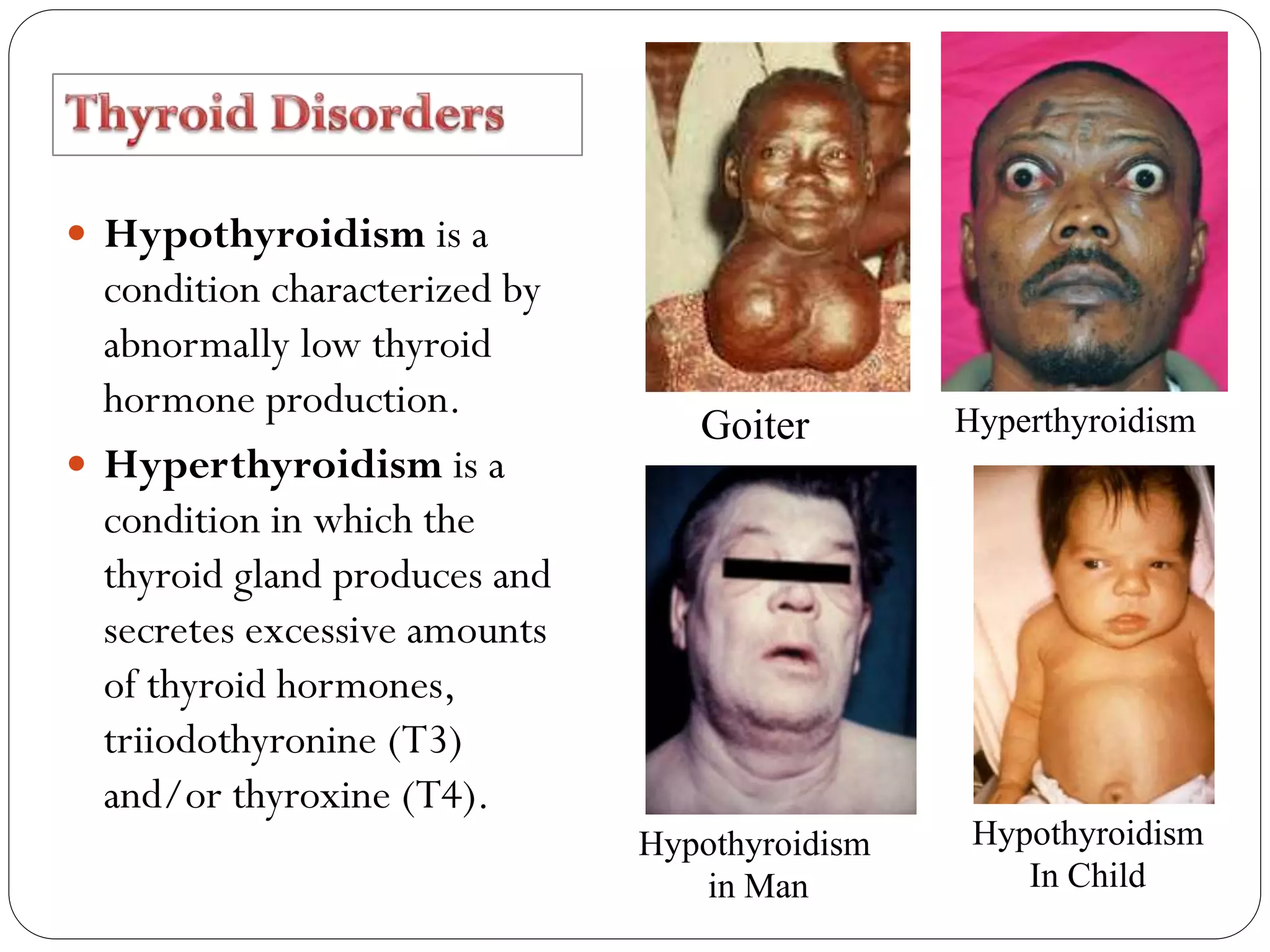
 Hypothyroidism is a
condition characterized by
abnormally low thyroid
hormone production.
 Hyperthyroidism is a
condition in which the
thyroid gland produces and
secretes excessive amounts
of thyroid hormones,
triiodothyronine (T3)
and/or thyroxine (T4).
Goiter Hyperthyroidism
Hypothyroidism
in Man
Hypothyroidism
In Child
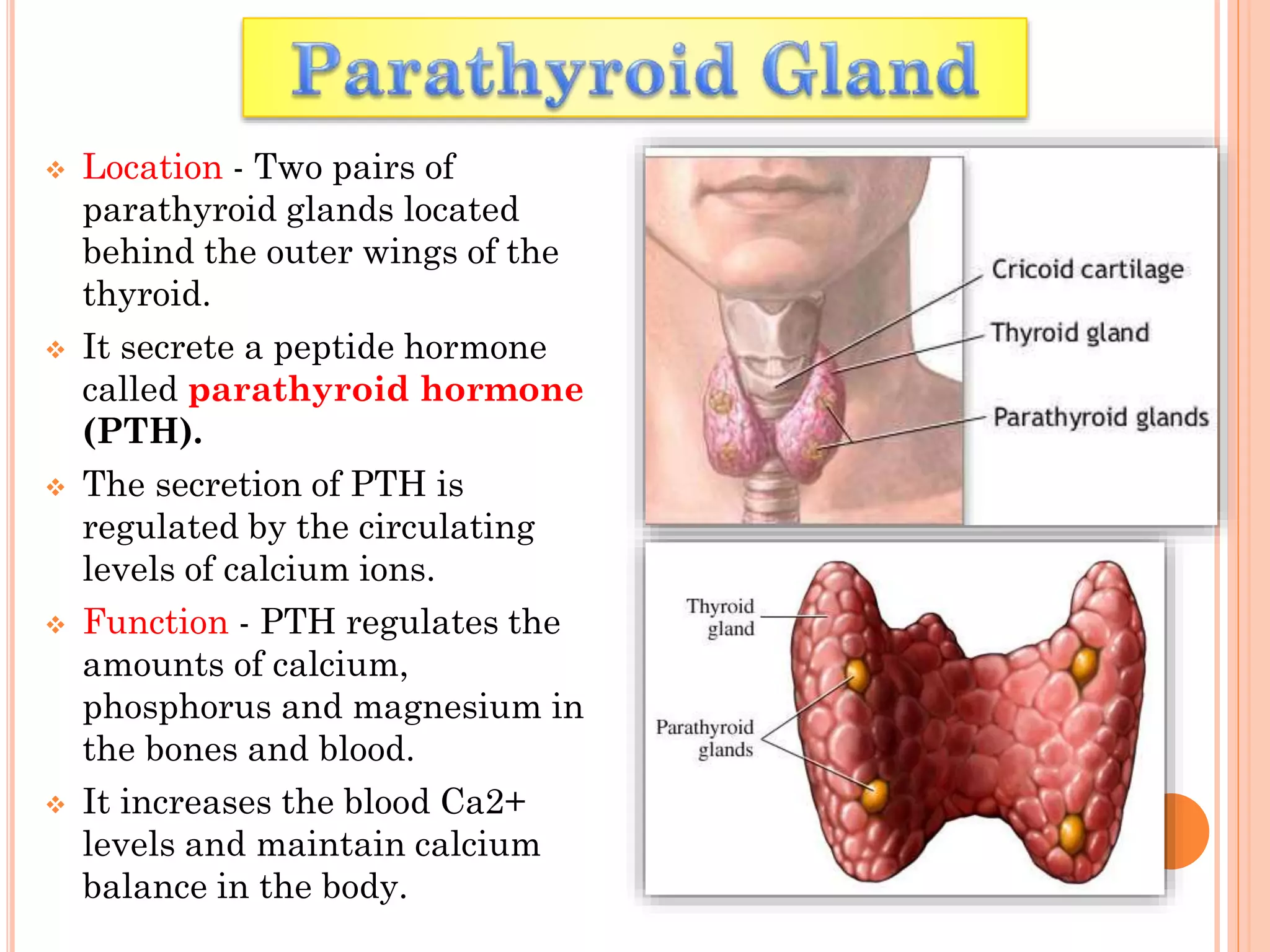
 Location - Two pairs of
parathyroid glands located
behind the outer wings of the
thyroid.
 It secrete a peptide hormone
called parathyroid hormone
(PTH).
 The secretion of PTH is
regulated by the circulating
levels of calcium ions.
 Function - PTH regulates the
amounts of calcium,
phosphorus and magnesium in
the bones and blood.
 It increases the blood Ca2+
levels and maintain calcium
balance in the body.
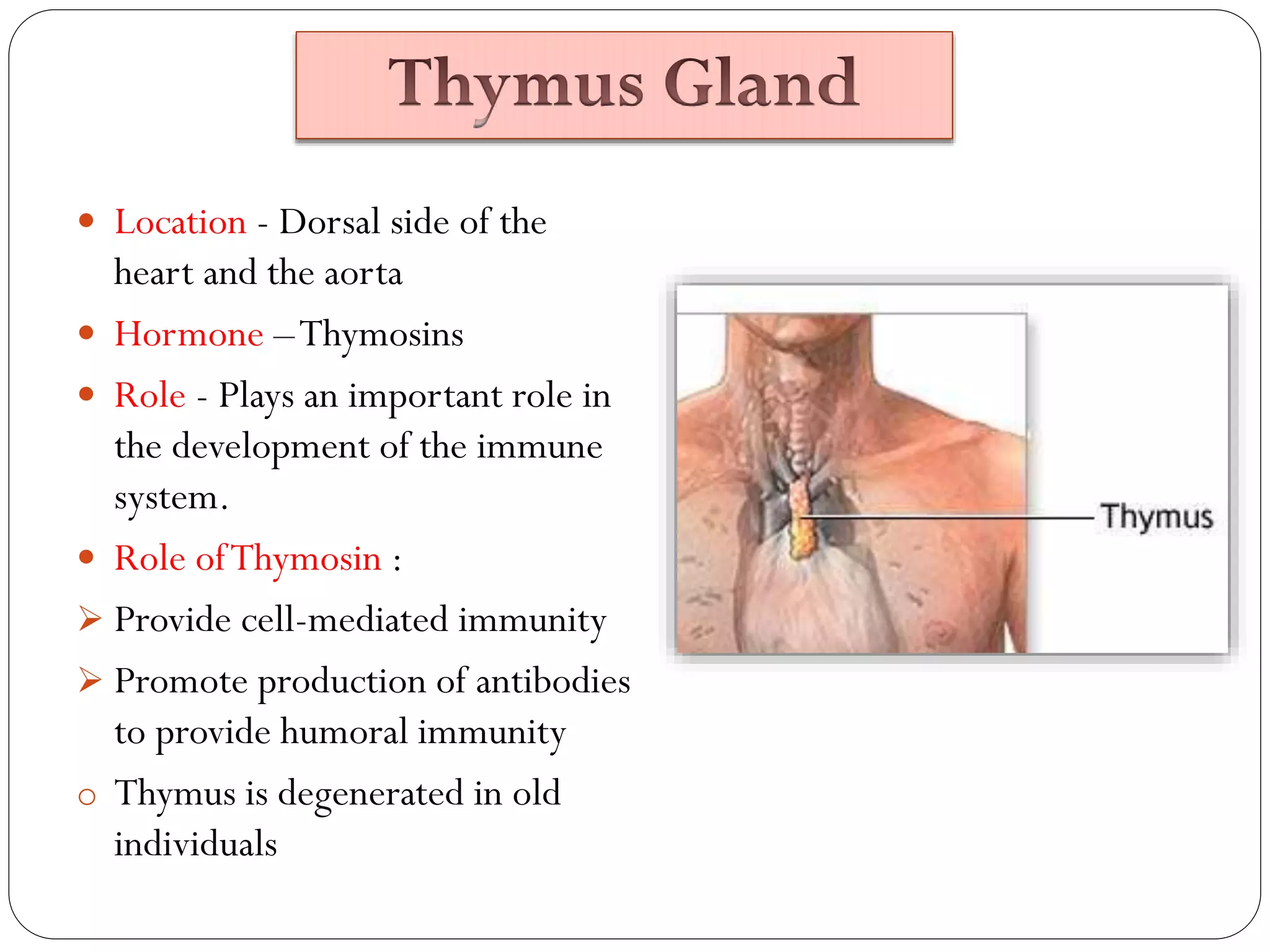
 Location - Dorsal side of the
heart and the aorta
 Hormone –Thymosins
 Role - Plays an important role in
the development of the immune
system.
 Role ofThymosin :
 Provide cell-mediated immunity
 Promote production of antibodies
to provide humoral immunity
o Thymus is degenerated in old
individuals
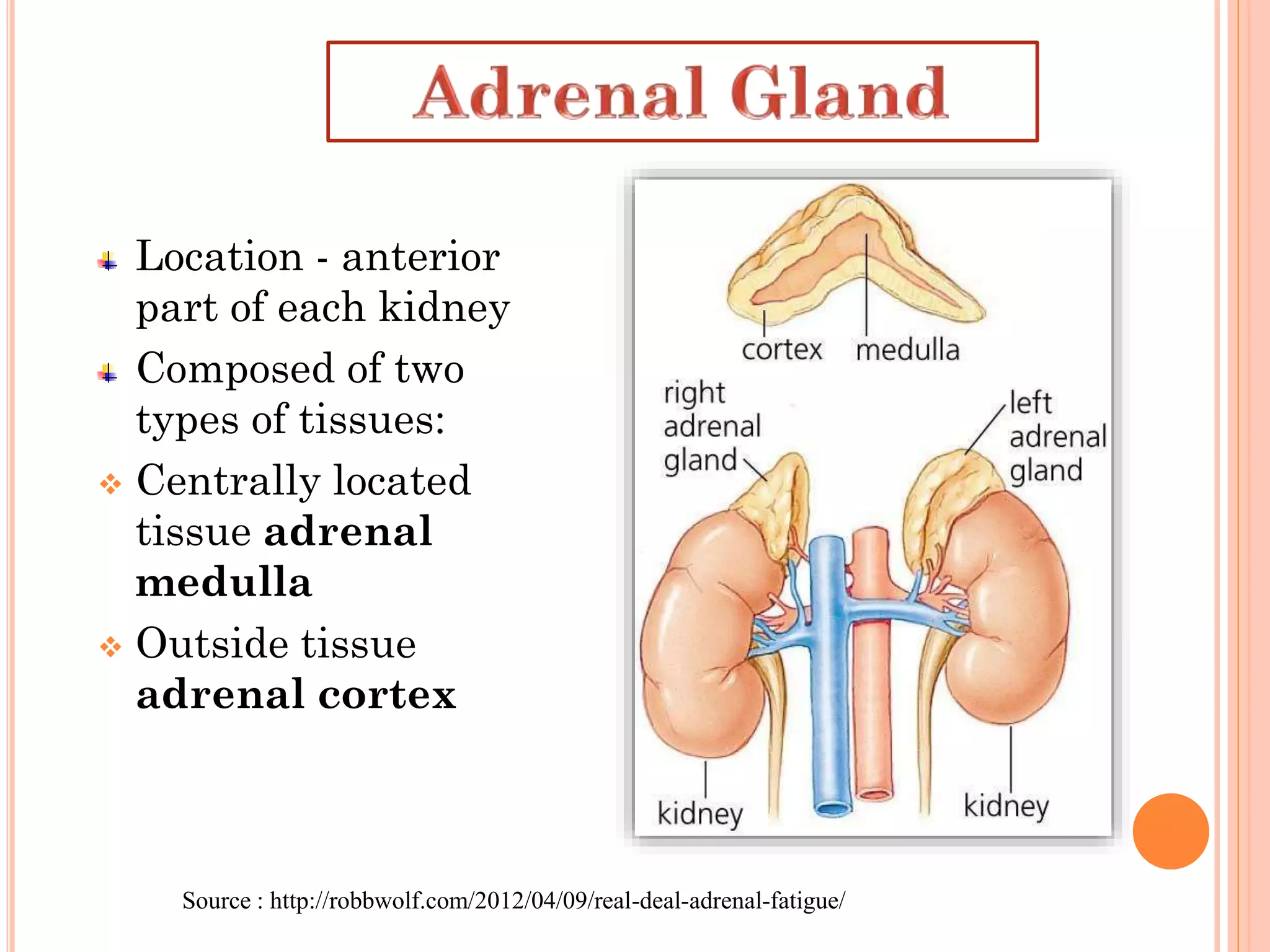
Location - anterior
part of each kidney
Composed of two
types of tissues:
 Centrally located
tissue adrenal
medulla
 Outside tissue
adrenal cortex
Source : http://robbwolf.com/2012/04/09/real-deal-adrenal-fatigue/
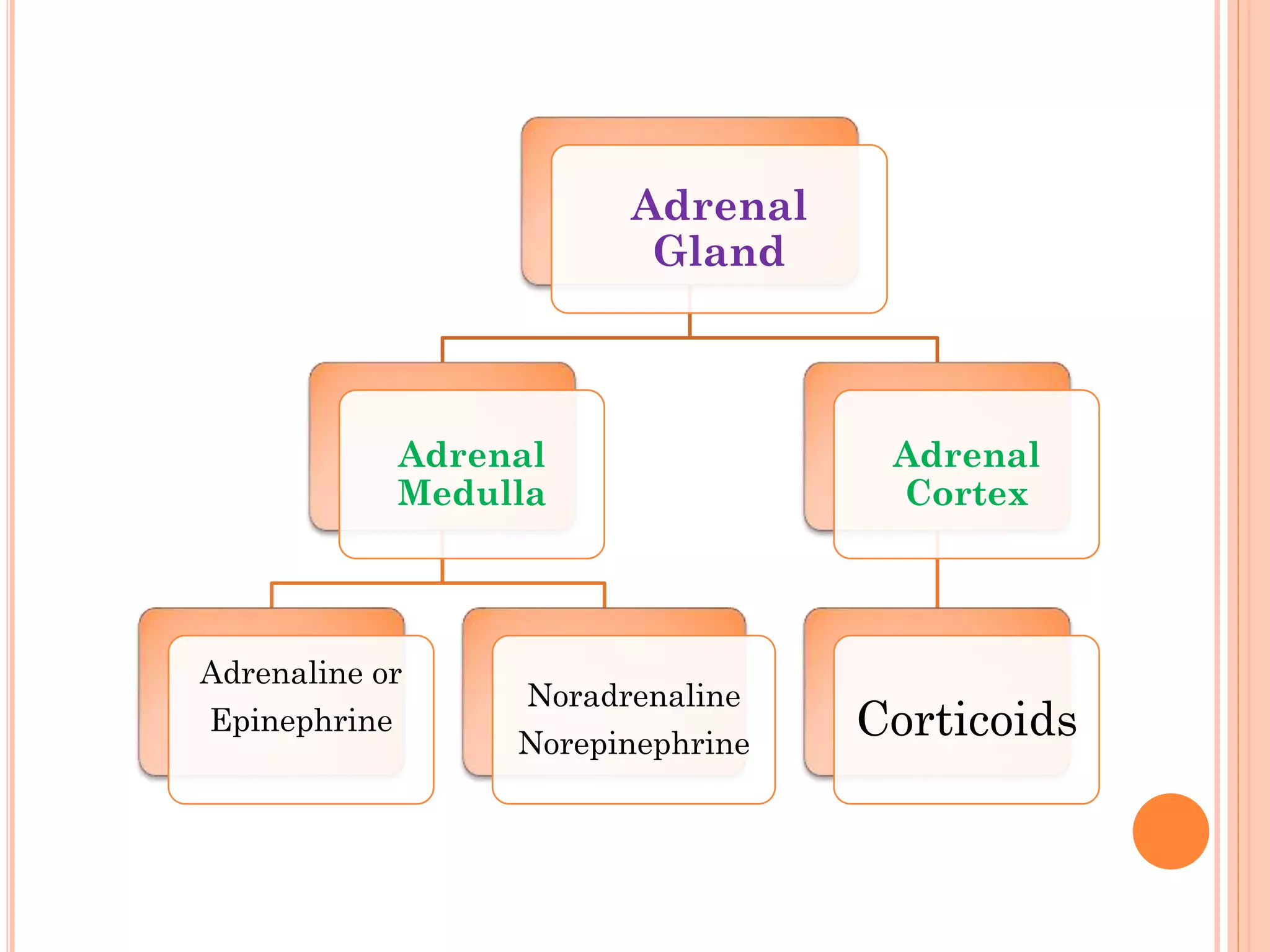
Adrenal
Gland
Adrenal
Medulla
Adrenaline or
Epinephrine
Noradrenaline
Norepinephrine
Adrenal
Cortex
Corticoids
ADRENAL MEDULLA
ï‚ą Adrenal medulla releases the catecholamines:
i)Adrenaline or Epinephrine
ii)Noradrenaline or Norepinephrine
ï‚ą These hormones are released in stressful
situations, hence called emergency hormones or
hormones of Fight or Flight.
ï‚ą These hormones increase the heart beat,
alertness, pupilary dilation, piloerection (raising of
hairs), sweating etc.
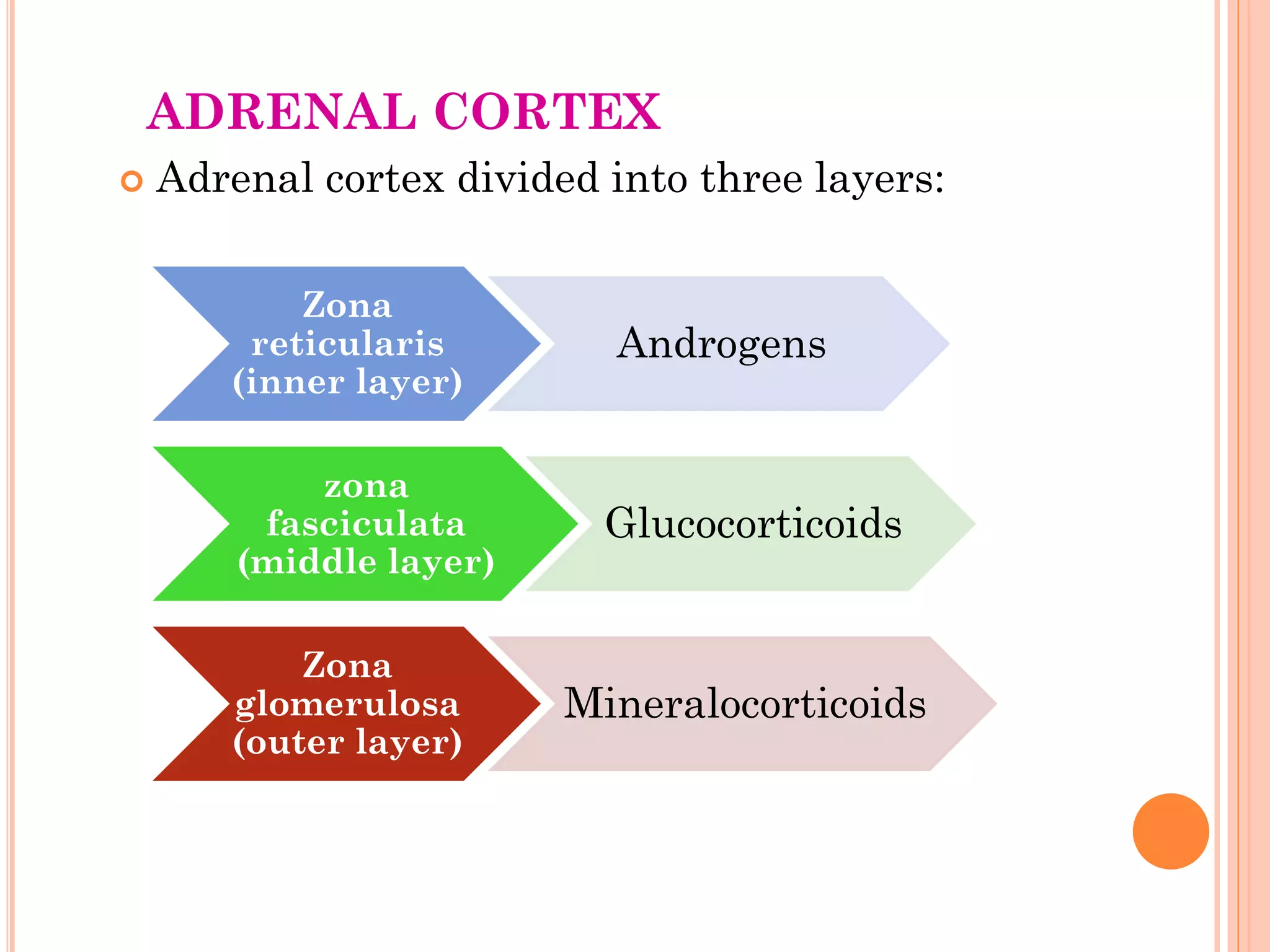
ADRENAL CORTEX
ï‚ą Adrenal cortex divided into three layers:
Zona
reticularis
(inner layer)
Androgens
zona
fasciculata
(middle layer)
Glucocorticoids
Zona
glomerulosa
(outer layer)
Mineralocorticoids
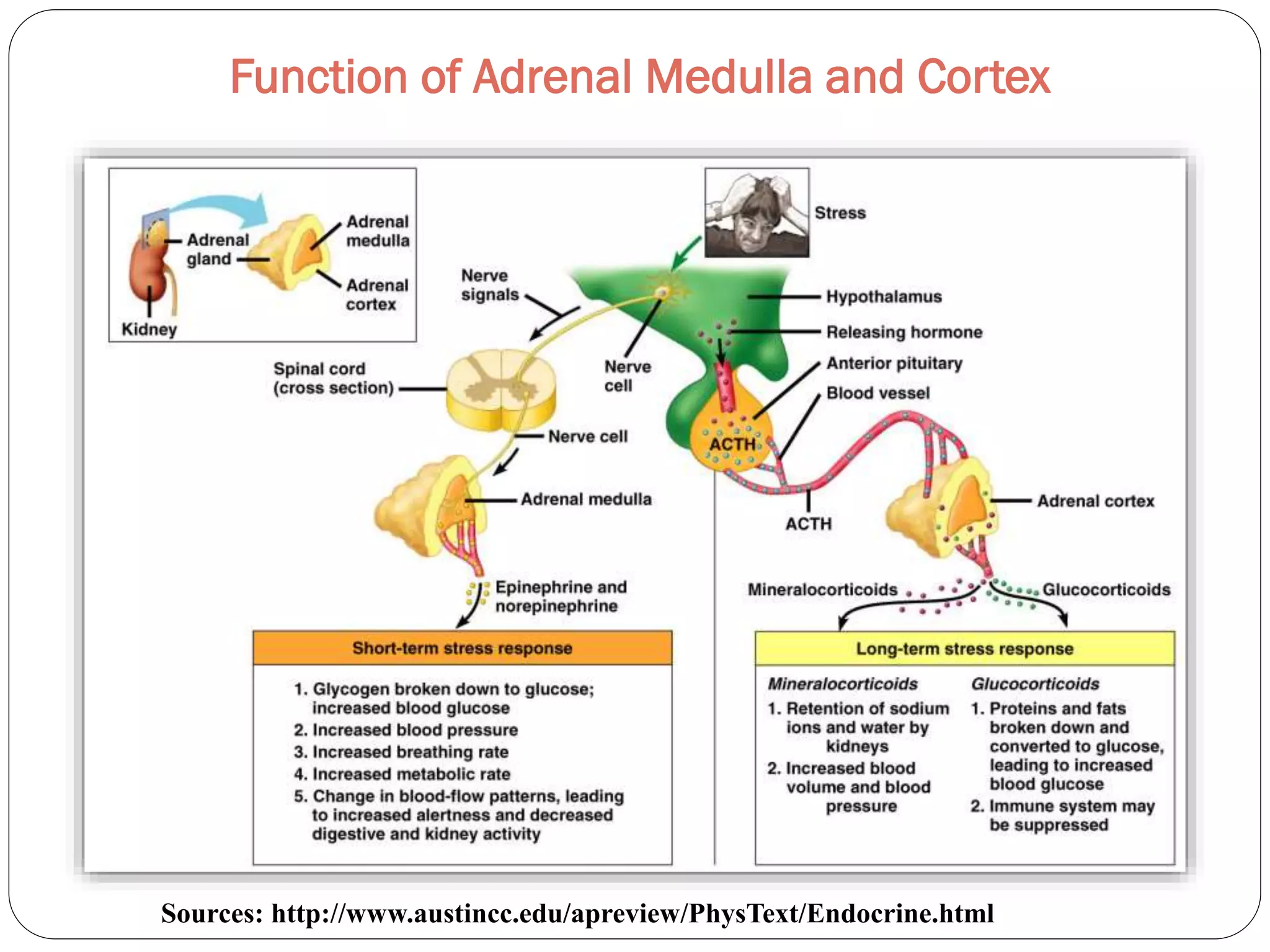
Function of Adrenal Medulla and Cortex
Sources: http://www.austincc.edu/apreview/PhysText/Endocrine.html
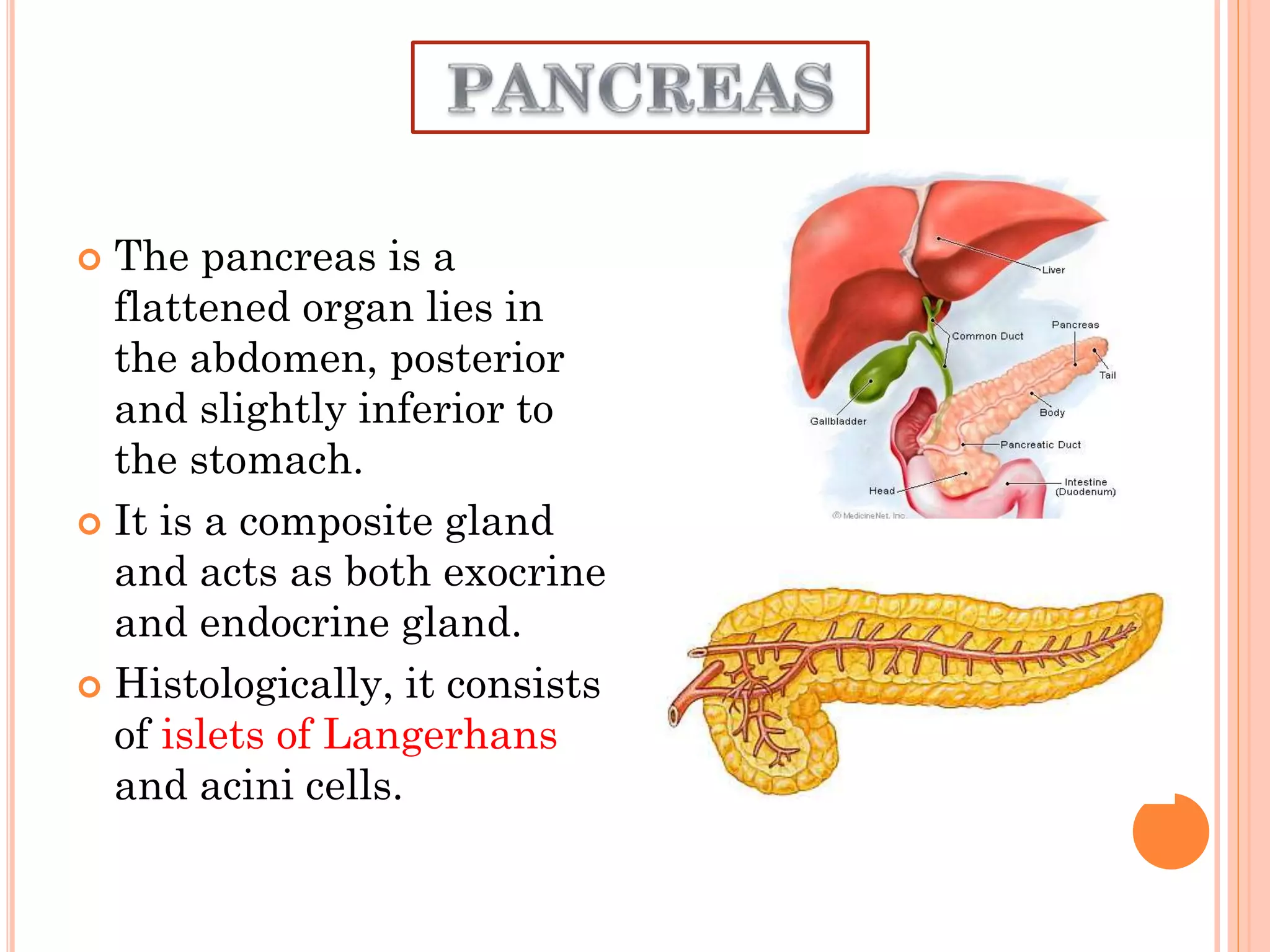
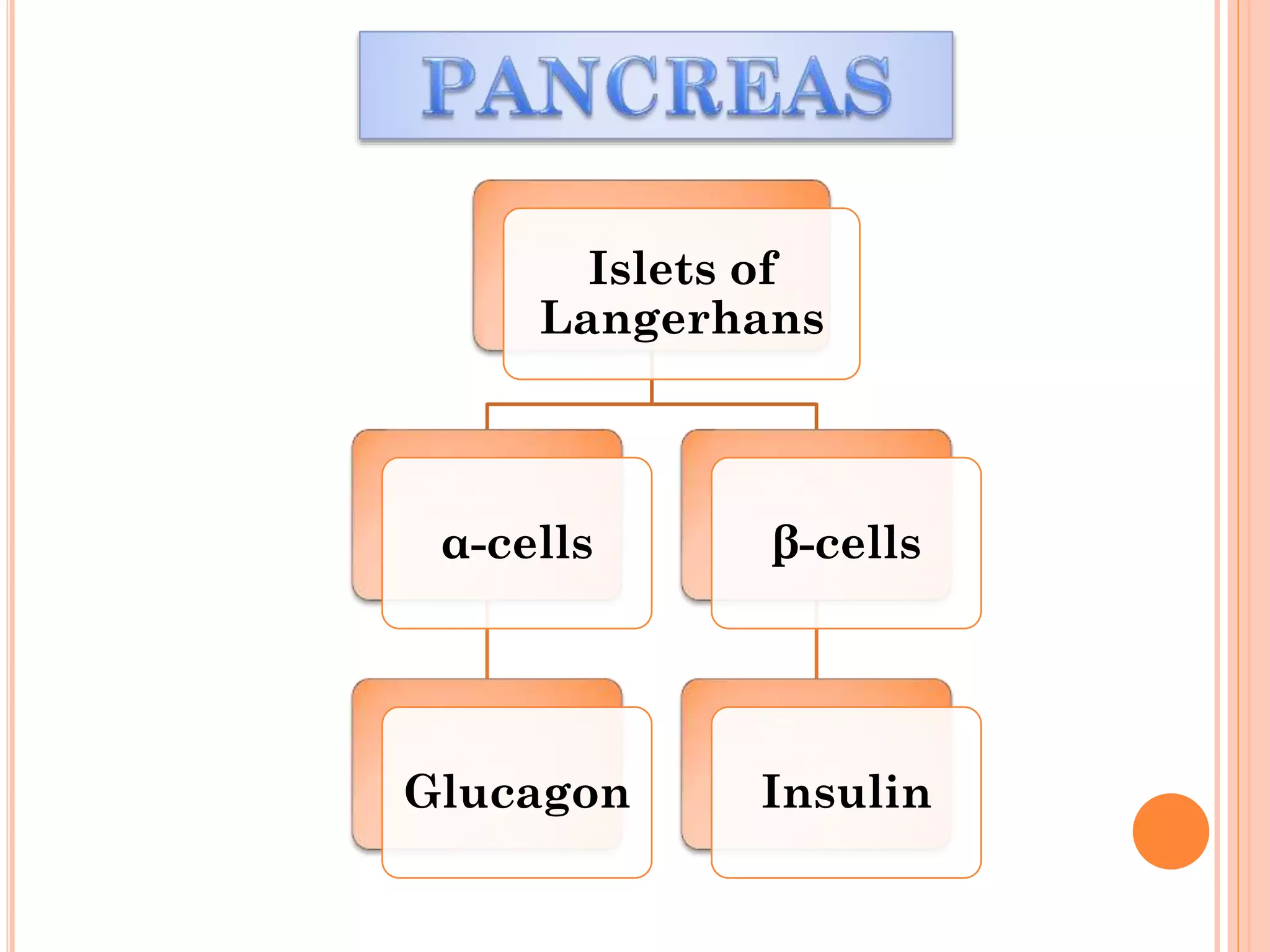
ï‚ą The pancreas is a
flattened organ lies in
the abdomen, posterior
and slightly inferior to
the stomach.
ï‚ą It is a composite gland
and acts as both exocrine
and endocrine gland.
ï‚ą Histologically, it consists
of islets of Langerhans
and acini cells.
Islets of
Langerhans
α-cells
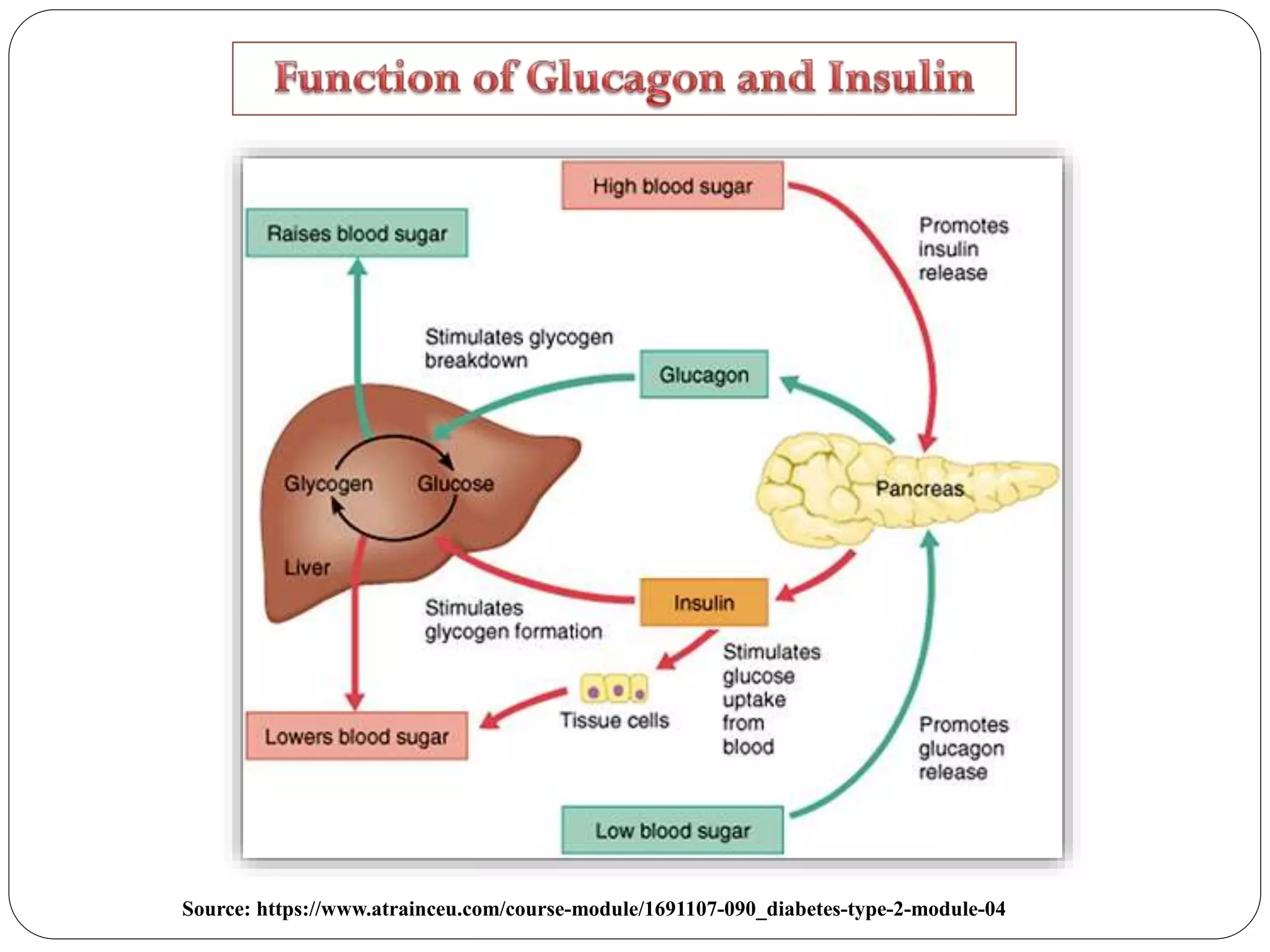
Glucagon
ÎČ-cells
Insulin
Source: https://www.atrainceu.com/course-module/1691107-090_diabetes-type-2-module-04
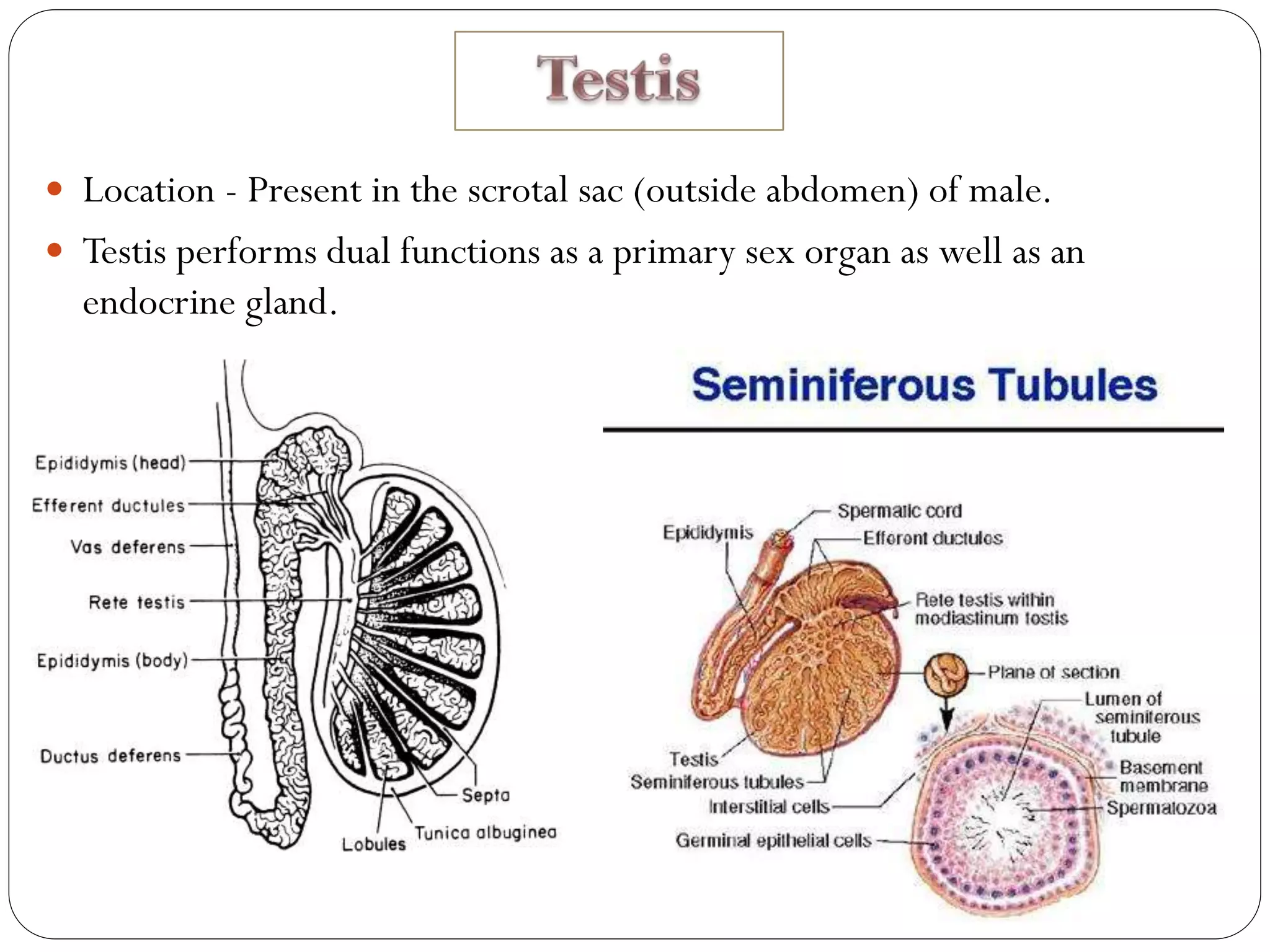
 Location - Present in the scrotal sac (outside abdomen) of male.
 Testis performs dual functions as a primary sex organ as well as an
endocrine gland.
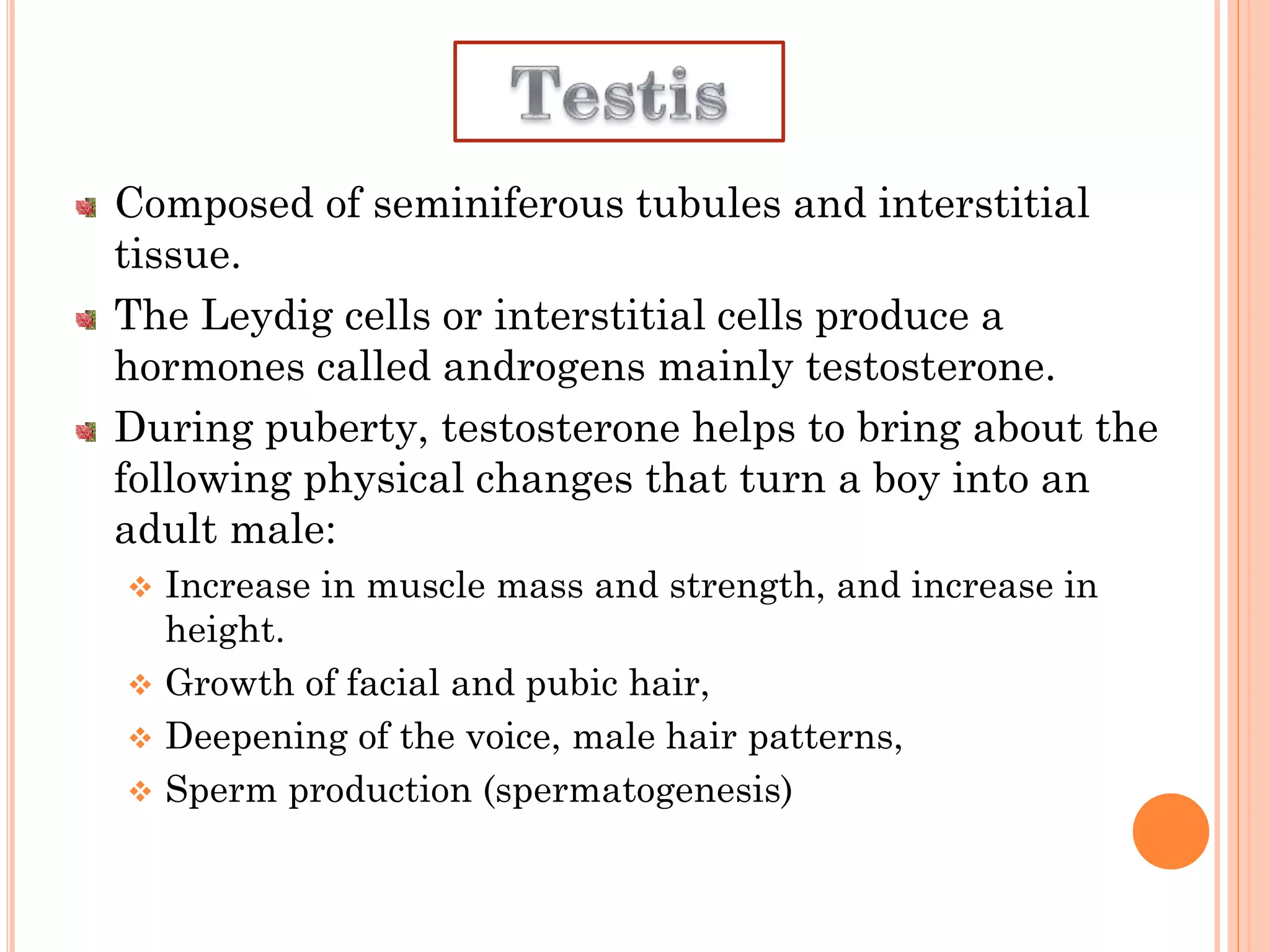
Composed of seminiferous tubules and interstitial
tissue.
The Leydig cells or interstitial cells produce a
hormones called androgens mainly testosterone.
During puberty, testosterone helps to bring about the
following physical changes that turn a boy into an
adult male:
 Increase in muscle mass and strength, and increase in
height.
 Growth of facial and pubic hair,
 Deepening of the voice, male hair patterns,
 Sperm production (spermatogenesis)
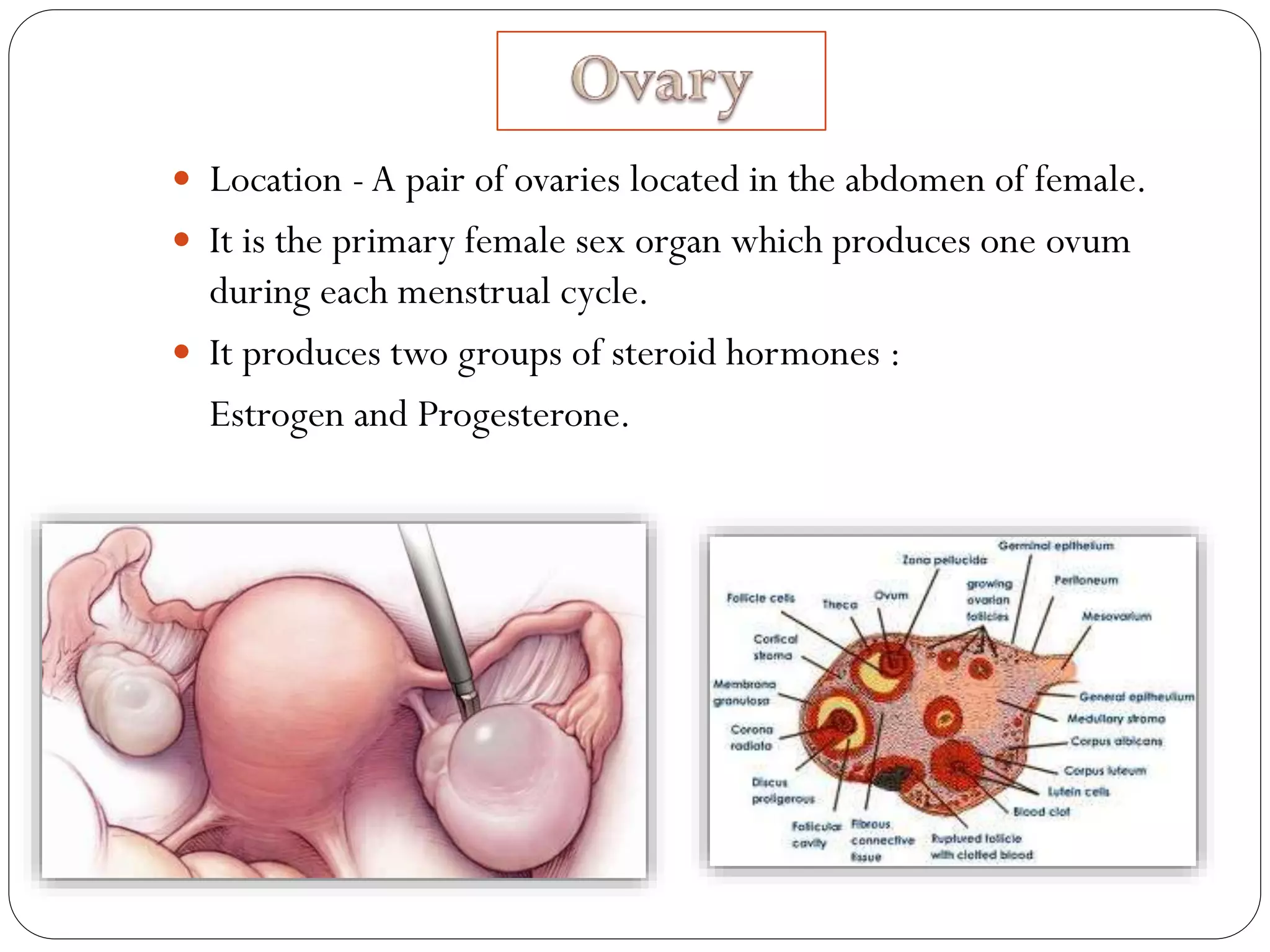
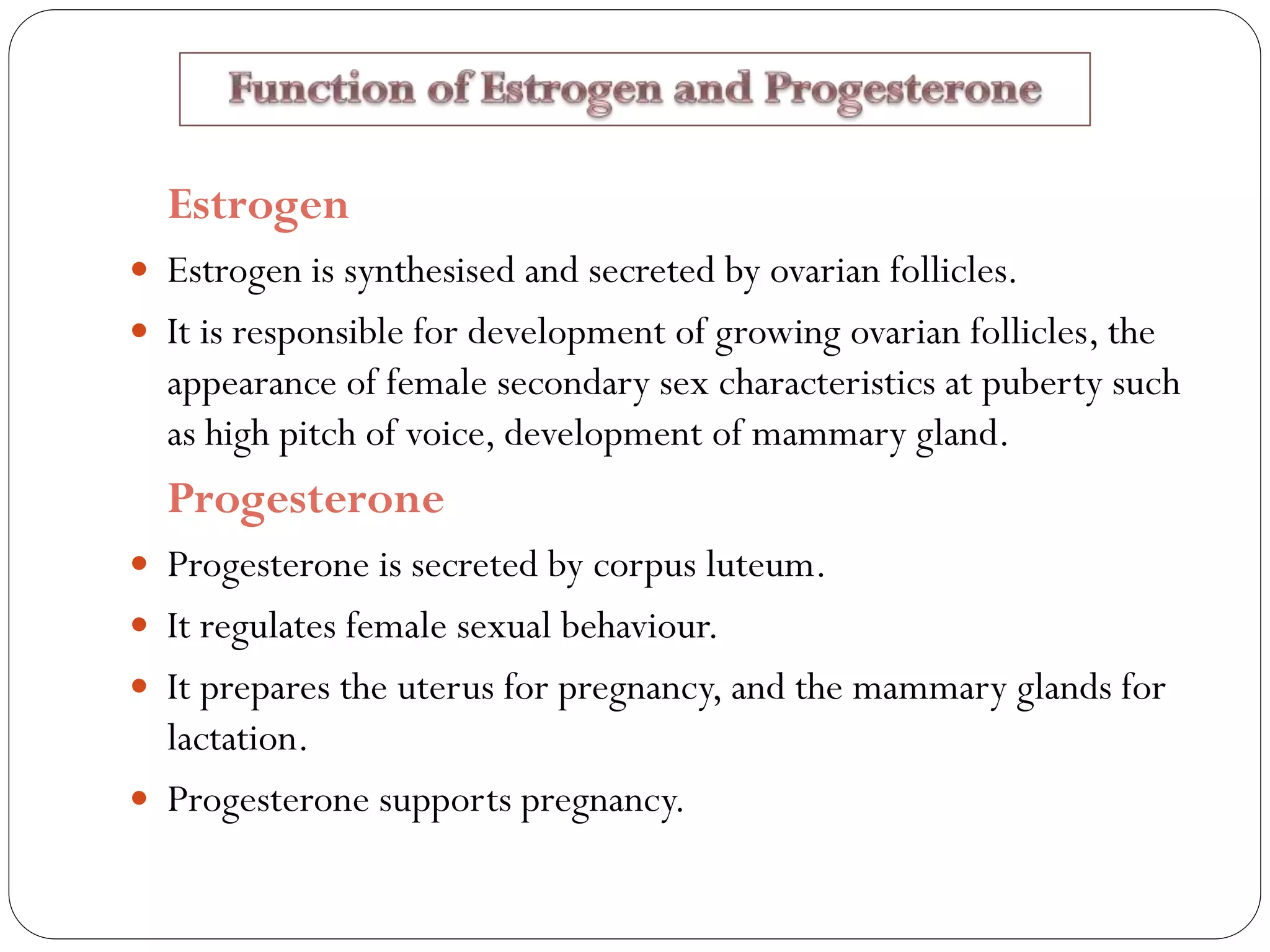
 Location -A pair of ovaries located in the abdomen of female.
 It is the primary female sex organ which produces one ovum
during each menstrual cycle.
 It produces two groups of steroid hormones :
Estrogen and Progesterone.
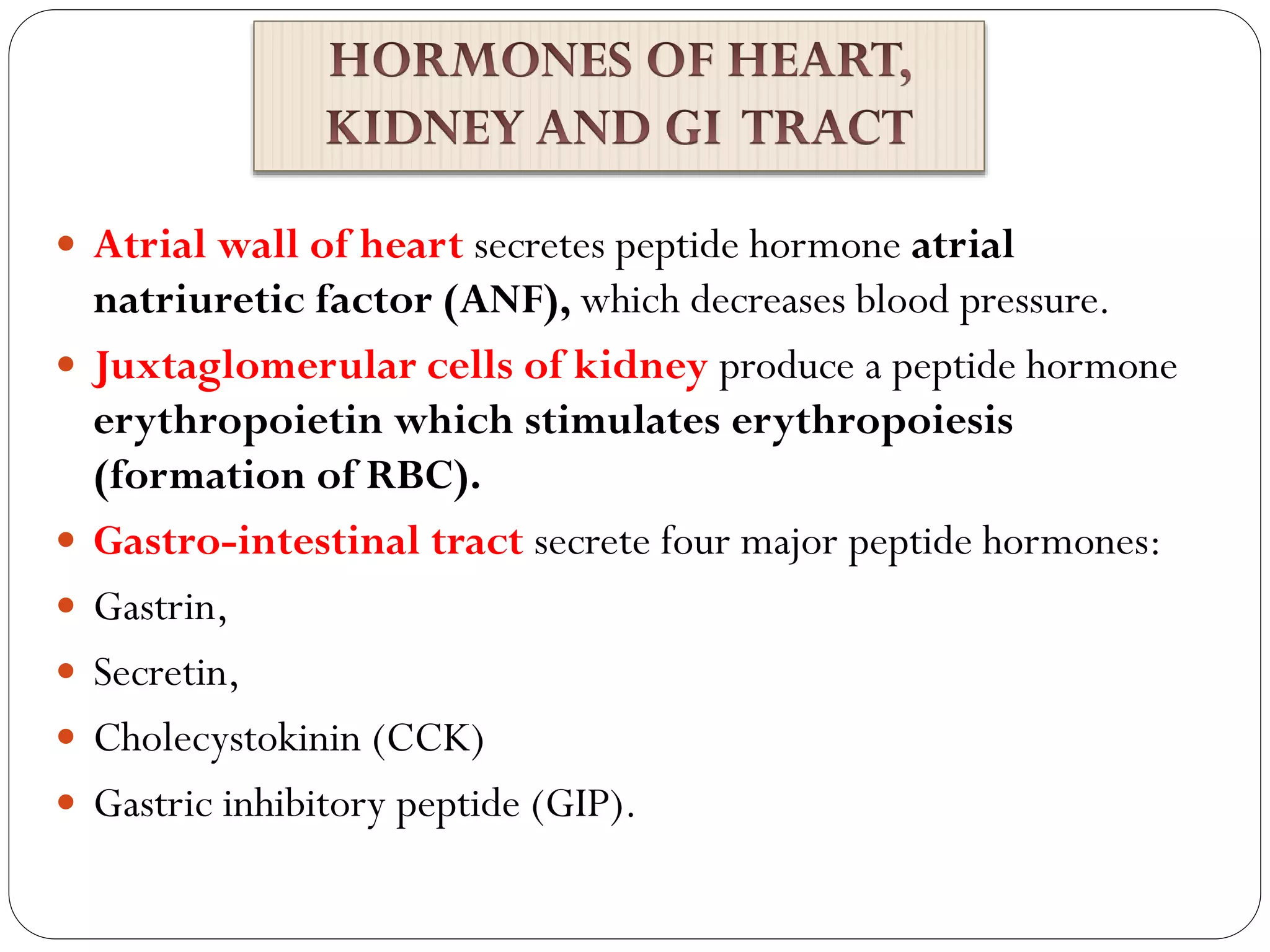
Estrogen
 Estrogen is synthesised and secreted by ovarian follicles.
 It is responsible for development of growing ovarian follicles, the
appearance of female secondary sex characteristics at puberty such
as high pitch of voice, development of mammary gland.
Progesterone
 Progesterone is secreted by corpus luteum.
 It regulates female sexual behaviour.
 It prepares the uterus for pregnancy, and the mammary glands for
lactation.
 Progesterone supports pregnancy.
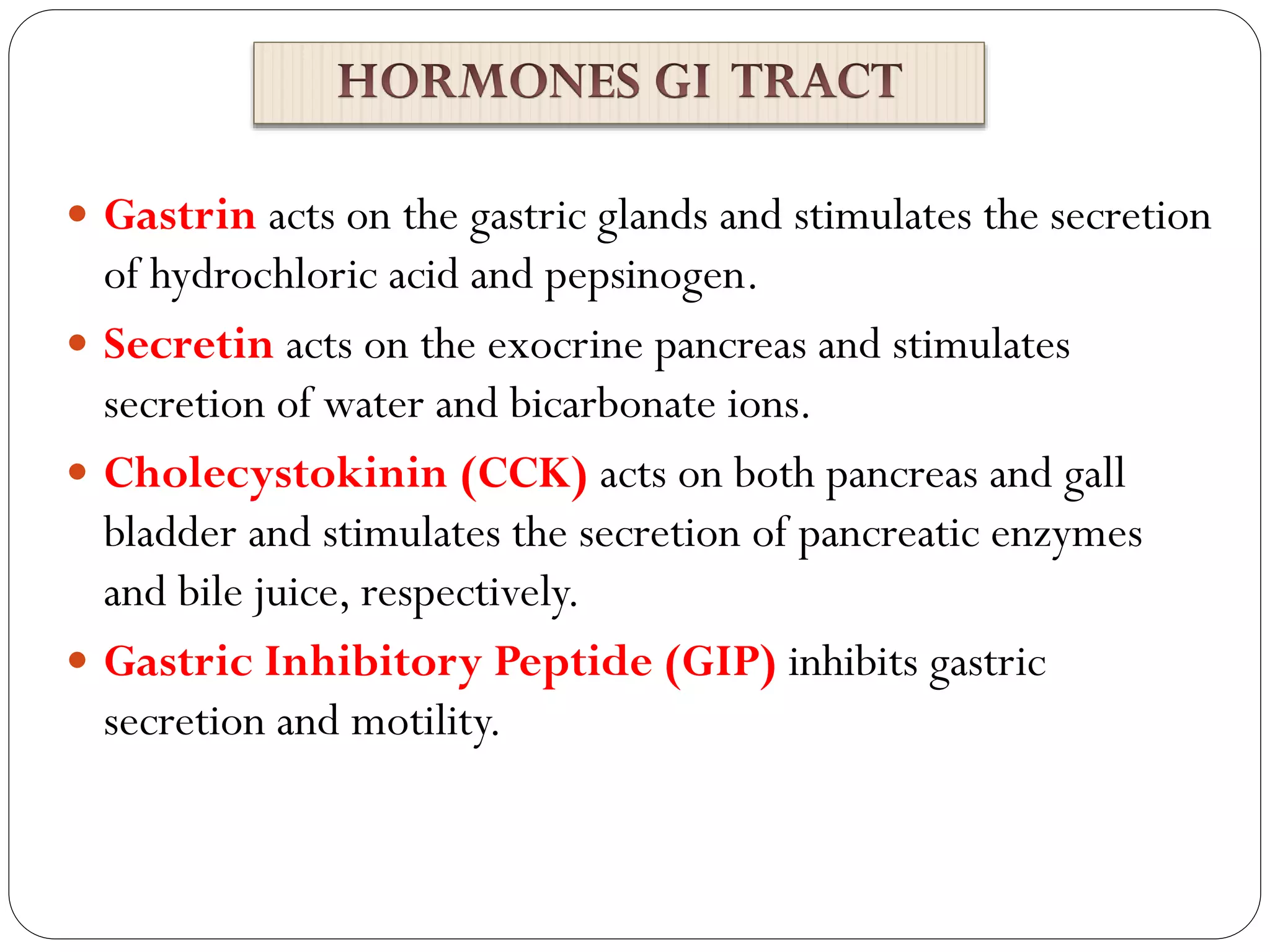
 Atrial wall of heart secretes peptide hormone atrial
natriuretic factor (ANF), which decreases blood pressure.
 Juxtaglomerular cells of kidney produce a peptide hormone
erythropoietin which stimulates erythropoiesis
(formation of RBC).
 Gastro-intestinal tract secrete four major peptide hormones:
 Gastrin,
 Secretin,
 Cholecystokinin (CCK)
 Gastric inhibitory peptide (GIP).
 Gastrin acts on the gastric glands and stimulates the secretion
of hydrochloric acid and pepsinogen.
 Secretin acts on the exocrine pancreas and stimulates
secretion of water and bicarbonate ions.
 Cholecystokinin (CCK) acts on both pancreas and gall
bladder and stimulates the secretion of pancreatic enzymes
and bile juice, respectively.
 Gastric Inhibitory Peptide (GIP) inhibits gastric
secretion and motility.

Chemical Coordination and Integration: Endocrine System

  • 2.
    Coordination of activities inhumans Nervous system Endocrine system
  • 3.
    Nervous System  Transmitselectrical impulses  Use the neurons to transmit the signal  Signal transmission is fast  Effect is localized Endocrine System  Transmits chemical biological messengers Impulses  Use the circulatory system to transmit the signal  Signal transmission is slow  Effect is widespread Nervous System vs Endocrine System
  • 4.
    Endocrine glands arecalled ductless glands. They secrete hormones. Hormones are non-nutrient chemicals act as intercellular messengers. They are produced in trace amounts.
  • 5.
    HUMAN ENDOCRINE SYSTEM PituitaryGland Pineal Gland Thyroid Gland Parathyroid Gland Thymus Gland Adrenal Gland Pancreas Gonads (Testis & Ovary)
  • 6.
     Location -Below the thalamus & just above the brainstem  It synthesizes and secretes certain neurohormones.  These hormones regulate the synthesis and secretion of pituitary hormones.  Two types of hormones are produced by hypothalamus: Releasing Hormones Inhibiting Hormones
  • 7.
    Synthesizes & releaseshypophysiotropic hormones: Thyrotropin-releasing hormone (TRH) Corticotropin-releasing hormone (CRH) Gonadotropin-releasing hormone (GnRH) Growth hormone-releasing hormone (GHRH) Growth hormone-inhibiting hormone (GHIH) Prolactin-releasing factor (PRF) Prolactin-inhibitn hormone (PIH)
  • 8.
    ï‚ą A marble-sizedgland at the base of the brain ï‚ą Location - in the bony cavity called sella tursica. ï‚ą Controlled by the hypothalamus or other neural mechanisms and therefore the middle man. ï‚ą Divided anatomically into: (i) Adenohypophysis (ii) Neurohypophysis
  • 9.
    Anterior Pituitary Growth hormone (GH) Thyroidstimulating hormone (TSH) Adrenocorticotrophic hormone (ACTH) Prolactin (PRL) Luteinizing hormone (LH) Follicle stimulating hormone (FSH) Posterior Pituitary Oxytocin Vasopressin or Anti-diuretic hormone
  • 10.
    Hormone Target(s) Function GHAll cells in the body Stimulates growth and repair. Hyper-secretion of GH leads to Gigantism and low secretion of GH results stunted growth called Dwarfism. TSH Thyroid Stimulates the thyroid gland to secrete the hormone thyroxine (T4) and triiodothyronine (T3). It regulates the body's metabolic activities. ACTH Adrenals Stimulates the adrenal gland to produce glucocorticoids. PRL Breasts Stimulates the growth of the mammary glands and formation of milk. LH Testes (men) Ovaries (women) LH and FSH are called gonadotrophins as stimulate gonadal activity. LH stimulates the synthesis and secretion of hormones called androgens from testis. Stimulates the ovaries to produce oestrogen and progesterone.
  • 11.
    FSH Ovaries (women) Stimulates growthand development of the ovarian follicles in females. MSH Melanocytes in skin Stimulate the production and release of melanin which regulates pigmentation of the skin. Oxytocin Uterus Breasts Stimulates a vigorous contraction of uterus at the time of child birth, and milk ejection from the mammary gland. Vasopressin (ADH) Kidneys Stimulates reabsorption of water and electrolytes by the distal tubules and reduces loss of water through urine (Diuresis).
  • 12.
     The pinealgland is reddish-gray and about the size of a grain of rice in humans.  Location - on the dorsal side of forebrain.  Hormone – Melatonin  Function - It affects the modulation of sleep patterns in the circadian rhythms and seasonal functions.  It helps in maintaining the body temperature.  It influences metabolism, pigmentation, the menstrual cycle as well as our defense capability. Sources: http://www.bibliotecapleyades.ne t/ciencia/ciencia_brain01.htm
  • 13.
    ï‚ą Location -Thyroid is a small, butterfly-shaped gland located at the base of the neck below the thyroid cartilage. ï‚ą Composition - It is composed of two lobes located on either side of the trachea.
  • 14.
     The thyroidgland is composed of follicles and stromal tissues.  Each thyroid follicle is composed of follicular cells, enclosing a cavity.  Thyroid hormones: Tetraiodothyronine or thyroxine (T4) Triiodothyronine (T3)
  • 15.
    Function of Thyroid hormones Regulationof the basal metabolic rate. Control the metabolism of carbohydrates, proteins and fats. Maintenance of water and electrolyte balance. Secrete thyrocalcitonin (TCT) which regulates the blood calcium levels. Support the process of red blood cell formation.
  • 16.
     Hypothyroidism isa condition characterized by abnormally low thyroid hormone production.  Hyperthyroidism is a condition in which the thyroid gland produces and secretes excessive amounts of thyroid hormones, triiodothyronine (T3) and/or thyroxine (T4). Goiter Hyperthyroidism Hypothyroidism in Man Hypothyroidism In Child
  • 17.
     Location -Two pairs of parathyroid glands located behind the outer wings of the thyroid.  It secrete a peptide hormone called parathyroid hormone (PTH).  The secretion of PTH is regulated by the circulating levels of calcium ions.  Function - PTH regulates the amounts of calcium, phosphorus and magnesium in the bones and blood.  It increases the blood Ca2+ levels and maintain calcium balance in the body.
  • 18.
     Location -Dorsal side of the heart and the aorta  Hormone –Thymosins  Role - Plays an important role in the development of the immune system.  Role ofThymosin :  Provide cell-mediated immunity  Promote production of antibodies to provide humoral immunity o Thymus is degenerated in old individuals
  • 19.
    Location - anterior partof each kidney Composed of two types of tissues:  Centrally located tissue adrenal medulla  Outside tissue adrenal cortex Source : http://robbwolf.com/2012/04/09/real-deal-adrenal-fatigue/
  • 20.
  • 21.
    ADRENAL MEDULLA ï‚ą Adrenalmedulla releases the catecholamines: i)Adrenaline or Epinephrine ii)Noradrenaline or Norepinephrine ï‚ą These hormones are released in stressful situations, hence called emergency hormones or hormones of Fight or Flight. ï‚ą These hormones increase the heart beat, alertness, pupilary dilation, piloerection (raising of hairs), sweating etc.
  • 22.
    ADRENAL CORTEX ï‚ą Adrenalcortex divided into three layers: Zona reticularis (inner layer) Androgens zona fasciculata (middle layer) Glucocorticoids Zona glomerulosa (outer layer) Mineralocorticoids
  • 23.
    Function of AdrenalMedulla and Cortex Sources: http://www.austincc.edu/apreview/PhysText/Endocrine.html
  • 24.
    ï‚ą The pancreasis a flattened organ lies in the abdomen, posterior and slightly inferior to the stomach. ï‚ą It is a composite gland and acts as both exocrine and endocrine gland. ï‚ą Histologically, it consists of islets of Langerhans and acini cells.
  • 25.
  • 26.
  • 27.
     Location -Present in the scrotal sac (outside abdomen) of male.  Testis performs dual functions as a primary sex organ as well as an endocrine gland.
  • 28.
    Composed of seminiferoustubules and interstitial tissue. The Leydig cells or interstitial cells produce a hormones called androgens mainly testosterone. During puberty, testosterone helps to bring about the following physical changes that turn a boy into an adult male:  Increase in muscle mass and strength, and increase in height.  Growth of facial and pubic hair,  Deepening of the voice, male hair patterns,  Sperm production (spermatogenesis)
  • 29.
     Location -Apair of ovaries located in the abdomen of female.  It is the primary female sex organ which produces one ovum during each menstrual cycle.  It produces two groups of steroid hormones : Estrogen and Progesterone.
  • 30.
    Estrogen  Estrogen issynthesised and secreted by ovarian follicles.  It is responsible for development of growing ovarian follicles, the appearance of female secondary sex characteristics at puberty such as high pitch of voice, development of mammary gland. Progesterone  Progesterone is secreted by corpus luteum.  It regulates female sexual behaviour.  It prepares the uterus for pregnancy, and the mammary glands for lactation.  Progesterone supports pregnancy.
  • 31.
     Atrial wallof heart secretes peptide hormone atrial natriuretic factor (ANF), which decreases blood pressure.  Juxtaglomerular cells of kidney produce a peptide hormone erythropoietin which stimulates erythropoiesis (formation of RBC).  Gastro-intestinal tract secrete four major peptide hormones:  Gastrin,  Secretin,  Cholecystokinin (CCK)  Gastric inhibitory peptide (GIP).
  • 32.
     Gastrin actson the gastric glands and stimulates the secretion of hydrochloric acid and pepsinogen.  Secretin acts on the exocrine pancreas and stimulates secretion of water and bicarbonate ions.  Cholecystokinin (CCK) acts on both pancreas and gall bladder and stimulates the secretion of pancreatic enzymes and bile juice, respectively.  Gastric Inhibitory Peptide (GIP) inhibits gastric secretion and motility.