• Transmission of characters from one
generation to the next generation is
called heredity
• Variations are existed in the wild
populations of plants &animals
Heredity :-
The transfer of characters or traits from the parents to
their off springs is called heredity.
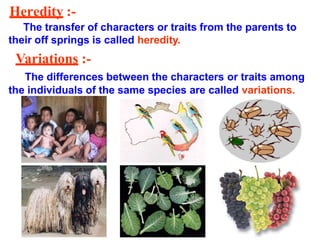
Variations :-
The differences between the characters or traits among
the individuals of the same species are called variations.
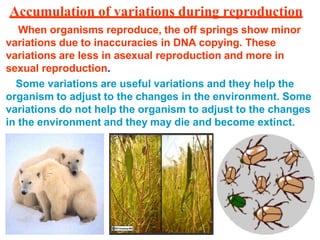
Accumulation of variations during reproduction
When organisms reproduce, the off springs show minor
variations due to inaccuracies in DNA copying. These
variations are less in asexual reproduction and more in
sexual reproduction.
Some variations are useful variations and they help the
organism to adjust to the changes in the environment. Some
variations do not help the organism to adjust to the changes
in the environment and they may die and become extinct.
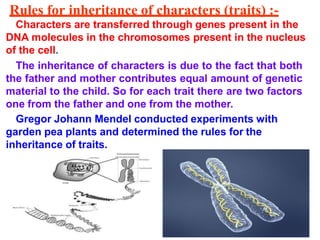
Rules for inheritance of characters (traits) :-
Characters are transferred through genes present in the
DNA molecules in the chromosomes present in the nucleus
of the cell.
The inheritance of characters is due to the fact that both
the father and mother contributes equal amount of genetic
material to the child. So for each trait there are two factors
one from the father and one from the mother.
Gregor Johann Mendel conducted experiments with
garden pea plants and determined the rules for the
inheritance of traits.
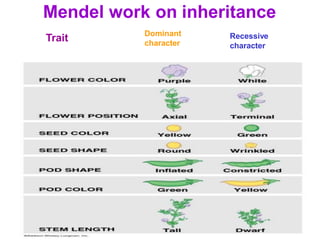
Mendel work on inheritance
Trait Dominant
character
Recessive
character
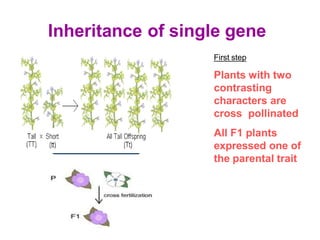
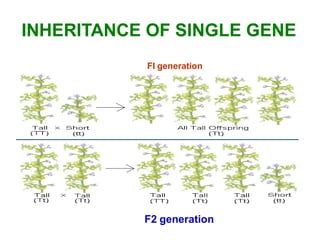
Inheritance of single gene
First step
Plants with two
contrasting
characters are
cross pollinated
All F1 plants
expressed one of
the parental trait
•
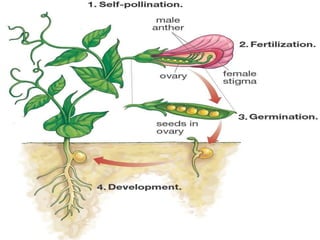
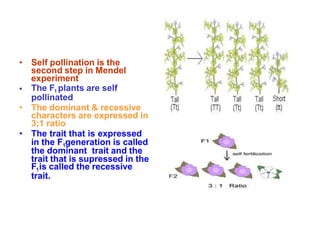
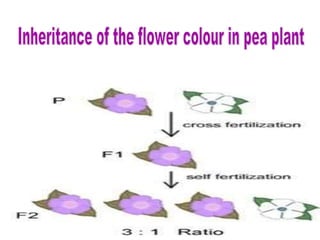
• Self pollination is the
second step in Mendel
experiment
The F1 plants are self
pollinated
• The dominant & recessive
characters are expressed in
3;1 ratio
• The trait that is expressed
in the F1generation is called
the dominant trait and the
trait that is supressed in the
F1is called the recessive
trait.
INHERITANCE OF SINGLE GENE
FI generation
F2 generation
Mendel conclusions based on
his observations
• 1. Mendel proposed that some thing
was being stably passed down,
unchanged from parents to offsprings
through the gametes , over successive
generations . He called these things as
the factors. Now we call them as genes
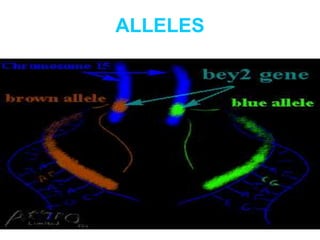
ALLELES
Genes & Alleles
• Genes are the units of the inheritance
• They contain the information that is
required to express a particular trait in
an organism
• Genes which code for a pair of
contrasting characters are known as
alleles
• Different forms of the same gene are said
to be alleles
Homozygous & Heterozygius
condition
• If the two alleles of the gene are similar , it is
said to be homozygous condition
• If the two alleles of the gene are dissimilar ,
it is said to be heterozygous condition
TT, tt Homozygous condition
Tt Heterozygous condition
T denotes the dominant trait
t denotes the recessive trait
TT, Tt denote the character tall
tt denote the character dwarf
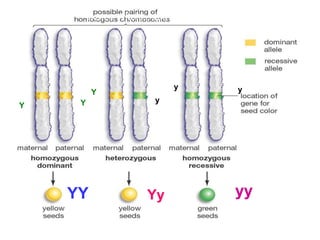
Genes, Alleles, and
YY Yy yy
Y Y
Y
y
y y
PHENOTYPE & GENOTYPE
• Observable character of the trait is
called Phenotype . It is a descriptive
term
• Ex- Tall or Dwarf
• Genetic constitution of the trait is said
to be Genotype
• Ex- TT, Tt, tt
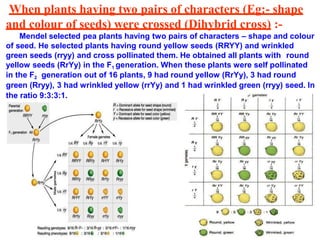
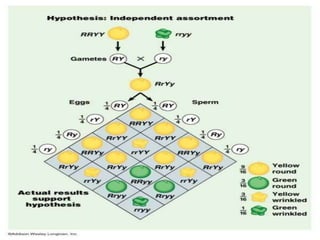
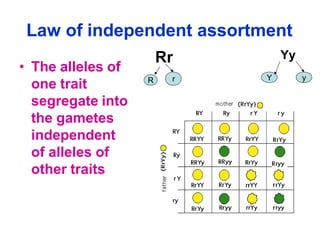
When plants having two pairs of characters (Eg:- shape
and colour of seeds) were crossed (Dihybrid cross) :-
Mendel selected pea plants having two pairs of characters – shape and colour
of seed. He selected plants having round yellow seeds (RRYY) and wrinkled
green seeds (rryy) and cross pollinated them. He obtained all plants with round
yellow seeds (RrYy) in the F1 generation. When these plants were self pollinated
in the F2 generation out of 16 plants, 9 had round yellow (RrYy), 3 had round
green (Rryy), 3 had wrinkled yellow (rrYy) and 1 had wrinkled green (rryy) seed. In
the ratio 9:3:3:1.
Mendal laws
• 1. Law of dominance
• 2, Law of segregation
• 3. Law of independent assortment
• The first two laws are derived from the
monohybrid cross
• The third law is derived from the
dihybrid cross
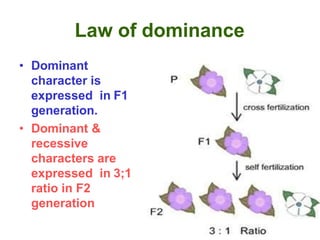
Law of dominance
• Dominant
character is
expressed in F1
generation.
• Dominant &
recessive
characters are
expressed in 3;1
ratio in F2
generation
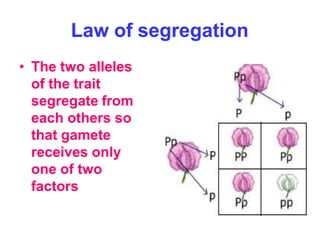
Law of segregation
• The two alleles
of the trait
segregate from
each others so
that gamete
receives only
one of two
factors
Law of independent assortment
• The alleles of
one trait
segregate into
the gametes
independent
of alleles of
other traits
Yy
R
Rr
r Y y
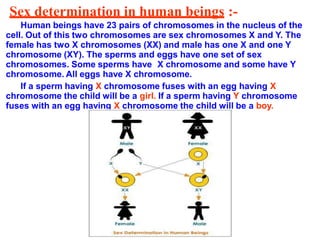
Sex determination in human beings :-
Human beings have 23 pairs of chromosomes in the nucleus of the
cell. Out of this two chromosomes are sex chromosomes X and Y. The
female has two X chromosomes (XX) and male has one X and one Y
chromosome (XY). The sperms and eggs have one set of sex
chromosomes. Some sperms have X chromosome and some have Y
chromosome. All eggs have X chromosome.
If a sperm having X chromosome fuses with an egg having X
chromosome the child will be a girl. If a sperm having Y chromosome
fuses with an egg having X chromosome the child will be a boy.

heredity class 10.pptx

  • 1.
    • Transmission ofcharacters from one generation to the next generation is called heredity • Variations are existed in the wild populations of plants &animals
  • 2.
    Heredity :- The transferof characters or traits from the parents to their off springs is called heredity. Variations :- The differences between the characters or traits among the individuals of the same species are called variations.
  • 3.
    Accumulation of variationsduring reproduction When organisms reproduce, the off springs show minor variations due to inaccuracies in DNA copying. These variations are less in asexual reproduction and more in sexual reproduction. Some variations are useful variations and they help the organism to adjust to the changes in the environment. Some variations do not help the organism to adjust to the changes in the environment and they may die and become extinct.
  • 4.
    Rules for inheritanceof characters (traits) :- Characters are transferred through genes present in the DNA molecules in the chromosomes present in the nucleus of the cell. The inheritance of characters is due to the fact that both the father and mother contributes equal amount of genetic material to the child. So for each trait there are two factors one from the father and one from the mother. Gregor Johann Mendel conducted experiments with garden pea plants and determined the rules for the inheritance of traits.
  • 5.
    Mendel work oninheritance Trait Dominant character Recessive character
  • 6.
    Inheritance of singlegene First step Plants with two contrasting characters are cross pollinated All F1 plants expressed one of the parental trait
  • 8.
    • • Self pollinationis the second step in Mendel experiment The F1 plants are self pollinated • The dominant & recessive characters are expressed in 3;1 ratio • The trait that is expressed in the F1generation is called the dominant trait and the trait that is supressed in the F1is called the recessive trait.
  • 9.
    INHERITANCE OF SINGLEGENE FI generation F2 generation
  • 11.
    Mendel conclusions basedon his observations • 1. Mendel proposed that some thing was being stably passed down, unchanged from parents to offsprings through the gametes , over successive generations . He called these things as the factors. Now we call them as genes
  • 12.
  • 13.
    Genes & Alleles •Genes are the units of the inheritance • They contain the information that is required to express a particular trait in an organism • Genes which code for a pair of contrasting characters are known as alleles • Different forms of the same gene are said to be alleles
  • 14.
    Homozygous & Heterozygius condition •If the two alleles of the gene are similar , it is said to be homozygous condition • If the two alleles of the gene are dissimilar , it is said to be heterozygous condition TT, tt Homozygous condition Tt Heterozygous condition T denotes the dominant trait t denotes the recessive trait TT, Tt denote the character tall tt denote the character dwarf
  • 15.
    Genes, Alleles, and YYYy yy Y Y Y y y y
  • 16.
    PHENOTYPE & GENOTYPE •Observable character of the trait is called Phenotype . It is a descriptive term • Ex- Tall or Dwarf • Genetic constitution of the trait is said to be Genotype • Ex- TT, Tt, tt
  • 17.
    When plants havingtwo pairs of characters (Eg:- shape and colour of seeds) were crossed (Dihybrid cross) :- Mendel selected pea plants having two pairs of characters – shape and colour of seed. He selected plants having round yellow seeds (RRYY) and wrinkled green seeds (rryy) and cross pollinated them. He obtained all plants with round yellow seeds (RrYy) in the F1 generation. When these plants were self pollinated in the F2 generation out of 16 plants, 9 had round yellow (RrYy), 3 had round green (Rryy), 3 had wrinkled yellow (rrYy) and 1 had wrinkled green (rryy) seed. In the ratio 9:3:3:1.
  • 19.
    Mendal laws • 1.Law of dominance • 2, Law of segregation • 3. Law of independent assortment • The first two laws are derived from the monohybrid cross • The third law is derived from the dihybrid cross
  • 20.
    Law of dominance •Dominant character is expressed in F1 generation. • Dominant & recessive characters are expressed in 3;1 ratio in F2 generation
  • 21.
    Law of segregation •The two alleles of the trait segregate from each others so that gamete receives only one of two factors
  • 22.
    Law of independentassortment • The alleles of one trait segregate into the gametes independent of alleles of other traits Yy R Rr r Y y
  • 23.
    Sex determination inhuman beings :- Human beings have 23 pairs of chromosomes in the nucleus of the cell. Out of this two chromosomes are sex chromosomes X and Y. The female has two X chromosomes (XX) and male has one X and one Y chromosome (XY). The sperms and eggs have one set of sex chromosomes. Some sperms have X chromosome and some have Y chromosome. All eggs have X chromosome. If a sperm having X chromosome fuses with an egg having X chromosome the child will be a girl. If a sperm having Y chromosome fuses with an egg having X chromosome the child will be a boy.