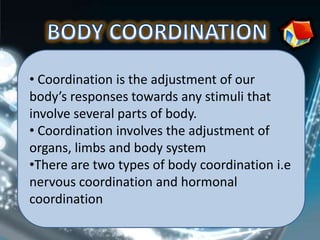
• Coordination is the adjustment of our
body’s responses towards any stimuli that
involve several parts of body.
• Coordination involves the adjustment of
organs, limbs and body system
•There are two types of body coordination i.e
nervous coordination and hormonal
coordination
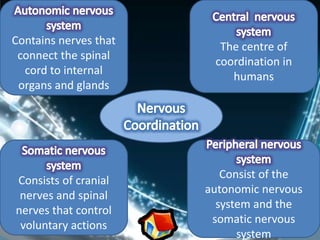
Contains nerves that
                         The centre of
 connect the spinal
                        coordination in
  cord to internal
                           humans
 organs and glands


Consists of cranial       Consist of the
                       autonomic nervous
 nerves and spinal
                         system and the
nerves that control
                        somatic nervous
 voluntary actions
                             system
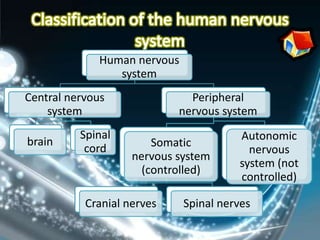
Human nervous
                 system
Central nervous               Peripheral
    system                  nervous system
          Spinal                        Autonomic
brain                   Somatic
           cord                           nervous
                    nervous system
                                        system (not
                      (controlled)
                                        controlled)

           Cranial nerves     Spinal nerves
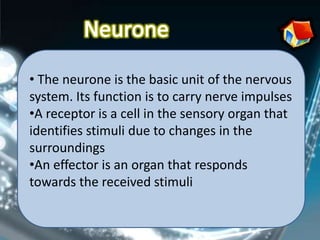
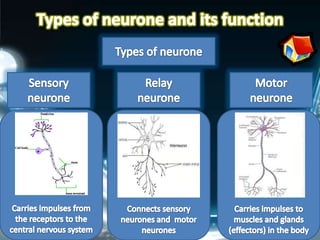
• The neurone is the basic unit of the nervous
system. Its function is to carry nerve impulses
•A receptor is a cell in the sensory organ that
identifies stimuli due to changes in the
surroundings
•An effector is an organ that responds
towards the received stimuli
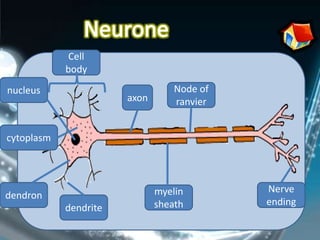
Cell
            body
nucleus                           Node of
                       axon       ranvier


cytoplasm


                              myelin        Nerve
dendron
                              sheath        ending
            dendrite
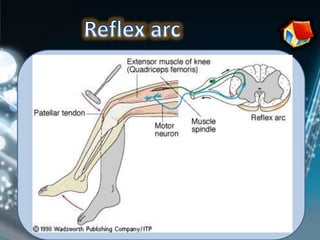
• Reflex action is the automatic quick body
response towards external stimuli that occurs
without brain control
•Reflex action is controlled by the spinal cord
and this action protects us from danger or
injury
•Receptors are sensory cells in the skin
whereas effectors are limb muscles.
• A proprioceptor can act as sensory organ
because of its sensitivity to muscle
contraction
•Kinaesthetic sensory receptors are found in
the muscles, joints, ligaments and tendons
•Kinaesthetic sense enables us to be aware
of the position of our body to maintain
balance and also to enables us to detect
body movements
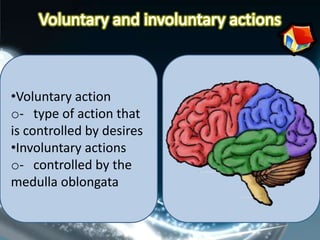
•Voluntary action
o- type of action that
is controlled by desires
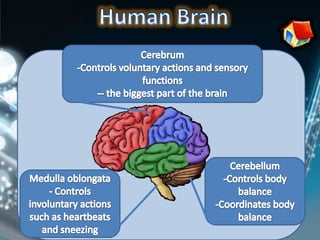
•Involuntary actions
o- controlled by the
medulla oblongata
• Alcohol affects the nervous system by
hindering the efficiency of its function and
coordination
•The response time of a drunkard during
emergencies is longer
•Alcohol can interfere with the cerebrum and
slow down its impulse transmissions
•Alcohol can damage liver cells, decrease bile
production and cause liver cirrhosis and
hepatitis

Body coordination (Chapter 2 Form 4)

  • 3.
    • Coordination isthe adjustment of our body’s responses towards any stimuli that involve several parts of body. • Coordination involves the adjustment of organs, limbs and body system •There are two types of body coordination i.e nervous coordination and hormonal coordination
  • 4.
    Contains nerves that The centre of connect the spinal coordination in cord to internal humans organs and glands Consists of cranial Consist of the autonomic nervous nerves and spinal system and the nerves that control somatic nervous voluntary actions system
  • 5.
    Human nervous system Central nervous Peripheral system nervous system Spinal Autonomic brain Somatic cord nervous nervous system system (not (controlled) controlled) Cranial nerves Spinal nerves
  • 6.
    • The neuroneis the basic unit of the nervous system. Its function is to carry nerve impulses •A receptor is a cell in the sensory organ that identifies stimuli due to changes in the surroundings •An effector is an organ that responds towards the received stimuli
  • 8.
    Cell body nucleus Node of axon ranvier cytoplasm myelin Nerve dendron sheath ending dendrite
  • 9.
    • Reflex actionis the automatic quick body response towards external stimuli that occurs without brain control •Reflex action is controlled by the spinal cord and this action protects us from danger or injury •Receptors are sensory cells in the skin whereas effectors are limb muscles.
  • 11.
    • A proprioceptorcan act as sensory organ because of its sensitivity to muscle contraction •Kinaesthetic sensory receptors are found in the muscles, joints, ligaments and tendons •Kinaesthetic sense enables us to be aware of the position of our body to maintain balance and also to enables us to detect body movements
  • 13.
    •Voluntary action o- typeof action that is controlled by desires •Involuntary actions o- controlled by the medulla oblongata
  • 17.
    • Alcohol affectsthe nervous system by hindering the efficiency of its function and coordination •The response time of a drunkard during emergencies is longer •Alcohol can interfere with the cerebrum and slow down its impulse transmissions •Alcohol can damage liver cells, decrease bile production and cause liver cirrhosis and hepatitis