Life Processes-Respiration
O2
ENERGY
The process of releasing energy from food is called respiration.
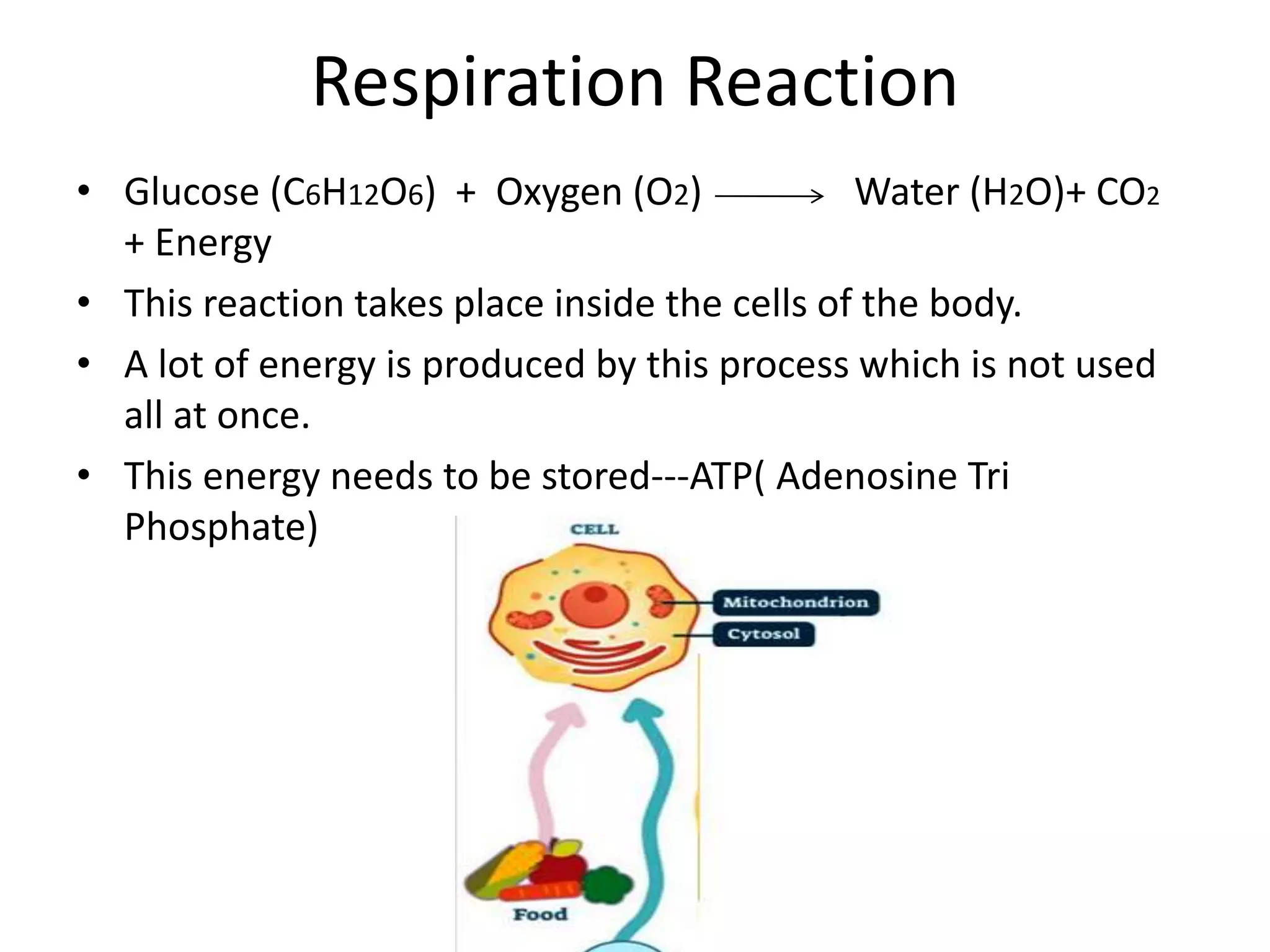
Respiration Reaction
• Glucose (C6H12O6) + Oxygen (O2) Water (H2O)+ CO2
+ Energy
• This reaction takes place inside the cells of the body.
• A lot of energy is produced by this process which is not used
all at once.
• This energy needs to be stored---ATP( Adenosine Tri
Phosphate)
TEST YOUR SELF
• What is respiration?
• Is respiration important for organisms? Why ?
• What word is spelled incorrectly in every
single dictionary?
How is energy stored and utilised when needed
• Adenosine Di Phosphate(ADP) + Pi + Energy ATP
• ADP and Pi are already present in the cell. Energy comes from
respiration
Types of Respiration
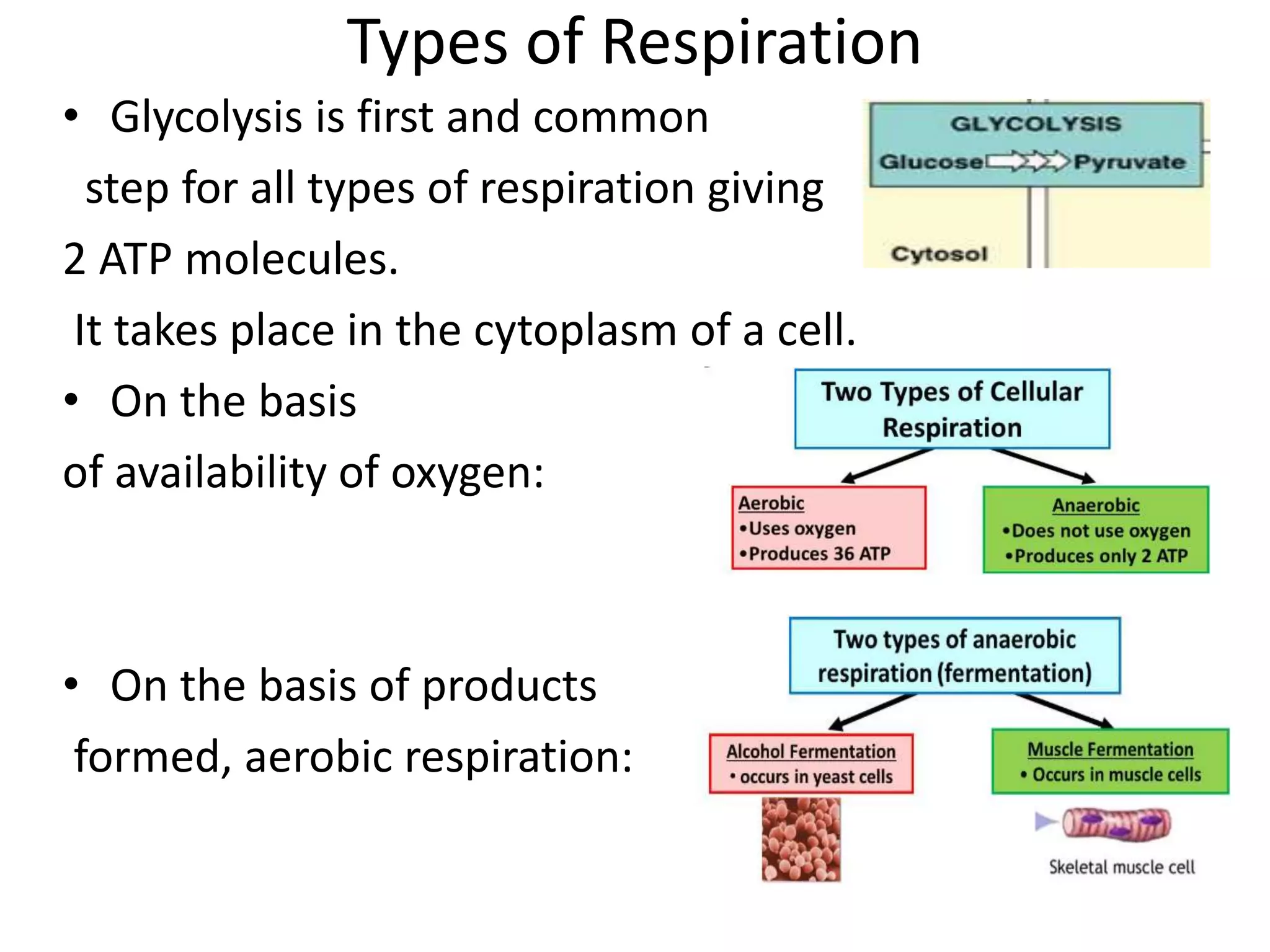
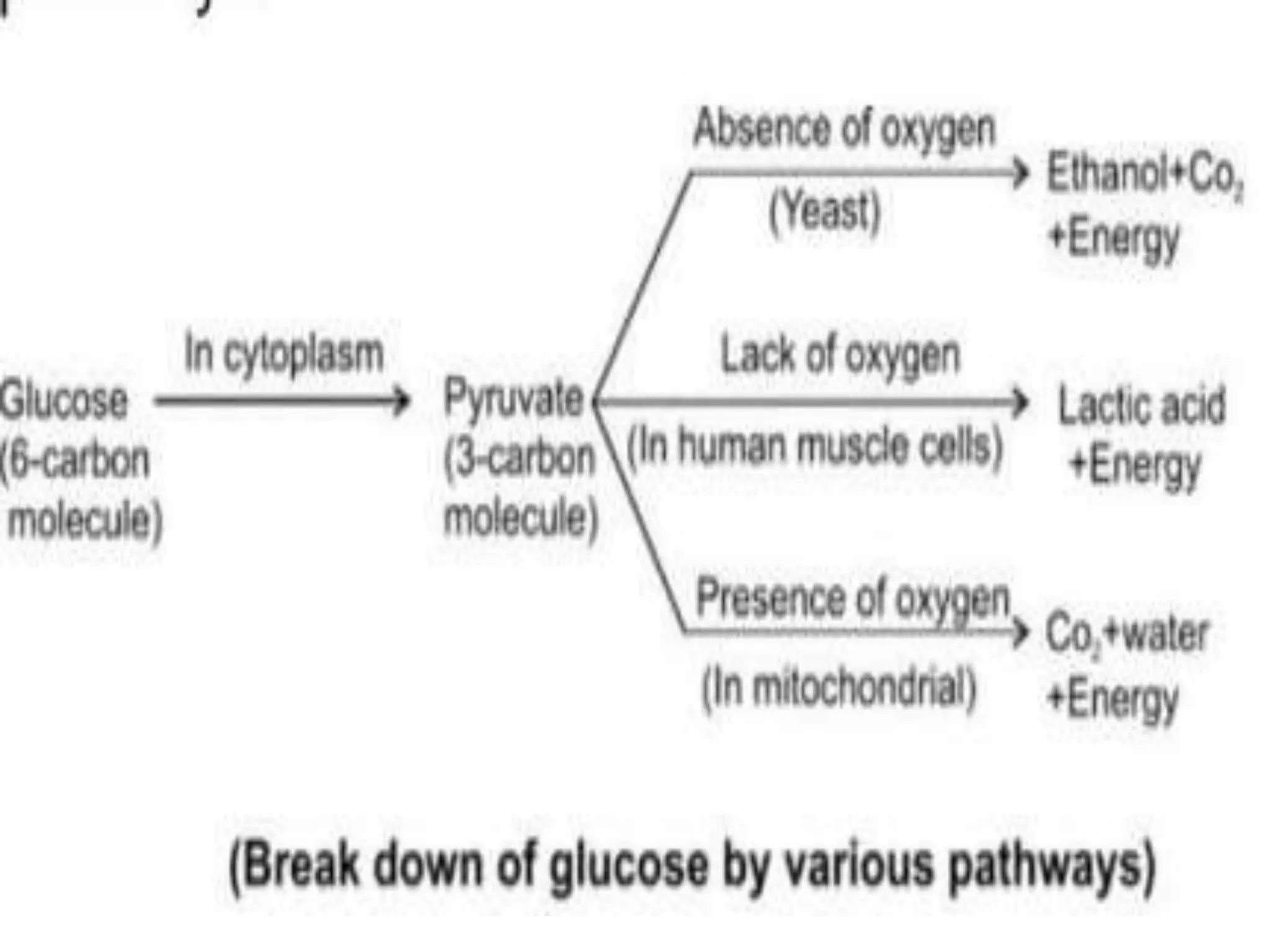
• Glycolysis is first and common
step for all types of respiration giving
2 ATP molecules.
It takes place in the cytoplasm of a cell.
• On the basis
of availability of oxygen:
• On the basis of products
formed, aerobic respiration:
TEST YOUR SELF
• What is the energy currency of the cell?
• What happens when ADP gets converted to
ATP?
• How many types of respiration are there?
• Name the first process in respiration. Does it
require oxygen?
• What is it that lives if it is fed, and dies if you
give it a drink?
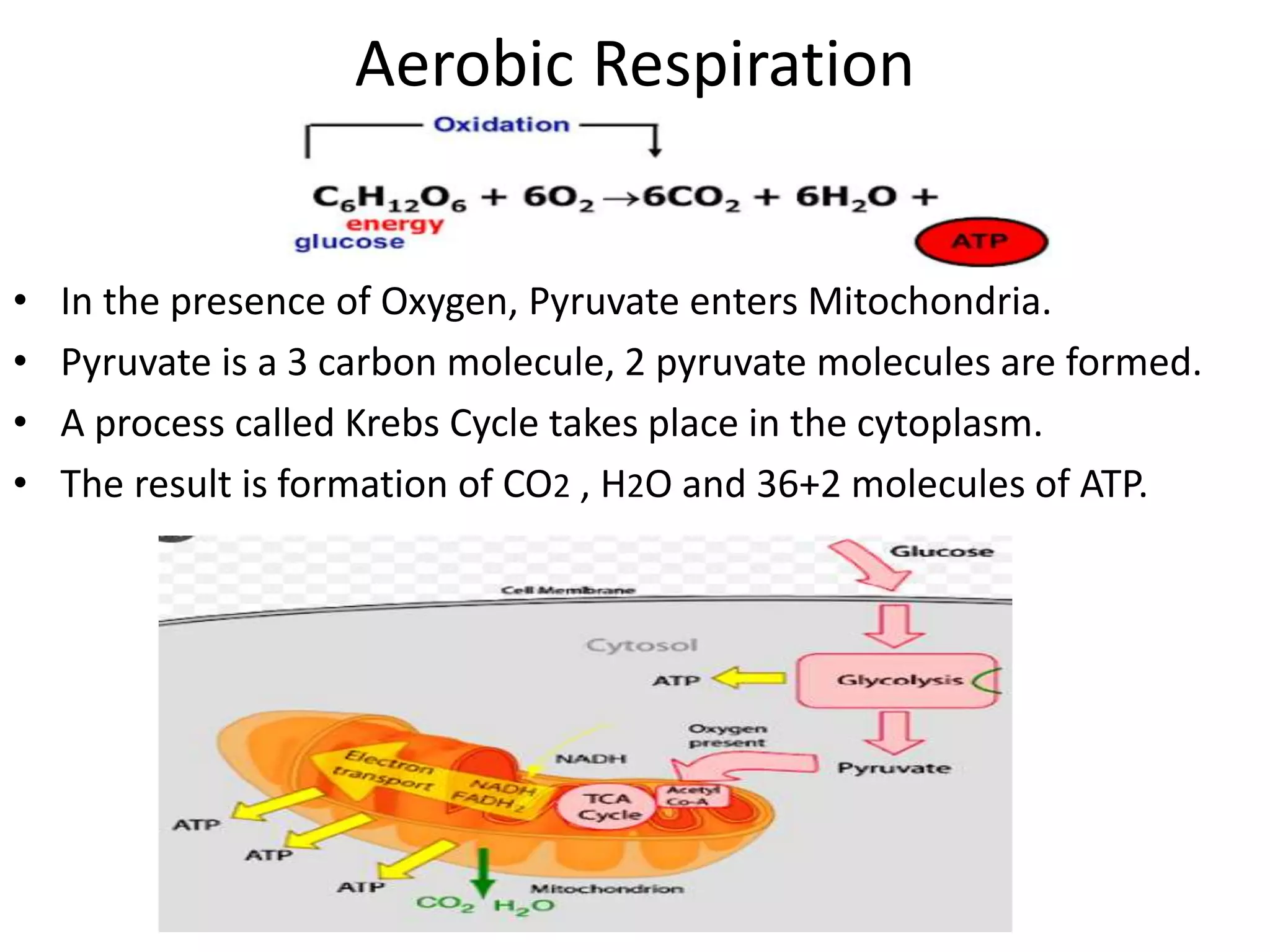
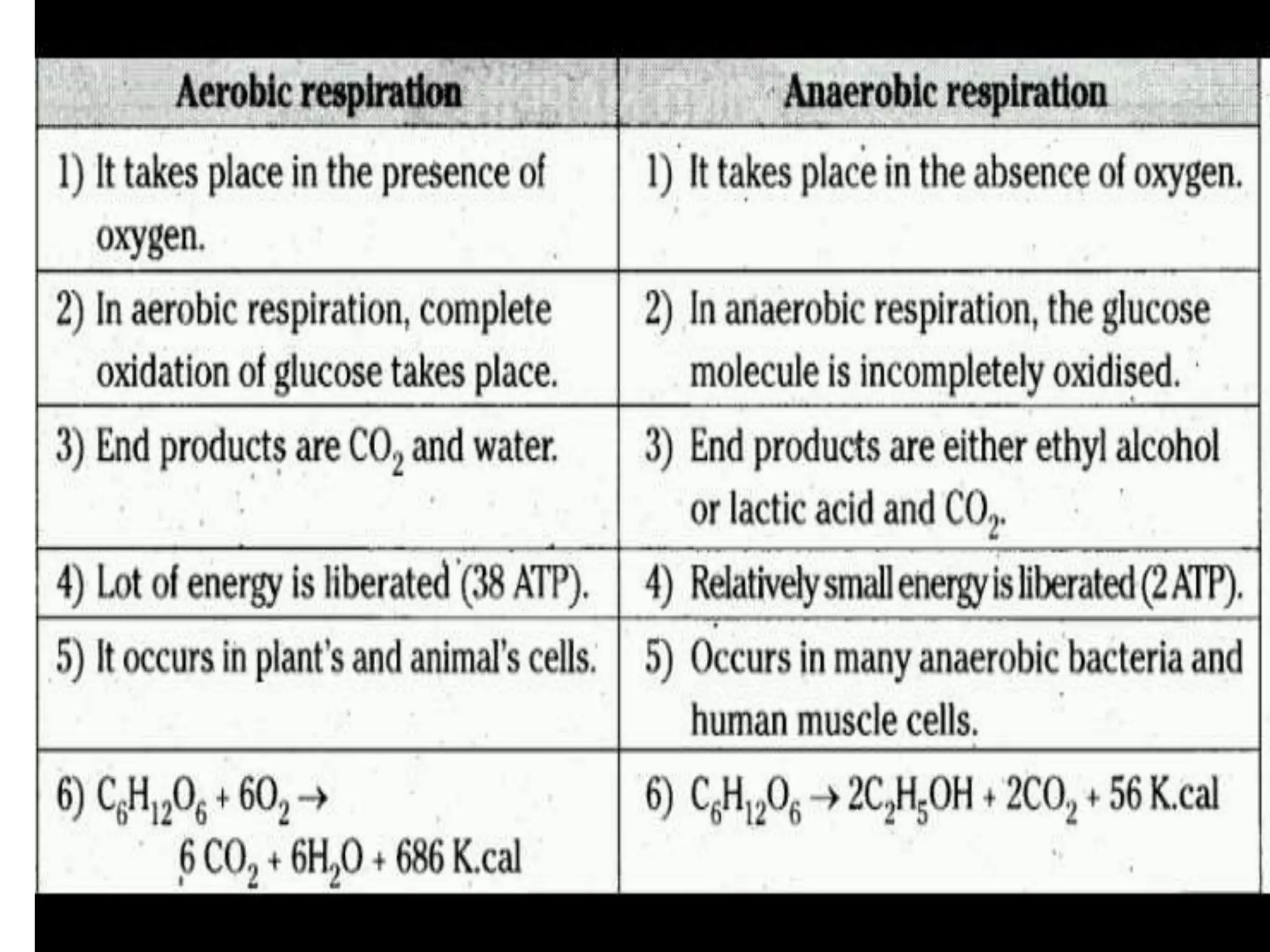
Aerobic Respiration
• In the presence of Oxygen, Pyruvate enters Mitochondria.
• Pyruvate is a 3 carbon molecule, 2 pyruvate molecules are formed.
• A process called Krebs Cycle takes place in the cytoplasm.
• The result is formation of CO2 , H2O and 36+2 molecules of ATP.
Anaerobic Respiration
• In the absence of O2, Pyruvate remains in the cytoplasm.
• Fermentation of Pyruvate takes place to produce either lactic
acid(in muscles) or ethyl alcohol(in yeast) and just 2 molecules
of ATP.
TEST YOUR SELF
• What happens to pyruvate in the presence of
oxygen?
• Name the process that takes place in the
above condition.
• Why do we feel pain in our muscles after
rigorous exercise?
• How is the above mentioned process different
in yeast?
• What goes up but never ever comes down?
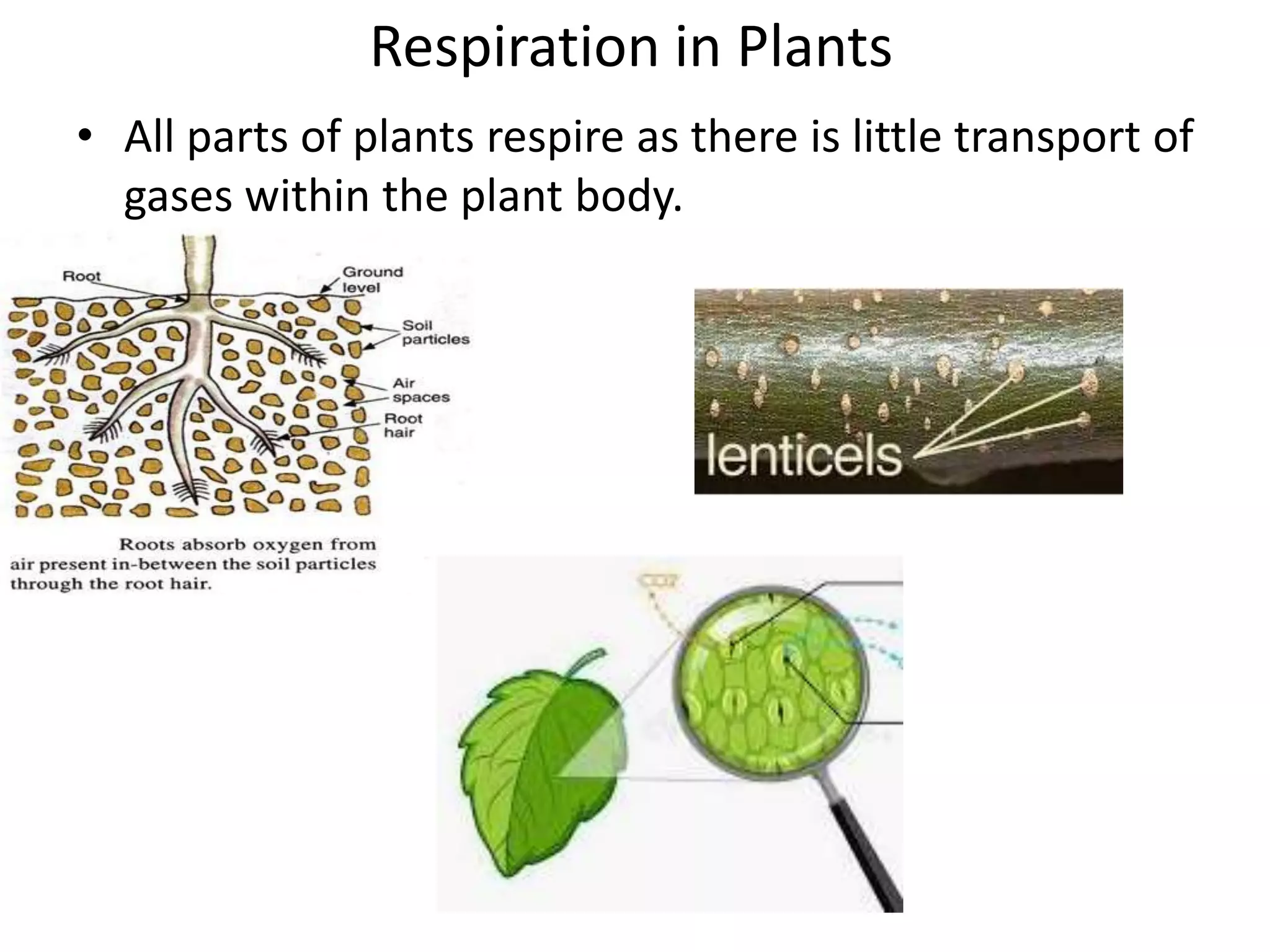
Respiration in Plants
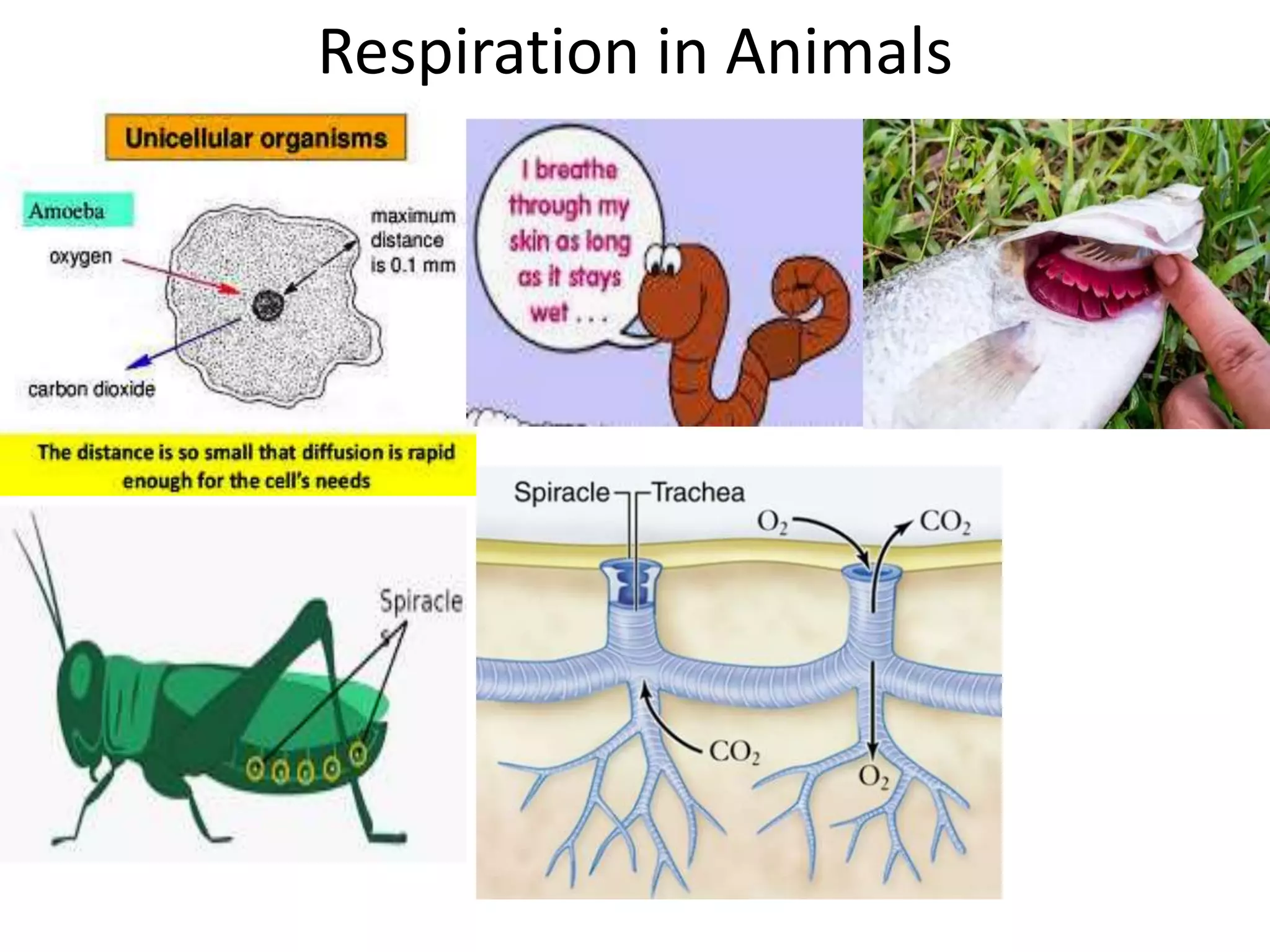
• All parts of plants respire as there is little transport of
gases within the plant body.
Respiration in Animals
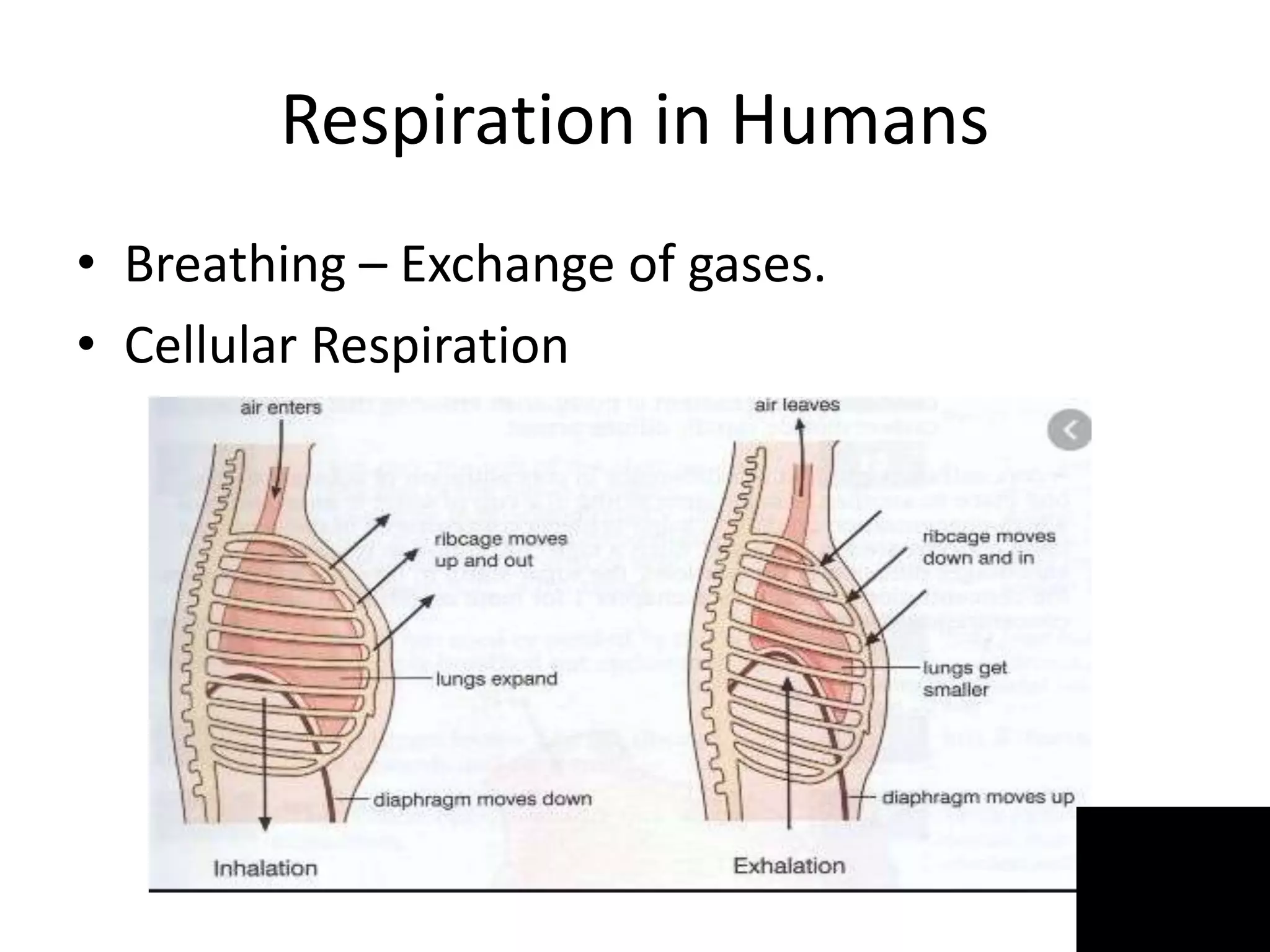
Respiration in Humans
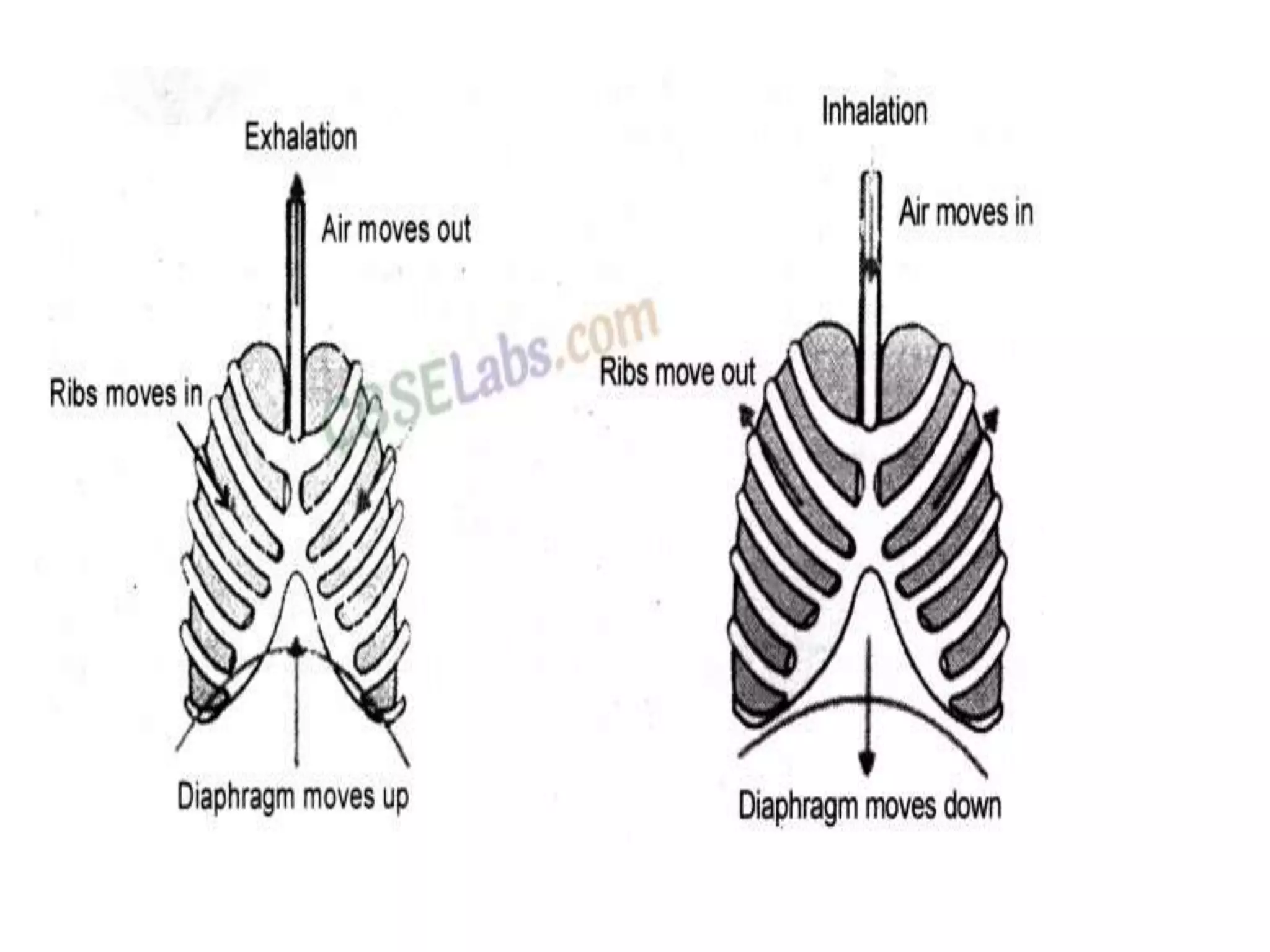
• Breathing – Exchange of gases.
• Cellular Respiration
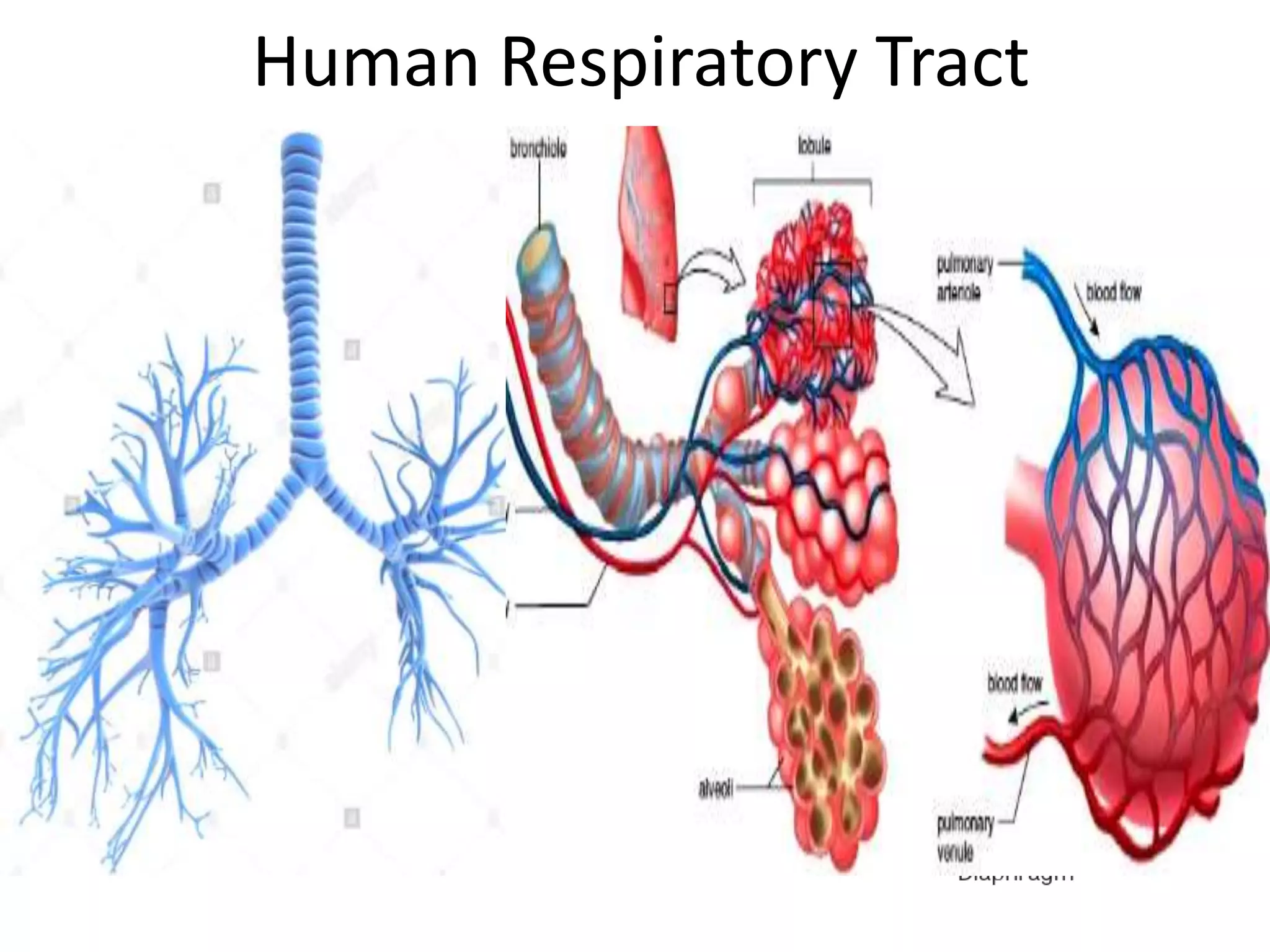
Human Respiratory Tract
• Do all cells use oxygen to produce energy?
• What is the other name of wind pipe?
• Where does exchange of gases takes place?
• Thoracic volume increases/decreases during
inhalation.
• What would happen if epiglottis is porous or absent
in our bodies?
• Why do skeletal muscles respire anaerobically
though they possess mitochondria?

respiration class 10.pptx

  • 1.
    Life Processes-Respiration O2 ENERGY The processof releasing energy from food is called respiration.
  • 2.
    Respiration Reaction • Glucose(C6H12O6) + Oxygen (O2) Water (H2O)+ CO2 + Energy • This reaction takes place inside the cells of the body. • A lot of energy is produced by this process which is not used all at once. • This energy needs to be stored---ATP( Adenosine Tri Phosphate)
  • 3.
    TEST YOUR SELF •What is respiration? • Is respiration important for organisms? Why ? • What word is spelled incorrectly in every single dictionary?
  • 4.
    How is energystored and utilised when needed • Adenosine Di Phosphate(ADP) + Pi + Energy ATP • ADP and Pi are already present in the cell. Energy comes from respiration
  • 5.
    Types of Respiration •Glycolysis is first and common step for all types of respiration giving 2 ATP molecules. It takes place in the cytoplasm of a cell. • On the basis of availability of oxygen: • On the basis of products formed, aerobic respiration:
  • 6.
    TEST YOUR SELF •What is the energy currency of the cell? • What happens when ADP gets converted to ATP? • How many types of respiration are there? • Name the first process in respiration. Does it require oxygen? • What is it that lives if it is fed, and dies if you give it a drink?
  • 7.
    Aerobic Respiration • Inthe presence of Oxygen, Pyruvate enters Mitochondria. • Pyruvate is a 3 carbon molecule, 2 pyruvate molecules are formed. • A process called Krebs Cycle takes place in the cytoplasm. • The result is formation of CO2 , H2O and 36+2 molecules of ATP.
  • 8.
    Anaerobic Respiration • Inthe absence of O2, Pyruvate remains in the cytoplasm. • Fermentation of Pyruvate takes place to produce either lactic acid(in muscles) or ethyl alcohol(in yeast) and just 2 molecules of ATP.
  • 11.
    TEST YOUR SELF •What happens to pyruvate in the presence of oxygen? • Name the process that takes place in the above condition. • Why do we feel pain in our muscles after rigorous exercise? • How is the above mentioned process different in yeast? • What goes up but never ever comes down?
  • 12.
    Respiration in Plants •All parts of plants respire as there is little transport of gases within the plant body.
  • 13.
  • 14.
    Respiration in Humans •Breathing – Exchange of gases. • Cellular Respiration
  • 16.
  • 17.
    • Do allcells use oxygen to produce energy? • What is the other name of wind pipe? • Where does exchange of gases takes place? • Thoracic volume increases/decreases during inhalation. • What would happen if epiglottis is porous or absent in our bodies? • Why do skeletal muscles respire anaerobically though they possess mitochondria?