Plasma
Water
90%

dissolved solutes
10%

blood gases
O2 and Co2

organic substancesIn-organic substances
9.1 %
0.9 %
Various
electrolytes
Plasma
Others
as Na+
proteins
2%
K+
7.1
Lipids, enzymes
Hco3Hormones,
Ca++
nutrients
Po4-Waste products
Plasma Proteins
Albumin

globulins

3.5 -5.0 gm%

2.5 – 3.5 gm%

0.3 gm%

0.01 gm%

Types

One type

Several types

One type

One type

M.W

69000

90000 - 156000

340000

Liver except
γ globulins
synthesized in
lymphoid tissues by
plasma cells

liver

Liver

Enzymatic function
Defense function

Blood clotting
Blood viscosity

Blood
clotting

%

Site of
liver
formation
Main
function

Maintaining
plasma colloidal.

Fibrinogen

Prothrombin
Dynamic state of plasma proteins
Plasma Proteins

Tissues

Amino acids

Plasma
Liver
When the level of plasma proteins decrease as in
:hemorrhage
:it can be regenerated in two phases
Slow phase

Rapid phase
( few hours )

)days(

from tissue proteins.
re-synthesis from
tissue proteins

and

dietary proteins
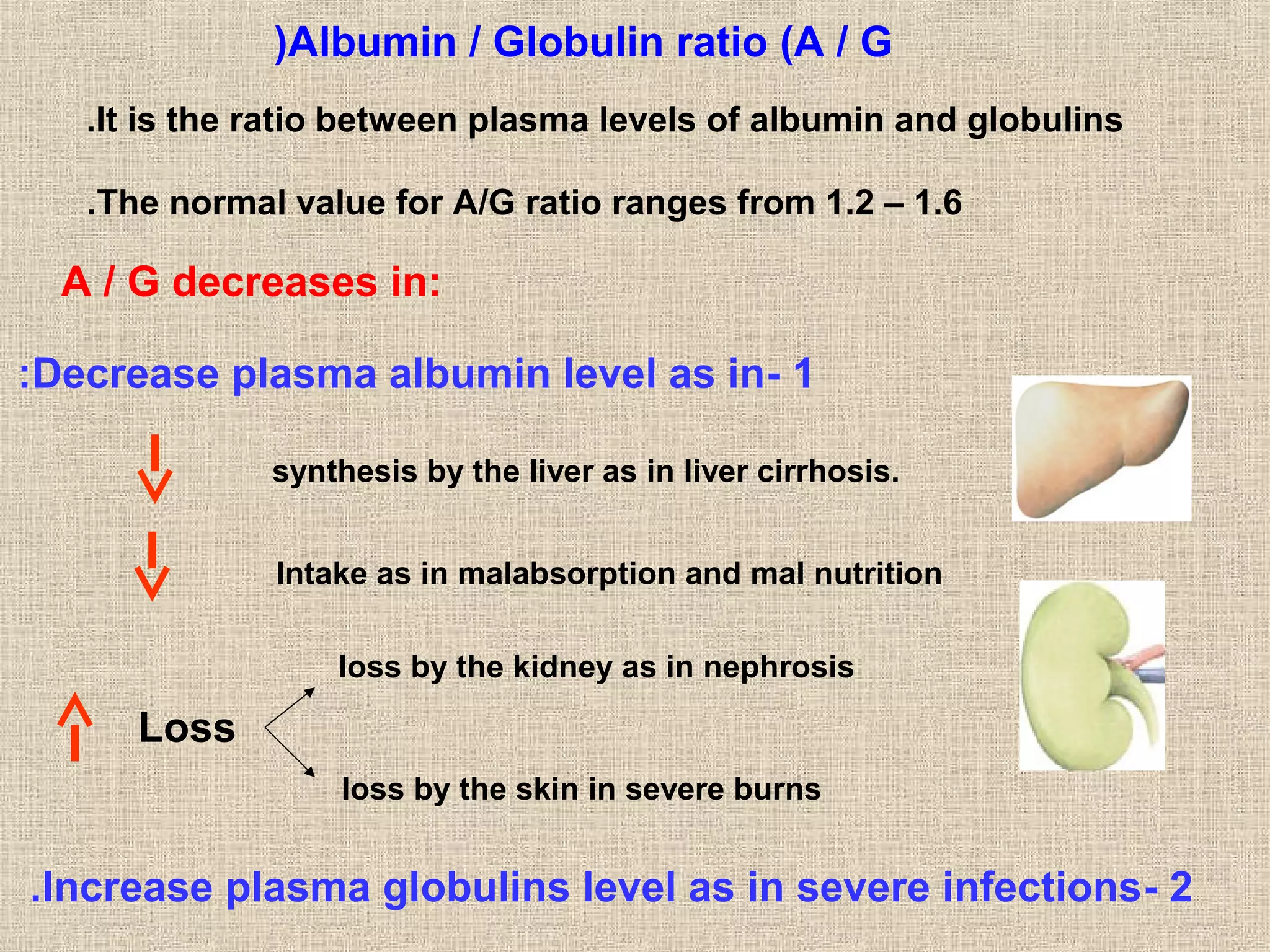
(Albumin / Globulin ratio (A / G
.It is the ratio between plasma levels of albumin and globulins
.The normal value for A/G ratio ranges from 1.2 – 1.6

A / G decreases in:
:Decrease plasma albumin level as in- 1
synthesis by the liver as in liver cirrhosis.
Intake as in malabsorption and mal nutrition
loss by the kidney as in nephrosis

Loss
loss by the skin in severe burns

.Increase plasma globulins level as in severe infections - 2
:A / G increases in

Congenital agammaglobulinemia where the
globulin fraction is decreased.
Functions of plasma proteins
1-Osmotic function.
2-Buffer function.
3-Defensive function.
4-Blood clotting.
5-Blood viscosity.
6-Regulation of capillary permeability.
7-Transport and conservation of important
elements.
8-Source of amino acids for the tissues
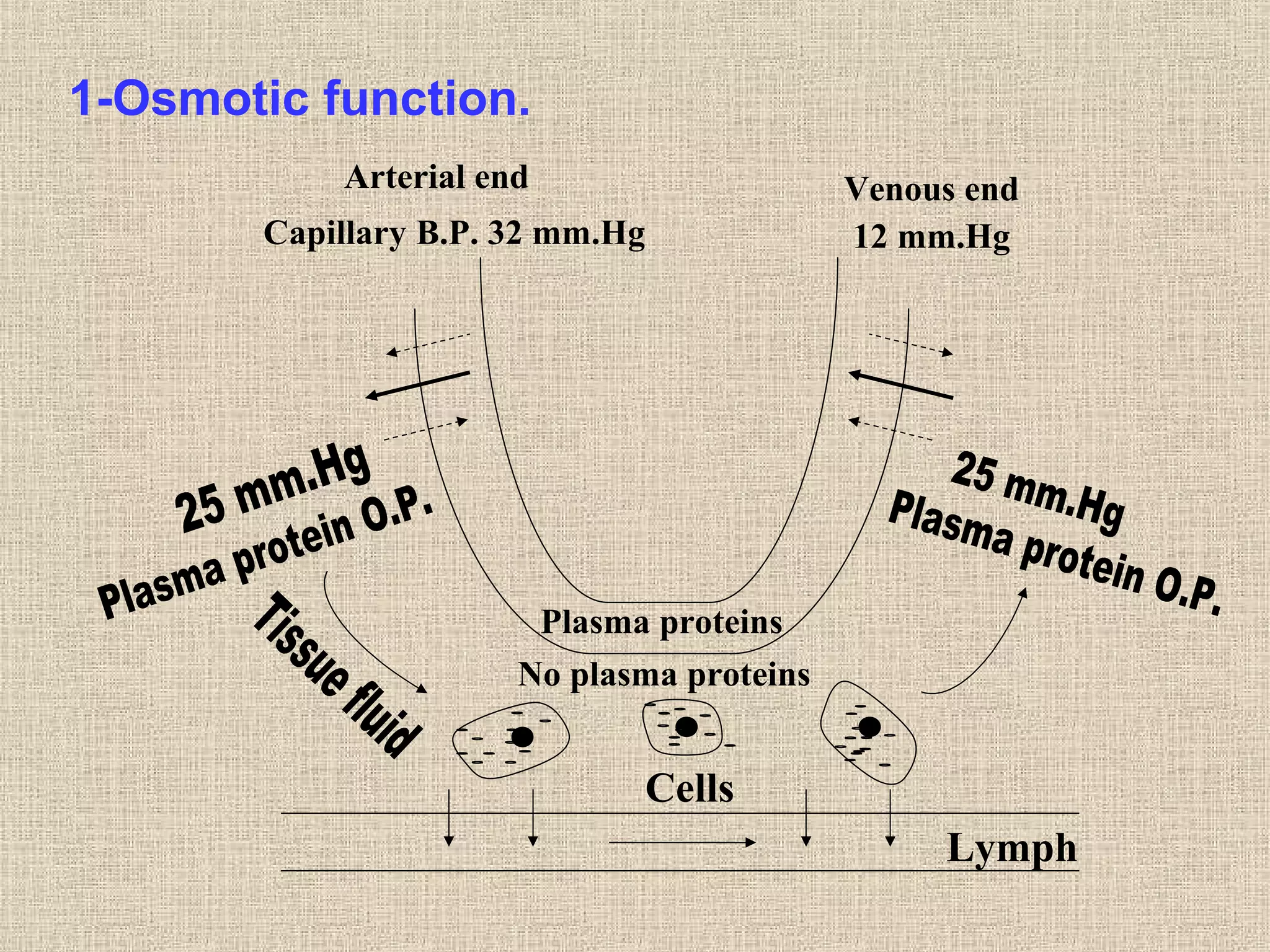
1-Osmotic function.
Arterial end
Capillary B.P. 32 mm.Hg

Venous end
12 mm.Hg

Plasma proteins
No plasma proteins

Cells
Lymph
The osmotic pressure of the plasma = 5000 mmHg
Is due to
Crystalloids = Na, Cl, K …

Colloids = plasma proteins

.Crystalloids are present in the plasma and tissue fluid in the same concentration
And So

The net osmotic effect of crystalloids is zero
.The plasma proteins are present only in the plasma

The tissue fluid is almost free of proteins
.The plasma proteins are responsible for 25 – 30 mmHg of the plasma O.P

So, some fluid is reabsorbed from tissue fluid to the plasma by the
osmotic effect of plasma proteins.

Albumin is responsible for most ( 80 % ) of the osmotic pressure of the
:plasma due to
Highest concentration
Smallest molecular size = great number of molecules
2-Buffer function:
Buffer system is composed of weak acid + its salt with a strong
base
): At normal Ph of blood ( 7.4, slightly alkaline
Plasma proteins are present in the form of proteinic acid ( weak
acid ) and Na proteinate ( its salt with strong base).
Thus it acts as a buffer system preventing
. excessive changes in Ph
Lactic acid (relatively strong) + Na protinate
proteinic acid ( weak acid )
NaOH (strong alkali) + proteinic acid

Na lactate +

Na proteinate + H2O
3-Defensive function.

Gamma globulins are responsible for
defending the body against micro-organisms
and their toxins {humoral immunity}.
4-Blood clotting.

Fibrinogen, prothrombin and other protein clotting factors
are essential for the coagulation process.
5-Blood viscosity.

Blood

3.0

1.5
1.0

plasma
Water
Viscosity is important in the production of the peripheral
resistance and maintenance of arterial blood pressure.

The fibrinogen molecule contributes more than other
plasma proteins to the viscosity of the blood because of its
.elongated shape

RBC’s are the main cause of blood viscosity because it
is the main cellular element of the blood
6-Regulation of capillary permeability

Most of the pores in the capillary wall are closed by
.plasma proteins
Decrease plasma proteins is associated with increasing
Capillary permeability.
7-Transport and conservation of important
elements.
carriers for important substances as hormones**
Significance:
The combined form acts as reservoir from which the free
substance is slowly releases e.g. Free T3
Prevent filtration of substances in the kidney and their
loss in urine.
**Bind harmful substances to prevent their hazards
e.g. bilirubin.
8- Plasma proteins as a source of amino acids for
the tissues

Plasma proteins act as a source for
rapid replacement of tissue proteins
in case of tissue protein depletion.

Blood #1, Plasma - Physiology

  • 1.
    Plasma Water 90% dissolved solutes 10% blood gases O2and Co2 organic substancesIn-organic substances 9.1 % 0.9 % Various electrolytes Plasma Others as Na+ proteins 2% K+ 7.1 Lipids, enzymes Hco3Hormones, Ca++ nutrients Po4-Waste products
  • 2.
    Plasma Proteins Albumin globulins 3.5 -5.0gm% 2.5 – 3.5 gm% 0.3 gm% 0.01 gm% Types One type Several types One type One type M.W 69000 90000 - 156000 340000 Liver except γ globulins synthesized in lymphoid tissues by plasma cells liver Liver Enzymatic function Defense function Blood clotting Blood viscosity Blood clotting % Site of liver formation Main function Maintaining plasma colloidal. Fibrinogen Prothrombin
  • 4.
    Dynamic state ofplasma proteins Plasma Proteins Tissues Amino acids Plasma Liver
  • 5.
    When the levelof plasma proteins decrease as in :hemorrhage :it can be regenerated in two phases Slow phase Rapid phase ( few hours ) )days( from tissue proteins. re-synthesis from tissue proteins and dietary proteins
  • 6.
    (Albumin / Globulinratio (A / G .It is the ratio between plasma levels of albumin and globulins .The normal value for A/G ratio ranges from 1.2 – 1.6 A / G decreases in: :Decrease plasma albumin level as in- 1 synthesis by the liver as in liver cirrhosis. Intake as in malabsorption and mal nutrition loss by the kidney as in nephrosis Loss loss by the skin in severe burns .Increase plasma globulins level as in severe infections - 2
  • 7.
    :A / Gincreases in Congenital agammaglobulinemia where the globulin fraction is decreased.
  • 8.
    Functions of plasmaproteins 1-Osmotic function. 2-Buffer function. 3-Defensive function. 4-Blood clotting. 5-Blood viscosity. 6-Regulation of capillary permeability. 7-Transport and conservation of important elements. 8-Source of amino acids for the tissues
  • 9.
    1-Osmotic function. Arterial end CapillaryB.P. 32 mm.Hg Venous end 12 mm.Hg Plasma proteins No plasma proteins Cells Lymph
  • 10.
    The osmotic pressureof the plasma = 5000 mmHg Is due to Crystalloids = Na, Cl, K … Colloids = plasma proteins .Crystalloids are present in the plasma and tissue fluid in the same concentration And So The net osmotic effect of crystalloids is zero .The plasma proteins are present only in the plasma The tissue fluid is almost free of proteins
  • 11.
    .The plasma proteinsare responsible for 25 – 30 mmHg of the plasma O.P So, some fluid is reabsorbed from tissue fluid to the plasma by the osmotic effect of plasma proteins. Albumin is responsible for most ( 80 % ) of the osmotic pressure of the :plasma due to Highest concentration Smallest molecular size = great number of molecules
  • 12.
    2-Buffer function: Buffer systemis composed of weak acid + its salt with a strong base ): At normal Ph of blood ( 7.4, slightly alkaline Plasma proteins are present in the form of proteinic acid ( weak acid ) and Na proteinate ( its salt with strong base). Thus it acts as a buffer system preventing . excessive changes in Ph Lactic acid (relatively strong) + Na protinate proteinic acid ( weak acid ) NaOH (strong alkali) + proteinic acid Na lactate + Na proteinate + H2O
  • 13.
    3-Defensive function. Gamma globulinsare responsible for defending the body against micro-organisms and their toxins {humoral immunity}.
  • 14.
    4-Blood clotting. Fibrinogen, prothrombinand other protein clotting factors are essential for the coagulation process.
  • 15.
  • 16.
    Viscosity is importantin the production of the peripheral resistance and maintenance of arterial blood pressure. The fibrinogen molecule contributes more than other plasma proteins to the viscosity of the blood because of its .elongated shape RBC’s are the main cause of blood viscosity because it is the main cellular element of the blood
  • 17.
    6-Regulation of capillarypermeability Most of the pores in the capillary wall are closed by .plasma proteins Decrease plasma proteins is associated with increasing Capillary permeability.
  • 18.
    7-Transport and conservationof important elements. carriers for important substances as hormones** Significance: The combined form acts as reservoir from which the free substance is slowly releases e.g. Free T3 Prevent filtration of substances in the kidney and their loss in urine. **Bind harmful substances to prevent their hazards e.g. bilirubin.
  • 19.
    8- Plasma proteinsas a source of amino acids for the tissues Plasma proteins act as a source for rapid replacement of tissue proteins in case of tissue protein depletion.