INTRODUCTION TO
HISTOLOGY
Prof. Redem C. Deligero, MATMRS;MSES
DEFINITION
 Histology is the branch of anatomy that
deals with the study of tissues in animal and
plants.
 It deals with the structure and its function.
 This subject itself intertwines the discipline in cell
biology, biochemistry, physiology and pathology.
MICROSCOPY
 Is the method used in the study of cells
and its structure using microscope.
Major Kind of Microscope
1.Light Microscope – Utilizes light for
illumination.
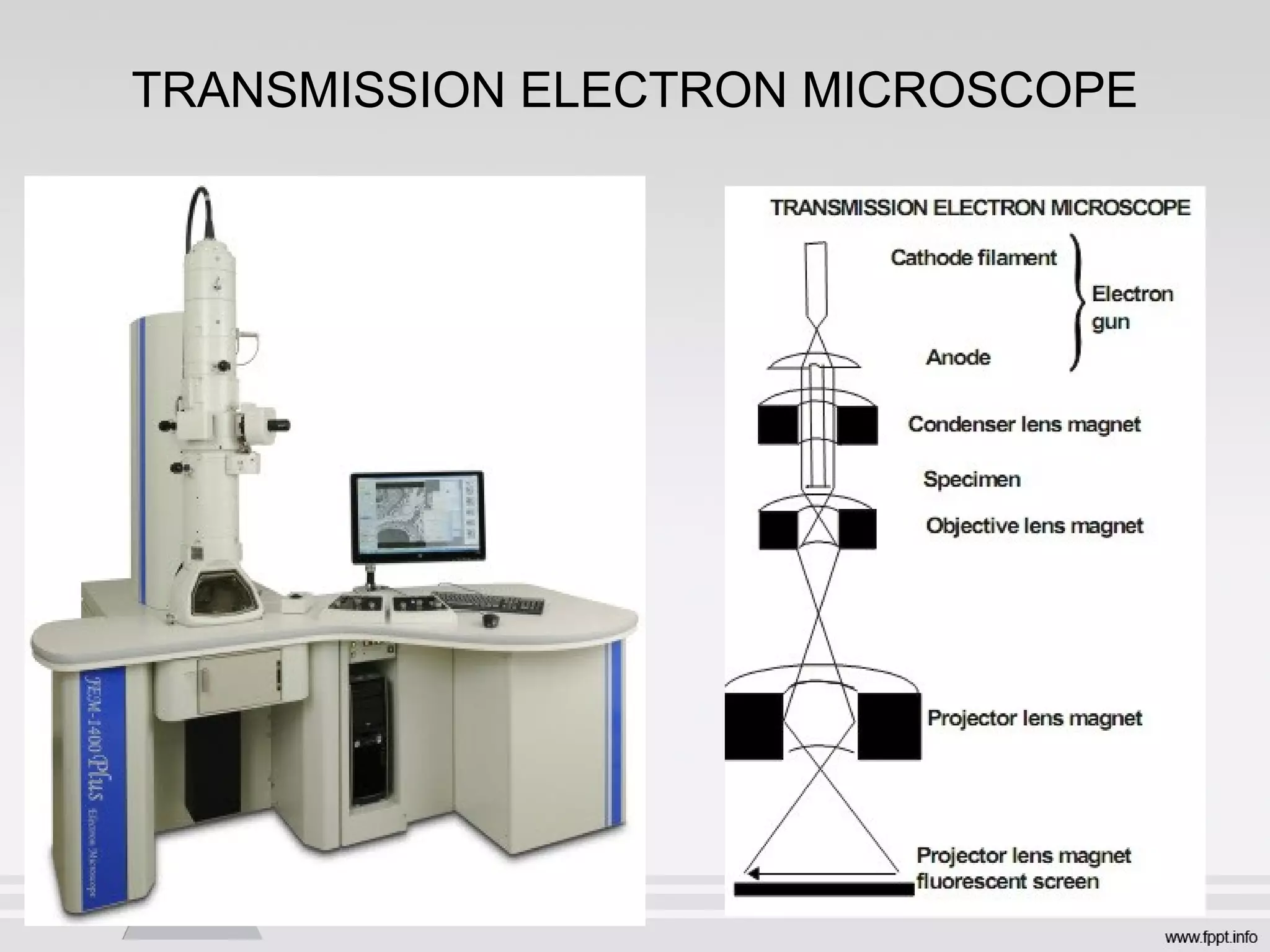
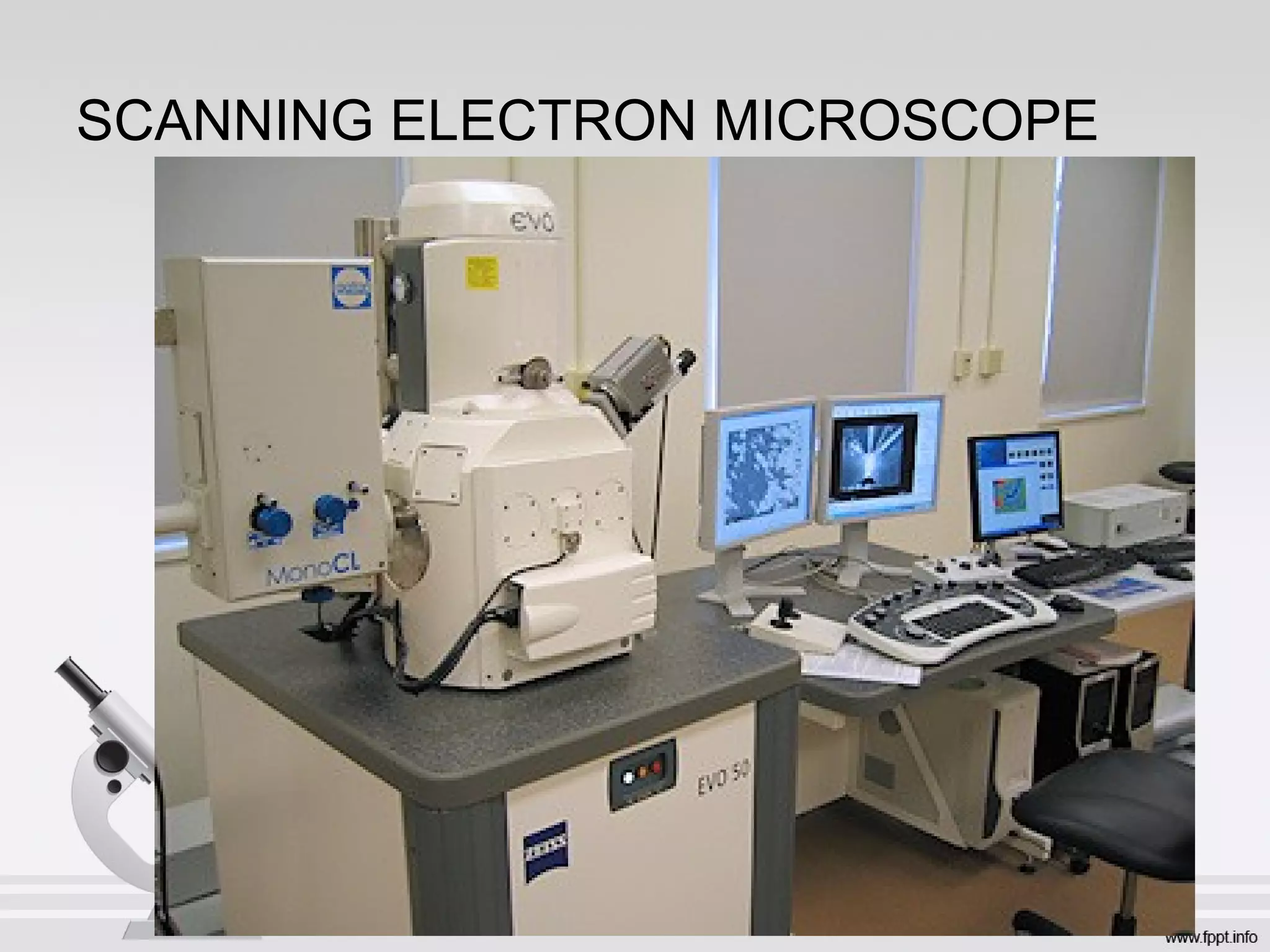
2.Electron Microscope – Uses an electron
beam.
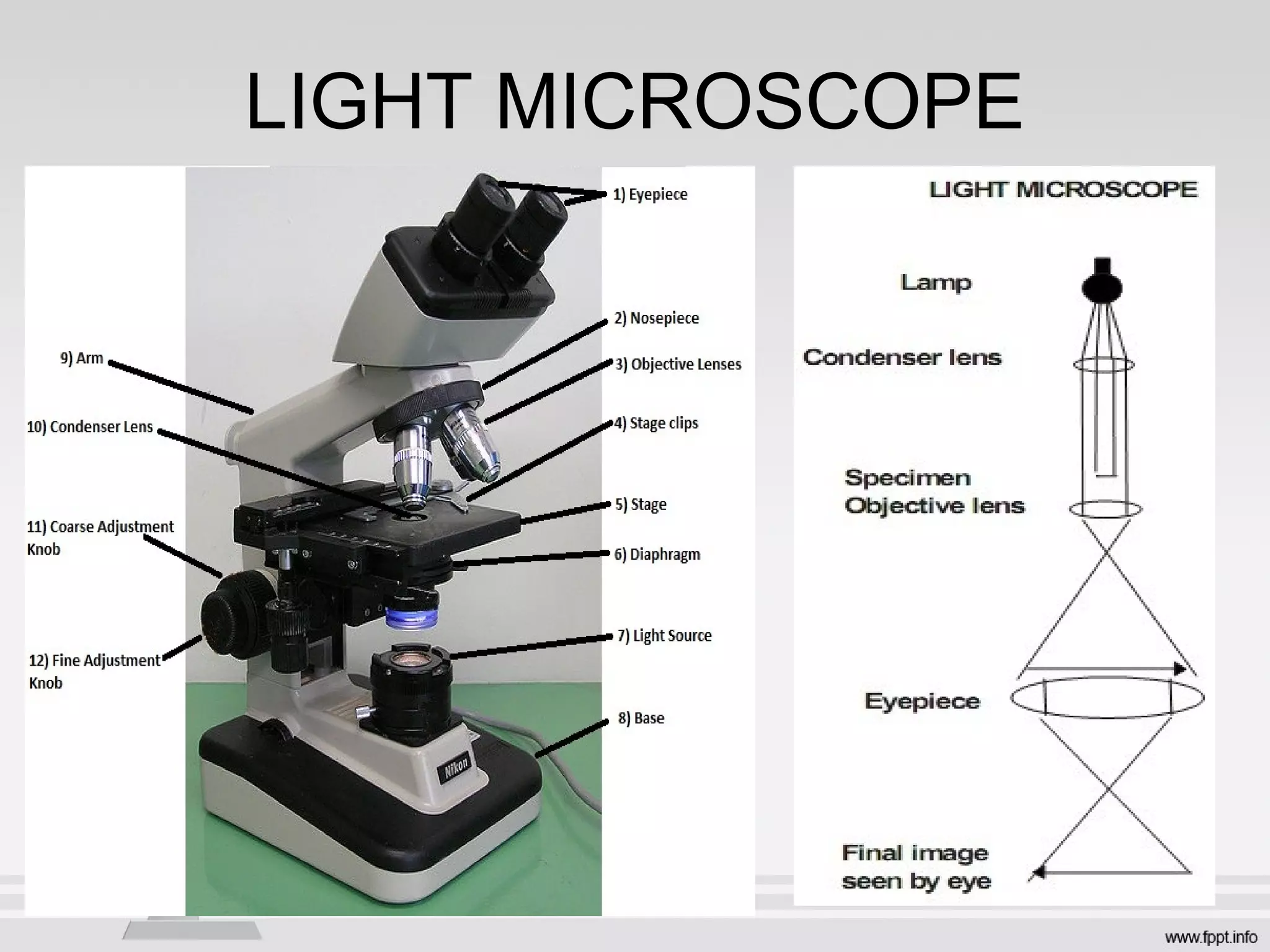
LIGHT MICROSCOPE
TRANSMISSION ELECTRON MICROSCOPE
SCANNING ELECTRON MICROSCOPE
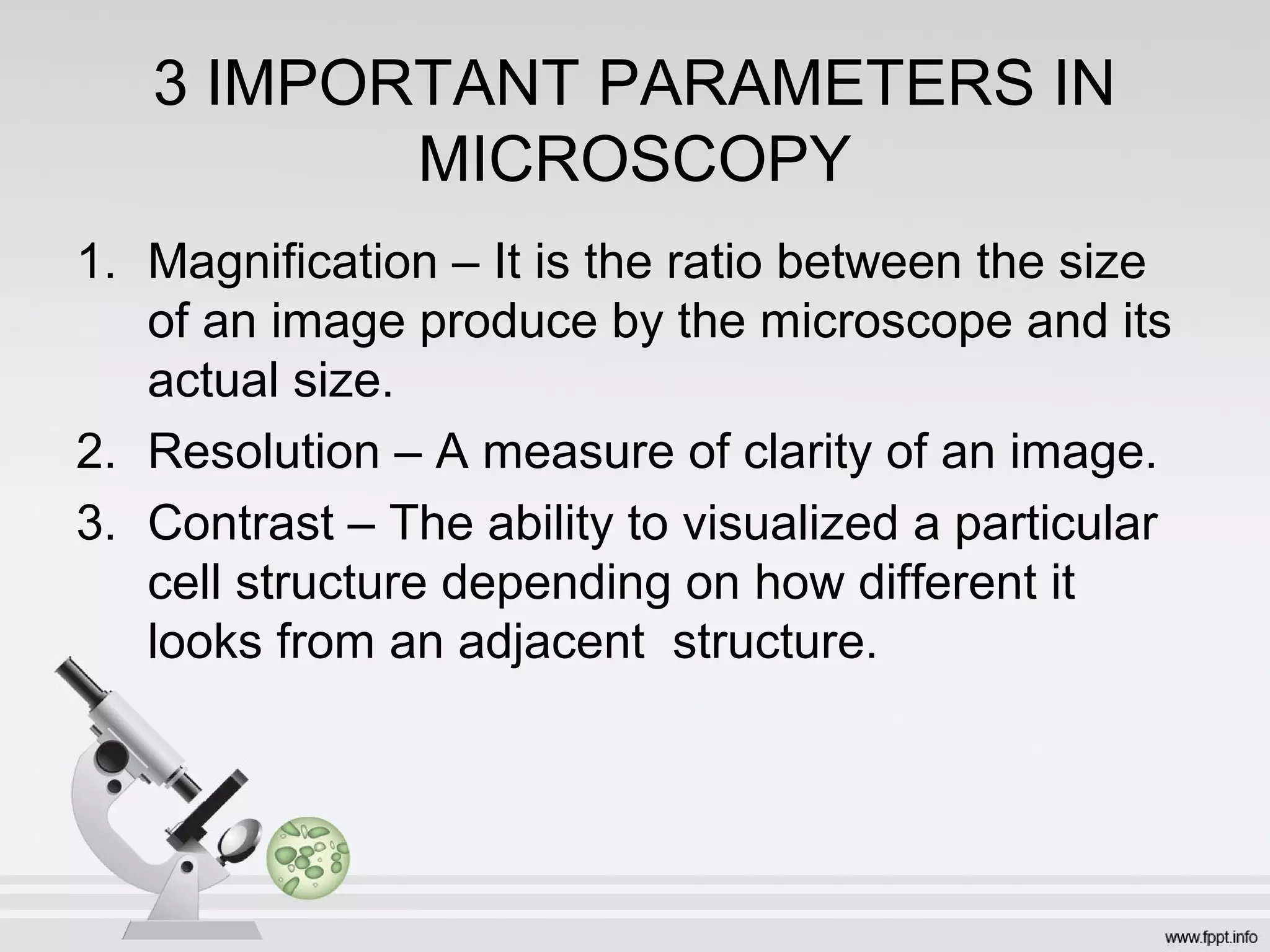
3 IMPORTANT PARAMETERS IN
MICROSCOPY
1. Magnification – It is the ratio between the size
of an image produce by the microscope and its
actual size.
2. Resolution – A measure of clarity of an image.
3. Contrast – The ability to visualized a particular
cell structure depending on how different it
looks from an adjacent structure.
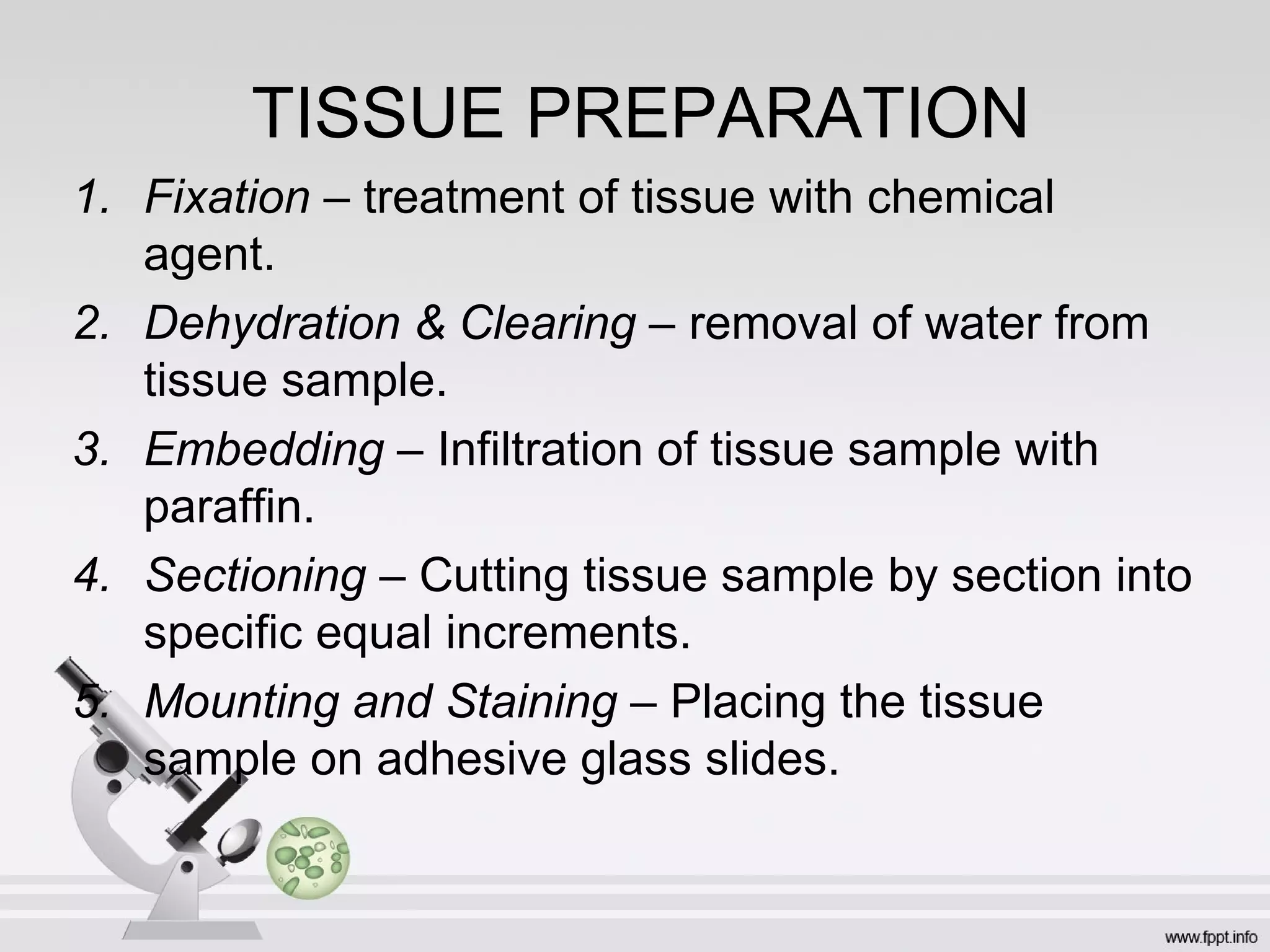
TISSUE PREPARATION
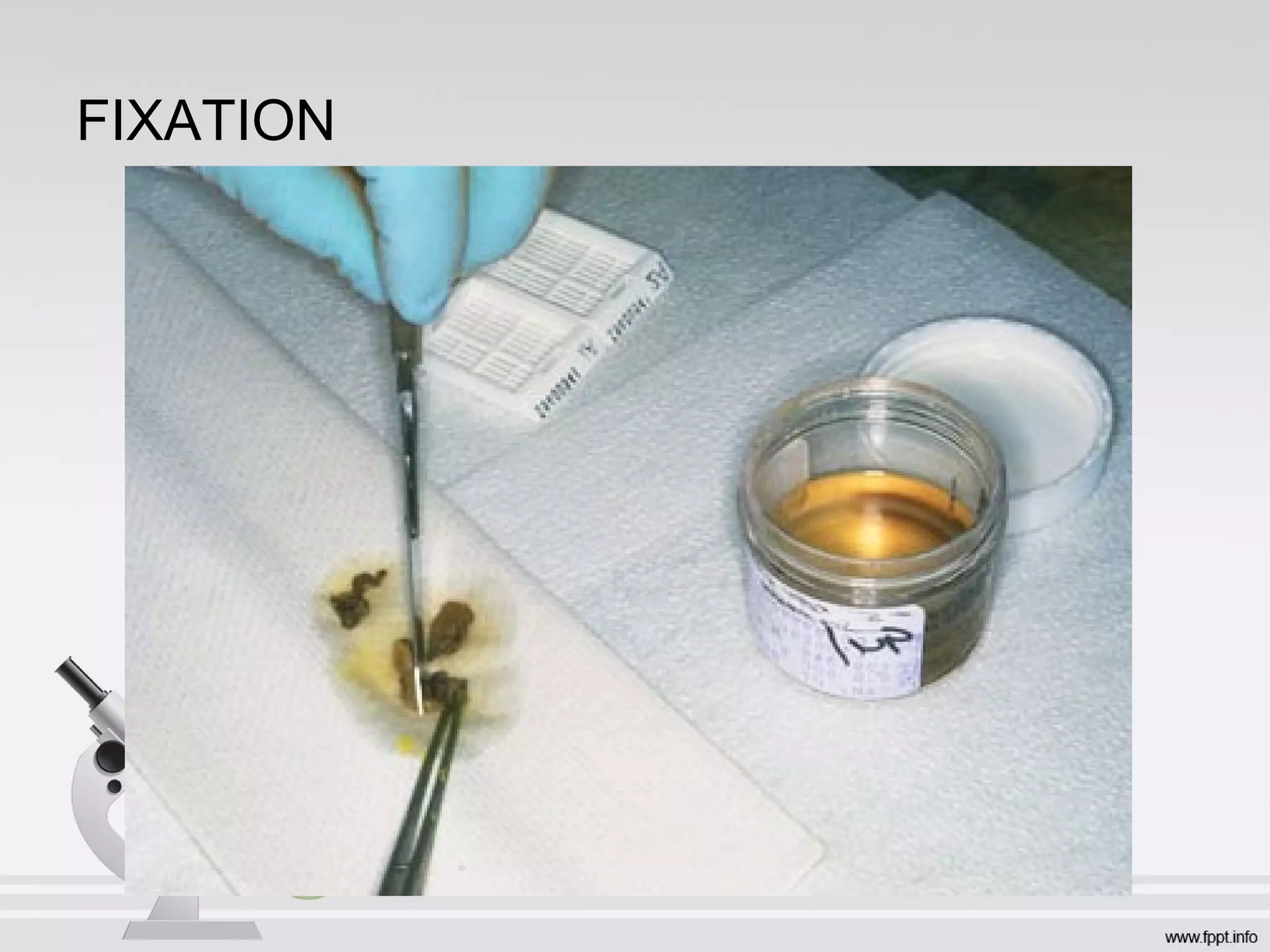
1. Fixation – treatment of tissue with chemical
agent.
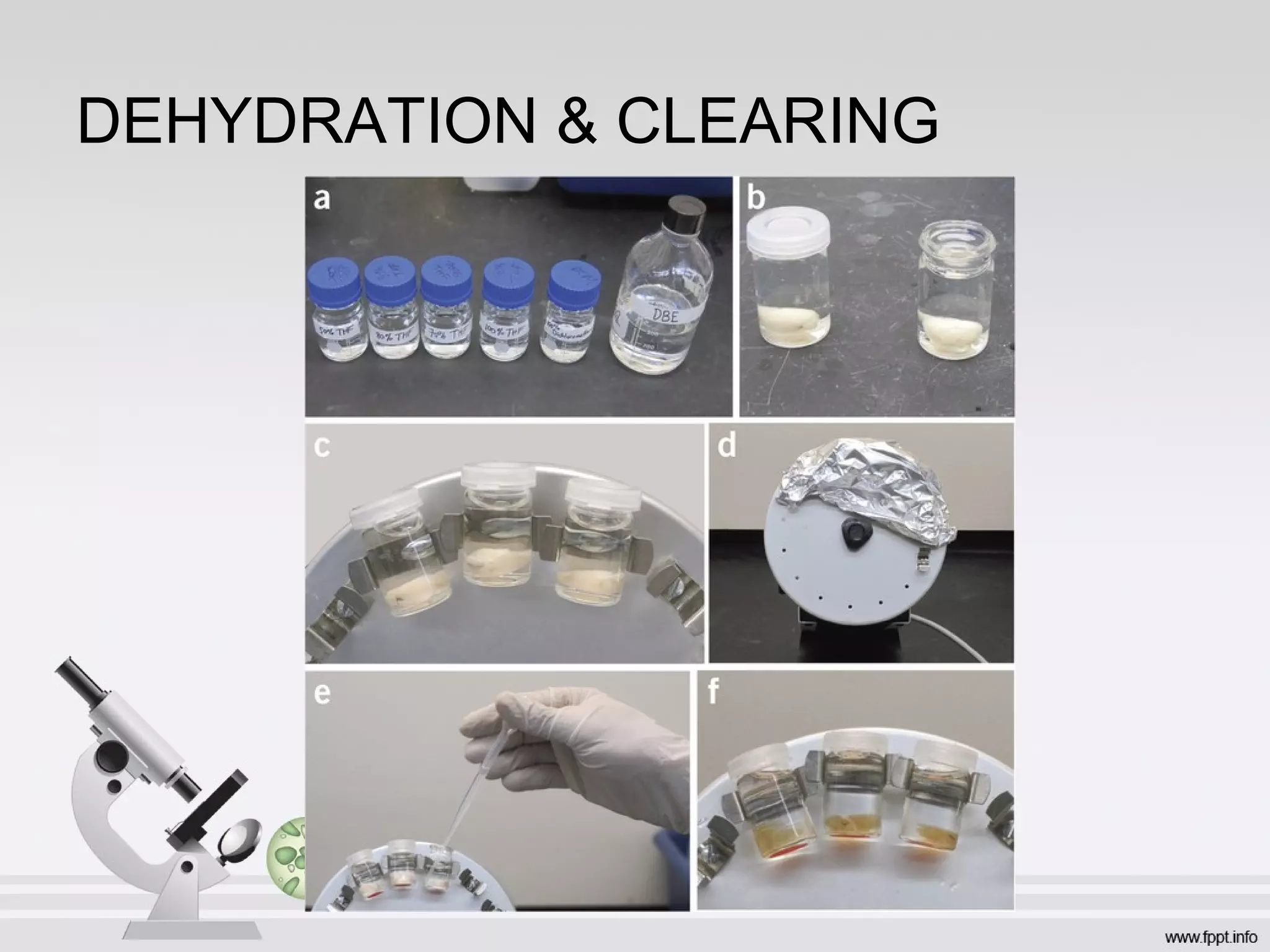
2. Dehydration & Clearing – removal of water from
tissue sample.
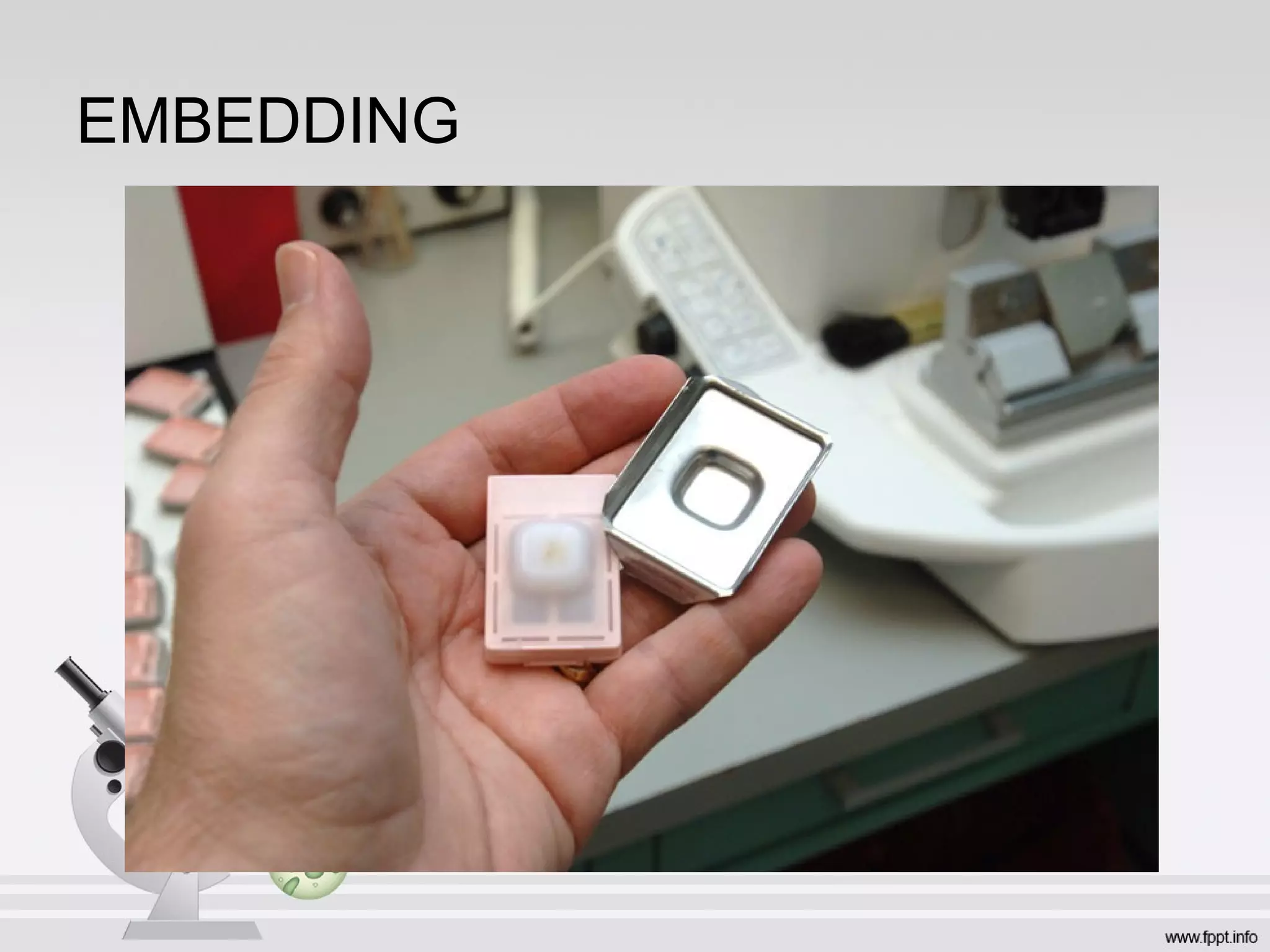
3. Embedding – Infiltration of tissue sample with
paraffin.
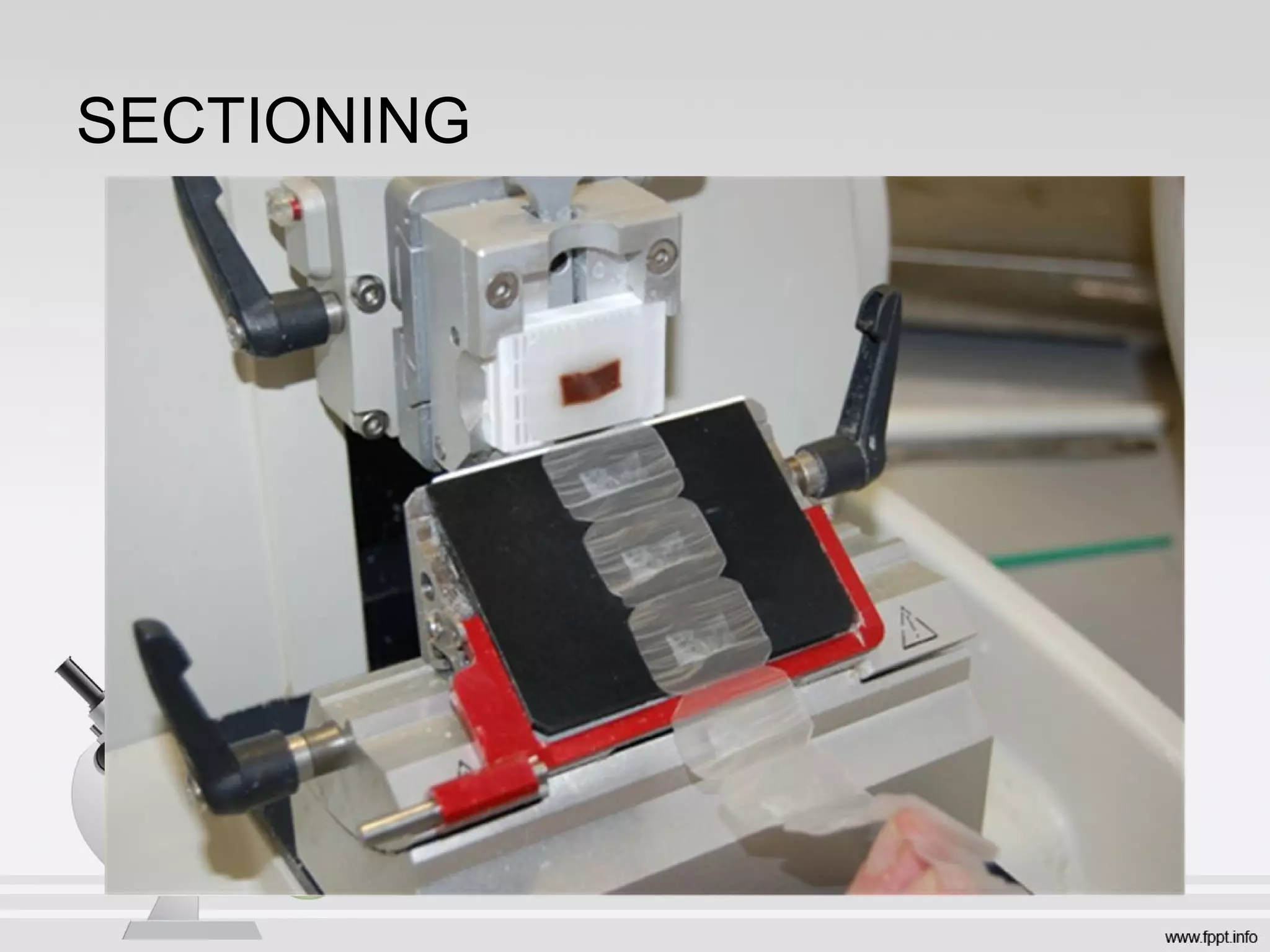
4. Sectioning – Cutting tissue sample by section into
specific equal increments.
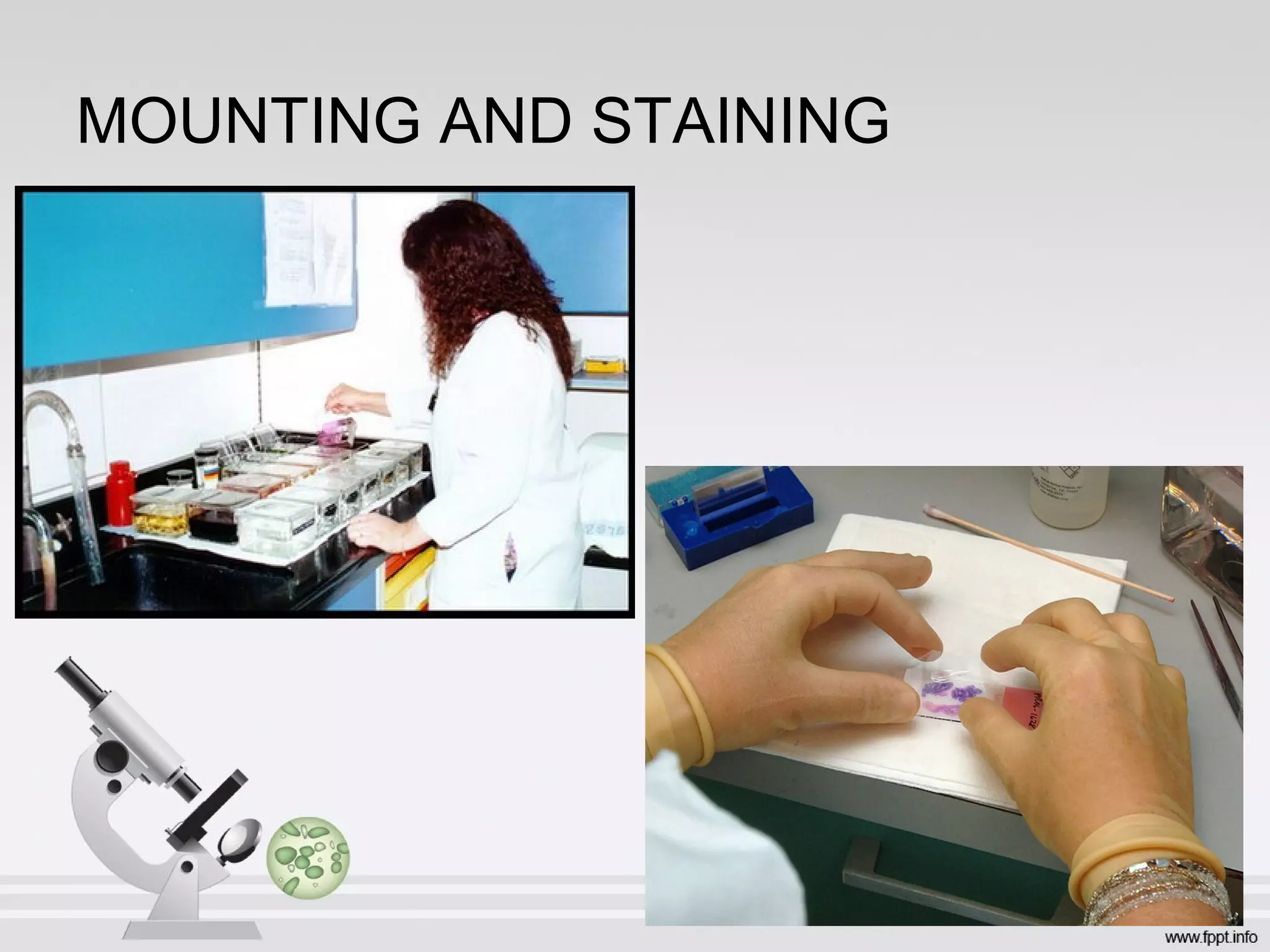
5. Mounting and Staining – Placing the tissue
sample on adhesive glass slides.
FIXATION
DEHYDRATION & CLEARING
EMBEDDING
SECTIONING
MOUNTING AND STAINING
3 MAJOR CATEGORY OF STAINS
1. Stains that differentiate between acidic
and basic cellular components.
2. Specialized stains that differentiate the
fibrous components of the extracellular
matrix.
3. Metallic salts that precipitate on tissue
forming metal deposits.
COMMONLY USED STAINS
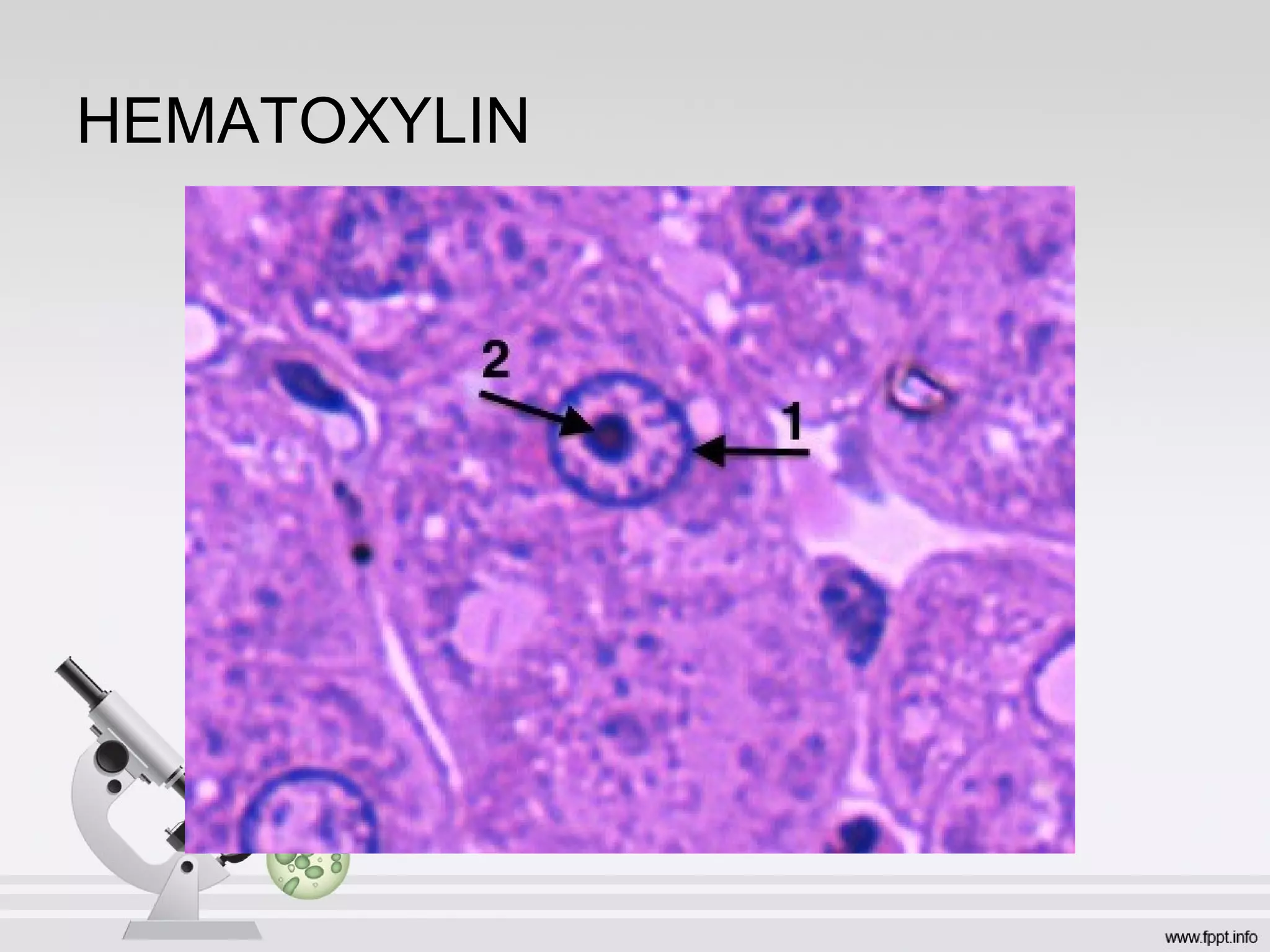
1. Hematoxylin – Forms the basophilic
components of the cell.
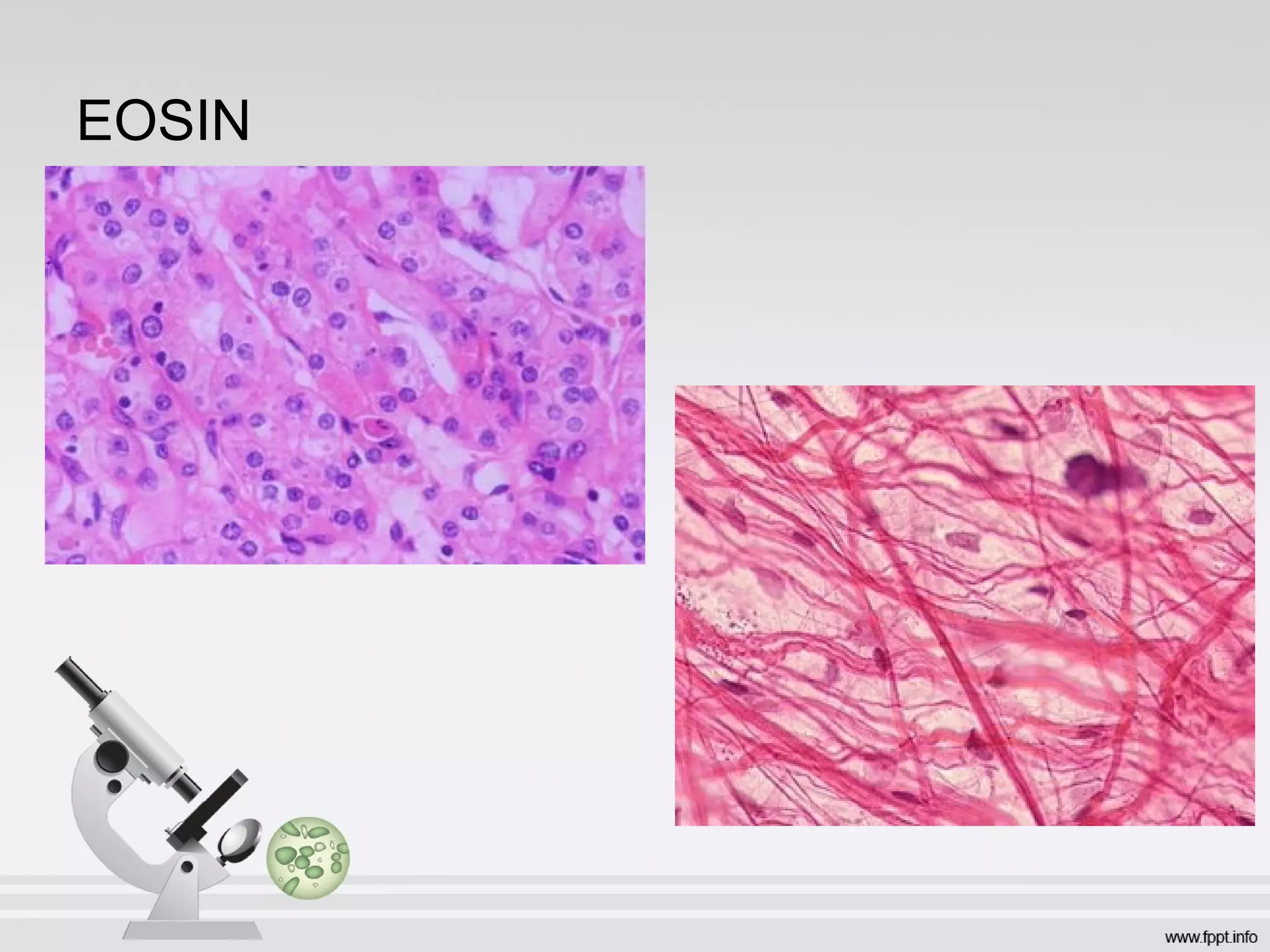
2. Eosin – Forms the acidophilic
components of the cell.
3. Toluidine Blue – Forms the
metachromatic component of the cell.
HISTOCHEMISTRY
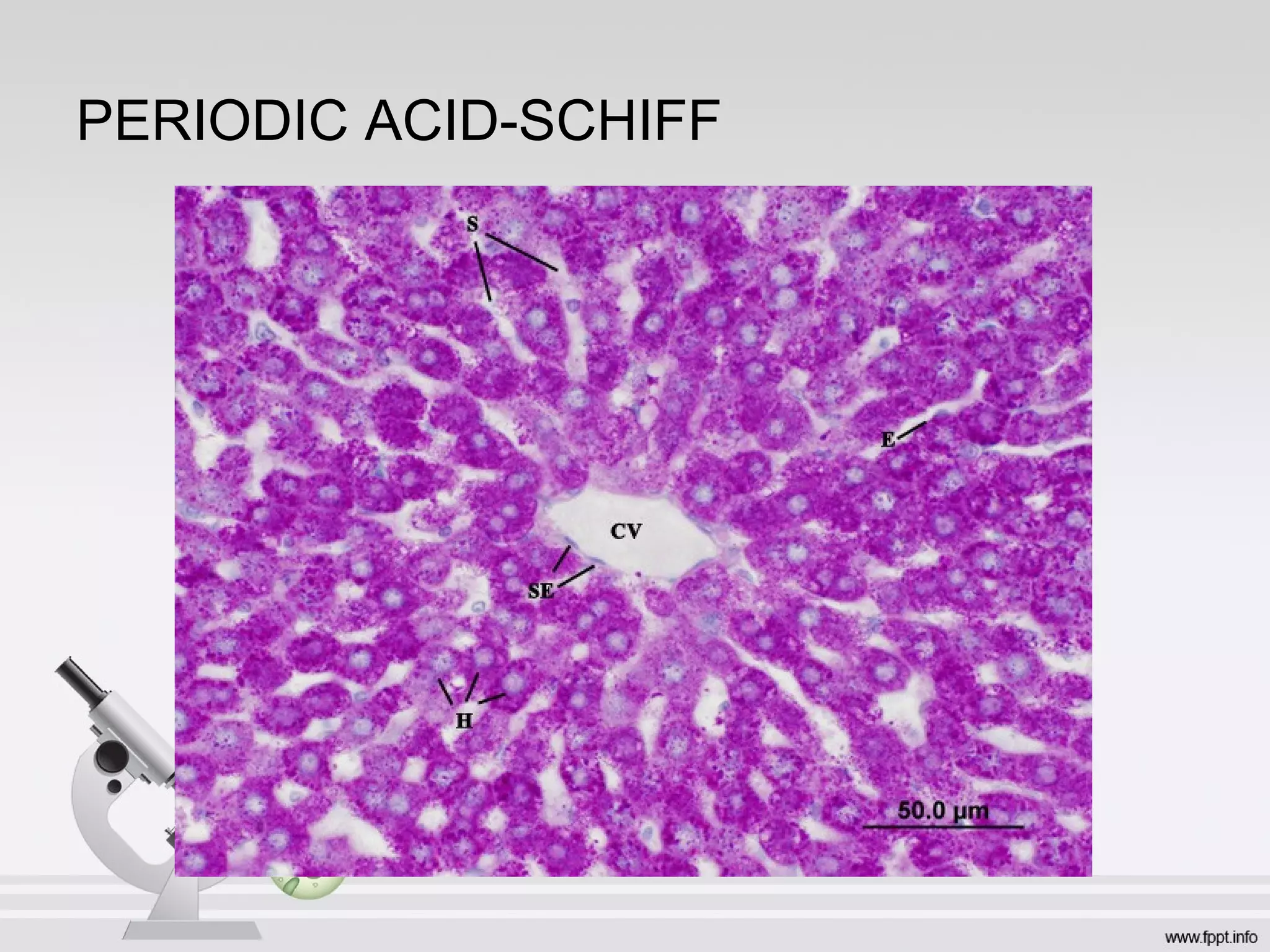
1. Periodic Acid Schiff (PAS) - Is a staining method used to
detect polysaccharides (e.g. glycogen, glycoproteins,
glycolipids and mucins in tissues.
2. Feulgen Reaction - Is used to identify chromosomal
material or DNA in cell specimens.
3. Gomori-Takamatsu - a method for localizing the alkaline
phosphatase enzyme.
4. Mordant - Is a substance used to set dyes on tissue
sections by forming a coordination complex with the dye
which then attaches to the tissue.It may be used for
intensifying stains in cell or tissue preparations.
5. Counterstain - Is a stain with colour contrasting to the
principal stain, making the stained structure more easily
visible.
HEMATOXYLIN
EOSIN
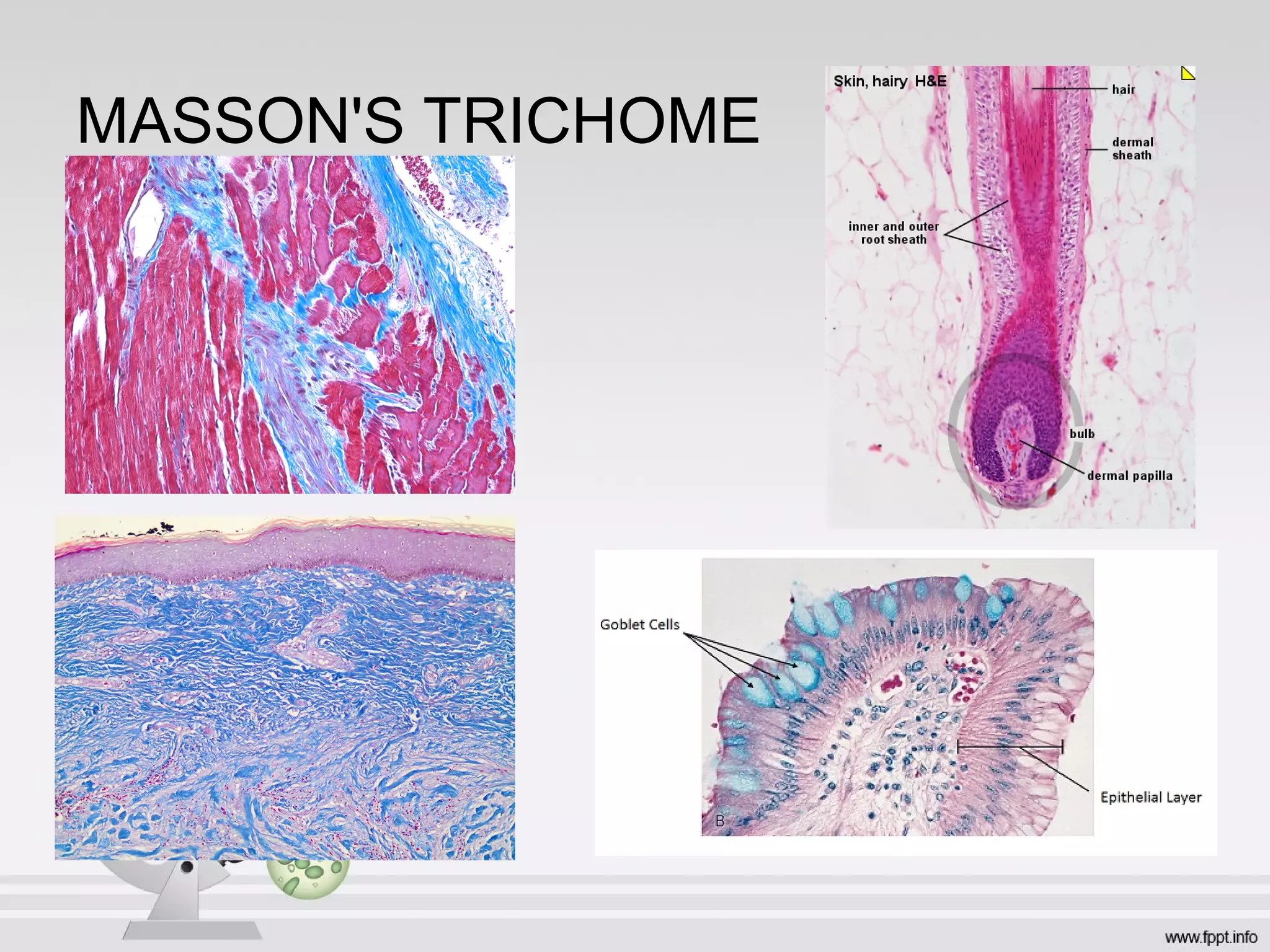
MASSON'S TRICHOME
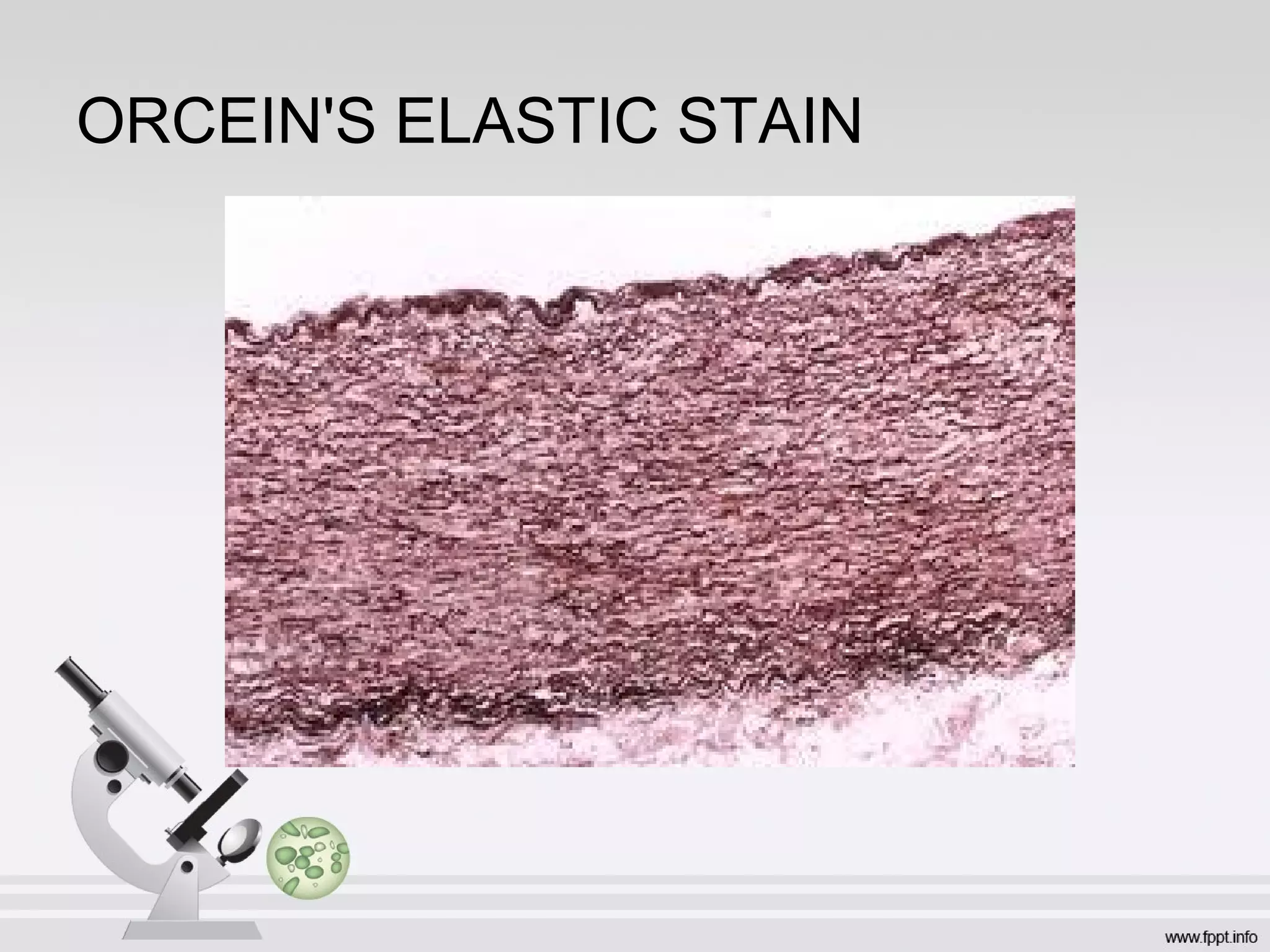
ORCEIN'S ELASTIC STAIN
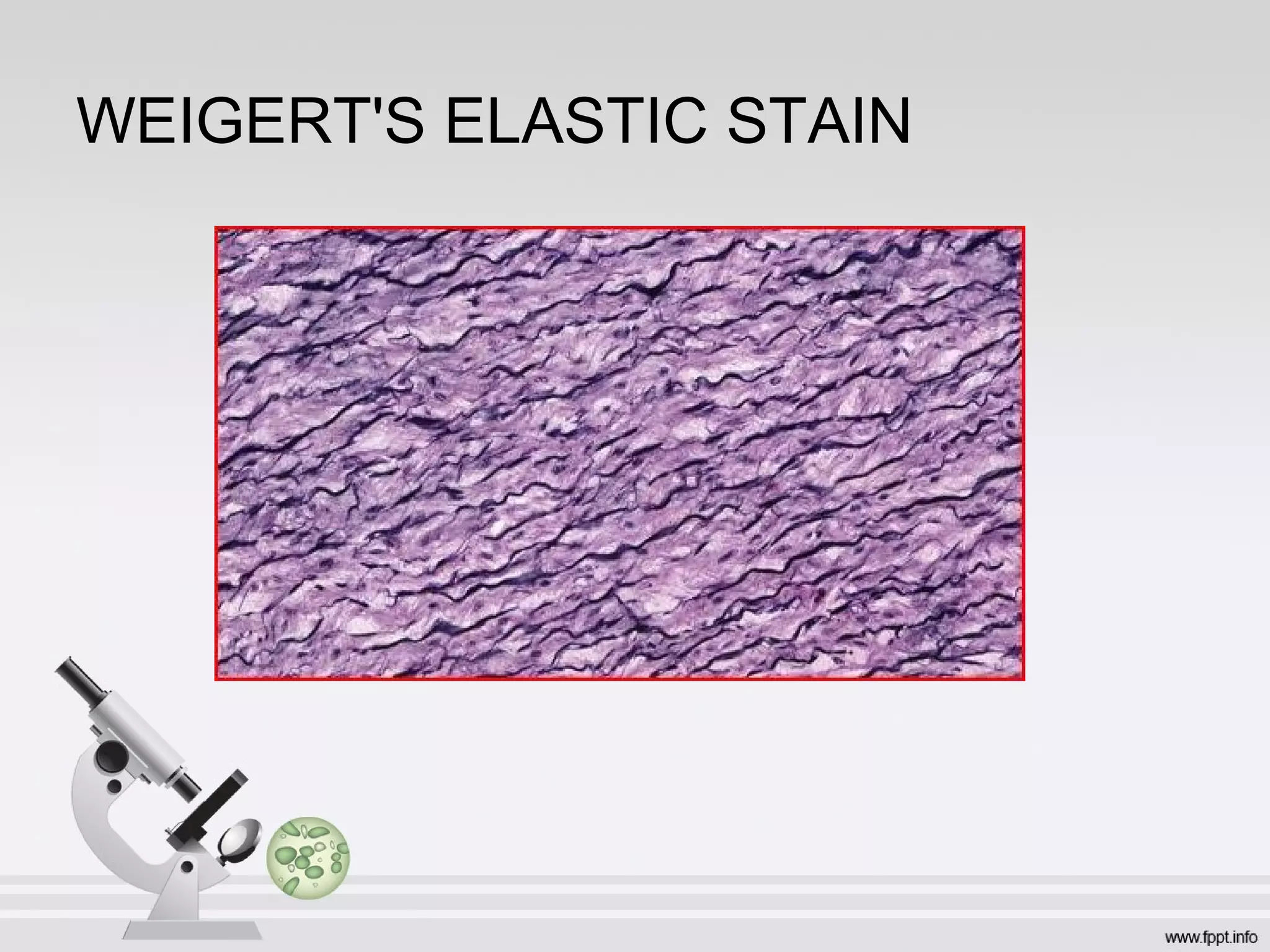
WEIGERT'S ELASTIC STAIN
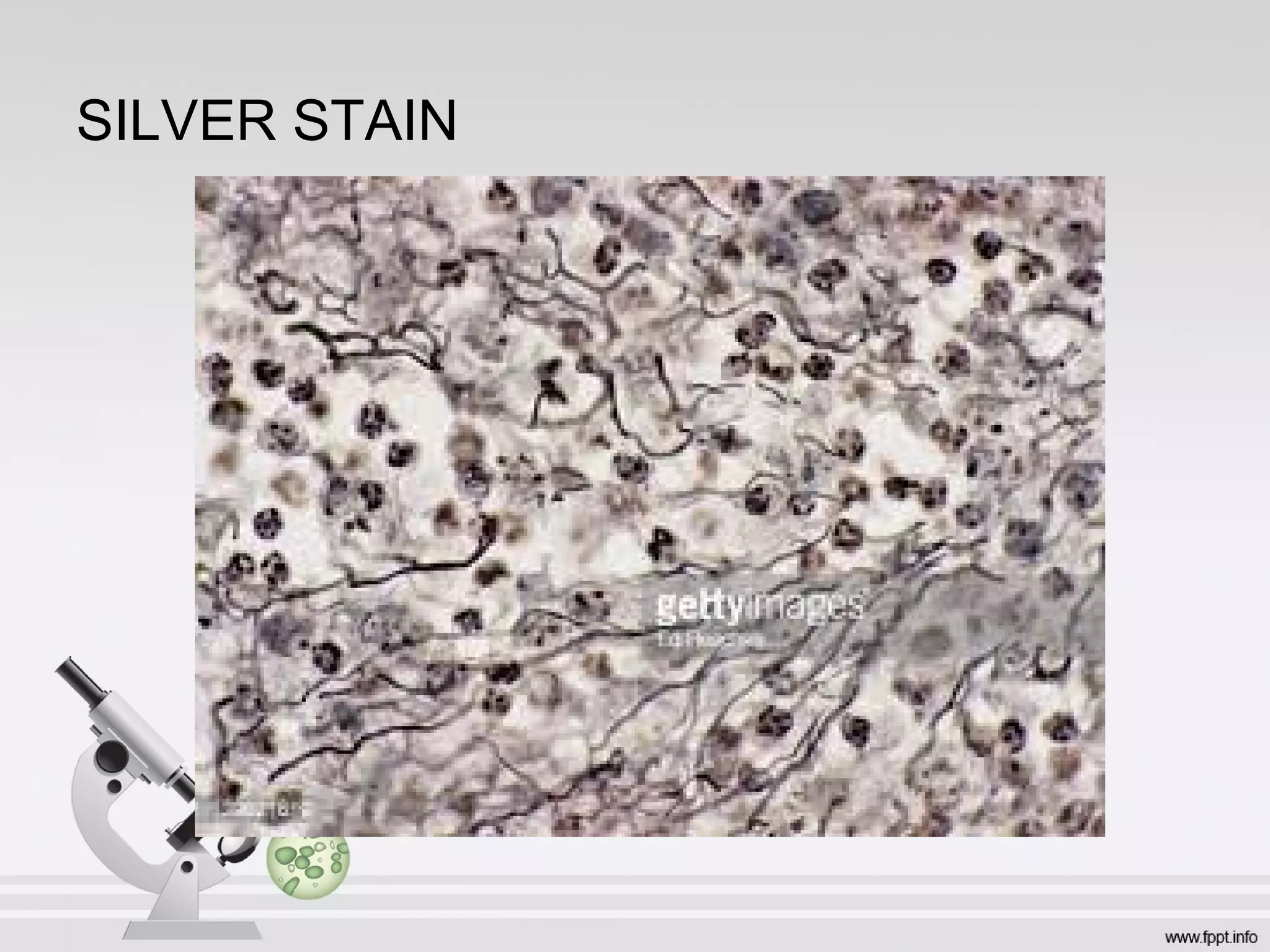
SILVER STAIN
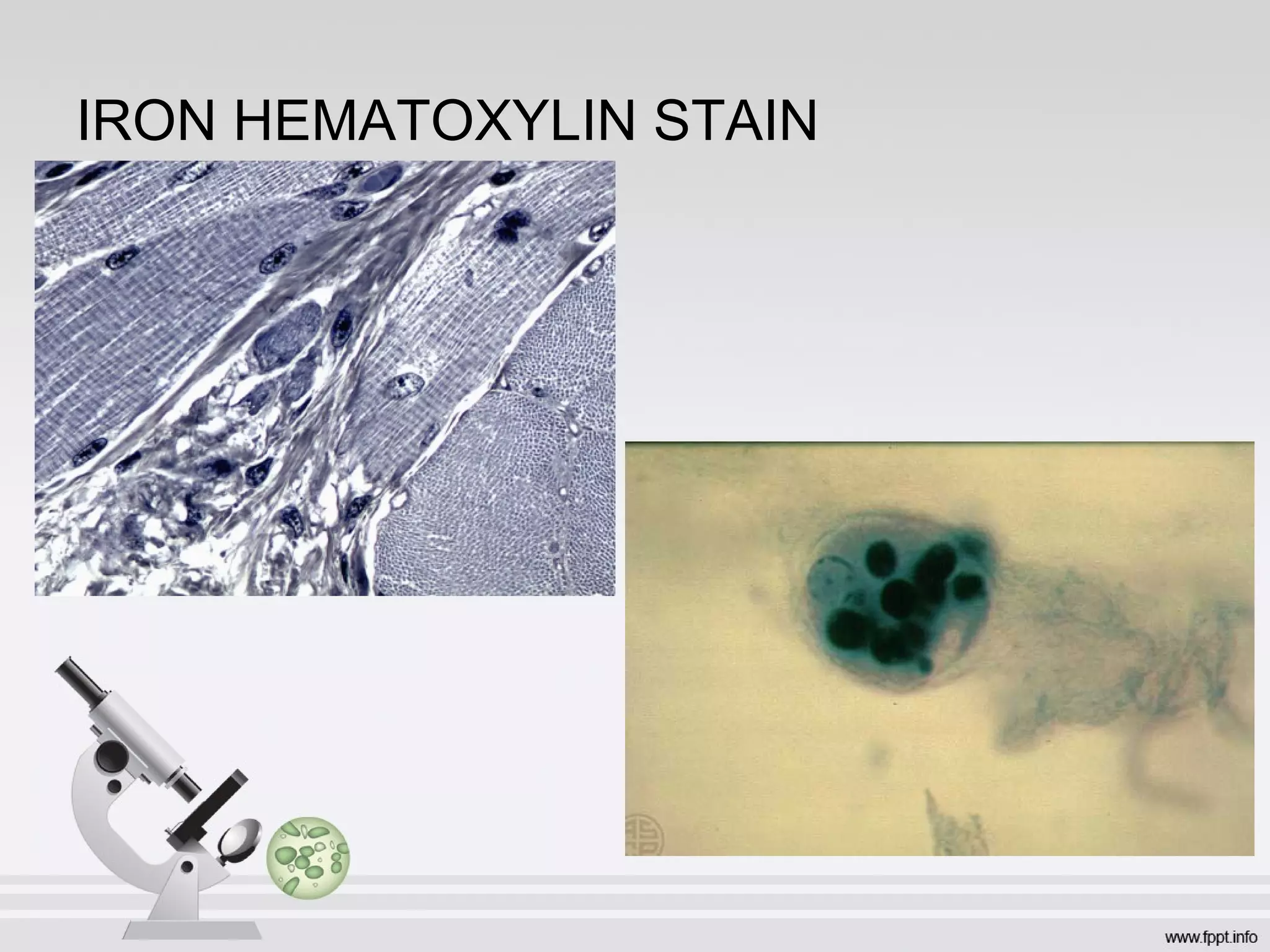
IRON HEMATOXYLIN STAIN
PERIODIC ACID-SCHIFF
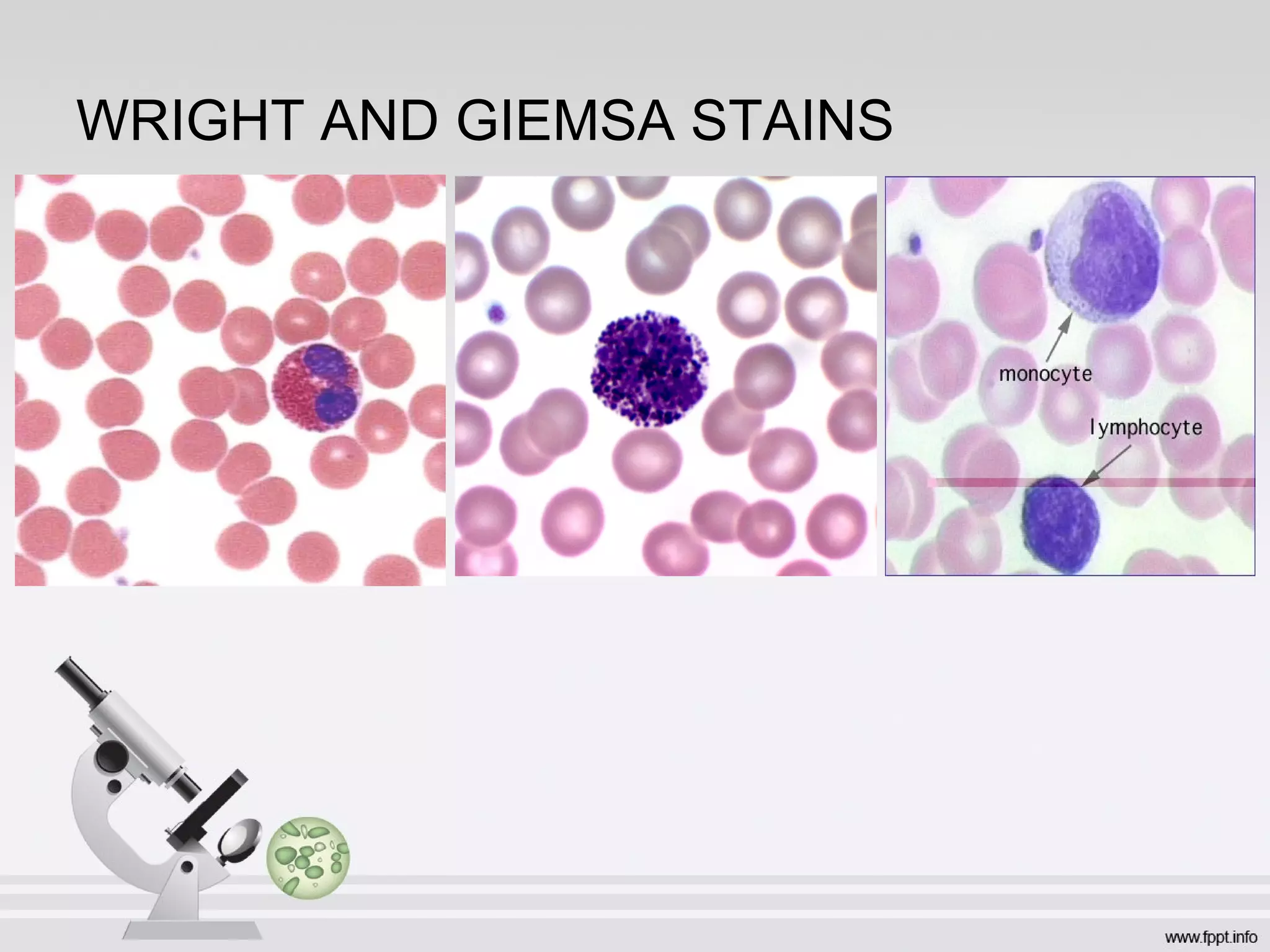
WRIGHT AND GIEMSA STAINS
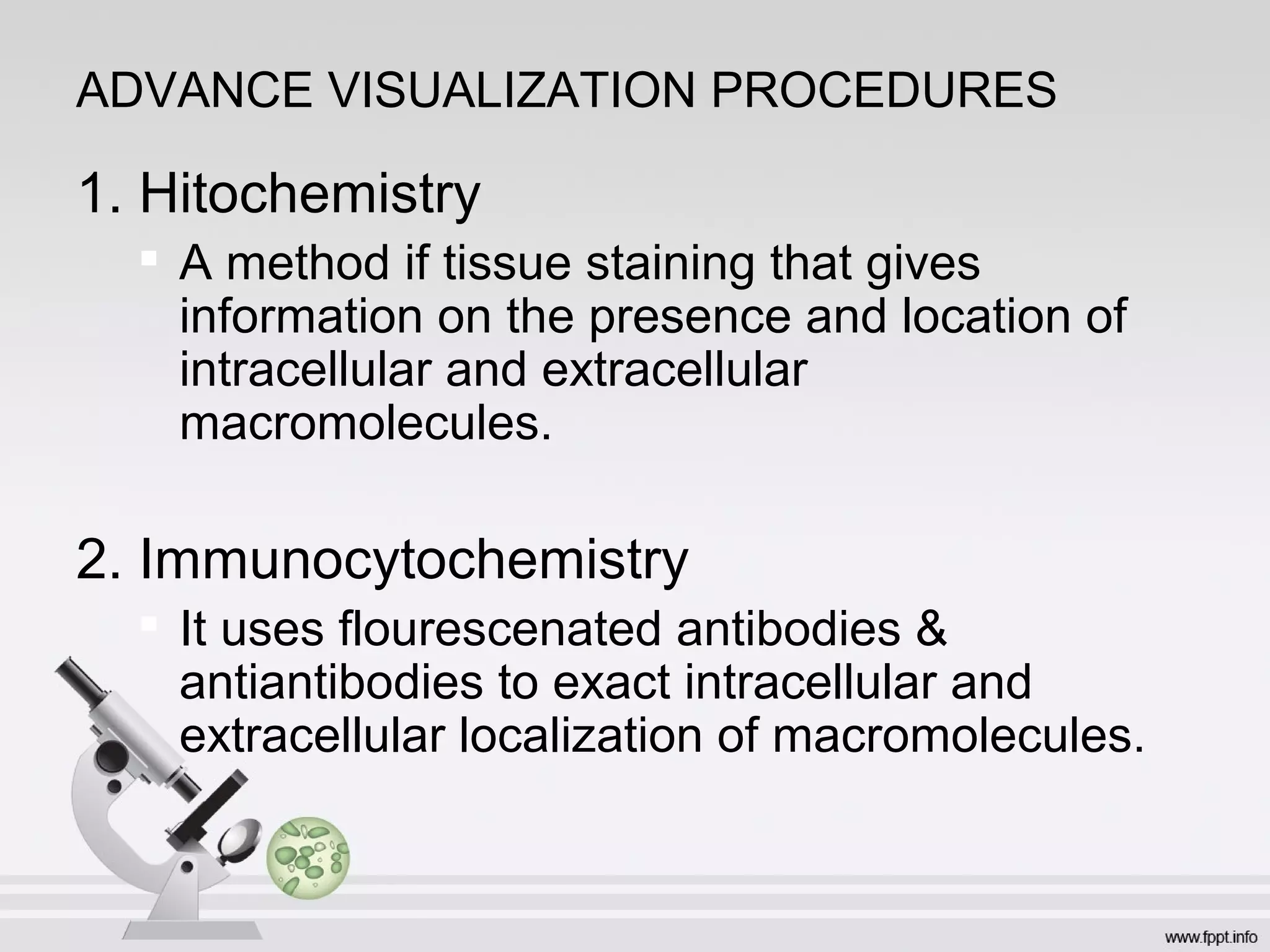
ADVANCE VISUALIZATION PROCEDURES
1. Hitochemistry

A method if tissue staining that gives
information on the presence and location of
intracellular and extracellular
macromolecules.
2. Immunocytochemistry

It uses flourescenated antibodies &
antiantibodies to exact intracellular and
extracellular localization of macromolecules.
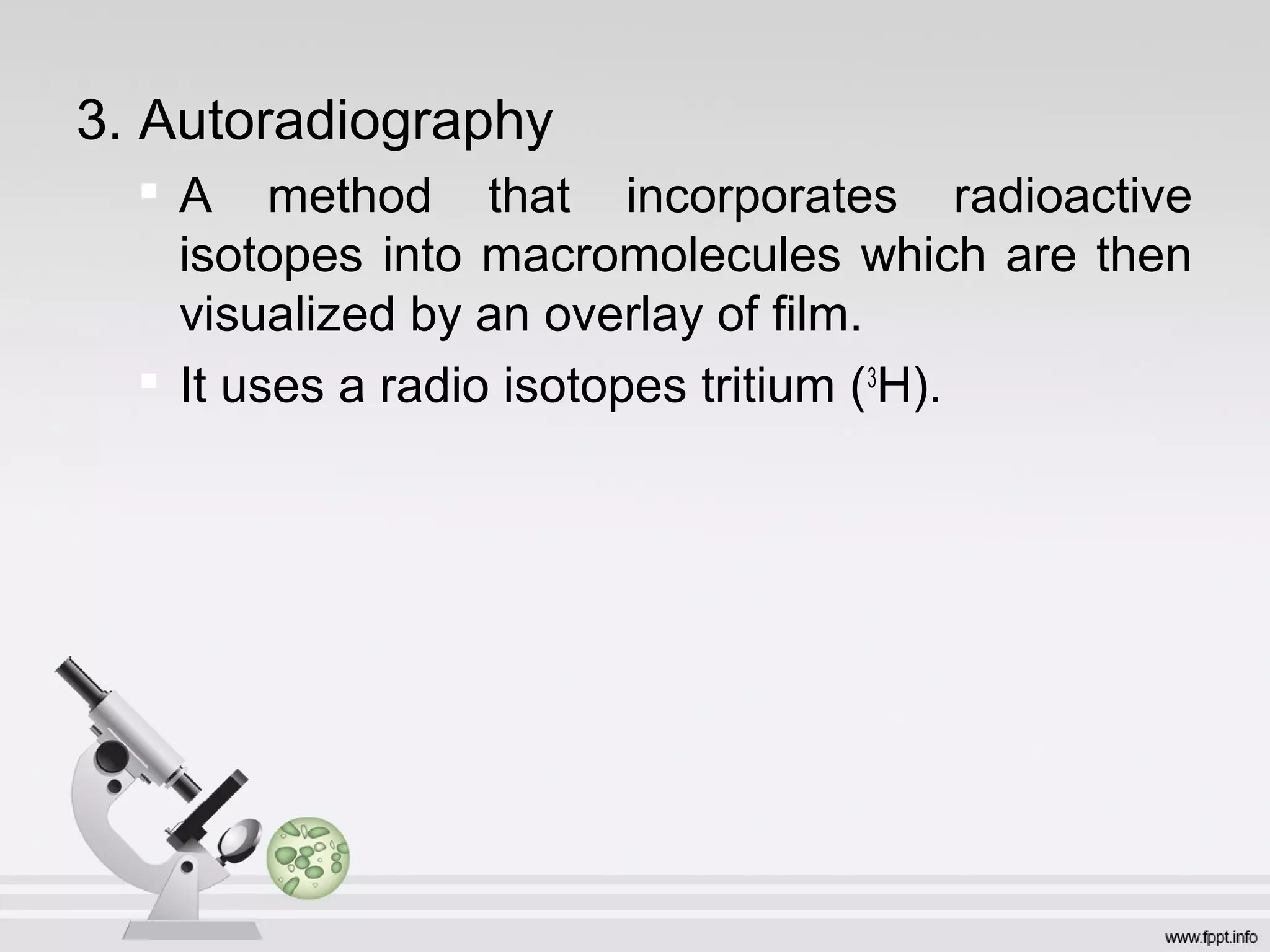
3. Autoradiography

A method that incorporates radioactive
isotopes into macromolecules which are then
visualized by an overlay of film.

It uses a radio isotopes tritium (3
H).
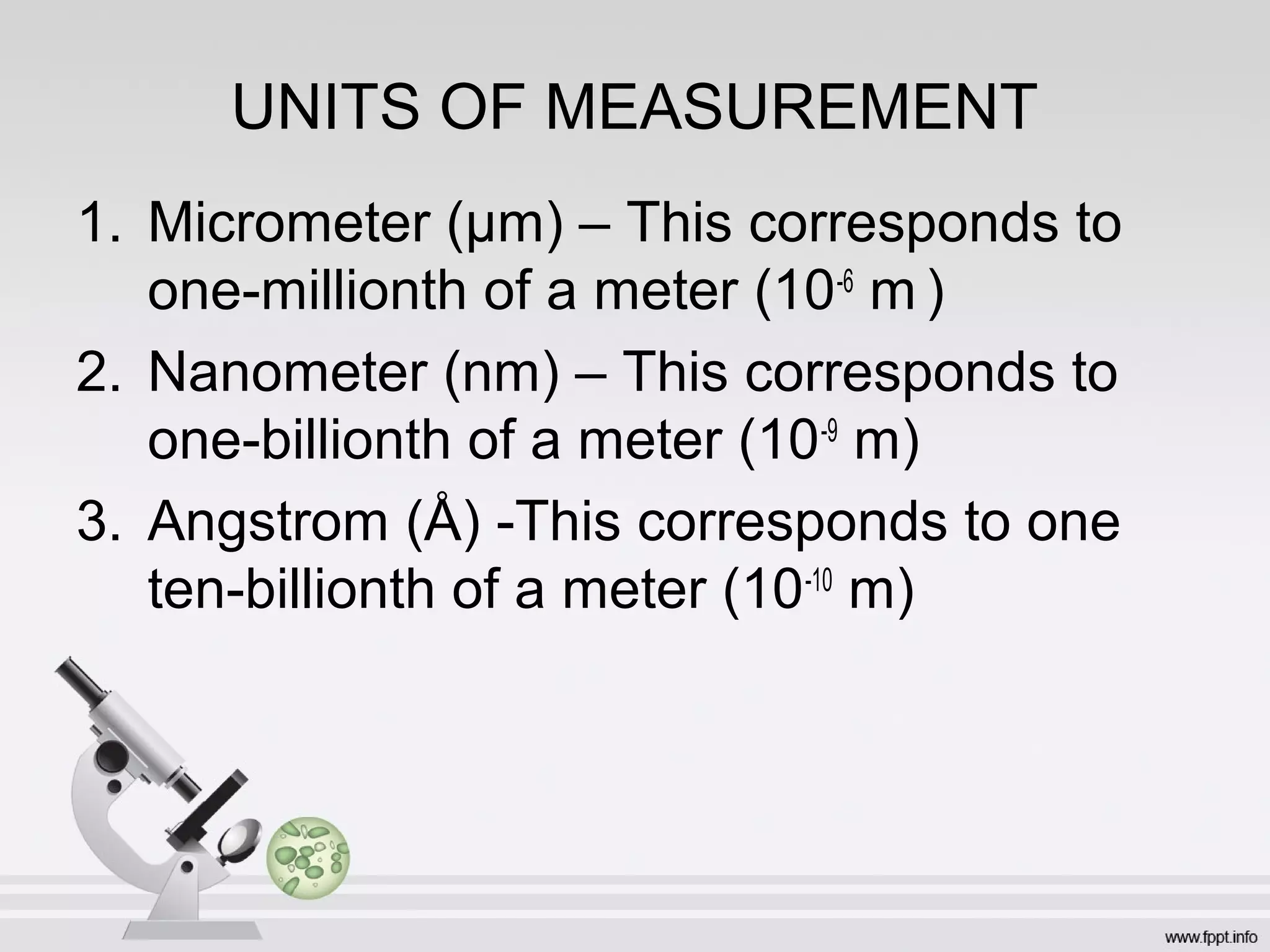
UNITS OF MEASUREMENT
1. Micrometer (µm) – This corresponds to
one-millionth of a meter (10-6
m )
2. Nanometer (nm) – This corresponds to
one-billionth of a meter (10-9
m)
3. Angstrom (Å) -This corresponds to one
ten-billionth of a meter (10-10
m)

Introduction to Histology

  • 1.
    INTRODUCTION TO HISTOLOGY Prof. RedemC. Deligero, MATMRS;MSES
  • 2.
    DEFINITION  Histology isthe branch of anatomy that deals with the study of tissues in animal and plants.  It deals with the structure and its function.  This subject itself intertwines the discipline in cell biology, biochemistry, physiology and pathology.
  • 3.
    MICROSCOPY  Is themethod used in the study of cells and its structure using microscope. Major Kind of Microscope 1.Light Microscope – Utilizes light for illumination. 2.Electron Microscope – Uses an electron beam.
  • 4.
  • 5.
  • 6.
  • 7.
    3 IMPORTANT PARAMETERSIN MICROSCOPY 1. Magnification – It is the ratio between the size of an image produce by the microscope and its actual size. 2. Resolution – A measure of clarity of an image. 3. Contrast – The ability to visualized a particular cell structure depending on how different it looks from an adjacent structure.
  • 8.
    TISSUE PREPARATION 1. Fixation– treatment of tissue with chemical agent. 2. Dehydration & Clearing – removal of water from tissue sample. 3. Embedding – Infiltration of tissue sample with paraffin. 4. Sectioning – Cutting tissue sample by section into specific equal increments. 5. Mounting and Staining – Placing the tissue sample on adhesive glass slides.
  • 9.
  • 10.
  • 11.
  • 12.
  • 13.
  • 14.
    3 MAJOR CATEGORYOF STAINS 1. Stains that differentiate between acidic and basic cellular components. 2. Specialized stains that differentiate the fibrous components of the extracellular matrix. 3. Metallic salts that precipitate on tissue forming metal deposits.
  • 15.
    COMMONLY USED STAINS 1.Hematoxylin – Forms the basophilic components of the cell. 2. Eosin – Forms the acidophilic components of the cell. 3. Toluidine Blue – Forms the metachromatic component of the cell.
  • 16.
    HISTOCHEMISTRY 1. Periodic AcidSchiff (PAS) - Is a staining method used to detect polysaccharides (e.g. glycogen, glycoproteins, glycolipids and mucins in tissues. 2. Feulgen Reaction - Is used to identify chromosomal material or DNA in cell specimens. 3. Gomori-Takamatsu - a method for localizing the alkaline phosphatase enzyme. 4. Mordant - Is a substance used to set dyes on tissue sections by forming a coordination complex with the dye which then attaches to the tissue.It may be used for intensifying stains in cell or tissue preparations. 5. Counterstain - Is a stain with colour contrasting to the principal stain, making the stained structure more easily visible.
  • 17.
  • 18.
  • 19.
  • 20.
  • 21.
  • 22.
  • 23.
  • 24.
  • 25.
  • 26.
    ADVANCE VISUALIZATION PROCEDURES 1.Hitochemistry  A method if tissue staining that gives information on the presence and location of intracellular and extracellular macromolecules. 2. Immunocytochemistry  It uses flourescenated antibodies & antiantibodies to exact intracellular and extracellular localization of macromolecules.
  • 27.
    3. Autoradiography  A methodthat incorporates radioactive isotopes into macromolecules which are then visualized by an overlay of film.  It uses a radio isotopes tritium (3 H).
  • 28.
    UNITS OF MEASUREMENT 1.Micrometer (µm) – This corresponds to one-millionth of a meter (10-6 m ) 2. Nanometer (nm) – This corresponds to one-billionth of a meter (10-9 m) 3. Angstrom (Å) -This corresponds to one ten-billionth of a meter (10-10 m)