Physics - Mechanics
Lecture 2
Velocity and Acceleration
September , 2013
Physics 114A - Lecture 3 2/19
Physics 114A - Introduction to Mechanics - Winter-2012
Textbook: Physics, Vol. 1 (UW Edition), James S. Walker
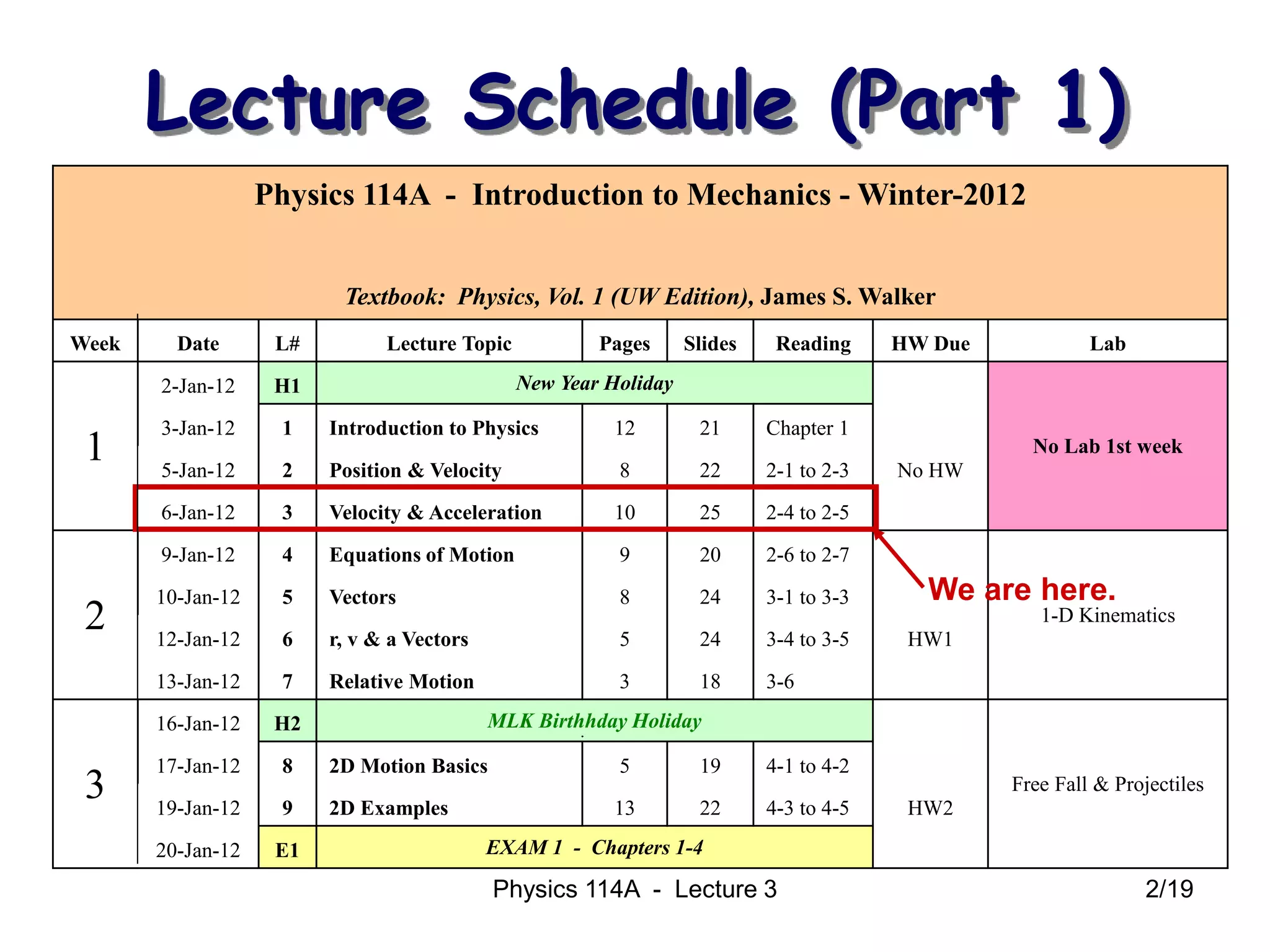
Week Date L# Lecture Topic Pages Slides Reading HW Due Lab
1
2-Jan-12 H1 New Year Holiday
No Lab 1st week
3-Jan-12 1 Introduction to Physics 12 21 Chapter 1
5-Jan-12 2 Position & Velocity 8 22 2-1 to 2-3 No HW
6-Jan-12 3 Velocity & Acceleration 10 25 2-4 to 2-5
2
9-Jan-12 4 Equations of Motion 9 20 2-6 to 2-7
1-D Kinematics
10-Jan-12 5 Vectors 8 24 3-1 to 3-3
12-Jan-12 6 r, v & a Vectors 5 24 3-4 to 3-5 HW1
13-Jan-12 7 Relative Motion 3 18 3-6
3
16-Jan-12 H2 MLK Birthhday Holiday
Free Fall & Projectiles
17-Jan-12 8 2D Motion Basics 5 19 4-1 to 4-2
19-Jan-12 9 2D Examples 13 22 4-3 to 4-5 HW2
20-Jan-12 E1 EXAM 1 - Chapters 1-4
Lecture Schedule (Part 1)
We are here.
Velocity &
Acceleration
4/19
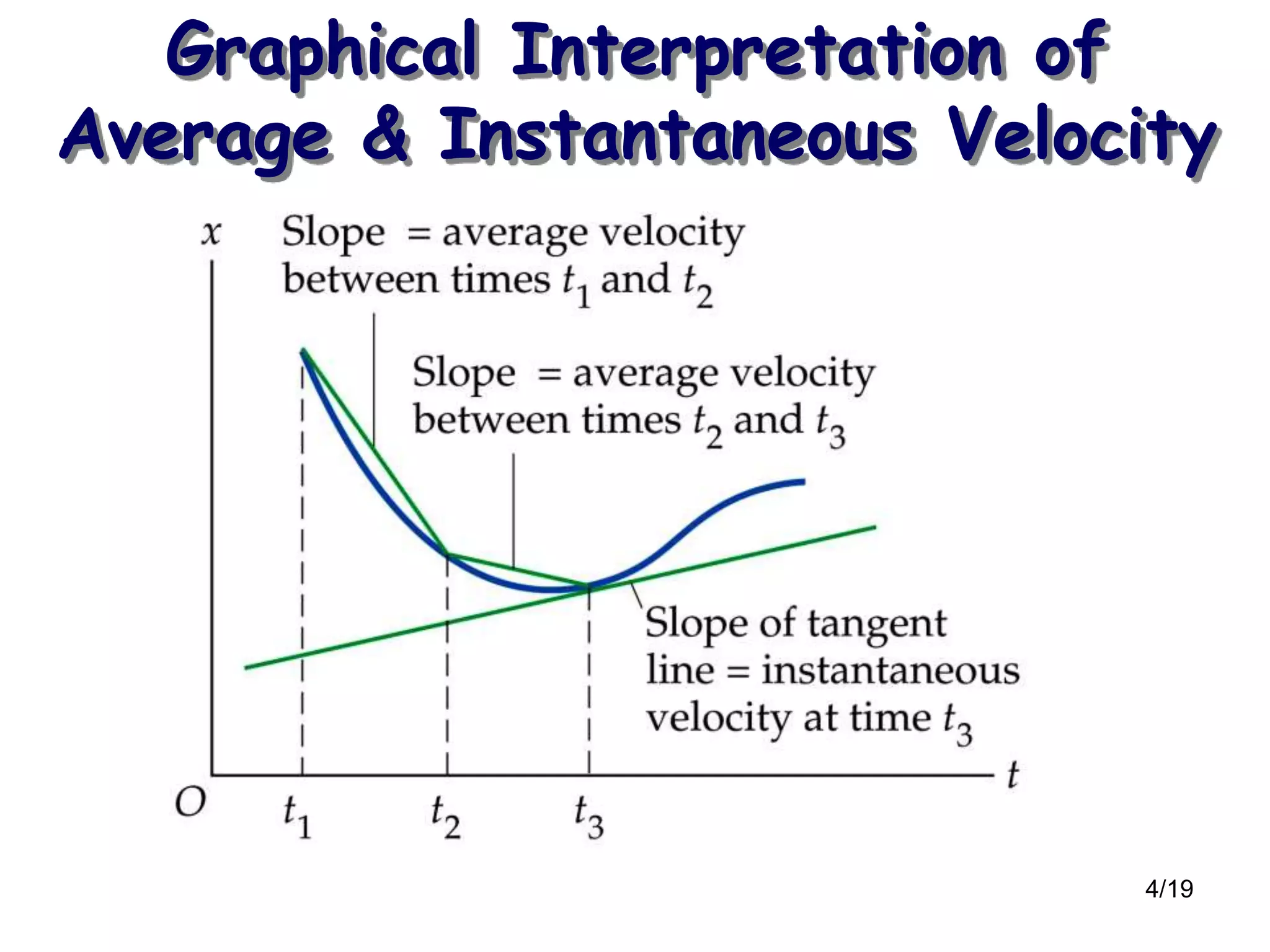
Graphical Interpretation of
Average & Instantaneous Velocity
5/19
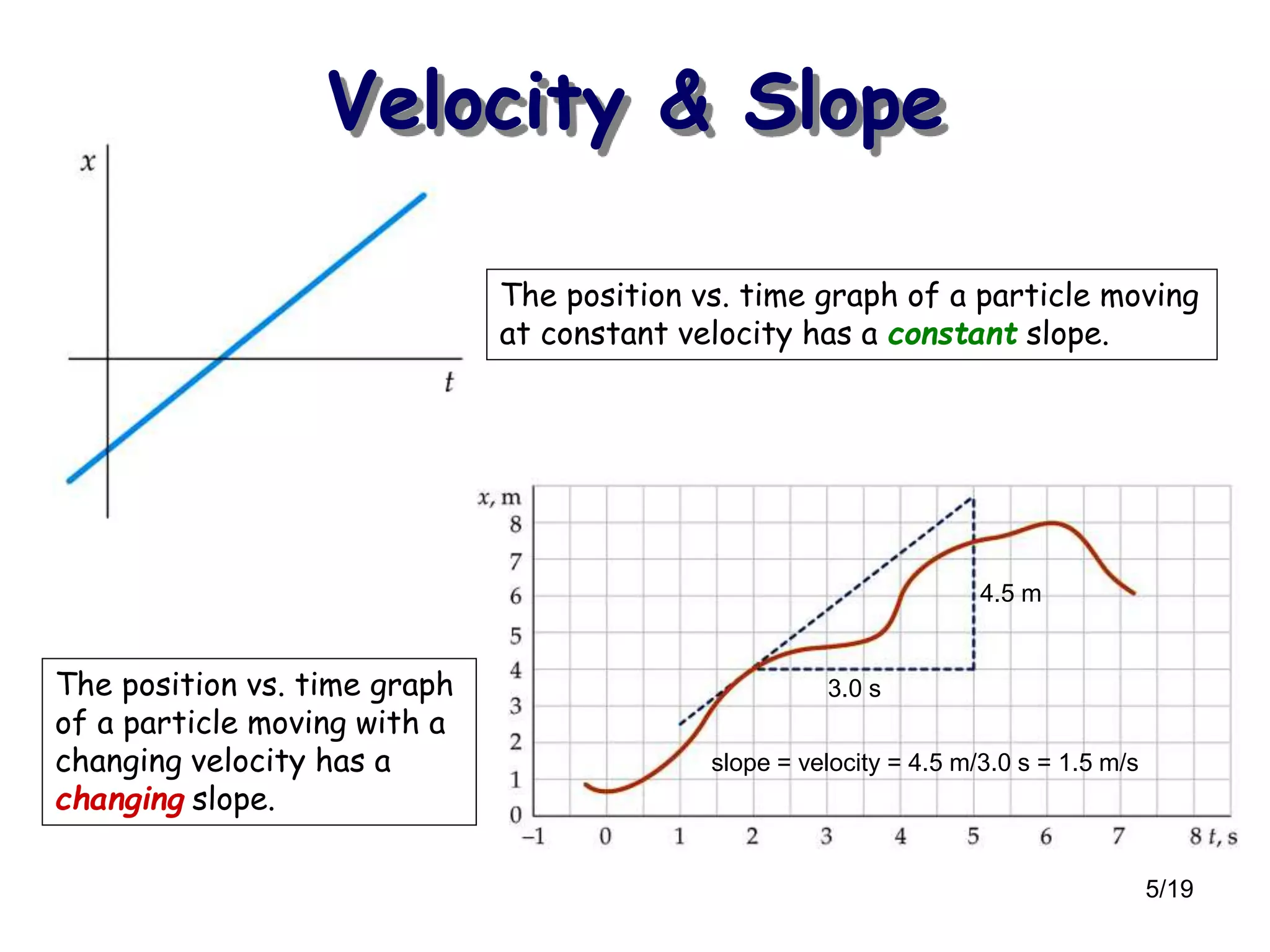
Velocity & Slope
The position vs. time graph of a particle moving
at constant velocity has a constant slope.
The position vs. time graph
of a particle moving with a
changing velocity has a
changing slope.
3.0 s
4.5 m
slope = velocity = 4.5 m/3.0 s = 1.5 m/s
6/19
Constant Acceleration
0 0 avx x x xv v v v a t     
av if is constantx x xa a a
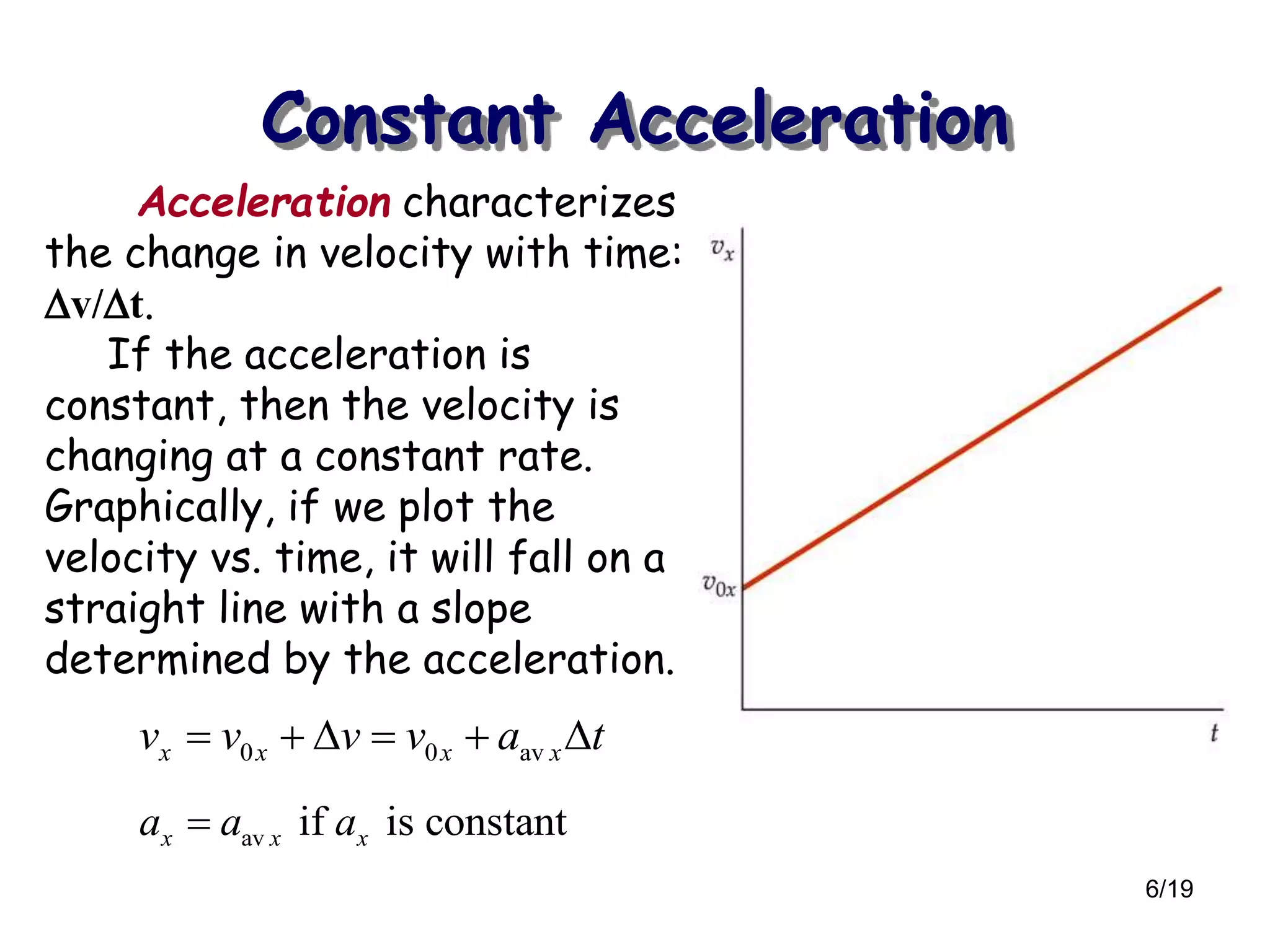
Acceleration characterizes
the change in velocity with time:
v/t.
If the acceleration is
constant, then the velocity is
changing at a constant rate.
Graphically, if we plot the
velocity vs. time, it will fall on a
straight line with a slope
determined by the acceleration.
7/19
Acceleration
, ,(so t)
fx ixx
av x x av x
f i
v vv
a v a
t t t

    
 
0
( ) lim x
x
t
v
a t
t 



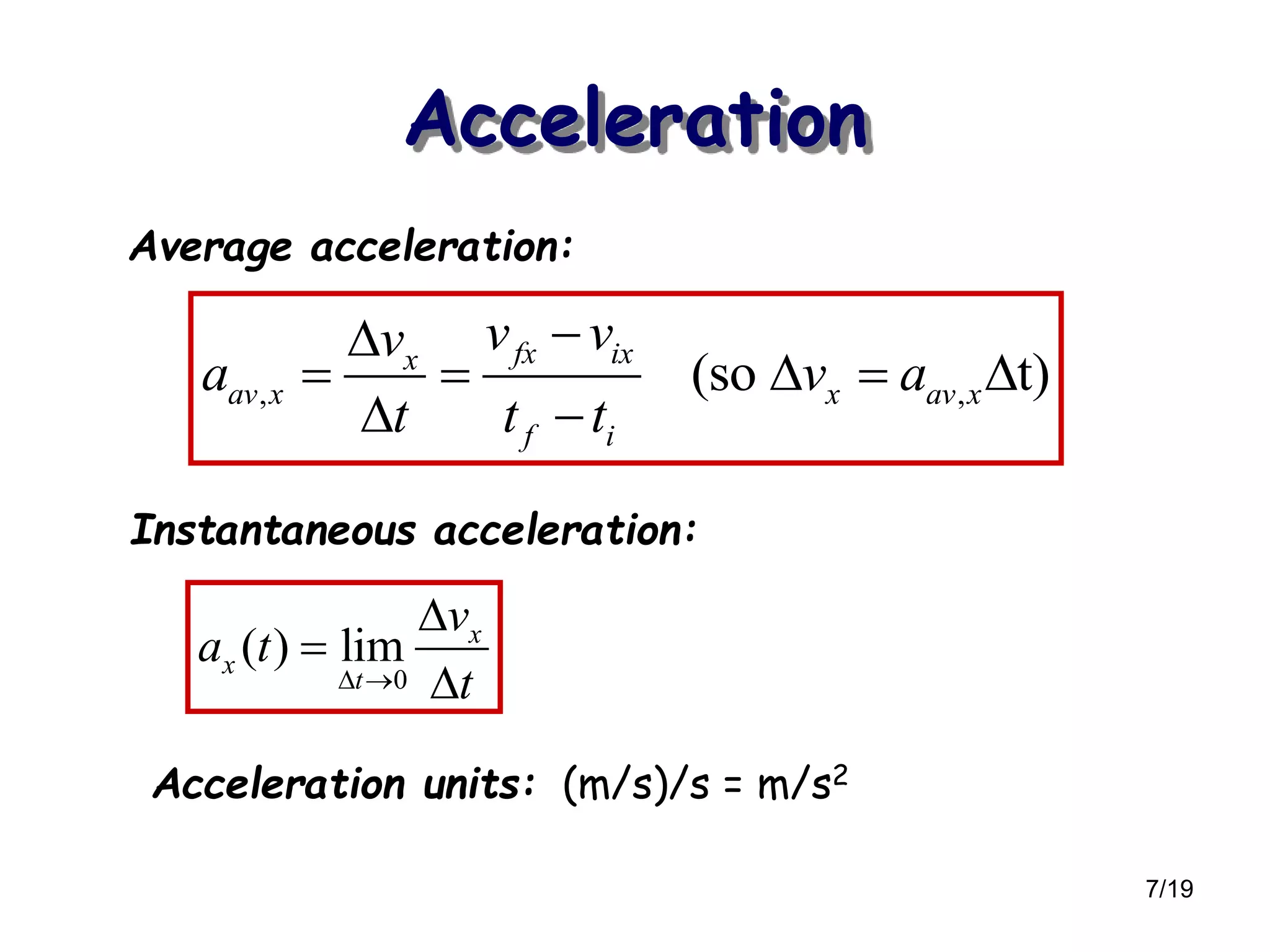
Average acceleration:
Instantaneous acceleration:
Acceleration units: (m/s)/s = m/s2
8/19
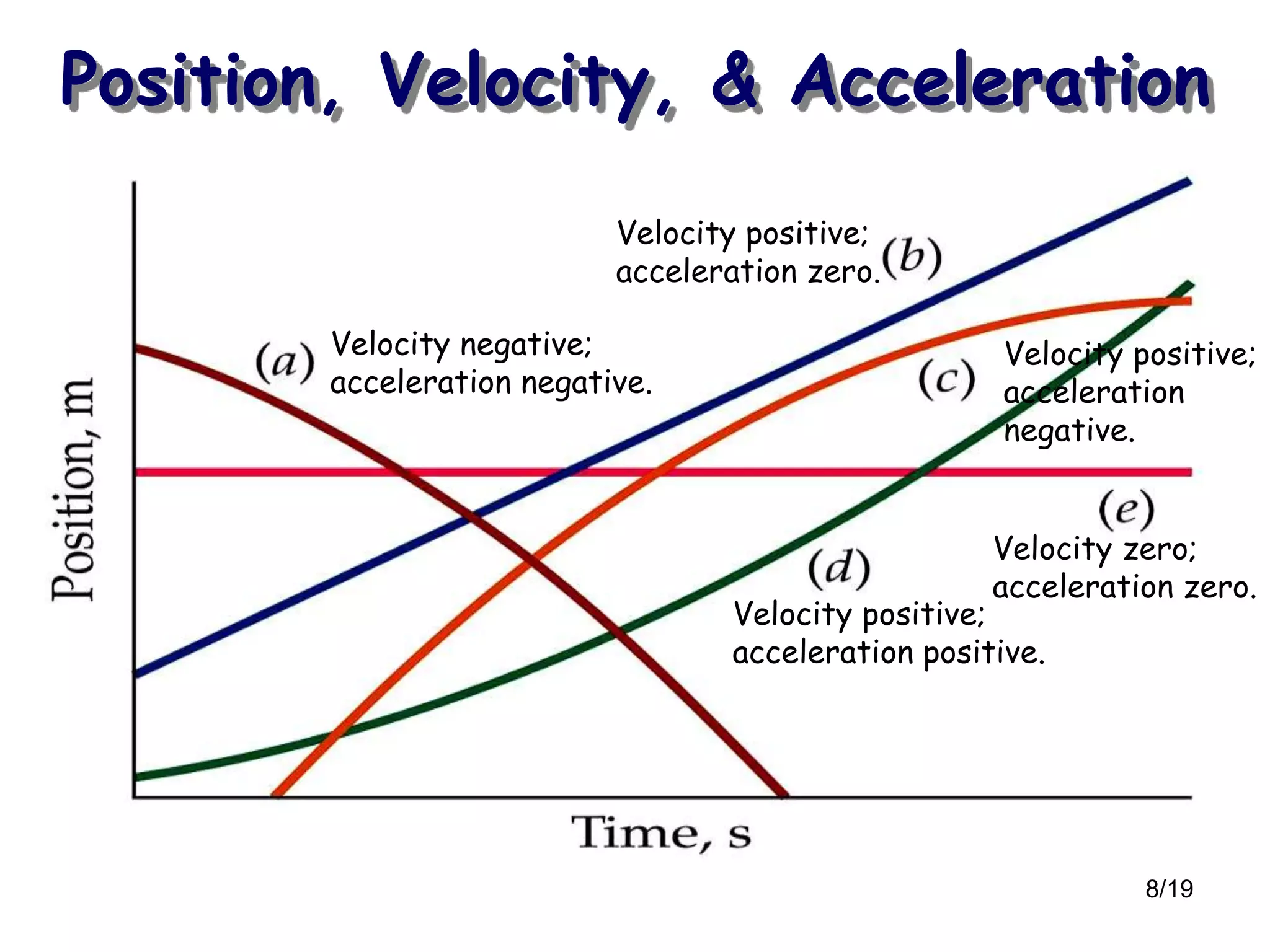
Position, Velocity, & Acceleration
Velocity negative;
acceleration negative.
Velocity positive;
acceleration zero.
Velocity positive;
acceleration
negative.
Velocity positive;
acceleration positive.
Velocity zero;
acceleration zero.
9/19
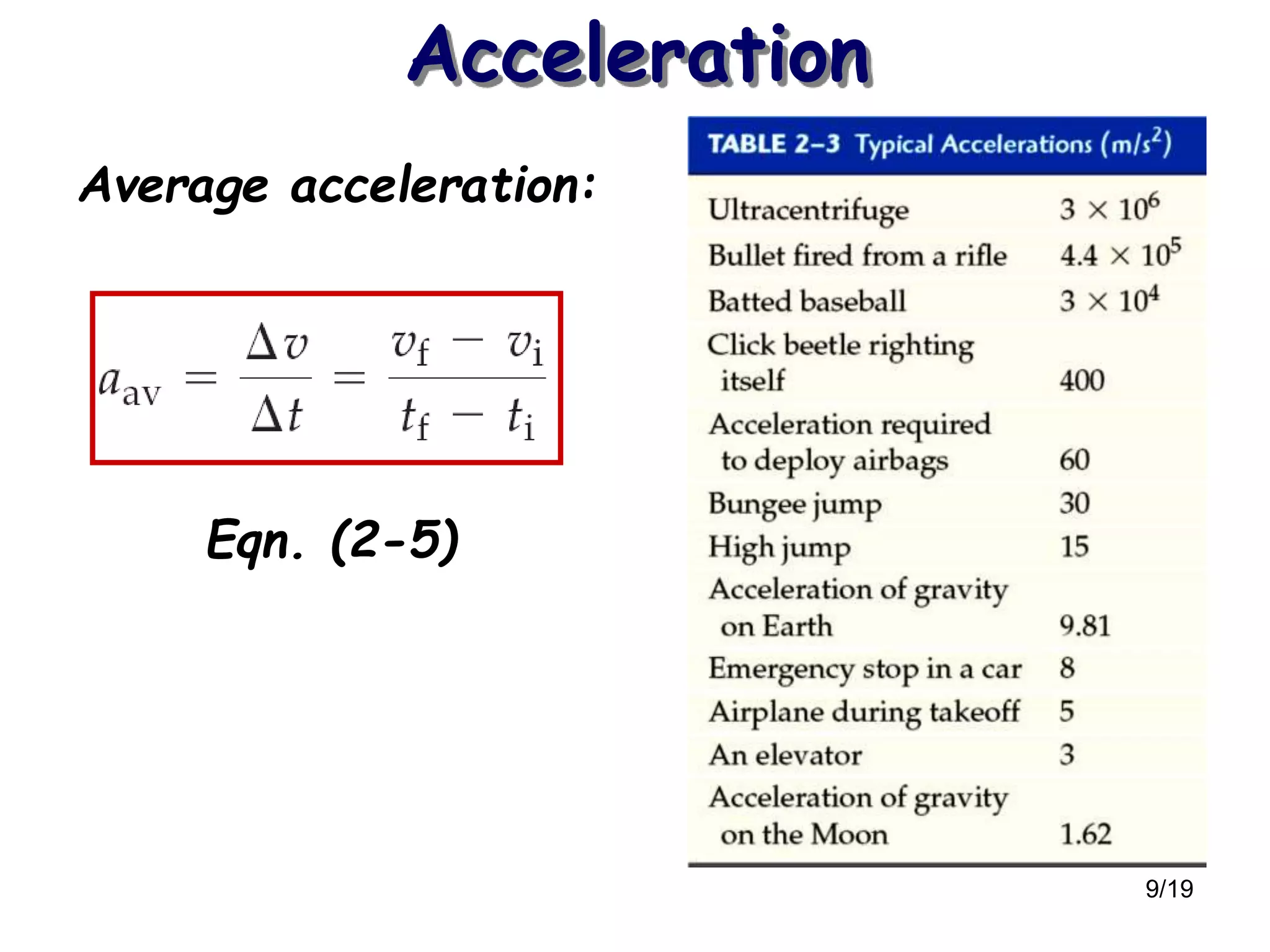
Acceleration
Average acceleration:
Eqn. (2-5)
10/19
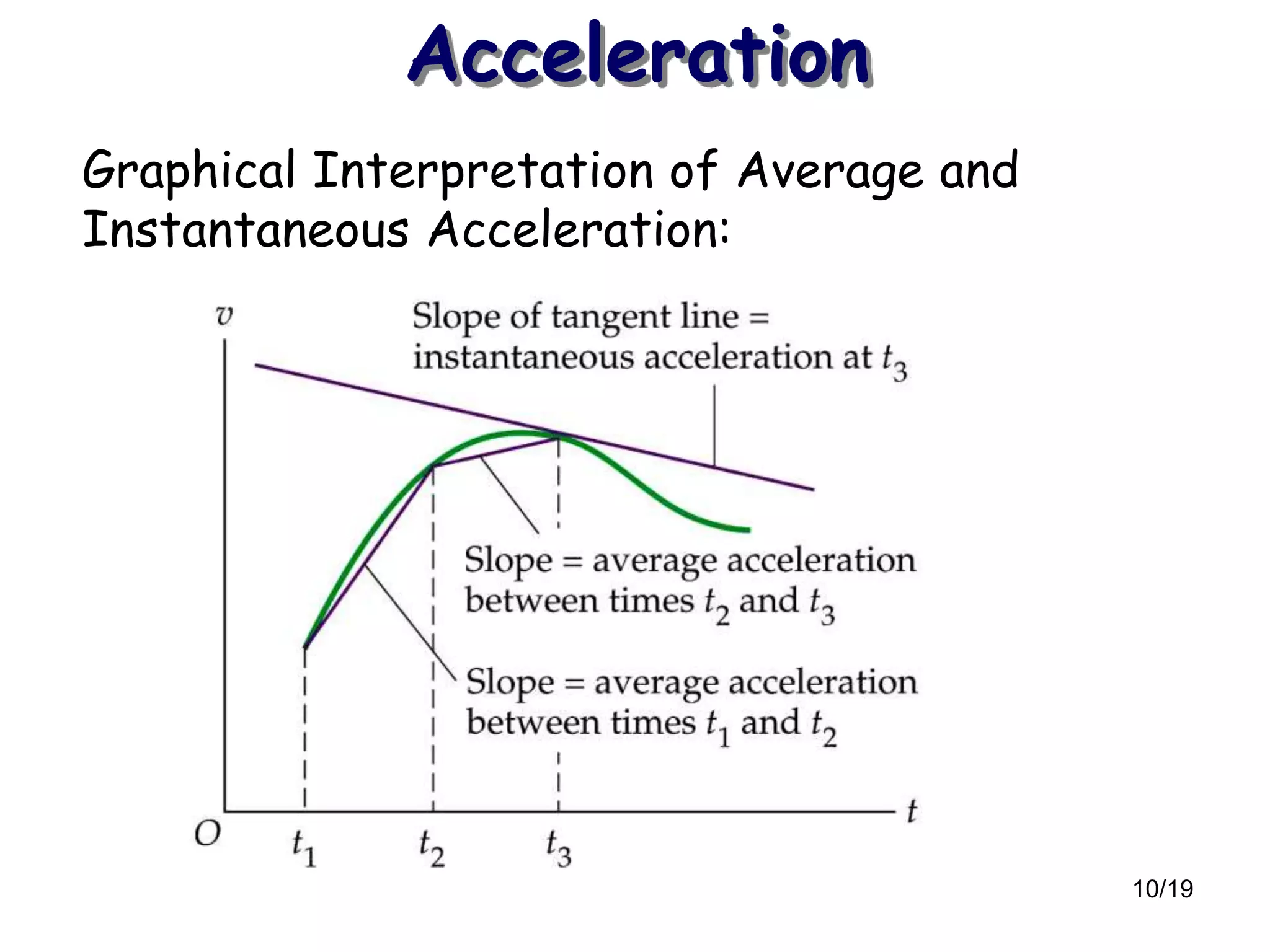
Graphical Interpretation of Average and
Instantaneous Acceleration:
Acceleration
11/19
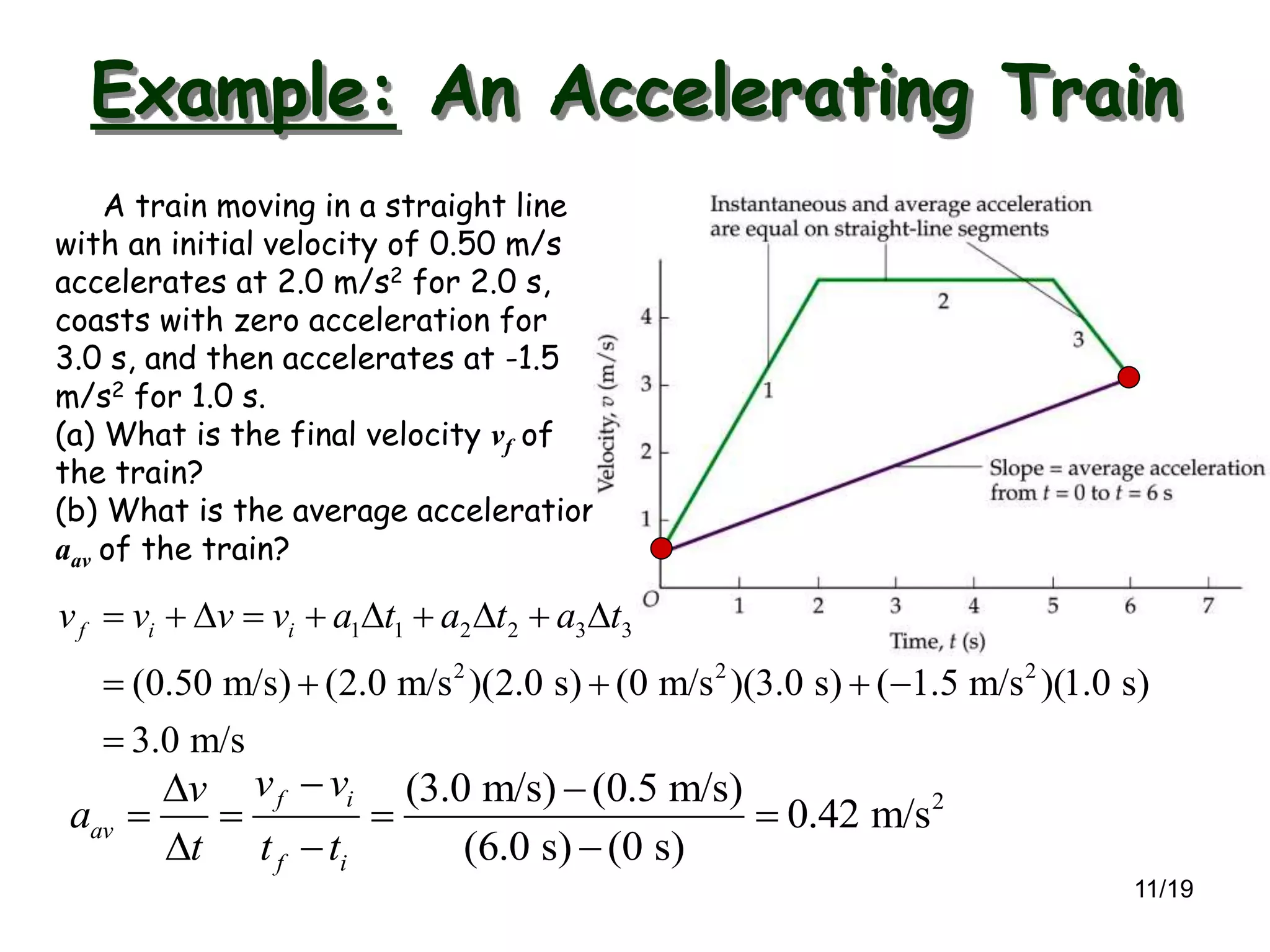
Example: An Accelerating Train
A train moving in a straight line
with an initial velocity of 0.50 m/s
accelerates at 2.0 m/s2 for 2.0 s,
coasts with zero acceleration for
3.0 s, and then accelerates at -1.5
m/s2 for 1.0 s.
(a) What is the final velocity vf of
the train?
(b) What is the average acceleration
aav of the train?
2(3.0 m/s) (0.5 m/s)
0.42 m/s
(6.0 s) (0 s)
f i
av
f i
v vv
a
t t t
 
   
  
1 1 2 2 3 3
2 2 2
(0.50 m/s) (2.0 m/s )(2.0 s) (0 m/s )(3.0 s) ( 1.5 m/s )(1.0 s)
3.0 m/s
f i iv v v v a t a t a t         
    

12/19
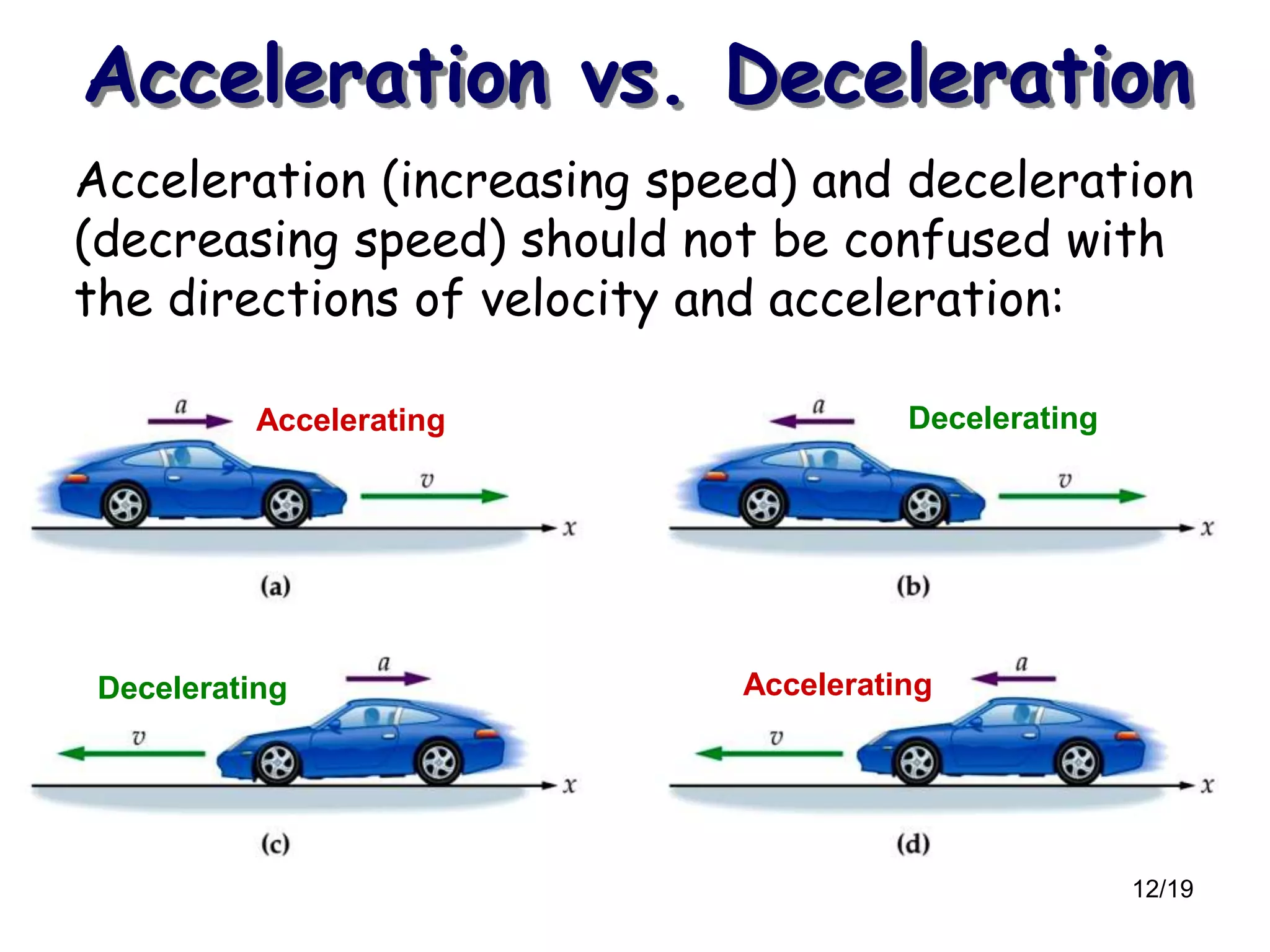
Acceleration (increasing speed) and deceleration
(decreasing speed) should not be confused with
the directions of velocity and acceleration:
Acceleration vs. Deceleration
Accelerating
Accelerating
Decelerating
Decelerating
13/19
Motion with Constant Acceleration
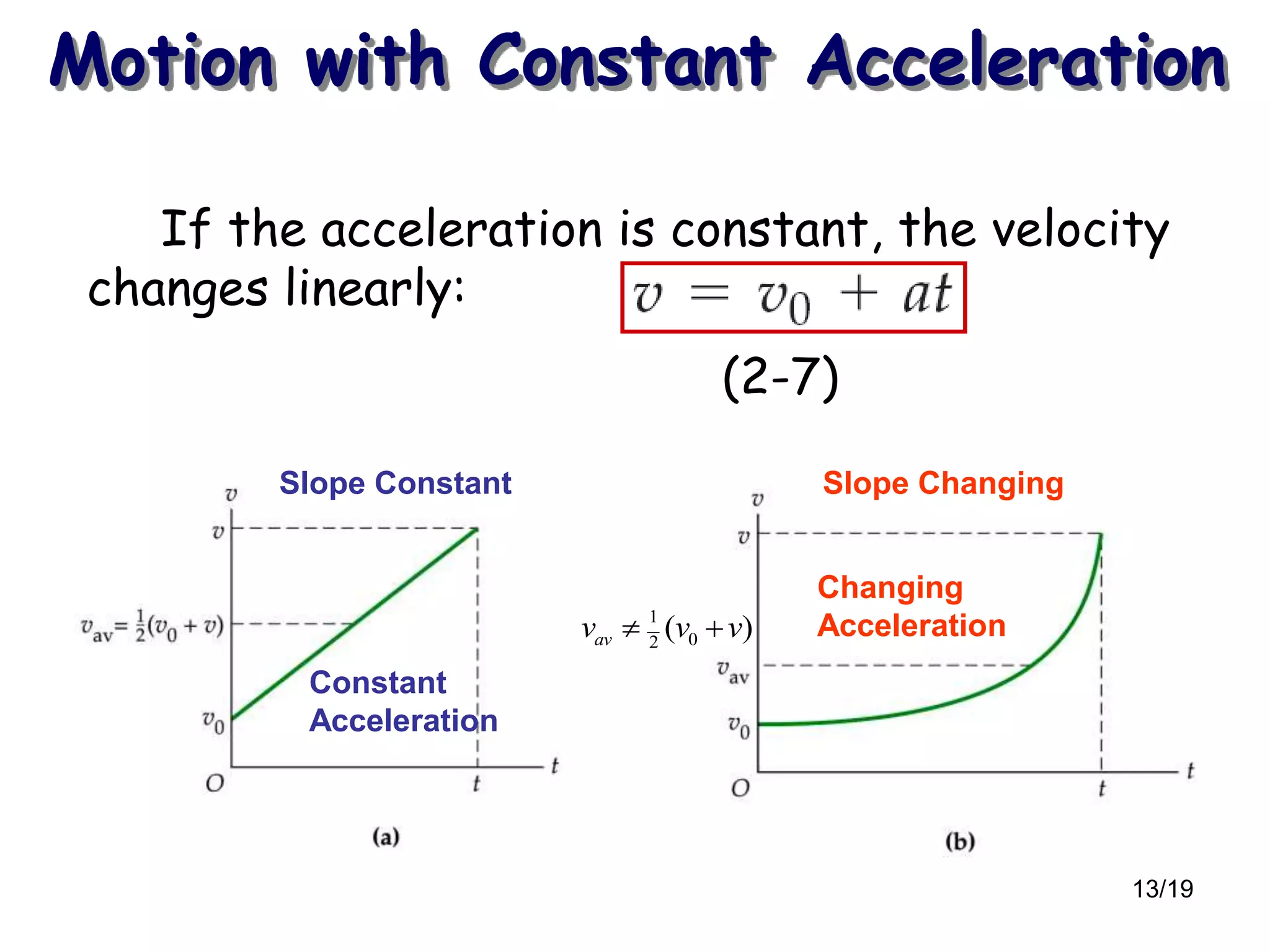
If the acceleration is constant, the velocity
changes linearly:
(2-7)
Constant
Acceleration
Changing
Acceleration1
02
( )avv v v 
Slope Constant Slope Changing
14/19
Motion with Constant Acceleration
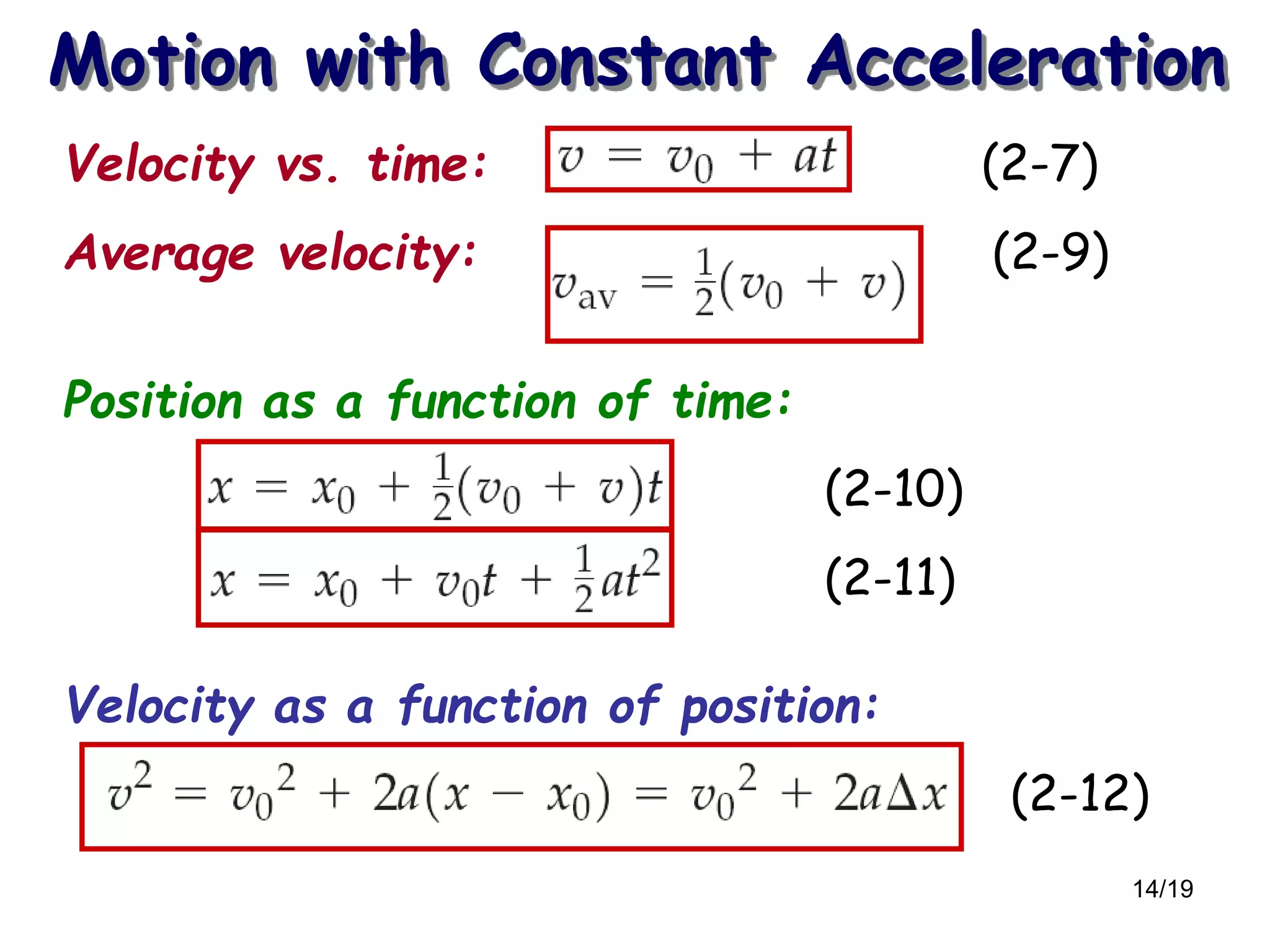
Velocity vs. time: (2-7)
Average velocity: (2-9)
Position as a function of time:
(2-10)
(2-11)
Velocity as a function of position:
(2-12)
15/19
Motion with Constant Acceleration
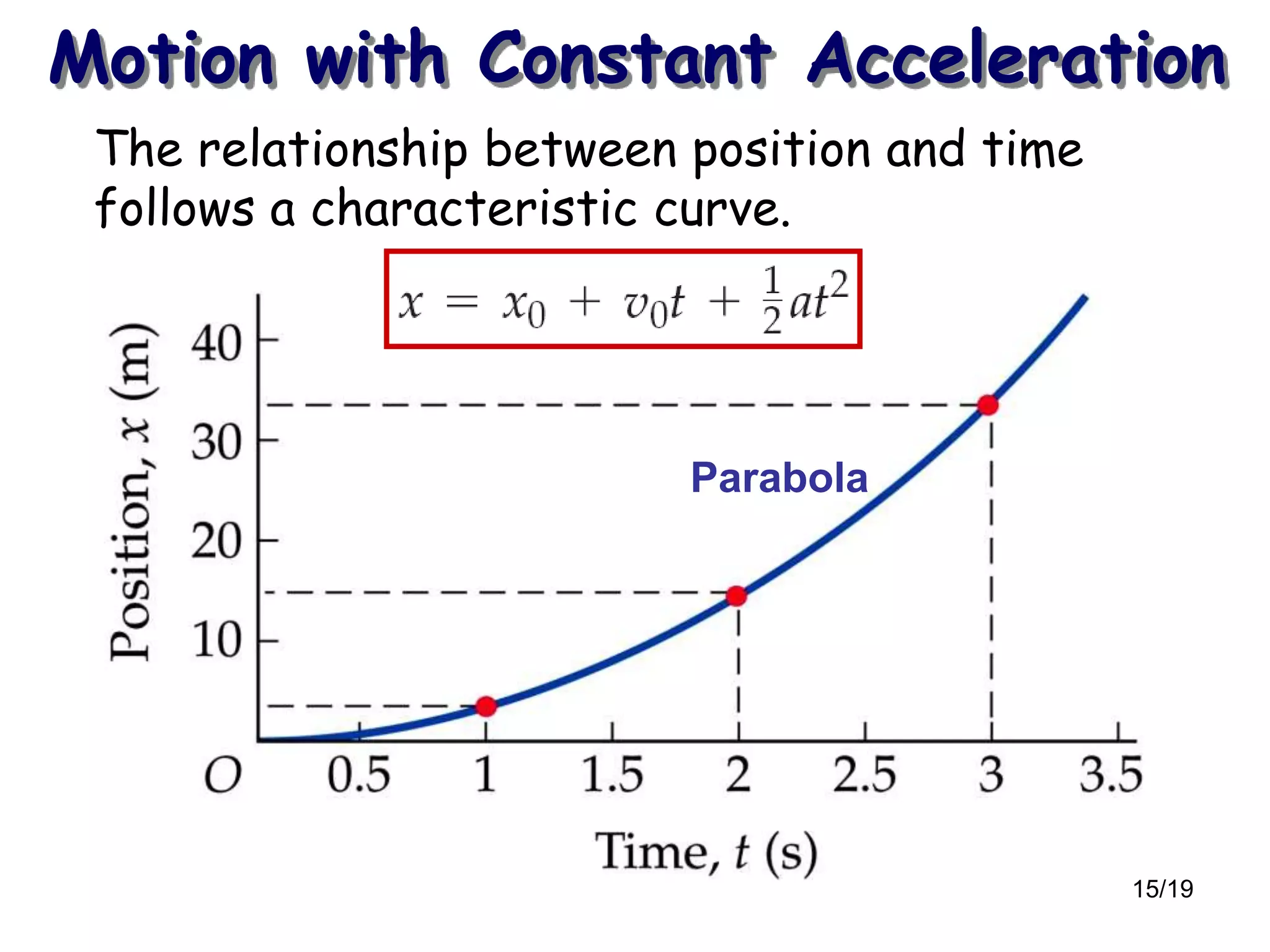
The relationship between position and time
follows a characteristic curve.
Parabola
16/19
Motion with Constant Acceleration
17/19
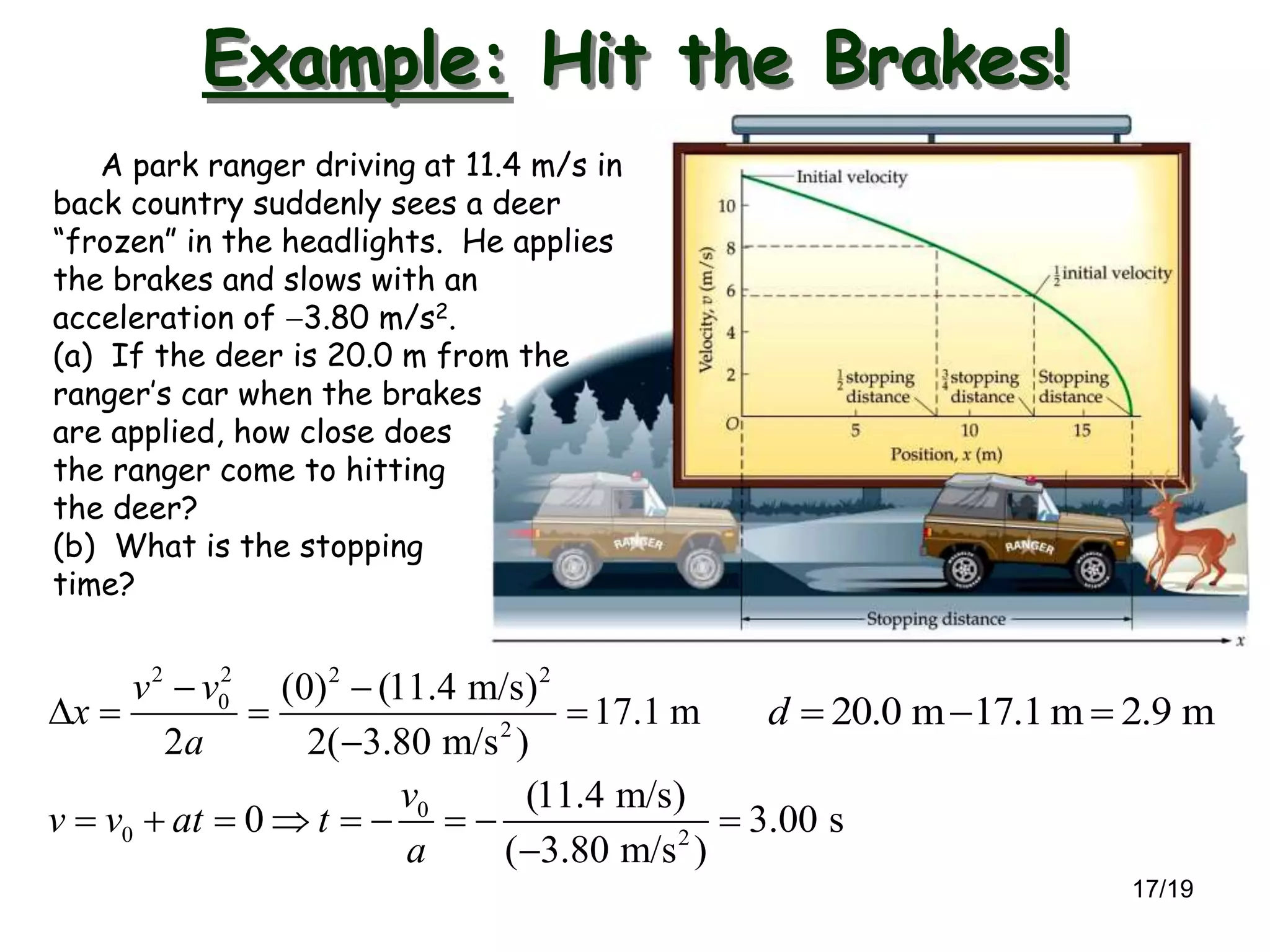
A park ranger driving at 11.4 m/s in
back country suddenly sees a deer
“frozen” in the headlights. He applies
the brakes and slows with an
acceleration of 3.80 m/s2.
(a) If the deer is 20.0 m from the
ranger’s car when the brakes
are applied, how close does
the ranger come to hitting
the deer?
(b) What is the stopping
time?
2 2 2 2
0
2
(0) (11.4 m/s)
17.1 m
2 2( 3.80 m/s )
v v
x
a
 
   

20.0 m 17.1 m 2.9 md   
0
0 2
(11.4 m/s)
0 3.00 s
( 3.80 m/s )
v
v v at t
a
        

Example: Hit the Brakes!

Velocity And acceleration graphical Interptition

  • 1.
    Physics - Mechanics Lecture2 Velocity and Acceleration September , 2013
  • 2.
    Physics 114A -Lecture 3 2/19 Physics 114A - Introduction to Mechanics - Winter-2012 Textbook: Physics, Vol. 1 (UW Edition), James S. Walker Week Date L# Lecture Topic Pages Slides Reading HW Due Lab 1 2-Jan-12 H1 New Year Holiday No Lab 1st week 3-Jan-12 1 Introduction to Physics 12 21 Chapter 1 5-Jan-12 2 Position & Velocity 8 22 2-1 to 2-3 No HW 6-Jan-12 3 Velocity & Acceleration 10 25 2-4 to 2-5 2 9-Jan-12 4 Equations of Motion 9 20 2-6 to 2-7 1-D Kinematics 10-Jan-12 5 Vectors 8 24 3-1 to 3-3 12-Jan-12 6 r, v & a Vectors 5 24 3-4 to 3-5 HW1 13-Jan-12 7 Relative Motion 3 18 3-6 3 16-Jan-12 H2 MLK Birthhday Holiday Free Fall & Projectiles 17-Jan-12 8 2D Motion Basics 5 19 4-1 to 4-2 19-Jan-12 9 2D Examples 13 22 4-3 to 4-5 HW2 20-Jan-12 E1 EXAM 1 - Chapters 1-4 Lecture Schedule (Part 1) We are here.
  • 3.
  • 4.
  • 5.
    5/19 Velocity & Slope Theposition vs. time graph of a particle moving at constant velocity has a constant slope. The position vs. time graph of a particle moving with a changing velocity has a changing slope. 3.0 s 4.5 m slope = velocity = 4.5 m/3.0 s = 1.5 m/s
  • 6.
    6/19 Constant Acceleration 0 0avx x x xv v v v a t      av if is constantx x xa a a Acceleration characterizes the change in velocity with time: v/t. If the acceleration is constant, then the velocity is changing at a constant rate. Graphically, if we plot the velocity vs. time, it will fall on a straight line with a slope determined by the acceleration.
  • 7.
    7/19 Acceleration , ,(so t) fxixx av x x av x f i v vv a v a t t t         0 ( ) lim x x t v a t t     Average acceleration: Instantaneous acceleration: Acceleration units: (m/s)/s = m/s2
  • 8.
    8/19 Position, Velocity, &Acceleration Velocity negative; acceleration negative. Velocity positive; acceleration zero. Velocity positive; acceleration negative. Velocity positive; acceleration positive. Velocity zero; acceleration zero.
  • 9.
  • 10.
    10/19 Graphical Interpretation ofAverage and Instantaneous Acceleration: Acceleration
  • 11.
    11/19 Example: An AcceleratingTrain A train moving in a straight line with an initial velocity of 0.50 m/s accelerates at 2.0 m/s2 for 2.0 s, coasts with zero acceleration for 3.0 s, and then accelerates at -1.5 m/s2 for 1.0 s. (a) What is the final velocity vf of the train? (b) What is the average acceleration aav of the train? 2(3.0 m/s) (0.5 m/s) 0.42 m/s (6.0 s) (0 s) f i av f i v vv a t t t          1 1 2 2 3 3 2 2 2 (0.50 m/s) (2.0 m/s )(2.0 s) (0 m/s )(3.0 s) ( 1.5 m/s )(1.0 s) 3.0 m/s f i iv v v v a t a t a t               
  • 12.
    12/19 Acceleration (increasing speed)and deceleration (decreasing speed) should not be confused with the directions of velocity and acceleration: Acceleration vs. Deceleration Accelerating Accelerating Decelerating Decelerating
  • 13.
    13/19 Motion with ConstantAcceleration If the acceleration is constant, the velocity changes linearly: (2-7) Constant Acceleration Changing Acceleration1 02 ( )avv v v  Slope Constant Slope Changing
  • 14.
    14/19 Motion with ConstantAcceleration Velocity vs. time: (2-7) Average velocity: (2-9) Position as a function of time: (2-10) (2-11) Velocity as a function of position: (2-12)
  • 15.
    15/19 Motion with ConstantAcceleration The relationship between position and time follows a characteristic curve. Parabola
  • 16.
  • 17.
    17/19 A park rangerdriving at 11.4 m/s in back country suddenly sees a deer “frozen” in the headlights. He applies the brakes and slows with an acceleration of 3.80 m/s2. (a) If the deer is 20.0 m from the ranger’s car when the brakes are applied, how close does the ranger come to hitting the deer? (b) What is the stopping time? 2 2 2 2 0 2 (0) (11.4 m/s) 17.1 m 2 2( 3.80 m/s ) v v x a        20.0 m 17.1 m 2.9 md    0 0 2 (11.4 m/s) 0 3.00 s ( 3.80 m/s ) v v v at t a           Example: Hit the Brakes!