The Biomechanics of Sprinting
 
 
Starting Biomechanics
Starting Aim – development of max horizontal velocity  Achieved by placing body in best biomechanical position to apply force
Leg Positioning Right side of brain involved in detection and identification of signal Left side – execution of movement Right leg controlled by left side of brain & vice versa. RT 26ms better with left leg as rear leg  MT 104ms better with right leg as rear leg (Eikenberry, 2008)
Types of Sprint Starts Aim to develop max impulse Impulse = Force x Time Distance between blocks – bullet (<30cm), medium (30-50cm), elongated (>50cm) Medium best – best combination of body position to develop force and time on blocks
Pedal Angle/Foot Placement Stretch Shortening Cycle Front Block - >45 deg Front Spikes in ground Rear Block – low as flexibility allows (c35 deg) Foot position depends upon pedal height
Set Position Shoulders over hands – elbow’s not locked Hips above shoulders Flat back – neutral head position Lower legs c45 degree Front knee 90 – 110 degree Rear knee 120 – 135 degree Body weight evenly on feet and hands Hold breath/tighten stomach muscles
After the Gun Focus on motor task – front arm/rear leg Hips projecting forwards not up Arms above parallel Front arm – forearm lead Rear arm – straight arm sweep back Low rear heel recovery c45 degree take off angle
Determining Best Start Position for your Athlete Fit the biomechanical model Time to 10m Changes with strength/growth
Teaching the Sprint Start a Practical Guide for  Young Athletes
KEEP IT SIMPLE! Break the start down in to phases Focus their attention on one or two key points and develop over time Finally bring the phases together – chaining Whole – Part – Whole?
Teaching The Phases:- Setting up the blocks…  Which foot first ? Distance from the line to  the blocks
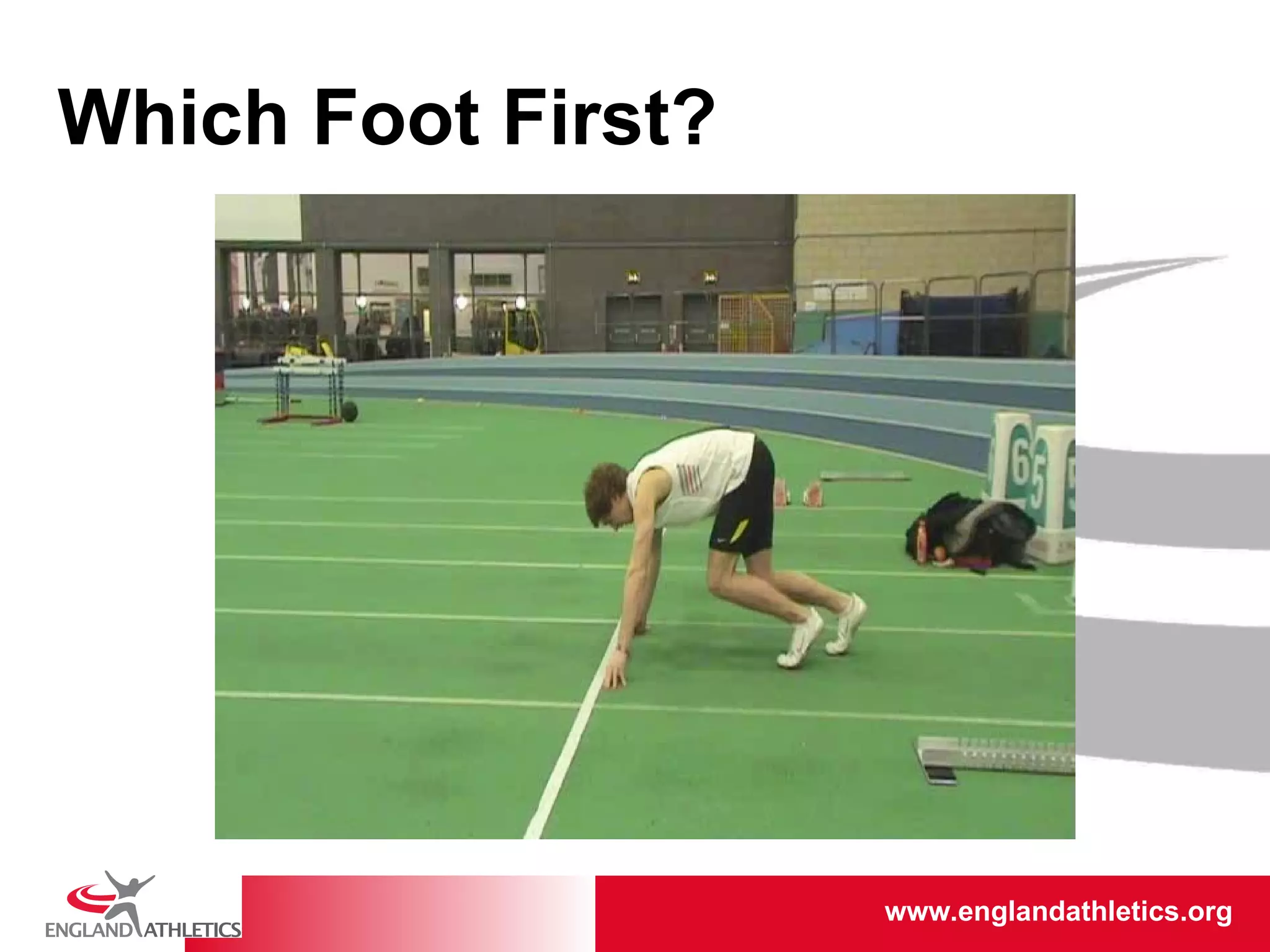
Which Foot First?
Distance from the line to the Blocks Foot Length Winkler/Seagrave/Mann Method 3 Feet to rear Block and 2 feet to front Block Leg Length Straight Leg to rear Block and 60% of this to the front Block It is all about getting the athlete into the right position
Set Position What is important Stability / Core Strength Upper Body Strength Foot Strength Focus
How are these developed? Stability In this phase basic core exercises (examples) Upper body strength Basic press up etc Foot Strength How important is this?
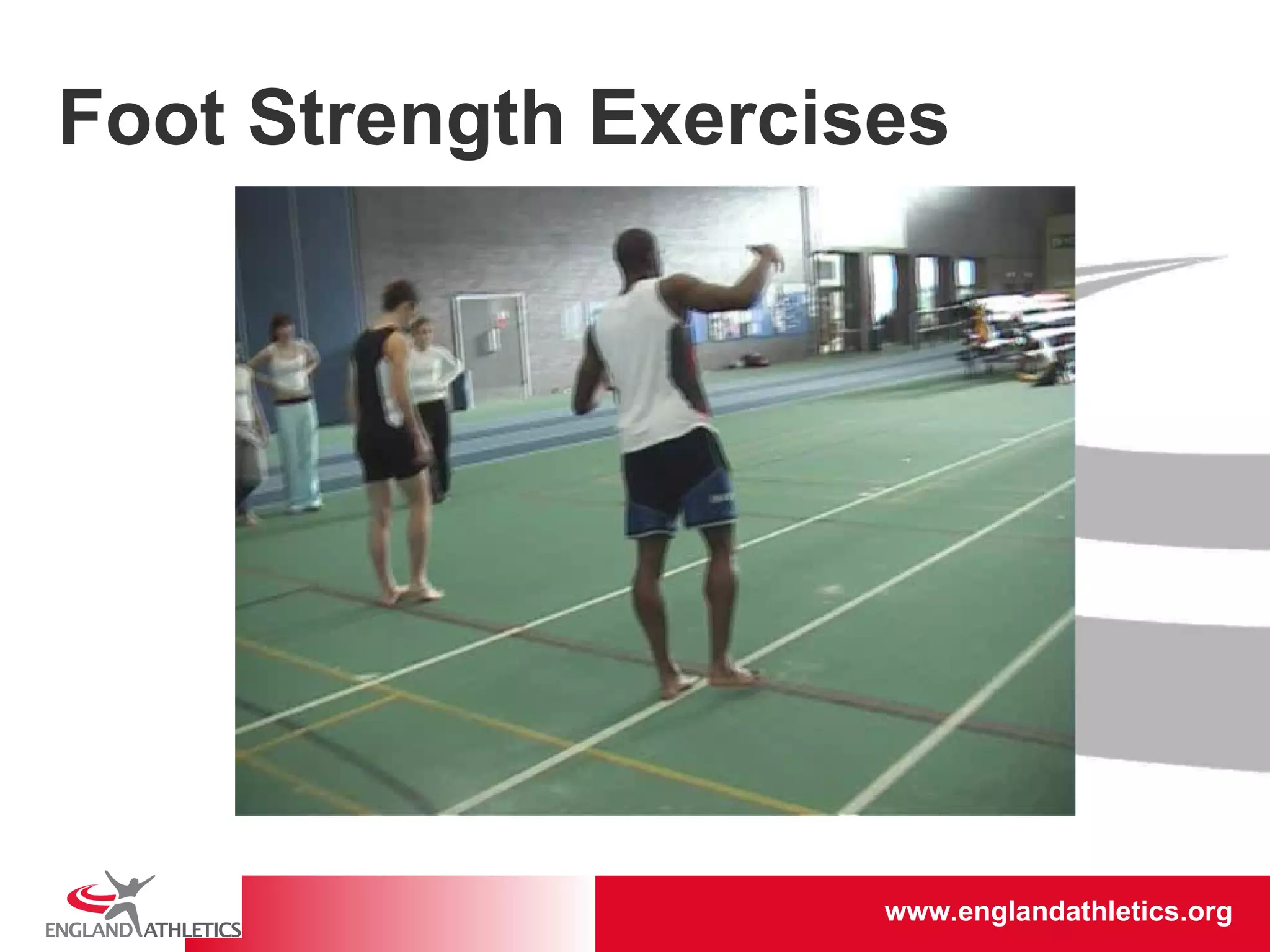
Foot Strength Exercises
Focus How important is reaction time ? Use as a focus cue rather than train.
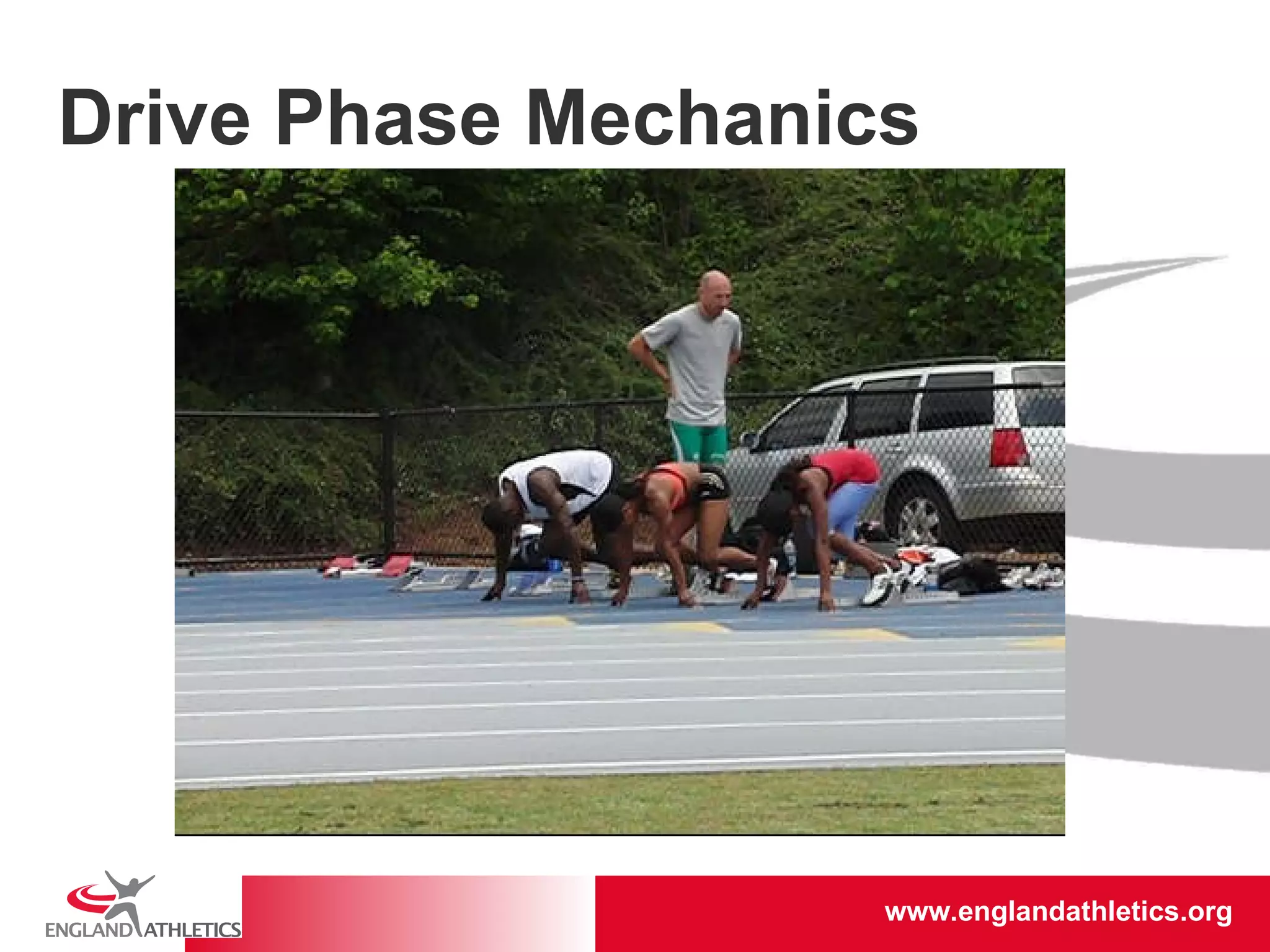
Drive Phase Mechanics
 
 
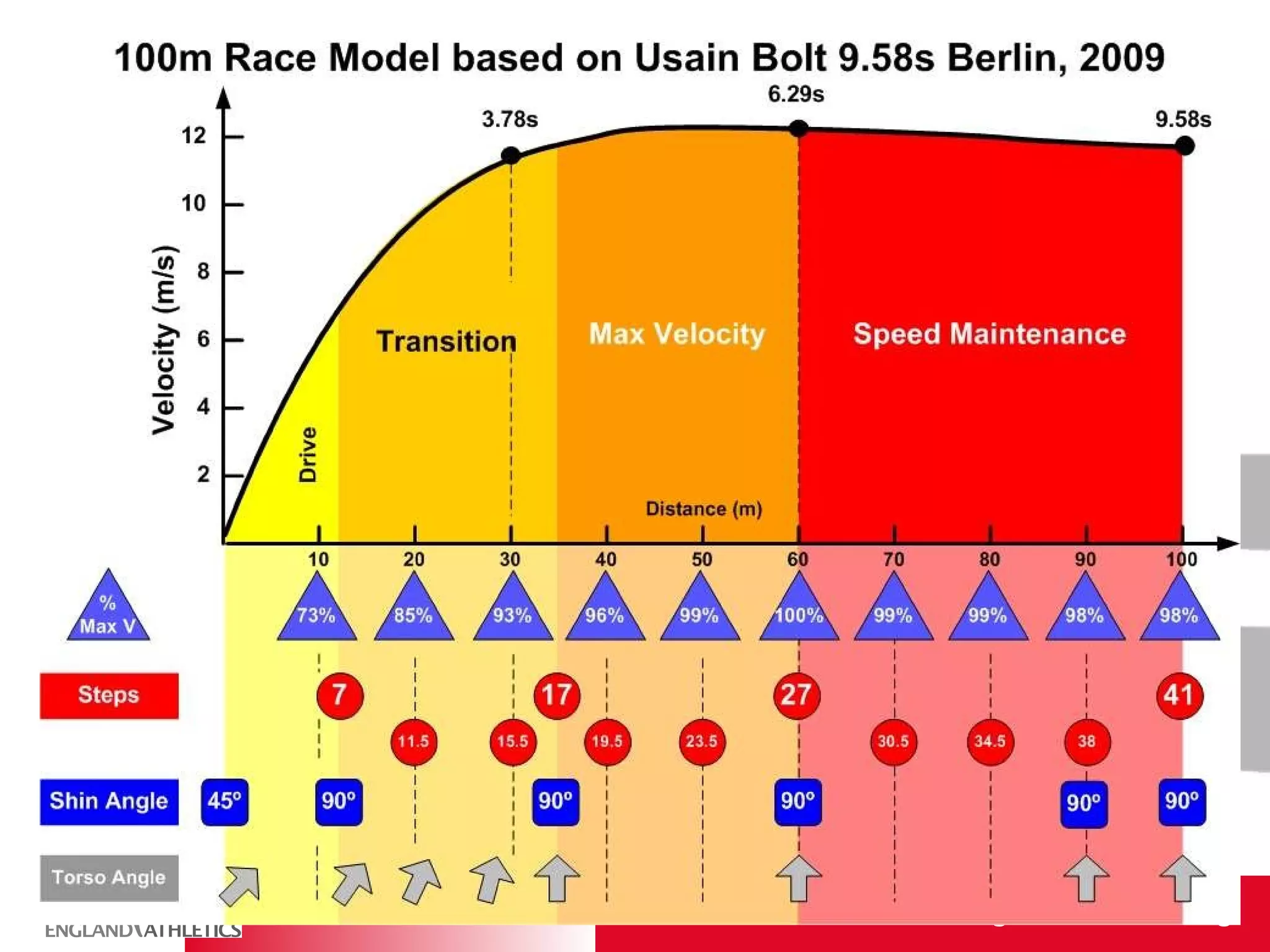
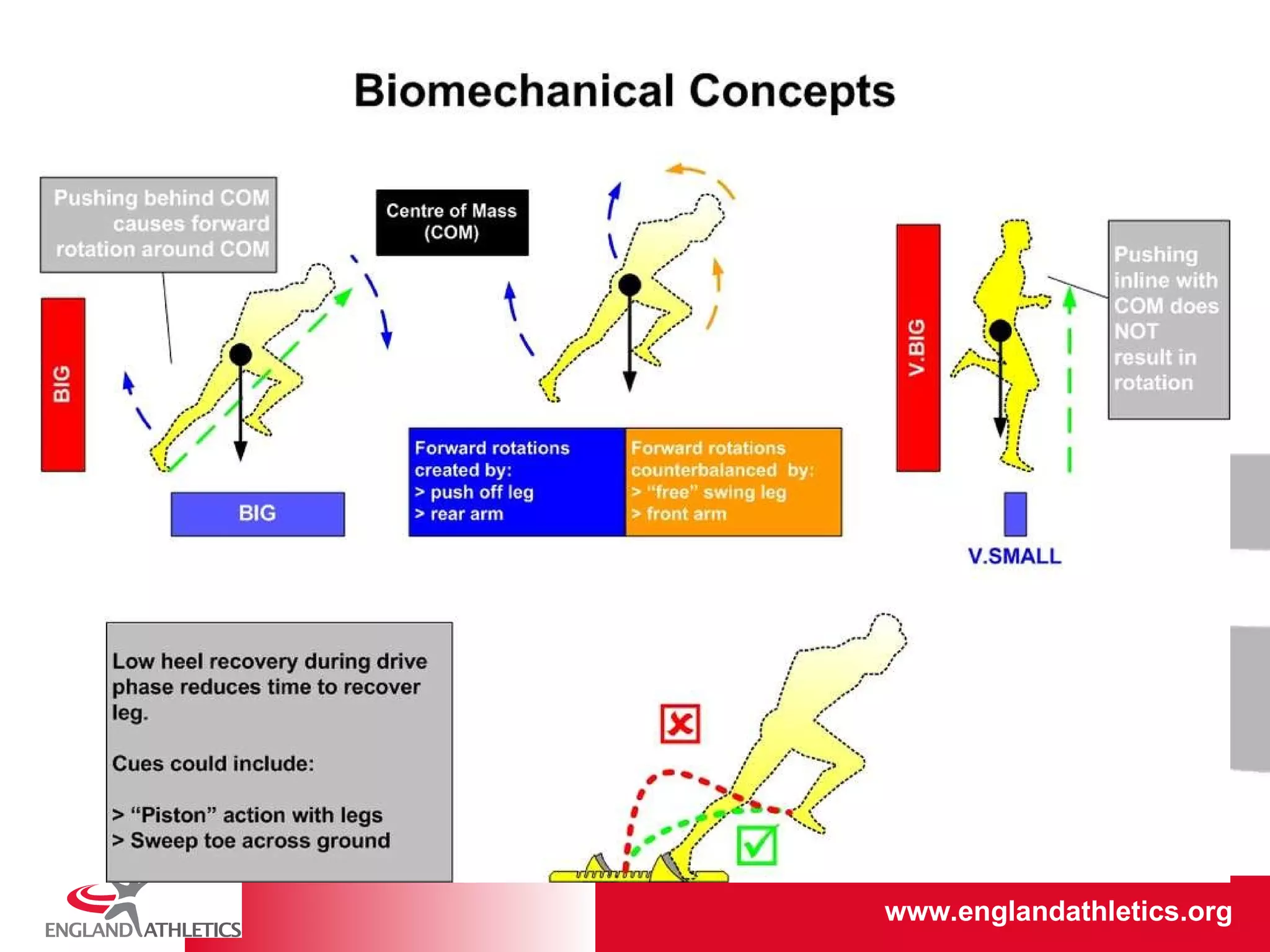
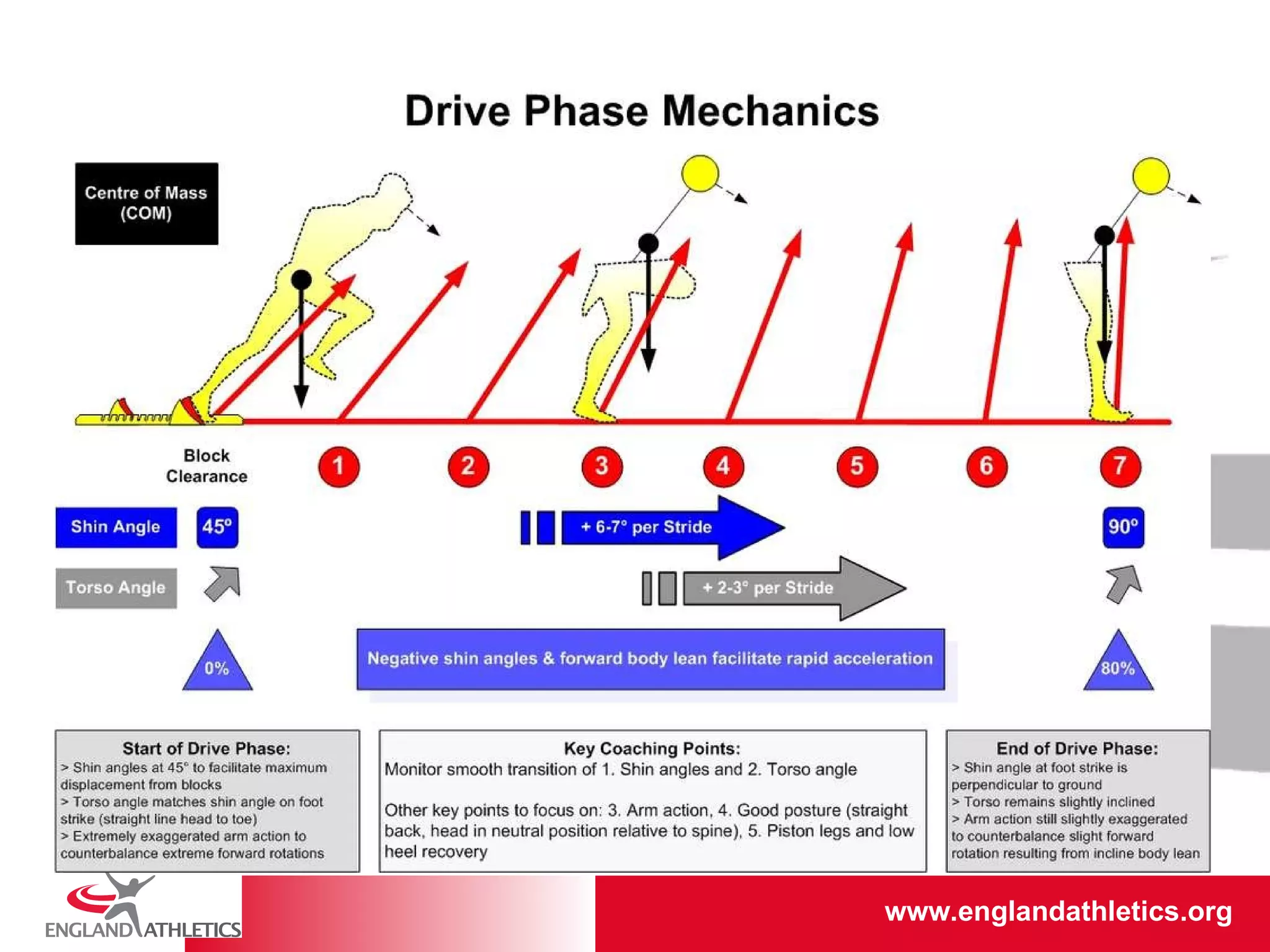
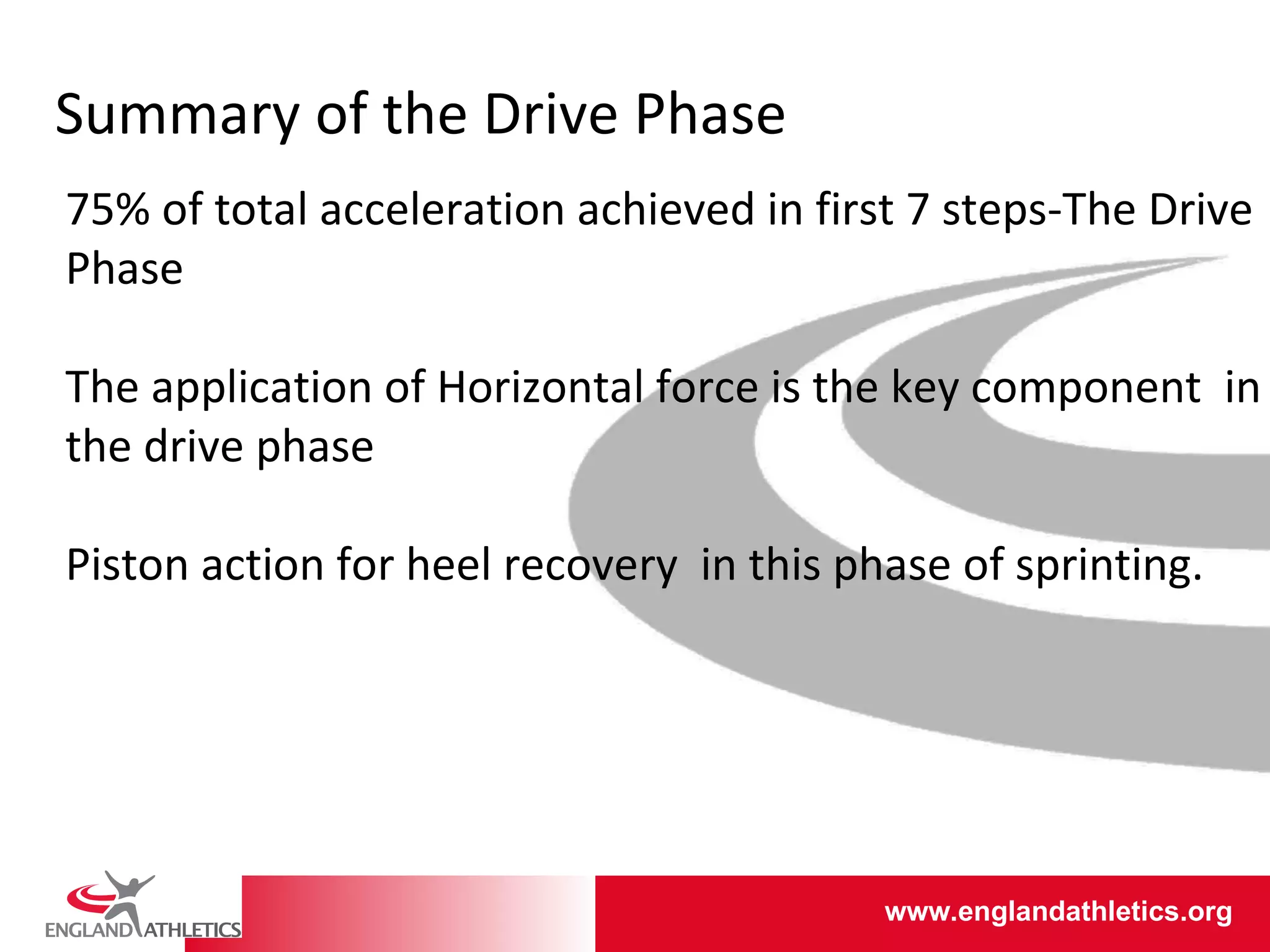
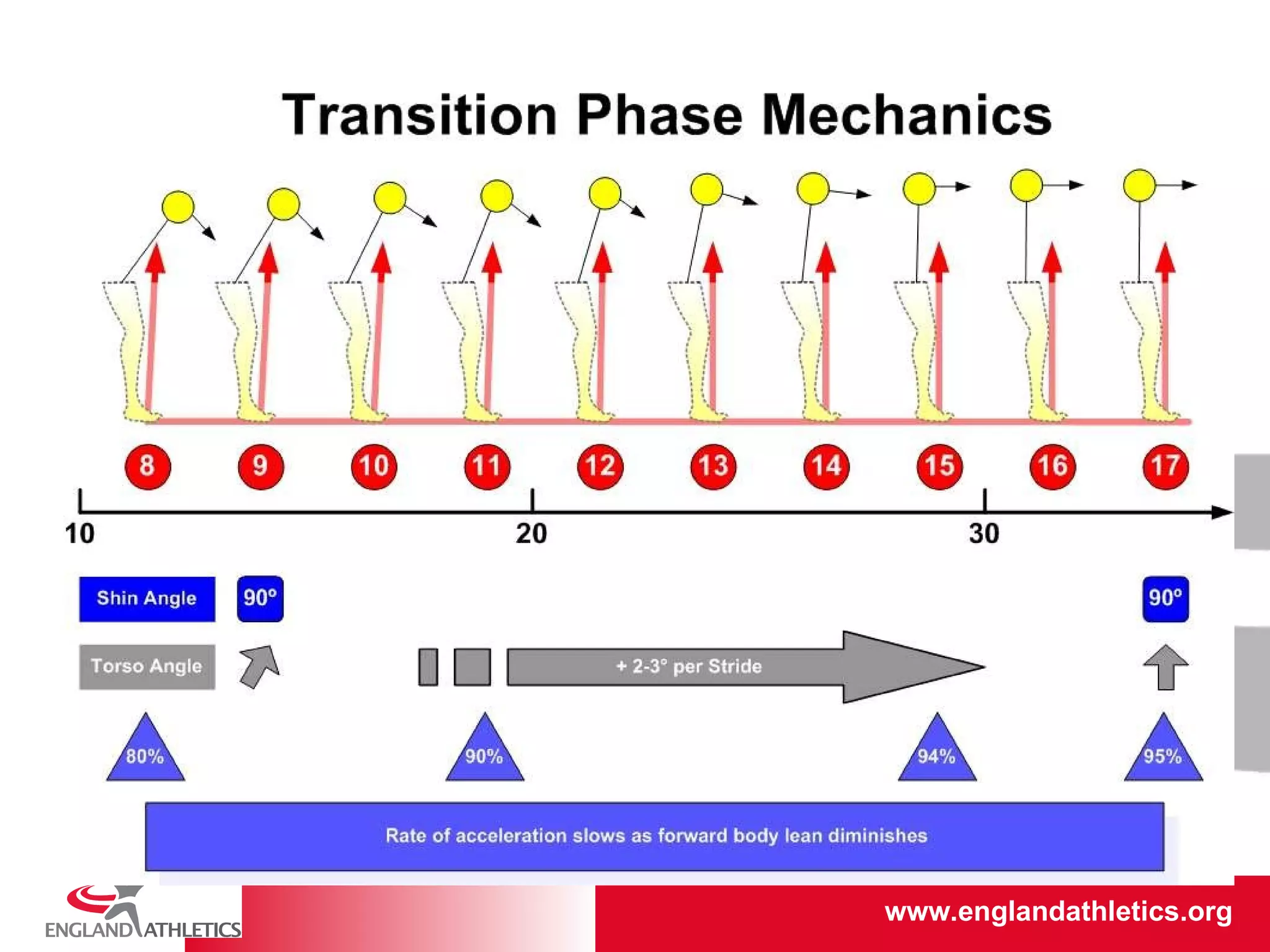
Summary of the Drive Phase  75% of total acceleration achieved in first 7 steps-The Drive Phase The application of Horizontal force is the key component  in the drive phase Piston action for heel recovery  in this phase of sprinting.
Transition Phase Mechanics
 
Drive Phase Mechanics
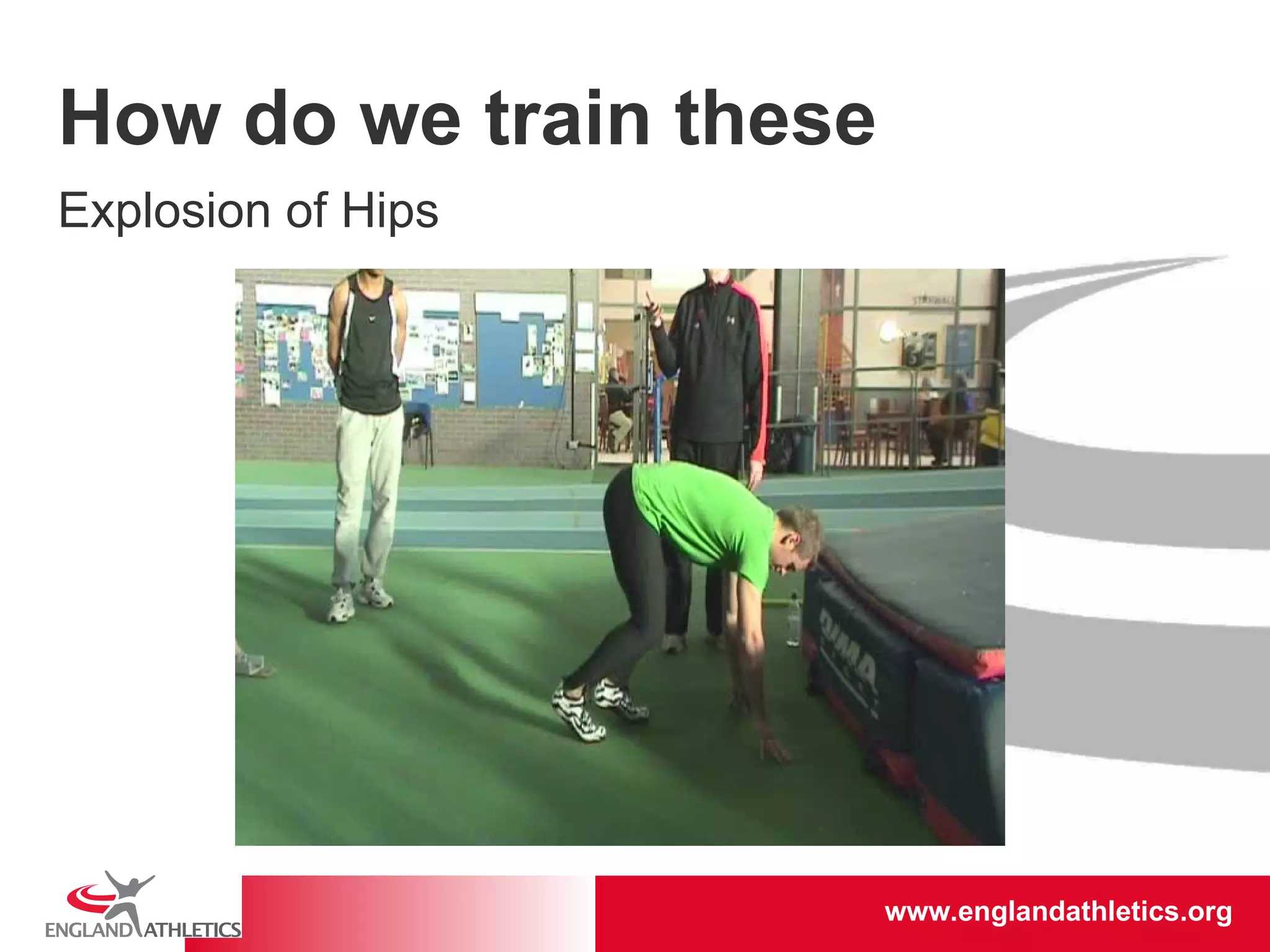
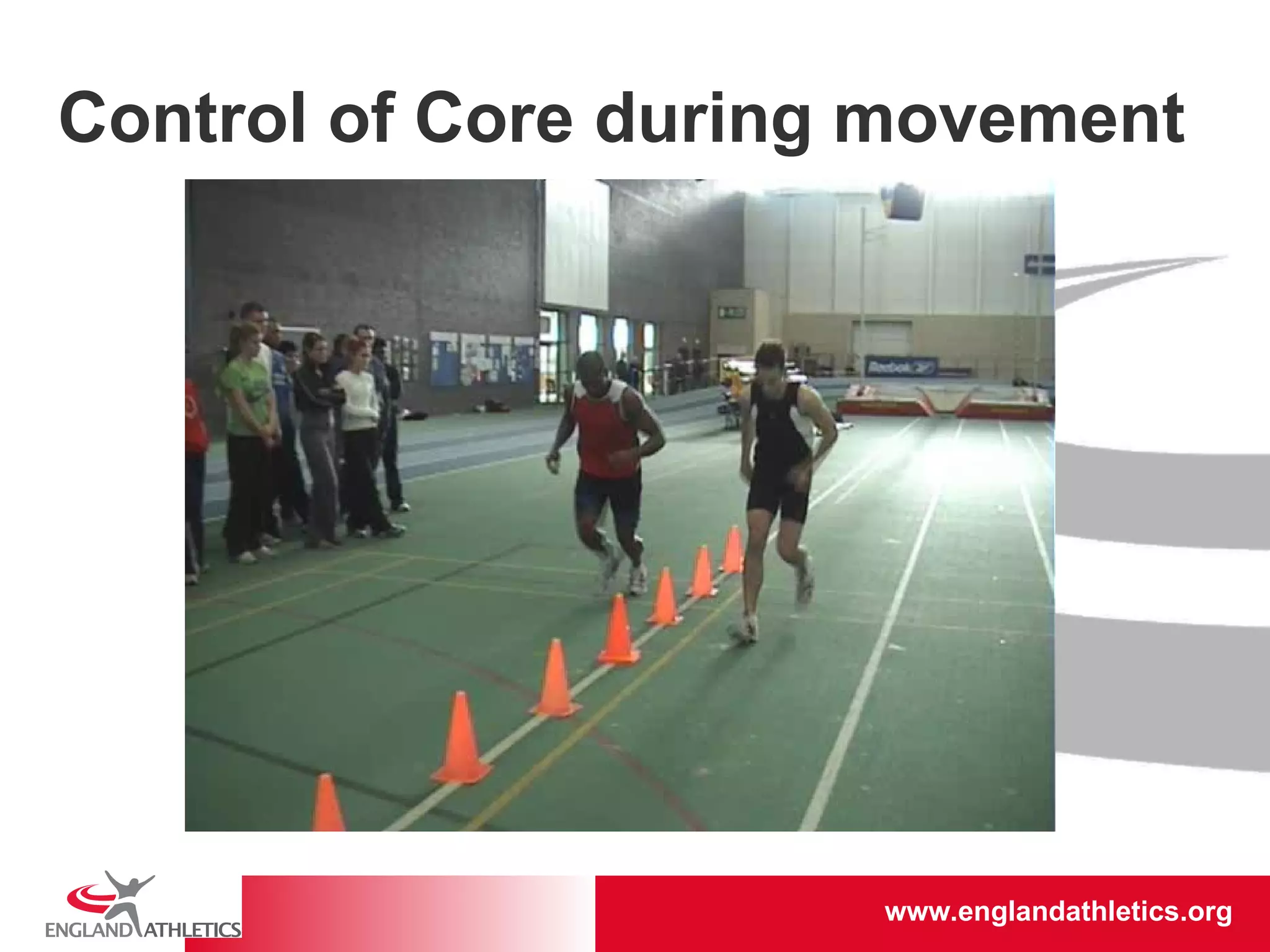
Coming out of the Blocks What is important ? Explosion of hips Stable movement with a low foot recovery Foot strength Control of core during movement Ability for the muscles to extend and contract quickly
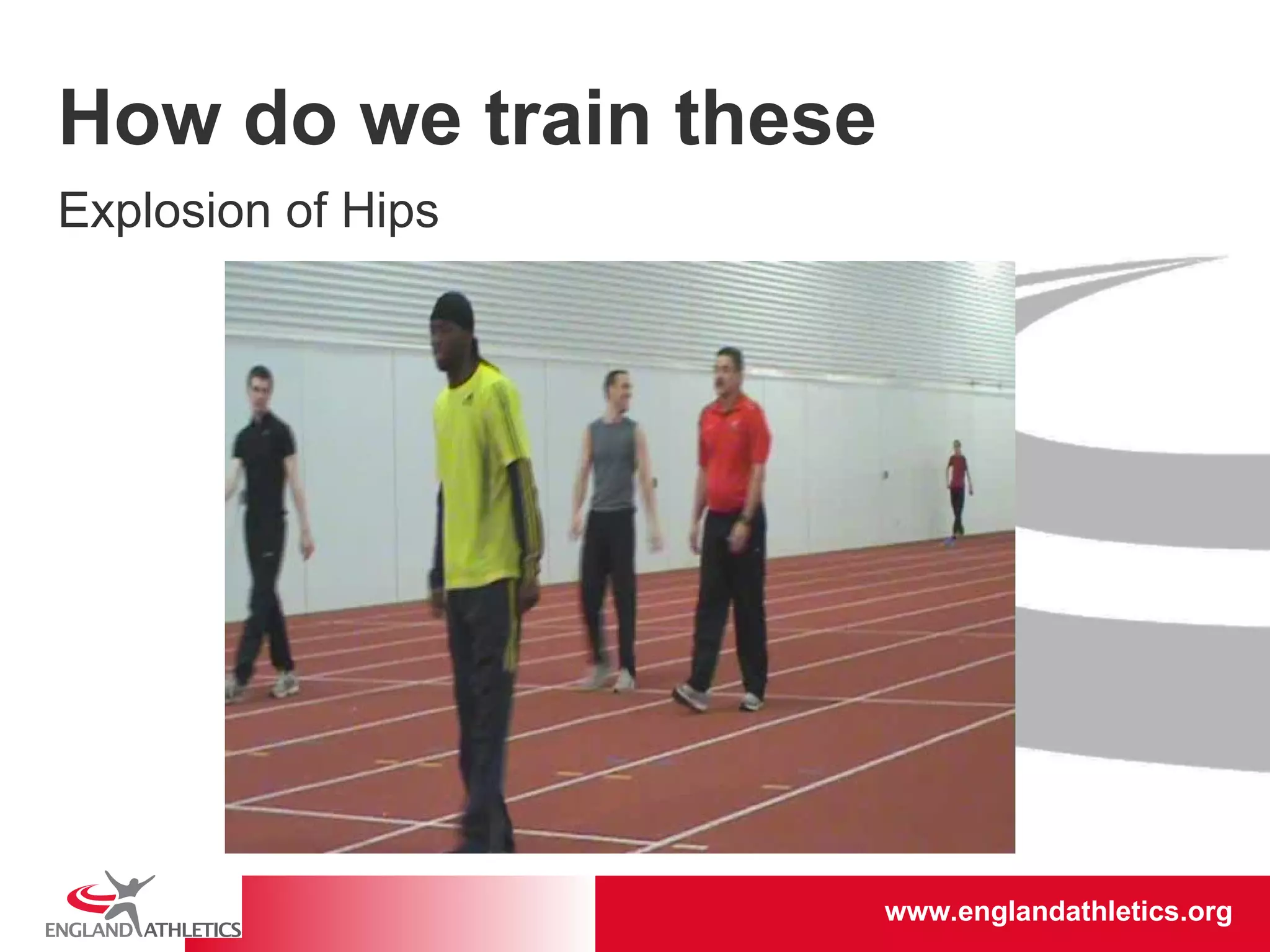
How do we train these Explosion of Hips
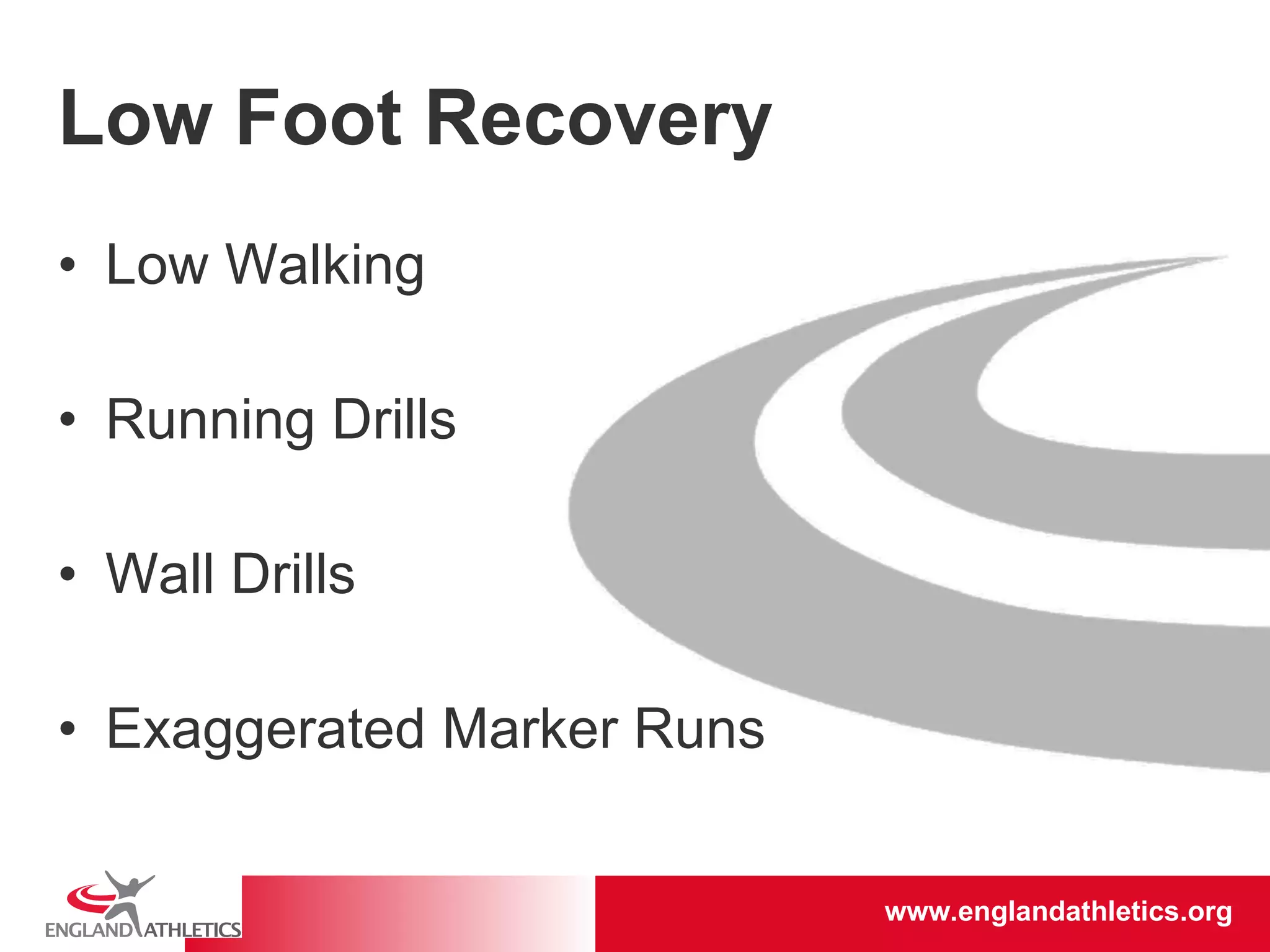
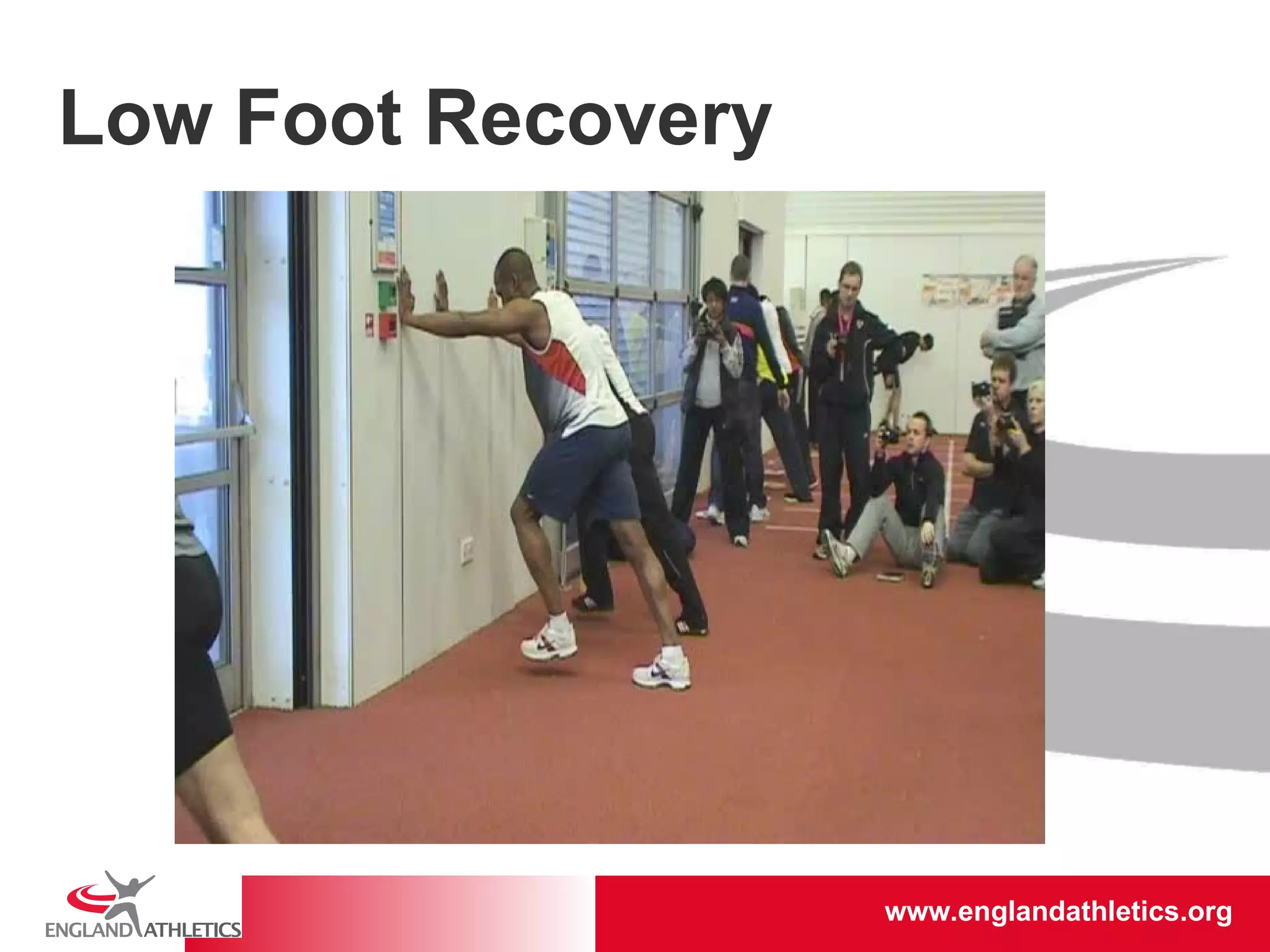
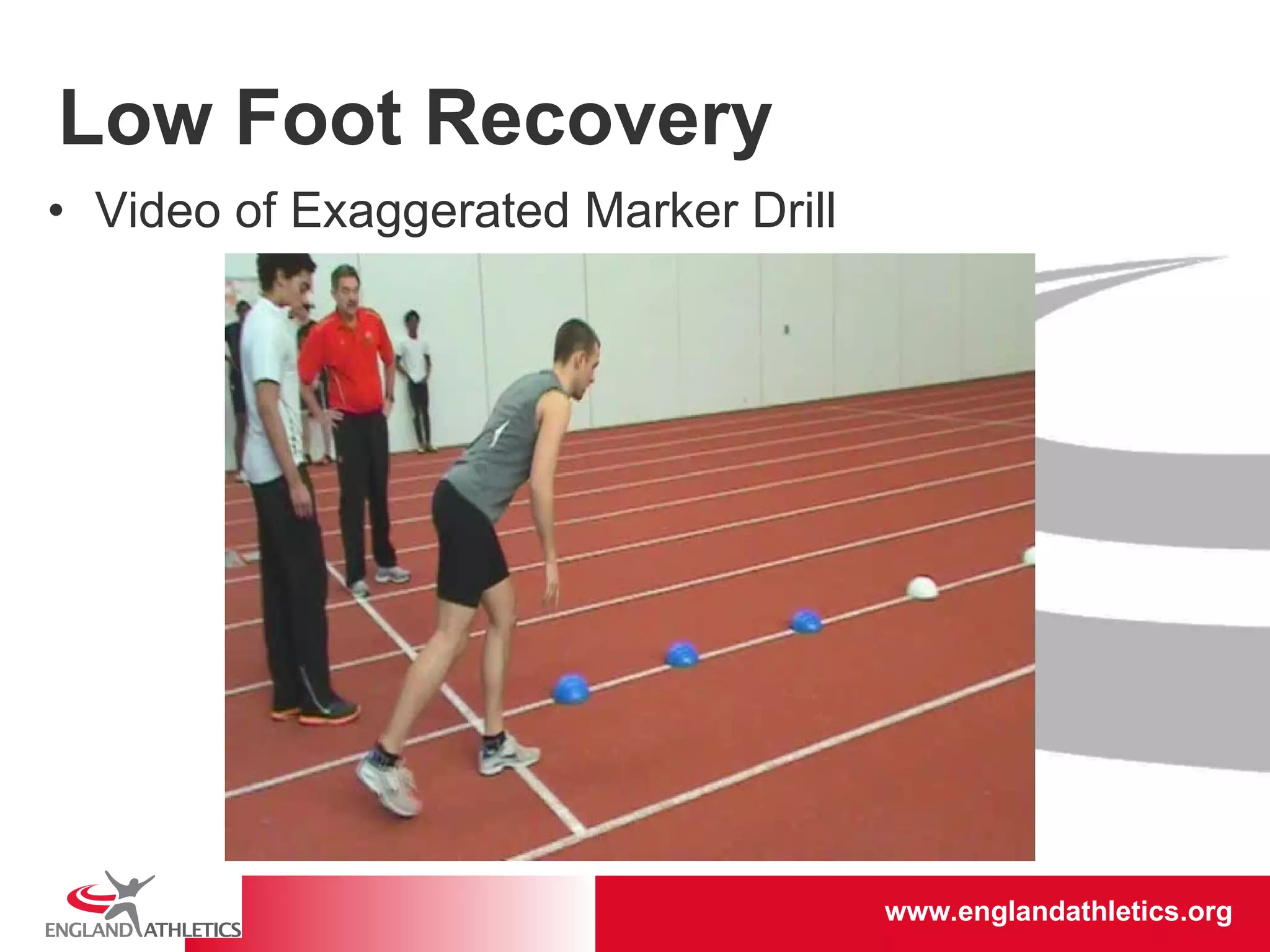
Low Foot Recovery Low Walking Running Drills Wall Drills Exaggerated Marker Runs
Low Foot Recovery
Low Foot Recovery Video of Exaggerated Marker Drill
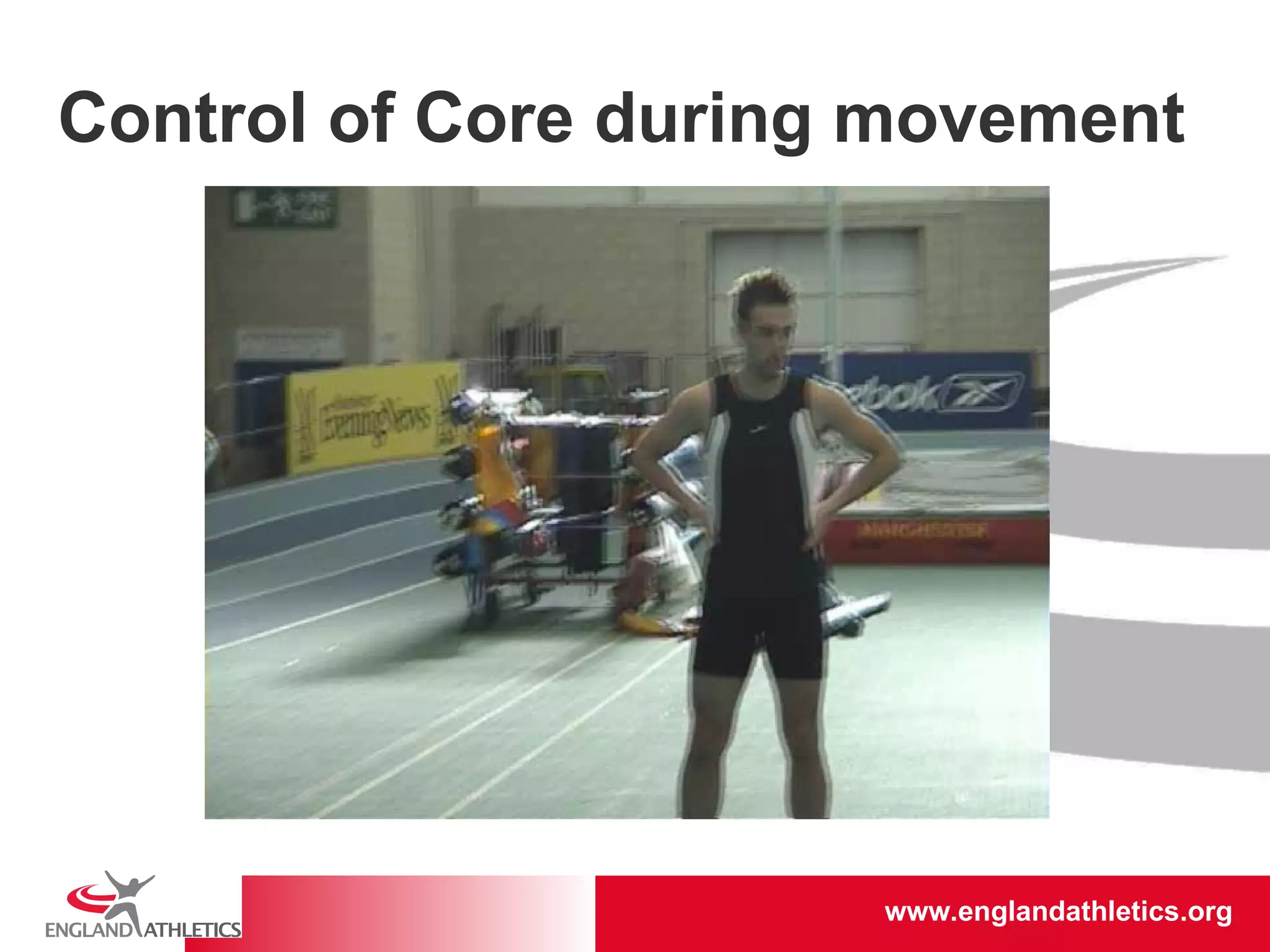
Control of Core during movement
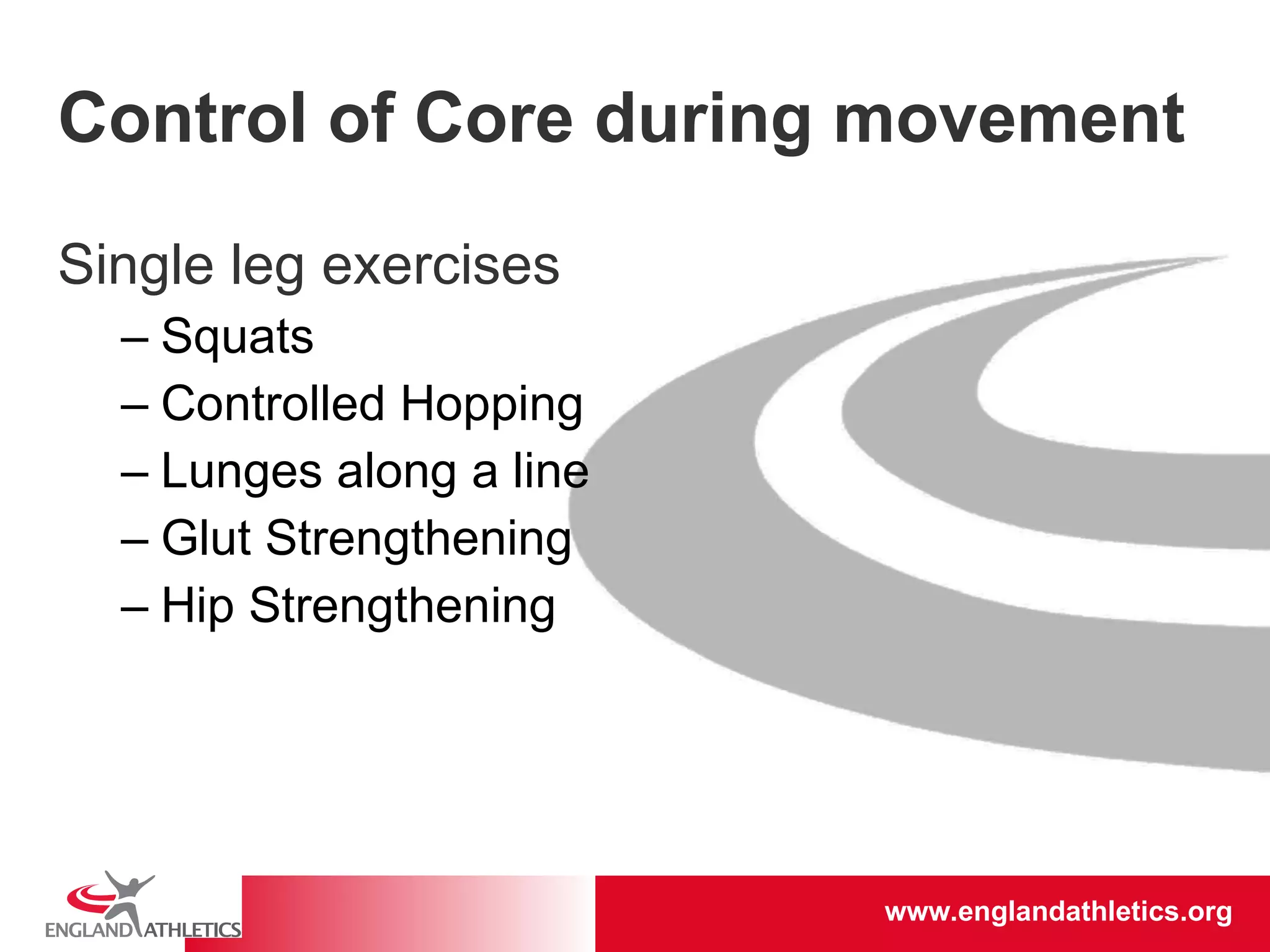
Control of Core during movement Single leg exercises Squats Controlled Hopping Lunges along a line Glut Strengthening  Hip Strengthening
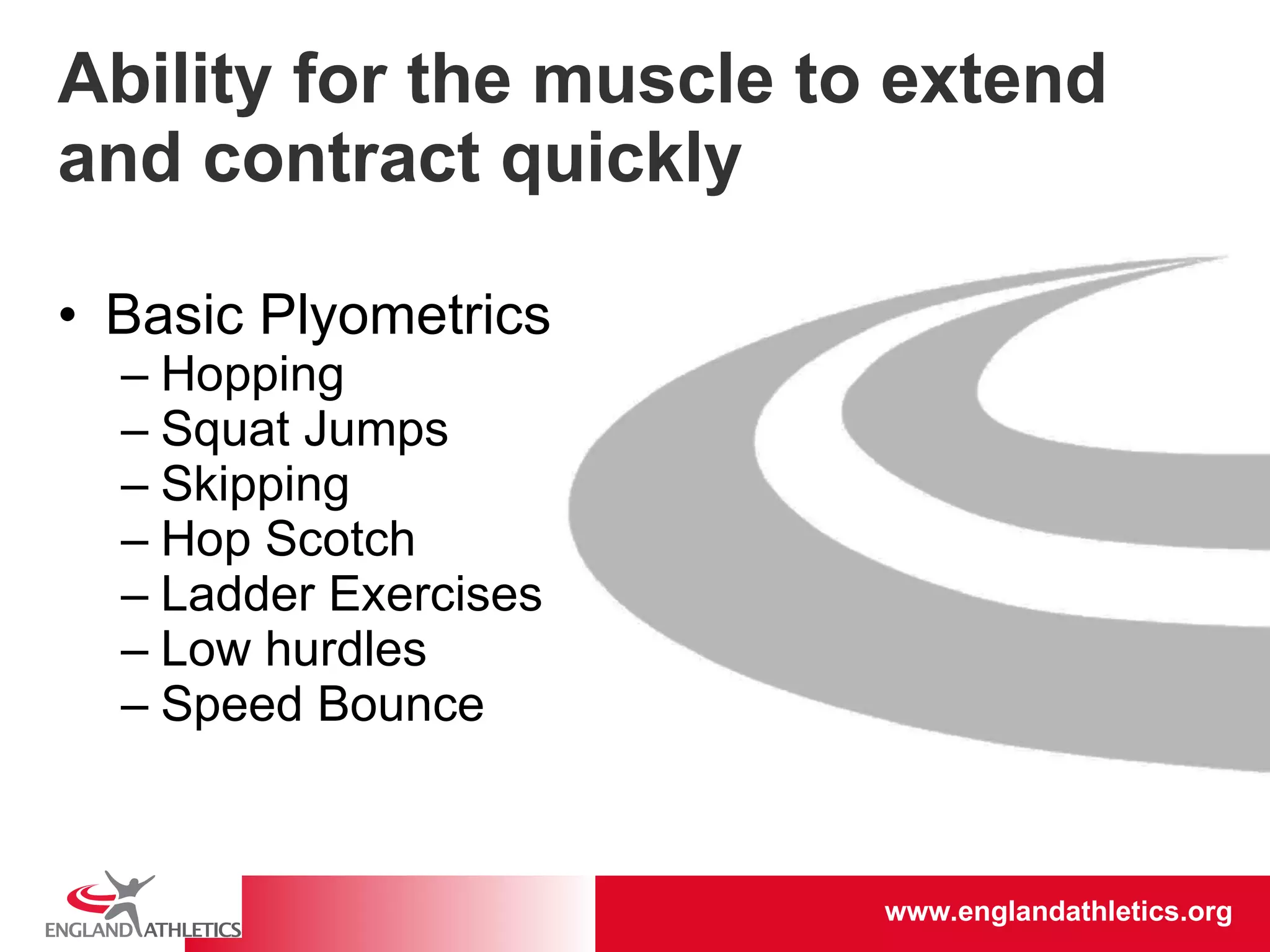
Ability for the muscle to extend and contract quickly Basic Plyometrics Hopping Squat Jumps Skipping Hop Scotch Ladder Exercises Low hurdles Speed Bounce
Something a bit more controversial! If we expect our athletes to be able to perform these complex movement skills when do we practice them?
Something a bit more controversial? If we expect our athletes to perform these movements during a race/training session – how do we prepare them to execute these complex movements?

The Biomechanics of Sprinting

  • 1.
  • 2.
  • 3.
  • 4.
  • 5.
    Starting Aim –development of max horizontal velocity Achieved by placing body in best biomechanical position to apply force
  • 6.
    Leg Positioning Rightside of brain involved in detection and identification of signal Left side – execution of movement Right leg controlled by left side of brain & vice versa. RT 26ms better with left leg as rear leg MT 104ms better with right leg as rear leg (Eikenberry, 2008)
  • 7.
    Types of SprintStarts Aim to develop max impulse Impulse = Force x Time Distance between blocks – bullet (<30cm), medium (30-50cm), elongated (>50cm) Medium best – best combination of body position to develop force and time on blocks
  • 8.
    Pedal Angle/Foot PlacementStretch Shortening Cycle Front Block - >45 deg Front Spikes in ground Rear Block – low as flexibility allows (c35 deg) Foot position depends upon pedal height
  • 9.
    Set Position Shouldersover hands – elbow’s not locked Hips above shoulders Flat back – neutral head position Lower legs c45 degree Front knee 90 – 110 degree Rear knee 120 – 135 degree Body weight evenly on feet and hands Hold breath/tighten stomach muscles
  • 10.
    After the GunFocus on motor task – front arm/rear leg Hips projecting forwards not up Arms above parallel Front arm – forearm lead Rear arm – straight arm sweep back Low rear heel recovery c45 degree take off angle
  • 11.
    Determining Best StartPosition for your Athlete Fit the biomechanical model Time to 10m Changes with strength/growth
  • 12.
    Teaching the SprintStart a Practical Guide for Young Athletes
  • 13.
    KEEP IT SIMPLE!Break the start down in to phases Focus their attention on one or two key points and develop over time Finally bring the phases together – chaining Whole – Part – Whole?
  • 14.
    Teaching The Phases:-Setting up the blocks… Which foot first ? Distance from the line to the blocks
  • 15.
  • 16.
    Distance from theline to the Blocks Foot Length Winkler/Seagrave/Mann Method 3 Feet to rear Block and 2 feet to front Block Leg Length Straight Leg to rear Block and 60% of this to the front Block It is all about getting the athlete into the right position
  • 17.
    Set Position Whatis important Stability / Core Strength Upper Body Strength Foot Strength Focus
  • 18.
    How are thesedeveloped? Stability In this phase basic core exercises (examples) Upper body strength Basic press up etc Foot Strength How important is this?
  • 19.
  • 20.
    Focus How importantis reaction time ? Use as a focus cue rather than train.
  • 21.
  • 22.
  • 23.
  • 24.
    Summary of theDrive Phase 75% of total acceleration achieved in first 7 steps-The Drive Phase The application of Horizontal force is the key component in the drive phase Piston action for heel recovery in this phase of sprinting.
  • 25.
  • 26.
  • 27.
  • 28.
    Coming out ofthe Blocks What is important ? Explosion of hips Stable movement with a low foot recovery Foot strength Control of core during movement Ability for the muscles to extend and contract quickly
  • 29.
    How do wetrain these Explosion of Hips
  • 30.
    How do wetrain these Explosion of Hips
  • 31.
    Low Foot RecoveryLow Walking Running Drills Wall Drills Exaggerated Marker Runs
  • 32.
  • 33.
    Low Foot RecoveryVideo of Exaggerated Marker Drill
  • 34.
    Control of Coreduring movement
  • 35.
    Control of Coreduring movement
  • 36.
    Control of Coreduring movement Single leg exercises Squats Controlled Hopping Lunges along a line Glut Strengthening Hip Strengthening
  • 37.
    Ability for themuscle to extend and contract quickly Basic Plyometrics Hopping Squat Jumps Skipping Hop Scotch Ladder Exercises Low hurdles Speed Bounce
  • 38.
    Something a bitmore controversial! If we expect our athletes to be able to perform these complex movement skills when do we practice them?
  • 39.
    Something a bitmore controversial? If we expect our athletes to perform these movements during a race/training session – how do we prepare them to execute these complex movements?

Editor's Notes

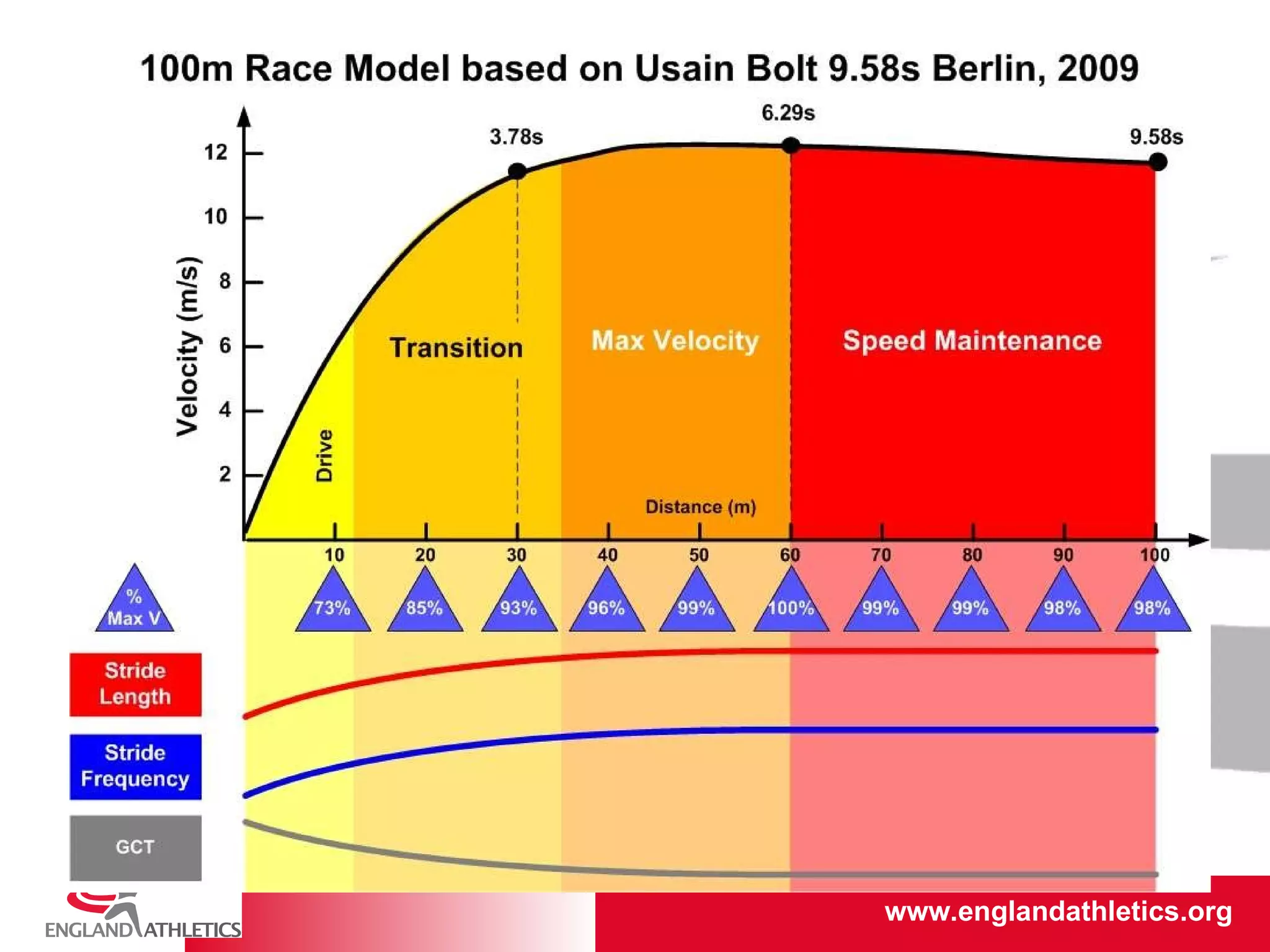
  • #3 What do you notice about this graph? 73% by 10m! How much time do we as coaches work on the first 20m, where 85% of the acceleration occurs? This speed determines you potential to compete during the race. Energy distribution idea – even for 100m, not just 400m.
  • #4 It is ground contact time that is the key issue here. How often do you have a chance to influence the race? 40 opportunities! When in contact with the ground.