Systematic approach toTeachingEly Bobbylord C. Alamin“the  purpose of a system instructional design is “to ensure orderly relationships and interaction of human, technical, and environmental resources to fulfill the goals which have been established for instruction.” - Brown
			The system approach views the entire educational program as a system of interrelated parts. It is an orchestrated learning pattern with all parts harmoniously integrated into the whole: the school, the teacher, the students, the objectives, the media, the materials, and assessment tools and procedures. Such an approach integrates the older, more familiar methods and tools of instruction with the new ones such as the computer.
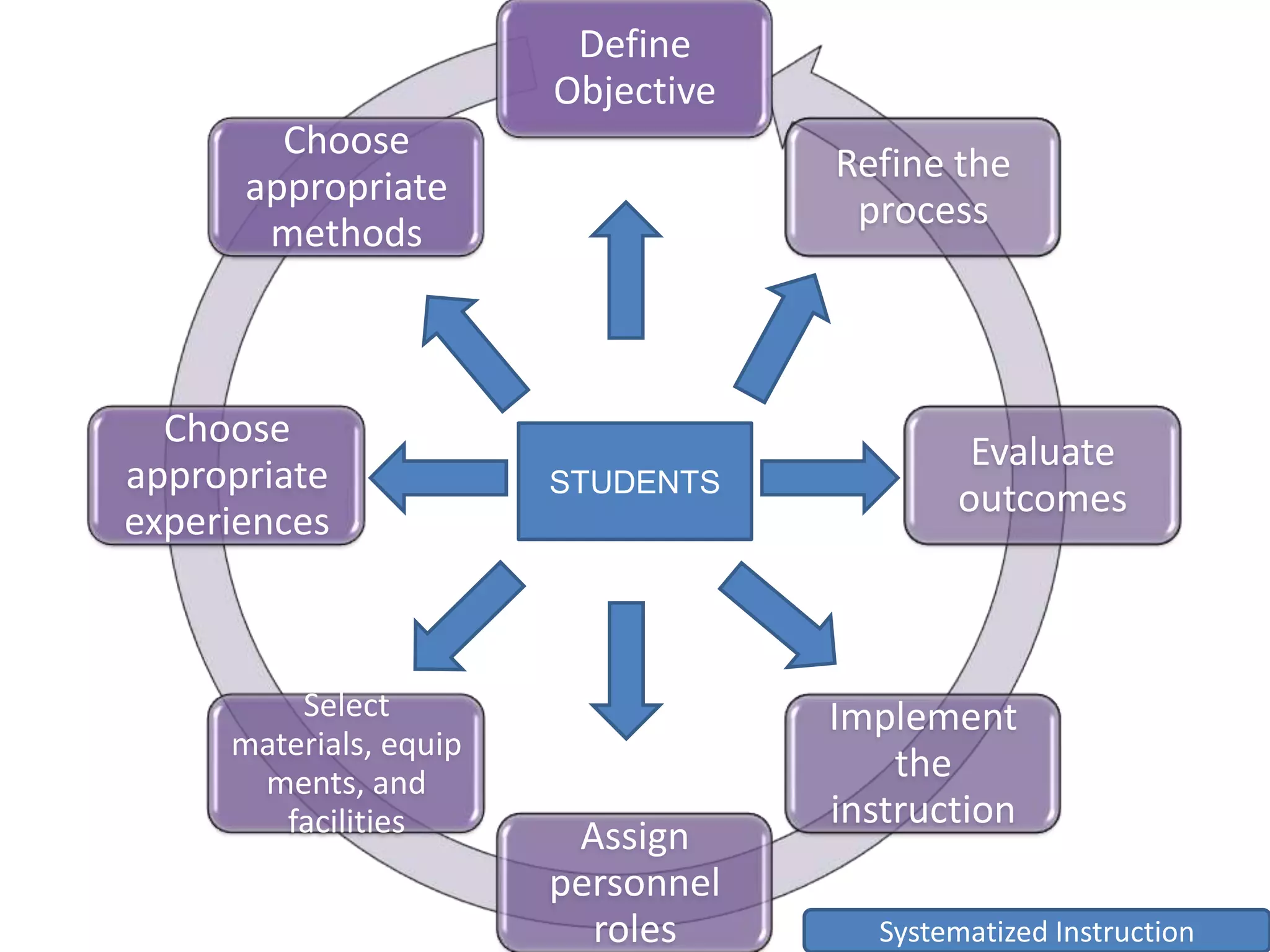
STUDENTSSystematized Instruction
Define ObjectivesConsiders the student’s need, interest and readiness.
Choose appropriate methodTo be untilized and used by the teacher
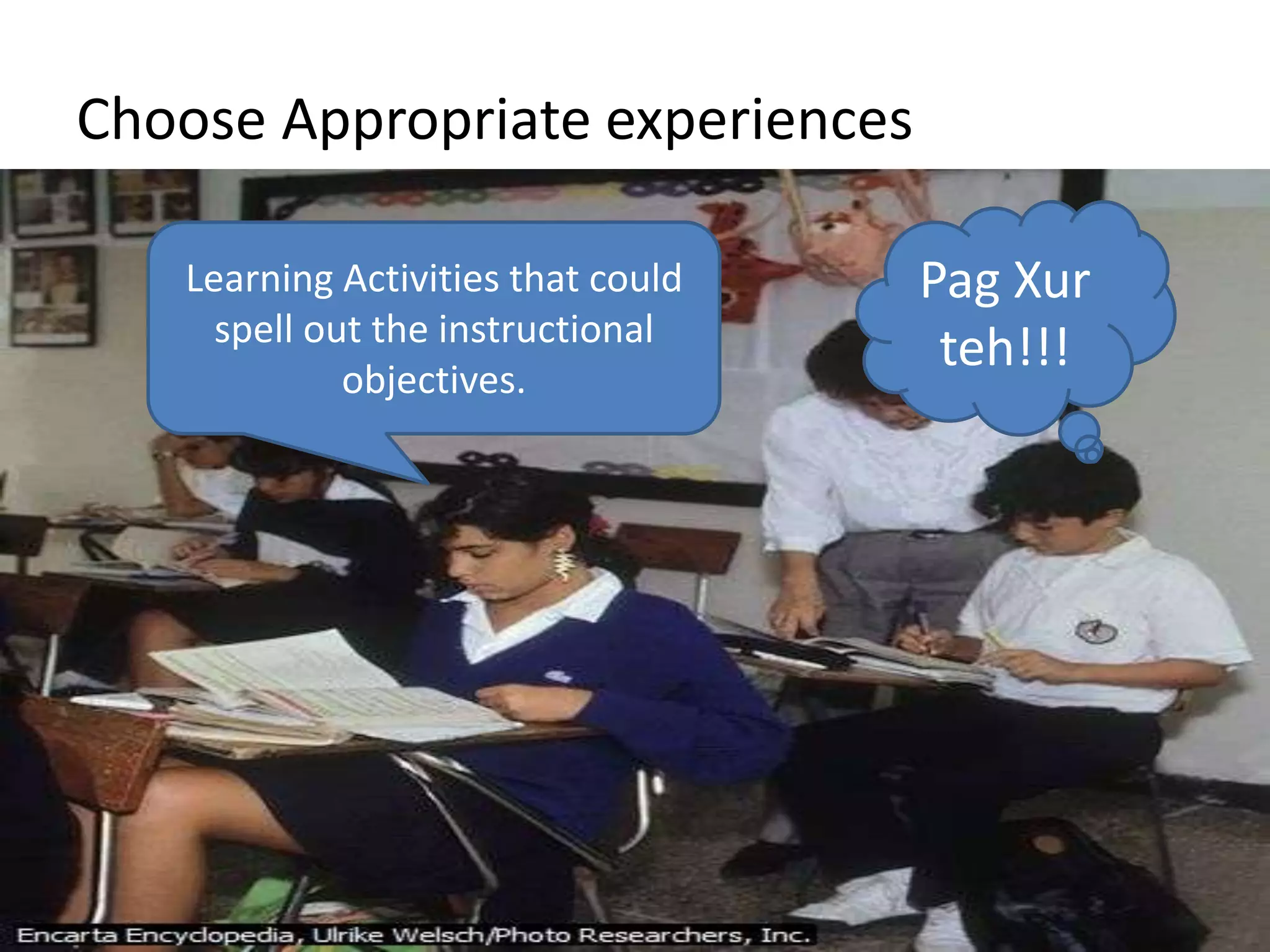
Choose Appropriate experiencesPagXurteh!!!Learning Activities that could spell out the instructional objectives.
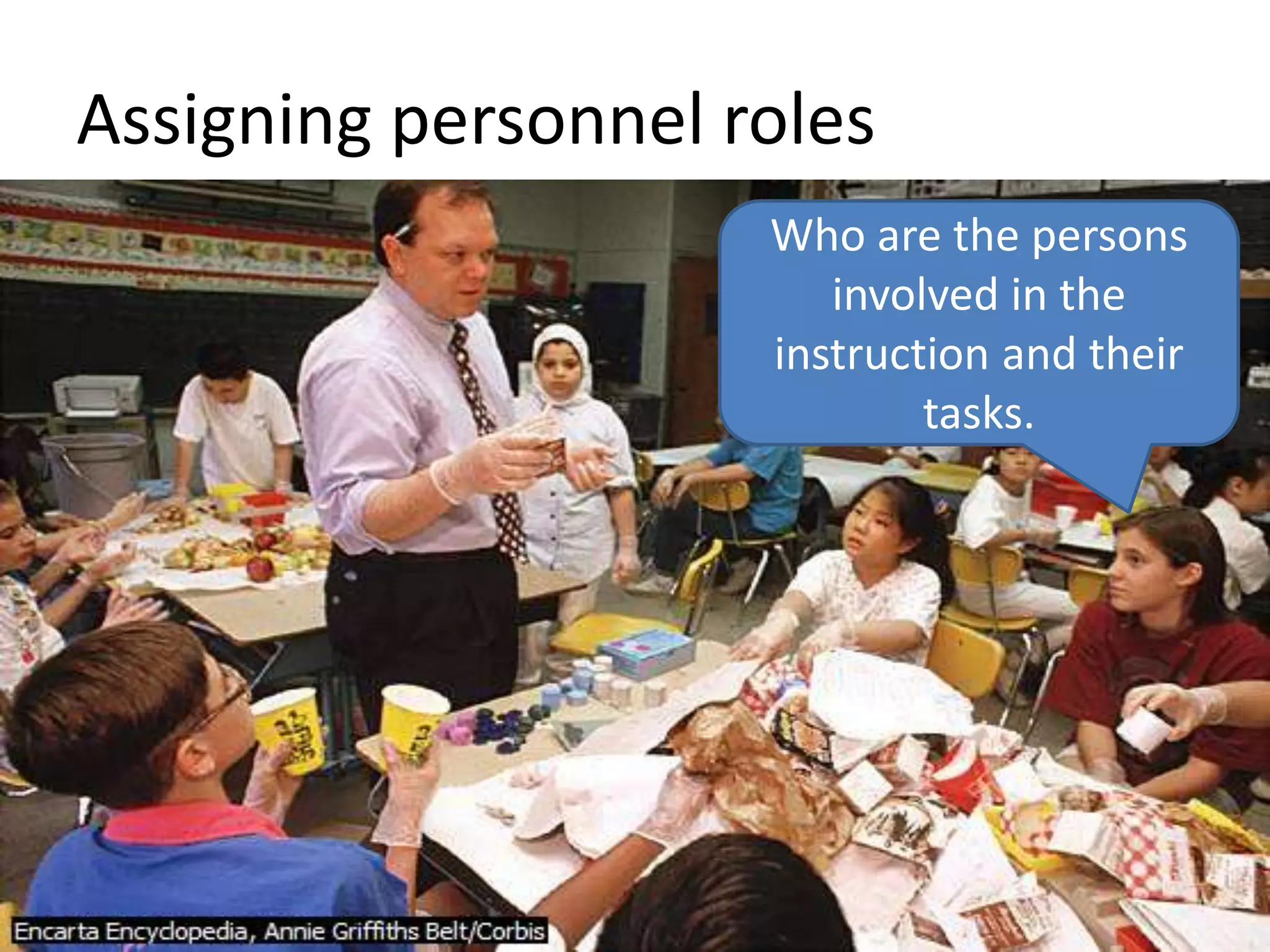
Assigning personnel rolesWho are the persons involved in the instruction and their tasks.
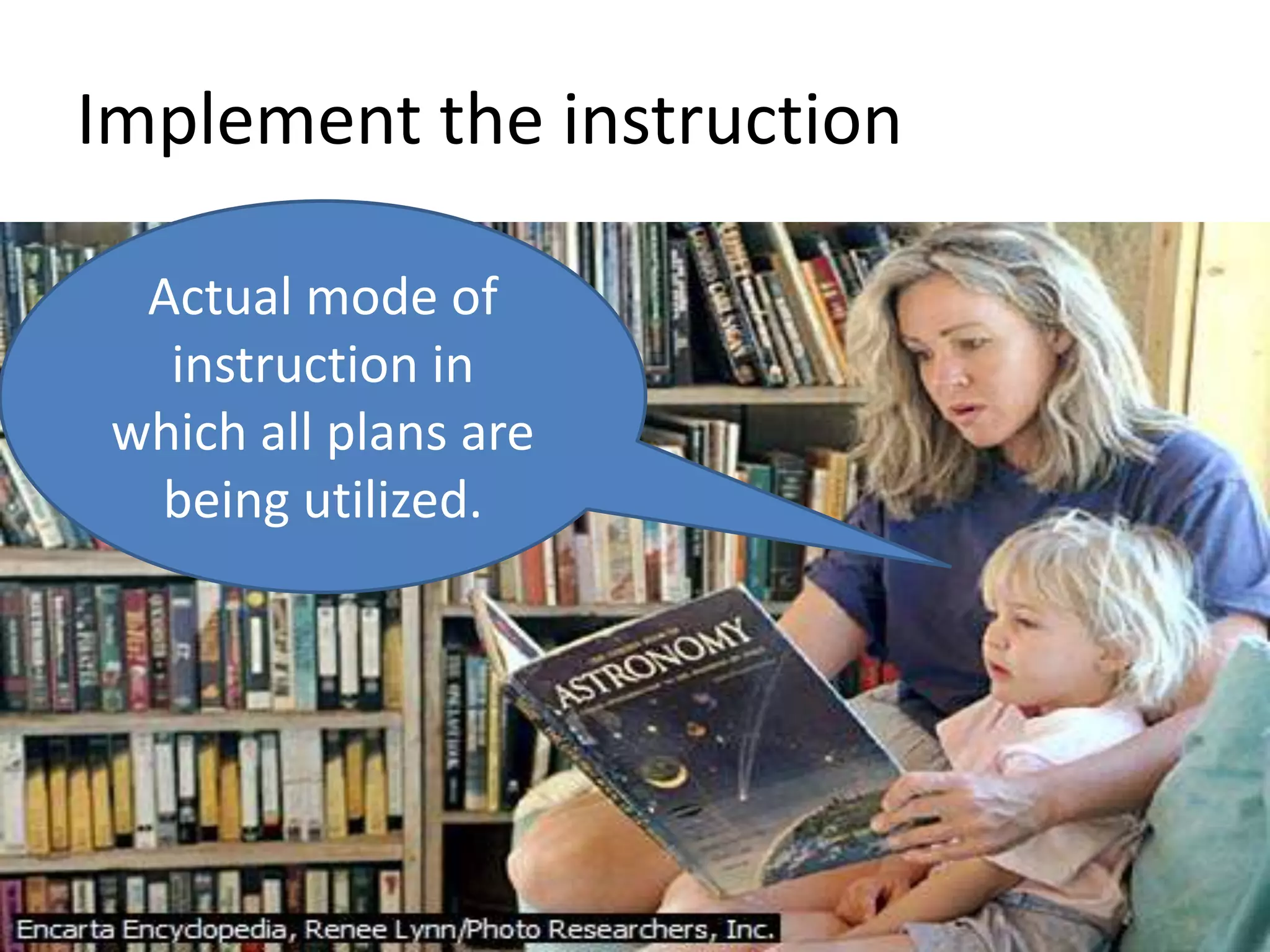
Implement the instructionActual mode of instruction in which all plans are being utilized.
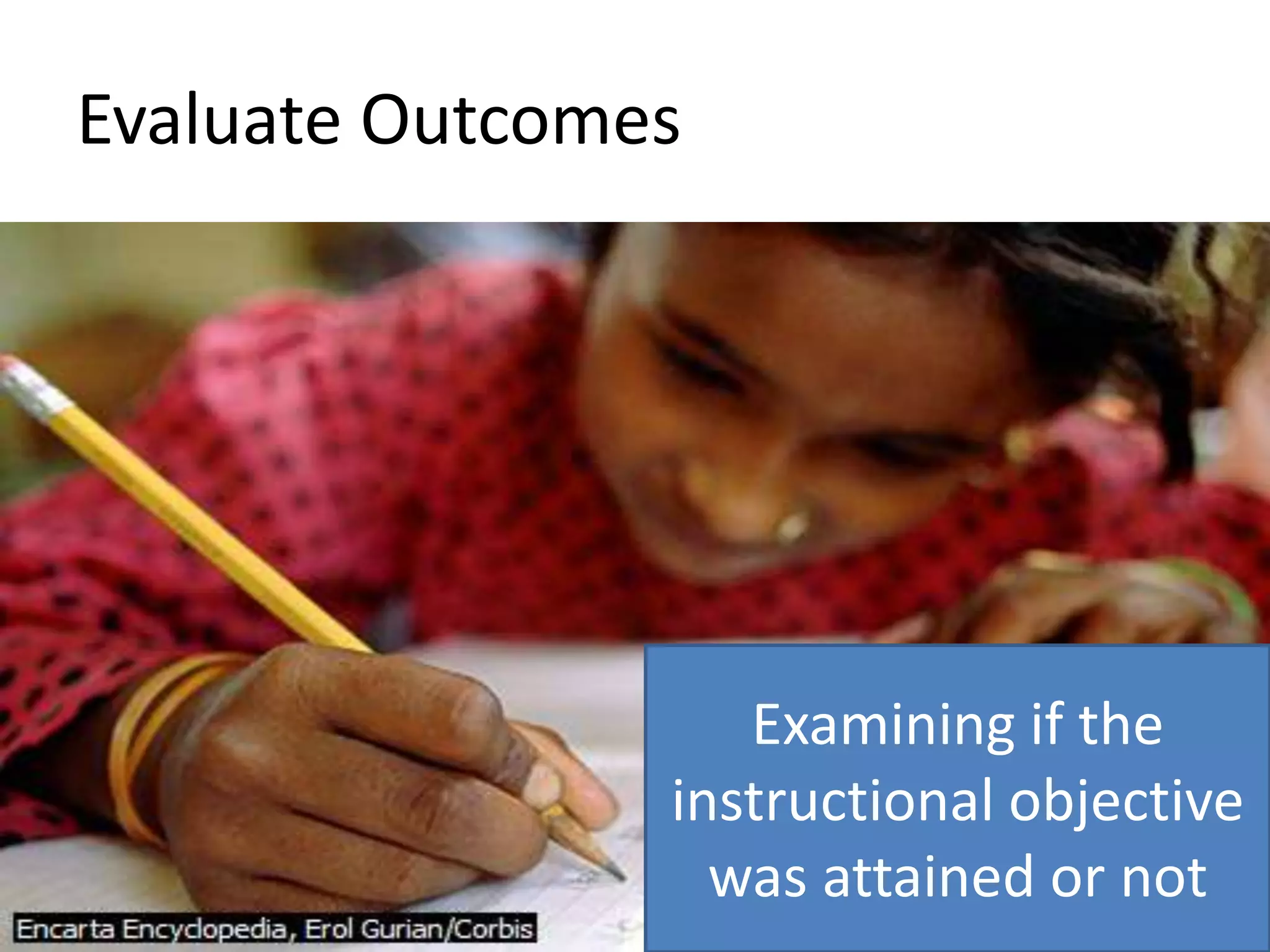
Evaluate OutcomesExamining if the instructional objective was attained or not
Refine the processWhatever!!!!Yeah Ryt!!!Getting the system fixed before entering to other cycle.
The ASSURE Model
		The ASSURE Model, a procedural guide for planning and conducting instruction that incorporates media, assumes that instruction really is required. 		The ASSURE Model focuses on planning surrounding the actual classroom use of media. It is less ambitious than models of instructional development, which are intended to guide the entire process of designing instructional systems. ASSURE Model, On the other hand, is meant for use by the individual instructor in planning everyday classroom use of media.
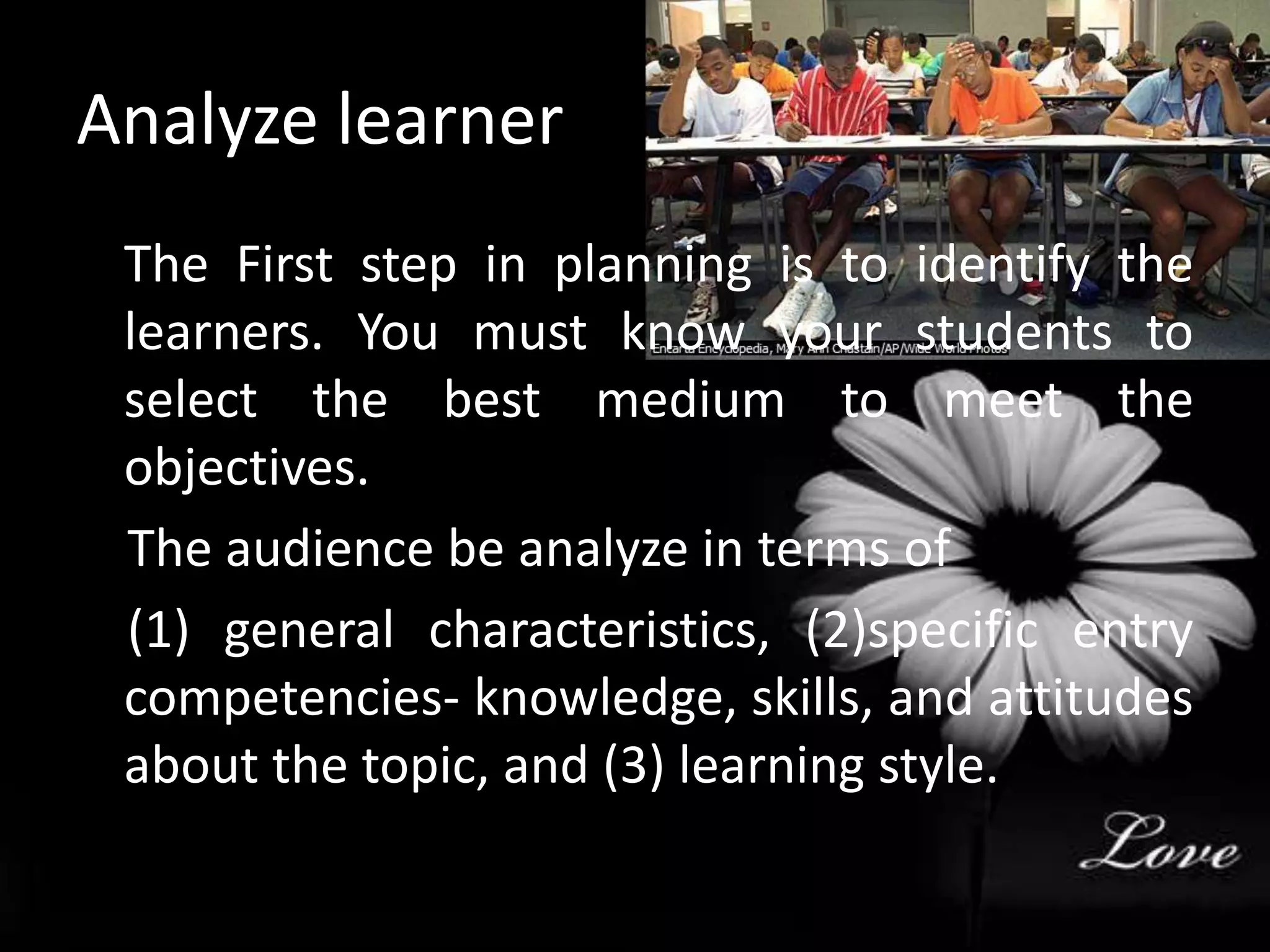
Analyze learner 	The First step in planning is to identify the learners. You must know your students to select the best medium to meet the objectives.    The audience be analyze in terms of     (1) general characteristics, (2)specific entry competencies- knowledge, skills, and attitudes about the topic, and (3) learning style.
State Objective    The objectives may be derived from a course syllabus, stated in a textbook, taken from a curriculum guide, or developed by the instructor. They should be stated in terms of what the learner will be able to do as a result of instructor.
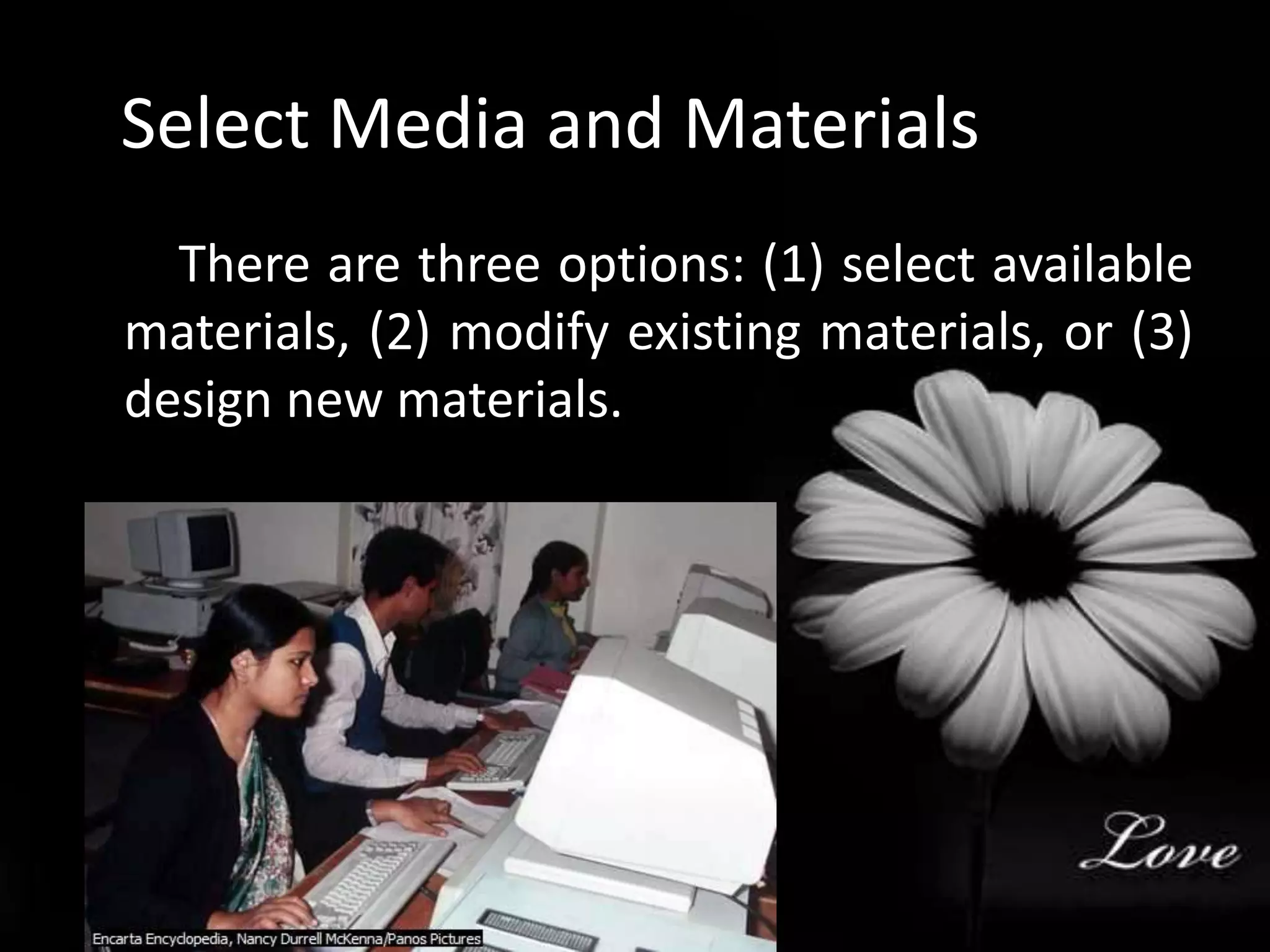
Select Media and Materials         There are three options: (1) select available materials, (2) modify existing materials, or (3) design new materials.
Utilize Media and Materials         First, preview the materials and practice your presentation. Next, prepare the class and ready the necessary equipment and facilities. Then present the material  using the show-manship techniques.
Require Learner Participation         Learners must practice what they are expected to learn and should be reinforced for the correct response. The first time they are expected to perform the behavior called for in the objectives should not be on examination. Instead, there should be activities within the lesson that allow learners to respond and to receive feedback on the appropriateness of their response.
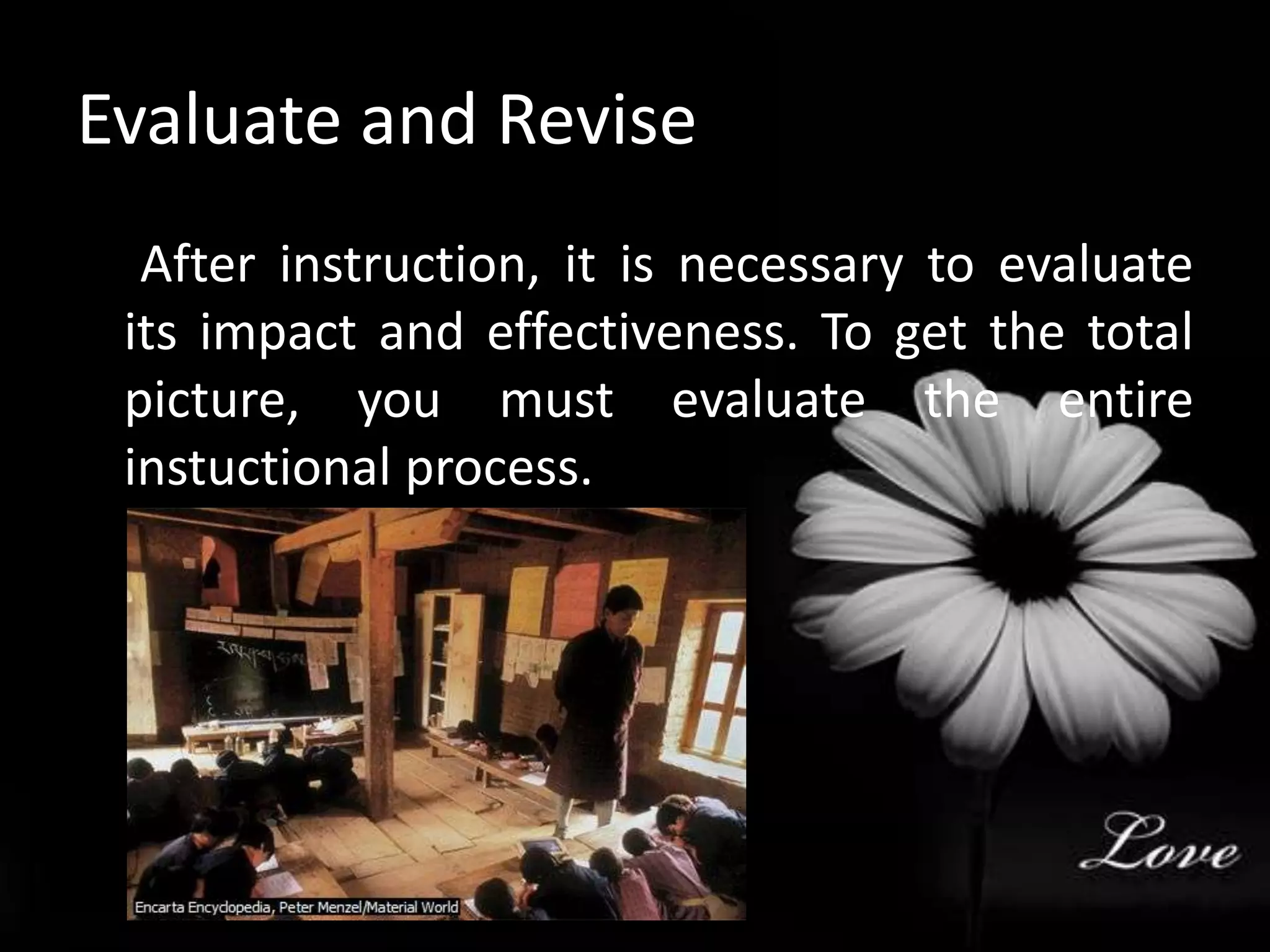
Evaluate and Revise     After instruction, it is necessary to evaluate its impact and effectiveness. To get the total picture, you must evaluate the entire instuctional process.
Thank you

Group 2 systematic approach to teaching

  • 1.
    Systematic approach toTeachingElyBobbylord C. Alamin“the purpose of a system instructional design is “to ensure orderly relationships and interaction of human, technical, and environmental resources to fulfill the goals which have been established for instruction.” - Brown
  • 2.
    The system approachviews the entire educational program as a system of interrelated parts. It is an orchestrated learning pattern with all parts harmoniously integrated into the whole: the school, the teacher, the students, the objectives, the media, the materials, and assessment tools and procedures. Such an approach integrates the older, more familiar methods and tools of instruction with the new ones such as the computer.
  • 3.
  • 4.
    Define ObjectivesConsiders thestudent’s need, interest and readiness.
  • 5.
    Choose appropriate methodTobe untilized and used by the teacher
  • 6.
    Choose Appropriate experiencesPagXurteh!!!LearningActivities that could spell out the instructional objectives.
  • 7.
    Assigning personnel rolesWhoare the persons involved in the instruction and their tasks.
  • 8.
    Implement the instructionActualmode of instruction in which all plans are being utilized.
  • 9.
    Evaluate OutcomesExamining ifthe instructional objective was attained or not
  • 10.
    Refine the processWhatever!!!!YeahRyt!!!Getting the system fixed before entering to other cycle.
  • 11.
  • 12.
    The ASSURE Model,a procedural guide for planning and conducting instruction that incorporates media, assumes that instruction really is required. The ASSURE Model focuses on planning surrounding the actual classroom use of media. It is less ambitious than models of instructional development, which are intended to guide the entire process of designing instructional systems. ASSURE Model, On the other hand, is meant for use by the individual instructor in planning everyday classroom use of media.
  • 13.
    Analyze learner TheFirst step in planning is to identify the learners. You must know your students to select the best medium to meet the objectives. The audience be analyze in terms of (1) general characteristics, (2)specific entry competencies- knowledge, skills, and attitudes about the topic, and (3) learning style.
  • 14.
    State Objective The objectives may be derived from a course syllabus, stated in a textbook, taken from a curriculum guide, or developed by the instructor. They should be stated in terms of what the learner will be able to do as a result of instructor.
  • 15.
    Select Media andMaterials There are three options: (1) select available materials, (2) modify existing materials, or (3) design new materials.
  • 16.
    Utilize Media andMaterials First, preview the materials and practice your presentation. Next, prepare the class and ready the necessary equipment and facilities. Then present the material using the show-manship techniques.
  • 17.
    Require Learner Participation Learners must practice what they are expected to learn and should be reinforced for the correct response. The first time they are expected to perform the behavior called for in the objectives should not be on examination. Instead, there should be activities within the lesson that allow learners to respond and to receive feedback on the appropriateness of their response.
  • 18.
    Evaluate and Revise After instruction, it is necessary to evaluate its impact and effectiveness. To get the total picture, you must evaluate the entire instuctional process.
  • 19.