1
ZIKA VIRUS
Zika virus is spread to people through mosquito bites. The most common
symptoms of Zika virus disease are fever, rash, joint pain, and conjunctivitis
(red eyes). The illness is usually mild with symptoms lasting from several days
to a week. Severe disease requiring hospitalization is uncommon.
In May 2015, the Pan American Health Organization (PAHO) issued an alert
regarding the first confirmed Zika virus infection in Brazil. The outbreak in
Brazil led to reports of Guillain-Barré syndrome and pregnant women giving
birth to babies with birth defects and poor pregnancy outcomes.
TRANSMISSION
Through mosquito bites Zika virus is transmitted to people primarily
through the bite of an infected Aedes species mosquito (A. aegypti and A.
albopictus).These are the same mosquitoes that
spread dengue and chikungunya viruses.
 These mosquitoes typically lay eggs in and near standing water in things like
buckets, bowls, animal dishes, flower pots and vases. They prefer to bite
people, and live indoors and outdoors near people.
o Mosquitoes that spread chikungunya, dengue, and Zika are aggressive
daytime biters. They can also bite at night.
 Mosquitoes become infected when they feed on a person already infected
with the virus. Infected mosquitoes can then spread the virus to other people
through bites.
Rarely, from mother to child
 A mother already infected with Zika virus near the time of delivery can pass
on the virus to her newborn around the time of birth, but this is rare.
 It is possible that Zika virus could be passed from a mother to her baby
during pregnancy. We are studying how some mothers can pass the virus to
their babies.
2
 To date, there are no reports of infants getting Zika virus through
breastfeeding. Because of the benefits of breastfeeding, mothers are
encouraged to breastfeed even in areas where Zika virus is found.
Through infected blood or sexual contact
 Spread of the virus through blood transfusion and sexual contact have been
reported.
PREVENTION
 No vaccine exists to prevent Zika virus disease (Zika).
 Prevent Zika by avoiding mosquito bites (see below).
 Mosquitoes that spread Zika virus bite mostly during the daytime.
 Mosquitoes that spread Zika virus also spread dengue and chikungunya
viruses.
When traveling to countries where Zika virus or other viruses spread by
mosquitoes are found, take the following steps:
 Wear long-sleeved shirts and long pants.
 Stay in places with air conditioning or that use window and door screens to
keep mosquitoes outside.
 Sleep under a mosquito bed net if you are overseas or outside and are not
able to protect yourself from mosquito bites.
 Use Environmental Protection Agency (EPA)-registered insect repellents.
When used as directed, EPA-registered insect repellents are proven safe and
effective, even for pregnant and breast-feeding women.
o Always follow the product label instructions
o Reapply insect repellent as directed.
o Do not spray repellent on the skin under clothing.
o If you are also using sunscreen, apply sunscreen before applying insect
repellent.
 If you have a baby or child:
o Do not use insect repellent on babies younger than 2 months of age.
o Dress your child in clothing that covers arms and legs, or
o Cover crib, stroller, and baby carrier with mosquito netting.
3
o Do not apply insect repellent onto a child’s hands, eyes, mouth, and cut
or irritated skin.
o Adults: Spray insect repellent onto your hands and then apply to a child’s
face.
 Treat clothing and gear with permethrin or purchase permethrin-treated
items.
o Treated clothing remains protective after multiple washings. See product
information to learn how long the protection will last.
o If treating items yourself, follow the product instructions carefully.
o Do NOT use permethrin products directly on skin. They are intended to
treat clothing.
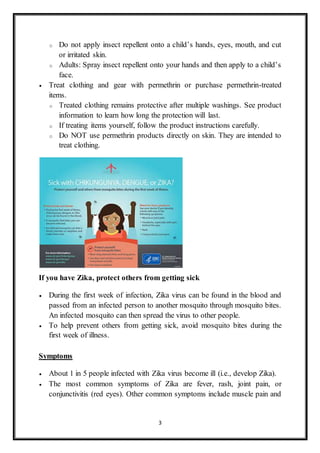
If you have Zika, protect others from getting sick
 During the first week of infection, Zika virus can be found in the blood and
passed from an infected person to another mosquito through mosquito bites.
An infected mosquito can then spread the virus to other people.
 To help prevent others from getting sick, avoid mosquito bites during the
first week of illness.
Symptoms
 About 1 in 5 people infected with Zika virus become ill (i.e., develop Zika).
 The most common symptoms of Zika are fever, rash, joint pain, or
conjunctivitis (red eyes). Other common symptoms include muscle pain and
4
headache. The incubation period (the time from exposure to symptoms) for
Zika virus disease is not known, but is likely to be a few days to a week.
 The illness is usually mild with symptoms lasting for several days to a week.
 People usually don’t get sick enough to go to the hospital, and they very
rarely die of Zika.
 Zika virus usually remains in the blood of an infected person for about a
week but it can be found longer in some people.
Diagnosis
 The symptoms of Zika are similar to those of dengue and chikungunya,
diseases spread through the same mosquitoes that transmit Zika.
 See your healthcare provider if you develop the symptoms described above
and have visited an area where Zika is found.
 If you have recently traveled, tell your healthcare provider when and where
you traveled.
 Your healthcare provider may order specialized blood tests to look for Zika
or other similar viruses like dengue or chikungunya.
Treatment
 There is no vaccine to prevent or specific medicine to treat Zika infections.
 Treat the symptoms:
o Get plenty of rest.
o Drink fluids to prevent dehydration.
o Take medicine such as acetaminophen (Tylenol®) to relieve fever and
pain.
o Do not take aspirin and other non-steroidal anti-inflammatory drugs.
o If you are taking medicine for another medical condition, talk to your
healthcare provider before taking additional medication.
 If you have Zika, prevent mosquito bites for the first week of your illness.
o During the first week of infection, Zika virus can be found in the blood
and passed from an infected person to a mosquito through mosquito bites.
WHY THE SPECIAL WARNING FOR PREGNANT WOMEN?
When a mom-to-be becomes infected with Zika virus, the virus can also infect
the fetus. In countries affected by Zika outbreaks, there has also been an
5
increase in cases of microcephaly. That link is why health experts believe Zika
infection during pregnancy may lead to this rare birth defect. Microcephaly is
a neurological condition that causes babies to be born with small heads and
severe developmental issues, and in rare instances it can result in death. The
highest risk to the fetus is believed to be when the mother is infected during
the first trimester.
The CDC cautions that more research is needed to better understand the link
between the Zika virus and microcephaly. The exact outcomes that might be
associated with infection during pregnancy and the factors that may increase
risk to a fetus are not yet fully understood.

Zika virus

  • 1.
    1 ZIKA VIRUS Zika virusis spread to people through mosquito bites. The most common symptoms of Zika virus disease are fever, rash, joint pain, and conjunctivitis (red eyes). The illness is usually mild with symptoms lasting from several days to a week. Severe disease requiring hospitalization is uncommon. In May 2015, the Pan American Health Organization (PAHO) issued an alert regarding the first confirmed Zika virus infection in Brazil. The outbreak in Brazil led to reports of Guillain-Barré syndrome and pregnant women giving birth to babies with birth defects and poor pregnancy outcomes. TRANSMISSION Through mosquito bites Zika virus is transmitted to people primarily through the bite of an infected Aedes species mosquito (A. aegypti and A. albopictus).These are the same mosquitoes that spread dengue and chikungunya viruses.  These mosquitoes typically lay eggs in and near standing water in things like buckets, bowls, animal dishes, flower pots and vases. They prefer to bite people, and live indoors and outdoors near people. o Mosquitoes that spread chikungunya, dengue, and Zika are aggressive daytime biters. They can also bite at night.  Mosquitoes become infected when they feed on a person already infected with the virus. Infected mosquitoes can then spread the virus to other people through bites. Rarely, from mother to child  A mother already infected with Zika virus near the time of delivery can pass on the virus to her newborn around the time of birth, but this is rare.  It is possible that Zika virus could be passed from a mother to her baby during pregnancy. We are studying how some mothers can pass the virus to their babies.
  • 2.
    2  To date,there are no reports of infants getting Zika virus through breastfeeding. Because of the benefits of breastfeeding, mothers are encouraged to breastfeed even in areas where Zika virus is found. Through infected blood or sexual contact  Spread of the virus through blood transfusion and sexual contact have been reported. PREVENTION  No vaccine exists to prevent Zika virus disease (Zika).  Prevent Zika by avoiding mosquito bites (see below).  Mosquitoes that spread Zika virus bite mostly during the daytime.  Mosquitoes that spread Zika virus also spread dengue and chikungunya viruses. When traveling to countries where Zika virus or other viruses spread by mosquitoes are found, take the following steps:  Wear long-sleeved shirts and long pants.  Stay in places with air conditioning or that use window and door screens to keep mosquitoes outside.  Sleep under a mosquito bed net if you are overseas or outside and are not able to protect yourself from mosquito bites.  Use Environmental Protection Agency (EPA)-registered insect repellents. When used as directed, EPA-registered insect repellents are proven safe and effective, even for pregnant and breast-feeding women. o Always follow the product label instructions o Reapply insect repellent as directed. o Do not spray repellent on the skin under clothing. o If you are also using sunscreen, apply sunscreen before applying insect repellent.  If you have a baby or child: o Do not use insect repellent on babies younger than 2 months of age. o Dress your child in clothing that covers arms and legs, or o Cover crib, stroller, and baby carrier with mosquito netting.
  • 3.
    3 o Do notapply insect repellent onto a child’s hands, eyes, mouth, and cut or irritated skin. o Adults: Spray insect repellent onto your hands and then apply to a child’s face.  Treat clothing and gear with permethrin or purchase permethrin-treated items. o Treated clothing remains protective after multiple washings. See product information to learn how long the protection will last. o If treating items yourself, follow the product instructions carefully. o Do NOT use permethrin products directly on skin. They are intended to treat clothing. If you have Zika, protect others from getting sick  During the first week of infection, Zika virus can be found in the blood and passed from an infected person to another mosquito through mosquito bites. An infected mosquito can then spread the virus to other people.  To help prevent others from getting sick, avoid mosquito bites during the first week of illness. Symptoms  About 1 in 5 people infected with Zika virus become ill (i.e., develop Zika).  The most common symptoms of Zika are fever, rash, joint pain, or conjunctivitis (red eyes). Other common symptoms include muscle pain and
  • 4.
    4 headache. The incubationperiod (the time from exposure to symptoms) for Zika virus disease is not known, but is likely to be a few days to a week.  The illness is usually mild with symptoms lasting for several days to a week.  People usually don’t get sick enough to go to the hospital, and they very rarely die of Zika.  Zika virus usually remains in the blood of an infected person for about a week but it can be found longer in some people. Diagnosis  The symptoms of Zika are similar to those of dengue and chikungunya, diseases spread through the same mosquitoes that transmit Zika.  See your healthcare provider if you develop the symptoms described above and have visited an area where Zika is found.  If you have recently traveled, tell your healthcare provider when and where you traveled.  Your healthcare provider may order specialized blood tests to look for Zika or other similar viruses like dengue or chikungunya. Treatment  There is no vaccine to prevent or specific medicine to treat Zika infections.  Treat the symptoms: o Get plenty of rest. o Drink fluids to prevent dehydration. o Take medicine such as acetaminophen (Tylenol®) to relieve fever and pain. o Do not take aspirin and other non-steroidal anti-inflammatory drugs. o If you are taking medicine for another medical condition, talk to your healthcare provider before taking additional medication.  If you have Zika, prevent mosquito bites for the first week of your illness. o During the first week of infection, Zika virus can be found in the blood and passed from an infected person to a mosquito through mosquito bites. WHY THE SPECIAL WARNING FOR PREGNANT WOMEN? When a mom-to-be becomes infected with Zika virus, the virus can also infect the fetus. In countries affected by Zika outbreaks, there has also been an
  • 5.
    5 increase in casesof microcephaly. That link is why health experts believe Zika infection during pregnancy may lead to this rare birth defect. Microcephaly is a neurological condition that causes babies to be born with small heads and severe developmental issues, and in rare instances it can result in death. The highest risk to the fetus is believed to be when the mother is infected during the first trimester. The CDC cautions that more research is needed to better understand the link between the Zika virus and microcephaly. The exact outcomes that might be associated with infection during pregnancy and the factors that may increase risk to a fetus are not yet fully understood.