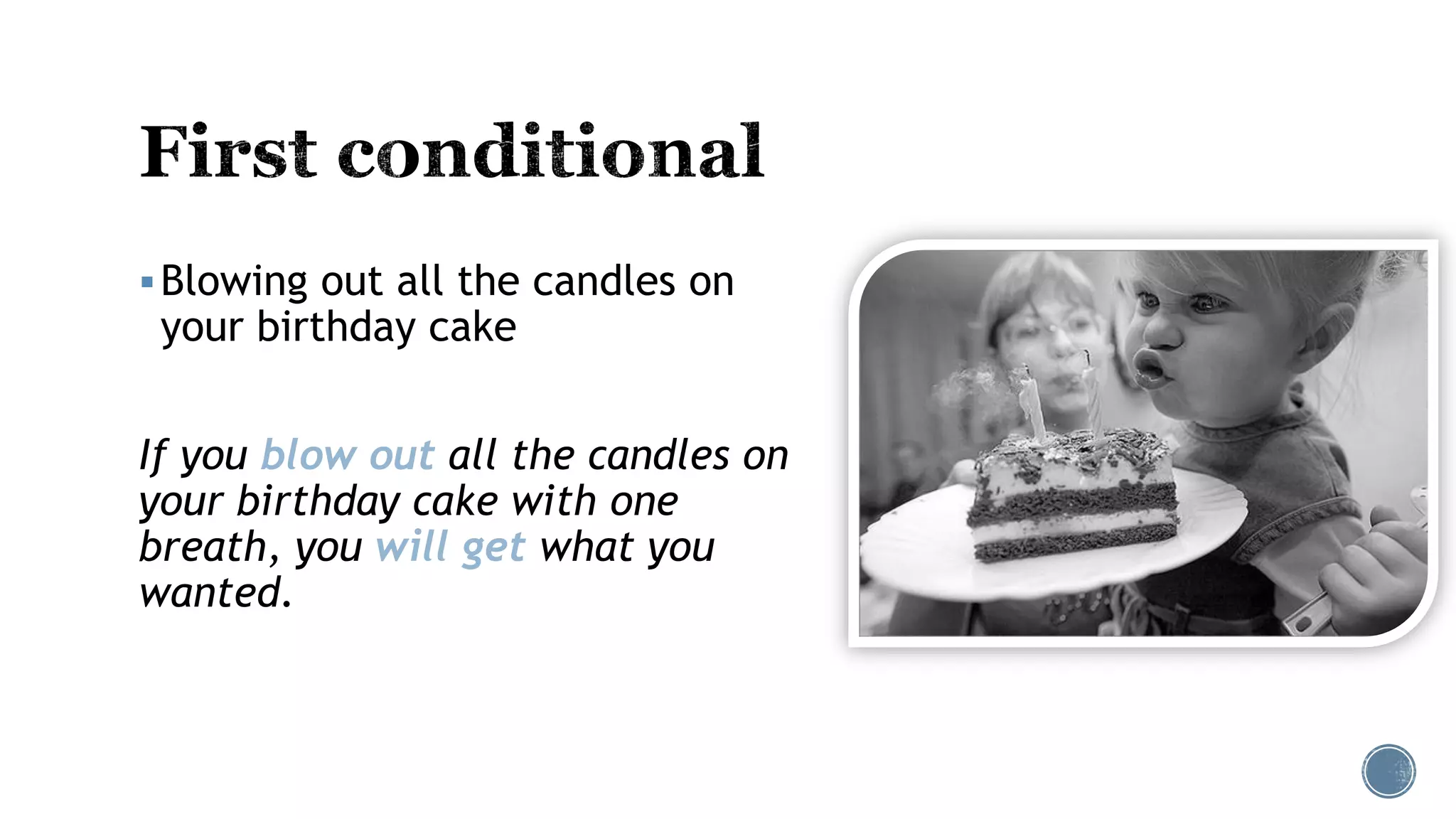
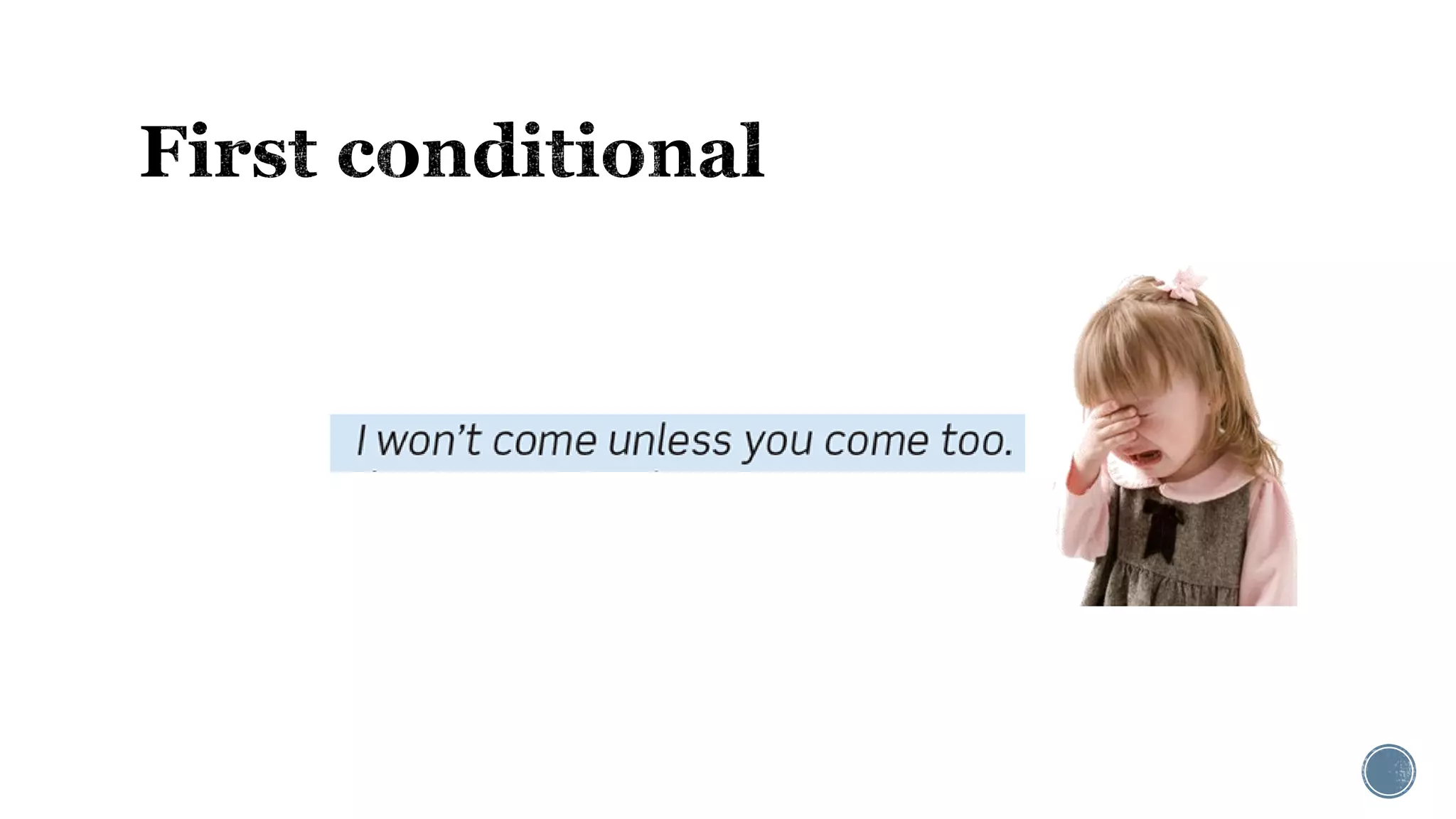
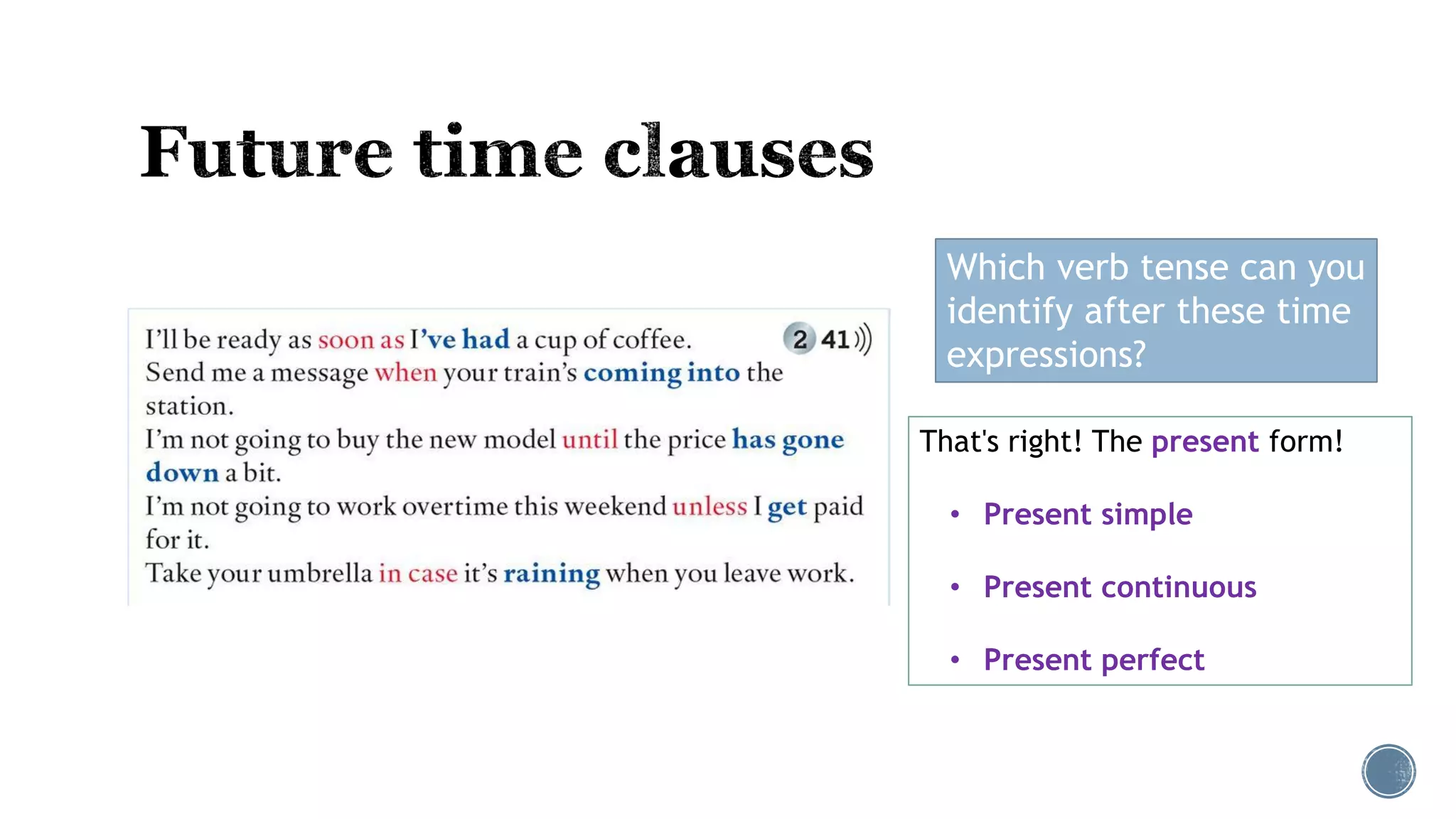
The document provides examples of conditional sentences using "if" to express possible situations and their consequences. It discusses the structure of sentences using "if" followed by the present simple tense and "will/won't" plus an infinitive verb. Examples are given of conditional sentences expressing superstitions and their potential consequences. The document notes that modal verbs other than "will/won't" can also be used after "if" such as "can", "might", "may", "must", and "should".
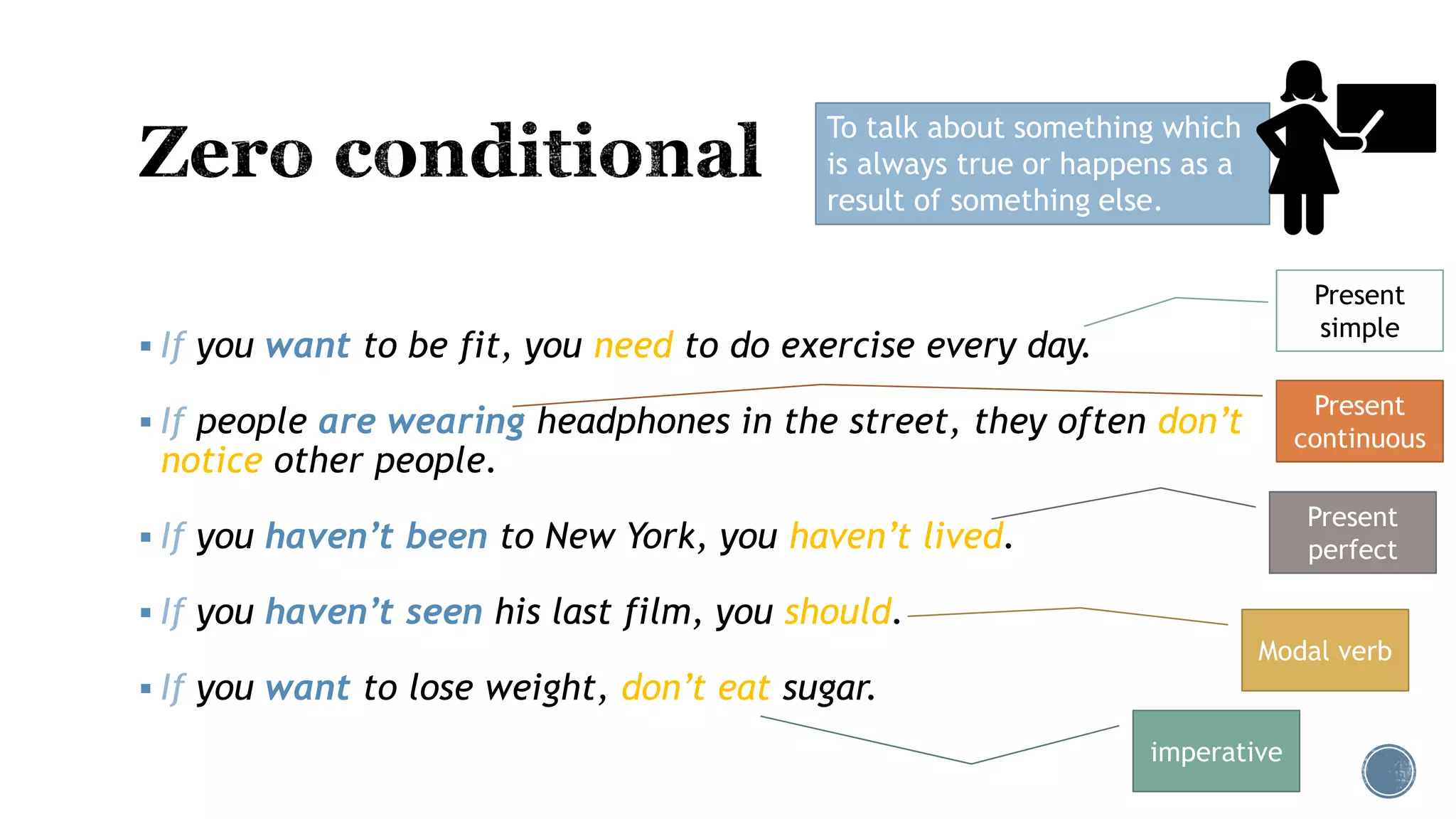
If youwant to be fit, you need to do exercise every day.
If people are wearing headphones in the street, they often don’t
notice other people.
If you haven’t been to New York, you haven’t lived.
If you haven’t seen his last film, you should.
If you want to lose weight, don’t eat sugar.
3.
If youwant to be fit, you need to do exercise every day.
If people are wearing headphones in the street, they often don’t
notice other people.
If you haven’t been to New York, you haven’t lived.
If you haven’t seen his last film, you should.
If you want to lose weight, don’t eat sugar.
To talk about something which
is always true or happens as a
result of something else.
Present
simple
Present
continuous
Present
perfect
Modal verb
imperative