Modals of deduction
B1
MíriamTomàs
How can we express certainty,
probability or speculation?
Let’s put the
thinking cap
on
must
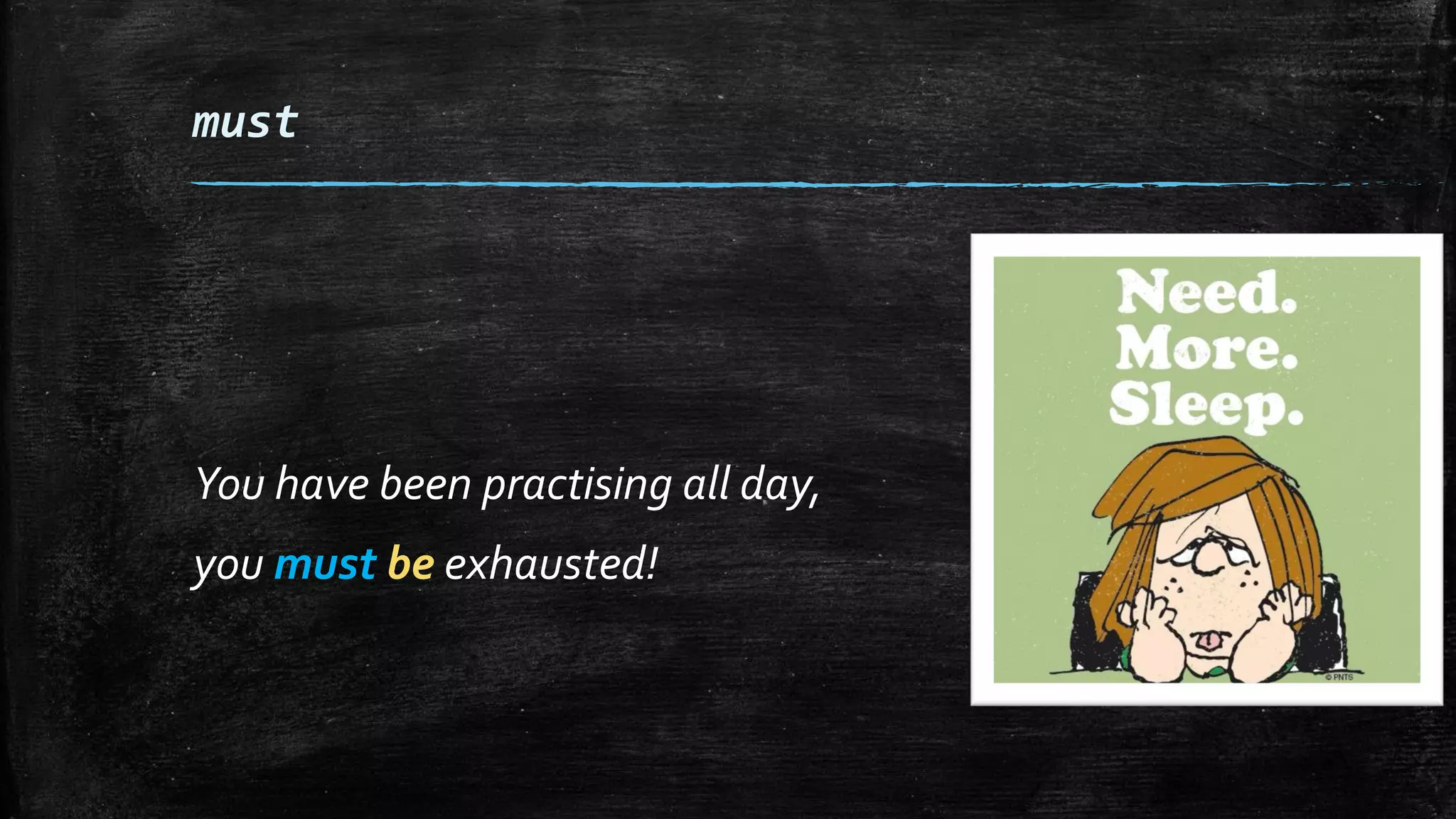
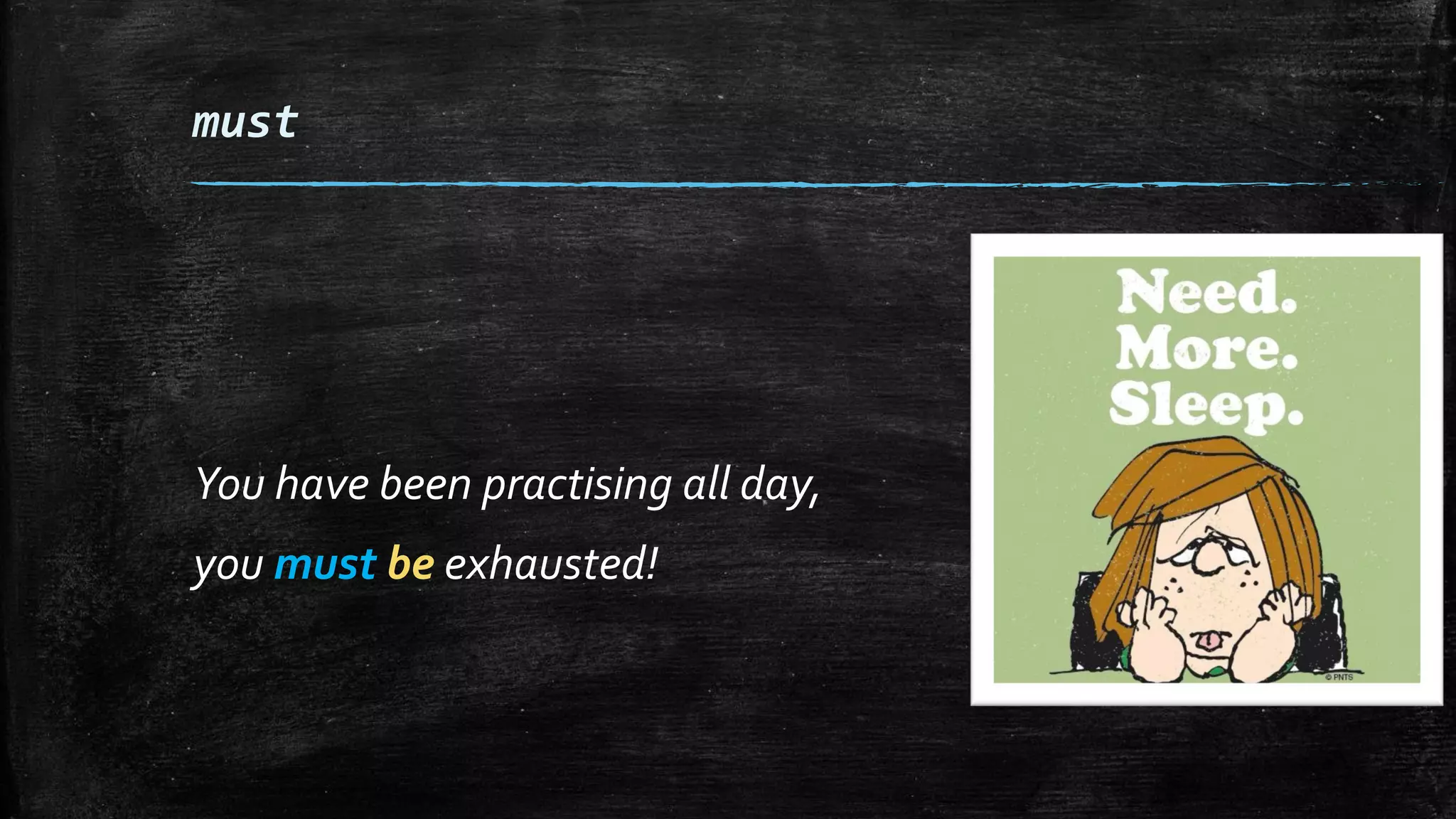
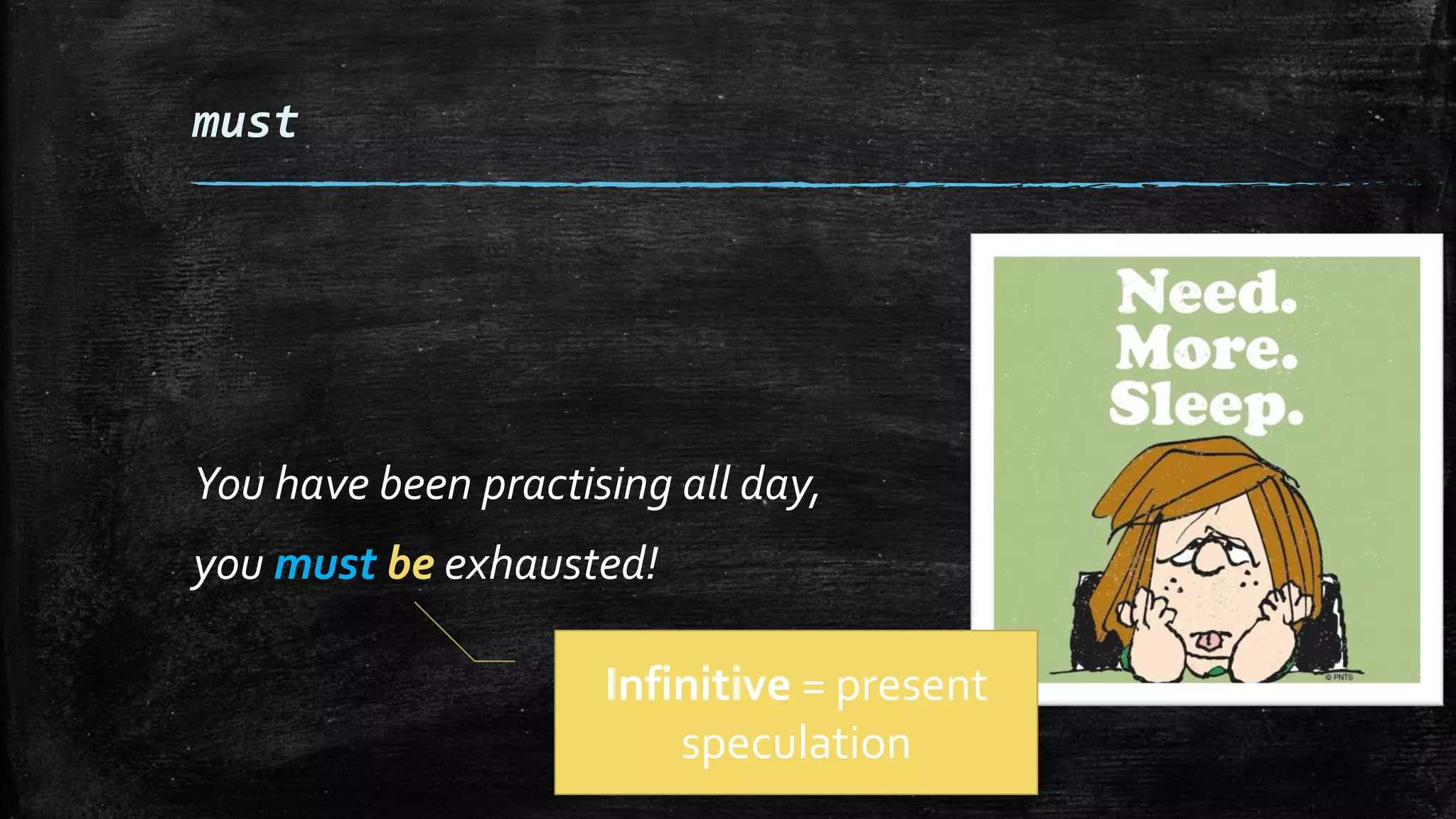
You have been practising all day,
you must be exhausted!
must
Sean and Jennie must be going out again. I’ve seen
them holding hands today.
Logical assumptions and deductions
Must:
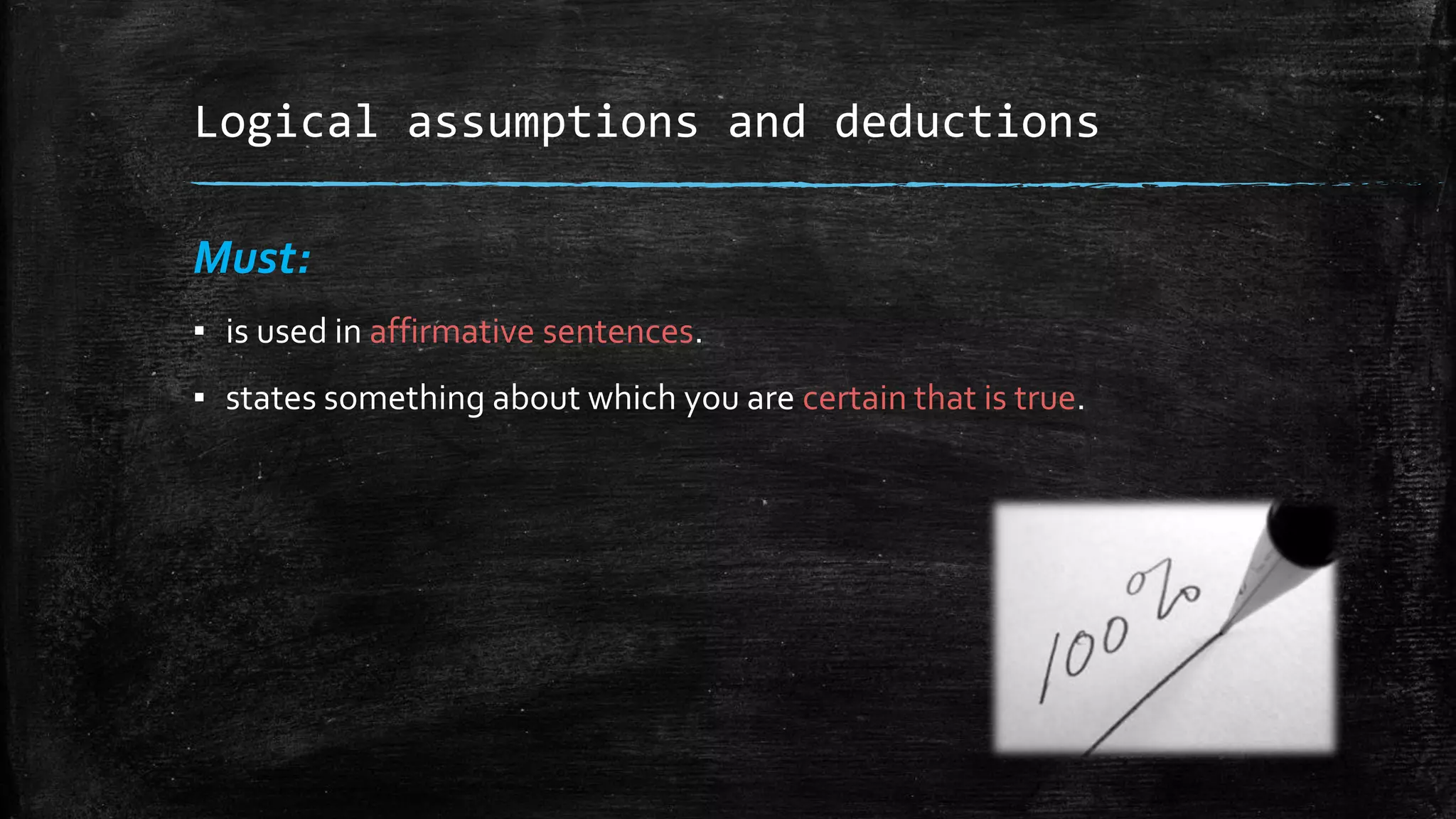
▪ is used in affirmative sentences.
▪ states something about which you are certain that is true.
Modal verbs and different tenses
We can use modal
verbs with different
combinations of
verbs to change the
time of the actions.
must
You have been practising all day,
you must be exhausted!
must
You have been practising all day,
you must be exhausted!
Infinitive = present
speculation
must
Sean and Jennie must be going out again. I’ve seen
them holding hands today.
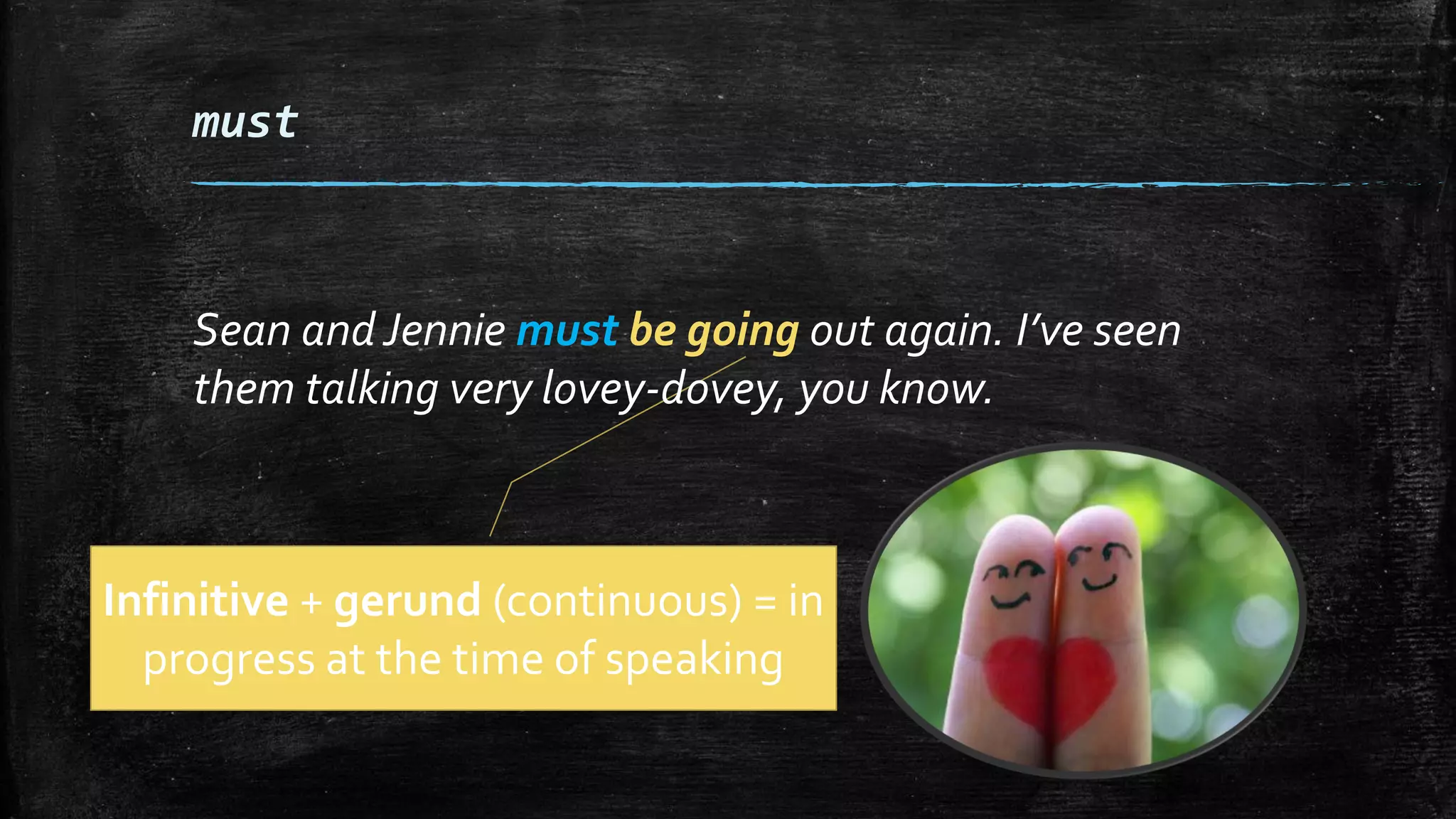
Infinitive + gerund (continuous) = in
progress at the time of speaking
must
Sean and Jennie must be going out again. I’ve seen
them talking very lovey-dovey, you know.
Next!
Can’t
What you say about Claire and Jake can’t be true!They’re so
good together it’s impossible they’re going to break up.
Can’t
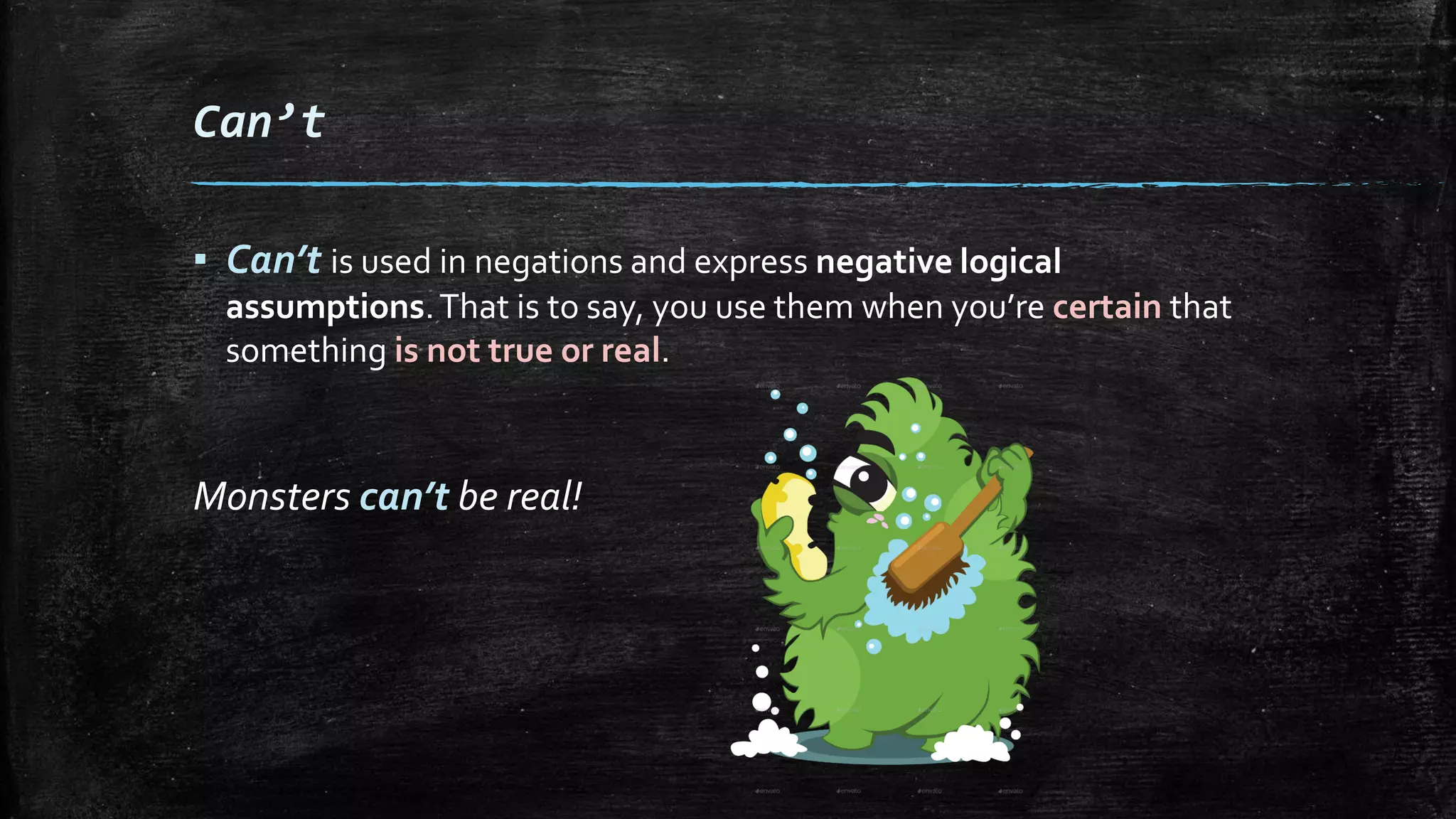
▪ Can’t is used in negations and express negative logical
assumptions.That is to say, you use them when you’re certain that
something is not true or real.
Monsters can’t be real!
Can’t
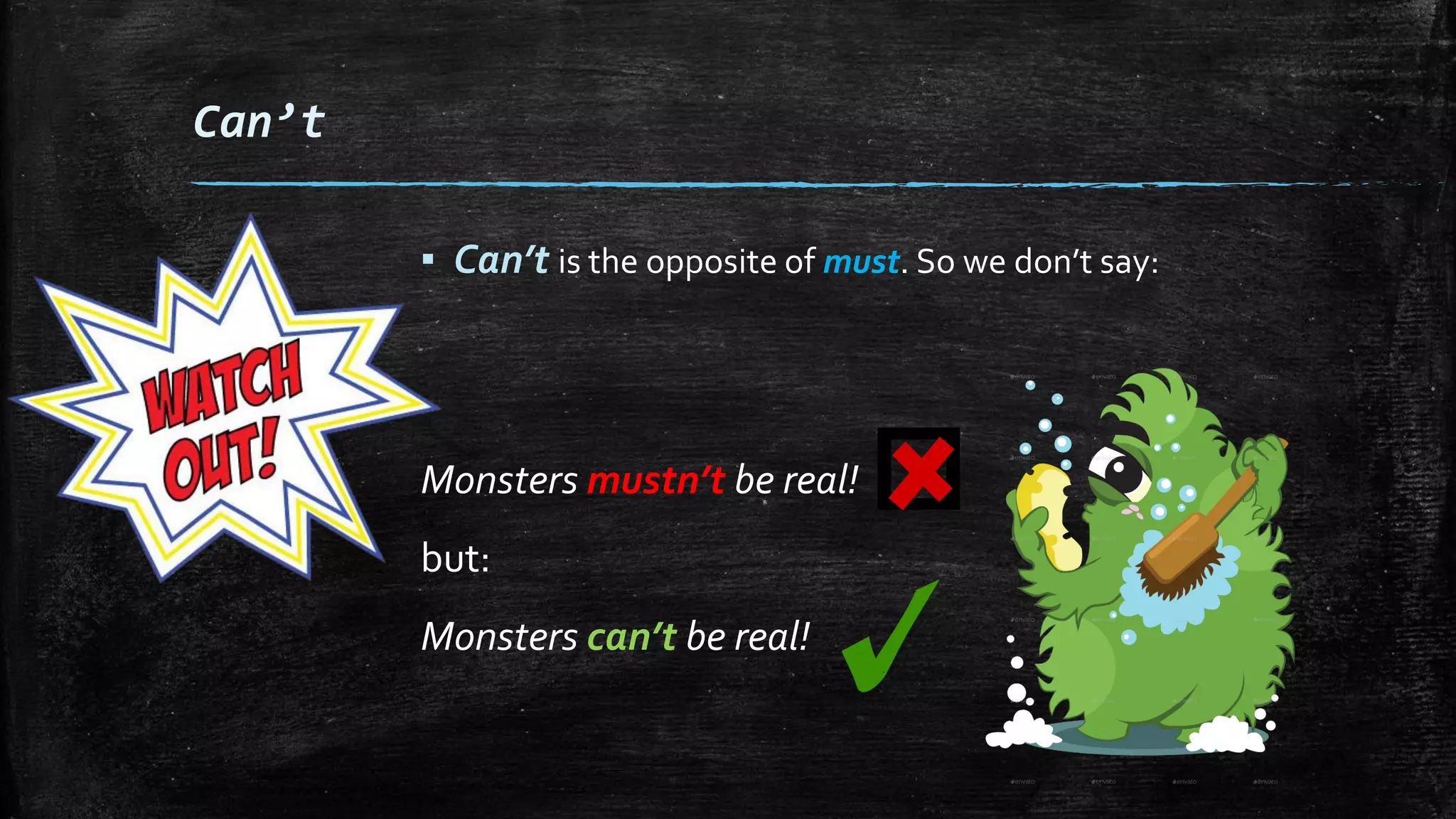
▪ Can’t is the opposite of must. So we don’t say:
Monsters mustn’t be real!
but:
Monsters can’t be real!
Modal verbs and different tenses
We can use modal
verbs with different
combinations of
verbs to change the
time of the actions.
Can’t
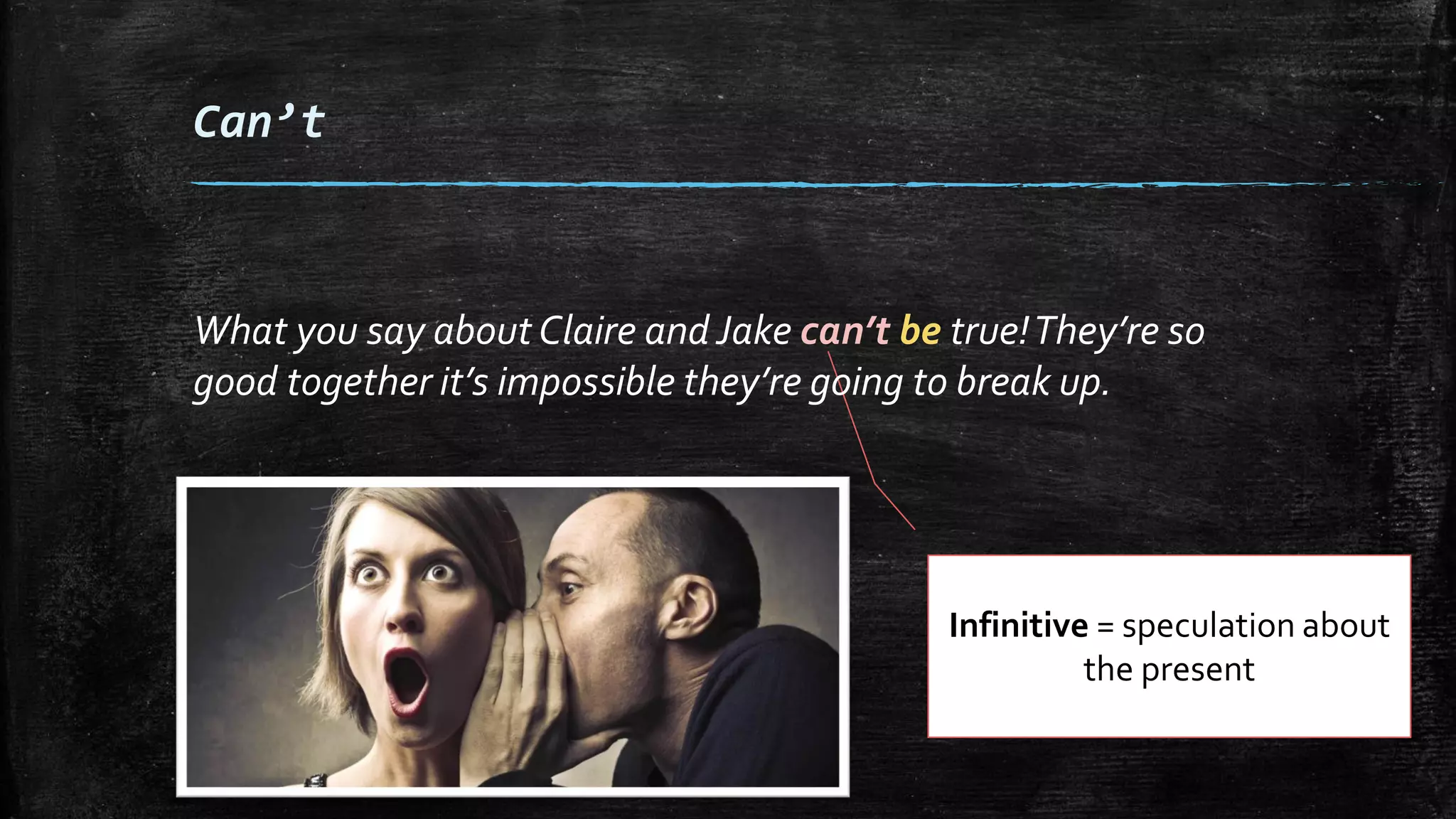
What you say about Claire and Jake can’t be true!They’re so
good together it’s impossible they’re going to break up.
Infinitive = speculation about
the present
Can’t
What you say about Claire and Jake can’t be true!They’re so
good together it’s impossible they’re going to break up.
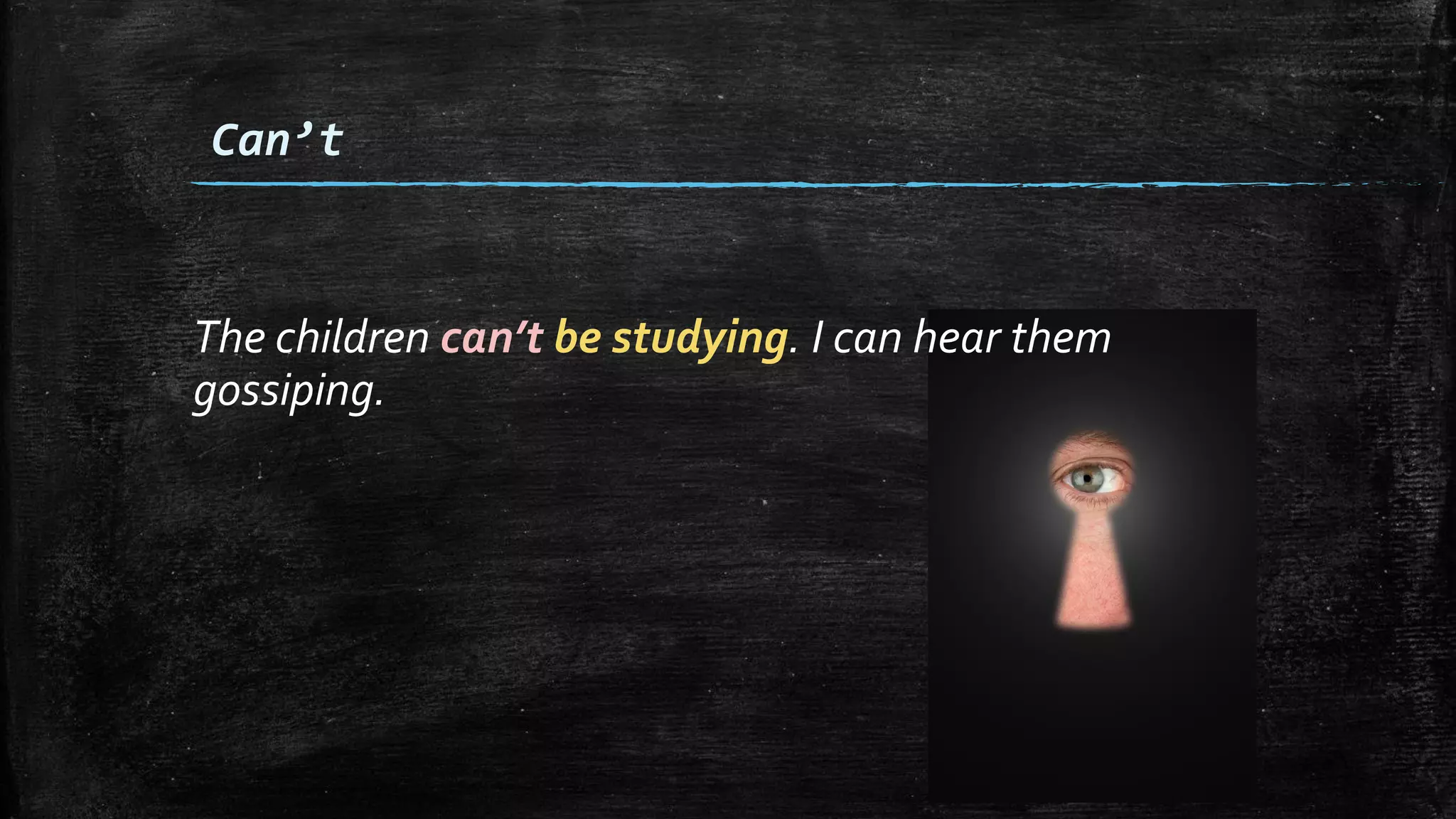
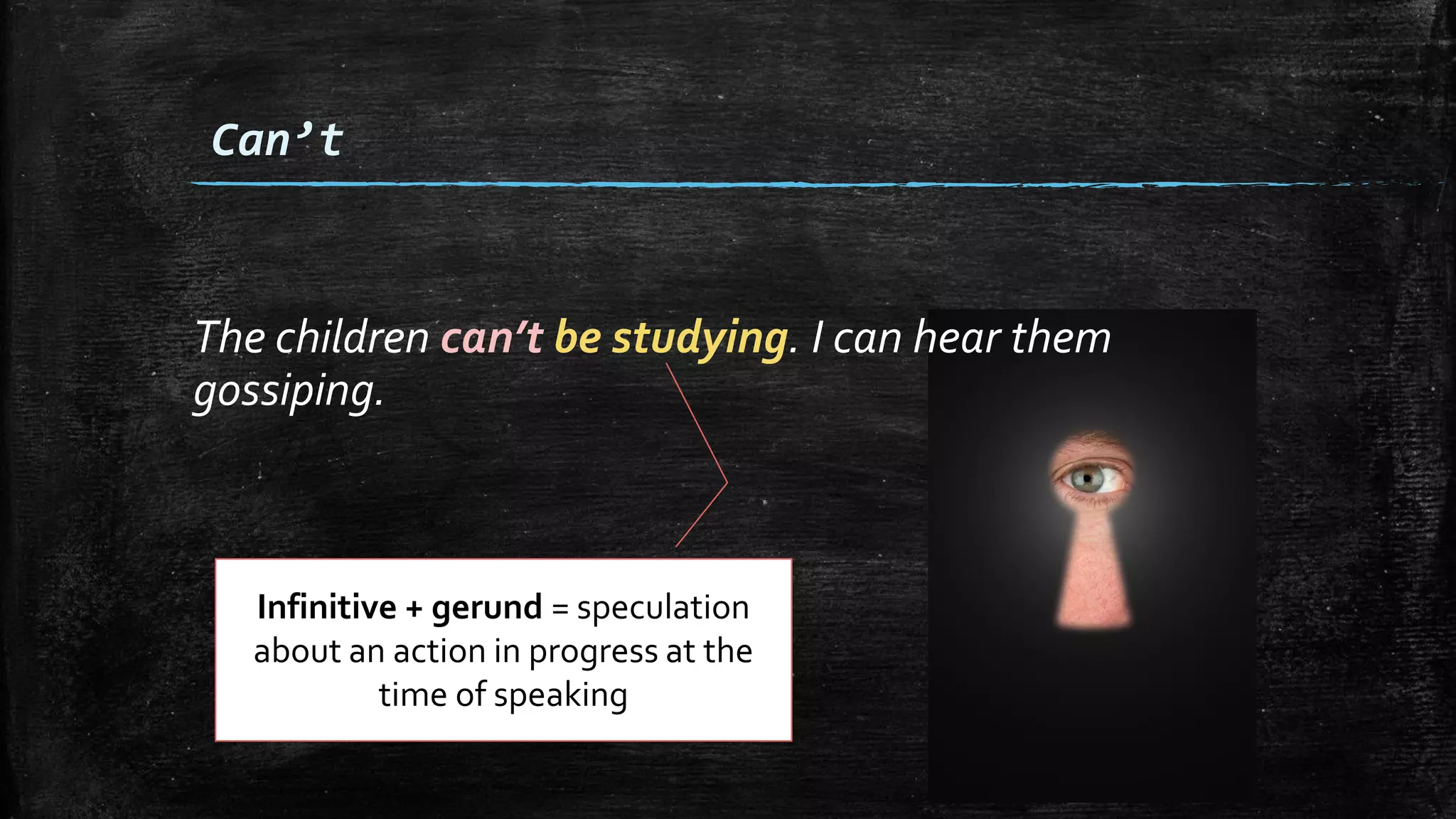
The children can’t be studying. I can hear them
gossiping.
Can’t
The children can’t be studying. I can hear them
gossiping.
Can’t
Infinitive + gerund = speculation
about an action in progress at the
time of speaking
Next!
Laura might not like that skirt. It’s not really her style.
May and might
I’m surprisedTed isn’t here. Hey may not know that the
meeting is today.
May and might
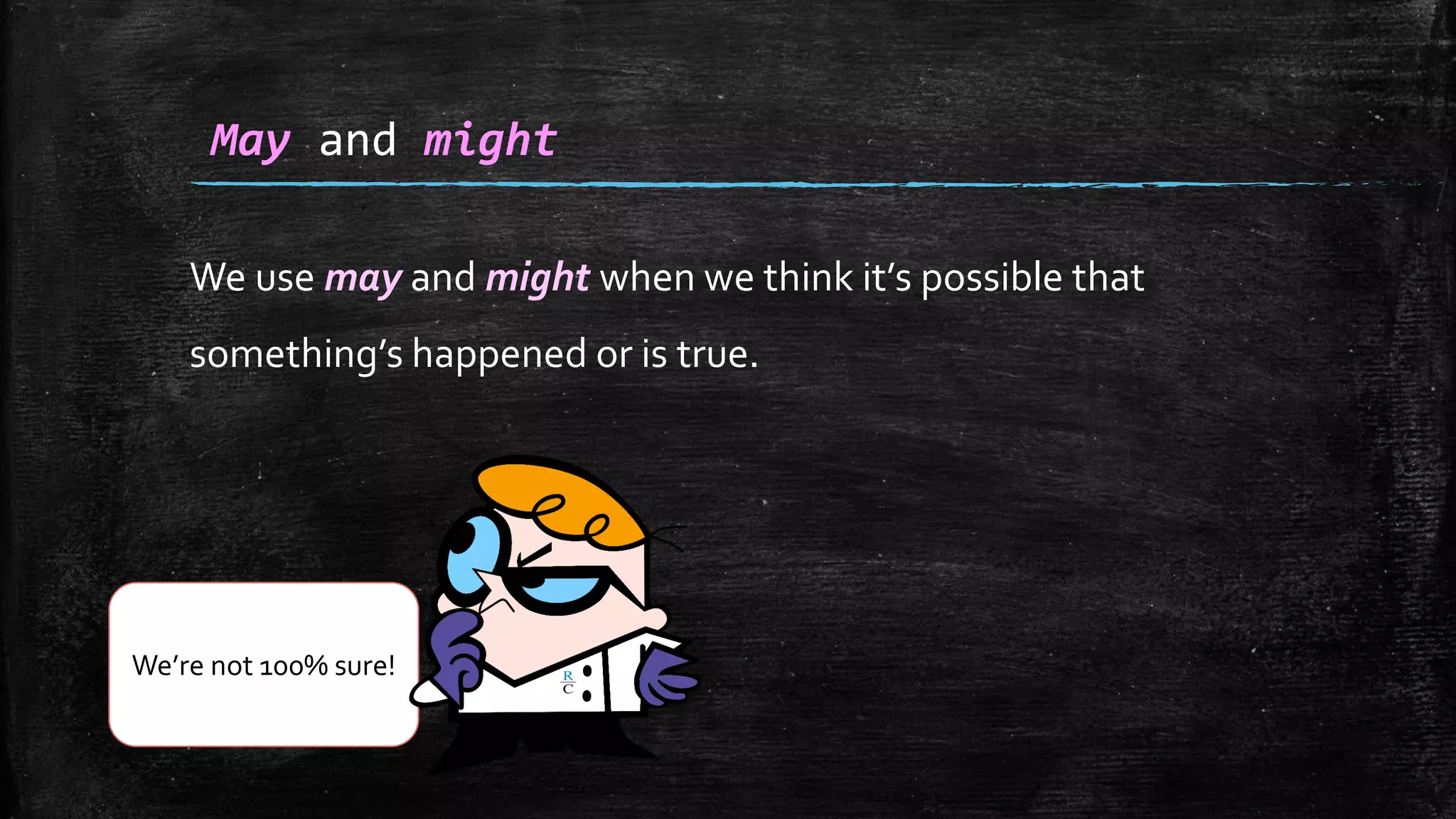
We use may and might when we think it’s possible that
something’s happened or is true.
May and might
We’re not 100% sure!
Modal verbs and different tenses
We can use modal
verbs with different
combinations of
verbs to change the
time of the actions.
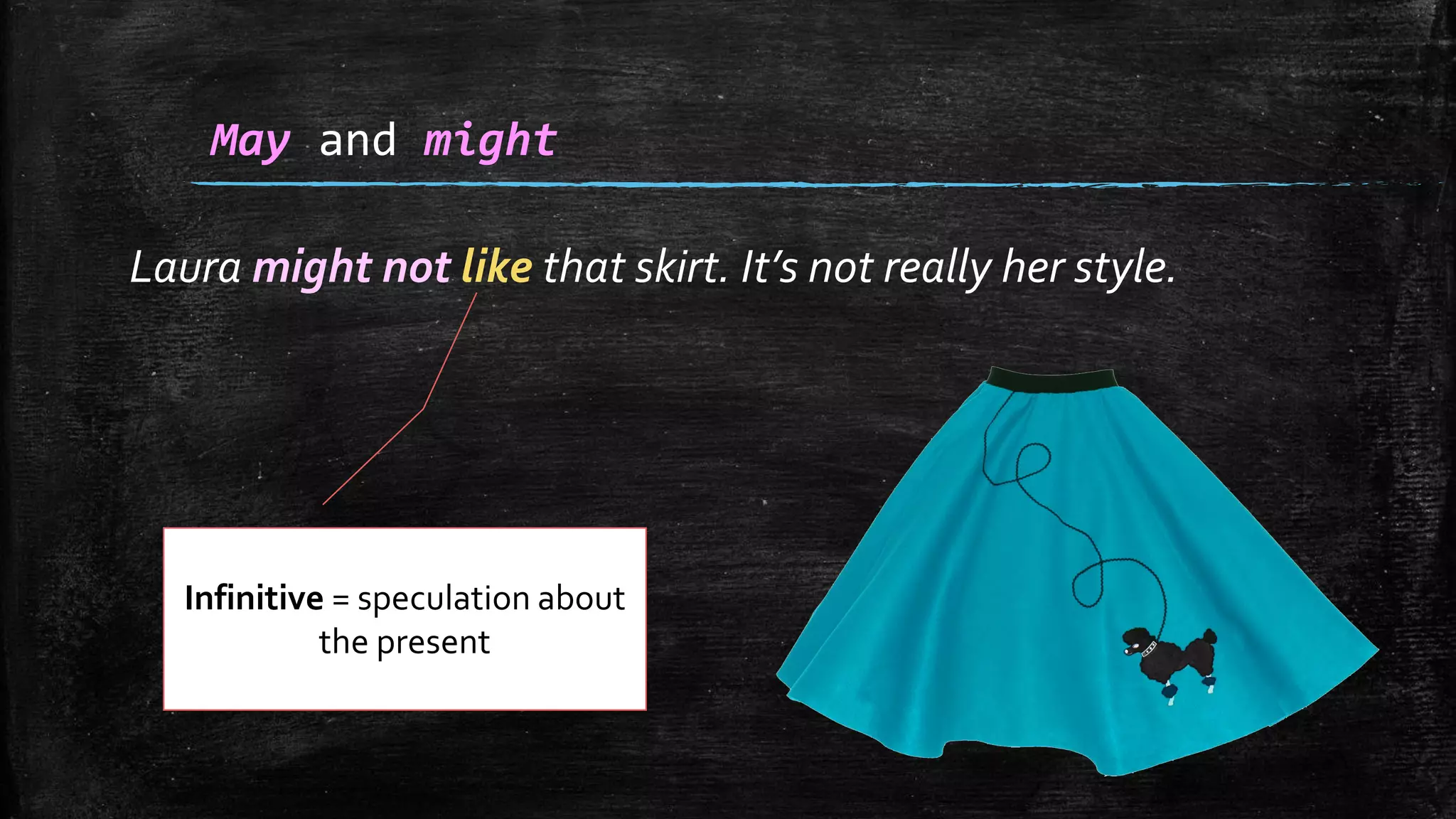
Laura might not like that skirt. It’s not really her style.
May and might
Laura might not like that skirt. It’s not really her style.
May and might
Infinitive = speculation about
the present
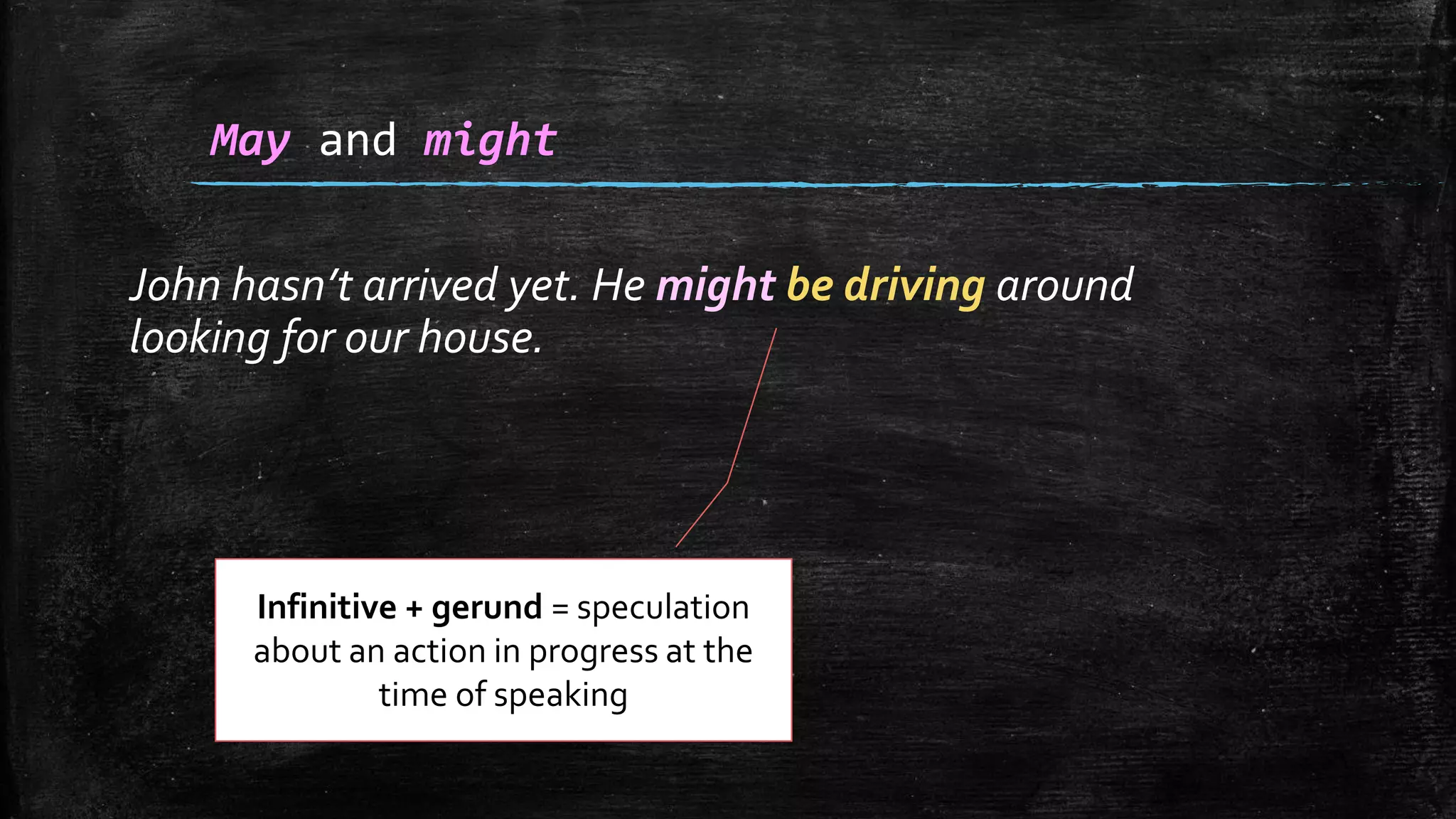
John hasn’t arrived yet. He might be driving around
looking for our house.
May and might
John hasn’t arrived yet. He might be driving around
looking for our house.
May and might
Infinitive + gerund = speculation
about an action in progress at the
time of speaking
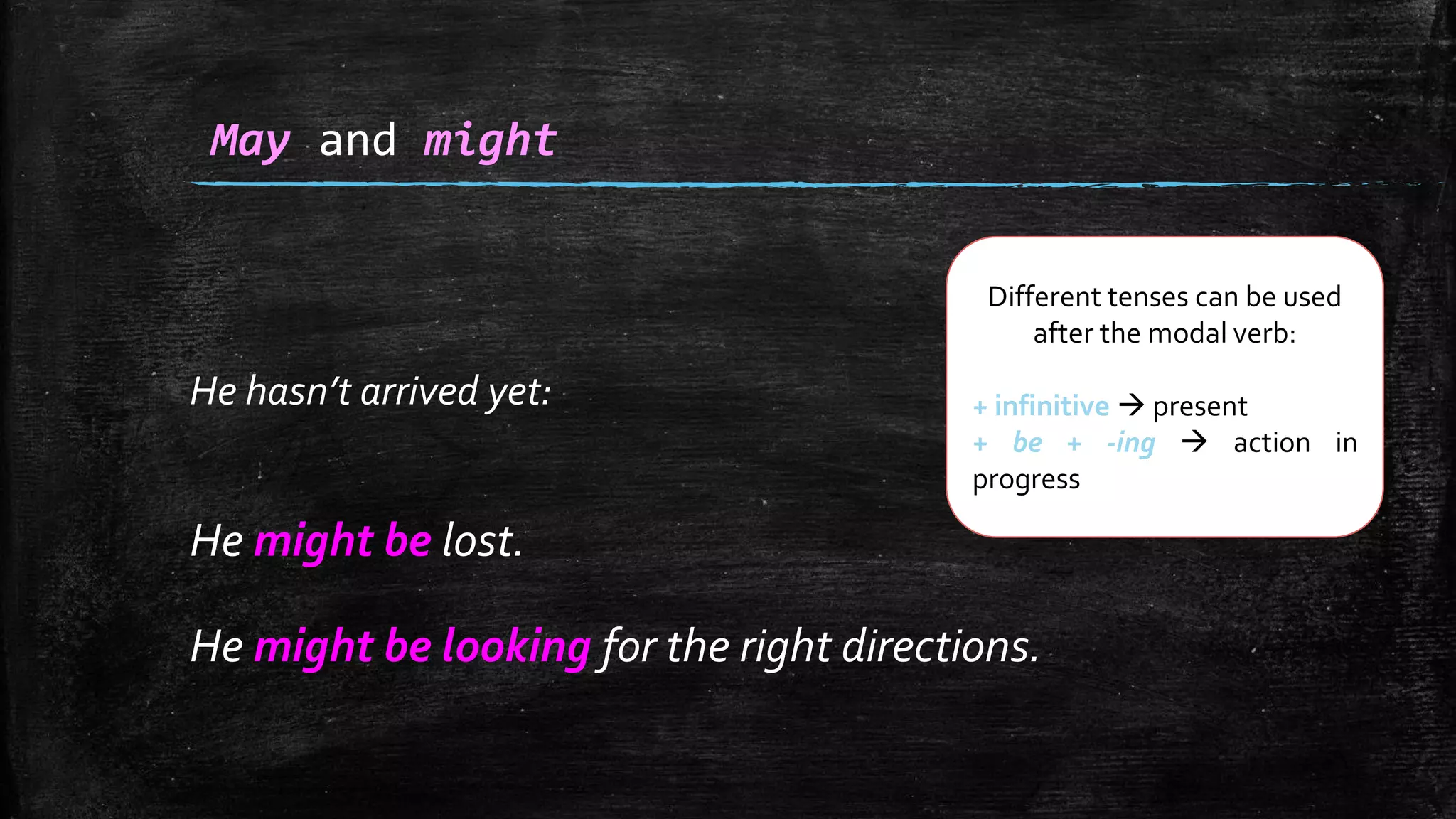
He hasn’t arrived yet:
He might be lost.
He might be looking for the right directions.
May and might
Different tenses can be used
after the modal verb:
+ infinitive  present
+ be + -ing  action in
progress
Now it’s your
turn!
Go to page 143 to complete
exercise 3.
Modal verbs: speculation and deduction

Modal verbs: speculation and deduction

  • 1.
  • 2.
    How can weexpress certainty, probability or speculation? Let’s put the thinking cap on
  • 3.
    must You have beenpractising all day, you must be exhausted!
  • 4.
    must Sean and Jenniemust be going out again. I’ve seen them holding hands today.
  • 5.
    Logical assumptions anddeductions Must: ▪ is used in affirmative sentences. ▪ states something about which you are certain that is true.
  • 6.
    Modal verbs anddifferent tenses We can use modal verbs with different combinations of verbs to change the time of the actions.
  • 7.
    must You have beenpractising all day, you must be exhausted!
  • 8.
    must You have beenpractising all day, you must be exhausted! Infinitive = present speculation
  • 9.
    must Sean and Jenniemust be going out again. I’ve seen them holding hands today.
  • 10.
    Infinitive + gerund(continuous) = in progress at the time of speaking must Sean and Jennie must be going out again. I’ve seen them talking very lovey-dovey, you know.
  • 11.
  • 12.
    Can’t What you sayabout Claire and Jake can’t be true!They’re so good together it’s impossible they’re going to break up.
  • 13.
    Can’t ▪ Can’t isused in negations and express negative logical assumptions.That is to say, you use them when you’re certain that something is not true or real. Monsters can’t be real!
  • 14.
    Can’t ▪ Can’t isthe opposite of must. So we don’t say: Monsters mustn’t be real! but: Monsters can’t be real!
  • 15.
    Modal verbs anddifferent tenses We can use modal verbs with different combinations of verbs to change the time of the actions.
  • 16.
    Can’t What you sayabout Claire and Jake can’t be true!They’re so good together it’s impossible they’re going to break up.
  • 17.
    Infinitive = speculationabout the present Can’t What you say about Claire and Jake can’t be true!They’re so good together it’s impossible they’re going to break up.
  • 18.
    The children can’tbe studying. I can hear them gossiping. Can’t
  • 19.
    The children can’tbe studying. I can hear them gossiping. Can’t Infinitive + gerund = speculation about an action in progress at the time of speaking
  • 20.
  • 21.
    Laura might notlike that skirt. It’s not really her style. May and might
  • 22.
    I’m surprisedTed isn’there. Hey may not know that the meeting is today. May and might
  • 23.
    We use mayand might when we think it’s possible that something’s happened or is true. May and might We’re not 100% sure!
  • 24.
    Modal verbs anddifferent tenses We can use modal verbs with different combinations of verbs to change the time of the actions.
  • 25.
    Laura might notlike that skirt. It’s not really her style. May and might
  • 26.
    Laura might notlike that skirt. It’s not really her style. May and might Infinitive = speculation about the present
  • 27.
    John hasn’t arrivedyet. He might be driving around looking for our house. May and might
  • 28.
    John hasn’t arrivedyet. He might be driving around looking for our house. May and might Infinitive + gerund = speculation about an action in progress at the time of speaking
  • 29.
    He hasn’t arrivedyet: He might be lost. He might be looking for the right directions. May and might Different tenses can be used after the modal verb: + infinitive  present + be + -ing  action in progress
  • 30.
    Now it’s your turn! Goto page 143 to complete exercise 3.