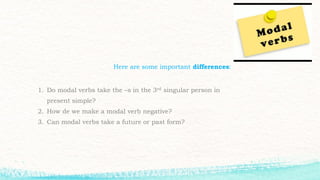
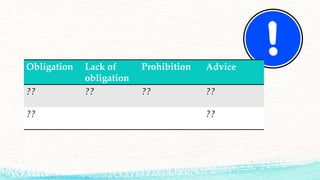
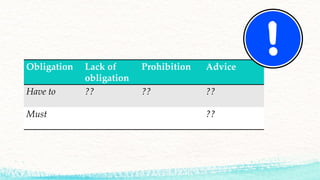
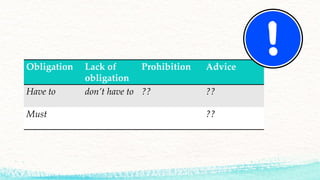
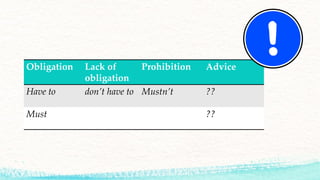
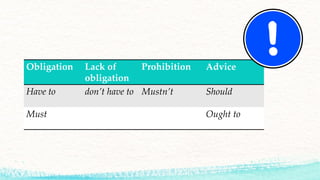
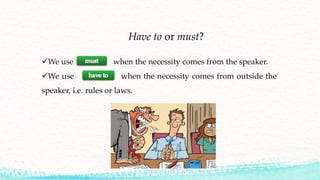
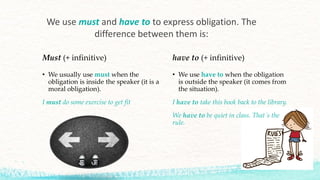
Modal verbs are used to express ideas like obligation, lack of obligation, prohibition, and advice. They behave differently than regular verbs in that they do not take -s in the third person singular present and use "not" for negation rather than tense. Common modal verbs are must, have to, should, and ought to. Must expresses strong obligation or advice while have to expresses external obligation. Don't have to expresses lack of obligation. Mustn't is used for prohibition while should and ought to provide recommendations. Have got to is also used in spoken English like must and have to.