The Future in
the Past
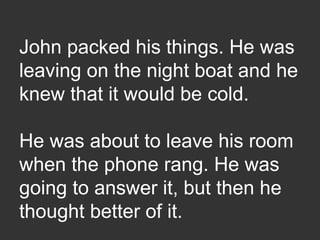
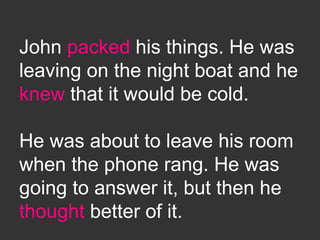
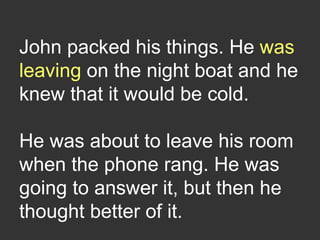
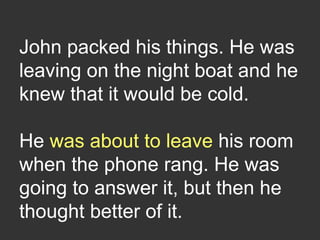
John packed his things. He was
leaving on the night boat and he
knew that it would be cold.
He was about to leave his room
when the phone rang. He was
going to answer it, but then he
thought better of it.
John packed his things. He was
leaving on the night boat and he
knew that it would be cold.
He was about to leave his room
when the phone rang. He was
going to answer it, but then he
thought better of it.
John packed his things. He was
leaving on the night boat and he
knew that it would be cold.
He was about to leave his room
when the phone rang. He was
going to answer it, but then he
thought better of it.
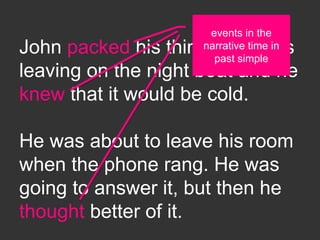
events in the
narrative time in
past simple
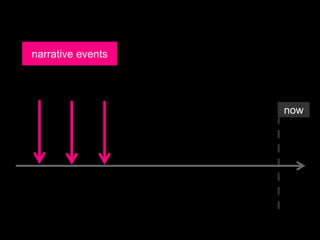
now
narrative events
John packed his things. He was
leaving on the night boat and he
knew that it would be cold.
He was about to leave his room
when the phone rang. He was
going to answer it, but then he
thought better of it.
John packed his things. He was
leaving on the night boat and he
knew that it would be cold.
He was about to leave his room
when the phone rang. He was
going to answer it, but then he
thought better of it.
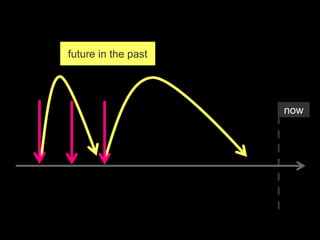
various forms for the future in the past
now
future in the past
to understand the future in the
past in English, you need to
start from the normal future
(inside your narrative)
1. Past Continuous
John packed his things. He was
leaving on the night boat and he
knew that it would be cold.
He was about to leave his room
when the phone rang. He was
going to answer it, but then he
thought better of it.
consider the situation as if it
were in the present
John is leaving on the night boat.
present
continuous for
present plans
John is leaving on the night boat.
future in the past
?
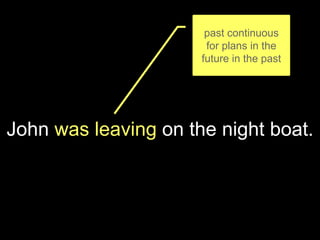
John was leaving on the night boat.
past continuous
for plans in the
future in the past
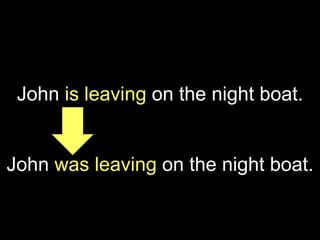
John is leaving on the night boat.
John was leaving on the night boat.
2. ‘would do’
John packed his things. He was
leaving on the night boat and he
knew that it would be cold.
He was about to leave his room
when the phone rang. He was
going to answer it, but then he
thought better of it.
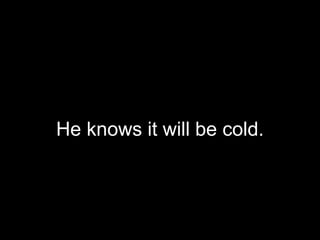
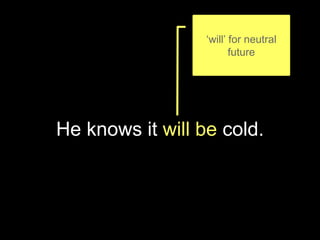
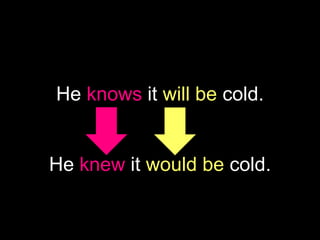
He knows it will be cold.
‘will’ for neutral
future
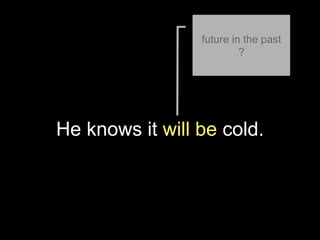
He knows it will be cold.
future in the past
?
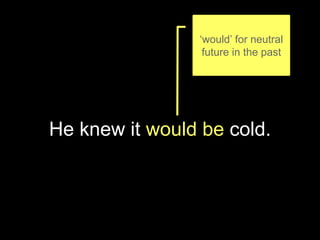
He knew it would be cold.
‘would’ for neutral
future in the past
He knows it will be cold.
He knew it would be cold.
NB the same mechanism is
used in reported speech
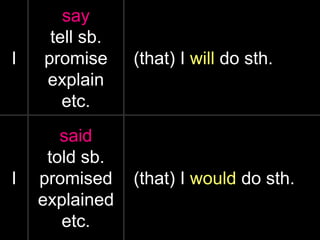
I
say
tell sb.
promise
explain
etc.
(that) I will do sth.
I
said
told sb.
promised
explained
etc.
(that) I would do sth.
3. ‘about to’
John packed his things. He was
leaving on the night boat and he
knew that it would be cold.
He was about to leave his room
when the phone rang. He was
going to answer it, but then he
thought better of it.
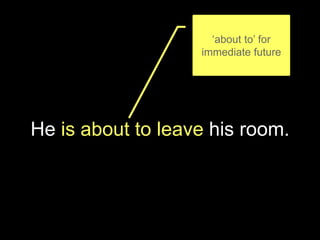
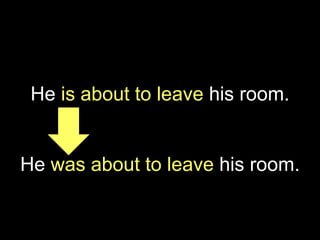
He is about to leave his room.
‘about to’ for
immediate future
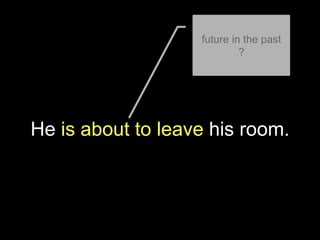
He is about to leave his room.
future in the past
?
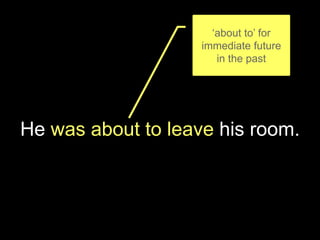
He was about to leave his room.
‘about to’ for
immediate future
in the past
He is about to leave his room.
He was about to leave his room.
4. ‘going to’
John packed his things. He was
leaving on the night boat and he
knew that it would be cold.
He was about to leave his room
when the phone rang. He was
going to answer it, but then he
thought better of it.
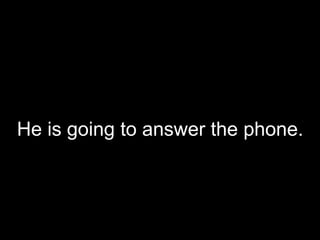
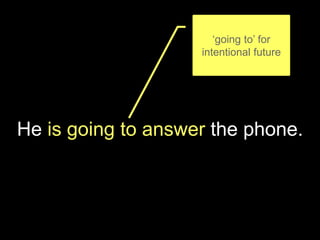
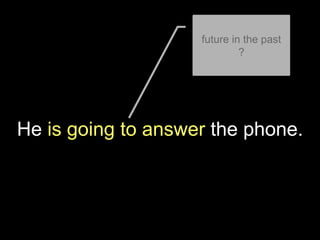
He is going to answer the phone.
‘going to’ for
intentional future
He is going to answer the phone.
future in the past
?
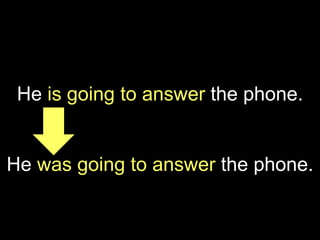
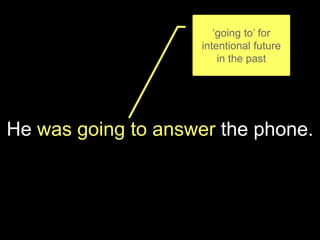
He was going to answer the phone.
‘going to’ for
intentional future
in the past
He is going to answer the phone.
He was going to answer the phone.
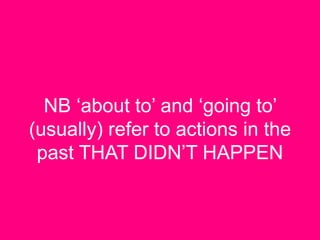
NB ‘about to’ and ‘going to’
(usually) refer to actions in the
past THAT DIDN’T HAPPEN
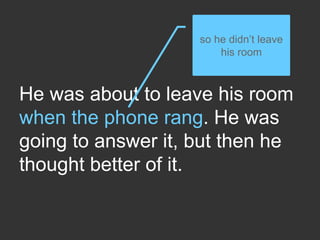
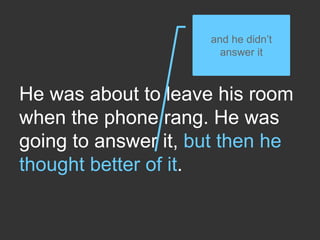
He was about to leave his room
when the phone rang. He was
going to answer it, but then he
thought better of it.
He was about to leave his room
when the phone rang. He was
going to answer it, but then he
thought better of it.
so he didn’t leave
his room
He was about to leave his room
when the phone rang. He was
going to answer it, but then he
thought better of it.
and he didn’t
answer it
in the present ‘intention’ and
‘immediate action’
are useful concepts
in the present ‘intention’ and
‘immediate action’
are useful concepts
BEFORE the verb happens
in the past ‘intention’ and
‘immediate action’
are only interesting…
in the past ‘intention’ and
‘immediate action’
are only interesting…
IF the verb doesn’t happen
consider:
John packed his things. He was
about to leave the room. Then
he left the room.
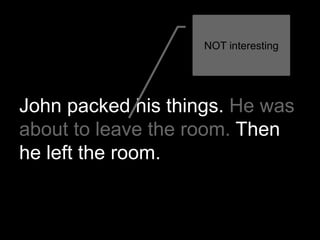
John packed his things. He was
about to leave the room. Then
he left the room.
NOT interesting
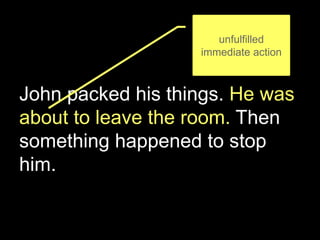
John packed his things. He was
about to leave the room. Then
something happened to stop
him.
unfulfilled
immediate action
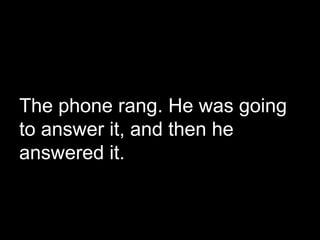
The phone rang. He was going
to answer it, and then he
answered it.
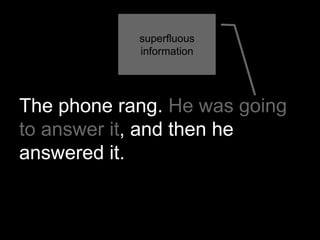
The phone rang. He was going
to answer it, and then he
answered it.
superfluous
information
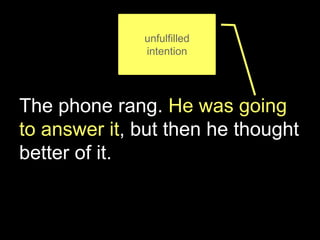
The phone rang. He was going
to answer it, but then he thought
better of it.
unfulfilled
intention
be careful translating
‘avrei fatto’ etc.
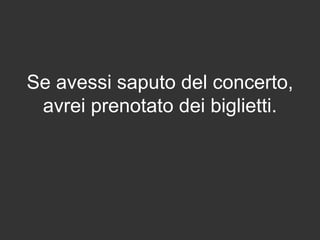
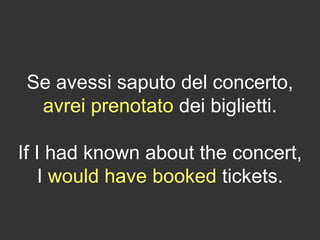
1. unreal past
Se avessi saputo del concerto,
avrei prenotato dei biglietti.
Se avessi saputo del concerto,
avrei prenotato dei biglietti.
If I had known about the concert,
I would have booked tickets.
2. future in the past
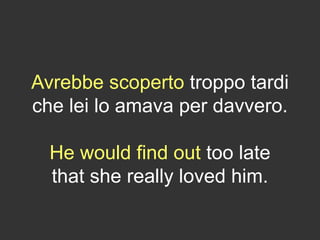
Avrebbe scoperto troppo tardi
che lei lo amava per davvero.
Avrebbe scoperto troppo tardi
che lei lo amava per davvero.
He would find out too late
that she really loved him.
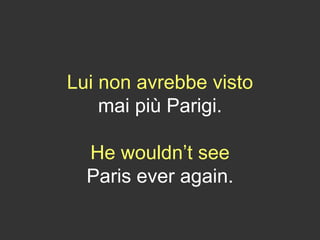
Lui non avrebbe visto
mai più Parigi.
Lui non avrebbe visto
mai più Parigi.
He wouldn’t see
Paris ever again.
3. reported and indirect speech
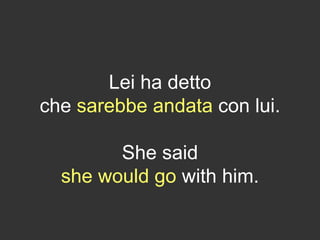
Lei ha detto
che sarebbe andata con lui.
Lei ha detto
che sarebbe andata con lui.
She said
she would go with him.
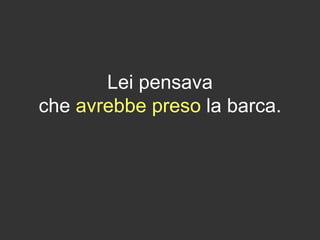
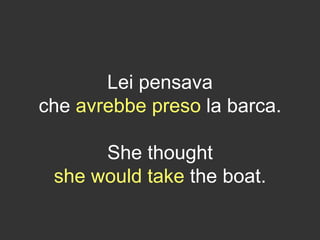
Lei pensava
che avrebbe preso la barca.
Lei pensava
che avrebbe preso la barca.
She thought
she would take the boat.
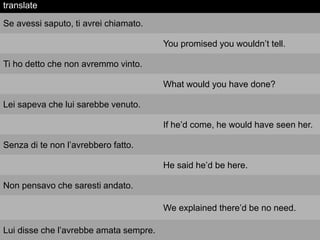
translate
Se avessi saputo, ti avrei chiamato.
You promised you wouldn’t tell.
Ti ho detto che non avremmo vinto.
What would you have done?
Lei sapeva che lui sarebbe venuto.
If he’d come, he would have seen her.
Senza di te non l’avrebbero fatto.
He said he’d be here.
Non pensavo che saresti andato.
We explained there’d be no need.
Lui disse che l’avrebbe amata sempre.
translate
Se avessi saputo, ti avrei chiamato. If I had known, I would have called you
Hai promesso che non l’avresti detto. You promised you wouldn’t tell.
Ti ho detto che non avremmo vinto. I told you (that) we wouldn’t win.
Cosa avresti fatto tu? What would you have done?
Lei sapeva che lui sarebbe venuto. She knew (that) he’d come.
Se fosse venuto, l’avrebbe vista. If he’d come, he would have seen her.
Senza di te non l’avrebbero fatto. Without you they wouldn’t have done it
Lui ha detto che sarebbe stato qui. He said he’d be here.
Non pensavo che saresti andato. I didn’t think (that) you’d go.
Abbiamo spiegato che non ci sarebbe
stato bisogno.
We explained there’d be no need.
Lui disse che l’avrebbe amata sempre. He said (that) he’d always love her.
why?
see what happens if you
translate literally?
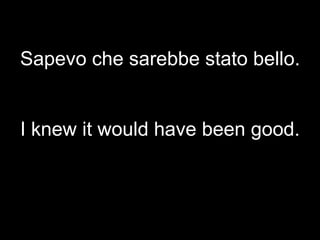
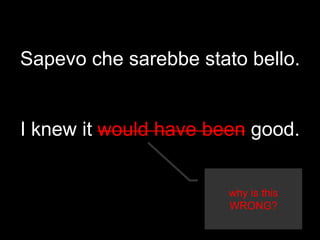
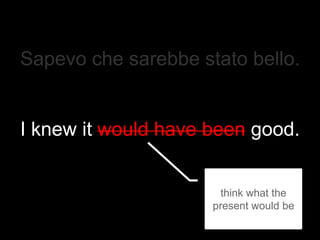
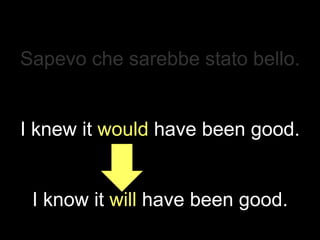
Sapevo che sarebbe stato bello.
I knew it would have been good.
Sapevo che sarebbe stato bello.
I knew it would have been good.
why is this
WRONG?
Sapevo che sarebbe stato bello.
I knew it would have been good.
think what the
present would be
Sapevo che sarebbe stato bello.
I knew it would have been good.
I know it will have been good.
So che sarà bello.
≠
I know it will have been good.
www.davidnicholson.it

Future in the past

  • 1.
  • 2.
    John packed histhings. He was leaving on the night boat and he knew that it would be cold. He was about to leave his room when the phone rang. He was going to answer it, but then he thought better of it.
  • 3.
    John packed histhings. He was leaving on the night boat and he knew that it would be cold. He was about to leave his room when the phone rang. He was going to answer it, but then he thought better of it.
  • 4.
    John packed histhings. He was leaving on the night boat and he knew that it would be cold. He was about to leave his room when the phone rang. He was going to answer it, but then he thought better of it. events in the narrative time in past simple
  • 5.
  • 6.
    John packed histhings. He was leaving on the night boat and he knew that it would be cold. He was about to leave his room when the phone rang. He was going to answer it, but then he thought better of it.
  • 7.
    John packed histhings. He was leaving on the night boat and he knew that it would be cold. He was about to leave his room when the phone rang. He was going to answer it, but then he thought better of it. various forms for the future in the past
  • 8.
  • 9.
    to understand thefuture in the past in English, you need to start from the normal future (inside your narrative)
  • 10.
  • 11.
    John packed histhings. He was leaving on the night boat and he knew that it would be cold. He was about to leave his room when the phone rang. He was going to answer it, but then he thought better of it.
  • 12.
    consider the situationas if it were in the present
  • 13.
    John is leavingon the night boat.
  • 14.
    John is leavingon the night boat. present continuous for present plans
  • 15.
    John is leavingon the night boat. future in the past ?
  • 16.
    John was leavingon the night boat. past continuous for plans in the future in the past
  • 17.
    John is leavingon the night boat. John was leaving on the night boat.
  • 18.
  • 19.
    John packed histhings. He was leaving on the night boat and he knew that it would be cold. He was about to leave his room when the phone rang. He was going to answer it, but then he thought better of it.
  • 20.
    He knows itwill be cold.
  • 21.
    He knows itwill be cold. ‘will’ for neutral future
  • 22.
    He knows itwill be cold. future in the past ?
  • 23.
    He knew itwould be cold. ‘would’ for neutral future in the past
  • 24.
    He knows itwill be cold. He knew it would be cold.
  • 25.
    NB the samemechanism is used in reported speech
  • 26.
    I say tell sb. promise explain etc. (that) Iwill do sth. I said told sb. promised explained etc. (that) I would do sth.
  • 27.
  • 28.
    John packed histhings. He was leaving on the night boat and he knew that it would be cold. He was about to leave his room when the phone rang. He was going to answer it, but then he thought better of it.
  • 29.
    He is aboutto leave his room. ‘about to’ for immediate future
  • 30.
    He is aboutto leave his room. future in the past ?
  • 31.
    He was aboutto leave his room. ‘about to’ for immediate future in the past
  • 32.
    He is aboutto leave his room. He was about to leave his room.
  • 33.
  • 34.
    John packed histhings. He was leaving on the night boat and he knew that it would be cold. He was about to leave his room when the phone rang. He was going to answer it, but then he thought better of it.
  • 35.
    He is goingto answer the phone.
  • 36.
    He is goingto answer the phone. ‘going to’ for intentional future
  • 37.
    He is goingto answer the phone. future in the past ?
  • 38.
    He was goingto answer the phone. ‘going to’ for intentional future in the past
  • 39.
    He is goingto answer the phone. He was going to answer the phone.
  • 40.
    NB ‘about to’and ‘going to’ (usually) refer to actions in the past THAT DIDN’T HAPPEN
  • 41.
    He was aboutto leave his room when the phone rang. He was going to answer it, but then he thought better of it.
  • 42.
    He was aboutto leave his room when the phone rang. He was going to answer it, but then he thought better of it. so he didn’t leave his room
  • 43.
    He was aboutto leave his room when the phone rang. He was going to answer it, but then he thought better of it. and he didn’t answer it
  • 44.
    in the present‘intention’ and ‘immediate action’ are useful concepts
  • 45.
    in the present‘intention’ and ‘immediate action’ are useful concepts BEFORE the verb happens
  • 46.
    in the past‘intention’ and ‘immediate action’ are only interesting…
  • 47.
    in the past‘intention’ and ‘immediate action’ are only interesting… IF the verb doesn’t happen
  • 48.
  • 49.
    John packed histhings. He was about to leave the room. Then he left the room.
  • 50.
    John packed histhings. He was about to leave the room. Then he left the room. NOT interesting
  • 51.
    John packed histhings. He was about to leave the room. Then something happened to stop him. unfulfilled immediate action
  • 52.
    The phone rang.He was going to answer it, and then he answered it.
  • 53.
    The phone rang.He was going to answer it, and then he answered it. superfluous information
  • 54.
    The phone rang.He was going to answer it, but then he thought better of it. unfulfilled intention
  • 55.
  • 56.
  • 57.
    Se avessi saputodel concerto, avrei prenotato dei biglietti.
  • 58.
    Se avessi saputodel concerto, avrei prenotato dei biglietti. If I had known about the concert, I would have booked tickets.
  • 59.
    2. future inthe past
  • 60.
    Avrebbe scoperto troppotardi che lei lo amava per davvero.
  • 61.
    Avrebbe scoperto troppotardi che lei lo amava per davvero. He would find out too late that she really loved him.
  • 62.
    Lui non avrebbevisto mai più Parigi.
  • 63.
    Lui non avrebbevisto mai più Parigi. He wouldn’t see Paris ever again.
  • 64.
    3. reported andindirect speech
  • 65.
    Lei ha detto chesarebbe andata con lui.
  • 66.
    Lei ha detto chesarebbe andata con lui. She said she would go with him.
  • 67.
    Lei pensava che avrebbepreso la barca.
  • 68.
    Lei pensava che avrebbepreso la barca. She thought she would take the boat.
  • 69.
    translate Se avessi saputo,ti avrei chiamato. You promised you wouldn’t tell. Ti ho detto che non avremmo vinto. What would you have done? Lei sapeva che lui sarebbe venuto. If he’d come, he would have seen her. Senza di te non l’avrebbero fatto. He said he’d be here. Non pensavo che saresti andato. We explained there’d be no need. Lui disse che l’avrebbe amata sempre.
  • 70.
    translate Se avessi saputo,ti avrei chiamato. If I had known, I would have called you Hai promesso che non l’avresti detto. You promised you wouldn’t tell. Ti ho detto che non avremmo vinto. I told you (that) we wouldn’t win. Cosa avresti fatto tu? What would you have done? Lei sapeva che lui sarebbe venuto. She knew (that) he’d come. Se fosse venuto, l’avrebbe vista. If he’d come, he would have seen her. Senza di te non l’avrebbero fatto. Without you they wouldn’t have done it Lui ha detto che sarebbe stato qui. He said he’d be here. Non pensavo che saresti andato. I didn’t think (that) you’d go. Abbiamo spiegato che non ci sarebbe stato bisogno. We explained there’d be no need. Lui disse che l’avrebbe amata sempre. He said (that) he’d always love her.
  • 71.
  • 72.
    see what happensif you translate literally?
  • 73.
    Sapevo che sarebbestato bello.
  • 74.
    Sapevo che sarebbestato bello. I knew it would have been good.
  • 75.
    Sapevo che sarebbestato bello. I knew it would have been good. why is this WRONG?
  • 76.
    Sapevo che sarebbestato bello. I knew it would have been good. think what the present would be
  • 77.
    Sapevo che sarebbestato bello. I knew it would have been good. I know it will have been good.
  • 78.
    So che saràbello. ≠ I know it will have been good.
  • 81.