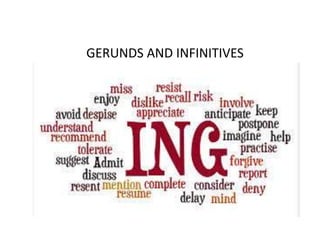
GERUNDS AND INFINITIVES
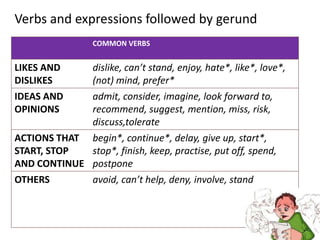
Verbs and expressions followed by gerund
COMMON VERBS

LIKES AND
DISLIKES
IDEAS AND
OPINIONS

dislike, can’t stand, enjoy, hate*, like*, love*,
s
(not) mind, prefer*

admit, consider, imagine, look forward to,
recommend, suggest, mention, miss, risk,
discuss,tolerate
ACTIONS THAT begin*, continue*, delay, give up, start*,
START, STOP
stop*, finish, keep, practise, put off, spend,
AND CONTINUE postpone
OTHERS
avoid, can’t help, deny, involve, stand
Go+-ing form
We sometimes use go+-ing form to talk
about doing sports and other activities.
We usually use go+-ing where there is a
verb for the activity surf-go surfing
Gerunds are used after
prepositions
eg. I’m good at painting.
Gerunds are used as subject or the
object of the sentence
Eg. Smoking is bad for your health.
My job involves doing a lot of hours.
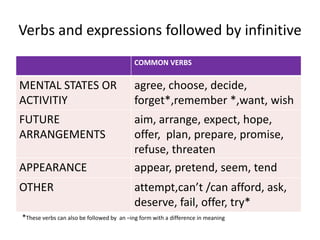
Verbs and expressions followed by infinitive
COMMON VERBS

MENTAL STATES OR
ACTIVITIY

agree, choose, decide,
forget*,remember *,want, wish

FUTURE
ARRANGEMENTS

aim, arrange, expect, hope,
offer, plan, prepare, promise,
refuse, threaten
appear, pretend, seem, tend

APPEARANCE

OTHER
*These verbs can also be followed by

attempt,can’t /can afford, ask,
deserve, fail, offer, try*
an –ing form with a difference in meaning
Verbs followed by infinitive
• After verbs and expressions such as
ask, learn, find out, wonder, want to
know, decide, explain+ a question word
who, what, how, where,etc
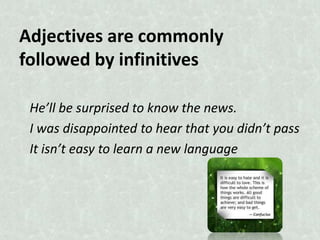
Adjectives are commonly
followed by infinitives
He’ll be surprised to know the news.
I was disappointed to hear that you didn’t pass
It isn’t easy to learn a new language
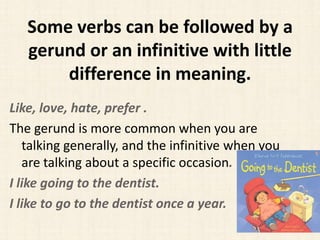
Some verbs can be followed by a
gerund or an infinitive with little
difference in meaning.
Like, love, hate, prefer .
The gerund is more common when you are
talking generally, and the infinitive when you
are talking about a specific occasion.
I like going to the dentist.
I like to go to the dentist once a year.
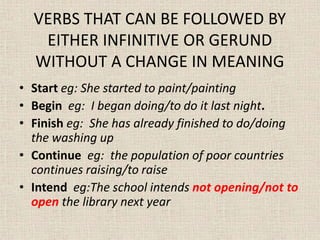
VERBS THAT CAN BE FOLLOWED BY
EITHER INFINITIVE OR GERUND
WITHOUT A CHANGE IN MEANING
• Start eg: She started to paint/painting
• Begin eg: I began doing/to do it last night.
• Finish eg: She has already finished to do/doing
the washing up
• Continue eg: the population of poor countries
continues raising/to raise
• Intend eg:The school intends not opening/not to
open the library next year
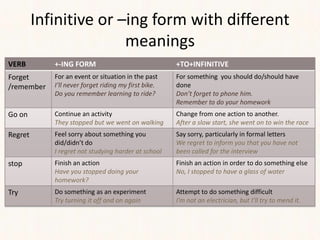
Infinitive or –ing form with different
meanings
VERB

+-ING FORM

+TO+INFINITIVE

Forget
/remember

For an event or situation in the past
I’ll never forget riding my first bike.
Do you remember learning to ride?

For something you should do/should have
done
Don’t forget to phone him.
Remember to do your homework

Go on

Continue an activity
They stopped but we went on walking

Change from one action to another.
After a slow start, she went on to win the race

Regret

Feel sorry about something you
did/didn’t do
I regret not studying harder at school

Say sorry, particularly in formal letters
We regret to inform you that you have not
been called for the interview

stop

Finish an action
Have you stopped doing your
homework?

Finish an action in order to do something else
No, I stopped to have a glass of water

Try

Do something as an experiment
Try turning it off and on again

Attempt to do something difficult
I’m not an electrician, but I’ll try to mend it.
Exercise 1
Exercise 2
Exercise 3

Gerunds and infinitives

  • 1.
  • 2.
    Verbs and expressionsfollowed by gerund COMMON VERBS LIKES AND DISLIKES IDEAS AND OPINIONS dislike, can’t stand, enjoy, hate*, like*, love*, s (not) mind, prefer* admit, consider, imagine, look forward to, recommend, suggest, mention, miss, risk, discuss,tolerate ACTIONS THAT begin*, continue*, delay, give up, start*, START, STOP stop*, finish, keep, practise, put off, spend, AND CONTINUE postpone OTHERS avoid, can’t help, deny, involve, stand
  • 3.
    Go+-ing form We sometimesuse go+-ing form to talk about doing sports and other activities. We usually use go+-ing where there is a verb for the activity surf-go surfing
  • 4.
    Gerunds are usedafter prepositions eg. I’m good at painting. Gerunds are used as subject or the object of the sentence Eg. Smoking is bad for your health. My job involves doing a lot of hours.
  • 5.
    Verbs and expressionsfollowed by infinitive COMMON VERBS MENTAL STATES OR ACTIVITIY agree, choose, decide, forget*,remember *,want, wish FUTURE ARRANGEMENTS aim, arrange, expect, hope, offer, plan, prepare, promise, refuse, threaten appear, pretend, seem, tend APPEARANCE OTHER *These verbs can also be followed by attempt,can’t /can afford, ask, deserve, fail, offer, try* an –ing form with a difference in meaning
  • 6.
    Verbs followed byinfinitive • After verbs and expressions such as ask, learn, find out, wonder, want to know, decide, explain+ a question word who, what, how, where,etc
  • 7.
    Adjectives are commonly followedby infinitives He’ll be surprised to know the news. I was disappointed to hear that you didn’t pass It isn’t easy to learn a new language
  • 8.
    Some verbs canbe followed by a gerund or an infinitive with little difference in meaning. Like, love, hate, prefer . The gerund is more common when you are talking generally, and the infinitive when you are talking about a specific occasion. I like going to the dentist. I like to go to the dentist once a year.
  • 9.
    VERBS THAT CANBE FOLLOWED BY EITHER INFINITIVE OR GERUND WITHOUT A CHANGE IN MEANING • Start eg: She started to paint/painting • Begin eg: I began doing/to do it last night. • Finish eg: She has already finished to do/doing the washing up • Continue eg: the population of poor countries continues raising/to raise • Intend eg:The school intends not opening/not to open the library next year
  • 10.
    Infinitive or –ingform with different meanings VERB +-ING FORM +TO+INFINITIVE Forget /remember For an event or situation in the past I’ll never forget riding my first bike. Do you remember learning to ride? For something you should do/should have done Don’t forget to phone him. Remember to do your homework Go on Continue an activity They stopped but we went on walking Change from one action to another. After a slow start, she went on to win the race Regret Feel sorry about something you did/didn’t do I regret not studying harder at school Say sorry, particularly in formal letters We regret to inform you that you have not been called for the interview stop Finish an action Have you stopped doing your homework? Finish an action in order to do something else No, I stopped to have a glass of water Try Do something as an experiment Try turning it off and on again Attempt to do something difficult I’m not an electrician, but I’ll try to mend it.
  • 11.