Doctor M.Waseem Riaz Sabri
I.U.B, Islamia Bahawalpur
Line of learning contents
• Extrusion
• Why gain popularity
• Extruders types
• Extruders components
• Principle of operation
• Physicochemical changes during extrusion
• Extrusion products
• Extrusion vs pelleting
Why gain
popularity?
Versatility
Cost effective
High
Productivity
Extrusion
Developed in 1870 for sausages
Single screw extruder was evolved
in1930
Twin screw extruder in 1940s
Based
on
Method
of
operation
Cold extruders
Hot extruders
Type of
construction
Single screw
extruders
Twin screw
extruders
Types of
extruders
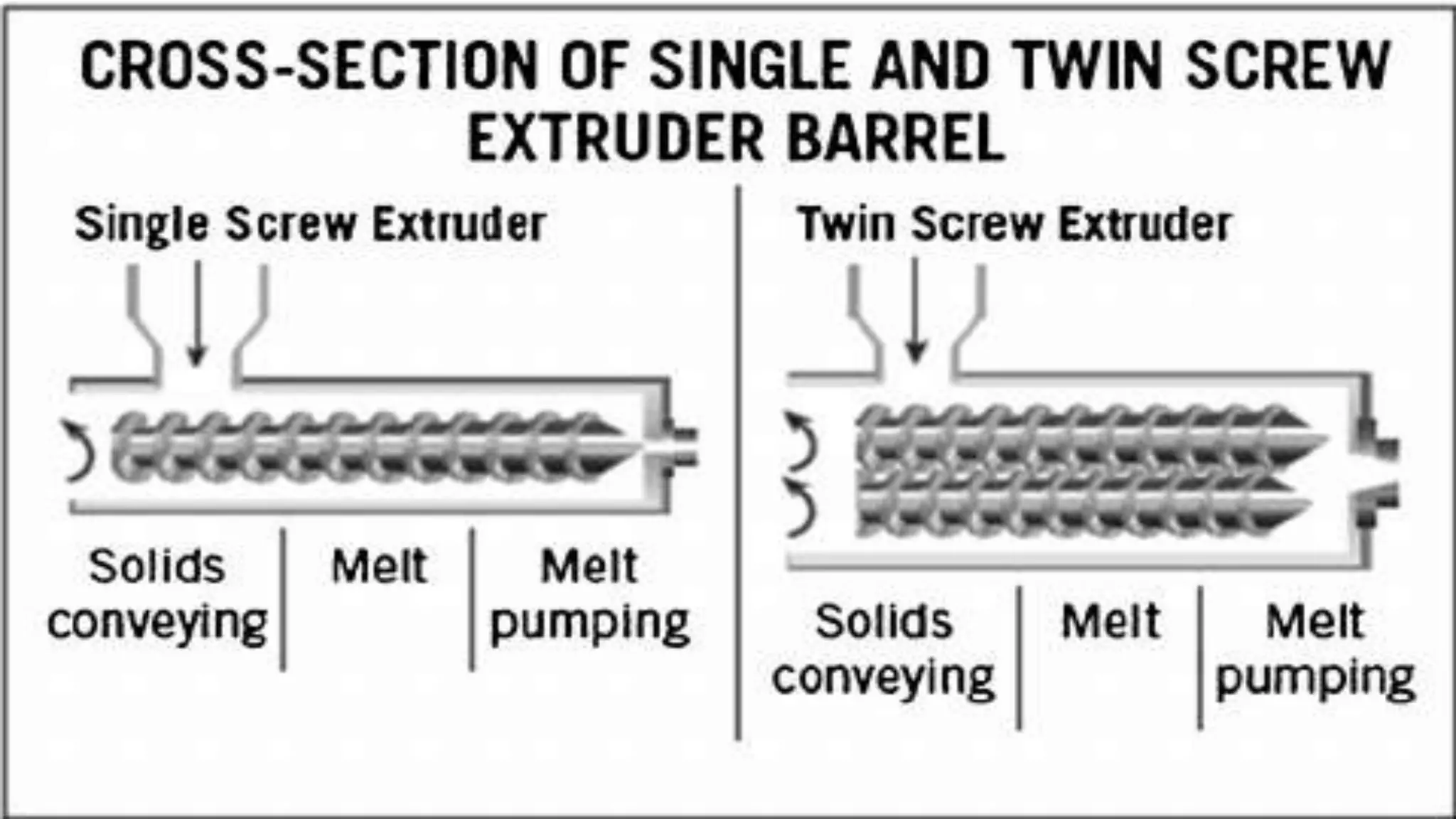
Twin screw types
1) Co-rotating
a) Intermeshing b) Non-intermeshing
2) Counter rotating
a)
Intermeshing
b) Non-
intermeshing
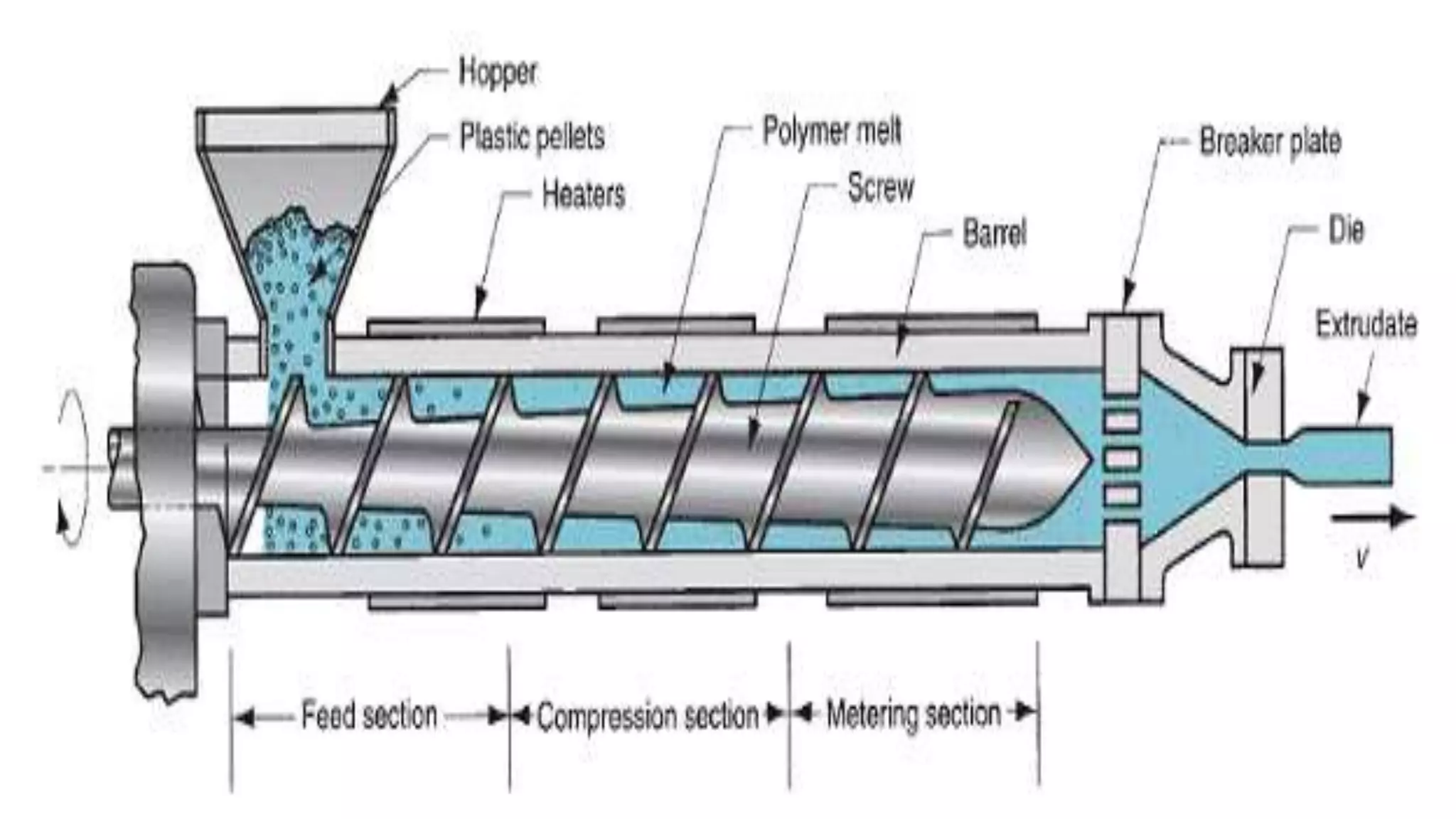
Cylindrical
Rotates in grooved barred made of alloy or stainless steel
Length to diameter ratio 2:1 and 25:1
Typical screw speeds are 150–600 rpm
Compression is achieved by back pressure
Die pressures vary from 2000_103 Pa for low viscosity products
17 000_103 Pa for expanded snack foods
Features of
single screw
extruder
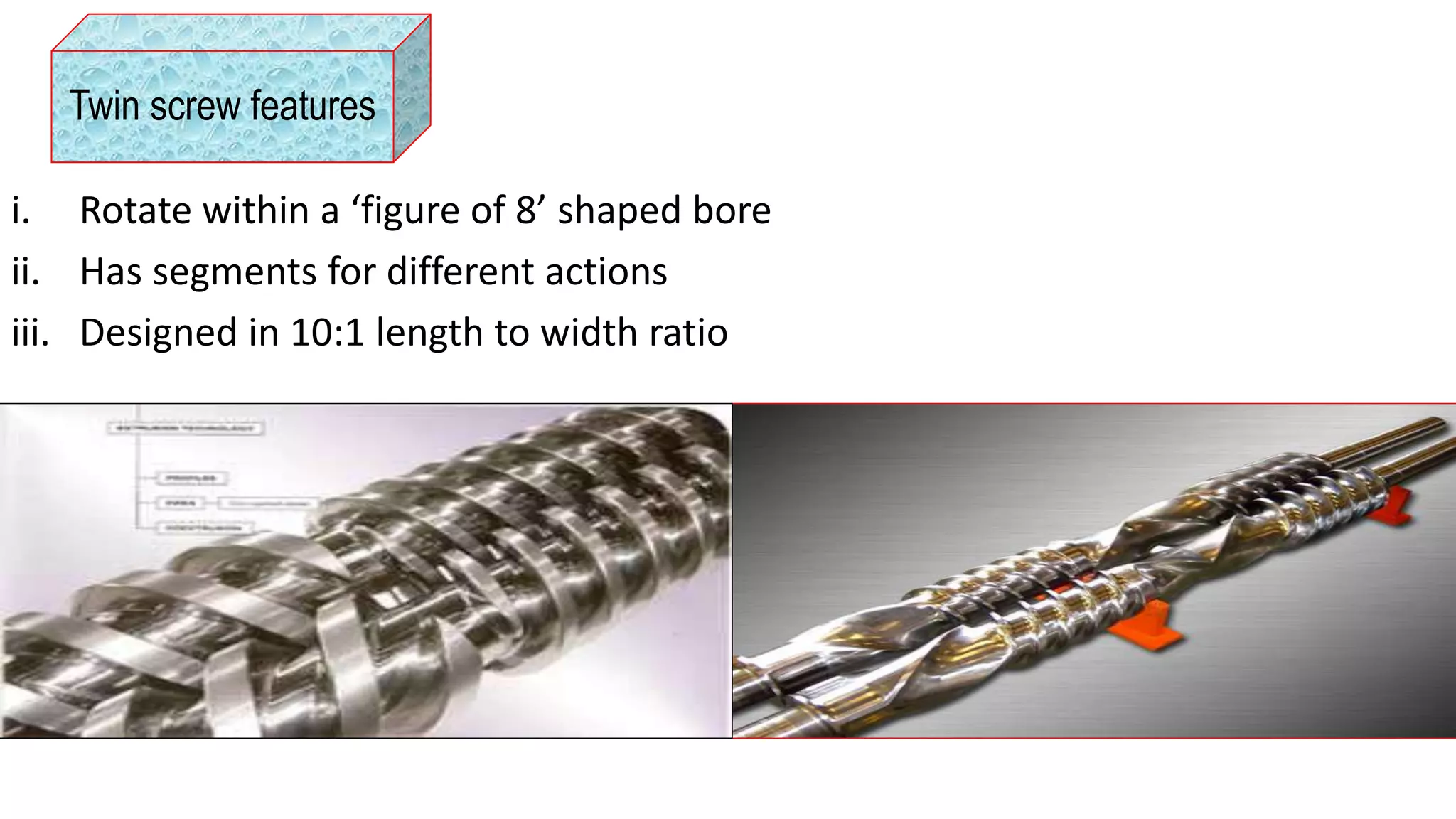
i. Rotate within a ‘figure of 8’ shaped bore
ii. Has segments for different actions
iii. Designed in 10:1 length to width ratio
Twin screw features
Extruders
part
Pre-conditioning
system
Feeding
system
Screw or
worm
Barrel
Die and the
cutting
mechanism
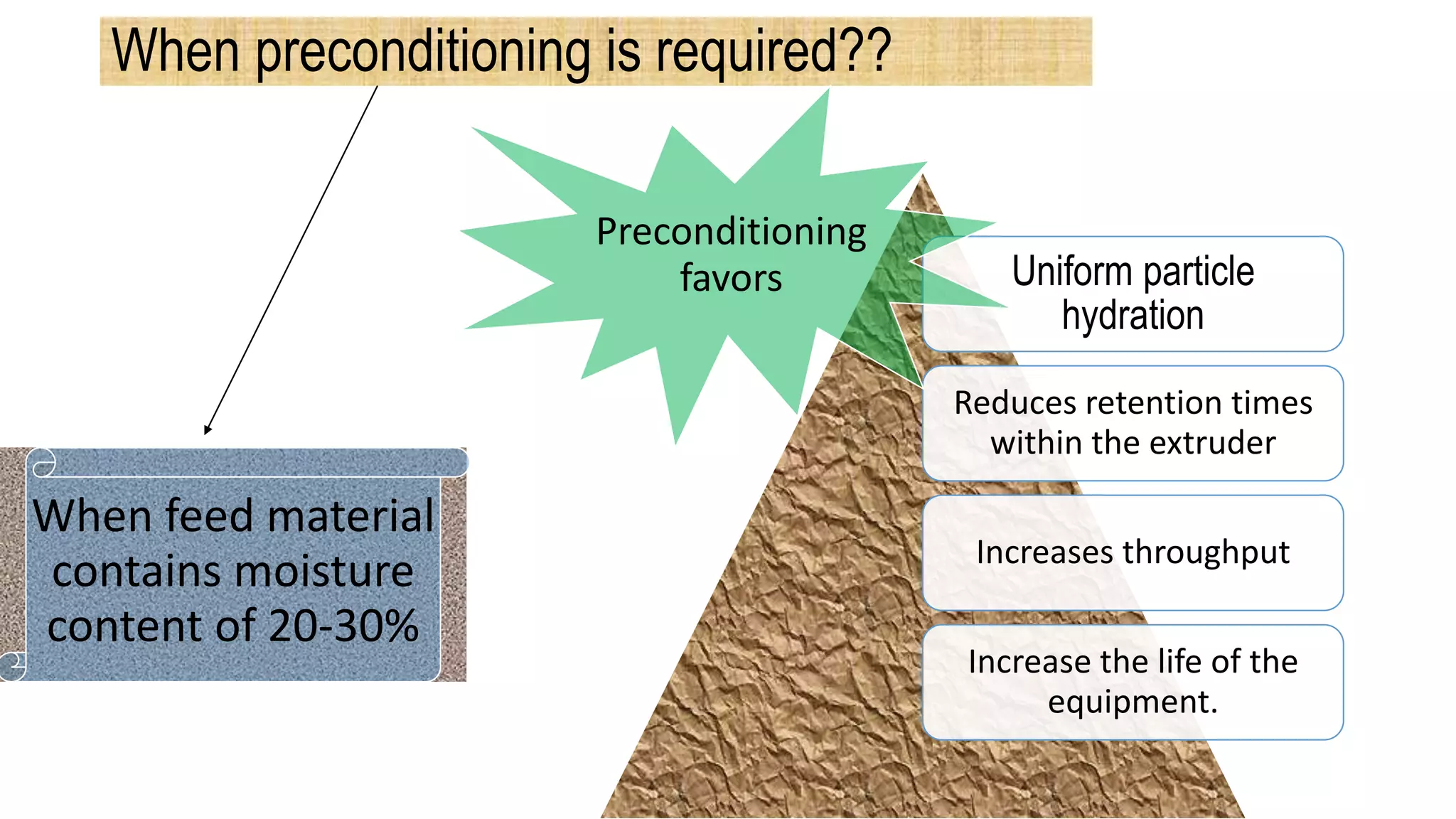
When preconditioning is required??
Uniform particle
hydration
Reduces retention times
within the extruder
Increases throughput
Increase the life of the
equipment.
When feed material
contains moisture
content of 20-30%
Preconditioning
favors
Feeding
system
Guarantee a
constant feed
material
Non-interrupted
feeding of the
raw materialsFor an efficient
Uniform
functioning of
the extrusion
process
Determine
cooking degree
Gelatinization
Starch and
protein
denaturation
Final product
quality
Importance of
screw
Barrel
Its
surrounded
by sleeve
Sleeves can
be solid
But often
permits the
circulation of
steam and
heat
Die
Give shape to the
final product
Increase internal
pressure of extruder
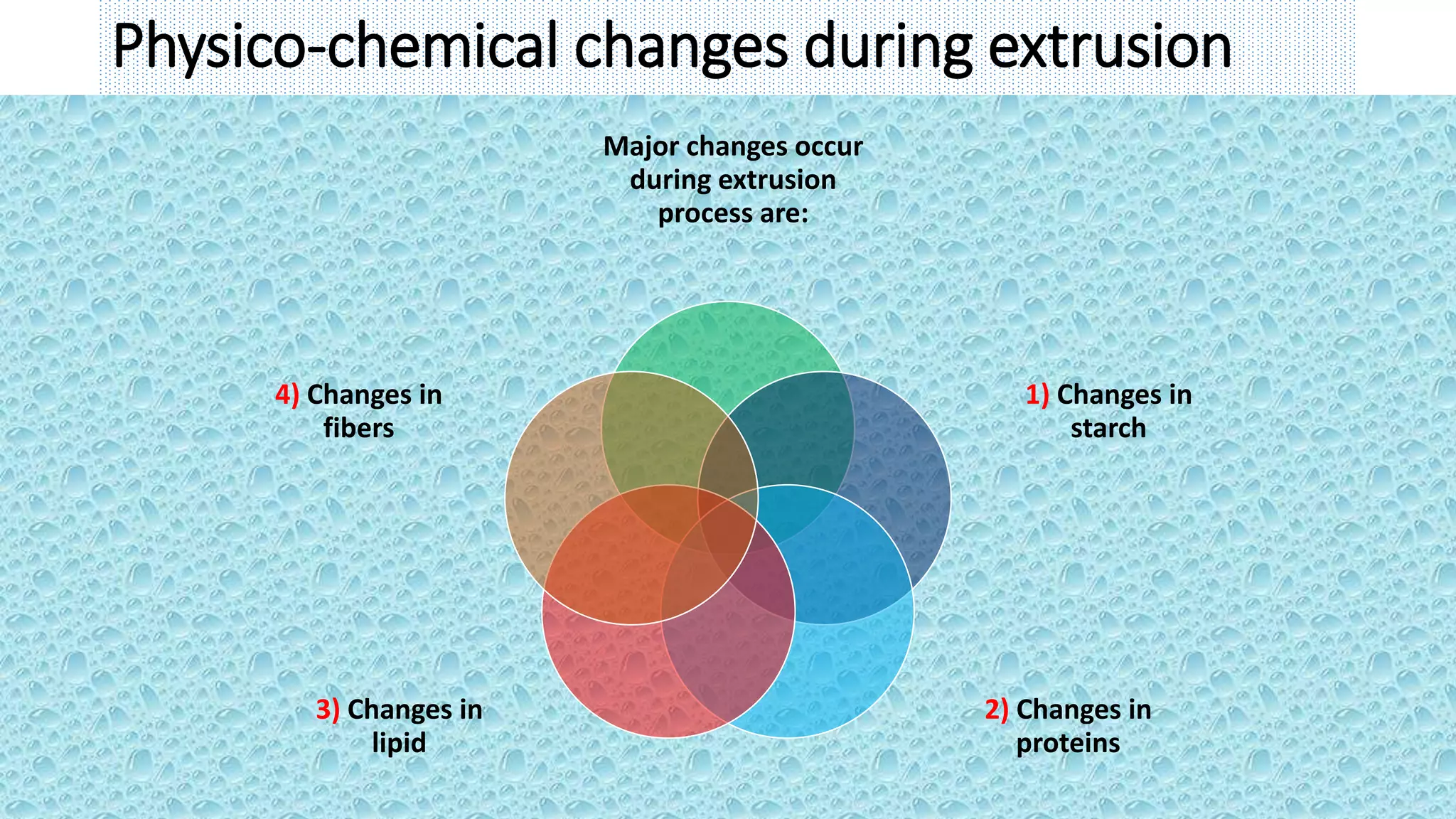
Physico-chemical changes during extrusion
Major changes occur
during extrusion
process are:
1) Changes in
starch
2) Changes in
proteins
3) Changes in
lipid
4) Changes in
fibers
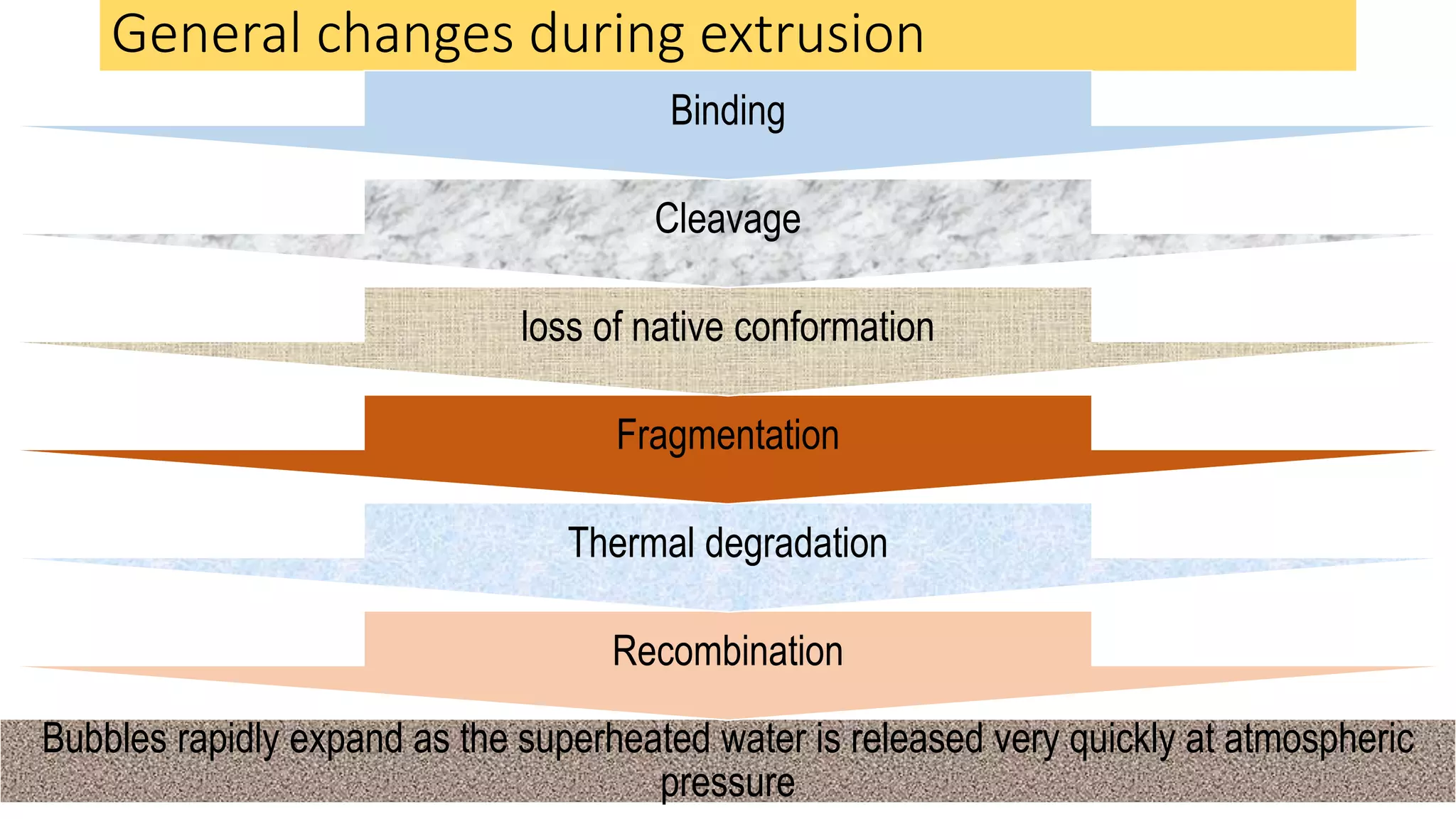
General changes during extrusion
Bubbles rapidly expand as the superheated water is released very quickly at atmospheric
pressure
Recombination
Thermal degradation
Fragmentation
loss of native conformation
Cleavage
Binding
• Changes in starches
• Gelatinization
its define as ‘the irreversible destruction of crystalline order in starch granules so
that the surface of each molecule is accessible to solvents or reactants
Gelatinization
is brought by
Moisture
combination
Heat
Pressure
difference
By PH
modification.
Gelatinization
occurs in 3
phases
Phase 1
Phase 2
Phase 3
slow absorption
of water
immense
absorption
Step by
step
changes
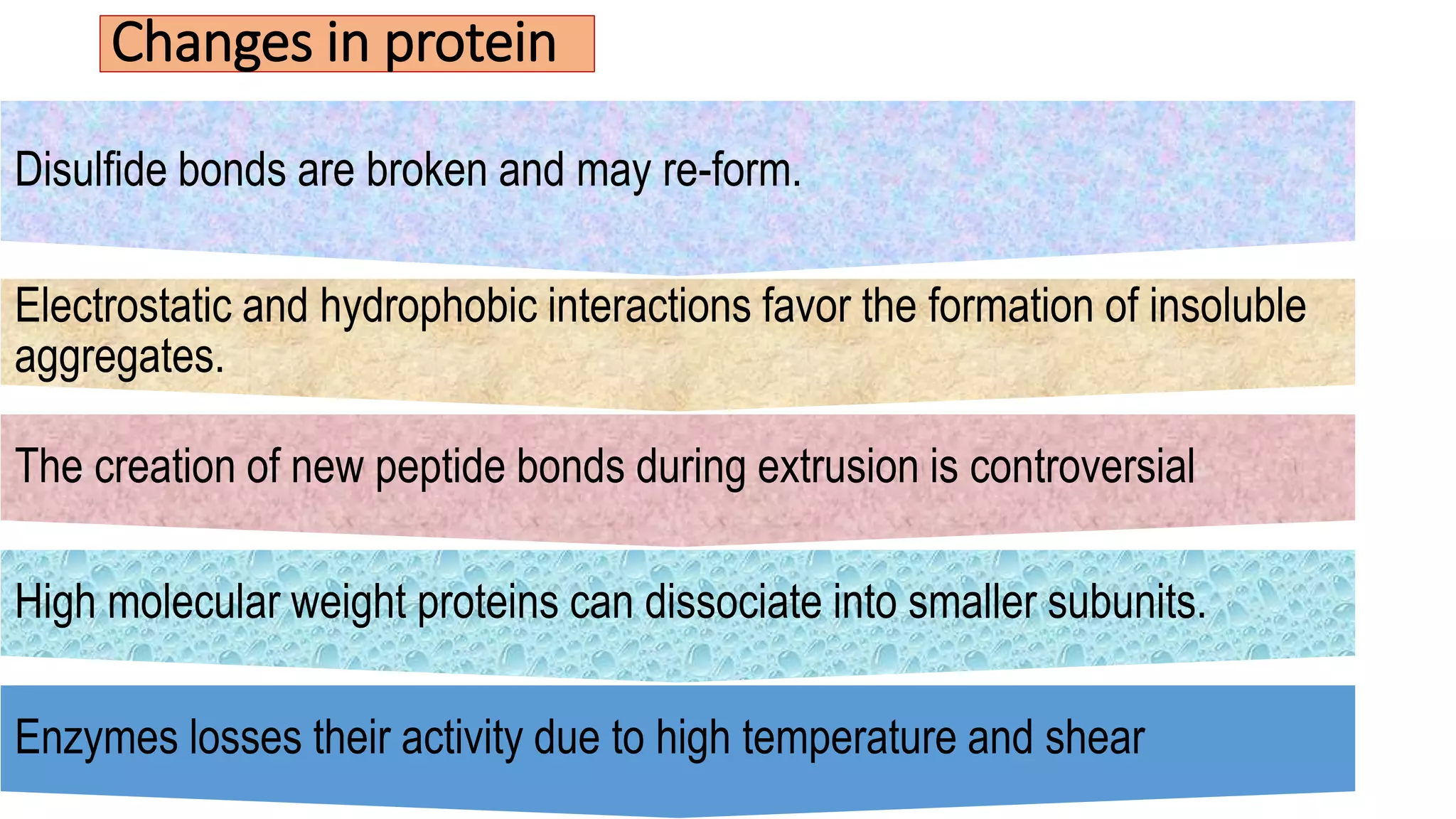
Changes in protein
Disulfide bonds are broken and may re-form.
Electrostatic and hydrophobic interactions favor the formation of insoluble
aggregates.
The creation of new peptide bonds during extrusion is controversial
High molecular weight proteins can dissociate into smaller subunits.
Enzymes losses their activity due to high temperature and shear
Changes
in
lipidsfat
Melts
into small
droplets
Reduces
friction
Mixed in
feed
materials
Redistribution of
insoluble fiber to
soluble
Rupture of covalent
and noncovalent
bonds between
carbohydrates and
proteins associated to
the fiber
Resulting in smaller
molecular
fragments, that
would be more
soluble
Positive effects of extrusion
Effects of
extrusion on
vitamins activity
Cereals
Snacks foods
Pet food AquafeedBaby food
Extrusion products
cereals
• Cooked wheat, barley or oats in the form of porridge ready-to-eat cereal
Flakes Co-extruded
products
Directly
expanded
products
Snacks
Light meals or a partial replacement for a regular meal. Often eaten
while travelling or watching sports and other entertainment
Directly
expanded
snacks
Indirectly
expanded
Snacks
Shape
diversity
Pet food
Filled products
Multicolored
product
Kibbles ,for cat &
dog
Aquafeed
Floating
Sinking
Fast sinking
Single-screw extruders includes:
• Direct expanded corn snacks
• Texturized vegetable protein
• Ready-to-eat breakfast cereal
• Production of full fat soy
• Pet foods
• Floating and sinking aquatic feed
• Production of baby foods
• Rice bran stabilization
• Precooked or thermally modified starches, flours and
grain
• Breading
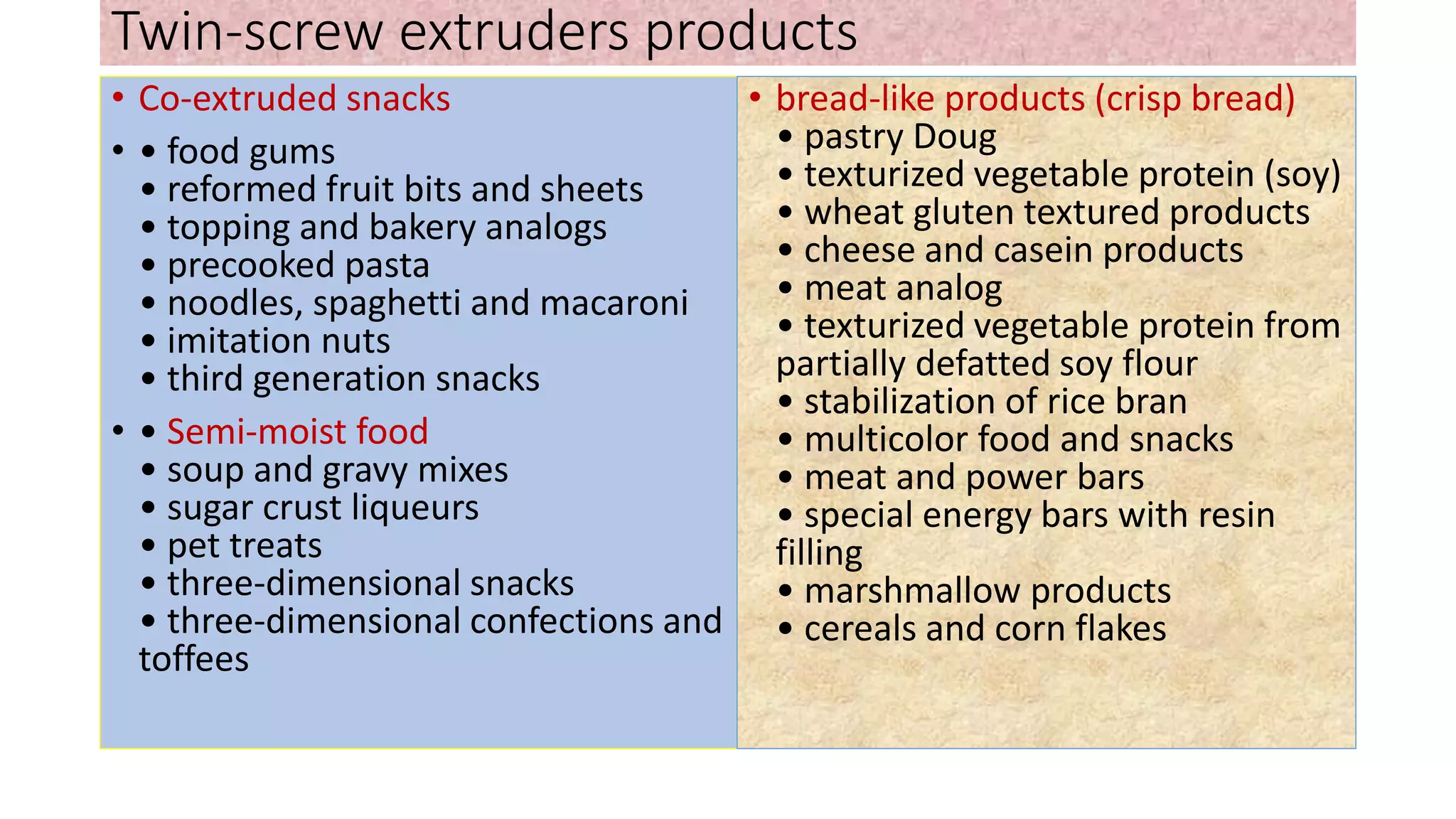
Twin-screw extruders products
• Co-extruded snacks
• • food gums
• reformed fruit bits and sheets
• topping and bakery analogs
• precooked pasta
• noodles, spaghetti and macaroni
• imitation nuts
• third generation snacks
• • Semi-moist food
• soup and gravy mixes
• sugar crust liqueurs
• pet treats
• three-dimensional snacks
• three-dimensional confections and
toffees
• bread-like products (crisp bread)
• pastry Doug
• texturized vegetable protein (soy)
• wheat gluten textured products
• cheese and casein products
• meat analog
• texturized vegetable protein from
partially defatted soy flour
• stabilization of rice bran
• multicolor food and snacks
• meat and power bars
• special energy bars with resin
filling
• marshmallow products
• cereals and corn flakes
Extrusion Pelleting
An extruder will expand the pellet by
gelatinization of the starch, expansion and
increased porosity thus the reduction of the
density.
A pellet mill shapes the pellets by compression
through long land dies thus the pellet is dense.
No need for the addition of a pellet binder in most
cases.
In most cases, a pellet binder is need in the
formula to facilitate the cohesion of the pellet.
Extrusion allows you to control the buoyancy of
the pellet by the degree of starch gelatinization.
Do not control the buoyancy of the pellet
Extrusion allows you to use higher level of oil or
fat without creating much fines
Does not allows to use high levels of oil or fat
Shaping is only one part of extrusion pellet mill is mainly utilized to shape or produce a
pellet of different shapes.

xtrusion, Extruders types,Changes during extrusion, difference b|w Extrusion and pelleting

  • 1.
    Doctor M.Waseem RiazSabri I.U.B, Islamia Bahawalpur
  • 2.
    Line of learningcontents • Extrusion • Why gain popularity • Extruders types • Extruders components • Principle of operation • Physicochemical changes during extrusion • Extrusion products • Extrusion vs pelleting
  • 5.
  • 6.
    Extrusion Developed in 1870for sausages Single screw extruder was evolved in1930 Twin screw extruder in 1940s
  • 7.
    Based on Method of operation Cold extruders Hot extruders Typeof construction Single screw extruders Twin screw extruders Types of extruders
  • 9.
    Twin screw types 1)Co-rotating a) Intermeshing b) Non-intermeshing 2) Counter rotating a) Intermeshing b) Non- intermeshing
  • 13.
    Cylindrical Rotates in groovedbarred made of alloy or stainless steel Length to diameter ratio 2:1 and 25:1 Typical screw speeds are 150–600 rpm Compression is achieved by back pressure Die pressures vary from 2000_103 Pa for low viscosity products 17 000_103 Pa for expanded snack foods Features of single screw extruder
  • 14.
    i. Rotate withina ‘figure of 8’ shaped bore ii. Has segments for different actions iii. Designed in 10:1 length to width ratio Twin screw features
  • 17.
  • 20.
    When preconditioning isrequired?? Uniform particle hydration Reduces retention times within the extruder Increases throughput Increase the life of the equipment. When feed material contains moisture content of 20-30% Preconditioning favors
  • 21.
    Feeding system Guarantee a constant feed material Non-interrupted feedingof the raw materialsFor an efficient Uniform functioning of the extrusion process
  • 22.
  • 23.
    Barrel Its surrounded by sleeve Sleeves can besolid But often permits the circulation of steam and heat
  • 24.
    Die Give shape tothe final product Increase internal pressure of extruder
  • 25.
    Physico-chemical changes duringextrusion Major changes occur during extrusion process are: 1) Changes in starch 2) Changes in proteins 3) Changes in lipid 4) Changes in fibers
  • 26.
    General changes duringextrusion Bubbles rapidly expand as the superheated water is released very quickly at atmospheric pressure Recombination Thermal degradation Fragmentation loss of native conformation Cleavage Binding
  • 27.
    • Changes instarches • Gelatinization its define as ‘the irreversible destruction of crystalline order in starch granules so that the surface of each molecule is accessible to solvents or reactants
  • 28.
  • 29.
    Gelatinization occurs in 3 phases Phase1 Phase 2 Phase 3 slow absorption of water immense absorption Step by step changes
  • 31.
    Changes in protein Disulfidebonds are broken and may re-form. Electrostatic and hydrophobic interactions favor the formation of insoluble aggregates. The creation of new peptide bonds during extrusion is controversial High molecular weight proteins can dissociate into smaller subunits. Enzymes losses their activity due to high temperature and shear
  • 32.
  • 33.
    Redistribution of insoluble fiberto soluble Rupture of covalent and noncovalent bonds between carbohydrates and proteins associated to the fiber Resulting in smaller molecular fragments, that would be more soluble
  • 34.
  • 37.
  • 39.
    Cereals Snacks foods Pet foodAquafeedBaby food Extrusion products
  • 40.
    cereals • Cooked wheat,barley or oats in the form of porridge ready-to-eat cereal Flakes Co-extruded products Directly expanded products
  • 41.
    Snacks Light meals ora partial replacement for a regular meal. Often eaten while travelling or watching sports and other entertainment Directly expanded snacks Indirectly expanded Snacks Shape diversity
  • 43.
  • 44.
  • 47.
    Single-screw extruders includes: •Direct expanded corn snacks • Texturized vegetable protein • Ready-to-eat breakfast cereal • Production of full fat soy • Pet foods • Floating and sinking aquatic feed • Production of baby foods • Rice bran stabilization • Precooked or thermally modified starches, flours and grain • Breading
  • 48.
    Twin-screw extruders products •Co-extruded snacks • • food gums • reformed fruit bits and sheets • topping and bakery analogs • precooked pasta • noodles, spaghetti and macaroni • imitation nuts • third generation snacks • • Semi-moist food • soup and gravy mixes • sugar crust liqueurs • pet treats • three-dimensional snacks • three-dimensional confections and toffees • bread-like products (crisp bread) • pastry Doug • texturized vegetable protein (soy) • wheat gluten textured products • cheese and casein products • meat analog • texturized vegetable protein from partially defatted soy flour • stabilization of rice bran • multicolor food and snacks • meat and power bars • special energy bars with resin filling • marshmallow products • cereals and corn flakes
  • 49.
    Extrusion Pelleting An extruderwill expand the pellet by gelatinization of the starch, expansion and increased porosity thus the reduction of the density. A pellet mill shapes the pellets by compression through long land dies thus the pellet is dense. No need for the addition of a pellet binder in most cases. In most cases, a pellet binder is need in the formula to facilitate the cohesion of the pellet. Extrusion allows you to control the buoyancy of the pellet by the degree of starch gelatinization. Do not control the buoyancy of the pellet Extrusion allows you to use higher level of oil or fat without creating much fines Does not allows to use high levels of oil or fat Shaping is only one part of extrusion pellet mill is mainly utilized to shape or produce a pellet of different shapes.

Editor's Notes

  • #17 rigidity= the capacity of a solid object to resist its deformation
  • #19 Puffing… forceful exhaustion of air or passing of air
  • #21 Throughput = rate of production