BY,
R.KEERTHANA
PRIYA,
BTM 11008.
Coating in the food industry is the application of a
layer of liquid and/or solids onto a product.
The operation essentially relies on mechanical
energy and physical principles.
It consists mostly in setting the product particles in
motion and simultaneously applying the coating
ingredient in a certain pattern to expose one to the
other.
The snack food industry
includes everything from chips
to confections ,from salty to
sweet.
Most of the success of snack
food industry is due to the
coating that are applied.
Adhesion is the tendency of certain dissimilar
substance to cling together.
For fried snacks ,seasonings are typically
powder, no tack agent is needed for adhesion.
The dry products are sprayed with oil, then the
seasonings are applied and adheres to the oil.
Other tack agents includes water ,sugar water and
hydrocolloids, for these solutions drying is
required.
Exception-fried corn chips, they require secondary
spraying.
Coating ingredients generally used are
Salt
Other Flavors
The most common snack food seasoning is salt, but
even with other seasonings ,salt is added to accentuate
the flavor.
The snack food association recommends a salt level
of 1.75% plus or minus 0.25% for salted potato chips.
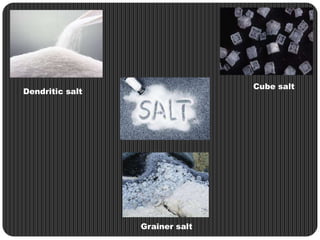
Cube , dendritic and grainer salt are used.
Cube salt

Dendritic salt

Grainer salt
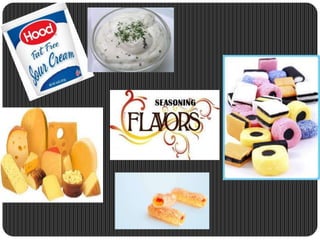
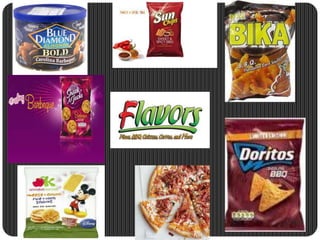
The most popular flavors for salty snacks are cheese,
BBQ,sour cream and onion.
Typical seasoning levels are 8-10%,depending on the
seasoning and snacks base.
The flavor base frequently combines cheese ,tomato,
onion and garlic.
Monosodium glutamate, yeast extracts, disodium
inosinate and disodium guanylate can be added to
accentuate savory , salty flavors.
Botanical extracts
Maltol
Fillers
Anticaking agent
Size , shape , taste ,adherence and flow ability
of powder seasoning decides the quality of the coating.
If the powder is cohesive or ambient humidity gets too
high , spices clump, and uniformity in application
suffers.
Many flavor powders are highly hygroscopic and
agglomerate easily, thus anti-caking agent is important
to keep the powders free flowing.
Small powders are more cohesive, thus more anticaking agent required.
Larger powders are more unlikely distributed than small
powders.
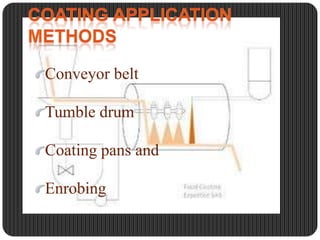
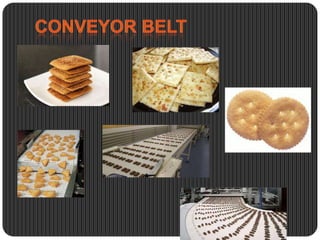
Conveyor belt
Tumble drum

Coating pans and
Enrobing
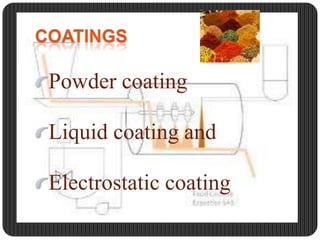
Powder coating
Liquid coating and
Electrostatic coating
The seasoning are dispensed over the belt , one side of the
snack only get coated, unless there is a device to flip the
pieces over.
In some foods such as potato chips, the chips are layered
two or three layers deep, so that more seasonings lands on
the top layers.
One study found that adherence dropped from 60% on the
top layers to 30% on the middle layer and 10% on the
bottom layer.
Thus, a conveyor belt system may not produce snacks
that are as evenly coated as other methods, but requires
much less space.
Even coating on both the sides.
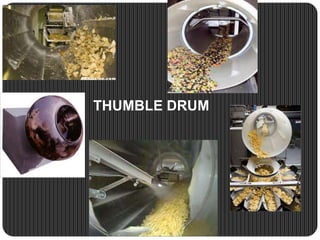
Thumble drums are horizontal cylinders with one side
raised so that product flows from one end to the other.
Flights are provided.
Spray nozzles and dispensing tubes can be installed
inside the drum, so that the snack may be sprayed with oil in
one section , then coated with powder in other section.
THUMBLE DRUM
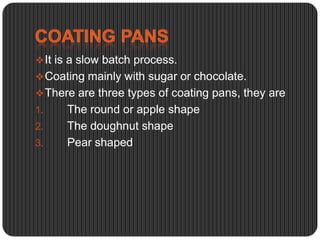
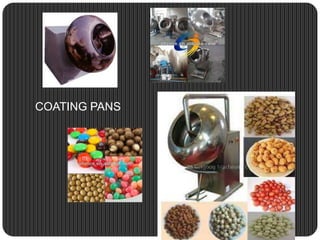
 It is a slow batch process.
 Coating mainly with sugar or chocolate.
 There are three types of coating pans, they are
1.
2.

3.

The round or apple shape
The doughnut shape
Pear shaped
COATING PANS
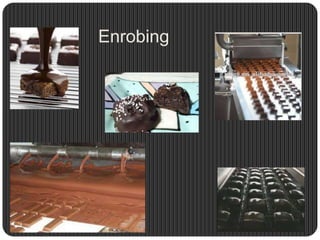
Enrobers works by dipping, Pouring or spraying a liquid coating
onto a core material.
Over thickening of enrobing material is prevented or controlled
by air knives, this is followed by shaker to remove further excess
coating.

Pre-bottomer for cooling.
For smoother coating ,they are coated with hydrocolloidal
solution i.e., when dried it gives glossy and smoothie flavour

Eg: Gumarabic
Enrobing
Powder coating is usually by three methods
1.
Gravity feed
2.
Pneumatically conveyed by forced air and
3.
Centrifugally applied
 Oil are aplied to the surface of the products,along

with other flavors substance can also be added
 Usually 80% sugar solution are sprayed.
 It is mainly meant for its adhesion ability.
 Powder is suspended in the oil in the ratio of
80:20
The basic of electrostatic coating is that by charging the
seasoning powder as it is dispensed,it is attracted to the
product,which grounded through contact with the
conveyor belt.
It reduces the seasoning fall off ,eventual coating and
reduce the oil content by 20%.
Eg: Seasoning of corn and tortilla chips.
Give an attractive appearance.
Define product shape.
Improve taste.
Increases the shelf life.
Protect ingredients.
Prevent migration of core constituents &
Create texture or maintain structural integrity.
 Hand book of food science ,Technology and

Engineering-WH yuhi
169 chapter coating snack foods
-Sheryl Barringer
Deparment of food science and
technology,The Ohio State University.
Coating of snack

Coating of snack

  • 1.
  • 2.
    Coating in thefood industry is the application of a layer of liquid and/or solids onto a product. The operation essentially relies on mechanical energy and physical principles. It consists mostly in setting the product particles in motion and simultaneously applying the coating ingredient in a certain pattern to expose one to the other.
  • 3.
    The snack foodindustry includes everything from chips to confections ,from salty to sweet. Most of the success of snack food industry is due to the coating that are applied.
  • 4.
    Adhesion is thetendency of certain dissimilar substance to cling together. For fried snacks ,seasonings are typically powder, no tack agent is needed for adhesion. The dry products are sprayed with oil, then the seasonings are applied and adheres to the oil. Other tack agents includes water ,sugar water and hydrocolloids, for these solutions drying is required. Exception-fried corn chips, they require secondary spraying.
  • 5.
    Coating ingredients generallyused are Salt Other Flavors
  • 6.
    The most commonsnack food seasoning is salt, but even with other seasonings ,salt is added to accentuate the flavor. The snack food association recommends a salt level of 1.75% plus or minus 0.25% for salted potato chips. Cube , dendritic and grainer salt are used.
  • 7.
  • 8.
    The most popularflavors for salty snacks are cheese, BBQ,sour cream and onion. Typical seasoning levels are 8-10%,depending on the seasoning and snacks base. The flavor base frequently combines cheese ,tomato, onion and garlic. Monosodium glutamate, yeast extracts, disodium inosinate and disodium guanylate can be added to accentuate savory , salty flavors. Botanical extracts Maltol Fillers Anticaking agent
  • 11.
    Size , shape, taste ,adherence and flow ability of powder seasoning decides the quality of the coating. If the powder is cohesive or ambient humidity gets too high , spices clump, and uniformity in application suffers. Many flavor powders are highly hygroscopic and agglomerate easily, thus anti-caking agent is important to keep the powders free flowing. Small powders are more cohesive, thus more anticaking agent required. Larger powders are more unlikely distributed than small powders.
  • 12.
  • 13.
    Powder coating Liquid coatingand Electrostatic coating
  • 14.
    The seasoning aredispensed over the belt , one side of the snack only get coated, unless there is a device to flip the pieces over. In some foods such as potato chips, the chips are layered two or three layers deep, so that more seasonings lands on the top layers. One study found that adherence dropped from 60% on the top layers to 30% on the middle layer and 10% on the bottom layer. Thus, a conveyor belt system may not produce snacks that are as evenly coated as other methods, but requires much less space.
  • 16.
    Even coating onboth the sides. Thumble drums are horizontal cylinders with one side raised so that product flows from one end to the other. Flights are provided. Spray nozzles and dispensing tubes can be installed inside the drum, so that the snack may be sprayed with oil in one section , then coated with powder in other section.
  • 17.
  • 18.
     It isa slow batch process.  Coating mainly with sugar or chocolate.  There are three types of coating pans, they are 1. 2. 3. The round or apple shape The doughnut shape Pear shaped
  • 19.
  • 20.
    Enrobers works bydipping, Pouring or spraying a liquid coating onto a core material. Over thickening of enrobing material is prevented or controlled by air knives, this is followed by shaker to remove further excess coating. Pre-bottomer for cooling. For smoother coating ,they are coated with hydrocolloidal solution i.e., when dried it gives glossy and smoothie flavour Eg: Gumarabic
  • 21.
  • 22.
    Powder coating isusually by three methods 1. Gravity feed 2. Pneumatically conveyed by forced air and 3. Centrifugally applied
  • 23.
     Oil areaplied to the surface of the products,along with other flavors substance can also be added  Usually 80% sugar solution are sprayed.  It is mainly meant for its adhesion ability.  Powder is suspended in the oil in the ratio of 80:20
  • 24.
    The basic ofelectrostatic coating is that by charging the seasoning powder as it is dispensed,it is attracted to the product,which grounded through contact with the conveyor belt. It reduces the seasoning fall off ,eventual coating and reduce the oil content by 20%. Eg: Seasoning of corn and tortilla chips.
  • 25.
    Give an attractiveappearance. Define product shape. Improve taste. Increases the shelf life. Protect ingredients. Prevent migration of core constituents & Create texture or maintain structural integrity.
  • 26.
     Hand bookof food science ,Technology and Engineering-WH yuhi 169 chapter coating snack foods -Sheryl Barringer Deparment of food science and technology,The Ohio State University.