NON MIGRATORY
BIOACTIVE POLYMERS
SUBMITTED TO: SUBMITTED BY:
Ms. NEHA SINGH KUSH VERMA
15/PFT/001
INTRODUCTION
• Non-migratory bioactive packaging is a novel
form of active packaging.
• It gives desirable biological response to food
without the active component migrating from
the packaging into the food.
• Bioactive peptides were covalently linked to the
free terminus of the PEG chains.
• Antibacterial activity was found for films treated
with antimicrobial peptide.
• No activity was found for lactase attached to PE
films.
• NMBP possess biological activity without the
active components migrating from the polymer
to the substrate.
• Example: inhibition of microbial growth.
Types of Non-Migratory
Bioactive Polymers
Chitosan
a) Possesses broad spectrum antimicrobial
activity.
b) Commercially available as an antifungal
coating for fresh fruit.
c) Chitosan is the deacetylated form of chitin.
d) Effective against gram-positive and gram-
negative bacteria.
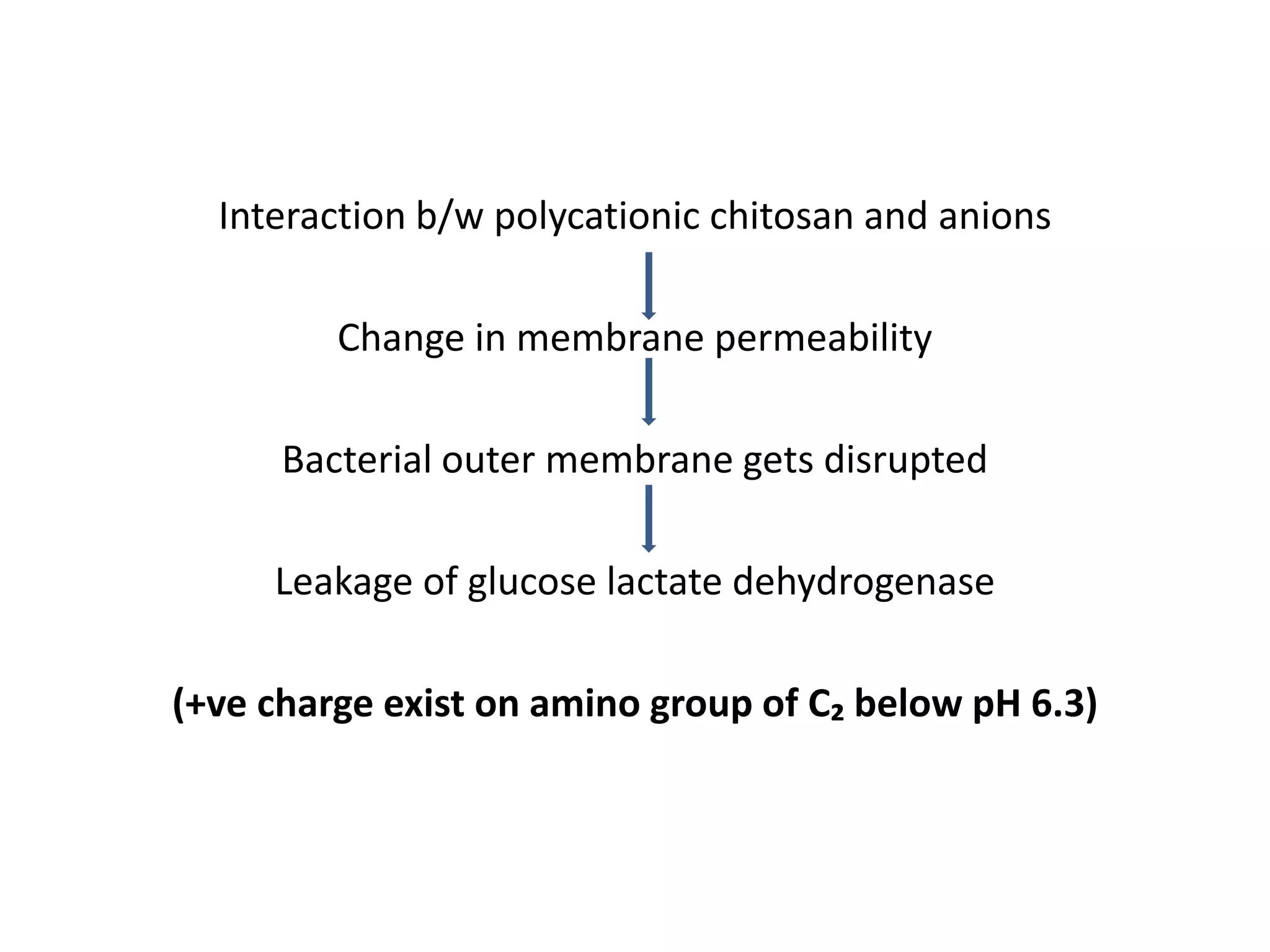
Interaction b/w polycationic chitosan and anions
Change in membrane permeability
Bacterial outer membrane gets disrupted
Leakage of glucose lactate dehydrogenase
(+ve charge exist on amino group of C₂ below pH 6.3)
UV irradiated nylon
a) The antimicrobial effect is strongly dependent on
the UV wavelength used, the temperature and
the composition.
b) Example- poly-L-lysine
c) Interaction with negatively charged microbial
membranes leading to membrane disruption.
PEG It posses antimicrobial activity only at
high concentrations. It reduces the adhesion
of proteins and cells to polymers.
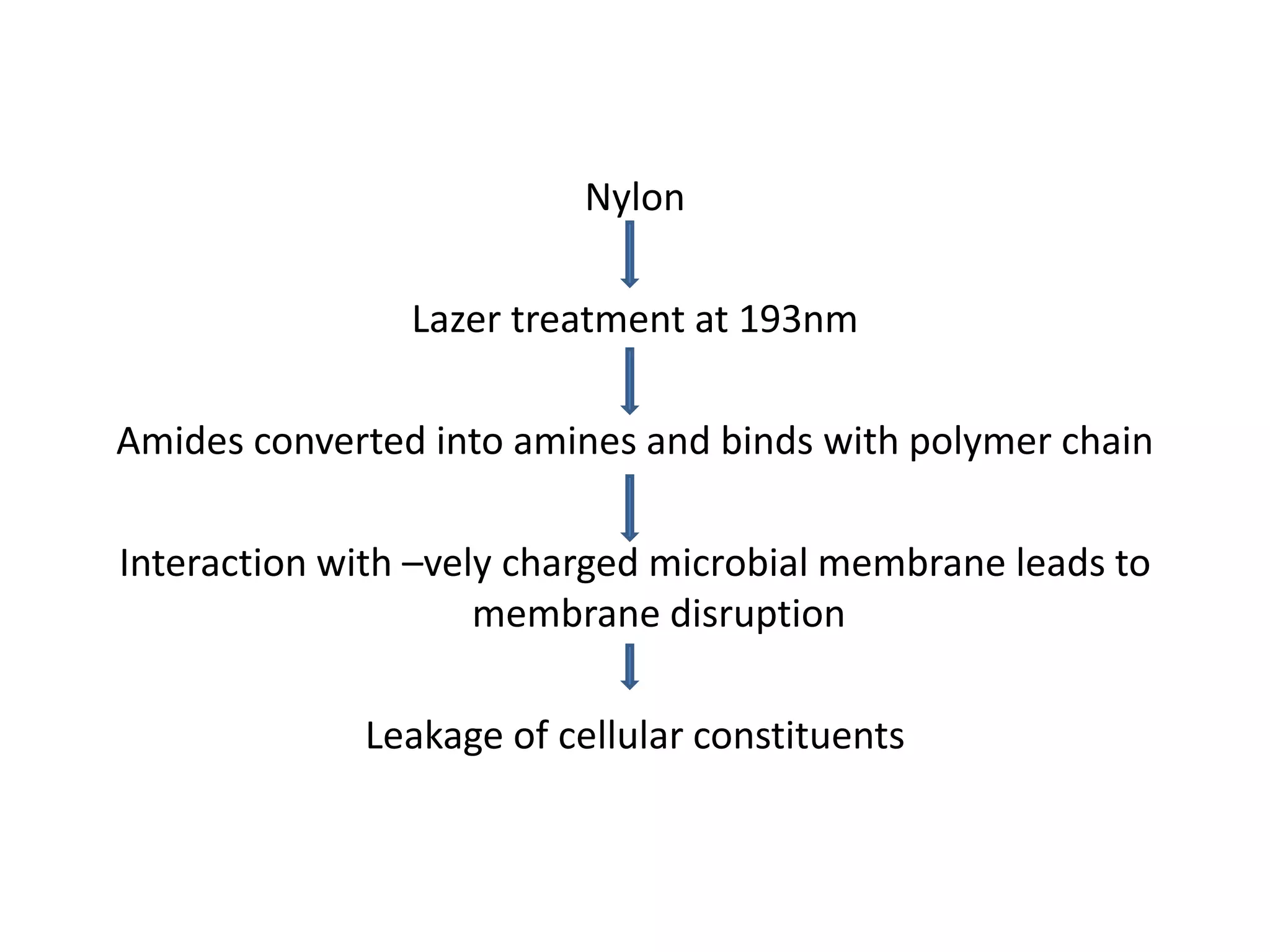
Nylon
Lazer treatment at 193nm
Amides converted into amines and binds with polymer chain
Interaction with –vely charged microbial membrane leads to
membrane disruption
Leakage of cellular constituents
APPLICATION
• In-package processing.
• Antimicrobial packaging .
• Shelf life extension.
• Intelligent Packaging.
ADVANTAGES
1. Technical benefits
a) Improved stability and conc. of bioactive
compounds and its effect at a specific area.
b) Immobilization of bioactive compounds.
c) Conc. Of bioactive molecules are higher on
the surface of polymer and headspace.
2. Regulatory advantages
a) A/C to US regulation that there is negligible
migration into a food product is not classified
as a food additive.
b) NMBP don’t need to meet food additive
regulation.
3. Marketting aspects
a) It incorporates non migratory antimicrobials
in packaging material.
b) It provide minimally processed, preservative
free food products.
c) More demand.
4. Food processor’s perspective
a) More stable pdt. with longer shelf life.
b) Using lactase-active packaging, milk could be
packed off a normal production run and a
lactose reduced product obtained after a
short period of storage. Eg- lactose free milk.
c) It has high cost and low sales volume.
THANK YOU

Non Migratory Bioactive Polymer

  • 1.
    NON MIGRATORY BIOACTIVE POLYMERS SUBMITTEDTO: SUBMITTED BY: Ms. NEHA SINGH KUSH VERMA 15/PFT/001
  • 2.
    INTRODUCTION • Non-migratory bioactivepackaging is a novel form of active packaging. • It gives desirable biological response to food without the active component migrating from the packaging into the food.
  • 3.
    • Bioactive peptideswere covalently linked to the free terminus of the PEG chains. • Antibacterial activity was found for films treated with antimicrobial peptide. • No activity was found for lactase attached to PE films. • NMBP possess biological activity without the active components migrating from the polymer to the substrate. • Example: inhibition of microbial growth.
  • 4.
    Types of Non-Migratory BioactivePolymers Chitosan a) Possesses broad spectrum antimicrobial activity. b) Commercially available as an antifungal coating for fresh fruit. c) Chitosan is the deacetylated form of chitin. d) Effective against gram-positive and gram- negative bacteria.
  • 5.
    Interaction b/w polycationicchitosan and anions Change in membrane permeability Bacterial outer membrane gets disrupted Leakage of glucose lactate dehydrogenase (+ve charge exist on amino group of C₂ below pH 6.3)
  • 6.
    UV irradiated nylon a)The antimicrobial effect is strongly dependent on the UV wavelength used, the temperature and the composition. b) Example- poly-L-lysine c) Interaction with negatively charged microbial membranes leading to membrane disruption. PEG It posses antimicrobial activity only at high concentrations. It reduces the adhesion of proteins and cells to polymers.
  • 7.
    Nylon Lazer treatment at193nm Amides converted into amines and binds with polymer chain Interaction with –vely charged microbial membrane leads to membrane disruption Leakage of cellular constituents
  • 8.
    APPLICATION • In-package processing. •Antimicrobial packaging . • Shelf life extension. • Intelligent Packaging.
  • 9.
    ADVANTAGES 1. Technical benefits a)Improved stability and conc. of bioactive compounds and its effect at a specific area. b) Immobilization of bioactive compounds. c) Conc. Of bioactive molecules are higher on the surface of polymer and headspace.
  • 10.
    2. Regulatory advantages a)A/C to US regulation that there is negligible migration into a food product is not classified as a food additive. b) NMBP don’t need to meet food additive regulation.
  • 11.
    3. Marketting aspects a)It incorporates non migratory antimicrobials in packaging material. b) It provide minimally processed, preservative free food products. c) More demand.
  • 12.
    4. Food processor’sperspective a) More stable pdt. with longer shelf life. b) Using lactase-active packaging, milk could be packed off a normal production run and a lactose reduced product obtained after a short period of storage. Eg- lactose free milk. c) It has high cost and low sales volume.
  • 13.