(Doctoral Seminar-1)
Extrusion Technology
in
Food Processing
PRESENTED BY: GAURAV PRATAP SINGH (Ph.D.(PFT-22027) ,FT)
(Moscicki et al., 2013)
History
 Extruders were developed in the 1870s for the production of sausage.
 Single-screw extruder was evolved during the 1930s and was used to mix
semolina flour and water to make pasta products.
 It was also used in the process of making ready-to eat (RTE) cereals to shape hot,
precooked dough.
 The first patent on an application of twin-screw extrusion technology was filed
in the mid- 1950s.
 Since then the application of extrusion technology in food processing has
advanced, widened and grown dramatically (Choton et al., 2020).
Introduction
 Extrusion may be defined as a process by which moistened, starchy and proteinaceous food materials are
plasticized through a die by a combination of moisture, pressure, heat and mechanical shear (Maurya and
Said, 2014).
 Extrusion is a continuous process in which few unit operations like mixing, shearing, heating, pumping,
forming, and sizing combines uniquely to form the products (Agarwal and Chauhan, 2019).
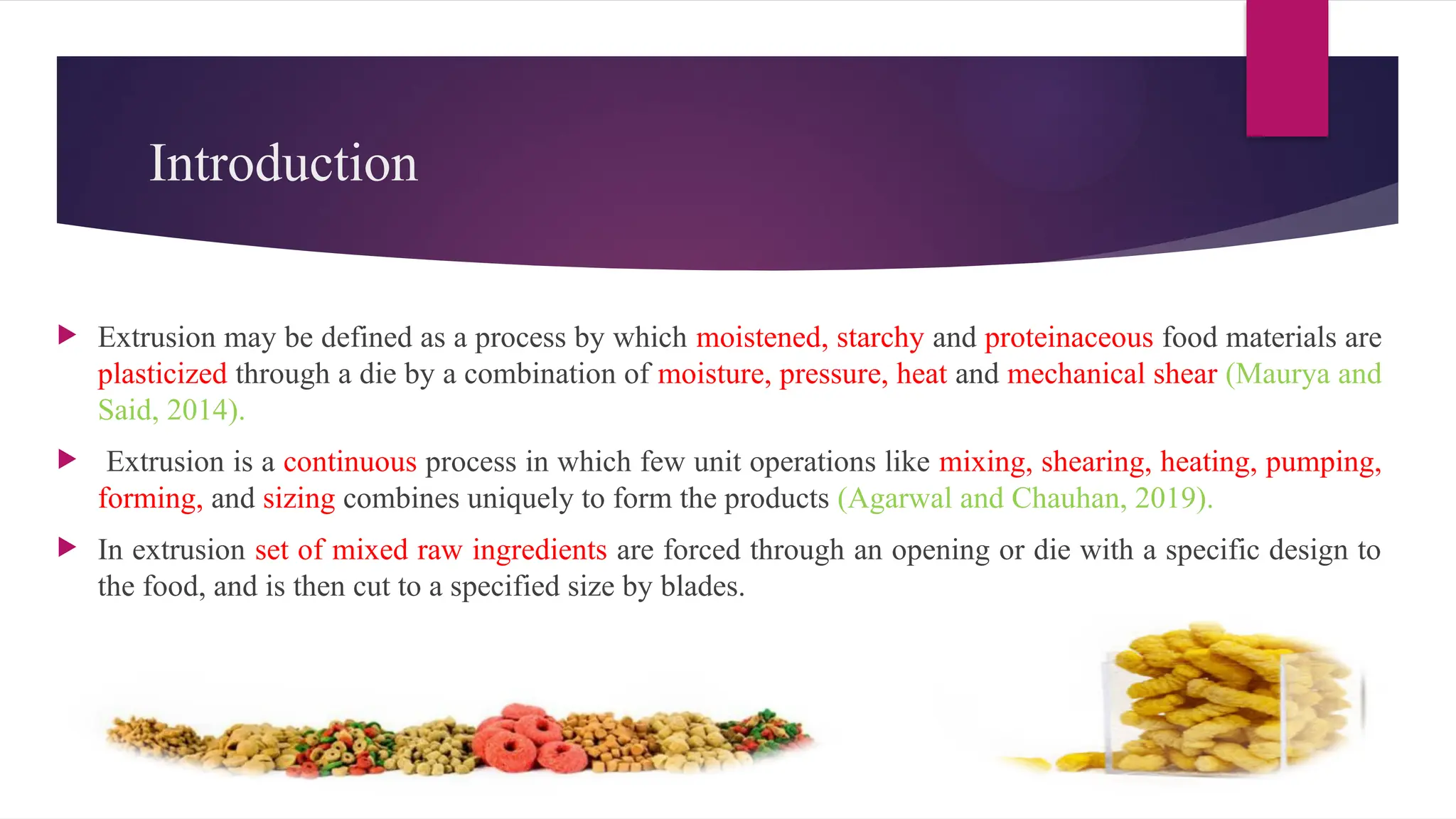
 In extrusion set of mixed raw ingredients are forced through an opening or die with a specific design to
the food, and is then cut to a specified size by blades.
Introduction
 Extrusion produces number of food items for human consumption using different types
of basic and raw ingredients with various textures, shapes, flavours and colours.
 Extruded food products have lower water activity (0.1-0.4) and due to the lower water
activity extruded food products are preserved for longer time (Athar et al., 2006).
 The machine which forces the mix through the die is an extruder, and the mix is known as the extrudate.
 The extruded food products are digestible, palatable and safe to consume.
Why Extrusion ?
 Versatility
 Reduced costs
 Higher productivity and automatic operations
 Quality of product
Extruded food products
Extruded food
products
Co-extruded
Directly
Expanded
Unexpanded
Modified
Half
products
Candy
Texturized
Extruder
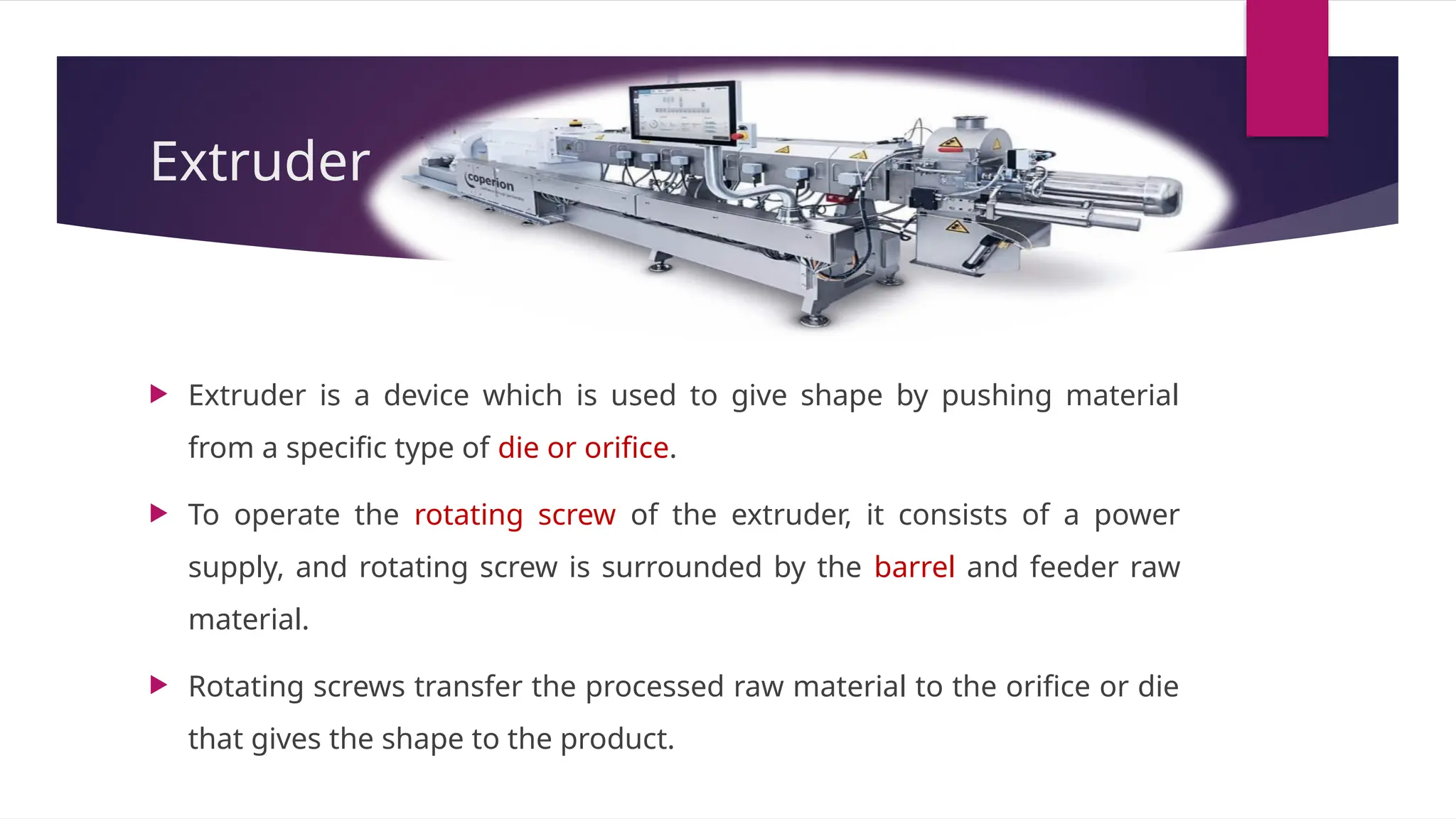
 Extruder is a device which is used to give shape by pushing material
from a specific type of die or orifice.
 To operate the rotating screw of the extruder, it consists of a power
supply, and rotating screw is surrounded by the barrel and feeder raw
material.
 Rotating screws transfer the processed raw material to the orifice or die
that gives the shape to the product.
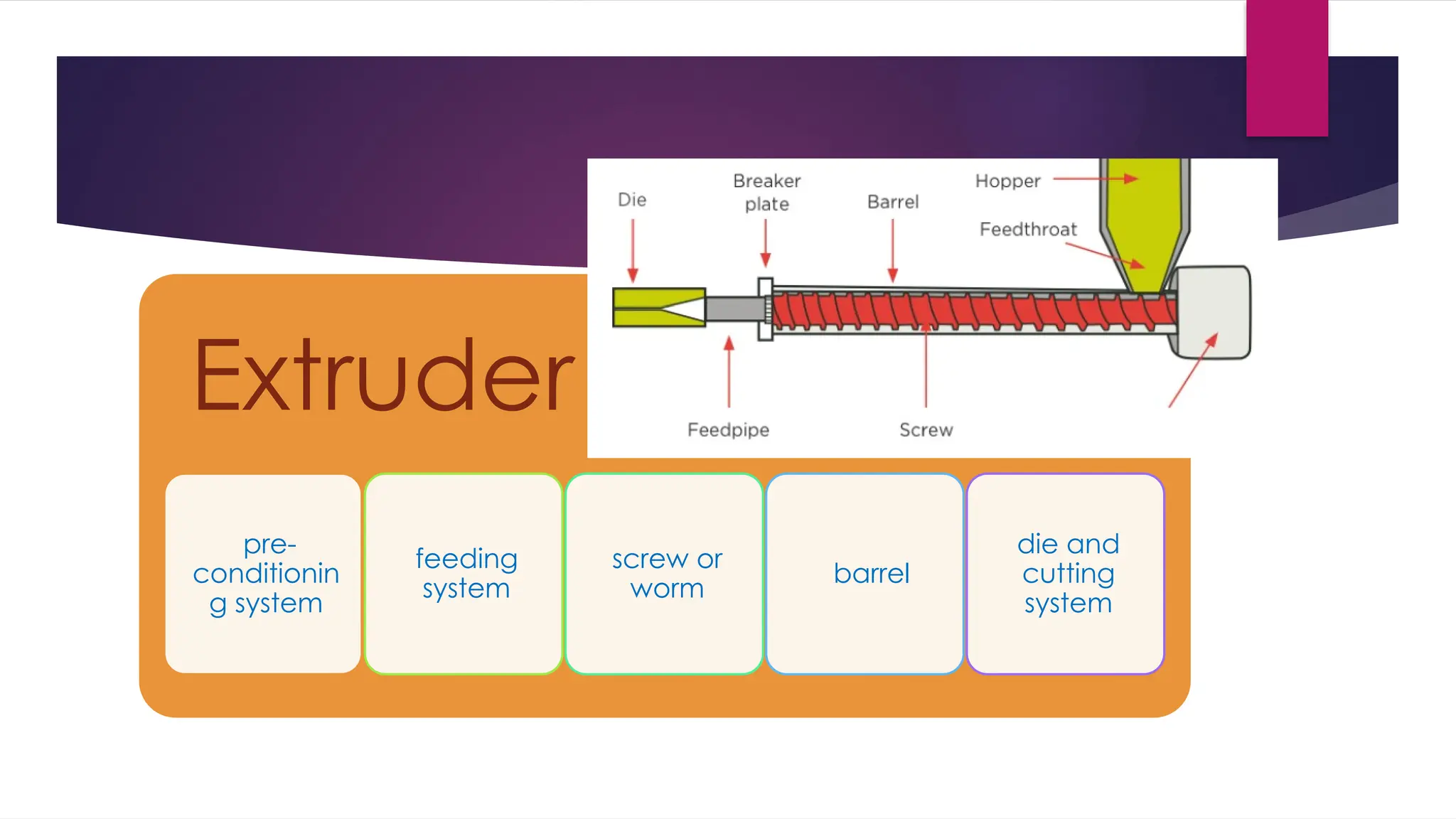
Extruder
pre-
conditionin
g system
feeding
system
screw or
worm
barrel
die and
cutting
system
Principle
(Prabha et al., 2021)
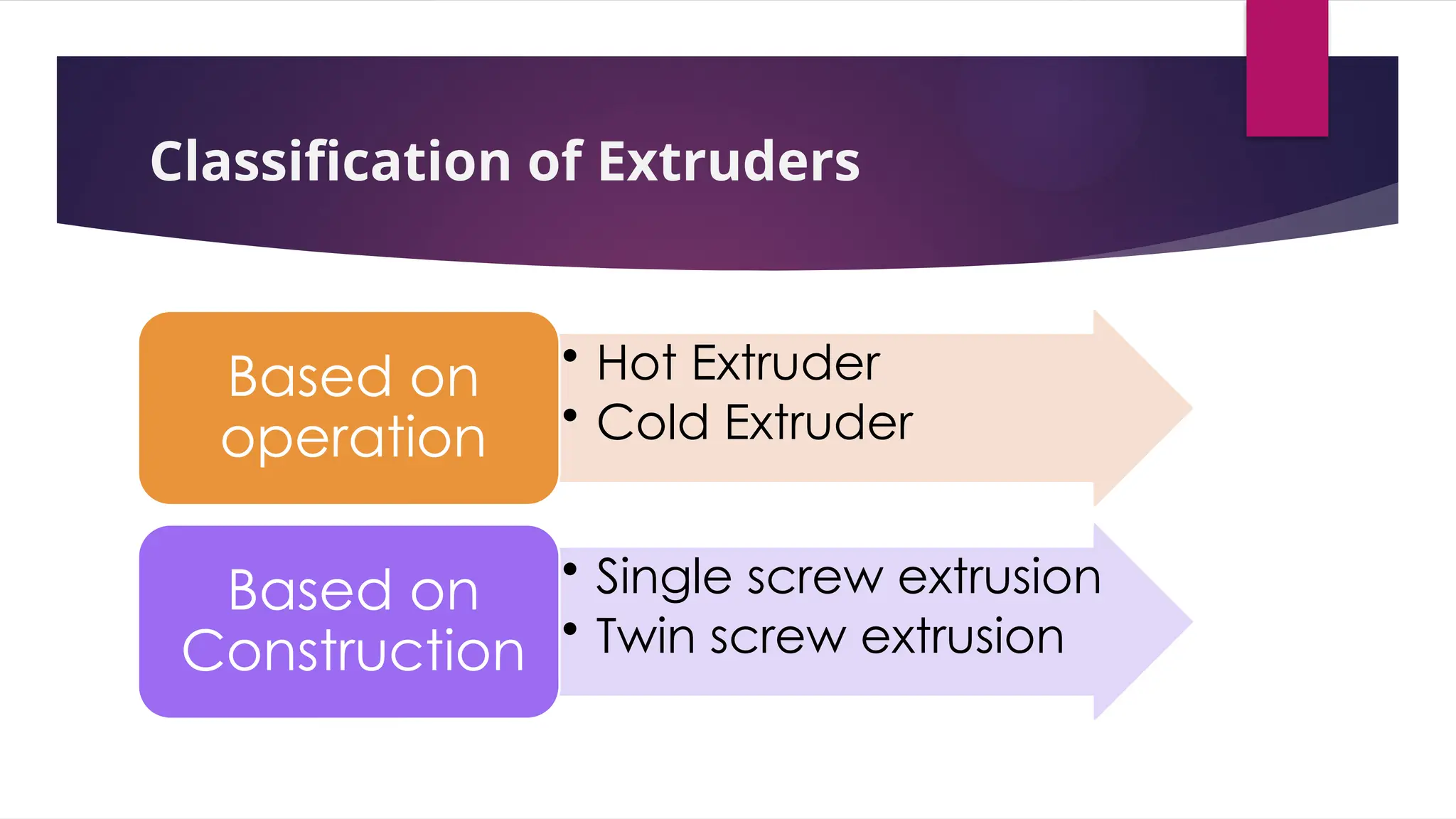
Classification of Extruders
• Hot Extruder
• Cold Extruder
Based on
operation
• Single screw extrusion
• Twin screw extrusion
Based on
Construction
Hot extrusion
 In hot extrusion cooking heating of food is carried out at more than
100℃.
 Frictional heating and other heating methods is used to increase the
temperature quickly.
 Heated food is passed to barrel sections which have a small flight
which helps to increase the shear and pressure.
 At last, food is passed through die under pressure where final
shaping of food occurs due to removal of moisture in the form of
steam (Onwulata et al., 2008).
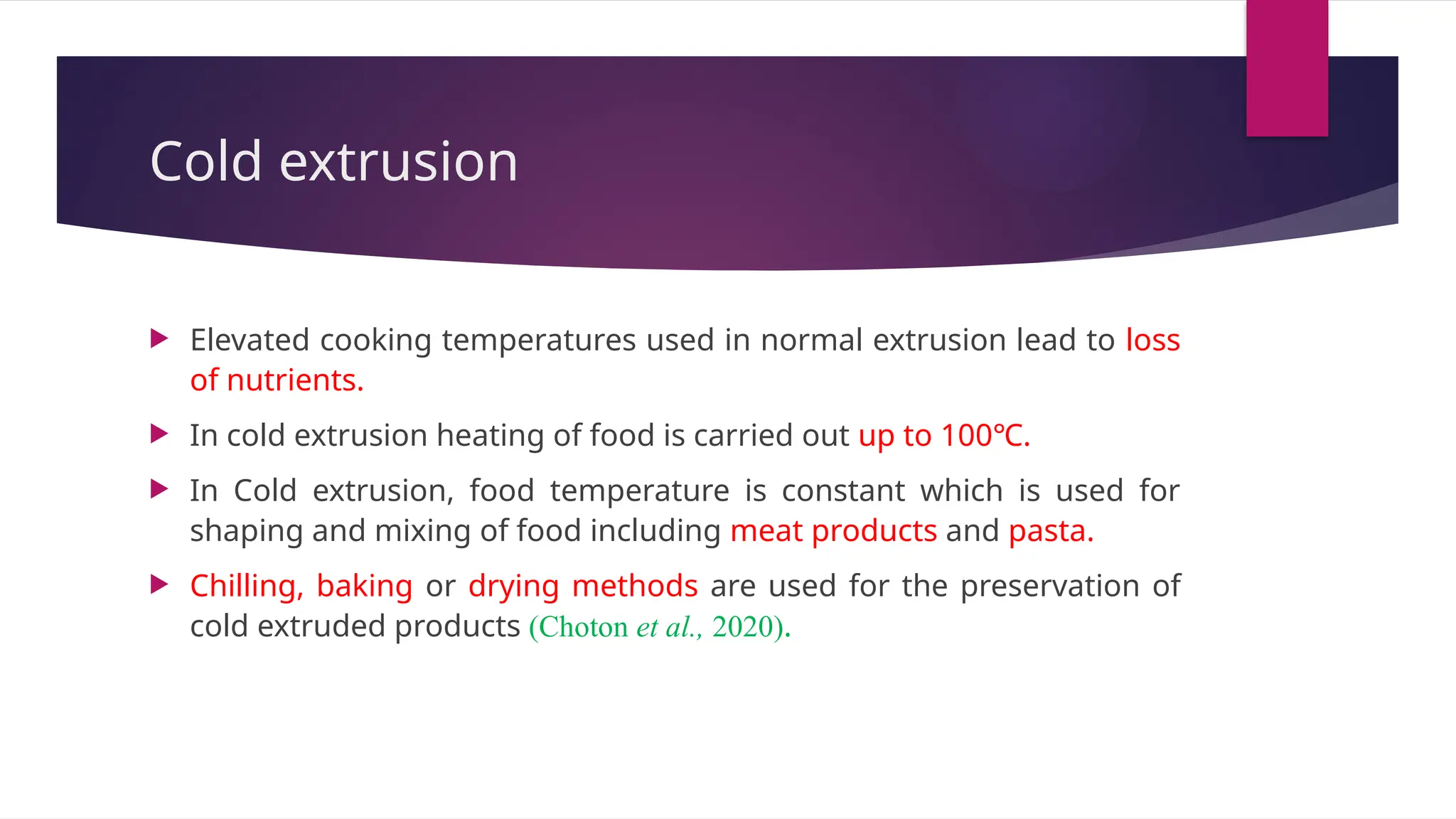
Cold extrusion
 Elevated cooking temperatures used in normal extrusion lead to loss
of nutrients.
 In cold extrusion heating of food is carried out up to 100℃.
 In Cold extrusion, food temperature is constant which is used for
shaping and mixing of food including meat products and pasta.
 Chilling, baking or drying methods are used for the preservation of
cold extruded products (Choton et al., 2020).
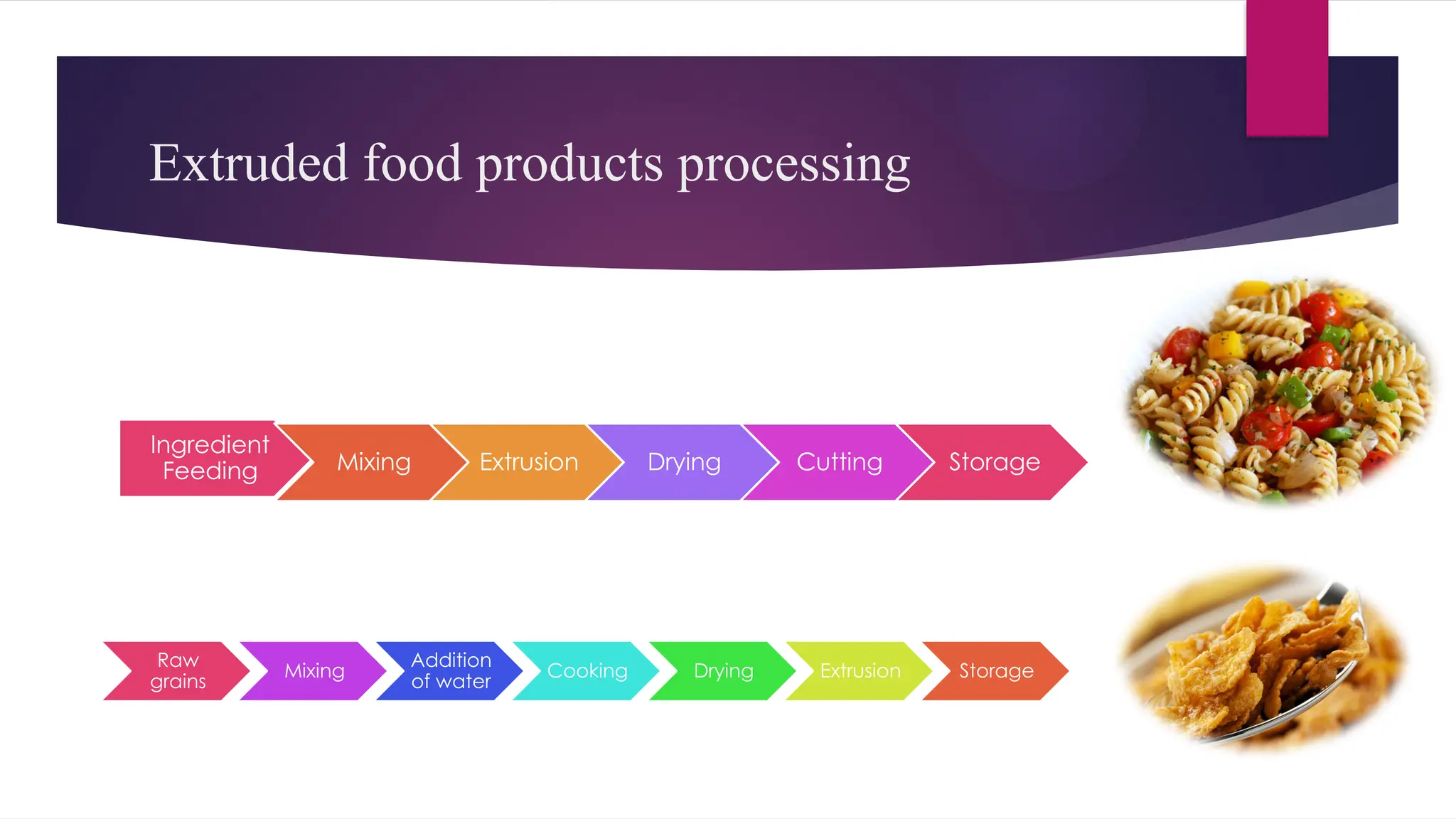
Extruded food products processing
Ingredient
Feeding Mixing Extrusion Drying Cutting Storage
Raw
grains
Mixing
Addition
of water
Cooking Drying Extrusion Storage
Single screw extruders
 Single screw extruders contain a single rotating screw in a metal barrel.
 The raw materials are fed from the hopper located in the feed section and the
rotating screw conveys the material to the transition section.
 In the transition section, the screw channel has small flights which results in a
rise in temperature of the material.
 Starch becomes gelatinized, and the material becomes more cohesive.
 It is transported further by the metering section and pushed through the die
opening (Choton et al., 2020).
(Patil et al., 2016)
Twin-Screw Extruders
 It consists of two parallel screws of equal length rotate inside the same barrel,
usually the internal surface of the barrel of twin screw extruders is smooth.
 It is more complicated than single screw extruders, provides much more
flexibility and better control.
 Twin-screw extruders are used for high moisture extrusion, products that include
higher quantities of components such as fibres, fats, etc. and more sophisticated
products (Athar et al., 2006).
Twin-Screw Extruders
(Maurya and Said, 2014)
co-rotating
intermeshing screws
co-rotating non-
intermeshing screws
counter-rotating
intermeshing screws
counter-rotating non-
intermeshing screws
Effect of extrusion technology on
food product
(Moscicki et al., 2013)
Enzyme inactivation.
Naturally present toxin destruction.
Lower the microbial load of finished product.
Convert the complex starches into simple form.
Loss of vitamin A.
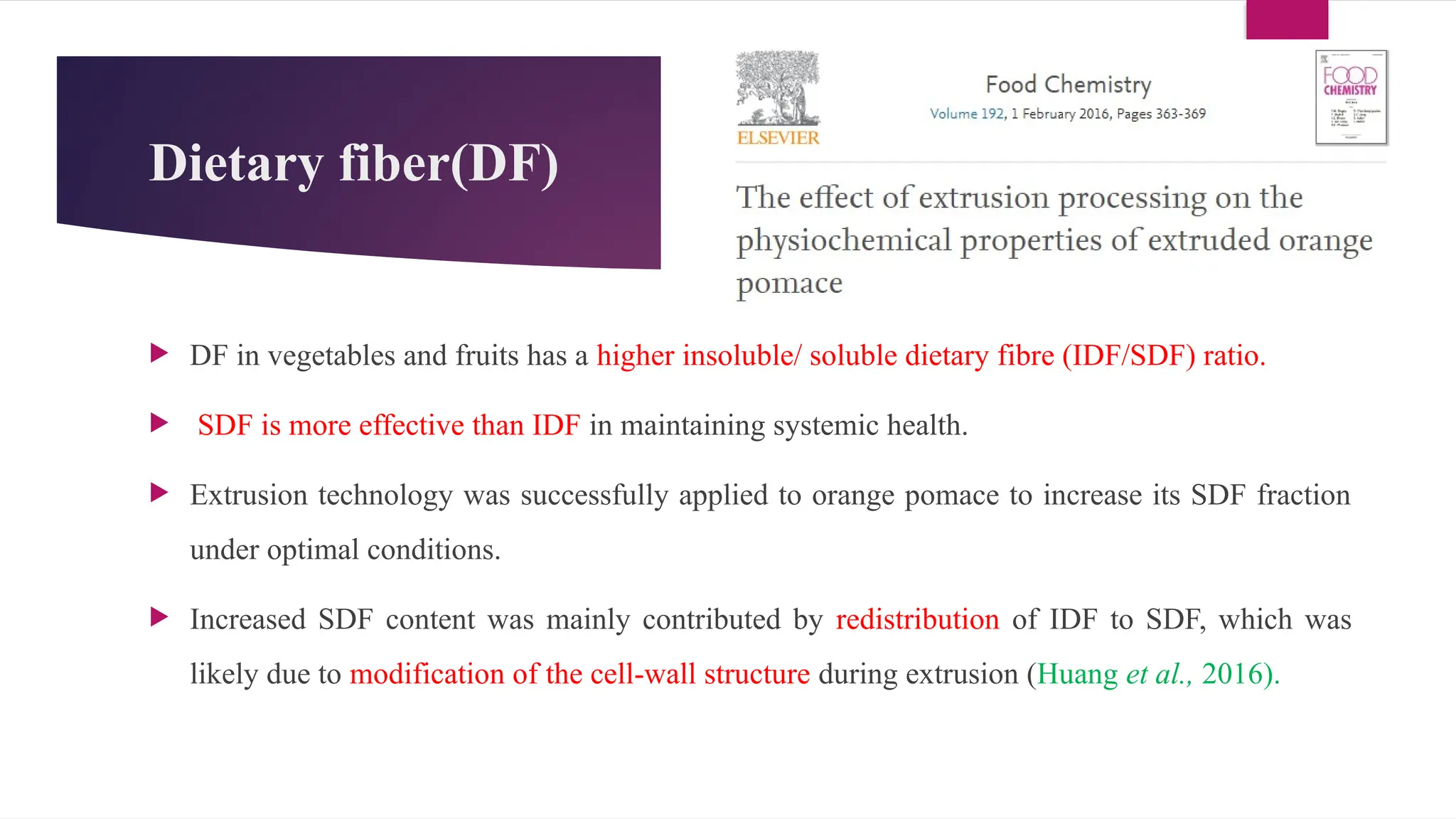
Dietary fiber(DF)
 DF in vegetables and fruits has a higher insoluble/ soluble dietary fibre (IDF/SDF) ratio.
 SDF is more effective than IDF in maintaining systemic health.
 Extrusion technology was successfully applied to orange pomace to increase its SDF fraction
under optimal conditions.
 Increased SDF content was mainly contributed by redistribution of IDF to SDF, which was
likely due to modification of the cell-wall structure during extrusion (Huang et al., 2016).
Protein
 Denaturation of proteins at high temperature during extrusion cooking
inactivates antinutritional factors (such as antitrypsin factor, lectins, etc.) and
improves digestibility.
 Extrusion of soy protein reduces the undesirable volatile compounds and the
bitter taste (Maurya and Said, 2014).
 Very high drying temperatures have shown to decrease in protein digestibility
and lysine bioavailability (Singh et al., 2007).
Lipids
 The changes in physicochemical properties of lipids during extrusion are
complex and vary with the hydrophilic–lipophilic balance of lipids, amount, type
and the materials being extruded.
 High temperature decreases the factors that favours free fatty acid development
and oxidation of fatty acids because of the reduction in lipase and lipoxygenase
activity (Agarwal and Chauhan, 2019).
Advantages of extrusion technology
Versatility
Cost
Product Quality
Environment friendly
Energy efficient
Production of new foods
Disadvantages of extrusion technology
 Fading of product color due to expansion on excessive heat.
 Due to the elevated temperatures and low moisture conditions used, different
chemical reactions such as the non-enzymatic browning and caramelization can
take place.
 Temperature treatment of food material containing proteins and reducing sugars
usually leads to a deterioration of the nutritional characteristic of proteins
(lysine) (Huang et al., 2016).
Recent Developments
Extrusion based 3 D printing
‐
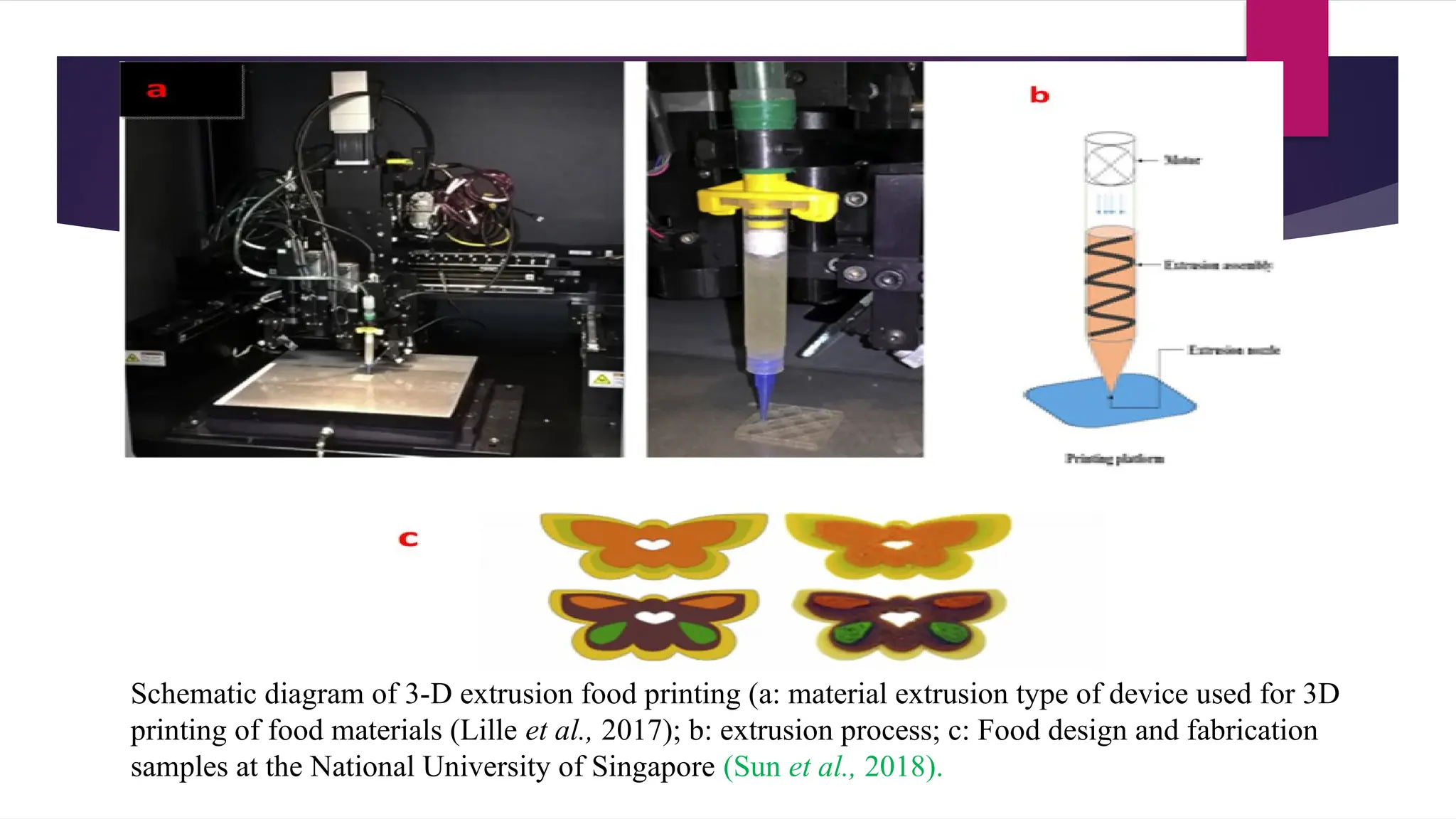
 The 3-D printing involves digitally controlled extrusion process.
 Food products of sophisticated design, geometries and internal structures with high surface to
volume ratio and customized nutrition content can be developed (Prabha et al., 2021).
 This robotic construction process, with the help of computer control involves, the loading of food
materials and extruding them through a predefined path, resulting in the layer-by-layer deposition
(Sun et al., 2018).
Schematic diagram of 3-D extrusion food printing (a: material extrusion type of device used for 3D
printing of food materials (Lille et al., 2017); b: extrusion process; c: Food design and fabrication
samples at the National University of Singapore (Sun et al., 2018).
Extrusion using supercritical carbon
dioxide
 The principle behind supercritical fluid assisted extrusion involves a supercritical
fluid CO2, is injected as a blowing agent to cooked feed, containing
volatile micronutrients, flavourings and colourants.
 Water is mixed in the ingredients to act as a plasticizer, and the role of steam is
to heat the ingredients for cooking.
(Prabha et al., 2021)
Extrusion using supercritical carbon
dioxide
 After cooking, the steam helps to prevent product puffing and to lower the temperature of the product
through water flash off in the cooling zone.
 Cooling zone, reduces the temperature <100 °C and pressure is raised eventually over supercritical
pressure.
 Supercritical carbon dioxide is then mixed with feed at the next zone.
 Shear developed from mixing screw, breaks down the supercritical carbon dioxide into small bubbles
and this nucleated gas bubbles, results in expansion of the extrudates when it exits the die (Prabha et al.,
2021).
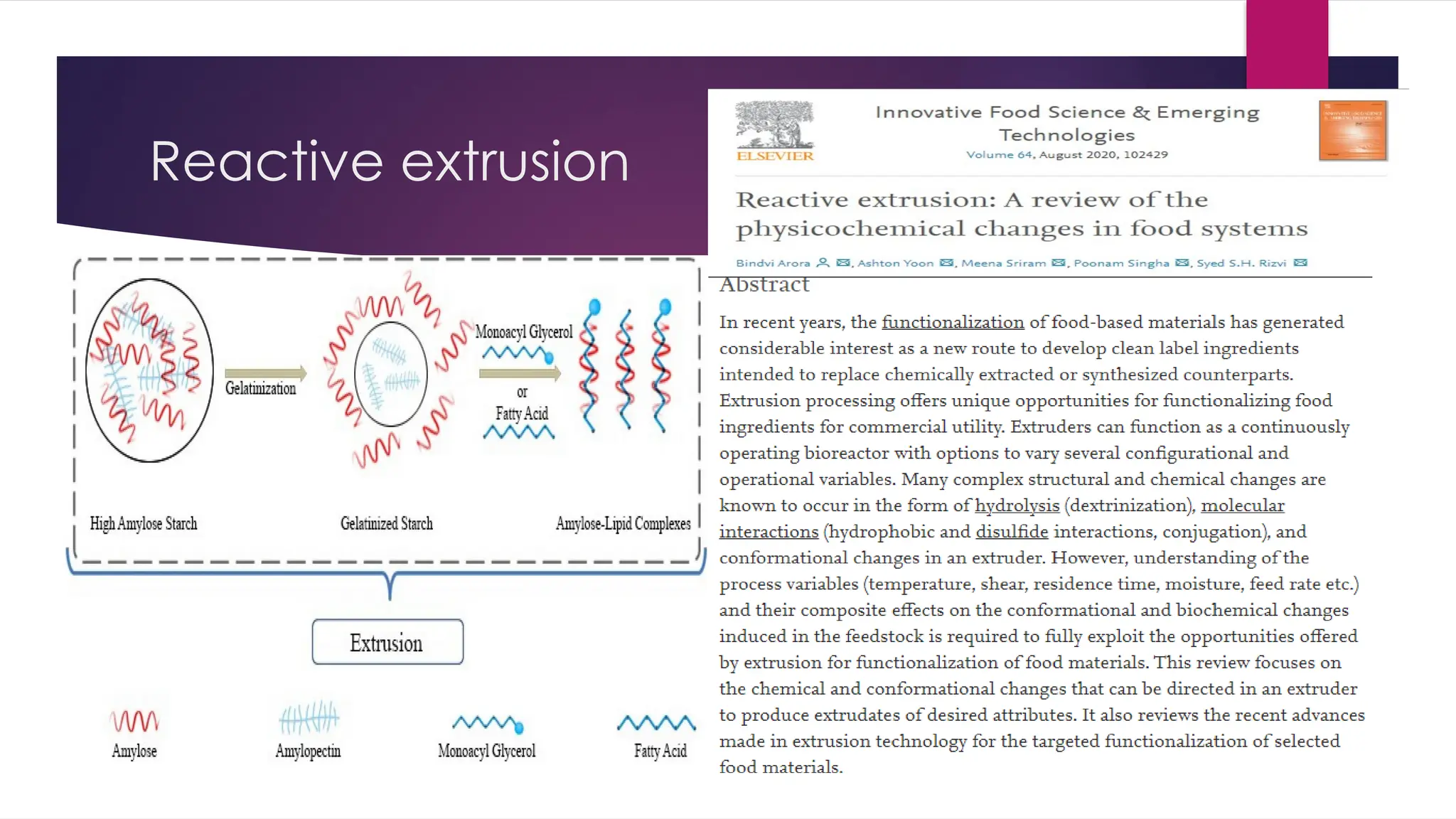
Reactive extrusion
Conclusion
 Extrusion processing provides a great versatility for the development of low cost, high nutritive
and convenience food products.
 The extruded products have the potential of replacing conventional snack foods that are low
nutrients.
 This technology because of its beneficial effects such as destruction of antinutritional factors,
increased soluble dietary fibres, reduction of lipid oxidation and contaminating microorganisms
plays an important role in the production of a wide variety of foods and ingredients.
Refrences
 Agarwal, S., & Chauhan, E. S. (2019). Extrusion processing: The effect on nutrients and based products. The Pharma Innovation
Journal, 8(4), 464-470.
 Athar, N., Hardacre, A., Taylor, G., Clark, S., Harding, R., & McLaughlin, J. (2006). Vitamin retention in extruded food
products. Journal of Food Composition and Analysis, 19(4), 379-383.
 Choton, S., Gupta, N., Bandral, J. D., Anjum, N., & Choudary, A. (2020). Extrusion technology and its application in food processing:
A review. The Pharma Innovation Journal, 9(2), 162-168.
 Huang, Y. L., & Ma, Y. S. (2016). The effect of extrusion processing on the physiochemical properties of extruded orange
pomace. Food chemistry, 192, 363-369.
 Moscicki, L., Mitrus, M., Wojtowicz, A., Oniszczuk, T., & Rejak, A. (2013). Extrusion-cooking of starch. Advances in agrophysical
research, 319-346.
 Maurya, A. K., & Said, P. P. (2014). Extrusion processing on physical and chemical properties of protein rich products-an overview. J.
Bioresour. Eng. Technol, 2(4), 61-67.
 Onwulata CI, Pordesimo LO. Whey Texturization for Snacks. In: Onwulata CI, Huth PJ. editors. Whey Processing, Functionality and
Health Benefits. Ames, IA: Blackwell Publishing and IFT Press, 2008, 169-184.
Refrences
 Patil, H., Tiwari, R. V., & Repka, M. A. (2016). 11 Encapsulation via Hot-Melt Extrusion.
 Prabha, K., Ghosh, P., Abdullah, S., Joseph, R. M., Krishnan, R., Rana, S. S., & Pradhan, R. C. (2021). Recent development,
challenges, and prospects of extrusion technology. Future Foods, 3, 100019.
 Singh, S., Gamlath, S., & Wakeling, L. (2007). Nutritional aspects of food extrusion: a review. International Journal of Food Science &
Technology, 42(8), 916-929.
 Sun, J., Zhou, W., Yan, L., Huang, D., & Lin, L. Y. (2018). Extrusion-based food printing for digitalized food design and nutrition
control. Journal of Food Engineering, 220, 1-11.
 Yang, J., Wu, L.W., & Liu, J. 2001. U.S. Patent No. 6,280,785. Washington, DC: U.S. Patent and Trademark Office.
 Zhu, S., Stieger, M. A., van der Goot, A. J., & Schutyser, M. A. (2019). Extrusion-based 3D printing of food pastes: Correlating
rheological properties with printing behaviour. Innovative Food Science & Emerging Technologies, 58, 102214.
Thank you

Role of extrusion technology in Food Processing

  • 1.
    (Doctoral Seminar-1) Extrusion Technology in FoodProcessing PRESENTED BY: GAURAV PRATAP SINGH (Ph.D.(PFT-22027) ,FT)
  • 2.
  • 3.
    History  Extruders weredeveloped in the 1870s for the production of sausage.  Single-screw extruder was evolved during the 1930s and was used to mix semolina flour and water to make pasta products.  It was also used in the process of making ready-to eat (RTE) cereals to shape hot, precooked dough.  The first patent on an application of twin-screw extrusion technology was filed in the mid- 1950s.  Since then the application of extrusion technology in food processing has advanced, widened and grown dramatically (Choton et al., 2020).
  • 4.
    Introduction  Extrusion maybe defined as a process by which moistened, starchy and proteinaceous food materials are plasticized through a die by a combination of moisture, pressure, heat and mechanical shear (Maurya and Said, 2014).  Extrusion is a continuous process in which few unit operations like mixing, shearing, heating, pumping, forming, and sizing combines uniquely to form the products (Agarwal and Chauhan, 2019).  In extrusion set of mixed raw ingredients are forced through an opening or die with a specific design to the food, and is then cut to a specified size by blades.
  • 5.
    Introduction  Extrusion producesnumber of food items for human consumption using different types of basic and raw ingredients with various textures, shapes, flavours and colours.  Extruded food products have lower water activity (0.1-0.4) and due to the lower water activity extruded food products are preserved for longer time (Athar et al., 2006).  The machine which forces the mix through the die is an extruder, and the mix is known as the extrudate.  The extruded food products are digestible, palatable and safe to consume.
  • 6.
    Why Extrusion ? Versatility  Reduced costs  Higher productivity and automatic operations  Quality of product
  • 7.
    Extruded food products Extrudedfood products Co-extruded Directly Expanded Unexpanded Modified Half products Candy Texturized
  • 8.
    Extruder  Extruder isa device which is used to give shape by pushing material from a specific type of die or orifice.  To operate the rotating screw of the extruder, it consists of a power supply, and rotating screw is surrounded by the barrel and feeder raw material.  Rotating screws transfer the processed raw material to the orifice or die that gives the shape to the product.
  • 9.
  • 10.
  • 11.
    Classification of Extruders •Hot Extruder • Cold Extruder Based on operation • Single screw extrusion • Twin screw extrusion Based on Construction
  • 12.
    Hot extrusion  Inhot extrusion cooking heating of food is carried out at more than 100℃.  Frictional heating and other heating methods is used to increase the temperature quickly.  Heated food is passed to barrel sections which have a small flight which helps to increase the shear and pressure.  At last, food is passed through die under pressure where final shaping of food occurs due to removal of moisture in the form of steam (Onwulata et al., 2008).
  • 13.
    Cold extrusion  Elevatedcooking temperatures used in normal extrusion lead to loss of nutrients.  In cold extrusion heating of food is carried out up to 100℃.  In Cold extrusion, food temperature is constant which is used for shaping and mixing of food including meat products and pasta.  Chilling, baking or drying methods are used for the preservation of cold extruded products (Choton et al., 2020).
  • 14.
    Extruded food productsprocessing Ingredient Feeding Mixing Extrusion Drying Cutting Storage Raw grains Mixing Addition of water Cooking Drying Extrusion Storage
  • 15.
    Single screw extruders Single screw extruders contain a single rotating screw in a metal barrel.  The raw materials are fed from the hopper located in the feed section and the rotating screw conveys the material to the transition section.  In the transition section, the screw channel has small flights which results in a rise in temperature of the material.  Starch becomes gelatinized, and the material becomes more cohesive.  It is transported further by the metering section and pushed through the die opening (Choton et al., 2020).
  • 16.
  • 17.
    Twin-Screw Extruders  Itconsists of two parallel screws of equal length rotate inside the same barrel, usually the internal surface of the barrel of twin screw extruders is smooth.  It is more complicated than single screw extruders, provides much more flexibility and better control.  Twin-screw extruders are used for high moisture extrusion, products that include higher quantities of components such as fibres, fats, etc. and more sophisticated products (Athar et al., 2006).
  • 18.
    Twin-Screw Extruders (Maurya andSaid, 2014) co-rotating intermeshing screws co-rotating non- intermeshing screws counter-rotating intermeshing screws counter-rotating non- intermeshing screws
  • 19.
    Effect of extrusiontechnology on food product (Moscicki et al., 2013) Enzyme inactivation. Naturally present toxin destruction. Lower the microbial load of finished product. Convert the complex starches into simple form. Loss of vitamin A.
  • 20.
    Dietary fiber(DF)  DFin vegetables and fruits has a higher insoluble/ soluble dietary fibre (IDF/SDF) ratio.  SDF is more effective than IDF in maintaining systemic health.  Extrusion technology was successfully applied to orange pomace to increase its SDF fraction under optimal conditions.  Increased SDF content was mainly contributed by redistribution of IDF to SDF, which was likely due to modification of the cell-wall structure during extrusion (Huang et al., 2016).
  • 22.
    Protein  Denaturation ofproteins at high temperature during extrusion cooking inactivates antinutritional factors (such as antitrypsin factor, lectins, etc.) and improves digestibility.  Extrusion of soy protein reduces the undesirable volatile compounds and the bitter taste (Maurya and Said, 2014).  Very high drying temperatures have shown to decrease in protein digestibility and lysine bioavailability (Singh et al., 2007).
  • 23.
    Lipids  The changesin physicochemical properties of lipids during extrusion are complex and vary with the hydrophilic–lipophilic balance of lipids, amount, type and the materials being extruded.  High temperature decreases the factors that favours free fatty acid development and oxidation of fatty acids because of the reduction in lipase and lipoxygenase activity (Agarwal and Chauhan, 2019).
  • 24.
    Advantages of extrusiontechnology Versatility Cost Product Quality Environment friendly Energy efficient Production of new foods
  • 25.
    Disadvantages of extrusiontechnology  Fading of product color due to expansion on excessive heat.  Due to the elevated temperatures and low moisture conditions used, different chemical reactions such as the non-enzymatic browning and caramelization can take place.  Temperature treatment of food material containing proteins and reducing sugars usually leads to a deterioration of the nutritional characteristic of proteins (lysine) (Huang et al., 2016).
  • 26.
  • 27.
    Extrusion based 3D printing ‐  The 3-D printing involves digitally controlled extrusion process.  Food products of sophisticated design, geometries and internal structures with high surface to volume ratio and customized nutrition content can be developed (Prabha et al., 2021).  This robotic construction process, with the help of computer control involves, the loading of food materials and extruding them through a predefined path, resulting in the layer-by-layer deposition (Sun et al., 2018).
  • 28.
    Schematic diagram of3-D extrusion food printing (a: material extrusion type of device used for 3D printing of food materials (Lille et al., 2017); b: extrusion process; c: Food design and fabrication samples at the National University of Singapore (Sun et al., 2018).
  • 29.
    Extrusion using supercriticalcarbon dioxide  The principle behind supercritical fluid assisted extrusion involves a supercritical fluid CO2, is injected as a blowing agent to cooked feed, containing volatile micronutrients, flavourings and colourants.  Water is mixed in the ingredients to act as a plasticizer, and the role of steam is to heat the ingredients for cooking. (Prabha et al., 2021)
  • 30.
    Extrusion using supercriticalcarbon dioxide  After cooking, the steam helps to prevent product puffing and to lower the temperature of the product through water flash off in the cooling zone.  Cooling zone, reduces the temperature <100 °C and pressure is raised eventually over supercritical pressure.  Supercritical carbon dioxide is then mixed with feed at the next zone.  Shear developed from mixing screw, breaks down the supercritical carbon dioxide into small bubbles and this nucleated gas bubbles, results in expansion of the extrudates when it exits the die (Prabha et al., 2021).
  • 31.
  • 32.
    Conclusion  Extrusion processingprovides a great versatility for the development of low cost, high nutritive and convenience food products.  The extruded products have the potential of replacing conventional snack foods that are low nutrients.  This technology because of its beneficial effects such as destruction of antinutritional factors, increased soluble dietary fibres, reduction of lipid oxidation and contaminating microorganisms plays an important role in the production of a wide variety of foods and ingredients.
  • 33.
    Refrences  Agarwal, S.,& Chauhan, E. S. (2019). Extrusion processing: The effect on nutrients and based products. The Pharma Innovation Journal, 8(4), 464-470.  Athar, N., Hardacre, A., Taylor, G., Clark, S., Harding, R., & McLaughlin, J. (2006). Vitamin retention in extruded food products. Journal of Food Composition and Analysis, 19(4), 379-383.  Choton, S., Gupta, N., Bandral, J. D., Anjum, N., & Choudary, A. (2020). Extrusion technology and its application in food processing: A review. The Pharma Innovation Journal, 9(2), 162-168.  Huang, Y. L., & Ma, Y. S. (2016). The effect of extrusion processing on the physiochemical properties of extruded orange pomace. Food chemistry, 192, 363-369.  Moscicki, L., Mitrus, M., Wojtowicz, A., Oniszczuk, T., & Rejak, A. (2013). Extrusion-cooking of starch. Advances in agrophysical research, 319-346.  Maurya, A. K., & Said, P. P. (2014). Extrusion processing on physical and chemical properties of protein rich products-an overview. J. Bioresour. Eng. Technol, 2(4), 61-67.  Onwulata CI, Pordesimo LO. Whey Texturization for Snacks. In: Onwulata CI, Huth PJ. editors. Whey Processing, Functionality and Health Benefits. Ames, IA: Blackwell Publishing and IFT Press, 2008, 169-184.
  • 34.
    Refrences  Patil, H.,Tiwari, R. V., & Repka, M. A. (2016). 11 Encapsulation via Hot-Melt Extrusion.  Prabha, K., Ghosh, P., Abdullah, S., Joseph, R. M., Krishnan, R., Rana, S. S., & Pradhan, R. C. (2021). Recent development, challenges, and prospects of extrusion technology. Future Foods, 3, 100019.  Singh, S., Gamlath, S., & Wakeling, L. (2007). Nutritional aspects of food extrusion: a review. International Journal of Food Science & Technology, 42(8), 916-929.  Sun, J., Zhou, W., Yan, L., Huang, D., & Lin, L. Y. (2018). Extrusion-based food printing for digitalized food design and nutrition control. Journal of Food Engineering, 220, 1-11.  Yang, J., Wu, L.W., & Liu, J. 2001. U.S. Patent No. 6,280,785. Washington, DC: U.S. Patent and Trademark Office.  Zhu, S., Stieger, M. A., van der Goot, A. J., & Schutyser, M. A. (2019). Extrusion-based 3D printing of food pastes: Correlating rheological properties with printing behaviour. Innovative Food Science & Emerging Technologies, 58, 102214.
  • 35.