
Toxemia in Pregnancy
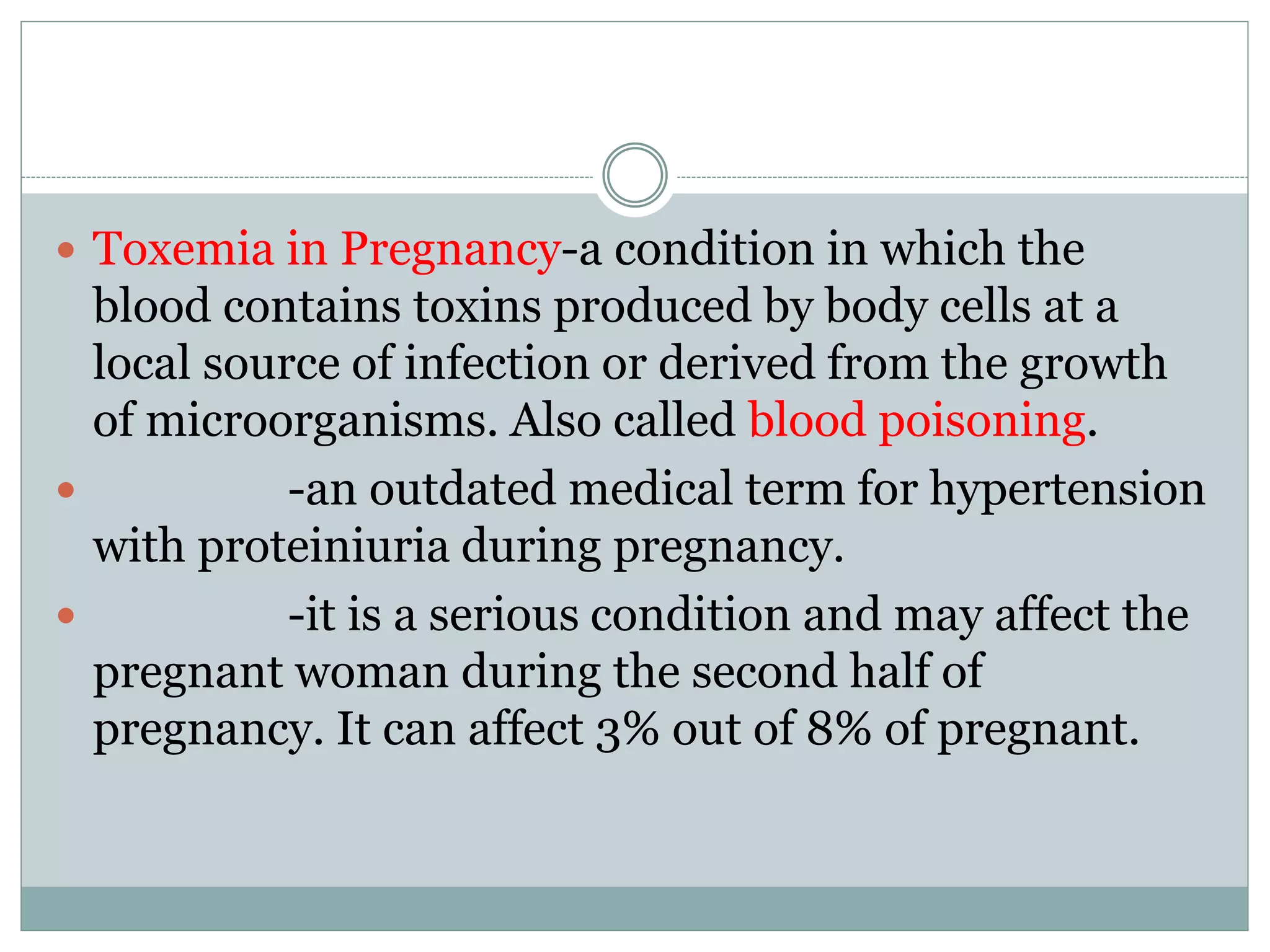
 Toxemia in Pregnancy-a condition in which the
blood contains toxins produced by body cells at a
local source of infection or derived from the growth
of microorganisms. Also called blood poisoning.
 -an outdated medical term for hypertension
with proteiniuria during pregnancy.
 -it is a serious condition and may affect the
pregnant woman during the second half of
pregnancy. It can affect 3% out of 8% of pregnant.
Signs and Symptoms of Preeclampsia
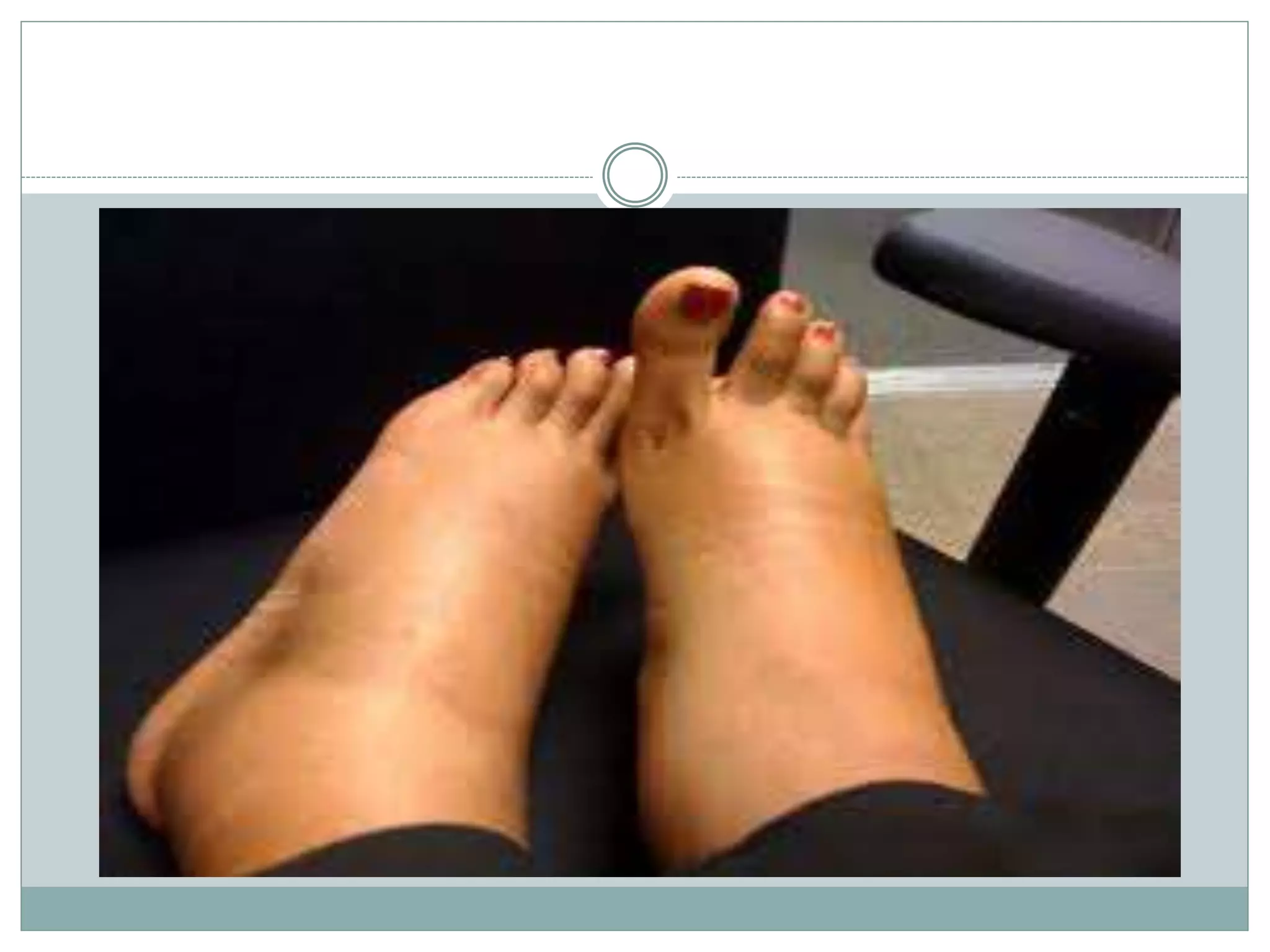
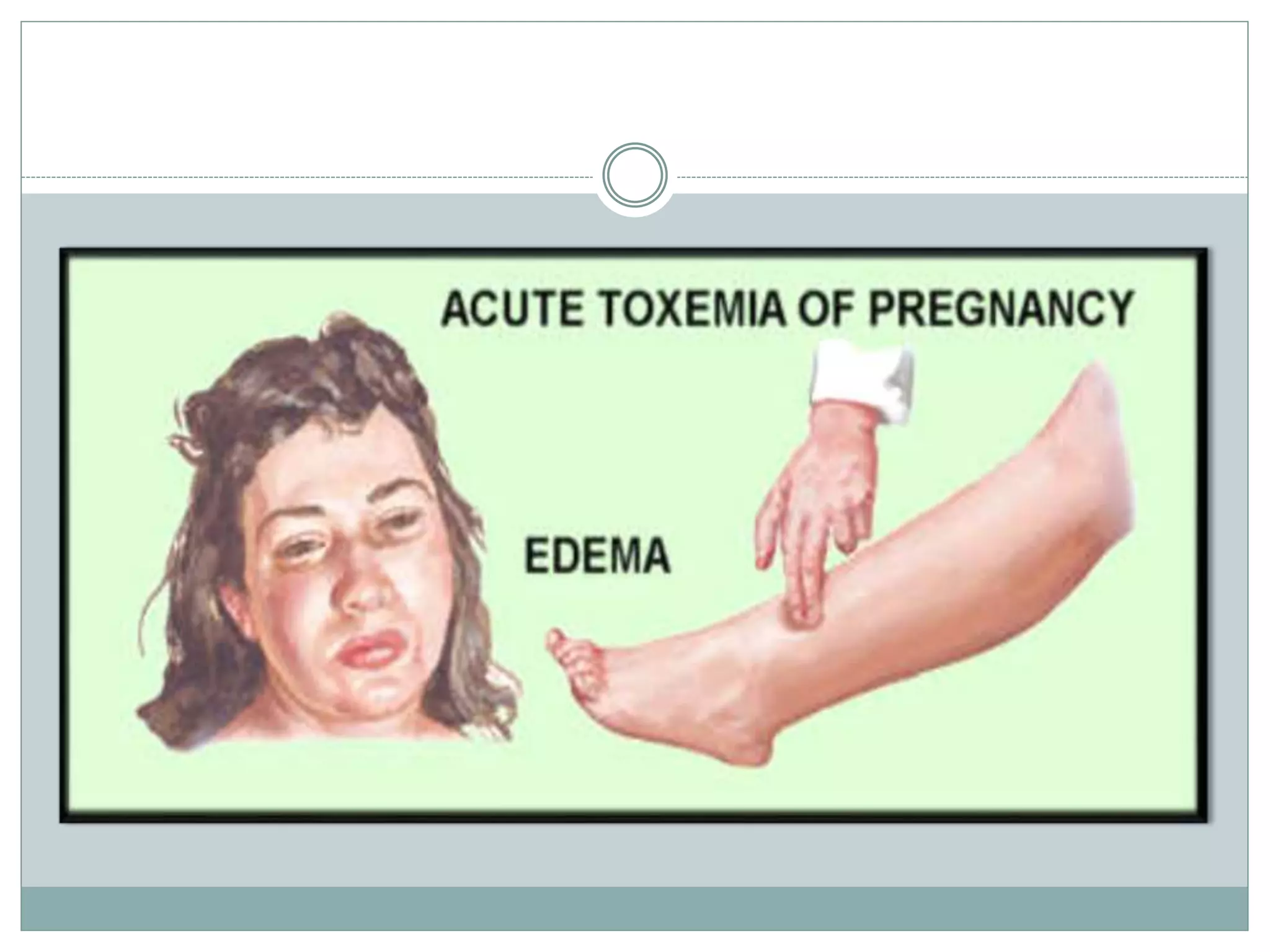
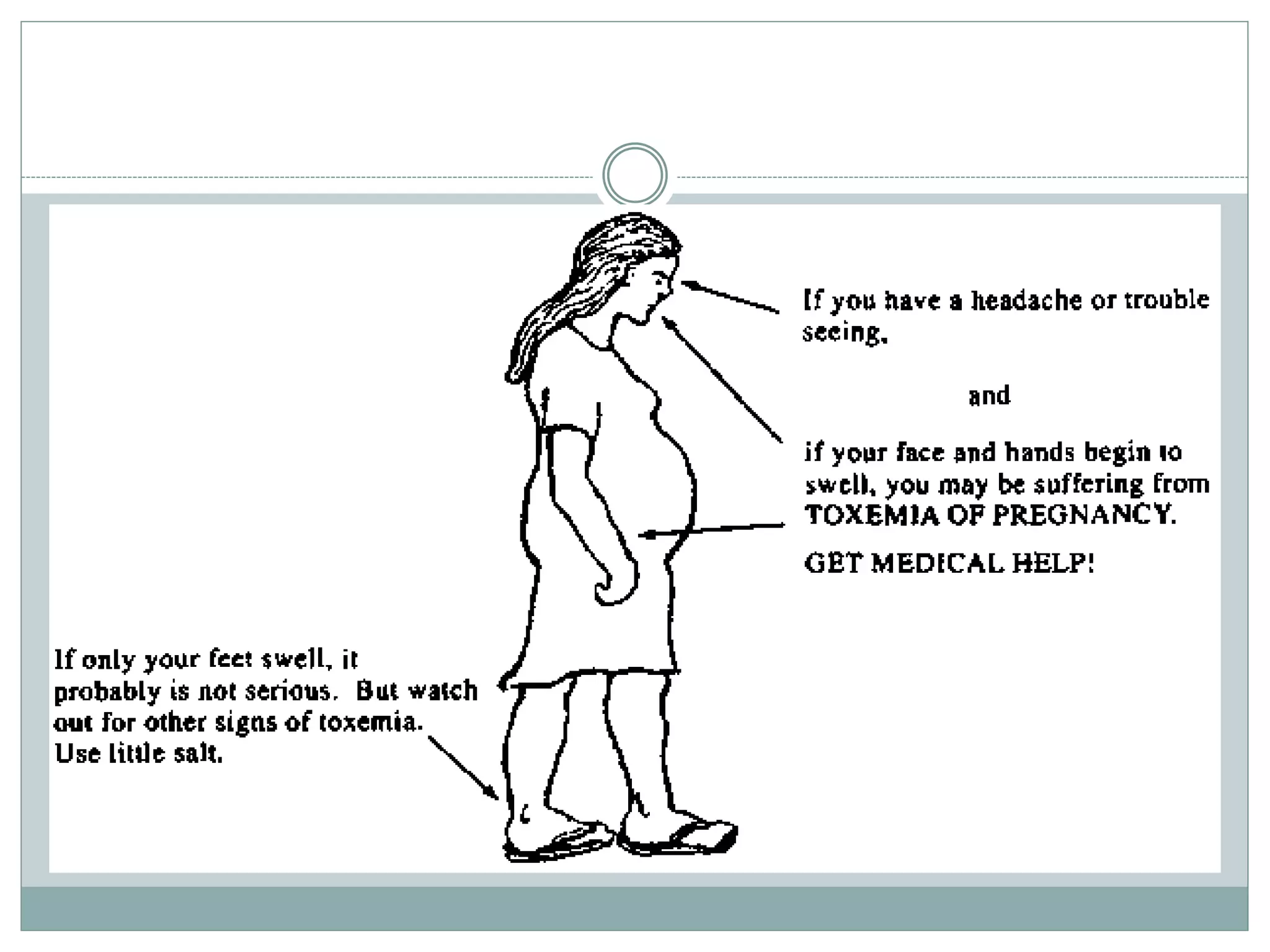
 Edema-one of the common symptom of toxemia involves
swelling in hands and face ,including the area of the face .
But many pregnant woman experience edema without
having preeclampsia.
 Sudden Weight Gain-it is a sudden weight gain that
amounts to more than 2lbs.in a single week.
 Vision Problems-sudden visual problems. The severity of
this symptoms can range from blurry spots to the
temporary loss of vision .Sudden changes in eyesight can
signal the presence of swelling in the brain.
 High Blood Pressure – sudden or gradual increase of
Blood Pressure if B/P 140/90 or more than 20 weeks.
 Upper Abdominal Pain-main experience painful
sensation in their upper abdomen. Watch for discomfort
or pain that seems to come from under your ribcage,
particularly on the right side. This may seem to extend
into shoulder.
 Proteinuria - excessive protein in urine. Damage vessels
in kidneys cause protein from blood to leak into urine.
Decrease in urine output and changes in the color of
urine. Dark urine , reddish urine.
 Headache-frequent bouts of throbbing headaches
(migraine-like)that don’t seem to go away. Specially
when you already had taken OTC medication.
 Rapid Heart Beat,Difficulty in breating , Mental
confusion.
Causes of Toxemia in Pregnancy(who are at risk
for Preeclampsia?)
 woman in their pregnancy
 woman carrying multiple fetus
 woman over 40 years old
 diagnosed of high blood pressure
 teenage mother younger 20 years old
 maternal history of preeclampsia and
 woman eating disorder
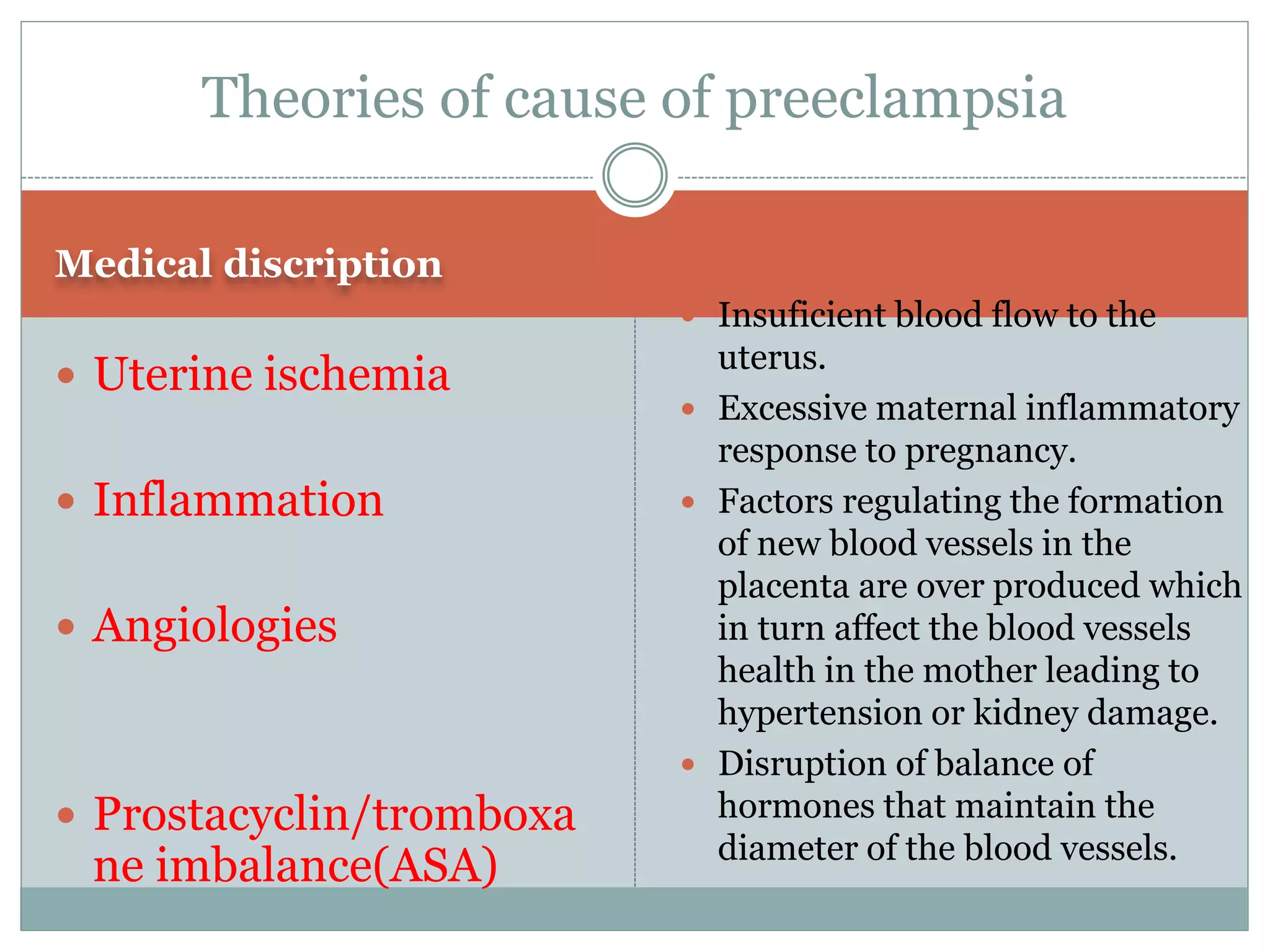
Medical discription
 Uterine ischemia
 Inflammation
 Angiologies
 Prostacyclin/tromboxa
ne imbalance(ASA)
 Insuficient blood flow to the
uterus.
 Excessive maternal inflammatory
response to pregnancy.
 Factors regulating the formation
of new blood vessels in the
placenta are over produced which
in turn affect the blood vessels
health in the mother leading to
hypertension or kidney damage.
 Disruption of balance of
hormones that maintain the
diameter of the blood vessels.
Theories of cause of preeclampsia
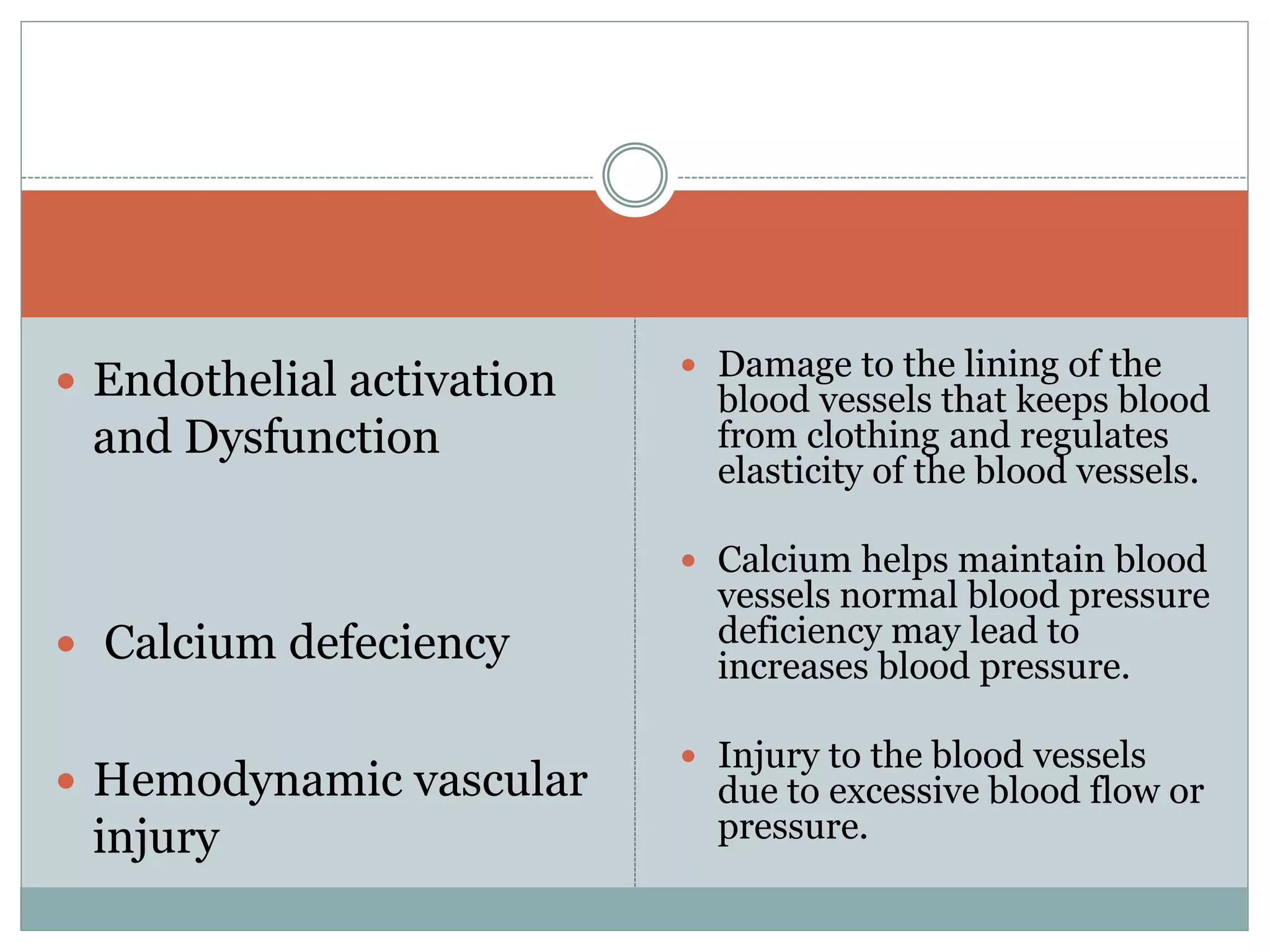
 Endothelial activation
and Dysfunction
 Calcium defeciency
 Hemodynamic vascular
injury
 Damage to the lining of the
blood vessels that keeps blood
from clothing and regulates
elasticity of the blood vessels.
 Calcium helps maintain blood
vessels normal blood pressure
deficiency may lead to
increases blood pressure.
 Injury to the blood vessels
due to excessive blood flow or
pressure.
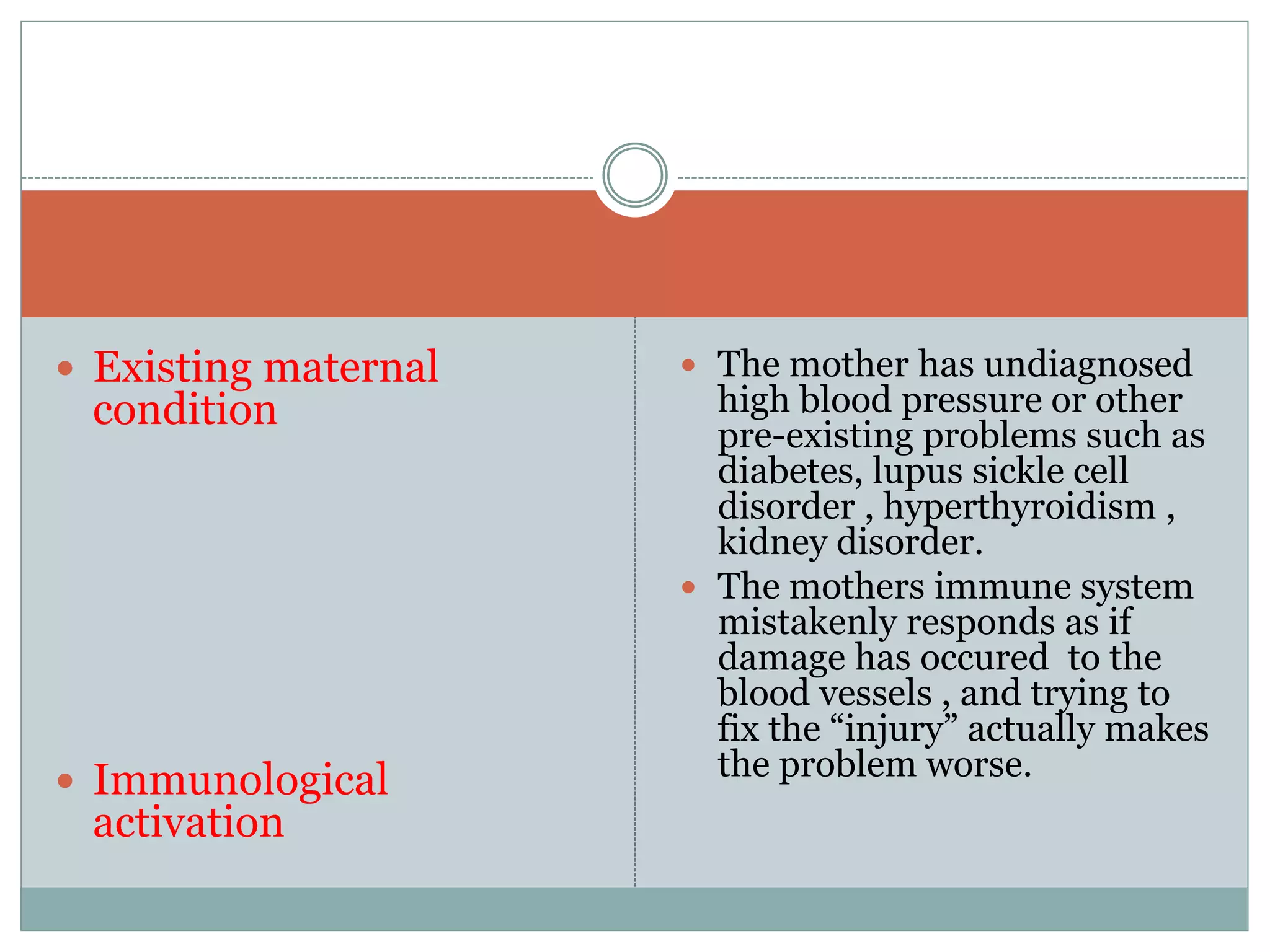
 Existing maternal
condition
 Immunological
activation
 The mother has undiagnosed
high blood pressure or other
pre-existing problems such as
diabetes, lupus sickle cell
disorder , hyperthyroidism ,
kidney disorder.
 The mothers immune system
mistakenly responds as if
damage has occured to the
blood vessels , and trying to
fix the “injury” actually makes
the problem worse.
 Nutritional deficiencies
 Obesity
 Genetic tendency
 Insuficient protein ,
excessive protein, fish
oil, vit.D and other diet
factor.
 Hereditary
transmission.
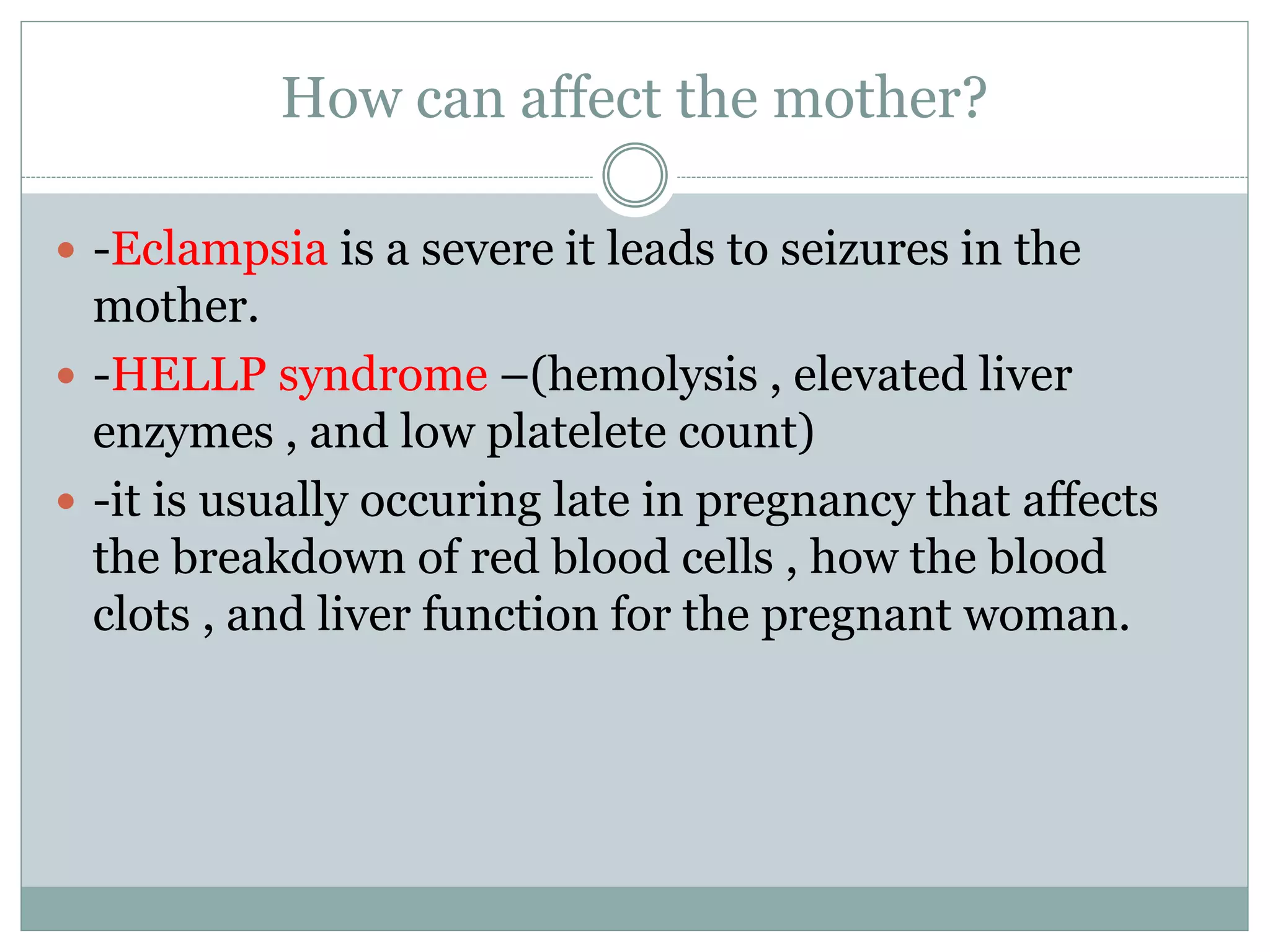
How can affect the mother?
 -Eclampsia is a severe it leads to seizures in the
mother.
 -HELLP syndrome –(hemolysis , elevated liver
enzymes , and low platelete count)
 -it is usually occuring late in pregnancy that affects
the breakdown of red blood cells , how the blood
clots , and liver function for the pregnant woman.
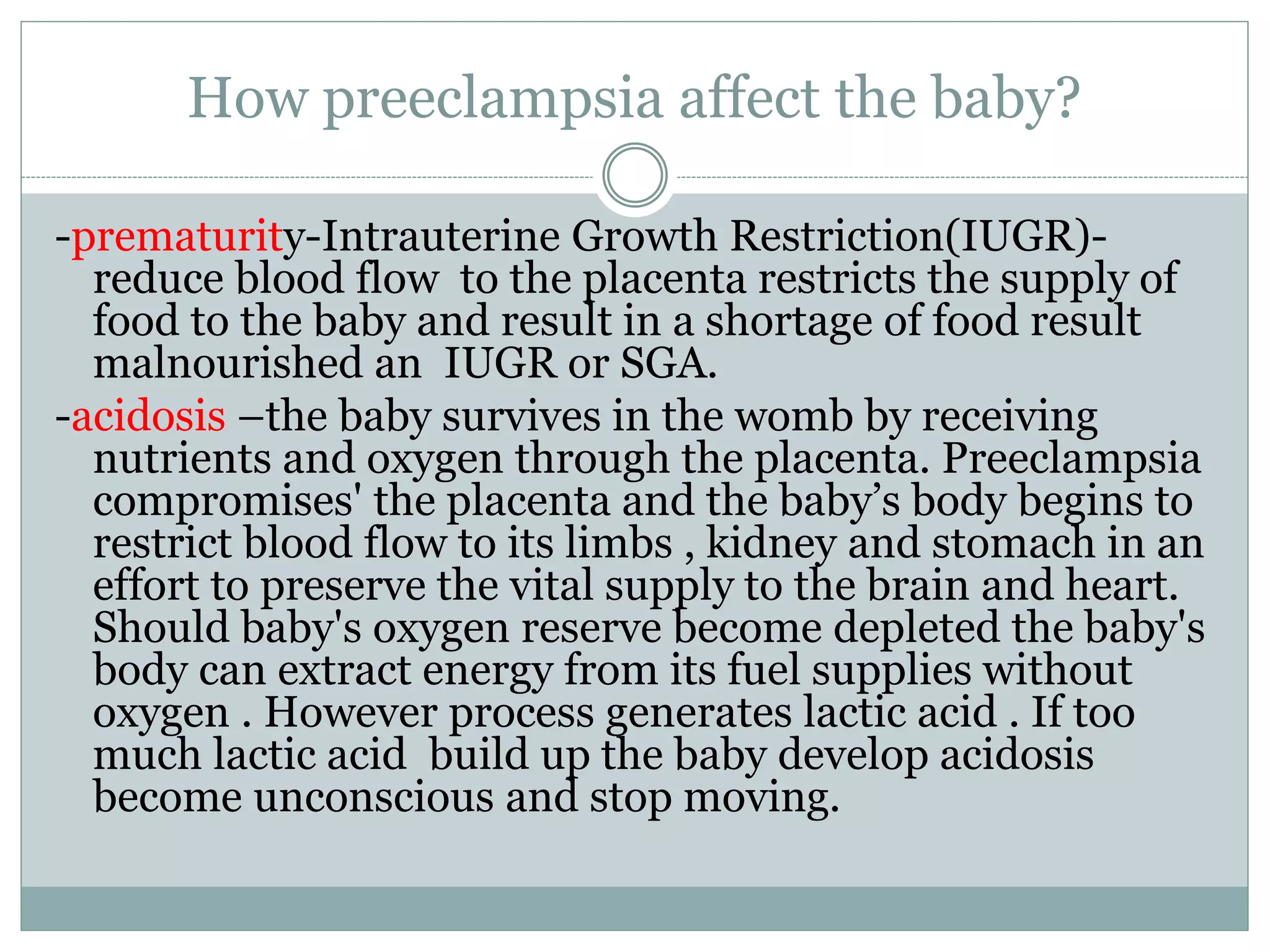
How preeclampsia affect the baby?
-prematurity-Intrauterine Growth Restriction(IUGR)-
reduce blood flow to the placenta restricts the supply of
food to the baby and result in a shortage of food result
malnourished an IUGR or SGA.
-acidosis –the baby survives in the womb by receiving
nutrients and oxygen through the placenta. Preeclampsia
compromises' the placenta and the baby’s body begins to
restrict blood flow to its limbs , kidney and stomach in an
effort to preserve the vital supply to the brain and heart.
Should baby's oxygen reserve become depleted the baby's
body can extract energy from its fuel supplies without
oxygen . However process generates lactic acid . If too
much lactic acid build up the baby develop acidosis
become unconscious and stop moving.
 Death Stillbirths from eclampsia , babies die in utero
after 20 weeks of gestation
 Ongoing life challenges – preeclampsia has been linked
to a host of lifelong challenges for infants born
prematurely among them learning , disorder, cerebral
palsy, epilepsy, blindness and deafness comes the risk of
extended hospitalization , SGA interruption of bonding
in families.
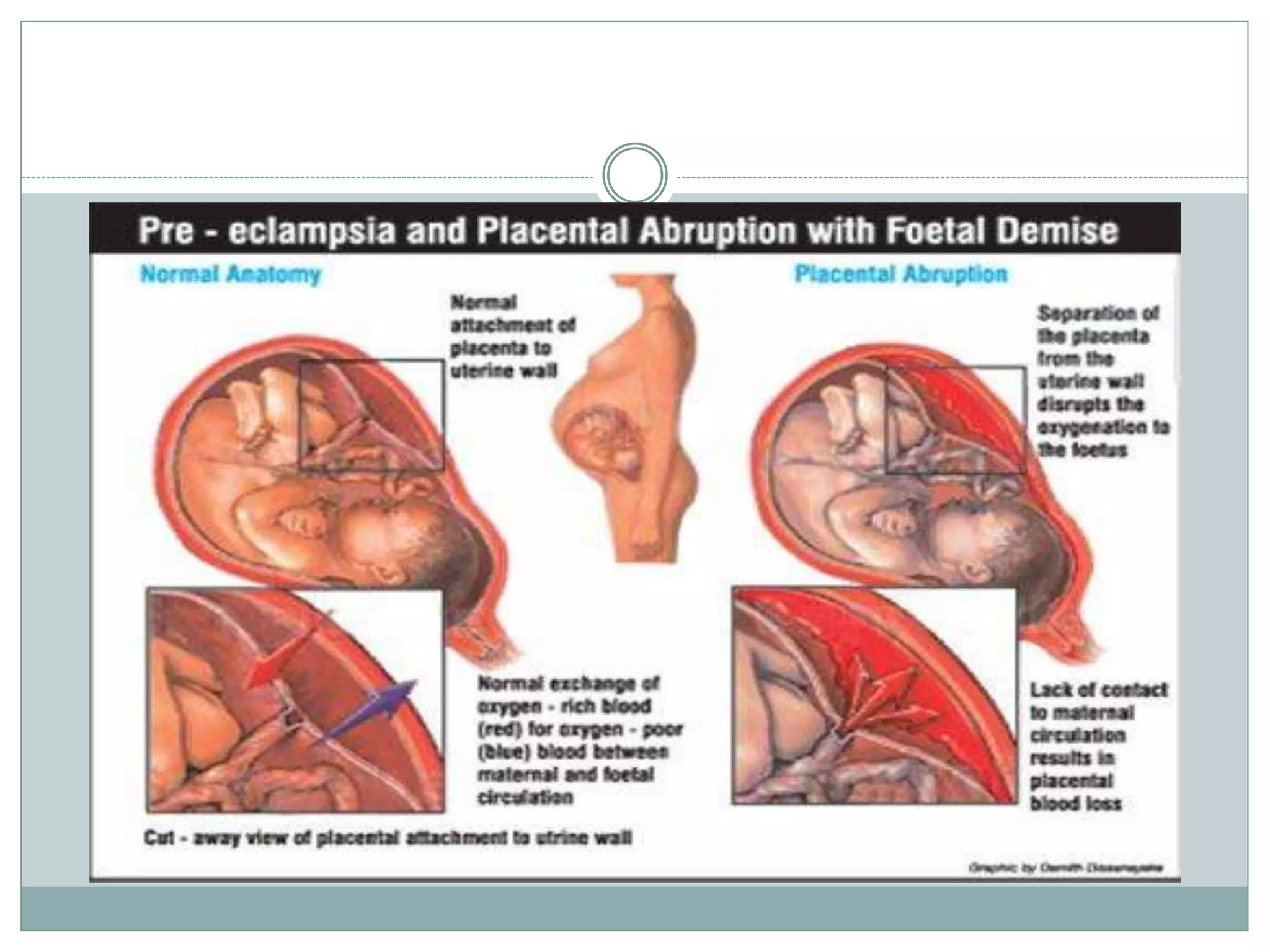
 - very high blood pressure affect the baby from
getting enough blood and oxygen .This could limit yours
baby's growth or cause the placenta to pull away to soon
from uterus.It also called lead to death.
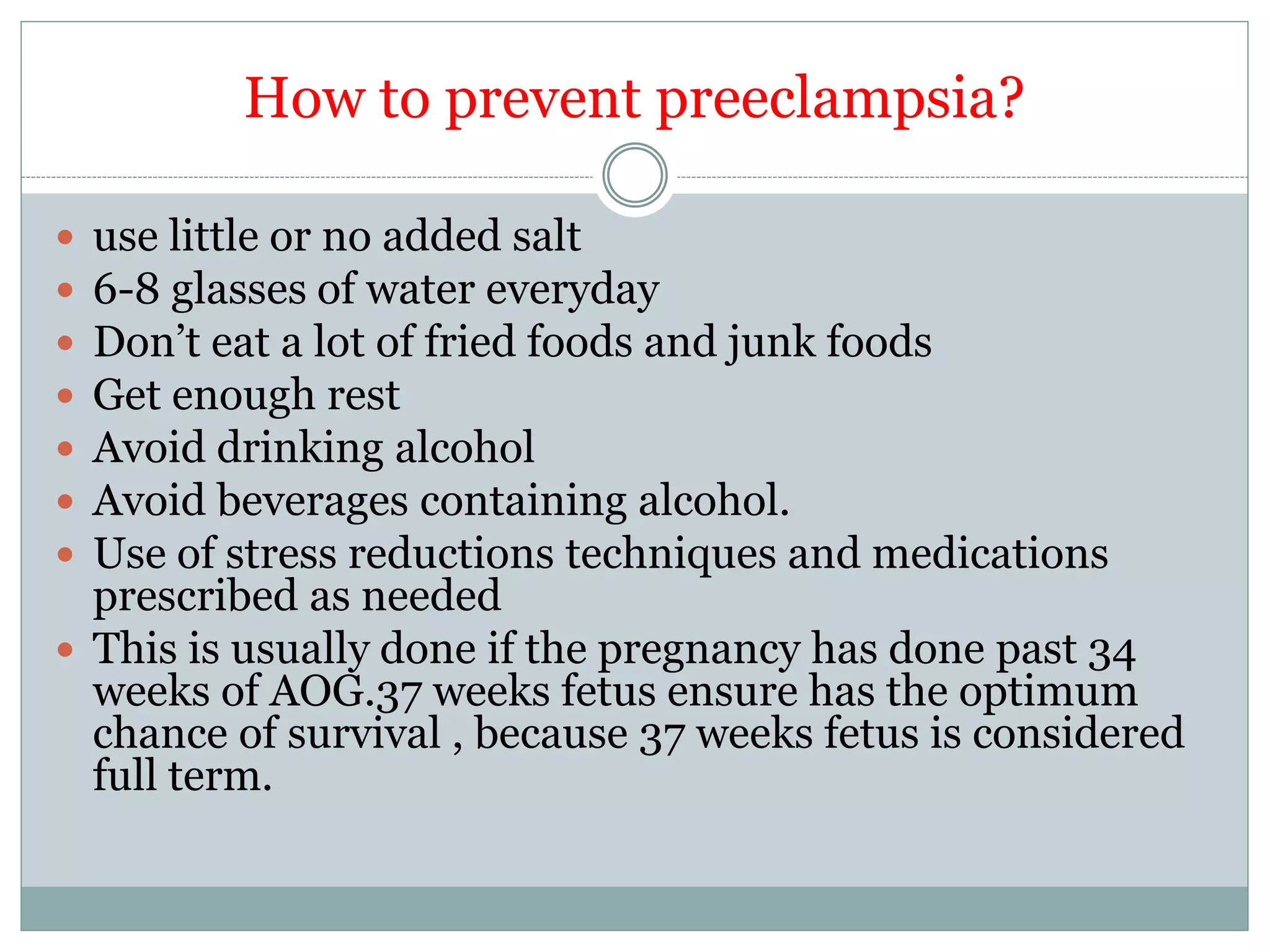
How to prevent preeclampsia?
 use little or no added salt
 6-8 glasses of water everyday
 Don’t eat a lot of fried foods and junk foods
 Get enough rest
 Avoid drinking alcohol
 Avoid beverages containing alcohol.
 Use of stress reductions techniques and medications
prescribed as needed
 This is usually done if the pregnancy has done past 34
weeks of AOG.37 weeks fetus ensure has the optimum
chance of survival , because 37 weeks fetus is considered
full term.
How Treated ?
 Rest , lying on your left side the weight of baby of
your major blood vessels
 Increase prenatal-checkup
 Consume less salt
 Change diet to induce more protein
Toxemia in-pregnancy

Toxemia in-pregnancy

  • 1.
  • 2.
     Toxemia inPregnancy-a condition in which the blood contains toxins produced by body cells at a local source of infection or derived from the growth of microorganisms. Also called blood poisoning.  -an outdated medical term for hypertension with proteiniuria during pregnancy.  -it is a serious condition and may affect the pregnant woman during the second half of pregnancy. It can affect 3% out of 8% of pregnant.
  • 3.
    Signs and Symptomsof Preeclampsia  Edema-one of the common symptom of toxemia involves swelling in hands and face ,including the area of the face . But many pregnant woman experience edema without having preeclampsia.  Sudden Weight Gain-it is a sudden weight gain that amounts to more than 2lbs.in a single week.  Vision Problems-sudden visual problems. The severity of this symptoms can range from blurry spots to the temporary loss of vision .Sudden changes in eyesight can signal the presence of swelling in the brain.
  • 4.
     High BloodPressure – sudden or gradual increase of Blood Pressure if B/P 140/90 or more than 20 weeks.  Upper Abdominal Pain-main experience painful sensation in their upper abdomen. Watch for discomfort or pain that seems to come from under your ribcage, particularly on the right side. This may seem to extend into shoulder.  Proteinuria - excessive protein in urine. Damage vessels in kidneys cause protein from blood to leak into urine. Decrease in urine output and changes in the color of urine. Dark urine , reddish urine.  Headache-frequent bouts of throbbing headaches (migraine-like)that don’t seem to go away. Specially when you already had taken OTC medication.
  • 5.
     Rapid HeartBeat,Difficulty in breating , Mental confusion.
  • 6.
    Causes of Toxemiain Pregnancy(who are at risk for Preeclampsia?)  woman in their pregnancy  woman carrying multiple fetus  woman over 40 years old  diagnosed of high blood pressure  teenage mother younger 20 years old  maternal history of preeclampsia and  woman eating disorder
  • 7.
    Medical discription  Uterineischemia  Inflammation  Angiologies  Prostacyclin/tromboxa ne imbalance(ASA)  Insuficient blood flow to the uterus.  Excessive maternal inflammatory response to pregnancy.  Factors regulating the formation of new blood vessels in the placenta are over produced which in turn affect the blood vessels health in the mother leading to hypertension or kidney damage.  Disruption of balance of hormones that maintain the diameter of the blood vessels. Theories of cause of preeclampsia
  • 8.
     Endothelial activation andDysfunction  Calcium defeciency  Hemodynamic vascular injury  Damage to the lining of the blood vessels that keeps blood from clothing and regulates elasticity of the blood vessels.  Calcium helps maintain blood vessels normal blood pressure deficiency may lead to increases blood pressure.  Injury to the blood vessels due to excessive blood flow or pressure.
  • 9.
     Existing maternal condition Immunological activation  The mother has undiagnosed high blood pressure or other pre-existing problems such as diabetes, lupus sickle cell disorder , hyperthyroidism , kidney disorder.  The mothers immune system mistakenly responds as if damage has occured to the blood vessels , and trying to fix the “injury” actually makes the problem worse.
  • 10.
     Nutritional deficiencies Obesity  Genetic tendency  Insuficient protein , excessive protein, fish oil, vit.D and other diet factor.  Hereditary transmission.
  • 11.
    How can affectthe mother?  -Eclampsia is a severe it leads to seizures in the mother.  -HELLP syndrome –(hemolysis , elevated liver enzymes , and low platelete count)  -it is usually occuring late in pregnancy that affects the breakdown of red blood cells , how the blood clots , and liver function for the pregnant woman.
  • 12.
    How preeclampsia affectthe baby? -prematurity-Intrauterine Growth Restriction(IUGR)- reduce blood flow to the placenta restricts the supply of food to the baby and result in a shortage of food result malnourished an IUGR or SGA. -acidosis –the baby survives in the womb by receiving nutrients and oxygen through the placenta. Preeclampsia compromises' the placenta and the baby’s body begins to restrict blood flow to its limbs , kidney and stomach in an effort to preserve the vital supply to the brain and heart. Should baby's oxygen reserve become depleted the baby's body can extract energy from its fuel supplies without oxygen . However process generates lactic acid . If too much lactic acid build up the baby develop acidosis become unconscious and stop moving.
  • 13.
     Death Stillbirthsfrom eclampsia , babies die in utero after 20 weeks of gestation  Ongoing life challenges – preeclampsia has been linked to a host of lifelong challenges for infants born prematurely among them learning , disorder, cerebral palsy, epilepsy, blindness and deafness comes the risk of extended hospitalization , SGA interruption of bonding in families.  - very high blood pressure affect the baby from getting enough blood and oxygen .This could limit yours baby's growth or cause the placenta to pull away to soon from uterus.It also called lead to death.
  • 14.
    How to preventpreeclampsia?  use little or no added salt  6-8 glasses of water everyday  Don’t eat a lot of fried foods and junk foods  Get enough rest  Avoid drinking alcohol  Avoid beverages containing alcohol.  Use of stress reductions techniques and medications prescribed as needed  This is usually done if the pregnancy has done past 34 weeks of AOG.37 weeks fetus ensure has the optimum chance of survival , because 37 weeks fetus is considered full term.
  • 15.
    How Treated ? Rest , lying on your left side the weight of baby of your major blood vessels  Increase prenatal-checkup  Consume less salt  Change diet to induce more protein