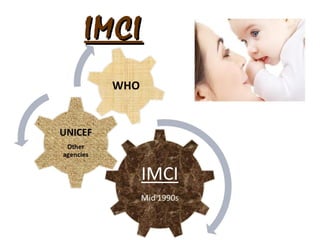
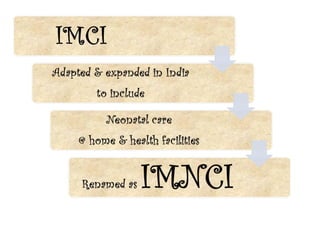
IMCIIMCI
• IMCI combines
–Improved management
of common childhood
illnesses
–Prevention of diseases
–Promotion of health
( by dealing with
feeding &
Essential components of IMNCI
strategy
• Improvements in case management skills
of health staff through locally adapted
guidelines
• Improvements in the overall health
system
• Improvements in family & community
health care practices
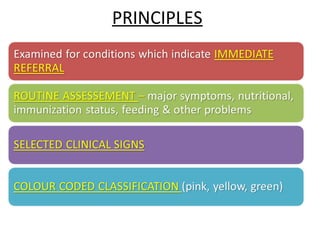
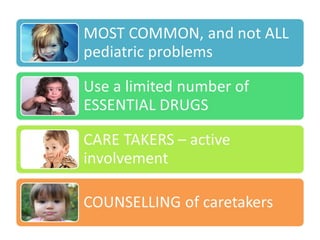
PRINCIPLES
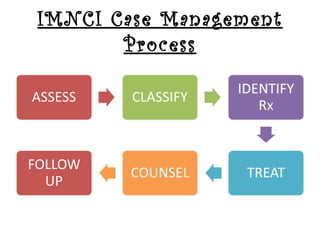
IMNCI Case Management
Process
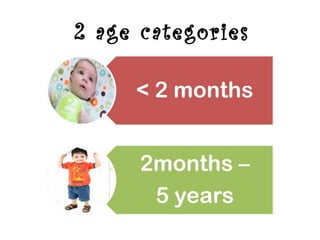
2 age categories
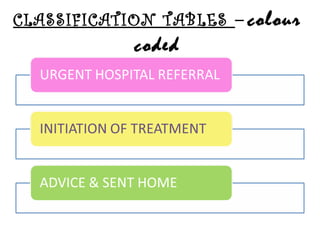
CLASSIFICATION TABLES – colour
coded
OUTPATIENT MANAGEMENT OFOUTPATIENT MANAGEMENT OF
YOUNG INFANTSYOUNG INFANTS ((age upto 2 months)age upto 2 months)
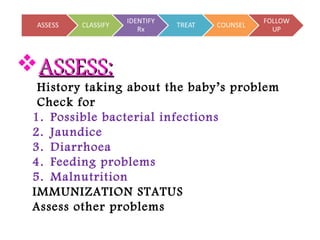
ASSESS:ASSESS:
History taking about the baby’s problem
Check for
1. Possible bacterial infections
2. Jaundice
3. Diarrhoea
4. Feeding problems
5. Malnutrition
IMMUNIZATION STATUS
Assess other problems
CLASSIFYCLASSIFY
1.1. Possible bacterial infectionsPossible bacterial infections
 Possible SERIOUS bact. InfectionsPossible SERIOUS bact. Infections
(CNS infection, very severe pneumonia,
extensive skin infection, temp >37.5 or
<35.5’c)
 Local bact. InfectionsLocal bact. Infections
(umbilical, ear, mild skin infection)
1.1. JAUNDICEJAUNDICE
 Severe jaundiceSevere jaundice
(palms & soles yellow, age <24hrs or
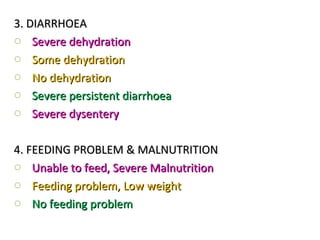
3. DIARRHOEA3. DIARRHOEA
o Severe dehydrationSevere dehydration
o Some dehydrationSome dehydration
o No dehydrationNo dehydration
o Severe persistent diarrhoeaSevere persistent diarrhoea
o Severe dysenterySevere dysentery
4. FEEDING PROBLEM & MALNUTRITION4. FEEDING PROBLEM & MALNUTRITION
o Unable to feed, Severe MalnutritionUnable to feed, Severe Malnutrition
o Feeding problem, Low weightFeeding problem, Low weight
o No feeding problemNo feeding problem
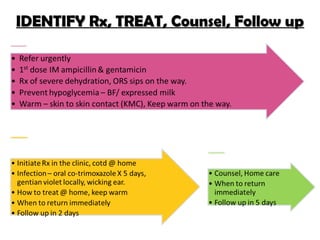
IDENTIFY Rx, TREAT, Counsel, Follow upIDENTIFY Rx, TREAT, Counsel, Follow up
OUTPATIENT MANAGEMENT OF SICKOUTPATIENT MANAGEMENT OF SICK
CHILDCHILD ( Age 2 months – 5 years)( Age 2 months – 5 years)
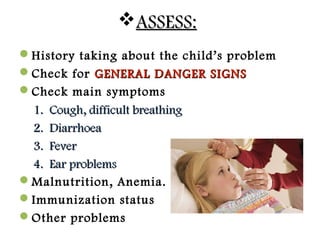
ASSESS:ASSESS:
History taking about the child’s problem
Check for GENERAL DANGER SIGNSGENERAL DANGER SIGNS
Check main symptoms
1.1. Cough, difficult breathingCough, difficult breathing
2.2. DiarrhoeaDiarrhoea
3.3. FeverFever
4.4. Ear problemsEar problems
Malnutrition, Anemia.
Immunization status
Other problems
CLASSIFYCLASSIFY
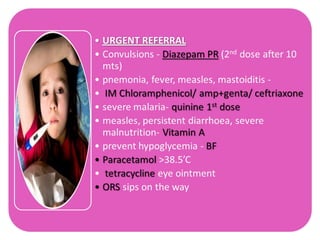
GENERAL DANGER SIGNS
ConvulsionsConvulsions
 unconciousness/lethargyunconciousness/lethargy
 inability to drink/breastfeedinability to drink/breastfeed
 vomits everythingvomits everything
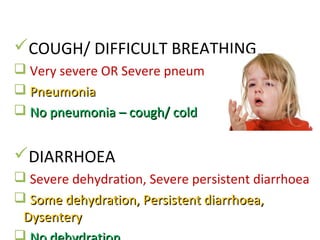
COUGH/ DIFFICULT BREATHING
 Very severe OR Severe pneumonia
 PneumoniaPneumonia
 No pneumonia – cough/ coldNo pneumonia – cough/ cold
DIARRHOEA
 Severe dehydration, Severe persistent diarrhoea
 Some dehydration, Persistent diarrhoea,Some dehydration, Persistent diarrhoea,
DysenteryDysentery
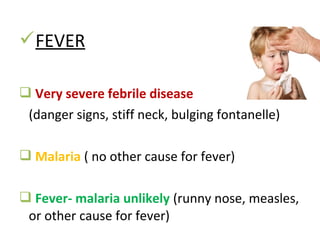
FEVER
 Very severe febrile disease
(danger signs, stiff neck, bulging fontanelle)
 Malaria ( no other cause for fever)
 Fever- malaria unlikely (runny nose, measles,
or other cause for fever)
If MEASLES now or within last 3 months,
classify as:
 Severe complicated measles
( danger sign, corneal clouding, severe mouth
ulcers)
 Measles with eye or mouth complications
(pus from eye, mouth ulcers)
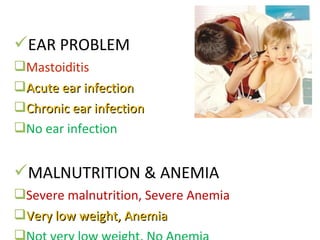
EAR PROBLEM
Mastoiditis
Acute ear infectionAcute ear infection
Chronic ear infectionChronic ear infection
No ear infection
MALNUTRITION & ANEMIA
Severe malnutrition, Severe Anemia
Very low weight, AnemiaVery low weight, Anemia

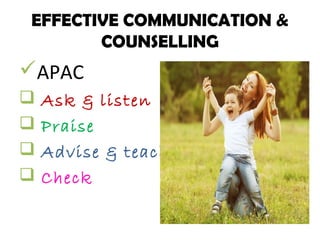
EFFECTIVE COMMUNICATION &
COUNSELLING
APAC
 Ask & listen
 Praise
 Advise & teach
 Check

Imnci ppt

  • 1.
  • 2.
    • IMCI combines –Improvedmanagement of common childhood illnesses –Prevention of diseases –Promotion of health ( by dealing with feeding &
  • 4.
    Essential components ofIMNCI strategy • Improvements in case management skills of health staff through locally adapted guidelines • Improvements in the overall health system • Improvements in family & community health care practices
  • 5.
  • 7.
  • 8.
  • 9.
  • 10.
    OUTPATIENT MANAGEMENT OFOUTPATIENTMANAGEMENT OF YOUNG INFANTSYOUNG INFANTS ((age upto 2 months)age upto 2 months)
  • 11.
    ASSESS:ASSESS: History taking aboutthe baby’s problem Check for 1. Possible bacterial infections 2. Jaundice 3. Diarrhoea 4. Feeding problems 5. Malnutrition IMMUNIZATION STATUS Assess other problems
  • 12.
    CLASSIFYCLASSIFY 1.1. Possible bacterialinfectionsPossible bacterial infections  Possible SERIOUS bact. InfectionsPossible SERIOUS bact. Infections (CNS infection, very severe pneumonia, extensive skin infection, temp >37.5 or <35.5’c)  Local bact. InfectionsLocal bact. Infections (umbilical, ear, mild skin infection) 1.1. JAUNDICEJAUNDICE  Severe jaundiceSevere jaundice (palms & soles yellow, age <24hrs or
  • 13.
    3. DIARRHOEA3. DIARRHOEA oSevere dehydrationSevere dehydration o Some dehydrationSome dehydration o No dehydrationNo dehydration o Severe persistent diarrhoeaSevere persistent diarrhoea o Severe dysenterySevere dysentery 4. FEEDING PROBLEM & MALNUTRITION4. FEEDING PROBLEM & MALNUTRITION o Unable to feed, Severe MalnutritionUnable to feed, Severe Malnutrition o Feeding problem, Low weightFeeding problem, Low weight o No feeding problemNo feeding problem
  • 14.
    IDENTIFY Rx, TREAT,Counsel, Follow upIDENTIFY Rx, TREAT, Counsel, Follow up
  • 15.
    OUTPATIENT MANAGEMENT OFSICKOUTPATIENT MANAGEMENT OF SICK CHILDCHILD ( Age 2 months – 5 years)( Age 2 months – 5 years)
  • 16.
    ASSESS:ASSESS: History taking aboutthe child’s problem Check for GENERAL DANGER SIGNSGENERAL DANGER SIGNS Check main symptoms 1.1. Cough, difficult breathingCough, difficult breathing 2.2. DiarrhoeaDiarrhoea 3.3. FeverFever 4.4. Ear problemsEar problems Malnutrition, Anemia. Immunization status Other problems
  • 17.
    CLASSIFYCLASSIFY GENERAL DANGER SIGNS ConvulsionsConvulsions unconciousness/lethargyunconciousness/lethargy  inability to drink/breastfeedinability to drink/breastfeed  vomits everythingvomits everything
  • 18.
    COUGH/ DIFFICULT BREATHING Very severe OR Severe pneumonia  PneumoniaPneumonia  No pneumonia – cough/ coldNo pneumonia – cough/ cold DIARRHOEA  Severe dehydration, Severe persistent diarrhoea  Some dehydration, Persistent diarrhoea,Some dehydration, Persistent diarrhoea, DysenteryDysentery
  • 19.
    FEVER  Very severefebrile disease (danger signs, stiff neck, bulging fontanelle)  Malaria ( no other cause for fever)  Fever- malaria unlikely (runny nose, measles, or other cause for fever)
  • 20.
    If MEASLES nowor within last 3 months, classify as:  Severe complicated measles ( danger sign, corneal clouding, severe mouth ulcers)  Measles with eye or mouth complications (pus from eye, mouth ulcers)
  • 21.
    EAR PROBLEM Mastoiditis Acute earinfectionAcute ear infection Chronic ear infectionChronic ear infection No ear infection MALNUTRITION & ANEMIA Severe malnutrition, Severe Anemia Very low weight, AnemiaVery low weight, Anemia 
  • 24.
    EFFECTIVE COMMUNICATION & COUNSELLING APAC Ask & listen  Praise  Advise & teach  Check