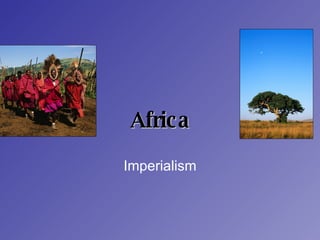
Africa Imperialism
Imperialism Major kingdoms developed over time Beginning in the early AD years, Africa had a steady stream of outside traders and explorers Brought new ideas and tools Religions: Christianity, Islam, Judaism
European Imperialism Circa 1450, Prince Henry “The Navigator” of Portugal sent ships to explore the West Africa They brought gold and Africans back with them It began the trade between Europe and Africa With new colonies in the Americas, Europeans needed workers
European Motives Raw materials/ natural resources Industrial Revolution Diamonds of South Africa Rubber from rainforests in Central Africa Political rivalries To be the best and have the biggest empire Great Britain vs. Spain vs. Portugal vs. France Belief in European superiority Racism ,  Social Darwinism Ethnocentrism:  "The White Man's Burden" by Rudyard Kipling European Imperialism
European Imperialism Other Factors Involved Technological superiority Steam engine and railroads allowed easier travel Quinine to protect Europeans from malaria African diversity Made it easy to encourage rivalries between different groups
The Atlantic Slave Trade The Middle Passage :  the second leg of the Atlantic slave trade in which horrible injustices were committed against Africans who were to be sold as slaves European Imperialism PBS: The Atlantic Slave Trade
 
The Scramble for Africa European colonial rivalries spurred the meeting of the  Berlin Conference  (1884) Split Africa into regions owned by European countries (page 99)
 
A New Conference? Does Africa need a new Berlin Conference?
Resistance to Imperialism Africans continually fought of European imperialism South African resistance Zulus:  trained warriors who fought off British soldiers Boer Wars : Fights between Dutch settlers (Boers), British, and Zulus for diamonds and gold Both Dutch and Zulus eventually absorbed into British empire
Effects of Imperialism Increased tensions among tribes and societies Loss of traditional culture and communities Loss of lives, particularly from slave trade African diaspora : scattering of people and culture Resulted in the spread of African culture to new regions of the world, especially Europe and the Americas European Imperialism
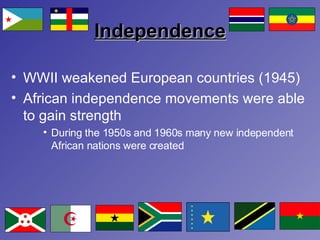
Independence Nationalism grew out of European imperialism European boundaries put African tribal rivals under the same governments Nationalists called for a movement Pan-Africanism : movement to unite all Africans based on common heritage
WWII weakened European countries (1945) African independence movements were able to gain strength During the 1950s and 1960s many new independent African nations were created Independence
Implications African nations have struggled to maintain stable governments and stable economies Europeans gave no government training to Africans Extracting and selling natural resources
The Middle East Imperialism
End of the Ottomans Challenges to the Ottoman Empire: Imperialism European imperialism began to play a strong role in the break up of the Ottoman Empire Reforms Ottoman rulers began acting more Western than Middle Eastern Nationalism Ottoman-ruled regions began nationalist movements
Ottomans attempted to reform Modernized the government and army Created secular schools to teach western ideas This plan backfired… Ottoman Reforms
European Imperialism The empire began breaking into numerous independent states around the 19 th  century Those states later came under the control of European countries Example: Egypt- Great Britain
One of Egypt’s great rulers during British imperialism was Muhammad Ali He promoted: Modernization Growth of cash crops Western reforms Egypt and Imperialism
Egypt & Imperialism Britain and France fought to gain control of Egypt They wanted control of the  Suez Canal Links the Red Sea with the Mediterranean Sea
Republic of Turkey Turkey became independent, however its new ruler was “western” through and through Ataturk :  Became President of Turkey in the 1920s Adopted policies of westernization and modernization
Western style clothing Separation of church and state Secular public schools Republic of Turkey Even language reform. Turkey Video
Arab Nationalism After the break up of the Ottoman Empire, Britain and France got control of many Arab lands Arab nationalists demanded self-rule Importance of oil made Europeans reluctant to leave the Middle East
The empire was officially dissolved after WWI (1919), when its ally, Germany, was defeated End of the Ottomans
End of the Ottomans Ottoman Empire at its height
End of the Ottomans
South Asia British Imperialism in India
Dutch and British The Dutch and British gained trading posts in Southeast Asia East India Companies Silk, spices to Europe Textiles, foods, etc. to SE Asia
British in India British encouraged disunity among local Indian leaders Indian grievances with British Outlawed Indian traditions Indian princes didn’t like being told what to do High taxes Conversion to Christianity
British in India British train  sepoys Indian troops serving in the British army Causes of the  Sepoy Rebellion Rifles greased with pork or beef fat Required to fight in foreign lands
British in India Effects of imperialism British imports pushed Local industries declined Had to raise cash crops to afford to live Improved healthcare and sanitation Improved transportation Railroads Schools built Development of an educated an Indian middle class
Push for Independence Indian middle class wants: liberty and freedom from Great Britain To keep Indian cultural traditions Indian nationalists formed groups Indian National Congress (INC) Pressured for  self-rule
Freedom Great Britain passed laws limiting various freedoms and rights in India The Indian National Congress (INC) continued to fight for self-rule. Example : Indians were prohibited from gathering publicly. Indian National Congress, 1885
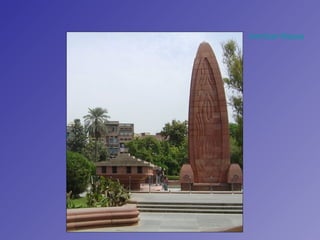
Amritsar Massacre (1919) : British troops opened fire and killed or wounded nearly 1500 Indians Symbolizes a turning point in India’s struggle for freedom Freedom
Amritsar Massacre memorial in Amritsar, India.
Mohandas Gandhi Gandhi urged Indians to gain independence through non-cooperation and nonviolent means
U.S. Imperialism Ch. 27 S.5 and Ch. 28 S.3
East Asia Spheres of Influence in China
Before and After
Imperialism During the age of imperialism, the Qing dynasty declined and the Industrial Revolution increased the strength of European nations
Great Britain wanted to get involved with China British began trading opium in China The Chinese became addicted Imperialism
Imperialism
Opium Wars The Chinese government asked Great Britain to stop the trade The British refused Imperialism
Imperialism Opium Wars European victory Superior military technology
Imperialism Opium Wars Treaty of Nanjing : ended the Opium wars The Chinese were forced to accept British terms of surrender Spheres of influence : areas in which a foreign country has special economic privileges
Imperialism
Reform in China The Chinese wanted reform, with the hopes of kicking other nations out of China Learn the western way of life to control foreigners Rebellions and unrest lasted for half a century Many were supportive of reform, others resisted it
Reform in China The Boxer Rebellion : Part of a movement known as the “Righteous and Harmonious Society Movement” Fought against foreign influence in China The rebellion was easily crushed by a coalition of foreign armies
Independence China became a republic in 1911 (western reform)

World History- Imperialism

  • 1.
  • 2.
    Imperialism Major kingdomsdeveloped over time Beginning in the early AD years, Africa had a steady stream of outside traders and explorers Brought new ideas and tools Religions: Christianity, Islam, Judaism
  • 3.
    European Imperialism Circa1450, Prince Henry “The Navigator” of Portugal sent ships to explore the West Africa They brought gold and Africans back with them It began the trade between Europe and Africa With new colonies in the Americas, Europeans needed workers
  • 4.
    European Motives Rawmaterials/ natural resources Industrial Revolution Diamonds of South Africa Rubber from rainforests in Central Africa Political rivalries To be the best and have the biggest empire Great Britain vs. Spain vs. Portugal vs. France Belief in European superiority Racism , Social Darwinism Ethnocentrism: "The White Man's Burden" by Rudyard Kipling European Imperialism
  • 5.
    European Imperialism OtherFactors Involved Technological superiority Steam engine and railroads allowed easier travel Quinine to protect Europeans from malaria African diversity Made it easy to encourage rivalries between different groups
  • 6.
    The Atlantic SlaveTrade The Middle Passage : the second leg of the Atlantic slave trade in which horrible injustices were committed against Africans who were to be sold as slaves European Imperialism PBS: The Atlantic Slave Trade
  • 7.
  • 8.
    The Scramble forAfrica European colonial rivalries spurred the meeting of the Berlin Conference (1884) Split Africa into regions owned by European countries (page 99)
  • 9.
  • 10.
    A New Conference?Does Africa need a new Berlin Conference?
  • 11.
    Resistance to ImperialismAfricans continually fought of European imperialism South African resistance Zulus: trained warriors who fought off British soldiers Boer Wars : Fights between Dutch settlers (Boers), British, and Zulus for diamonds and gold Both Dutch and Zulus eventually absorbed into British empire
  • 12.
    Effects of ImperialismIncreased tensions among tribes and societies Loss of traditional culture and communities Loss of lives, particularly from slave trade African diaspora : scattering of people and culture Resulted in the spread of African culture to new regions of the world, especially Europe and the Americas European Imperialism
  • 13.
    Independence Nationalism grewout of European imperialism European boundaries put African tribal rivals under the same governments Nationalists called for a movement Pan-Africanism : movement to unite all Africans based on common heritage
  • 14.
    WWII weakened Europeancountries (1945) African independence movements were able to gain strength During the 1950s and 1960s many new independent African nations were created Independence
  • 15.
    Implications African nationshave struggled to maintain stable governments and stable economies Europeans gave no government training to Africans Extracting and selling natural resources
  • 16.
    The Middle EastImperialism
  • 17.
    End of theOttomans Challenges to the Ottoman Empire: Imperialism European imperialism began to play a strong role in the break up of the Ottoman Empire Reforms Ottoman rulers began acting more Western than Middle Eastern Nationalism Ottoman-ruled regions began nationalist movements
  • 18.
    Ottomans attempted toreform Modernized the government and army Created secular schools to teach western ideas This plan backfired… Ottoman Reforms
  • 19.
    European Imperialism Theempire began breaking into numerous independent states around the 19 th century Those states later came under the control of European countries Example: Egypt- Great Britain
  • 20.
    One of Egypt’sgreat rulers during British imperialism was Muhammad Ali He promoted: Modernization Growth of cash crops Western reforms Egypt and Imperialism
  • 21.
    Egypt & ImperialismBritain and France fought to gain control of Egypt They wanted control of the Suez Canal Links the Red Sea with the Mediterranean Sea
  • 22.
    Republic of TurkeyTurkey became independent, however its new ruler was “western” through and through Ataturk : Became President of Turkey in the 1920s Adopted policies of westernization and modernization
  • 23.
    Western style clothingSeparation of church and state Secular public schools Republic of Turkey Even language reform. Turkey Video
  • 24.
    Arab Nationalism Afterthe break up of the Ottoman Empire, Britain and France got control of many Arab lands Arab nationalists demanded self-rule Importance of oil made Europeans reluctant to leave the Middle East
  • 25.
    The empire wasofficially dissolved after WWI (1919), when its ally, Germany, was defeated End of the Ottomans
  • 26.
    End of theOttomans Ottoman Empire at its height
  • 27.
    End of theOttomans
  • 28.
    South Asia BritishImperialism in India
  • 29.
    Dutch and BritishThe Dutch and British gained trading posts in Southeast Asia East India Companies Silk, spices to Europe Textiles, foods, etc. to SE Asia
  • 30.
    British in IndiaBritish encouraged disunity among local Indian leaders Indian grievances with British Outlawed Indian traditions Indian princes didn’t like being told what to do High taxes Conversion to Christianity
  • 31.
    British in IndiaBritish train sepoys Indian troops serving in the British army Causes of the Sepoy Rebellion Rifles greased with pork or beef fat Required to fight in foreign lands
  • 32.
    British in IndiaEffects of imperialism British imports pushed Local industries declined Had to raise cash crops to afford to live Improved healthcare and sanitation Improved transportation Railroads Schools built Development of an educated an Indian middle class
  • 33.
    Push for IndependenceIndian middle class wants: liberty and freedom from Great Britain To keep Indian cultural traditions Indian nationalists formed groups Indian National Congress (INC) Pressured for self-rule
  • 34.
    Freedom Great Britainpassed laws limiting various freedoms and rights in India The Indian National Congress (INC) continued to fight for self-rule. Example : Indians were prohibited from gathering publicly. Indian National Congress, 1885
  • 35.
    Amritsar Massacre (1919): British troops opened fire and killed or wounded nearly 1500 Indians Symbolizes a turning point in India’s struggle for freedom Freedom
  • 36.
    Amritsar Massacre memorialin Amritsar, India.
  • 37.
    Mohandas Gandhi Gandhiurged Indians to gain independence through non-cooperation and nonviolent means
  • 38.
    U.S. Imperialism Ch.27 S.5 and Ch. 28 S.3
  • 39.
    East Asia Spheresof Influence in China
  • 40.
  • 41.
    Imperialism During theage of imperialism, the Qing dynasty declined and the Industrial Revolution increased the strength of European nations
  • 42.
    Great Britain wantedto get involved with China British began trading opium in China The Chinese became addicted Imperialism
  • 43.
  • 44.
    Opium Wars TheChinese government asked Great Britain to stop the trade The British refused Imperialism
  • 45.
    Imperialism Opium WarsEuropean victory Superior military technology
  • 46.
    Imperialism Opium WarsTreaty of Nanjing : ended the Opium wars The Chinese were forced to accept British terms of surrender Spheres of influence : areas in which a foreign country has special economic privileges
  • 47.
  • 48.
    Reform in ChinaThe Chinese wanted reform, with the hopes of kicking other nations out of China Learn the western way of life to control foreigners Rebellions and unrest lasted for half a century Many were supportive of reform, others resisted it
  • 49.
    Reform in ChinaThe Boxer Rebellion : Part of a movement known as the “Righteous and Harmonious Society Movement” Fought against foreign influence in China The rebellion was easily crushed by a coalition of foreign armies
  • 50.
    Independence China becamea republic in 1911 (western reform)