Migration and Industrialization Chapter 13
Migration and Industrialization Photograph pages 406-407
“ The West”
Themes of Western Settlement The American Dream Native Americans, White settlers, Immigrants Cultural Diversity Cowboys Economic Opportunity Western frontier, railroads Women in America Played a crucial role in western settlement
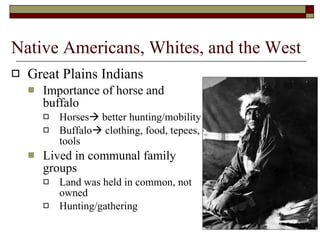
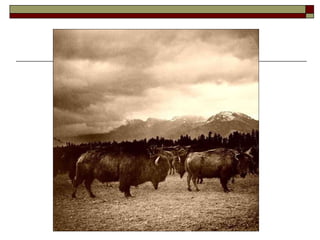
Native Americans, Whites, and the West Great Plains Indians Importance of horse and buffalo Horses   better hunting/mobility Buffalo   clothing, food, tepees, tools Lived in communal family groups Land was held in common, not owned Hunting/gathering
 
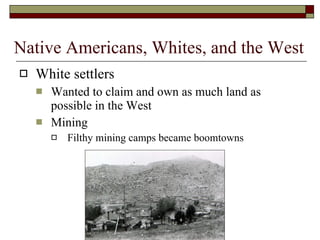
White settlers Wanted to claim and own as much land as possible in the West Mining Filthy mining camps became boomtowns Native Americans, Whites, and the West
The Government and Native Americans The government attempted to get tribal treaties defining tribe boundaries Most tribes refused to sign the treaties Sand Creek Massacre :  U.S. military attacked a Cheyenne tribe that had previously surrendered and lived in peace
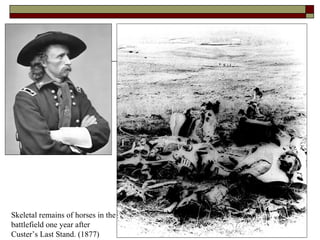
Custer’s Last Stand:   George Armstrong Custer went to attack the Cheyenne at the Little Bighorn River Custer underestimated the number of natives Custer and his men were dead in 20 minutes American people were outraged by Custer’s defeat and demanded revenge The Government and Native Americans
Skeletal remains of horses in the battlefield one year after Custer’s Last Stand. (1877)
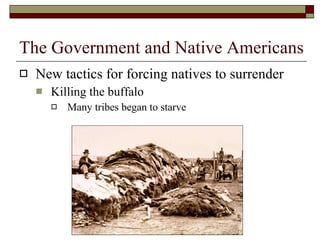
New tactics for forcing natives to surrender Killing the buffalo Many tribes began to starve The Government and Native Americans
Assimilation :  Native Americans expected to give up ways of life and beliefs for white culture Dawes Act :  split reservation land into a number of acres given to individual natives Attempt to assimilate natives into white culture Never fully worked The Government and Native Americans
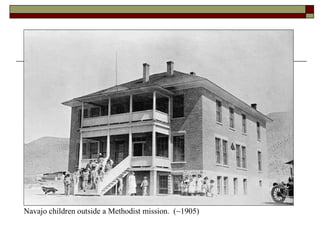
Navajo children outside a Methodist mission.  (~1905)
The Ghost Dance The dance was performed with the belief that the white people would disappear and the buffalo would return Many white officers were frightened by the dance Attempted to arrest Sitting Bull (Sioux leader), however a shootout occurred, resulting in the death of Sitting Bull
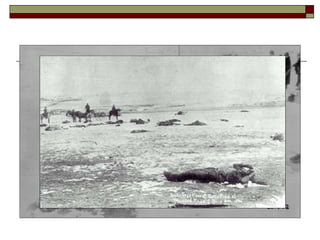
The Ghost Dance Battle of Wounded Knee : A group of Sioux were taken to Wounded Knee camp and asked to hand over their weapons When the natives refused, the military men fired and killed 300 of 350 natives
 
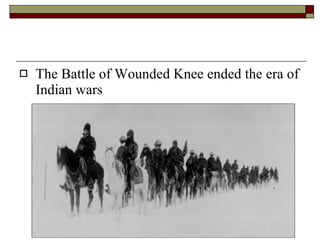
The Battle of Wounded Knee ended the era of Indian wars
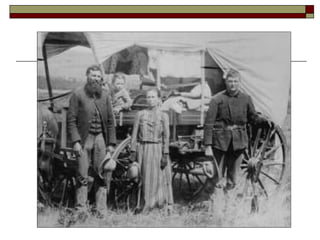
American Migration Homestead Act (1862):  160 acres of land free to anyone who would live on it and cultivate it for 5 years Exodusters : African-Americans who moved from the South to Kansas after being freed Pacific Railroad Act (1862):  gave land and loans to railroad companies


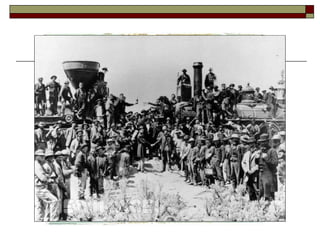
American Migration Transcontinental Railroad Union Pacific and Central Pacific Railroad Companies met in Utah in 1869 to complete the first trans. railroad
 
The Legend of the American Cowboy Chapter 13
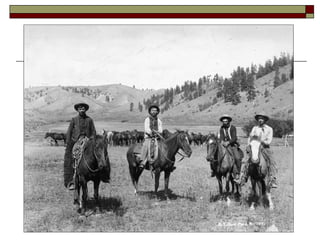
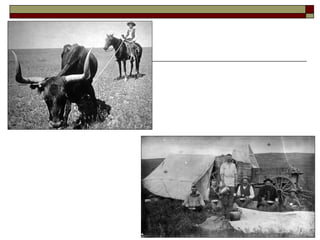
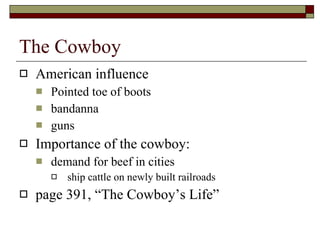
Cowboys Original cowboys were Aztec prisoners of the Spanish, as well as the Spanish ranchers All of what is known of the American cowboy was heavily influenced by the Mexican ranchers Spurs, clothing (chaps, boots, etc), stirrups Language:  rodeo, bronco, corral


The Cowboy American influence Pointed toe of boots bandanna guns Importance of the cowboy: demand for beef in cities ship cattle on newly built railroads page 391, “The Cowboy’s Life”
The End of the Wide Open West overgrazing natural disasters (drought, blizzards, etc) invention of barbed wire led to the fencing off of the frontier
Populism – The People’s Party Chapter 13
Development of Populism As a result of the hardships farmers faced (weather, debt due to rising shipping costs, etc), they felt they needed some political representation The Grange : a group of farmers who took action on the political reforms they wanted
Populist Party Populist (People’s) Party  —formed to help lift the burden of farmers and other workers
Populism Supported a number of reforms Increase in the money supply Graduated income tax Federal loan program Elect U.S. senators by popular vote Secret ballot 8 hour workday and restrictions on immigration
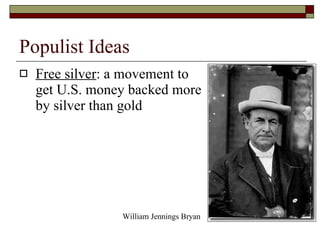
Populist Ideas Free silver : a movement to get U.S. money backed more by silver than gold William Jennings Bryan
Populist Ideas Bimetallism :  gold or silver given in exchange for paper money There was more silver than gold, making more money More money=more expensive goods and services Good for farmers, bad for consumers Populism ended because many consumers feared the free silverites Goods would be more expensive
Legacies of Populism Showed that people could organize and have political impact And brought certain reforms to the limelight These are brought up again in the early 20th century

Chapter 13

  • 1.
  • 2.
    Migration and IndustrializationPhotograph pages 406-407
  • 3.
  • 4.
    Themes of WesternSettlement The American Dream Native Americans, White settlers, Immigrants Cultural Diversity Cowboys Economic Opportunity Western frontier, railroads Women in America Played a crucial role in western settlement
  • 5.
    Native Americans, Whites,and the West Great Plains Indians Importance of horse and buffalo Horses  better hunting/mobility Buffalo  clothing, food, tepees, tools Lived in communal family groups Land was held in common, not owned Hunting/gathering
  • 6.
  • 7.
    White settlers Wantedto claim and own as much land as possible in the West Mining Filthy mining camps became boomtowns Native Americans, Whites, and the West
  • 8.
    The Government andNative Americans The government attempted to get tribal treaties defining tribe boundaries Most tribes refused to sign the treaties Sand Creek Massacre : U.S. military attacked a Cheyenne tribe that had previously surrendered and lived in peace
  • 9.
    Custer’s Last Stand: George Armstrong Custer went to attack the Cheyenne at the Little Bighorn River Custer underestimated the number of natives Custer and his men were dead in 20 minutes American people were outraged by Custer’s defeat and demanded revenge The Government and Native Americans
  • 10.
    Skeletal remains ofhorses in the battlefield one year after Custer’s Last Stand. (1877)
  • 11.
    New tactics forforcing natives to surrender Killing the buffalo Many tribes began to starve The Government and Native Americans
  • 12.
    Assimilation : Native Americans expected to give up ways of life and beliefs for white culture Dawes Act : split reservation land into a number of acres given to individual natives Attempt to assimilate natives into white culture Never fully worked The Government and Native Americans
  • 13.
    Navajo children outsidea Methodist mission. (~1905)
  • 14.
    The Ghost DanceThe dance was performed with the belief that the white people would disappear and the buffalo would return Many white officers were frightened by the dance Attempted to arrest Sitting Bull (Sioux leader), however a shootout occurred, resulting in the death of Sitting Bull
  • 15.
    The Ghost DanceBattle of Wounded Knee : A group of Sioux were taken to Wounded Knee camp and asked to hand over their weapons When the natives refused, the military men fired and killed 300 of 350 natives
  • 16.
  • 17.
    The Battle ofWounded Knee ended the era of Indian wars
  • 18.
    American Migration HomesteadAct (1862): 160 acres of land free to anyone who would live on it and cultivate it for 5 years Exodusters : African-Americans who moved from the South to Kansas after being freed Pacific Railroad Act (1862): gave land and loans to railroad companies
  • 19.
  • 20.
  • 21.
  • 22.
    American Migration TranscontinentalRailroad Union Pacific and Central Pacific Railroad Companies met in Utah in 1869 to complete the first trans. railroad
  • 23.
  • 24.
    The Legend ofthe American Cowboy Chapter 13
  • 25.
    Cowboys Original cowboyswere Aztec prisoners of the Spanish, as well as the Spanish ranchers All of what is known of the American cowboy was heavily influenced by the Mexican ranchers Spurs, clothing (chaps, boots, etc), stirrups Language: rodeo, bronco, corral
  • 26.
  • 27.
  • 28.
  • 29.
    The Cowboy Americaninfluence Pointed toe of boots bandanna guns Importance of the cowboy: demand for beef in cities ship cattle on newly built railroads page 391, “The Cowboy’s Life”
  • 30.
    The End ofthe Wide Open West overgrazing natural disasters (drought, blizzards, etc) invention of barbed wire led to the fencing off of the frontier
  • 31.
    Populism – ThePeople’s Party Chapter 13
  • 32.
    Development of PopulismAs a result of the hardships farmers faced (weather, debt due to rising shipping costs, etc), they felt they needed some political representation The Grange : a group of farmers who took action on the political reforms they wanted
  • 33.
    Populist Party Populist(People’s) Party —formed to help lift the burden of farmers and other workers
  • 34.
    Populism Supported anumber of reforms Increase in the money supply Graduated income tax Federal loan program Elect U.S. senators by popular vote Secret ballot 8 hour workday and restrictions on immigration
  • 35.
    Populist Ideas Freesilver : a movement to get U.S. money backed more by silver than gold William Jennings Bryan
  • 36.
    Populist Ideas Bimetallism: gold or silver given in exchange for paper money There was more silver than gold, making more money More money=more expensive goods and services Good for farmers, bad for consumers Populism ended because many consumers feared the free silverites Goods would be more expensive
  • 37.
    Legacies of PopulismShowed that people could organize and have political impact And brought certain reforms to the limelight These are brought up again in the early 20th century