Reforming American Society American History Chapter 8
Religion Sparks Reform Second Great Awakening After 1790, religious movement that stressed the individual Salvation is not predetermined Individual responsibility to improve themselves and society Revival :  meeting to awaken  religious faith through passion African American churches: Offered hope of salvation from slavery
Transcendentalism : Henry David Thoreau Ralph Waldo Emerson Emphasized the truth found in nature, personal emotion, and individual conscience Utopian communities : Optimism led people to try to create “utopias,” or perfect societies Religion Sparks Reform
Reforming Prisons Dorothea Dix, persuaded Congress to improve conditions at prisons Prisons held mentally ill patients, as well as criminals Improving Education Tax-supported schools Prepare students to become good citizens Religion Sparks Reform
Women and Reform Cult of domesticity : Housework and childcare considered the only proper activities for married women Young, unmarried women often worked in factories Women reform: Abolition:  the call to outlaw slavery Temperance movement: effort to prohibit drinking of alcohol Education Healthcare
Women and Reform Women’s rights movement Seneca Falls Convention:  first woman’s rights meeting Elizabeth Cady Stanton, Lucretia Mott, Sojourner Truth
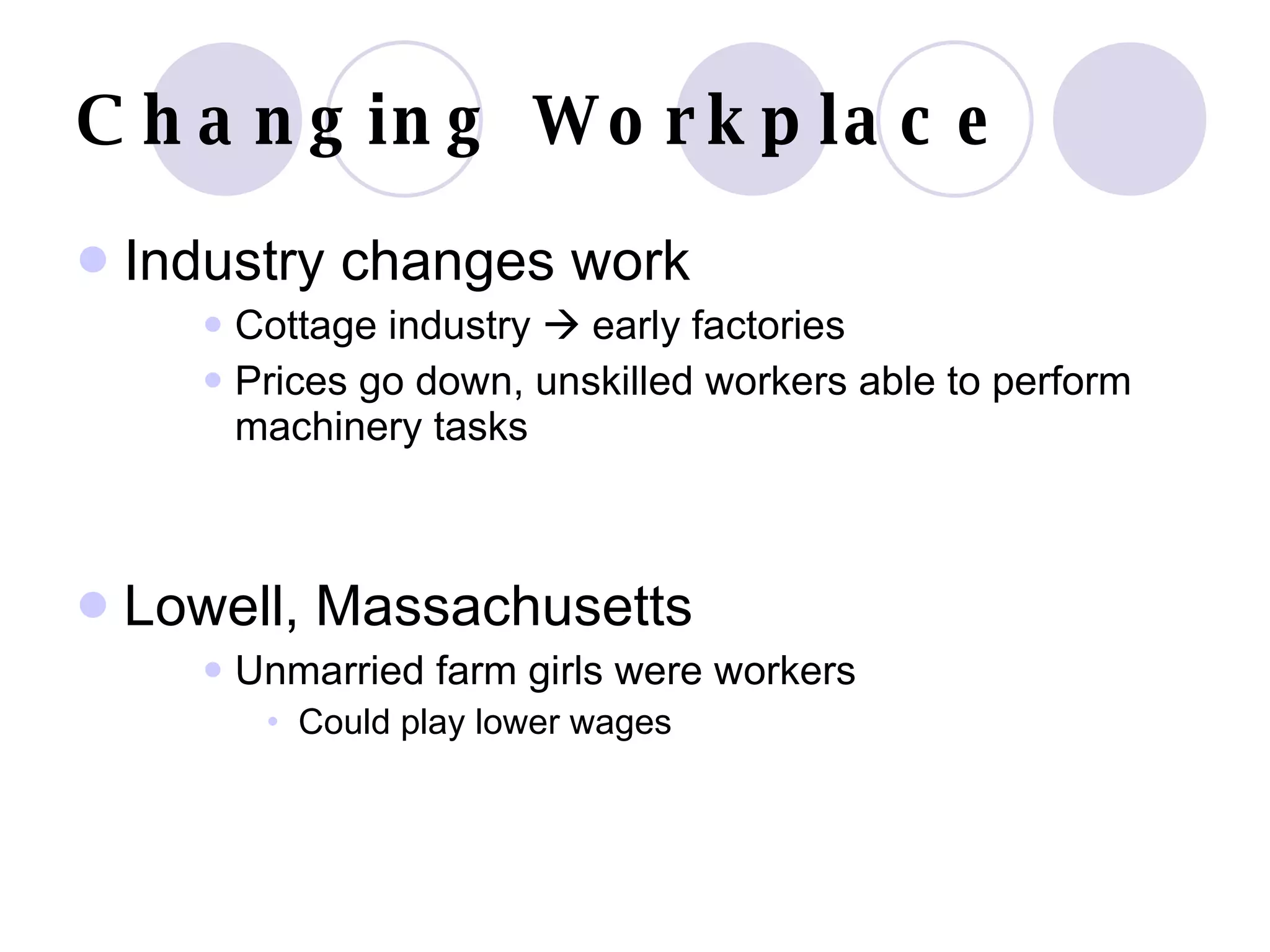
Changing Workplace Industry changes work Cottage industry    early factories Prices go down, unskilled workers able to perform machinery tasks Lowell, Massachusetts Unmarried farm girls were workers Could play lower wages
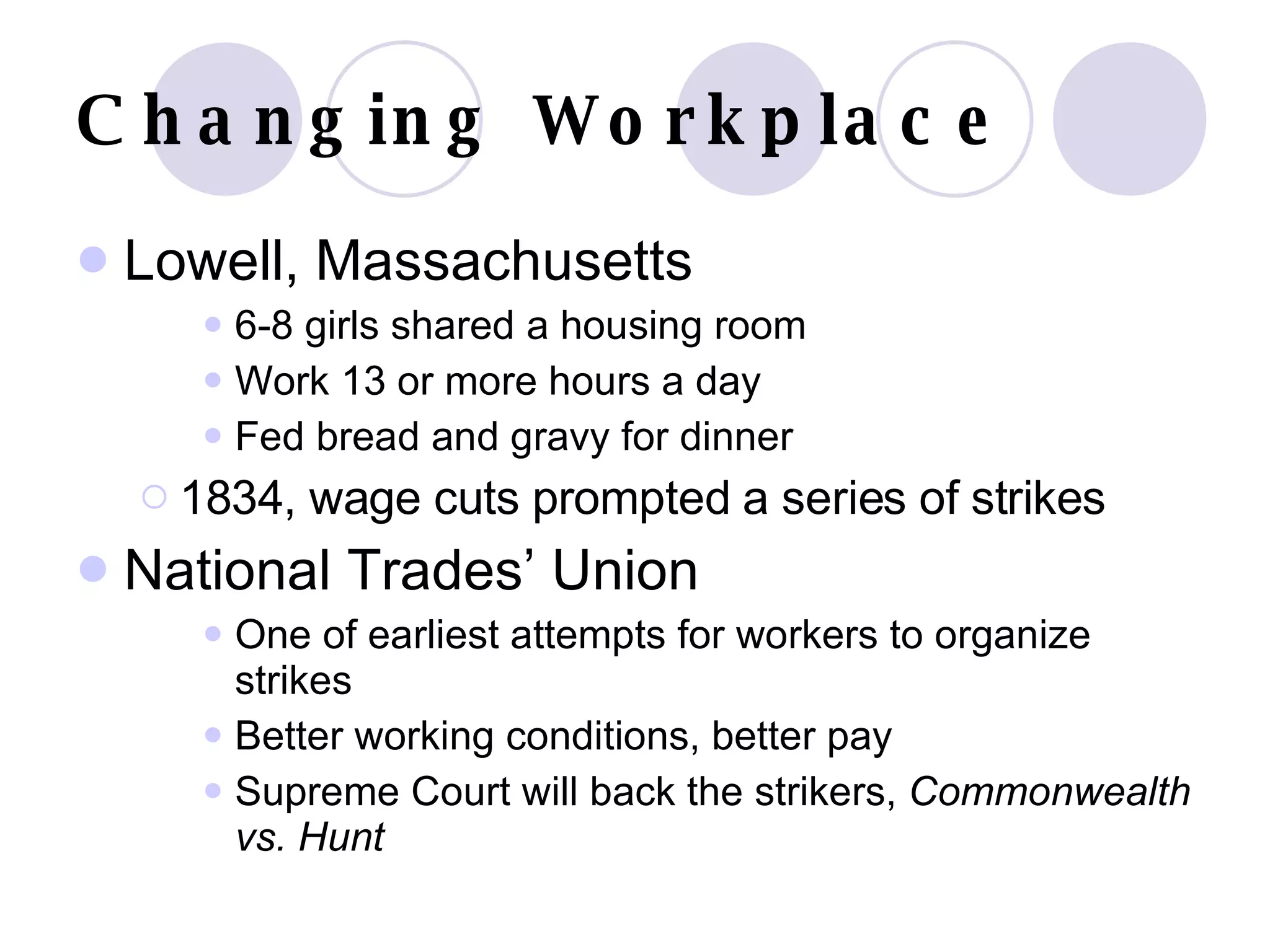
Changing Workplace Lowell, Massachusetts 6-8 girls shared a housing room Work 13 or more hours a day Fed bread and gravy for dinner 1834, wage cuts prompted a series of strikes National Trades’ Union One of earliest attempts for workers to organize strikes Better working conditions, better pay Supreme Court will back the strikers,  Commonwealth vs. Hunt
Changing Workplace Immigration 1845-1854, 3 million new immigrants Most were German or Irish Great Potato Famine Irish were discriminated against Poor and Roman Catholic

Chapter 8 - American History

  • 1.
    Reforming American SocietyAmerican History Chapter 8
  • 2.
    Religion Sparks ReformSecond Great Awakening After 1790, religious movement that stressed the individual Salvation is not predetermined Individual responsibility to improve themselves and society Revival : meeting to awaken religious faith through passion African American churches: Offered hope of salvation from slavery
  • 3.
    Transcendentalism : HenryDavid Thoreau Ralph Waldo Emerson Emphasized the truth found in nature, personal emotion, and individual conscience Utopian communities : Optimism led people to try to create “utopias,” or perfect societies Religion Sparks Reform
  • 4.
    Reforming Prisons DorotheaDix, persuaded Congress to improve conditions at prisons Prisons held mentally ill patients, as well as criminals Improving Education Tax-supported schools Prepare students to become good citizens Religion Sparks Reform
  • 5.
    Women and ReformCult of domesticity : Housework and childcare considered the only proper activities for married women Young, unmarried women often worked in factories Women reform: Abolition: the call to outlaw slavery Temperance movement: effort to prohibit drinking of alcohol Education Healthcare
  • 6.
    Women and ReformWomen’s rights movement Seneca Falls Convention: first woman’s rights meeting Elizabeth Cady Stanton, Lucretia Mott, Sojourner Truth
  • 7.
    Changing Workplace Industrychanges work Cottage industry  early factories Prices go down, unskilled workers able to perform machinery tasks Lowell, Massachusetts Unmarried farm girls were workers Could play lower wages
  • 8.
    Changing Workplace Lowell,Massachusetts 6-8 girls shared a housing room Work 13 or more hours a day Fed bread and gravy for dinner 1834, wage cuts prompted a series of strikes National Trades’ Union One of earliest attempts for workers to organize strikes Better working conditions, better pay Supreme Court will back the strikers, Commonwealth vs. Hunt
  • 9.
    Changing Workplace Immigration1845-1854, 3 million new immigrants Most were German or Irish Great Potato Famine Irish were discriminated against Poor and Roman Catholic