The Pressure to Expand American Imperialism
Why did the United States join the imperialist club at the end of the 19th century? Essential Question
Imperialism Strong nations attempt to create empires by dominating weaker nations
Economic Factors Increased need for natural resources New markets to sell manufactured goods
Nationalistic Factors Rise of nationalism Devotion to one’s country Believed themselves, ideas, goals superior to those of other nations
Military Factors New technology make European armies and navies superior to Asian and African Growing navies need bases for refueling and restocking
Humanitarian Factors Missionaries and doctors believe had duty to spread Western civilization
Monroe Doctrine Main principle of US foreign policy since the 1820s US declare self neutral in European wars Warned other countries not to interfere in the W. hemisphere
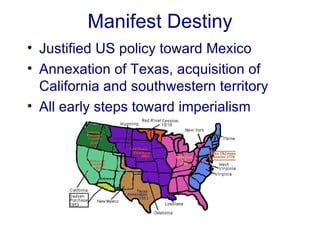
Manifest Destiny Justified US policy toward Mexico Annexation of Texas, acquisition of California and southwestern territory All early steps toward imperialism
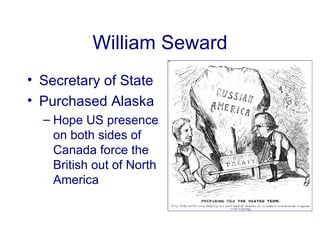
William Seward Secretary of State Purchased Alaska Hope US presence on both sides of Canada force the British out of North America
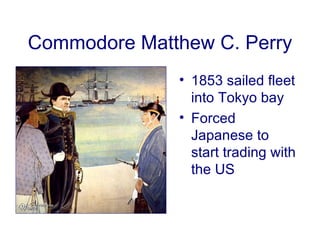
Commodore Matthew C. Perry 1853 sailed fleet into Tokyo bay Forced Japanese to start trading with the US
The Pacific US want control of some islands to use as refueling and repair stations  Seward want annexation of uninhabited Midway Islands in 1867 US Treaty with Hawaii 1875 Hawaiians sell sugar to US duty-free Couldn’t sell/lease territory to any foreign power
Promote Economic Growth   Overproduction of food and goods Financial panics Frequent economic depressions US must secure markets abroad US businessmen invest in foreign economies Banana Republics = Central American nations dominated by US business interests
Promote American Security   Alfred T. Mahan The Influence of Sea Power Upon History Nations economic future tied to gaining new markets abroad Need powerful navy to protect markets from foreign rivals Congress need to build modern steam-powered, steel-hulled ships
Preserve American Spirit Fear US lose vitality Closing frontier sap nation’s energy Quest for empire restore pioneer spirit Social Darwinism Certain racial and ethnic groups superior to others Expansionism is nation’s destiny and noble pursuit
Americans Lean Toward Expansion Want new markets abroad Want favorable trade relations Political and military entanglements follow Difficult, bloody, painful foreign conflicts Hawaii Spanish-American War Philippines

American Imperialism

  • 1.
    The Pressure toExpand American Imperialism
  • 2.
    Why did theUnited States join the imperialist club at the end of the 19th century? Essential Question
  • 3.
    Imperialism Strong nationsattempt to create empires by dominating weaker nations
  • 4.
    Economic Factors Increasedneed for natural resources New markets to sell manufactured goods
  • 5.
    Nationalistic Factors Riseof nationalism Devotion to one’s country Believed themselves, ideas, goals superior to those of other nations
  • 6.
    Military Factors Newtechnology make European armies and navies superior to Asian and African Growing navies need bases for refueling and restocking
  • 7.
    Humanitarian Factors Missionariesand doctors believe had duty to spread Western civilization
  • 8.
    Monroe Doctrine Mainprinciple of US foreign policy since the 1820s US declare self neutral in European wars Warned other countries not to interfere in the W. hemisphere
  • 9.
    Manifest Destiny JustifiedUS policy toward Mexico Annexation of Texas, acquisition of California and southwestern territory All early steps toward imperialism
  • 10.
    William Seward Secretaryof State Purchased Alaska Hope US presence on both sides of Canada force the British out of North America
  • 11.
    Commodore Matthew C.Perry 1853 sailed fleet into Tokyo bay Forced Japanese to start trading with the US
  • 12.
    The Pacific USwant control of some islands to use as refueling and repair stations Seward want annexation of uninhabited Midway Islands in 1867 US Treaty with Hawaii 1875 Hawaiians sell sugar to US duty-free Couldn’t sell/lease territory to any foreign power
  • 13.
    Promote Economic Growth Overproduction of food and goods Financial panics Frequent economic depressions US must secure markets abroad US businessmen invest in foreign economies Banana Republics = Central American nations dominated by US business interests
  • 14.
    Promote American Security Alfred T. Mahan The Influence of Sea Power Upon History Nations economic future tied to gaining new markets abroad Need powerful navy to protect markets from foreign rivals Congress need to build modern steam-powered, steel-hulled ships
  • 15.
    Preserve American SpiritFear US lose vitality Closing frontier sap nation’s energy Quest for empire restore pioneer spirit Social Darwinism Certain racial and ethnic groups superior to others Expansionism is nation’s destiny and noble pursuit
  • 16.
    Americans Lean TowardExpansion Want new markets abroad Want favorable trade relations Political and military entanglements follow Difficult, bloody, painful foreign conflicts Hawaii Spanish-American War Philippines